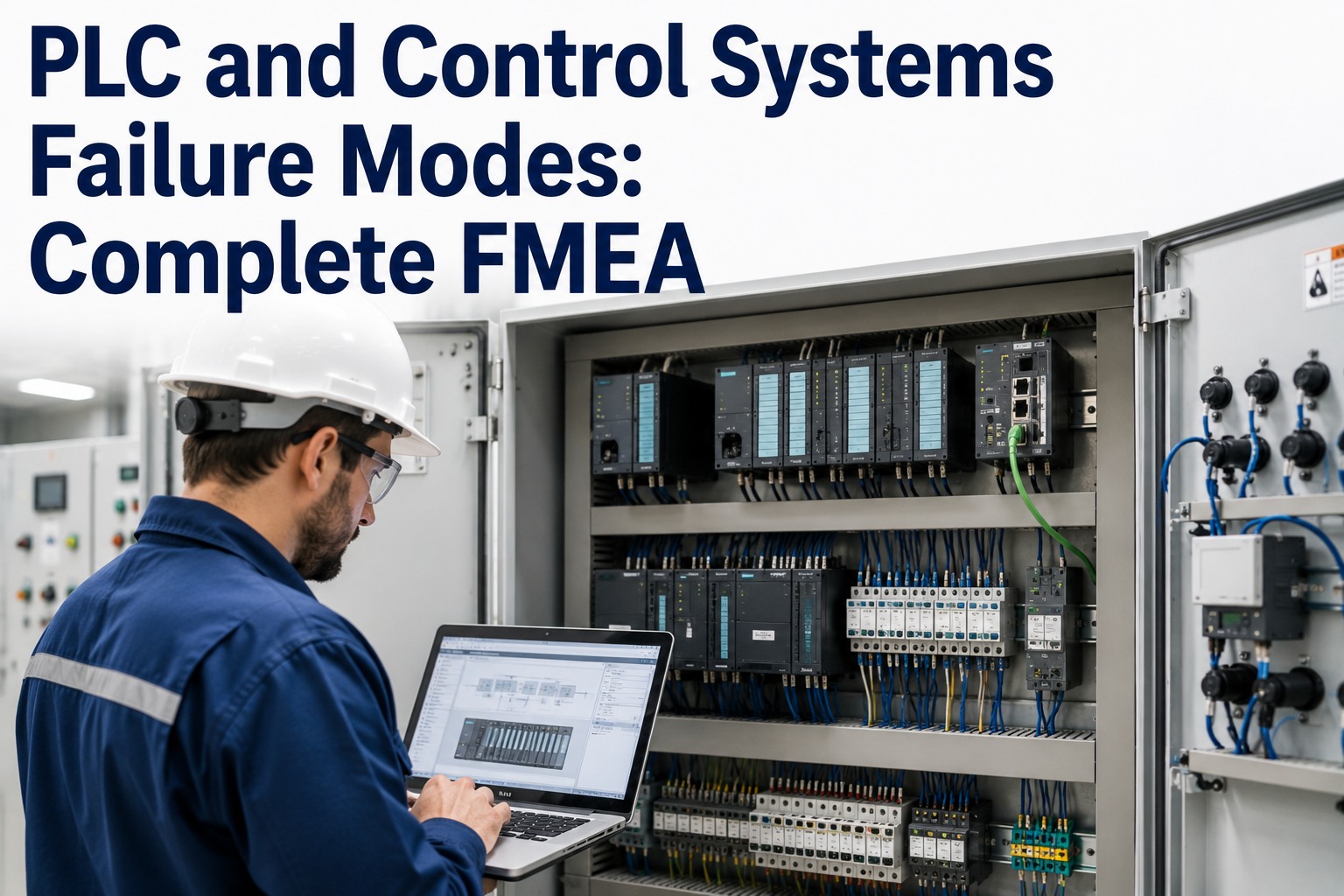
Failure modes and effects for PLC & control systems follow predictable patterns — power supply degradation, I/O module drift, communication bus faults, and environmental corrosion account for over 70% of unplanned automation stoppages in discrete and process plants alike. A structured PLC & control systems FMEA catalogs each failure mode against its root cause, severity rating, and recommended RCM task so your reliability team can shift from reactive firefighting to condition-based, planned interventions. This complete reference maps the most common PLC & control systems failure causes to actionable preventive and predictive maintenance tasks, then shows how OxMaint turns the worksheet into daily work-order execution. Build your FMEA library, trigger the right task at the right interval, and Start Free Trial to apply it inside OxMaint today.
COMPLETE FMEA REFERENCE
Every PLC & Control Systems Failure Mode — Mapped, Rated, and Solved
A single I/O card failure can halt a $2M production line for 4–6 hours. This reference catalogs the failure modes your team encounters on the floor — root causes, severity scores, and RCM tasks — so you can prevent downtime before it starts.
PLC & CONTROL SYSTEMS FMEA WORKSHEET
Complete PLC & Control Systems Failure Mode List with Severity Ratings
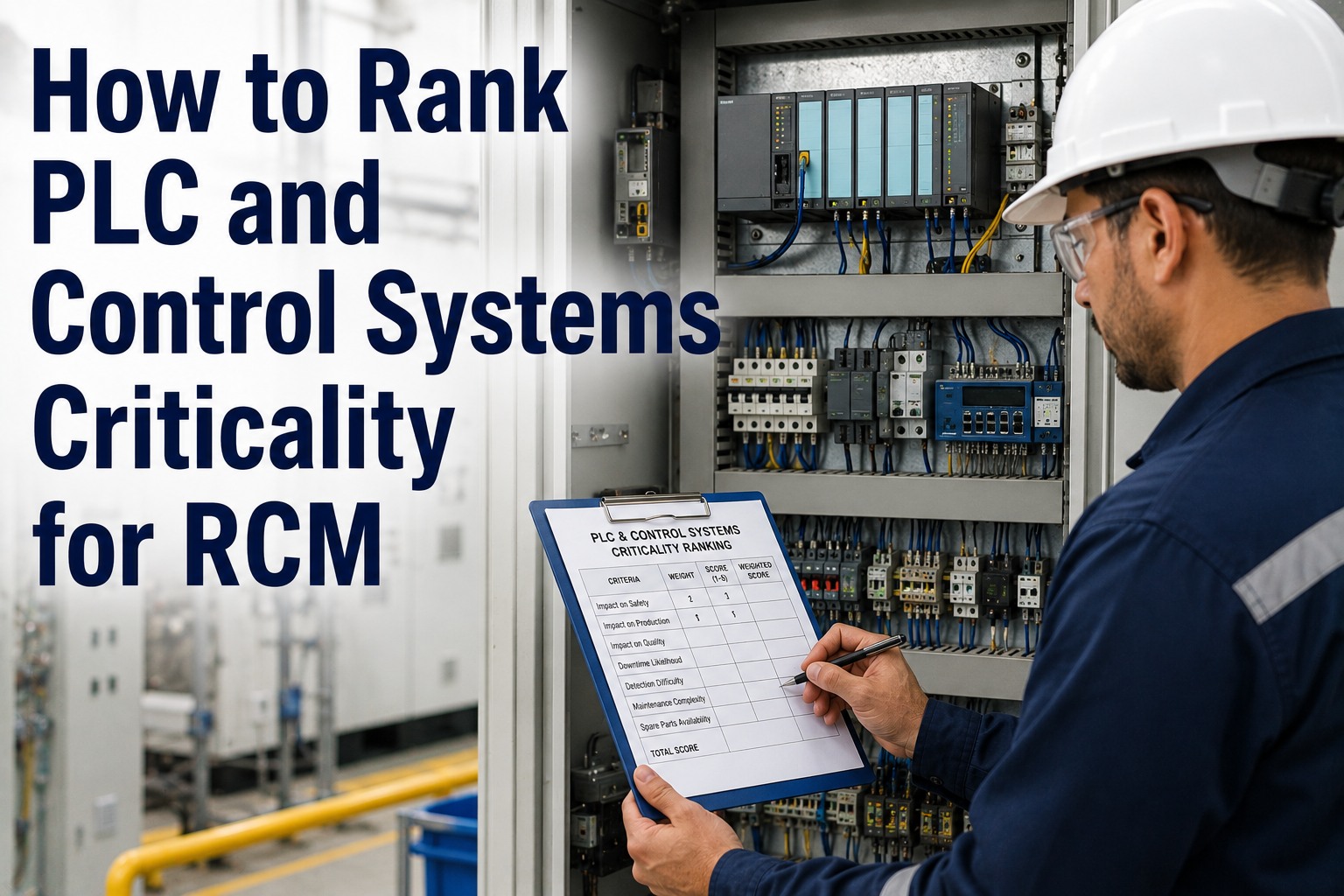
Use this FMEA worksheet as the backbone of your PLC & control systems reliability program. Each row maps a failure mode to its most likely root cause, the downstream effect on production and safety, a severity rating (1–10 scale per AIAG-VDA standards), and the recommended RCM maintenance task.
| Failure Mode | Root Cause | Effect | Severity | RCM Task |
|---|---|---|---|---|
| Power supply failure | Electrolytic capacitor aging; thermal stress; voltage transients | Complete controller shutdown; loss of all I/O; uncontrolled stop | 9 | Condition-based: monitor DC bus ripple & output voltage quarterly; time-based replace at 7–8 yrs |
| I/O module failure | Overvoltage surge; relay contact arcing; backplane connector corrosion | Individual sensor/actuator signal loss; partial process interruption | 7 | Predictive: thermography scan semi-annually; keep 1 spare module per rack |
| Communication bus fault | EMI/RFI interference; cable shielding degradation; terminating resistor drift | Intermittent data loss; controller timeout; dropped nodes on network | 8 | Condition-based: quarterly signal-quality scan; annual cable-shield continuity test |
| Control loop drift | Sensor calibration shift; PID tuning degradation; analog signal noise | Process variable deviation; quality defects; energy waste | 5 | Predictive: continuous trend analysis via OxMaint analytics; recalibrate every 6 months |
| CPU / processor fault | Firmware bug; memory corruption; thermal overload; watchdog timeout | Total logic execution halt; plant-wide shutdown; safety system trip | 10 | Condition-based: monitor CPU temperature & scan time; annual firmware patch review |
| Backup battery depletion | Natural battery lifecycle; extended power-off periods | Loss of retentive memory; program & tag data loss on power cycle | 6 | Time-based: replace battery annually; monitor battery-low status bit in HMI |
| Environmental corrosion | Humidity ingress; corrosive gas; dust accumulation on heat sinks | Short circuits; overheating; intermittent contact failures | 7 | Predictive: quarterly enclosure integrity inspection; NEMA rating audit annually |
| Wiring & termination failure | Vibration loosening; thermal cycling; conductor fatigue | Intermittent open/short; nuisance faults; hard-to-diagnose downtime | 4 | Condition-based: annual torque audit on all terminal blocks; thermal imaging scan |
Severity scale: 1–4 minor / 5–7 moderate / 8–10 critical. Adapt ratings to your plant's safety and production context.
FAILURE PREVENTION STRATEGY
How to Prevent PLC & Control Systems Failures with RCM Tasks
A 2023 study across 340 manufacturing plants found that 68% of PLC-related downtime was preventable with condition-based monitoring and disciplined spare-parts management. Prevention isn't about adding more PMs — it's about executing the right task at the right interval.
Condition-Based Monitoring
Deploy sensors and HMI trend logs to track CPU temperature, DC bus ripple, and network packet error rates. OxMaint's predictive analytics engine flags deviation from baseline 2–4 weeks before functional failure, giving your team time to plan the intervention during a scheduled window.
Spare Parts Criticality Mapping
Every PLC rack should have a mapped spare-part kit: power supply, CPU, critical I/O cards, and communication modules. OxMaint's inventory module ties each spare to its parent asset and auto-generates a reorder when stock drops below min — eliminating 3–5 day lead-time delays that extend downtime by 400%.
Firmware & Program Backup Discipline
A CPU failure without a current program backup can extend recovery from 2 hours to 18+ hours. Schedule automatic program uploads and store versioned backups in OxMaint's asset record. Run quarterly restore tests on a bench unit to validate backup integrity before you need it.
Environmental Control Audits
Heat and humidity are the silent killers of control systems. Audit enclosure temperatures (target: below 40°C), verify door gasket integrity, and confirm condensate drains are clear every quarter. OxMaint schedules these inspections automatically and attaches thermal images to each work order.
ROOT CAUSE ANALYSIS
PLC & Control Systems Root Cause Analysis: From Symptom to Source
When a PLC trips, the alarm on the HMI is rarely the root cause — it's the symptom. Effective root cause analysis (RCA) on control system failures demands a structured 5-Whys or fishbone approach, backed by data from your CMMS. Here's a worked example from a real plant scenario.
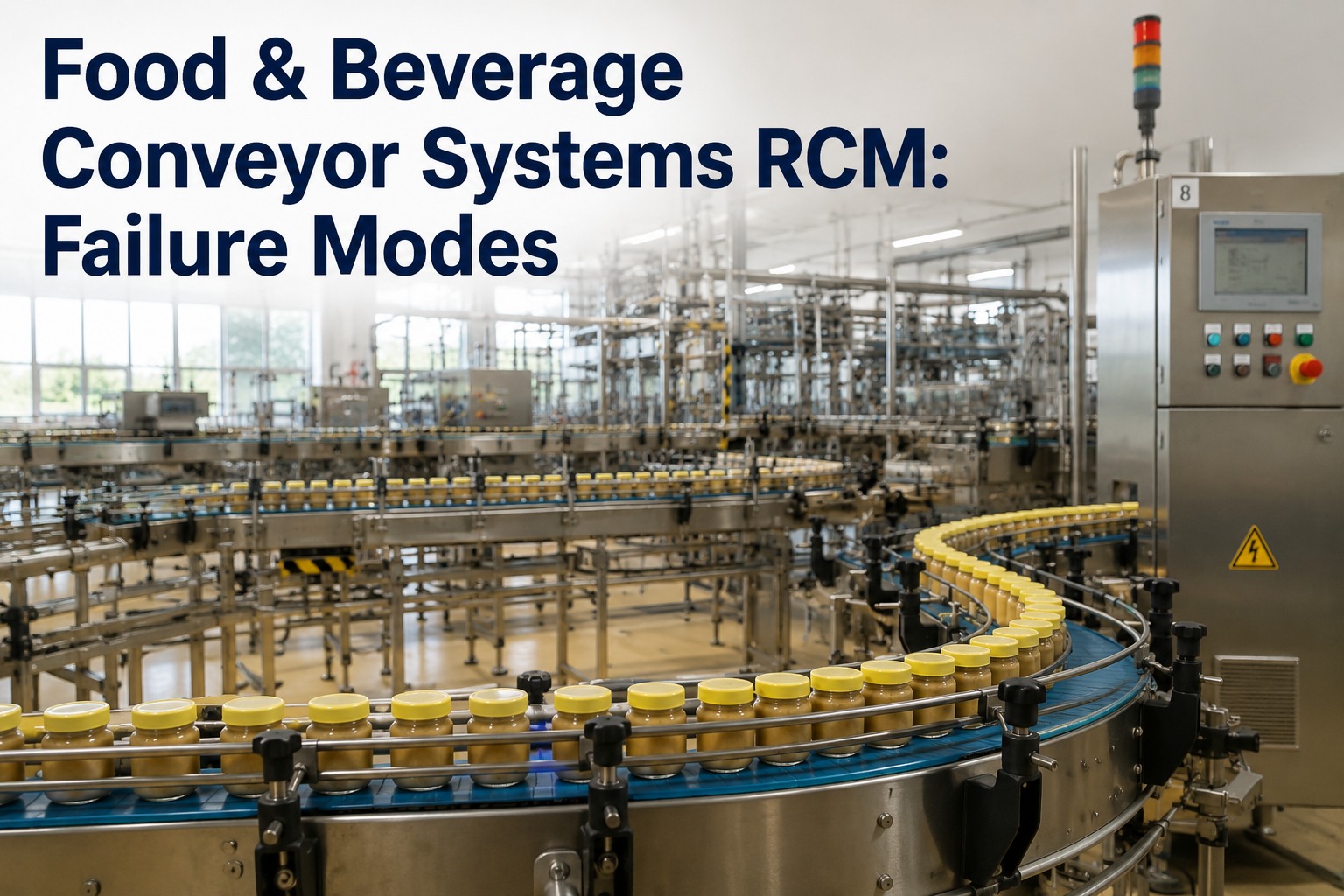
Plant: 180-asset food processing facility · Event: Packaging line stopped 6 times in 30 days · Cost: $42,000 in lost production per quarter
Symptom — Intermittent Conveyor Stoppage
Line stops randomly 2–3 times per shift. HMI shows "Network Node 7 Timeout." Operators reset and production resumes in 8–12 minutes each time.
5-Whys Drill-Down
Why 1: Node 7 drops off the bus. Why 2: Communication cable connector is corroded. Why 3: Moisture ingress at the cable gland. Why 4: Enclosure door gasket compressed and failed. Why 5: No scheduled gasket inspection exists in the PM program.
Corrective & Preventive Action
Corrective: Replace connector, re-terminate cable, install new gasket. Preventive: Add quarterly enclosure gasket inspection to OxMaint PM scheduler across all 23 control panels on site. Estimated cost avoided: $38K/yr.
HOW OXMAINT HELPS
Turn Your PLC & Control Systems FMEA into Daily Action
An FMEA worksheet on a spreadsheet is a static document. Inside OxMaint, every failure mode becomes a living, triggerable maintenance strategy that executes itself — logging history, adjusting intervals, and feeding predictive models with every work order closed.
Link Failure Modes to Every Asset
Attach the full FMEA record to each PLC, I/O rack, and power supply in your asset hierarchy. When a technician opens a work order, the failure mode library, known root causes, and recommended diagnostic steps are right there on the screen — cutting mean-time-to-repair by 25–40%.
Auto-Trigger Condition-Based Tasks
Set thresholds on sensor data — CPU temperature, bus error count, battery voltage — and OxMaint automatically generates a work order the moment a value crosses your preset limit. No manual polling, no missed warnings. Teams report 30–50% fewer unplanned PLC failures in the first 6 months.
Predictive Analytics on Failure History
OxMaint's AI engine analyzes 12+ months of work-order history and failure codes to predict which PLC assets are trending toward failure. The system recommends PM interval adjustments and flags assets for RCM review — turning your FMEA from a one-time exercise into a continuously improving strategy.
Spare-Part Triggers Tied to FMEA
Each failure mode in your FMEA can map to the exact spare part needed for remediation. When OxMaint triggers a condition-based task, it simultaneously checks stock levels and auto-generates a purchase requisition if the part is below minimum — ensuring the right part is always on the shelf when the failure mode activates.
FMEA TEMPLATE
Build Your PLC & Control Systems FMEA Template in 5 Steps
Whether you're starting from scratch or upgrading a legacy spreadsheet, this 5-step framework gets a defensible FMEA into production in 2–3 weeks — not 6 months.
Define the System Boundary
List every PLC processor, I/O rack, power supply, HMI, and network switch within scope. Tag each asset in OxMaint with a system-level identifier so failure data rolls up correctly. A typical mid-size plant has 40–80 distinct control system assets.
Identify Failure Modes
For each asset, brainstorm how it can fail using the reference table above. Involve operators, electricians, and controls engineers — the people closest to the equipment will surface modes that don't appear in any textbook.
Score Severity, Occurrence & Detection
Rate each mode 1–10 on severity (safety/production impact), occurrence (how often it happens), and detection (how likely you'll catch it before failure). Multiply for the Risk Priority Number (RPN). Any RPN above 200 demands a mitigation plan.
Assign RCM Tasks
Map each high-RPN mode to a time-based PM, condition-based monitor, or run-to-failure strategy with documented justification. Load every task into OxMaint with the correct interval, required skills, and spare-part kit.
Review & Refine Quarterly
An FMEA is a living document. Review failure history in OxMaint every quarter, adjust RPN scores, retire modes that no longer apply, and add new modes discovered through RCA. This continuous loop is what separates a 90% reliable plant from a 99% reliable one.
Stop Reacting to PLC Failures — Start Preventing Them
See how OxMaint turns your FMEA into automated, condition-based work orders that cut unplanned control-system downtime by 30–50%. Book a 30-minute demo on your assets.
FREQUENTLY ASKED QUESTIONS
PLC & Control Systems FMEA — Your Questions Answered
What are the most common PLC & control systems failure modes?
The most frequent failure modes are power supply degradation (electrolytic capacitor aging), I/O module burnout from voltage surges, communication bus faults from EMI/RFI interference, CPU processor faults from thermal overload or firmware corruption, and backup battery depletion causing memory loss. Environmental factors — humidity, dust, and heat — accelerate all of these modes and should be audited quarterly.
How do you calculate severity rating in a PLC & control systems FMEA?
Severity is rated on a 1–10 scale where 1 means negligible impact (no production loss, no safety risk) and 10 means catastrophic (plant-wide shutdown, safety system trip, or regulatory violation). A CPU fault that halts a $2M line is typically rated 9–10, while a single analog input drift causing minor quality deviation might rate 4–5. The severity score is multiplied by occurrence and detection ratings to calculate the Risk Priority Number (RPN). OxMaint stores these scores on each asset record and recalculates RPN as failure data accumulates — Start Free Trial to see it in action.
How often should PLC & control systems preventive maintenance be performed?
Core PM tasks — enclosure inspection, terminal torque audits, and backup battery replacement — should run quarterly to annually depending on environmental severity. Condition-based monitoring (CPU temperature, bus error rates, power supply ripple) runs continuously via the HMI or IoT sensors. Firmware and program backups should be captured after every program change and verified with a restore test at least once per year.
What is the difference between FMEA and RCM for control systems?
FMEA (Failure Modes and Effects Analysis) is the analytical method that identifies how assets fail, the effects of those failures, and their risk ratings. RCM (Reliability-Centered Maintenance) takes the FMEA output and defines the maintenance strategy for each failure mode — whether that's a time-based PM, condition-based monitoring, predictive analytics, or run-to-failure. FMEA is the diagnosis; RCM is the treatment plan. OxMaint bridges both by storing FMEA data on each asset and auto-triggering the RCM task at the correct interval.
Can CMMS software improve PLC & control systems reliability?
Yes — a modern CMMS like OxMaint improves control-system reliability by linking failure modes to specific assets, auto-generating work orders when condition thresholds are breached, tracking spare-part inventory against failure-mode requirements, and analyzing work-order history to refine PM intervals. Plants using CMMS-driven FMEA strategies report 30–50% fewer unplanned PLC failures and 25–40% faster mean-time-to-repair. Book a 30-minute demo to see the workflow on your asset list.
Ready to Build Your PLC & Control Systems FMEA in OxMaint?
Load your asset hierarchy, attach failure modes, and auto-trigger condition-based tasks in under a week. Your first FMEA is live before the next PLC trips.
Free 14-day trial · No credit card