Industrial maintenance has undergone a fundamental transformation. In 2026, the leading facilities no longer just repair equipment when it breaks — they predict exactly when it will fail. AI-powered predictive maintenance (PdM) systems now analyze millions of data points from IoT sensors simultaneously, detecting microscopic vibration anomalies, thermal shifts, and acoustic irregularities in real time. The shift from reactive and preventive schedules to proactive, AI-driven intervention is delivering results that define modern manufacturing: facilities deploying AI predictive maintenance report 70% fewer unexpected breakdowns within 6 months, 25-30% reduction in overall maintenance costs, and significant extensions in asset lifecycles. A single prevented catastrophic failure of a critical asset saves tens of thousands of dollars — often covering years of software subscription costs in one event. But with various IoT sensors and AI platforms competing for your business, choosing the right strategy requires understanding what actually delivers value versus what is just noise. This guide outlines how AI is shaping the future of maintenance and helps you build a business case your leadership will approve. Already managing maintenance with paper or basic spreadsheets? Sign up for Oxmaint and connect your real-time machine health data to automated maintenance workflows, technician dispatching, and facility-wide reliability analytics in one platform.
Smart Predictive Maintenance: How AI is Shaping the Future
Why Reactive and Calendar Maintenance Are Failing
First-generation maintenance strategies relied on fixing things after they broke (reactive) or replacing parts on a rigid calendar schedule regardless of actual wear (preventive). Both approaches are highly inefficient. AI-powered systems fundamentally change this equation by continuously monitoring asset condition and intervening exactly when necessary:
Reactive vs. Predictive
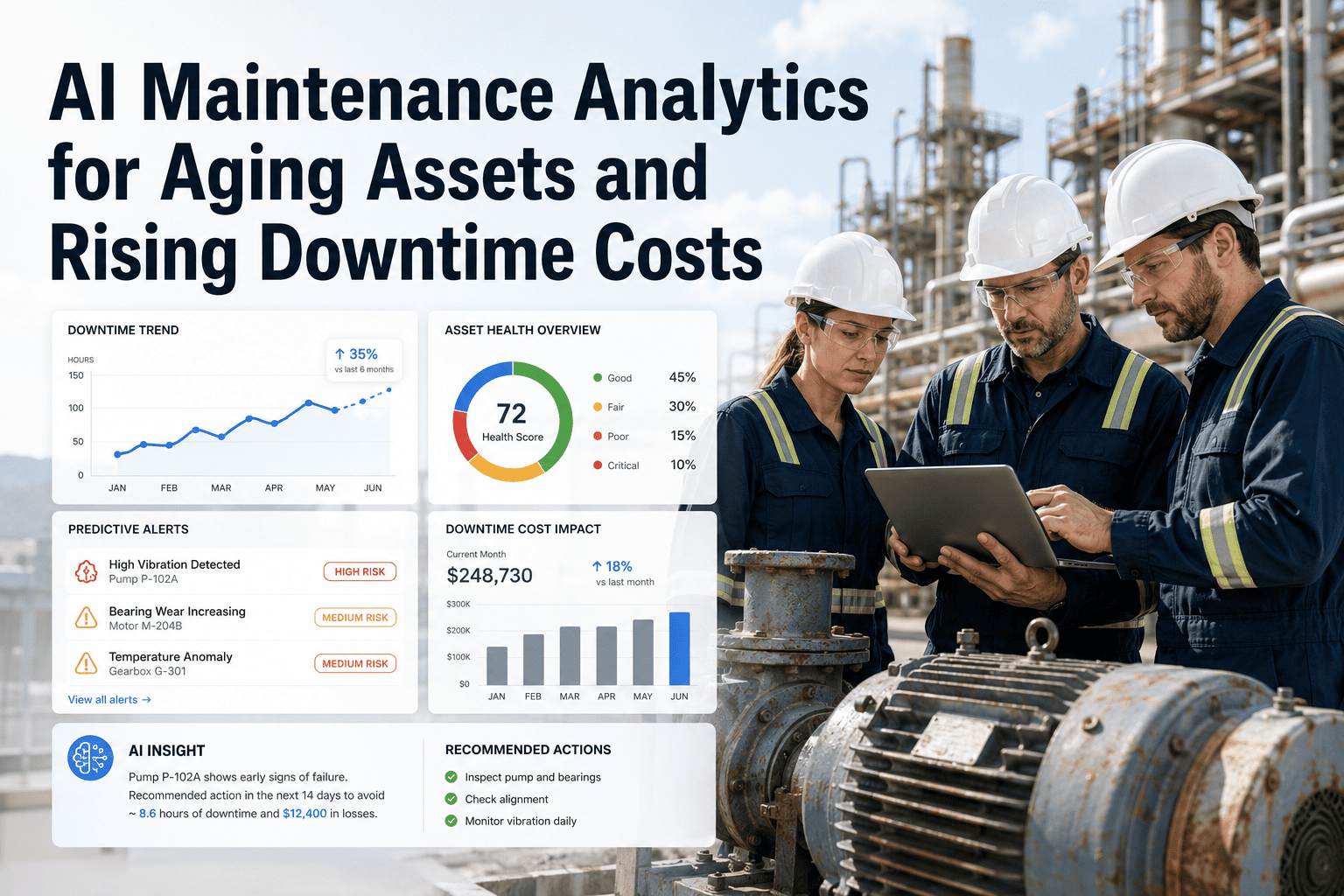
Traditional maintenance waits for a breakdown, causing expensive unplanned downtime. AI detects the earliest signs of degradation — like a subtle change in bearing vibration — and triggers an alert weeks before a failure occurs, allowing for planned, low-impact repairs.
Calendar vs. Condition-Based
Replacing perfectly good parts based on a 90-day schedule wastes money and labor. Modern AI analyzes the exact condition of the machine, ensuring you only service equipment when the data proves it is actually needed, saving massive amounts on spare parts.
Siloed Data vs. Prescriptive Action
Legacy systems trap data in isolated sensors. Modern AI integrates with your CMMS to not only detect the problem but also prescribe the exact fix. It automatically generates work orders with the correct parts and procedures attached.
Facilities using full AI predictive solutions achieve a 75% reduction in unplanned downtime. Connect your sensor alerts to automated work orders with Oxmaint's intelligent CMMS platform and turn every data anomaly into measurable reliability.
AI Maintenance ROI: The Numbers That Matter
The business case for AI in maintenance is proven across industries. Here is what facility-wide deployment data shows in 2026:
The math is undeniable: preventing just one hour of unplanned downtime on a primary production line — which can cost up to $260,000 per hour in some industries — justifies the IoT and AI investment for an entire plant. Start building your smart facility today — sign up for Oxmaint to track asset health, automate work orders, and demonstrate measurable cost savings to your stakeholders.
The 5 Stages of AI Maintenance Workflows
We break down how AI transforms raw machine data into completed maintenance tasks. Here is how leading platforms manage the predictive lifecycle:
Continuous IoT Data Ingestion
Industrial IoT sensors continuously capture high-frequency data from critical assets—including multi-axis vibration, surface temperature, and acoustics. This data is streamed securely to the cloud or edge processors in real-time, creating a comprehensive digital footprint of baseline machine health.
Machine Learning Pattern Recognition
The AI models analyze incoming data against historical baselines and global equipment datasets. Utilizing deep learning algorithms, the system can distinguish between normal operational variations (like a machine speeding up for a heavier load) and genuine mechanical degradation.
Anomaly Detection & Diagnostics
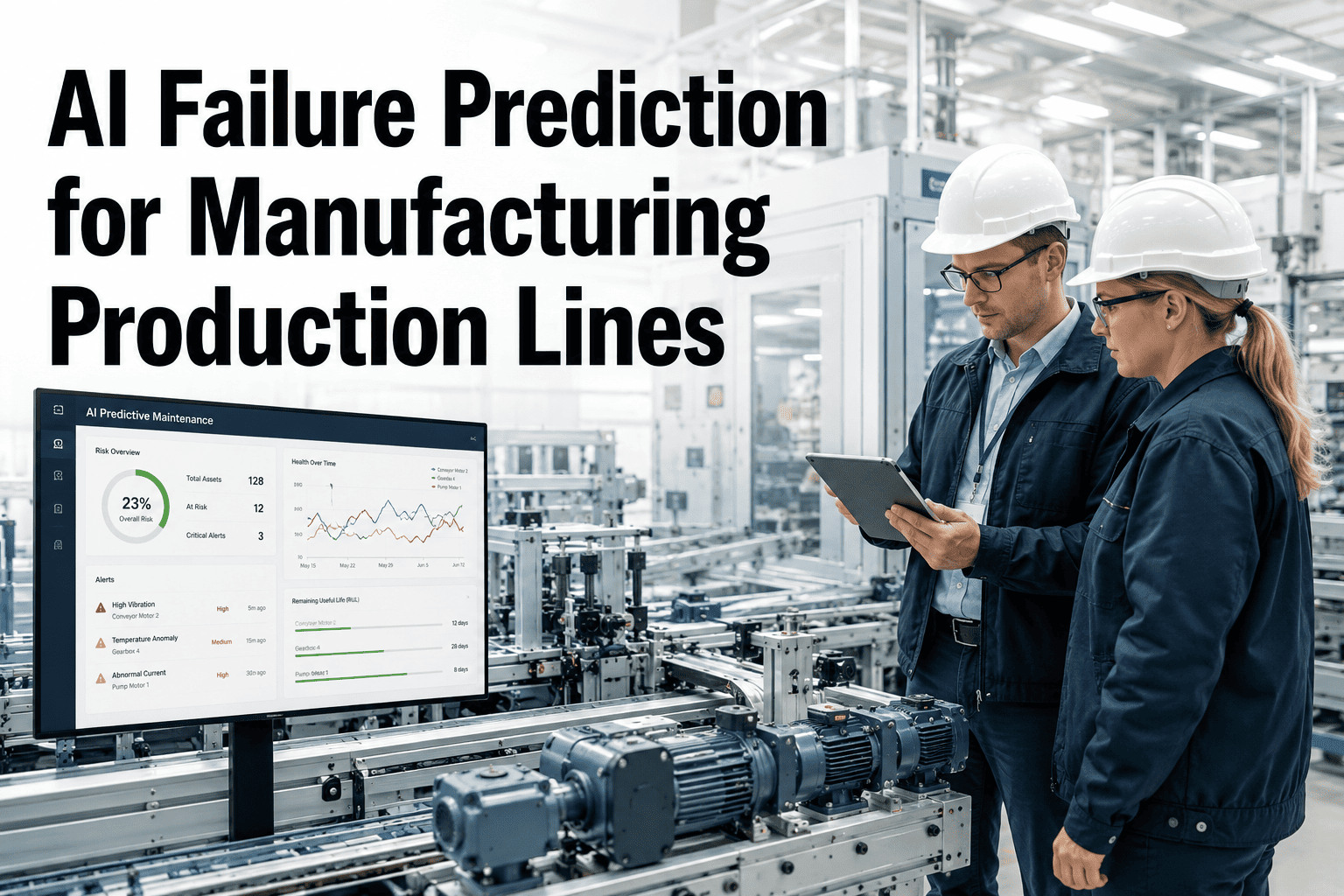
When the AI detects a signature pattern of failure (e.g., inner race bearing wear), it instantly flags the anomaly. The system doesn't just say "machine is vibrating"; it diagnoses the specific root cause and estimates the Remaining Useful Life (RUL) of the component.
Prescriptive Action Generation
Moving beyond predictions, prescriptive AI recommends the exact corrective action. It cross-references the issue with your digital manuals, identifies the tools needed, checks spare parts inventory, and outlines safety procedures required to fix the impending failure.
Automated CMMS Integration
The final and most crucial step. The AI automatically triggers a work order in a connected CMMS like Oxmaint. The task is routed to the appropriately skilled technician with all diagnostic data attached, ensuring the problem is fixed during planned downtime.
Modern predictive systems rely on seamless integration with execution platforms. Book a free demo to see how AI sensor data flows directly into your operational maintenance workflows.
Turn Predictive Alerts Into Actionable Work Orders
Oxmaint integrates seamlessly with leading IoT sensors and AI diagnostics tools to automatically convert equipment anomalies into work orders, technician dispatch tasks, and inventory requests. See your facility's reliability soar — without the administrative burden.
What AI Actually Monitors in 2026
Modern AI maintenance systems go far beyond basic temperature checks. Here are the key detection capabilities that separate true AI from basic threshold alarms:
Vibration Analysis
AI identifies microscopic changes in machine vibration frequencies. It can distinguish between imbalance, misalignment, mechanical looseness, and specific bearing defects months before human senses can detect a problem.
Thermal Anomalies
Continuous thermography monitoring tracks heat signatures. AI detects abnormal friction in gearboxes, electrical imbalances in panels, and blockages in fluid systems by analyzing subtle temperature gradients over time.
Acoustic Diagnostics
Ultrasonic and acoustic emission sensors listen for the high-frequency sounds of friction and leaks. AI algorithms pinpoint air leaks in pneumatic systems and early-stage lubrication issues in rotating equipment.
Fluid & Oil Analysis
In-line sensors monitor oil viscosity, particulate count, and dielectric constants. The AI predicts the exact moment lubricant loses its protective properties, moving fluid changes from a calendar schedule to a condition-based requirement.
Power Consumption
Motor current signature analysis (MCSA) tracks electrical draw. AI detects rotor bar damage and stator faults by recognizing minute fluctuations in power consumption patterns during standard operation.
Remaining Useful Life
By combining multiple data streams, AI calculates the Remaining Useful Life (RUL) of critical components. Feed these predictive timelines directly into Oxmaint to plan procurement and schedule downtime months in advance.
These detection vectors work together to build a complete reliability ecosystem. Book a demo to see how Oxmaint connects AI-generated diagnostics with daily maintenance execution and cost tracking.
Best Practices for AI Maintenance Deployment
Technology alone will not fix your machines. Organizations that get the highest ROI from predictive maintenance follow these operational practices consistently:
Start with Critical Assets First
Do not blanket your entire facility with sensors on day one. Deploy AI monitoring on the top 10% of assets that act as bottlenecks or have the highest cost of downtime. Prove the ROI here before expanding plant-wide.
Establish Strong Data Baselines
AI needs to know what "normal" looks like. Allow your systems to collect baseline data under varying operational loads for several weeks before activating automated alerts to prevent false positives and alarm fatigue.
Connect Data to Execution
An alert is useless if no one acts on it. You must integrate your AI diagnostic tools with a modern CMMS. Automate the workflow so an impending failure instantly generates a prioritized work order with necessary parts attached.
Upskill Your Technicians
Transition your team from "wrench turners" to reliability engineers. Train them to trust the data and interpret AI insights. When technicians understand that AI is a tool to eliminate their emergency midnight call-outs, adoption skyrockets.
Create a Feedback Loop
When a technician completes a predictive repair, they must log what they actually found. Feeding ground-truth repair data back into the AI model improves its accuracy for future predictions. Closing the loop is essential for continuous improvement.
Implementing these practices alongside Oxmaint's reliability management tools turns theoretical AI into measurable factory uptime. Sign up today and start your proactive journey.
Who Benefits from AI Predictive Maintenance
Smart maintenance creates value across the entire organization. Here is how different roles benefit from the same data:
Say goodbye to weekend emergencies. Automated scheduling, real-time asset health scores, and prioritized workflows mean you control the maintenance schedule, rather than the machines controlling you.
Deep analytics replace guesswork. Access to high-fidelity trend data allows for root cause analysis and the development of long-term strategies that structurally eliminate recurring failures.
Safer working conditions and smoother operations. When equipment runs optimally without unexpected jamming or failing, operators can hit their production targets consistently without the stress of malfunctioning gear.
Measurable reductions in spare parts inventory holding costs, minimized scrap from poor machine performance, and maximized OEE. A single prevented outage clearly justifies the technology investment to the CFO.
Whether you manage a single food processing plant or a global manufacturing network, AI maintenance scales to fit your operation. Book a demo to see how Oxmaint connects predictive data to your capital planning and cost analytics workflows.
Predict Failures. Prevent Downtime. Profit More.
Oxmaint connects your AI predictive alerts with maintenance workflows, technician scheduling, and inventory management — turning raw sensor data into guaranteed uptime and lower operating costs.
Frequently Asked Questions
How much does it cost to implement AI predictive maintenance?
Costs vary based on the scale and existing infrastructure. Modern wireless IoT sensors typically cost between $50 to $200 per unit, coupled with a monthly software subscription ranging from $10 to $50 per asset. Unlike legacy systems requiring massive capital expenditure, modern cloud-based AI can be deployed with minimal upfront costs. The ROI typically exceeds the investment within 6-9 months through avoided downtime and optimized labor.
Can I use AI on older, legacy machinery?
Yes. One of the biggest advantages of modern IoT sensors is that they are non-intrusive. Battery-powered, magnetic sensors can be attached to the exterior of 50-year-old motors, pumps, and gearboxes. The AI analyzes the physical outputs (vibration, heat, sound) rather than requiring internal digital connections, bringing legacy equipment into the modern digital age instantly.
Will AI replace my maintenance technicians?
Absolutely not. AI is a diagnostic tool, not a physical repair mechanism. It replaces the tedious, routine inspection work (like walking around with a clipboard and a temp gun) and redirects technicians to high-value, complex repair tasks. It empowers your team to work smarter, in a safer environment, by telling them exactly what is wrong before they even open the machine casing.
How does Oxmaint integrate with predictive AI tools?
Oxmaint connects via robust APIs to leading IoT and AI diagnostic platforms. When the AI detects an anomaly that exceeds healthy thresholds, it automatically triggers a workflow in Oxmaint: generating a work order, attaching the diagnostic graphs, assigning the task to the right technician, and checking inventory for required parts. Book a demo to see this seamless integration.
How long does it take for the AI to "learn" my machines?
While the AI comes pre-trained on millions of hours of general machine data, it typically takes 2 to 4 weeks of continuous monitoring to establish a highly accurate specific baseline for your unique assets. This period allows the system to learn your machine's unique operating cycles, load variations, and ambient environmental conditions before it starts issuing high-confidence predictive alerts.