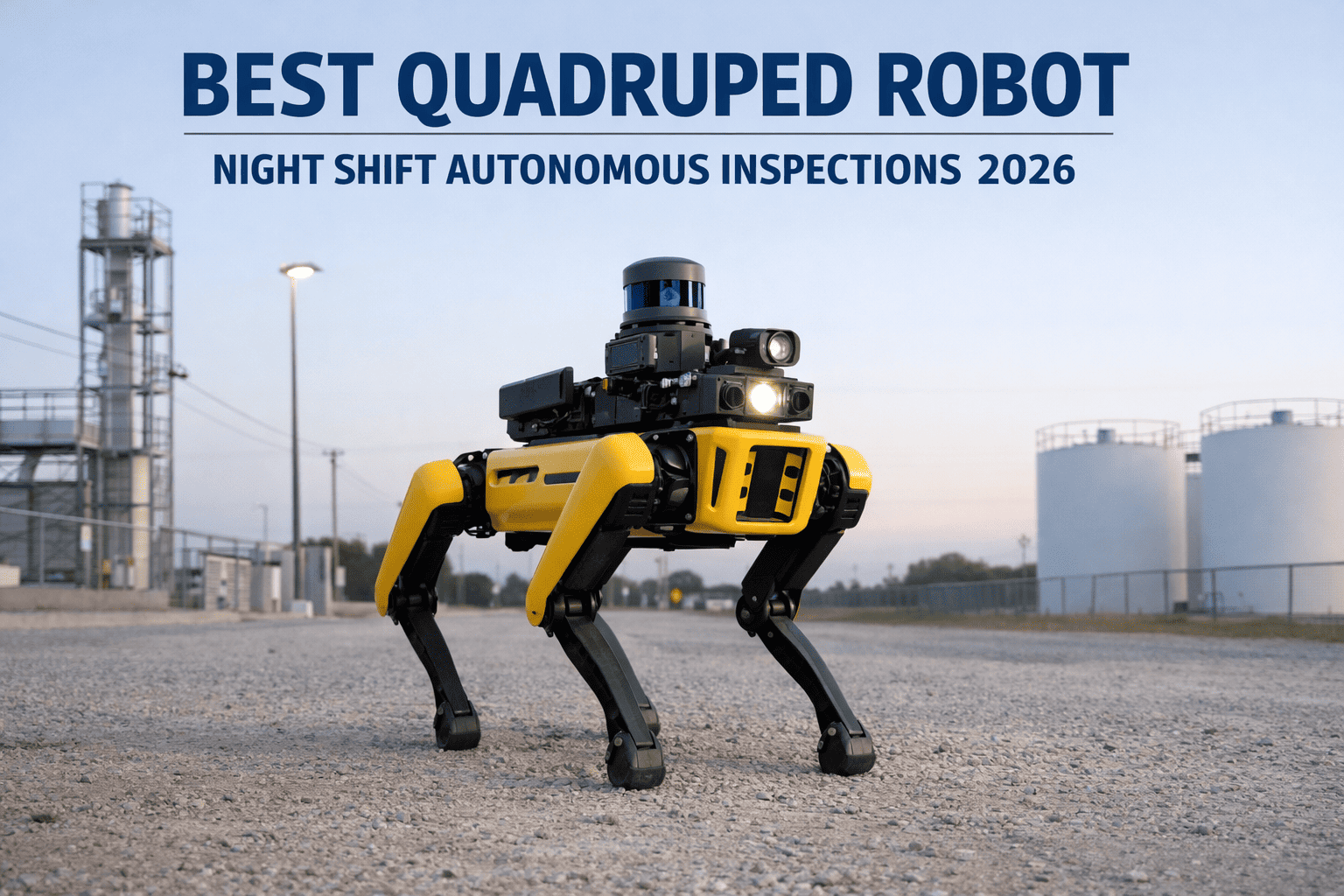
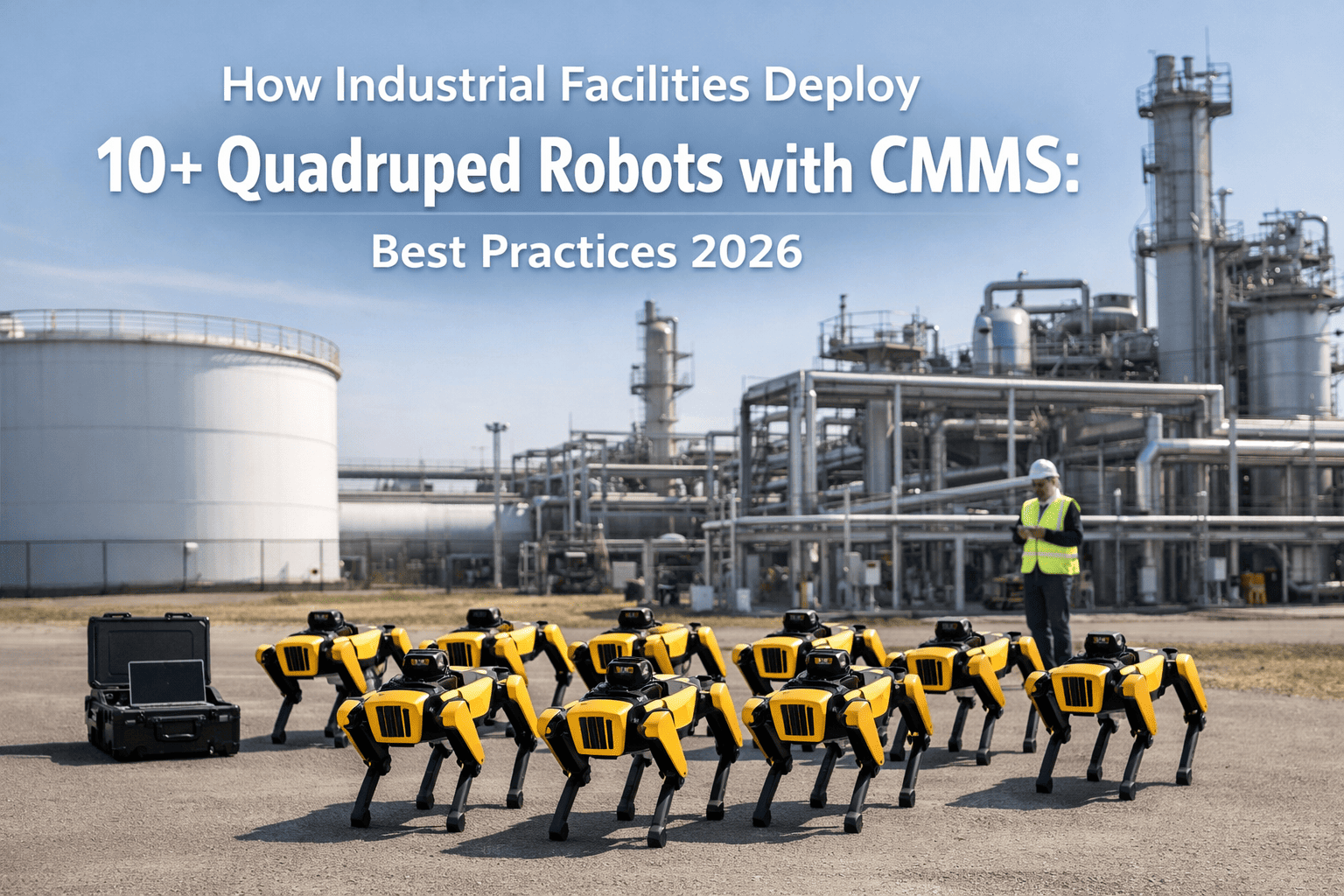
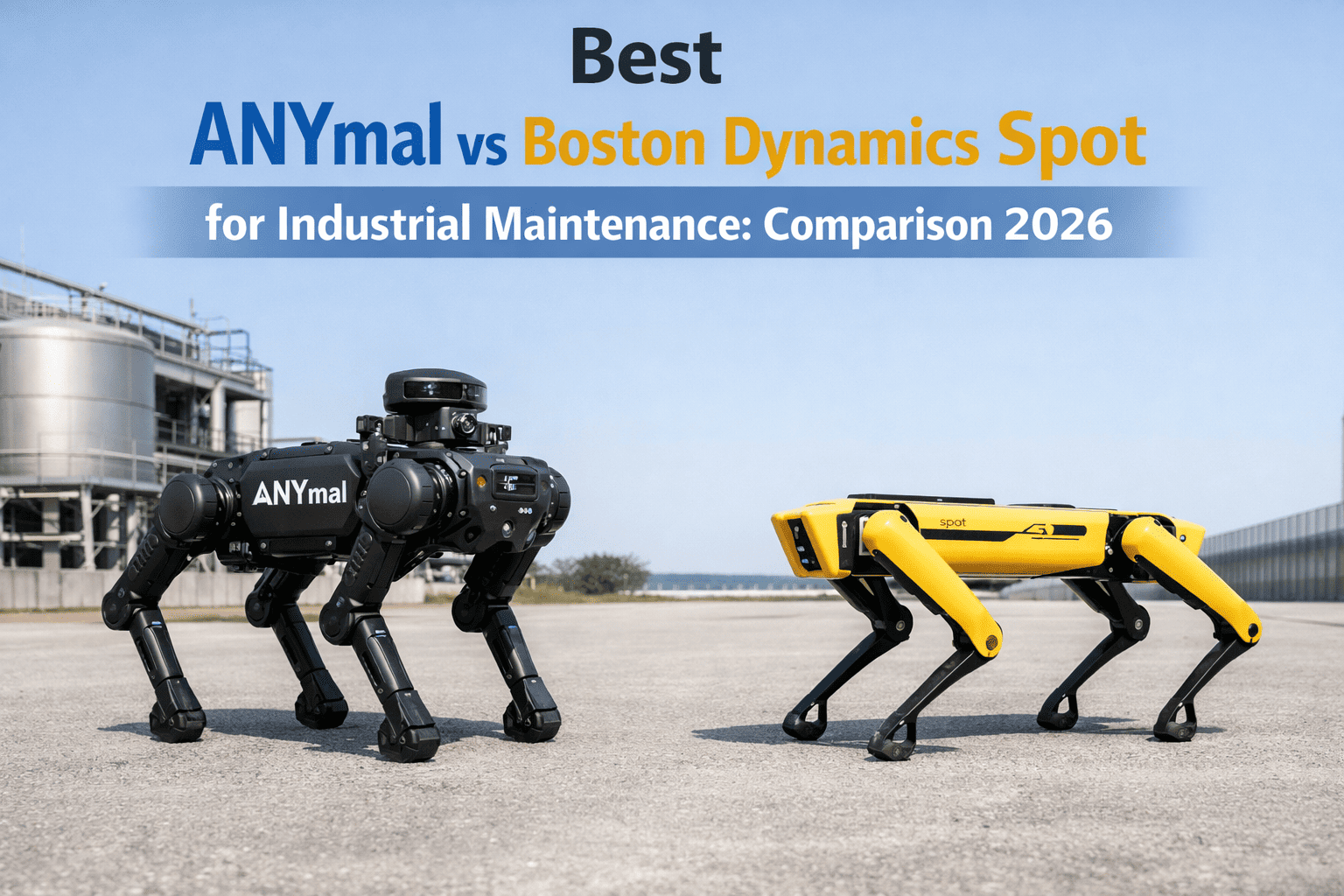
Every industrial facility has a blind spot — the overnight hours when skeleton crews, fatigue, and darkness conspire to let equipment problems go undetected. A thermal anomaly at 2 a.m. on a pump bearing, a slow compressed-air leak behind a compressor housing, a rising vibration signature on a cooling fan — these issues do not wait for the morning shift. Quadruped robots now walk the same routes your best inspector would, capturing thermal, acoustic, and visual data from every critical asset while the facility sleeps. When paired with a CMMS like Oxmaint, every finding becomes a prioritized work order waiting on your maintenance team's screen before they pour their first coffee. The quadruped robot inspection market is projected to grow at 18.7% CAGR through 2034, driven by exactly this use case — autonomous, after-hours monitoring that catches failures before they happen. Schedule a free demo to see how Oxmaint converts robotic patrol data into morning-ready work orders.
How Autonomous Quadruped Robots Work for Night Shift Facility Inspections
Quadruped robots are four-legged autonomous machines built specifically for environments where wheeled or tracked robots fail — stairs, grating, uneven floors, outdoor terrain, and tight corridors. Leading platforms like Boston Dynamics Spot, ANYbotics ANYmal, and Ghost Robotics Vision 60 carry modular sensor payloads that capture data far beyond human capability in low-light industrial conditions.
Terrain Agility
Four-legged locomotion navigates stairs, slopes up to 30 degrees, wet surfaces, gravel, and multi-level industrial structures — areas that ground wheeled robots or drones. IP67-rated models operate in rain, dust, and extreme temperatures without shelter.
Multi-Sensor Payload
Thermal cameras detect overheating bearings, electrical faults, and insulation failures. Ultrasonic microphones identify compressed-air leaks and bearing wear. HD cameras read analog gauges and spot corrosion. Gas detectors monitor for combustible or toxic atmospheres — all in a single patrol pass.
Edge AI Processing
Onboard processors running NVIDIA Orin or equivalent chipsets analyze sensor data in real-time. Anomalies are classified and severity-ranked at the edge — no cloud round-trip needed. Critical alerts fire within seconds of detection, even during network outages.
Autonomous Mission Execution
Robots undock from charging stations at scheduled times, follow pre-programmed routes with LiDAR-based navigation, pause at each checkpoint for sensor dwell, and return to dock — fully unattended. A single patrol covers 150-200+ inspection points across 2-4 hours.
Connect Robot Patrols to Your Maintenance Workflow
Oxmaint receives inspection data from quadruped robots and automatically generates prioritized work orders, updates asset histories, and builds compliance documentation — no manual data entry required.
Top Quadruped Robot Platforms for Industrial Inspection in 2026
The quadruped robot market reached $541 million in 2025, with Boston Dynamics holding roughly 35% market share. Three platforms dominate industrial night-shift inspection deployments, each with distinct strengths that maintenance teams should evaluate against their facility requirements.
Market Leader
Boston Dynamics Spot
Payload14 kg
Runtime~90 min
NavigationLiDAR + stereo cameras
Best ForMulti-industry, broadest ecosystem of sensor payloads and software integrations
ATEX Certified
ANYbotics ANYmal X
Payload10 kg
RatingATEX/IECEx Zone 1
NavigationLiDAR + depth cameras
Best ForOil and gas, chemical plants, explosive atmospheres requiring certified equipment
Ruggedized
Ghost Robotics Vision 60
Payload10 kg
Runtime~180 min
NavigationGPS + waypoint autonomy
Best ForHarsh outdoor environments, perimeter patrols, extreme heat and corrosive conditions
Automated Inspection vs Manual Night Rounds: Key Differences
Facilities that still rely entirely on manual night-shift rounds face structural limitations that no amount of training or overtime can resolve. Here is how autonomous quadruped patrols compare against traditional human inspection programs across every metric that impacts maintenance outcomes.
Manual Night Rounds
40-60 checkpoints per shift — limited by walking speed and fatigue
Subjective observations — inspector A finds issues inspector B misses
Paper or delayed digital logging — hours before data reaches CMMS
No thermal or ultrasonic sensing — visual-only in poor lighting
Safety exposure in hazardous, confined, or elevated areas
Overtime costs, absenteeism gaps, and staffing variability
8-15%of equipment issues missed during overnight manual rounds
Quadruped Robot Patrols
200+ checkpoints per patrol — multiple patrols per night possible
Objective, repeatable sensor measurements at identical positions
Instant CMMS sync — findings in Oxmaint within minutes of detection
Thermal, acoustic, visual, and gas sensing in total darkness
Zero human exposure to hazardous overnight environments
Predictable cost — same performance every night, no sick days
<2%of issues missed with multi-sensor autonomous coverage
Eliminate Night Shift Inspection Gaps
Oxmaint's inspection management module connects directly with quadruped robot APIs — turning every overnight patrol into structured, actionable maintenance data your team trusts.
CMMS-Integrated Robot Inspection: From Patrol Data to Work Orders
The inspection data a quadruped robot collects is only as useful as the system that processes it. Without CMMS integration, overnight findings sit in robot-vendor dashboards until someone manually reviews them — defeating the purpose of autonomous monitoring. Here is exactly how robot-to-CMMS data flow works when connected to Oxmaint — schedule a demo to see automated work order creation from robot inspection data.
01
Robot Completes Patrol
Quadruped finishes scheduled route at 3:15 a.m. — 187 inspection points covered with thermal, acoustic, and visual data captured at each checkpoint.
02
Edge AI Classifies Findings
Onboard algorithms flag 4 anomalies: one thermal hotspot on Motor-12B, one ultrasonic leak signature near Valve-7A, two gauge readings outside normal range. 183 normal readings also logged.
03
Data Syncs to Oxmaint via API
All 187 readings transmit to Oxmaint within minutes. Each data point is tagged with asset ID, GPS coordinates, timestamp, sensor type, and severity classification. Normal readings update inspection histories silently.
04
Automated Work Orders Created
Oxmaint generates 4 prioritized work orders — each with attached thermal image or acoustic waveform, asset maintenance history, and recommended action. Critical issues trigger immediate SMS/email alerts to on-call personnel.
05
Morning Team Gets Prioritized Queue
Day shift arrives to a ready-made action list: Motor-12B bearing replacement (high priority), Valve-7A leak investigation (medium), two gauge recalibrations (low). Full evidence attached. Zero time wasted on data gathering.
Industries Adopting Robot Dog Night Patrols in 2026
Autonomous quadruped inspection is no longer confined to oil rigs and research labs. The technology has matured rapidly — ANYbotics recently partnered with Yokogawa to integrate explosion-proof robots with plant control systems, and Pudu Robotics launched the D5 Series capable of mapping one million square meters autonomously. Here is where overnight robot patrols are delivering the strongest ROI across industries.
Oil, Gas and Petrochemical
Gas leak detection, fired heater thermal scans, valve status verification in ATEX zones. ANYmal X's explosion-proof certification enables patrols in Zone 1 environments that previously required manned entry.
Motor bearing monitoring, conveyor belt inspections, CNC machine thermal scans. Robots patrol production floors between shifts, catching issues that would cause unplanned downtime during morning startup.
Mining and Minerals
Ventilation system monitoring, structural integrity checks, crushing equipment thermal scans. Ghost Robotics platforms operate in extreme heat, dust, and corrosive conditions where human night patrols pose safety risks.
Warehousing and Logistics
Rack integrity verification, fire suppression system checks, HVAC and refrigeration monitoring. Overnight patrols protect high-value inventory and verify safety systems between operating shifts.
Data Centers and Utilities
Server room thermal mapping, UPS system checks, cable tray inspections. 24/7 uptime requirements make unattended overnight monitoring essential for catching cooling failures and electrical anomalies early.
Whatever Your Industry, Oxmaint Centralizes Inspection Data
From oil rigs to data centers, Oxmaint's inspection management and work order automation features work with any quadruped robot platform to deliver morning-ready maintenance intelligence.
Measurable ROI: What Overnight Robot Inspections Actually Deliver
The business case for quadruped robot night patrols rests on hard numbers, not hype. Facilities deploying autonomous overnight inspections with CMMS-integrated data reporting consistently report improvements across safety, uptime, labor efficiency, and compliance readiness.
Missed Inspection Points (Off-Hours)Reduced by 70%
Overnight Safety IncidentsReduced by 55%
Time-to-Repair for Night-Detected AnomaliesFaster by 45%
Night Shift Routine Inspection Labor CostsReduced by 35%
Unplanned Downtime from Overnight FailuresReduced by 60%
How to Deploy Quadruped Robots for Unmanned Overnight Inspections
A successful deployment is not just buying a robot and pressing go. Facilities that see the fastest payback follow a structured rollout that integrates robot capabilities with existing maintenance systems and team workflows. Here is the proven approach.
Week 1-2
Facility Assessment and Route Design
Walk the facility with robotics and maintenance teams together. Map every critical inspection point, identify terrain challenges (stairs, narrow passages, outdoor segments), plan charging station placement, and define no-go zones. Prioritize the highest-value assets for initial patrol routes.
Week 3-4
CMMS Configuration and API Integration
Configure Oxmaint asset registry to match robot checkpoint IDs. Set up automated work order rules — which anomaly types trigger immediate orders, which queue for review. Define alert escalation paths and notification channels. Test data flow end-to-end before going live.
Week 5-6
Supervised Pilot Runs and Sensor Calibration
Run overnight patrols with maintenance personnel observing robot performance. Establish thermal and acoustic baselines for each asset. Fine-tune anomaly detection thresholds to minimize false positives while catching genuine issues. Validate that Oxmaint work orders contain actionable detail.
Week 7+
Full Autonomous Operations and Continuous Improvement
Activate fully unattended nightly patrols. Monitor work order quality and team response rates. Expand patrol routes to additional facility areas. Use trend data in Oxmaint to shift from reactive repairs to predictive maintenance scheduling based on robot-detected degradation patterns.
Your Night Shift Should Not Be a Maintenance Blind Spot
Quadruped robots collect the data. Oxmaint turns it into action. Prioritized work orders, complete inspection histories, audit-ready compliance records, and trend analysis — all waiting for your maintenance team before they start their day. Stop losing equipment life to undetected overnight failures.
Can quadruped robots completely replace human night shift inspectors?
Quadruped robots excel at routine, repeatable data collection — thermal scans, gauge readings, acoustic monitoring, and gas detection. They cover more checkpoints with greater consistency than human rounds. However, they augment rather than fully replace human judgment. Your maintenance team focuses on analysis, decision-making, and complex repairs while the robot handles the data-gathering legwork. Book a demo to see how Oxmaint coordinates robotic and human inspection workflows together.
How does quadruped robot inspection data integrate with a CMMS?
Robot platforms expose APIs that transmit inspection data — sensor readings, images, GPS coordinates, timestamps, and anomaly classifications — directly into CMMS systems. Oxmaint receives this data, matches it to asset records, and applies automation rules. Anomalies trigger work orders with full supporting evidence attached. Normal readings update inspection histories without manual intervention. Sign up for Oxmaint and start receiving robot inspection data as automated work orders.
What terrain and conditions can these robots handle at night?
Modern quadruped robots navigate stairs, gravel, wet floors, grating, slopes up to 30 degrees, and outdoor terrain in complete darkness using LiDAR and infrared sensors. IP67-rated models handle rain, dust, and temperatures from -20 to 45 degrees Celsius. ATEX-certified platforms like ANYmal X operate safely in explosive atmospheres. Specific capabilities vary by manufacturer and model.
How long does a typical overnight inspection patrol take?
A standard patrol covering 150-200 inspection points runs 2-4 hours depending on facility layout and sensor dwell time at each checkpoint. Most quadruped platforms support multiple patrols per night with autonomous return-to-dock charging between cycles. The Pudu D5, for example, has a 14-kilometer single-charge inspection range for large-campus deployments.
What is the expected payback period for autonomous night inspections?
Most industrial facilities achieve payback within 12-18 months through reduced unplanned downtime, lower overnight labor costs, improved safety records, and extended asset lifespan from earlier fault detection. ROI accelerates significantly when robot data feeds a CMMS like Oxmaint that converts raw findings into preventive maintenance action rather than letting data sit unreviewed. Schedule a free consultation to calculate the expected ROI for your facility.
By oxmaint
✨
Experience Oxmaint's Power
Take a personalized tour with our product expert to see how OXmaint can help you streamline your maintenance operations and minimize downtime.