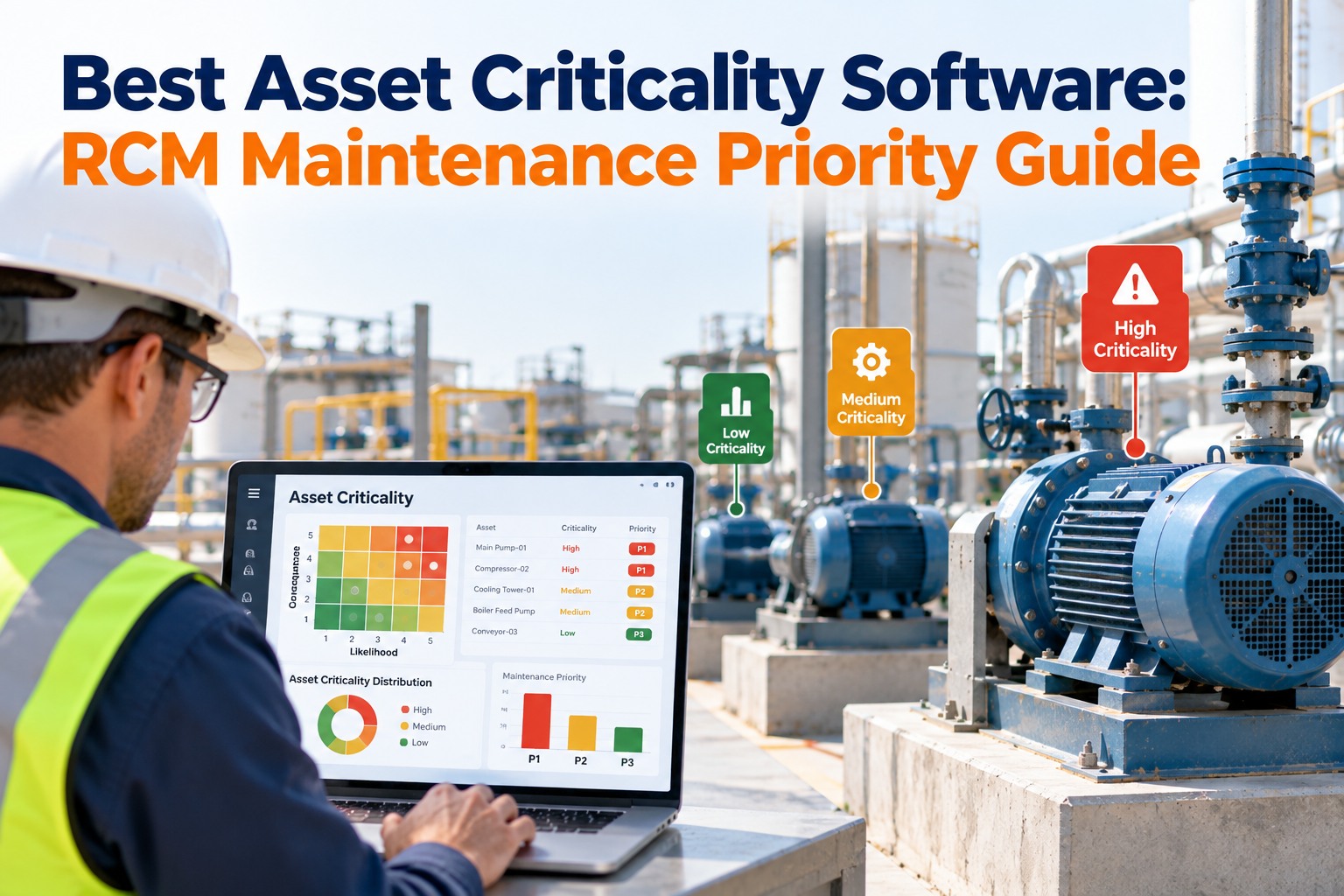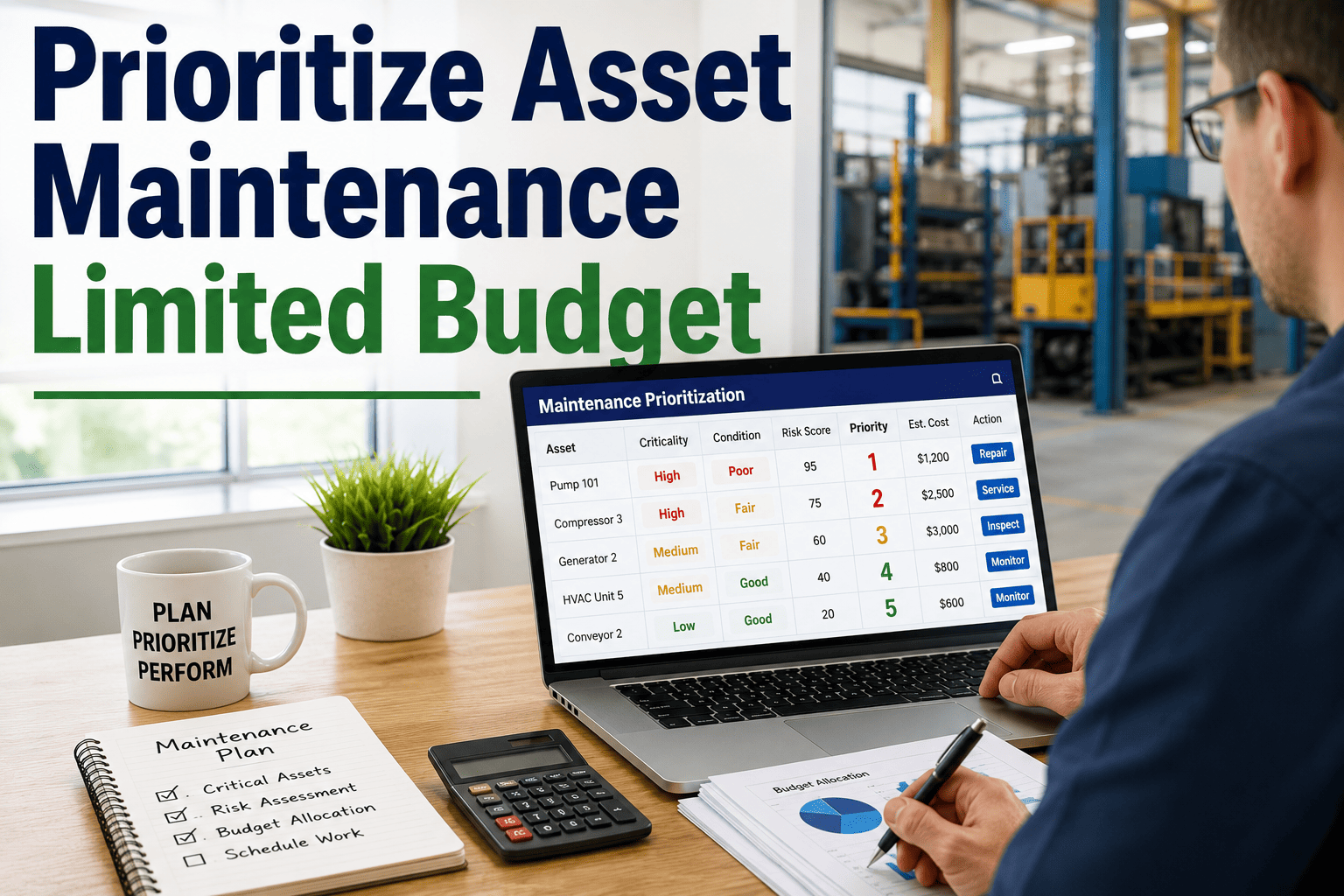
Prioritizing asset maintenance on a limited budget is not about doing less maintenance — it's about doing the right maintenance on the right assets before the assets that matter most fail at the worst possible moment. Research shows that 80% of unplanned downtime events trace back to just 20% of assets. That's the leverage point: identify the critical 20%, protect them with data-driven maintenance schedules, and stop over-maintaining low-risk assets that consume budget without protecting production. A structured asset criticality framework, combined with CMMS prioritization, is how maintenance leaders stretch constrained budgets further than anyone thinks possible.
See which of your assets are consuming disproportionate budget — and how to reallocate in 30 minutes.
- Asset criticality scoring to rank every asset by risk and impact
- AI-driven maintenance prioritization that focuses spend where it matters
- Cost-per-work-order analytics to find your highest-ROI maintenance targets
Trusted by 1,000+ maintenance teams across 9 industries · Live in days, not months
What Is Asset Maintenance Prioritization?
Asset maintenance prioritization is the systematic process of ranking assets by their criticality — the combination of failure consequence, production impact, safety risk, and replacement cost — then allocating limited maintenance budget, labor, and parts proportionally to that ranking. The goal is not to maintain every asset equally but to concentrate resources where a failure would be most damaging to operations, safety, or compliance.
In practice, this means dividing the asset register into tiers: critical assets that warrant predictive monitoring and frequent PM, important assets that justify standard preventive maintenance schedules, and lower-risk assets that can run to failure with a stock spare part on hand. Without this structure, every asset competes equally for the same constrained budget — and the most squeaky wheel (not the most critical asset) gets the grease. Teams using Oxmaint's asset management can score and tier entire asset registers in hours, not weeks.
Eight-Step Framework for Budget-Constrained Asset Prioritization
Start with a complete inventory of every maintainable asset. Include equipment ID, location, age, replacement cost, and last known maintenance date. If it doesn't exist in the system, it can't be prioritized. QR-scan onboarding in Oxmaint gets this done in the field without back-office data entry.
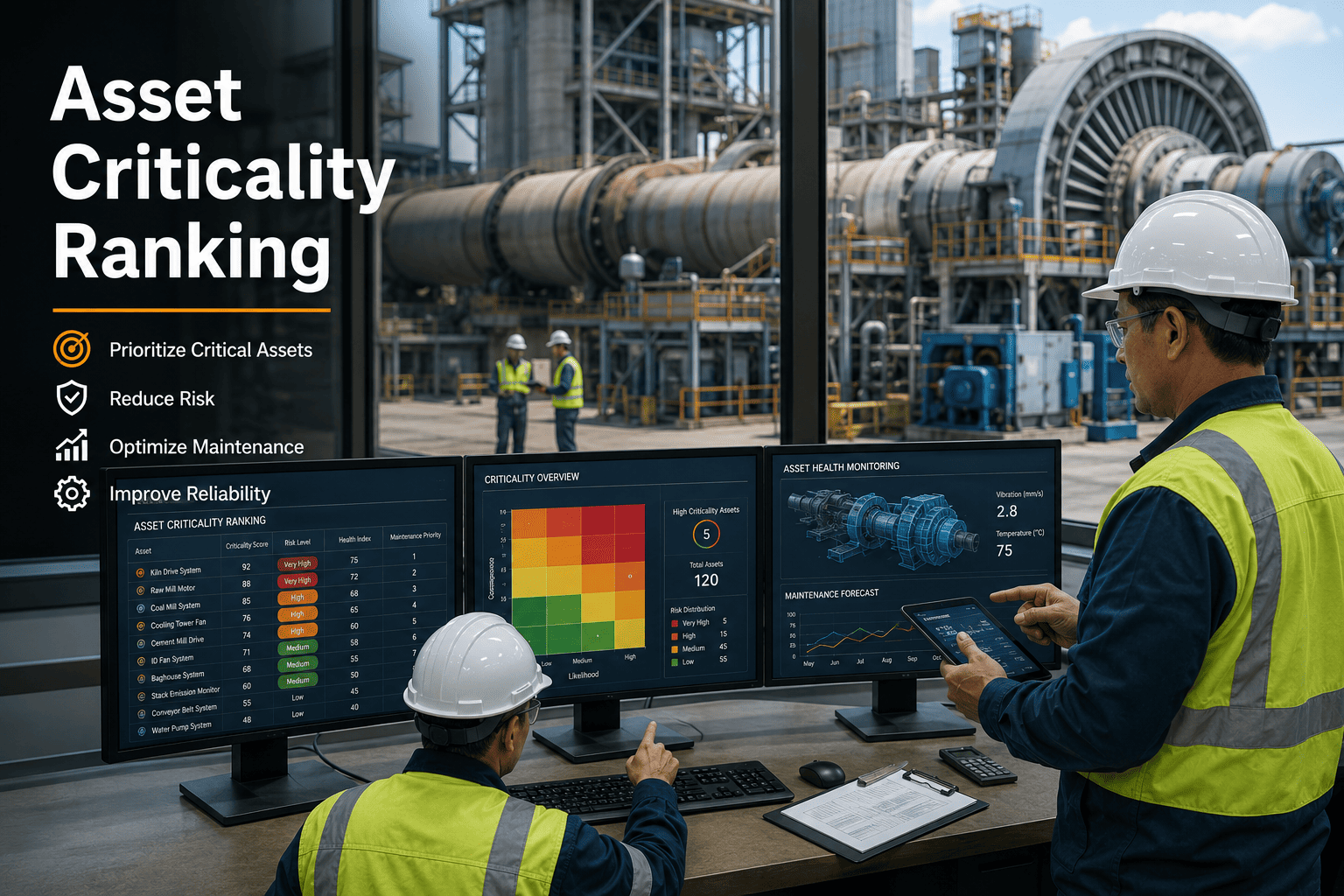
Assign each asset a criticality score based on four dimensions: production impact if it fails (1–5), safety/environmental consequence of failure (1–5), mean time to repair (1–5), and replacement cost or lead time (1–5). Multiply or sum the scores. High scorers are Tier 1 critical assets — these get priority budget and attention regardless of what else is competing.
Pull CMMS work order history for each asset. Which assets generated the most corrective work orders in the last 12 months? What was the average repair cost? What was the total downtime hours caused? Assets appearing frequently in corrective work order lists are consuming disproportionate reactive spend — they're candidates for upgraded PM or predictive monitoring.
For each Tier 1 critical asset, estimate the cost of one hour of unplanned downtime — including lost production, labor idle time, emergency repair premium, and expedited parts. This number is your maintenance investment ceiling per asset. Any PM program costing less than the downtime cost it prevents is immediately justifiable budget.
Match maintenance strategy to asset tier. Tier 1 critical assets: predictive monitoring with sensor integration and AI failure detection. Tier 2 important assets: structured preventive maintenance on condition-based or fixed intervals. Tier 3 low-risk assets: run-to-failure with documented spare-in-stock. This alone reallocates 20–30% of PM budget from low-risk to high-impact work.
Calendar-based PM programs over-maintain low-risk assets on fixed intervals that have no bearing on actual condition. Review every PM task and ask: what failure mode does this prevent, and what is the consequence if it's missed? PMs that protect low-criticality assets against low-consequence failures are deferred or eliminated, freeing budget for critical asset work.
Parts stocking decisions follow asset criticality. Critical asset spare parts are stocked locally with automatic reorder points. Important asset parts are stocked regionally. Low-criticality parts can be ordered on demand. This frees up parts budget for the components that actually protect production when they're urgently needed. See how Oxmaint's parts and inventory management supports this.
Asset criticality changes. Production lines shift. New equipment is installed. Quarterly criticality reviews — backed by CMMS data on work order frequency, downtime, and cost — keep the priority model current. Assets that have been over-spending without delivering downtime reduction drop in priority; emerging problem assets rise. This is how data-driven budgets stay accurate over time.
Four Budget-Limiting Pain Points in Maintenance Operations
Emergency repairs at 4.8× planned maintenance cost devour the budget before scheduled PM work can be completed. Teams defer planned PMs to fund emergencies — which generates more emergencies. This vicious cycle is self-perpetuating until asset criticality is used to break it by targeting the repeat-offender assets generating 80% of the reactive spend.
Without CMMS analytics, maintenance managers can't identify which assets are generating the highest repair costs, most frequent work orders, or most downtime hours. Budget decisions are made on intuition, seniority, or the loudest production complaint — not data. The result is systematic misallocation: spending on the wrong assets while critical equipment deteriorates. Start a free trial to get visibility in days.
Calendar-based PM programs apply the same maintenance frequency to a $500 pump and a $500,000 compressor. Industry analysis suggests 25% of PM tasks protect assets against failures with negligible production consequence — work that could be safely deferred or eliminated, freeing meaningful budget for genuinely critical equipment.
Spare parts inventory decisions made without criticality weighting result in over-stocking parts for low-risk assets and stockouts for critical asset components. When a Tier 1 machine needs a part urgently and it's not stocked, emergency procurement costs can exceed 10× the planned purchase price — while equivalent capital is tied up in low-risk parts sitting on the shelf. Book a demo to see criticality-weighted inventory management in action.
How Oxmaint Makes Budget-Constrained Prioritization Systematic
Oxmaint's asset management module supports custom criticality scoring fields — failure impact, safety consequence, MTTR, and replacement cost — calculated per asset and used to automatically tier the asset register. High-criticality assets receive elevated PM schedules and predictive monitoring triggers. Low-criticality assets are flagged for run-to-failure strategy review. Prioritization becomes systematic, not subjective.
IoT sensor feeds and AI analysis in Oxmaint's predictive maintenance module concentrate monitoring on Tier 1 critical assets — analyzing vibration, temperature, and runtime to flag failures 14–90 days ahead. This allows planned repairs at planned cost rather than emergency repairs at 4.8× cost. Budget stays on plan. Downtime drops by 62%.
Oxmaint's analytics and reporting module aggregates work order costs by asset, location, asset type, and time period — surfacing the specific assets consuming disproportionate maintenance spend. Maintenance managers see exactly which equipment is generating 80% of reactive costs and can redirect budget to prevent the next failure on those same machines.
Oxmaint's parts and inventory management links parts stocking decisions to asset criticality scores. Critical asset components receive priority stock positions with auto-reorder triggers. Low-criticality asset parts are managed as demand-order items. Parts budget concentrates where stockouts actually damage production — not spread uniformly across all asset classes.
Budget pressure should never compromise safety-critical maintenance. Oxmaint's safety and compliance module flags any work order deferral that would breach OSHA, ISO, GMP, or facility safety requirements — protecting managers from inadvertently cutting compliance maintenance when budgets are constrained. Regulatory-mandatory work is automatically elevated in priority regardless of asset criticality tier.
OEE analytics translate asset uptime and availability into production output value — giving maintenance managers the financial language needed to justify critical asset maintenance budgets to operations and finance leadership. When each percentage point of OEE improvement maps to a dollar figure, the business case for protecting critical assets becomes undeniable.
Before vs. After: Risk-Based Maintenance Prioritization
| Maintenance Dimension | Before: Equal-Priority PM | After: Risk-Based CMMS Prioritization |
|---|---|---|
| Budget allocation method | Equal spend across all assets | Weighted by criticality score and failure cost |
| PM frequency decisions | Fixed OEM calendar intervals | Condition-based, AI-adjusted per asset tier |
| Emergency repair rate | 40–60% of work orders (reactive) | Under 15% at mature AI-CMMS facilities |
| Critical asset downtime | Frequent — same priority as low-risk | 62% reduction through predictive protection |
| Parts stocking decisions | Based on historical ordering patterns | Aligned to asset criticality tier and lead times |
| Safety maintenance deferrals | Risk of inadvertent compliance gap | Compliance work protected; auto-flagged if at risk |
| Budget justification | Intuition and past spending | Cost-per-downtime-hour data and OEE impact |
| Over-maintenance waste | 25–35% of PM budget on low-risk assets | Redirected to critical asset protection |
ROI From Prioritized Maintenance Programs
Use the Oxmaint ROI calculator to quantify the financial impact of shifting your top 10 critical assets from reactive to predictive maintenance — most facilities find the payback period is under 6 months. Start a free trial this week, or book a demo and we'll walk through criticality scoring on your actual asset register.
Frequently Asked Questions
How do you prioritize maintenance work when maintenance budget is limited?
What is asset criticality scoring in maintenance?
What is risk-based maintenance and how does it save money?
How does a CMMS help with limited maintenance budget management?
Stretch Your Maintenance Budget Further — Without Cutting Coverage
Oxmaint gives maintenance managers the AI-native CMMS tools to score asset criticality, concentrate predictive monitoring where it matters most, and redirect PM budget from over-maintained low-risk assets to the critical 20% that cause 80% of your unplanned downtime. Every dollar works harder. Every hour is spent on work that protects production.
- Asset criticality scoring to tier your entire register by risk and impact
- AI predictive maintenance with 94% accuracy — flags failures weeks ahead
- Work order cost analytics to find and eliminate your top budget drains
Trusted by 1,000+ teams managing 10,000+ assets · Live in days, not months