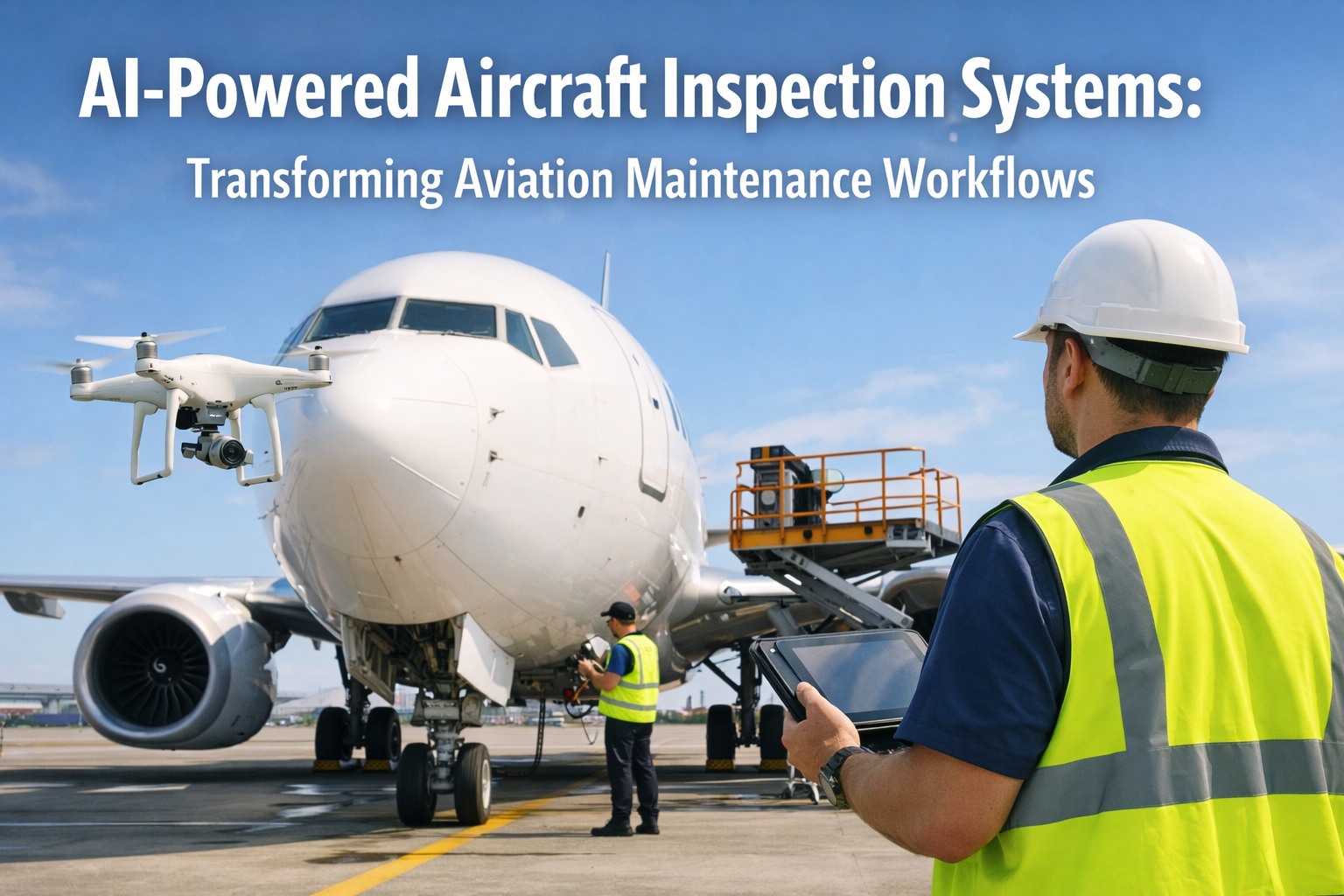
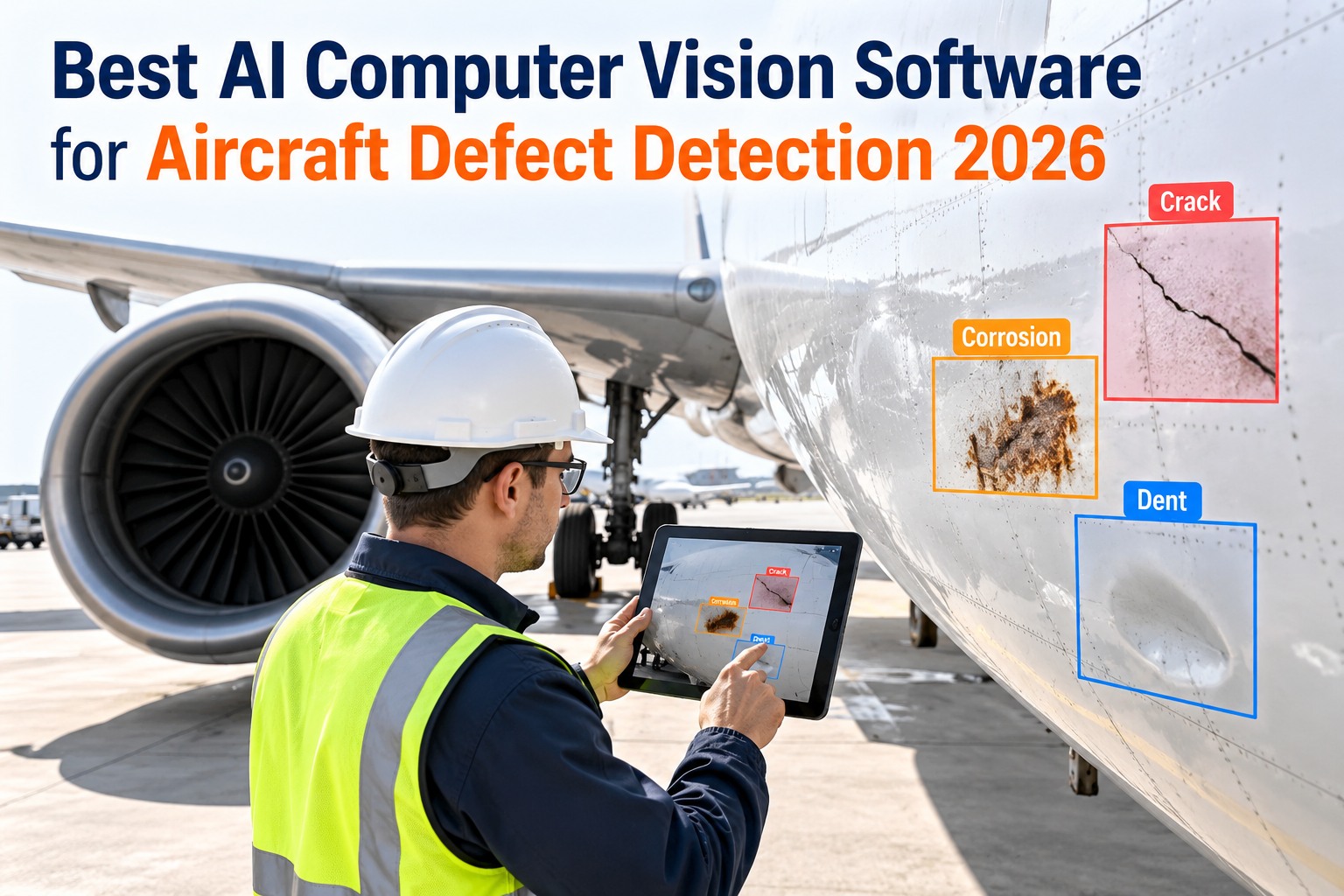
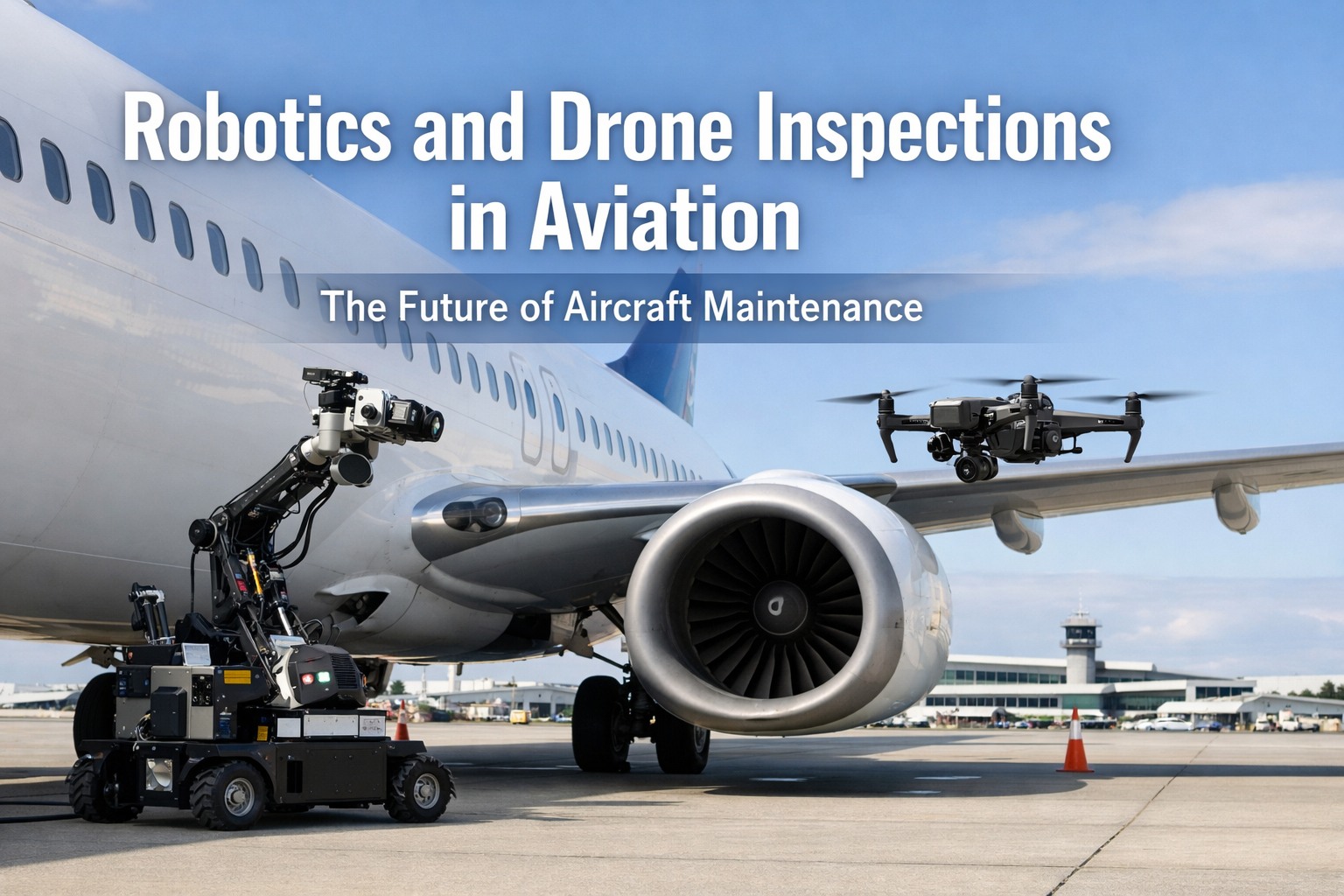
A single hairline crack on a turbine blade. A patch of corrosion hiding beneath a wing panel. A dent so subtle that three veteran inspectors walked right past it. In aviation, the margin between safe and catastrophic is measured in millimeters—and human eyes have limits. AI-powered inspection systems are eliminating those limits, detecting 27% more defects than manual methods while cutting inspection times from hours to minutes. Schedule a demo to see how OXmaint connects AI inspection findings directly to actionable maintenance workflows.
The Problem: Why Manual Inspection Alone Is No Longer Enough
Aircraft inspection has been a manual craft for decades. Certified technicians walk fuselages with flashlights and magnifying glasses, scanning thousands of square feet for cracks, corrosion, dents, and missing rivets. It is skilled, essential work—but it has inherent constraints that no amount of training can overcome.
Human Fatigue
Inspection accuracy drops measurably after the third hour. By hour six, experienced inspectors miss defects they would have caught at the start of their shift.
Microscopic Limits
Sub-millimeter cracks and early-stage corrosion are invisible to the naked eye. These are exactly the defects that become catastrophic failures if left undetected.
Time Pressure
A narrowbody aircraft manual inspection averages 4–16 hours. Every hour on the ground is lost revenue. Pressure to clear aircraft faster compounds the risk of missed defects.
No Data Trail
Paper-based inspections produce no analyzable data. There is no trend analysis, no historical pattern recognition, and no way to predict where the next failure will occur.
How AI Inspection Systems Actually Work
AI-powered aircraft inspection is not a single technology—it is an integrated pipeline that moves from raw image capture to classified defect reports to maintenance action. Here is how the pipeline flows, step by step.
01
Image Capture
Drones, robotic crawlers, borescopes, and fixed cameras capture hundreds to thousands of high-resolution images across the aircraft surface, engine interiors, landing gear, and structural joints. Thermal and infrared sensors detect hidden flaws invisible to visible-light cameras.
02
AI Defect Detection
Computer vision models trained on thousands of annotated defect images analyze every pixel—identifying cracks, corrosion, dents, missing rivets, paint deterioration, and deformation patterns. Production systems achieve 95%+ detection accuracy with false positive rates below 2%.
03
Classification & Severity Scoring
Each detected anomaly is classified by type and scored by severity based on size, depth, location, and proximity to structural load paths. The system differentiates cosmetic scratches from safety-critical structural defects.
04
Automated Work Order Generation
Findings auto-generate prioritized work orders with annotated images, location coordinates, and structural repair manual references—feeding directly into your CMMS for immediate technician assignment. No finding gets lost in an email inbox or paper log.
AI vs. Manual Inspection: The Performance Gap
These are not theoretical benchmarks from research labs. They come from airlines and MRO facilities already running AI inspection programs at production scale.
Performance Metric
Manual Inspection
AI-Powered Inspection
Defect Detection Rate
Baseline
27% more defects detected
Narrowbody Exterior Scan
4–16 hours
Under 90 minutes
Engine Borescope Analysis
2–3 hours
90% time reduction
Consistency Over Time
Degrades with fatigue
Identical at hour 1 and hour 12
Data Output
Paper reports, no analytics
Structured, searchable, traceable
Unscheduled Maintenance
Reactive
25% reduction with predictive AI
Sources: Aviation Week, Striveworks, GE Aerospace, Delta Air Lines operational data
The Market Is Moving Fast
AI-powered aircraft inspection is no longer experimental. The investment numbers, regulatory approvals, and enterprise deployments tell the story of an industry that has crossed the adoption threshold.
$7.4B
AI in aviation market size in 2025
Projected to reach $27B by 2032 at 20.2% CAGR
$750M
AI-powered pre-flight inspection market (2024)
Expected to hit $2.5B by 2034 at 14.3% CAGR
$92B
Global aircraft maintenance market in 2025
Still largely driven by manual, scheduled practices
Delta Air Lines
Authorized for drone inspections on Airbus and Boeing fleets. Narrowbody scans completed in under 90 minutes vs. 16 hours manually.
Airbus Skywise
Upgraded to include real-time defect flagging via edge-AI vision. Fleet-wide predictive insights across partner airlines.
GE Aerospace
AI-enhanced Blade Inspection Tool cuts engine inspection duration by 50%, with technicians using AI to prioritize image review.
Boeing
Autonomous inspection with automatic damage detection software. AI-powered OCR on 737 production lines saved 17+ hours per airplane.
Sources: Fortune Business Insights, Exactitude Consultancy, Aviation Week, Boeing, GE Aerospace
5 High-Impact AI Inspection Applications
The smartest aviation organizations are targeting AI adoption where time savings and accuracy improvements generate the most immediate return. These five applications deliver measurable value from day one.
1
Drone-Based Exterior Scanning
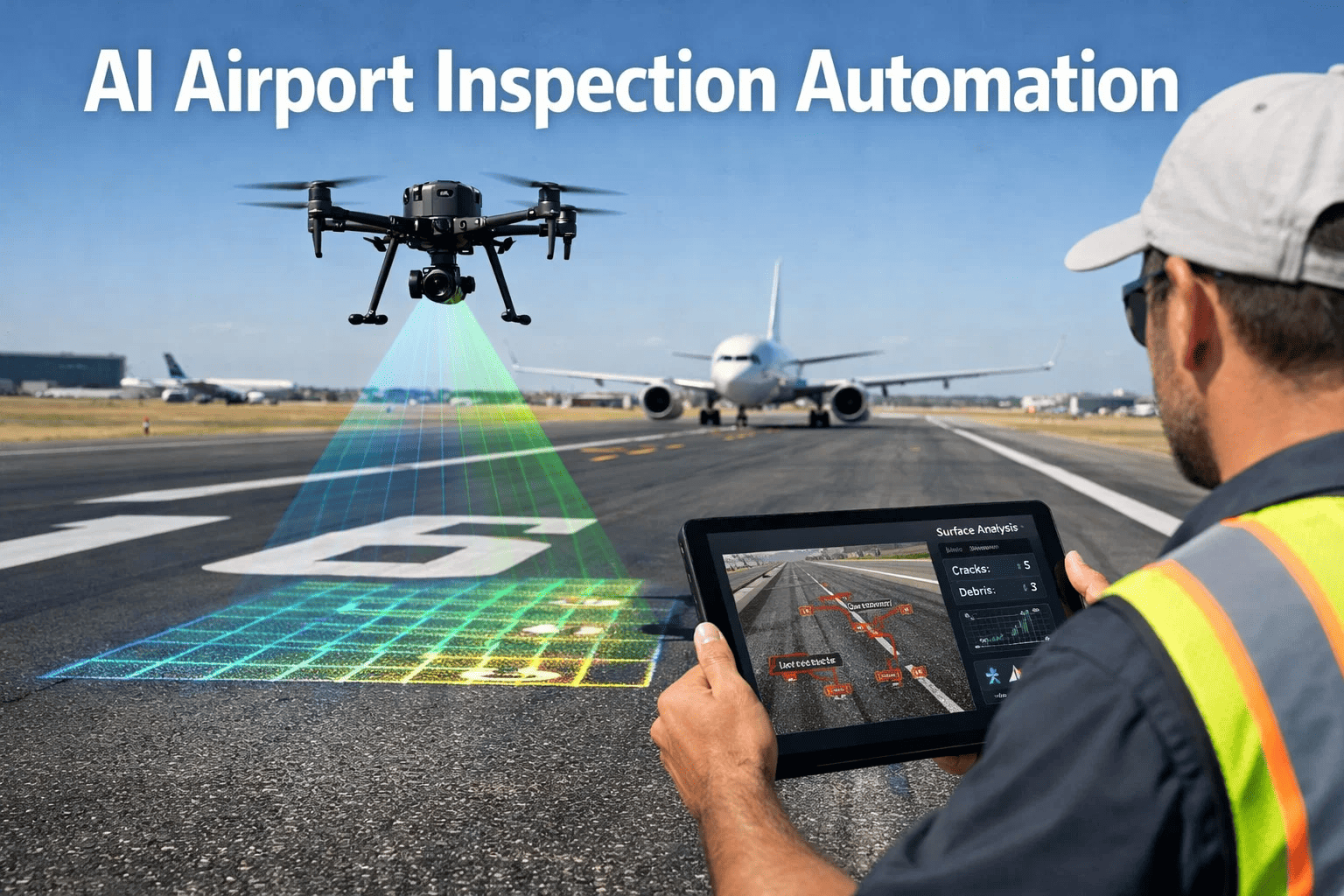
Drones equipped with high-resolution cameras photograph the entire aircraft exterior in under 30 minutes. AI stitches images into 3D models and scans for surface damage, corrosion, or deformation—eliminating scaffolding and height safety risks.
2
Engine Borescope Intelligence
AI analyzes borescope video of turbine blades, combustion chambers, and compressor stages. Pattern recognition identifies blade erosion, thermal coating loss, and crack propagation invisible to manual review—reducing engine shop visits by optimizing intervention timing.
3
Structural Fatigue Prediction
Machine learning models analyze historical failure data, operational stress, environmental exposure, and real-time sensor readings to forecast fatigue risks on high-cycle components—enabling proactive part replacement before failures occur.
4
Composite Delamination Detection
Thermal infrared imaging combined with AI detects subsurface layer separation in composite structures by identifying heat dissipation anomalies that are completely invisible to visual inspection—catching failures before they reach the surface.
5
Landing Gear & Rivet Analysis
Object detection models scan rivet patterns with sub-pixel accuracy, flagging gaps in expected fastener arrays. Machine vision inspects landing gear components for stress fractures and corrosion that would require NDT equipment to find manually.
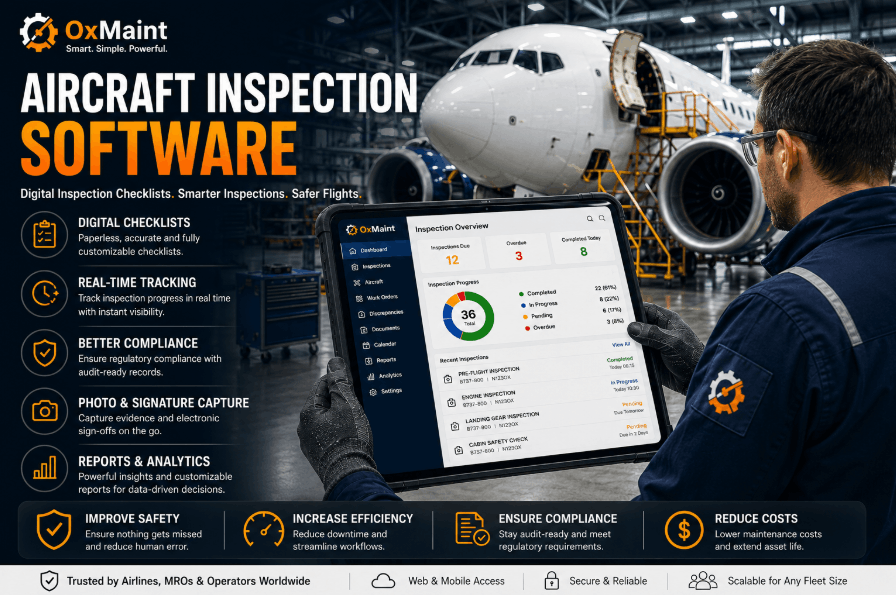
OXmaint automatically converts AI inspection findings into prioritized work orders—with full photographic evidence, location mapping, and audit-ready documentation.Start Free
Why AI Without a Maintenance System Is Just Expensive Photography
Computer vision can detect a 2mm crack. But if that finding sits in an email inbox, gets lost in a paper log, or never reaches the right technician—the detection was worthless. The real value emerges when every defect flows automatically into a digital maintenance workflow, creating a closed loop from detection to resolution to continuous improvement.
1
AI Detects
Computer vision flags a crack at fuselage frame station, classified as structural, severity score 8.4/10
2
CMMS Creates
OXmaint auto-generates a prioritized work order with annotated images and SRM references
3
Technician Acts
Mobile notification pushed to the qualified technician with full defect context on tablet
4
AI Learns
Resolution data feeds back into the AI model, improving detection accuracy with every cycle
Where the Industry Is Heading: 2025–2035
Regulatory bodies, OEMs, and airlines are converging on a clear trajectory. The question is no longer whether AI inspections will become standard—it is how fast your organization will adopt them.
Now – 2027
AI Augments Human Inspectors
AI serves as an assistant, flagging areas for human review. Drone inspections gain broad OEM approval. EASA and FAA AI road maps advance Level 1 certification. All major airlines expected to have key approvals by end of 2025.
2027 – 2032
AI-Led Inspection Workflows
AI makes preliminary disposition decisions with human oversight. Predictive maintenance shifts from scheduled intervals to condition-based service. Digital twin integration enables virtual stress testing across fleet lifecycles.
2032 – 2035+
Autonomous Inspection Systems
AI-based systems perform end-to-end inspection decisions. Drone swarms conduct simultaneous multi-aircraft scans. Real-time IoT monitoring, blockchain traceability, and autonomous maintenance scheduling become standard practice.
Trajectory based on EASA AI Roadmap, FAA AI guidance, and current industry deployment timelines
How to Get Started Without Boiling the Ocean
The organizations with the smoothest AI inspection adoption stories are the ones that built digital maturity first. You do not need to deploy drones and computer vision on day one. You need the maintenance foundation that makes AI inspection outputs actionable.
Step 1
Digitize Your Maintenance Workflows
Move from paper work orders, spreadsheets, and verbal handoffs to a digital CMMS. Every work order, inspection record, and compliance document needs to be traceable and searchable before AI inputs can add value.
Step 2
Build Your Asset & Inspection Data Foundation
Create complete asset registries with serialized part tracking, calibration records, and inspection histories. This structured data becomes the training set that makes AI models accurate for your specific fleet and facility.
Step 3
Connect AI Outputs to Automated Work Orders
When you integrate AI inspection tools, every detected defect should automatically generate a prioritized work order with full context—images, severity scores, location data, and SRM references—assigned to the right technician instantly.
Build the Digital Foundation That Makes AI Inspection Actionable
OXmaint gives aviation maintenance teams digital work orders, mobile inspection workflows, asset registries, calibration tracking, and the CMMS backbone that turns every AI-detected defect into a resolved, auditable action.
How accurate is AI-based aircraft defect detection compared to manual inspection?
Production AI inspection systems achieve over 95% defect detection accuracy for trained defect categories, with false positive rates below 2%. Studies from real-world deployments show AI detects approximately 27% more defects than manual methods alone—particularly microscopic cracks and early-stage corrosion that human inspectors miss during extended shifts.
Will AI replace human aircraft inspectors?
No. AI augments human inspectors by handling repetitive, fatigue-prone scanning work while flagging areas that require expert judgment. Current regulatory frameworks from both FAA and EASA position AI as an assistant to human decision-making, not a replacement. The highest EASA automation level—where AI could act without human override—is not expected before 2035 at the earliest.
How fast can a drone inspect a commercial aircraft?
Current drone systems can photograph a narrowbody aircraft exterior in under 90 minutes and a widebody in under 2 hours. Some autonomous systems can complete full fuselage scans in under 15 minutes. Compared to manual inspections averaging 4–16 hours, this represents a massive reduction in aircraft ground time.
What defects can AI vision systems detect on aircraft?
AI vision systems are trained to identify cracks, corrosion, dents, missing rivets, paint deterioration, composite delamination, thermal coating loss on turbine blades, fastener gaps, and surface deformation. Thermal infrared imaging extends detection to subsurface flaws invisible to standard cameras. Each defect is classified by type and severity and mapped to the exact aircraft location.
Do we need a CMMS before adopting AI inspection tools?
Strongly recommended. AI inspection without a digital maintenance system means findings end up in unstructured reports, email threads, or paper logs—where they get lost. A CMMS like OXmaint ensures every AI-detected defect generates a traceable work order, gets assigned to the right technician, and builds the historical data that makes the AI smarter with every inspection cycle. Book a demo to see this closed-loop workflow in action.
Ready to Make Every Inspection Finding Actionable?
OXmaint connects AI inspection outputs to digital work orders, technician assignments, and audit-ready documentation—so no defect ever falls through the cracks.