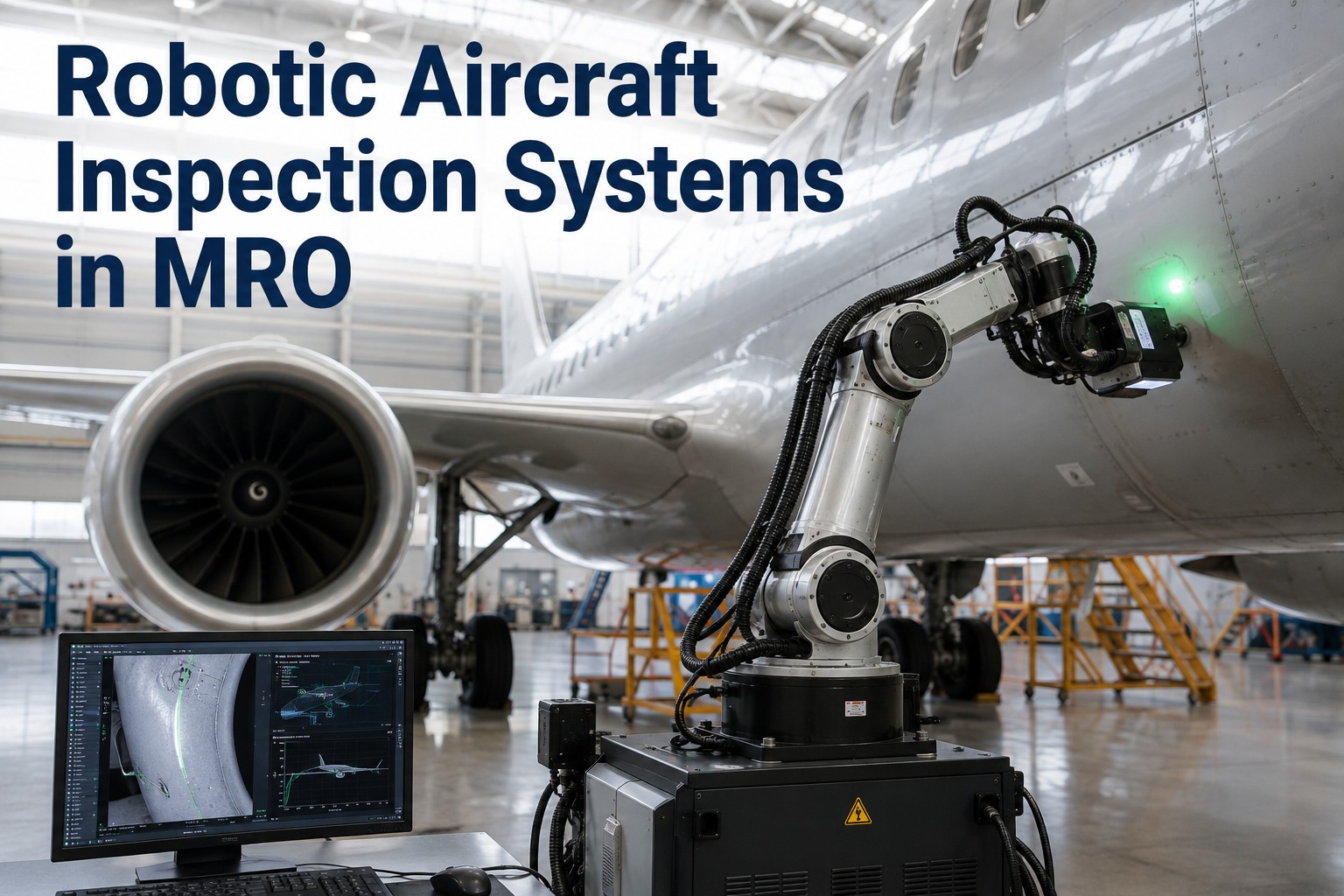
A single poorly scarfed ply on a Boeing 787 fuselage panel can compromise bond strength by up to 40%, turning a routine repair into a structural airworthiness risk. With over 50% of modern widebody airframes built from carbon fiber composites, the era of hand-grinding and eyeball-calibrated layups is ending. Composite repair robots now deliver laser-guided scarfing, force-controlled sanding, and automated ply placement with sub-millimeter precision that manual technicians simply cannot replicate shift after shift. But these robots are only as reliable as their maintenance. Schedule a demo to see how OXmaint tracks every calibration, tool change, and service interval for your composite repair automation.
Why Composite Repair Automation Is No Longer Optional
Modern aircraft like the Boeing 787 Dreamliner and Airbus A350 XWB are built with over 50% composite materials by weight. Carbon fiber reinforced plastic (CFRP) dominates fuselages, wings, tail sections, and nacelles. While composites deliver 20% fuel savings and dramatically reduce corrosion, they introduce a repair complexity that manual processes struggle to handle consistently at scale.
50%
CFRP by weight in Boeing 787 and Airbus A350 airframes
60%
Time saved by automated scarfing vs. manual grinding (Lufthansa Technik)
20:1
Typical scarf taper ratio required by OEMs for primary structure repairs
$25B
Projected industrial robot repair services market by 2035
A composite repair robot is not a single machine—it is an integrated system combining precision milling, optical scanning, laser projection, automated layup, and curing control into a coordinated workflow. Each stage of the repair process that once depended on technician skill is now driven by digital data and CNC-level precision.
Automated Composite Repair Workflow
1
Damage Detection
Phased array ultrasonic testing and stereoscopic cameras create 3D surface maps of subsurface damage extent and depth across each composite ply layer.
2
Robotic Scarfing
CNC-directed milling removes damaged material at precise taper ratios (20:1 to 50:1). Force-controlled sanding heads maintain consistent material removal across curved surfaces.
3
Surface Preparation
Laser surface pretreatment activates bond energy without chemicals or abrasives, achieving up to 20% higher bond joint strength than conventional methods.
4
Automated Ply Layup
Laser projection systems guide precise placement of prepreg patches with fiber orientation verified by optical scanning at each layer. Multi-robot cells generate trajectories automatically.
5
Vacuum Bag & Cure
Temperature-controlled heating blankets cure the repair under vacuum. Smart susceptor systems auto-adjust heat distribution to compensate for underlying structural heatsinks.
6
Post-Repair NDI
Final non-destructive inspection validates bond integrity, ply alignment, and surface finish. Digital repair records link to aircraft structural repair manuals for airworthiness documentation.
Manual vs. Robotic Repair: The Precision Gap
The difference between hand-performed and robot-executed composite repairs is not incremental—it is a fundamentally different standard of consistency, speed, and traceability.
Repair Parameter
Manual Process
Robotic Process
Scarf Angle Accuracy
Operator-dependent, varies by experience level
CNC-controlled to sub-degree precision
Elliptical Scarf Capability
Extremely difficult and time-consuming
Programmed as standard CNC geometry
Ply Fiber Orientation
Visual alignment with reference marks
Laser-projected with optical verification
Repair Time (Typical Scarf)
4-8 hours depending on complexity
60% faster than manual equivalent
Repeatability
High variability between technicians
Identical output every repair cycle
Digital Traceability
Paper records, manual data entry
Full digital thread linked to SRM
Your composite repair robots are precision instruments. OXmaint ensures they stay calibrated, serviced, and traceable against every OEM specification.Start Free
Critical Maintenance Tasks for Composite Repair Robots
A composite repair robot operating outside calibration is worse than no robot at all—it produces repairs that look precise but may not meet structural requirements. These five maintenance domains determine whether your automation investment delivers airworthy results or expensive rework.
01
Laser Projection System Alignment
What: Laser projectors guide ply placement and fiber orientation during layup. Misalignment of even 0.5mm cascades through every subsequent ply layer.
Frequency: Calibration verification before every repair session. Full alignment recalibration per OEM schedule or after any system relocation.
OXmaint tracks: Calibration certificates, deviation history, alignment drift trends, and technician sign-off for each verification event.
02
Scarfing Tool Bit Replacement
What: Milling bits and sanding heads wear with use, degrading scarf surface quality. Dull tooling creates heat buildup that damages surrounding composite material.
Frequency: Tool life monitoring based on cutting hours, material type processed, and surface quality measurements.
OXmaint tracks: Cumulative cutting hours per bit, replacement history, tool inventory levels, and auto-triggered work orders at life thresholds.
03
Vacuum Bag Seal Testing
What: Vacuum integrity during cure directly affects laminate quality. Seal degradation causes void content increases and disbonds that compromise structural repair.
Frequency: Seal integrity test before every cure cycle. Full vacuum system inspection at defined intervals.
OXmaint tracks: Leak rate test results, seal replacement dates, vacuum pump service history, and failure-to-hold alerts.
04
Heating Blanket Element Verification
What: Heating blankets must deliver uniform temperature across the repair zone. Dead zones or hot spots cause incomplete curing or thermal damage to surrounding structure.
Frequency: Thermocouple verification before each cure. Full element resistance testing and thermal mapping at scheduled intervals.
OXmaint tracks: Temperature uniformity records, element resistance trends, blanket usage cycles, and replacement scheduling.
05
Force-Controlled Sanding Head Calibration
What: Sanding heads use force-torque sensors to maintain consistent material removal pressure. Uncalibrated sensors cause over-sanding (structural compromise) or under-sanding (poor bond prep).
Frequency: Force sensor calibration per OEM specification. Load cell verification after any impact event or anomalous reading.
OXmaint tracks: Calibration certificates, force sensor drift analysis, maintenance compliance against OEM intervals, and audit-ready records.
Every Calibration. Every Tool Change. Every Cure Cycle. Tracked.
OXmaint links your composite repair robot maintenance to aircraft structural repair manuals, creating an unbroken digital thread from PM schedule to airworthiness documentation.
How OXmaint CMMS Supports Composite Repair Robot Programs
Managing composite repair robots requires a maintenance system that understands calibration-critical equipment, tool life tracking, and airworthiness documentation requirements. OXmaint delivers all three from a single platform.
Preventive Maintenance
Condition-Based Scheduling Against OEM Specs
Trigger PM work orders based on actual cutting hours, cure cycles, or sensor readings—not arbitrary calendar intervals. Each task links to the specific OEM maintenance procedure, ensuring compliance without over-servicing or under-servicing.
Tool Life Management
Track Every Bit, Blade, and Consumable
Monitor cumulative usage of scarfing bits, sanding pads, vacuum seals, and heating blankets. Auto-generated replacement alerts ensure tools are swapped before they degrade repair quality. Inventory levels tied to usage rates prevent stockouts.
Calibration Tracking
Never Miss a Calibration Window
Laser alignment, force sensor verification, thermocouple accuracy—all calibration events tracked with certificates, deviation records, and due-date alerts. Audit dashboards show compliance status at a glance.
Inspection Management
Digital Thread from Robot to Aircraft Record
Link every repair robot maintenance action to the corresponding aircraft structural repair manual reference. Create an unbroken documentation chain that satisfies airworthiness audits and regulatory inspections.
The Cost of Getting Robot Maintenance Wrong
When composite repair robots are not maintained to specification, the consequences cascade through your entire MRO operation—from rejected repairs to grounded aircraft.
Failure Cascade: Unmaintained Repair Robot
Trigger
Scarfing bit exceeds tool life by 40 cutting hours without replacement
Effect
Heat buildup damages CFRP matrix around scarf zone; surface roughness exceeds bond prep threshold
Detection
Post-repair NDI reveals disbond indicators in cured patch; repair rejected by QA
Impact
Complete repair removal and redo. Aircraft grounded 48+ additional hours. $75K-$150K in rework, parts, and AOG costs
Frequently Asked Questions
What types of composite repair robots does OXmaint support?
OXmaint supports maintenance tracking for all composite repair automation systems, including portable scarfing systems (like AGFM's PS/CRS), gantry-mounted CNC milling systems, robotic arm-based repair cells, and integrated inspection-scarfing-layup platforms. The CMMS adapts to any equipment type through configurable asset profiles, maintenance templates, and calibration schedules that match each system's OEM specifications.
How does OXmaint handle airworthiness documentation requirements?
Every maintenance action performed on a composite repair robot is recorded with technician identity, timestamp, task details, parts used, and calibration results. These records link to aircraft structural repair manual (SRM) references, creating a digital thread from robot maintenance through to aircraft repair documentation. Audit dashboards provide instant compliance visibility for regulatory inspections. Book a demo to see the documentation workflow.
Can OXmaint track calibration for laser projection and force sensors?
Yes. OXmaint's calibration management module tracks due dates, stores calibration certificates, records measurement deviations, and trends drift over time for laser projection systems, force-torque sensors, thermocouples, ultrasonic testing equipment, and any other precision instrument your repair program requires. Overdue calibrations trigger automatic alerts and can lock out equipment until recalibrated.
How quickly can we implement OXmaint for our composite repair shop?
Most MRO facilities complete initial setup within one to two weeks, including asset registration, PM template configuration, and team training. OXmaint's pre-built templates for calibration-critical equipment accelerate deployment. Your composite repair robots can be generating tracked, auditable maintenance records within days of setup. Start your free trial to begin configuration immediately.
Your Repair Robots Deserve Precision Maintenance
Track tool life, calibration schedules, and airworthiness documentation for every composite repair robot in your MRO operation. OXmaint delivers the digital maintenance thread that connects robot health to aircraft safety.