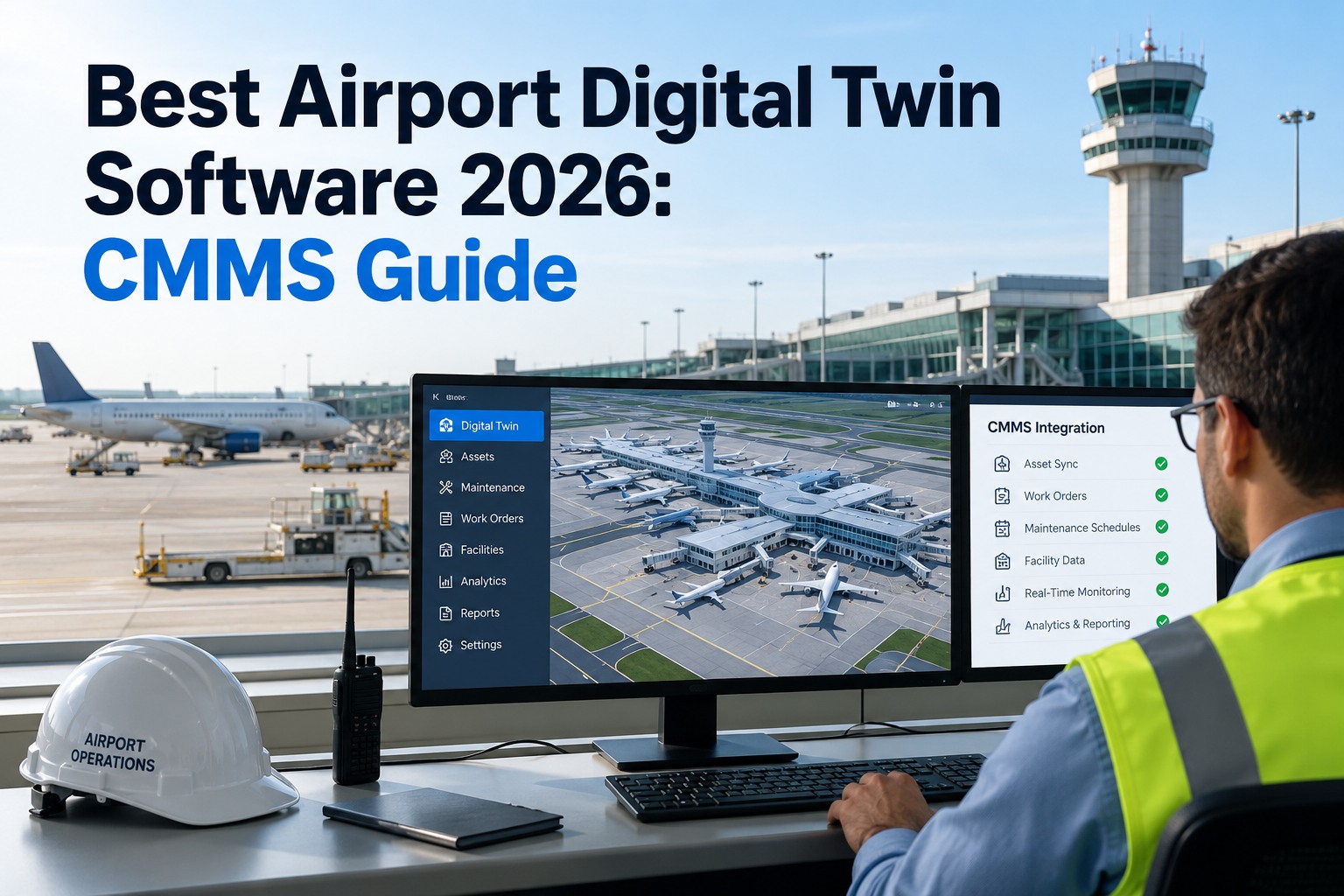
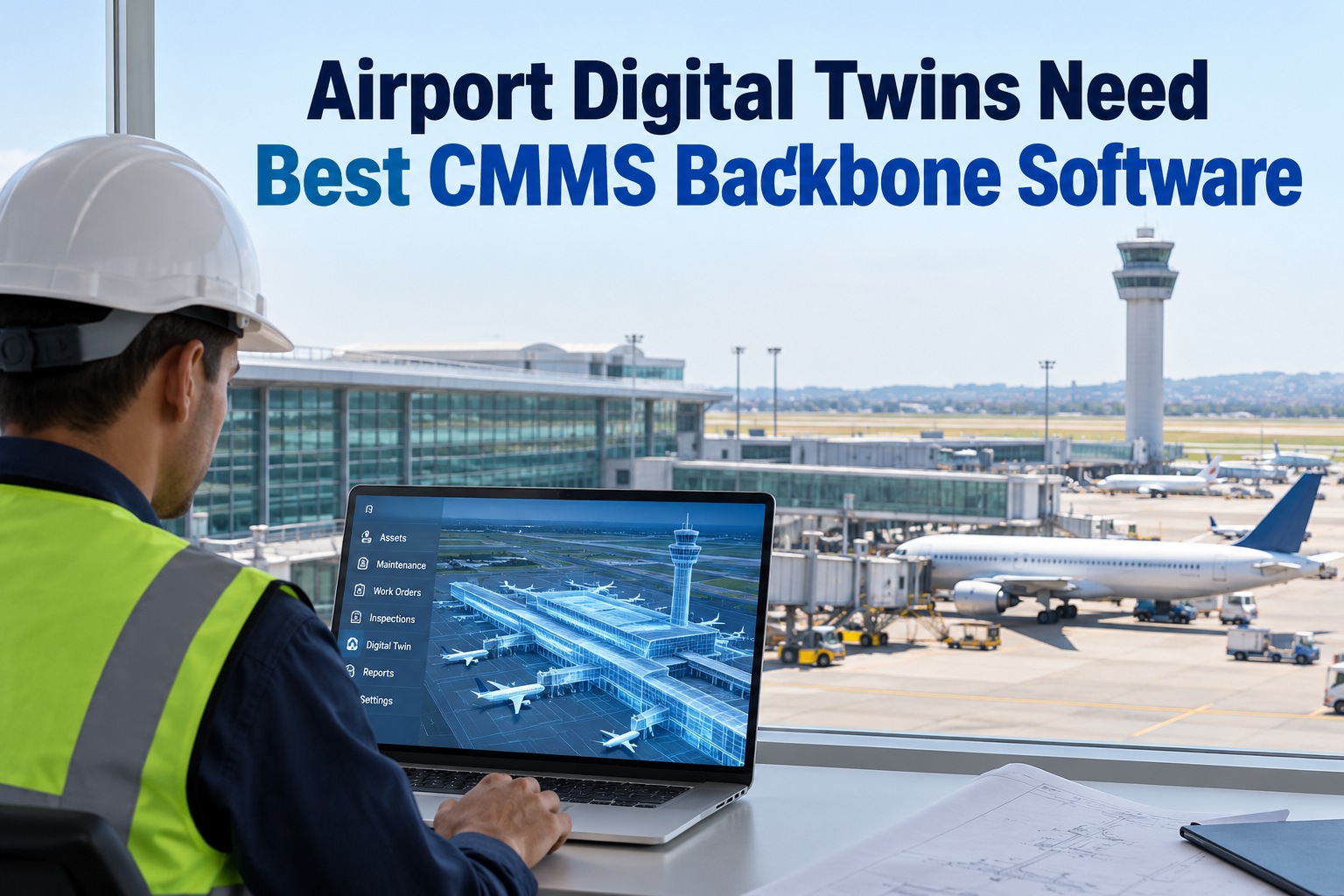
Airports are among the most operationally demanding environments on earth. A single unplanned equipment failure — a baggage conveyor that jams during a peak departure bank, a gate bridge that stalls mid-boarding, runway lighting that flickers during low-visibility operations — doesn't stay contained. It cascades. Passengers miss connections. Airlines scramble. Regulators take notice. And the costs compound well beyond what any repair invoice captures. With global air traffic projected to carry nearly 10 billion passengers annually, the question facing every airport operations director is no longer whether to modernize maintenance management. It's how fast they can do it — and whether the platform they choose is truly built for aviation's demands.
What Airport CMMS Software Actually Does
A Computerized Maintenance Management System built for airports is fundamentally different from a generic facilities tool. It is purpose-engineered for a 24/7 operational environment where maintenance schedules must coexist with live flight operations, where regulatory documentation is not optional, and where assets range from FAA-regulated airfield infrastructure to passenger-facing terminal systems — all under the same roof and the same compliance obligation.
At its core, an airport CMMS centralizes every maintenance activity — work orders, preventive schedules, inspection records, parts inventory, and compliance documentation — into one accessible platform. It replaces fragmented spreadsheets, paper checklists, and radio-dispatched technicians with automated workflows that move faster, document better, and give operations leadership real-time visibility into the health of every asset on the property.
Modern platforms like Oxmaint go further — layering AI-driven predictive intelligence on top of this foundation so that maintenance teams aren't just managing work efficiently, they're getting ahead of failures that haven't happened yet.
Why Traditional Maintenance Fails the Aviation Environment
Calendar-based preventive maintenance made reasonable sense when airports operated a few hundred relatively simple assets. That world no longer exists. A modern mid-size airport operates between 10,000 and 20,000 active assets — each with a different manufacturer, age profile, utilization intensity, and failure mode. Applying uniform maintenance intervals across that ecosystem wastes technician hours on equipment that doesn't need service while missing early-stage degradation in equipment that does.
The compliance dimension compounds the problem. FAA Part 139 requires documented twice-daily airfield inspections. ARFF vehicles must meet readiness certification on every shift. Terminal systems have their own inspection cycles tied to building code and insurance requirements. Managing this across paper forms and disconnected spreadsheets creates documentation gaps that only surface during audits — at the worst possible moment. Airports still running that way aren't just inefficient. They carry structural regulatory exposure every single day.
The operational cost is equally real. Emergency repairs for critical equipment — a baggage conveyor drive motor, a gate bridge hydraulic system, a terminal HVAC chiller — routinely cost four to eight times the price of a planned intervention. Every failure that reaches passengers also carries reputation cost that doesn't appear in a maintenance budget but absolutely affects future booking behavior and airline satisfaction scores.
The Five Capabilities That Define a Purpose-Built Airport CMMS
AI-Powered Predictive Maintenance
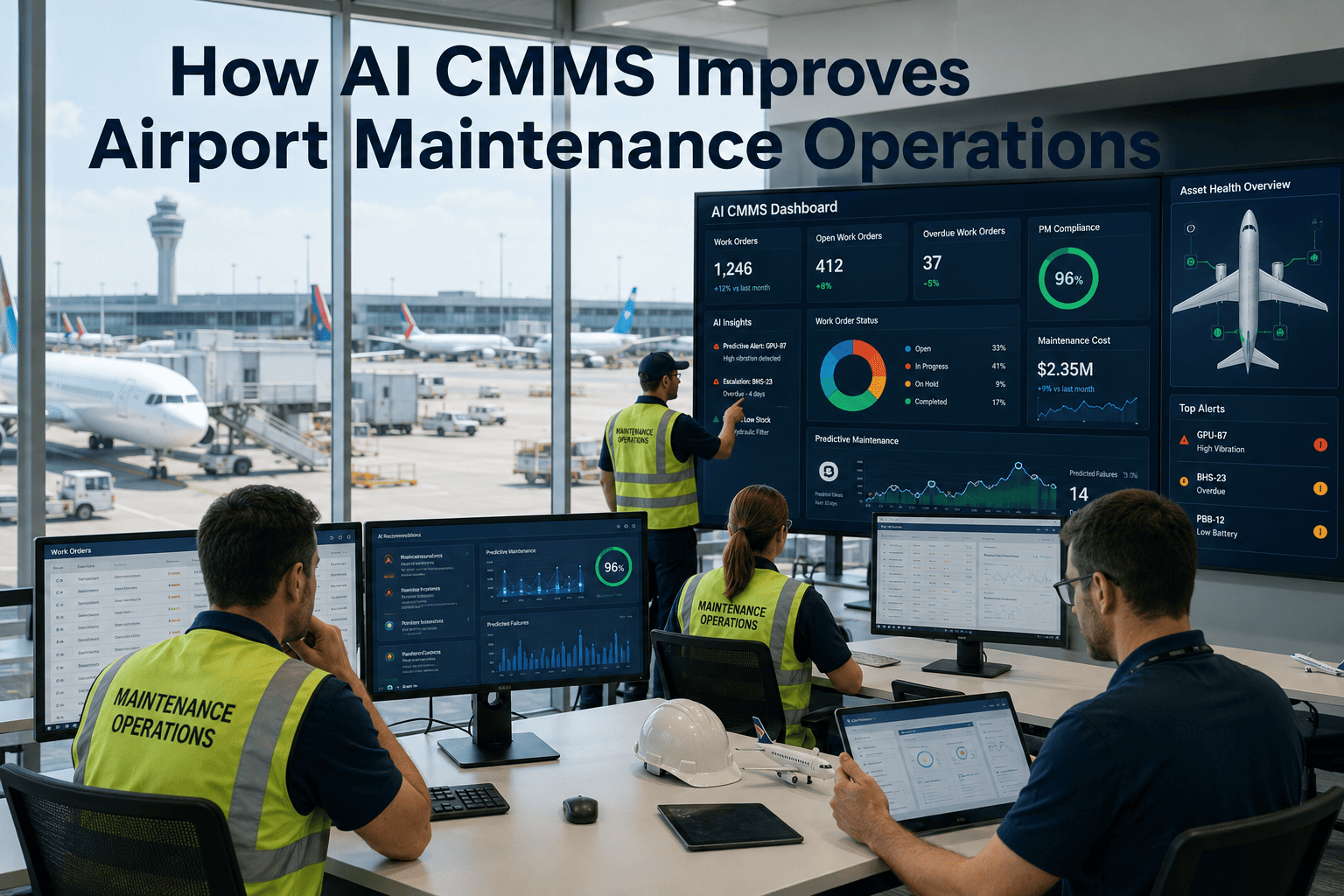
The most consequential shift in airport maintenance management over the past decade is the move from schedules driven by the calendar to interventions driven by actual equipment condition. Oxmaint's AI models continuously analyze sensor telemetry from baggage conveyors, escalators, runway lighting systems, ARFF vehicles, and terminal HVAC — detecting failure signatures 30 to 90 days before they produce operational impact. Maintenance can then be scheduled during low-traffic windows rather than reacted to during the morning departure peak. The AI models achieve 92–98% accuracy and improve continuously as they learn the specific usage patterns of your facility's equipment.
Automated Work Order Management
From the moment an anomaly is detected to the moment a technician closes the job, the entire workflow runs automatically. Work orders are generated with task procedures, required parts, manufacturer documentation, and technician certification requirements pre-populated. They are routed to the right person based on availability and skill matrix. Escalation triggers fire if response windows lapse. The most common failure point in hospital and airport maintenance — the gap between identifying a problem and actually resolving it — is eliminated structurally, not by reminders or management oversight.
FAA, EASA & ICAO Compliance Automation
Oxmaint ships with pre-configured compliance templates aligned to FAA Part 139, ICAO standards, EASA requirements, and OSHA safety protocols. Every completed inspection, calibration, and corrective action generates a timestamped, immutable audit record linked to the specific asset, the specific regulatory standard, and the technician who performed the work. When an FAA surveyor requests the complete airfield inspection history for the past 18 months, the report exports in seconds. Compliance stops being an annual documentation sprint and becomes a continuous operational state maintained automatically as a byproduct of normal daily maintenance activity.
Unified Asset Lifecycle Management
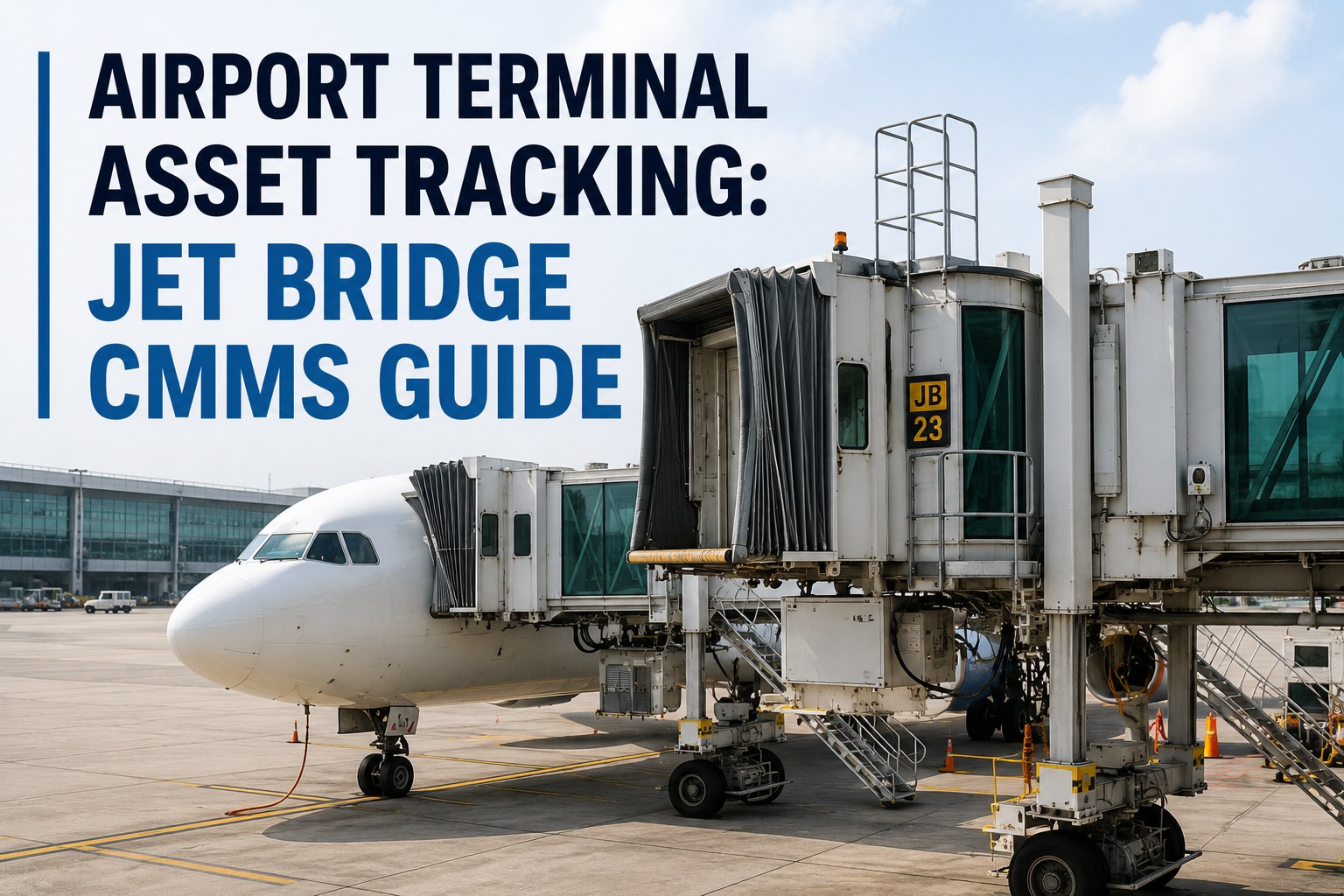
Every asset in the airport ecosystem — runways, taxiways, gate bridges, ARFF vehicles, terminal HVAC, baggage handling systems, escalators, ground support equipment — is tracked from procurement through disposal in a single platform. Operations leaders get real-time asset health scores, complete maintenance histories, and cost-per-unit data without navigating five different systems. Procurement decisions, capital replacement planning, and lease-versus-buy analyses become data-driven rather than gut-driven for the first time.
Inventory Management and Parts Intelligence
Planned maintenance is only as reliable as the parts availability that supports it. Oxmaint tracks spare parts inventory in real time, analyzes consumption trends, and auto-triggers reorder alerts before critical stock runs out. For airports managing emergency preparedness requirements alongside normal maintenance supply chains, this capability ensures the right part is always on hand when the intervention is scheduled — eliminating the costly delays that occur when planned work gets rescheduled because a component didn't arrive in time.
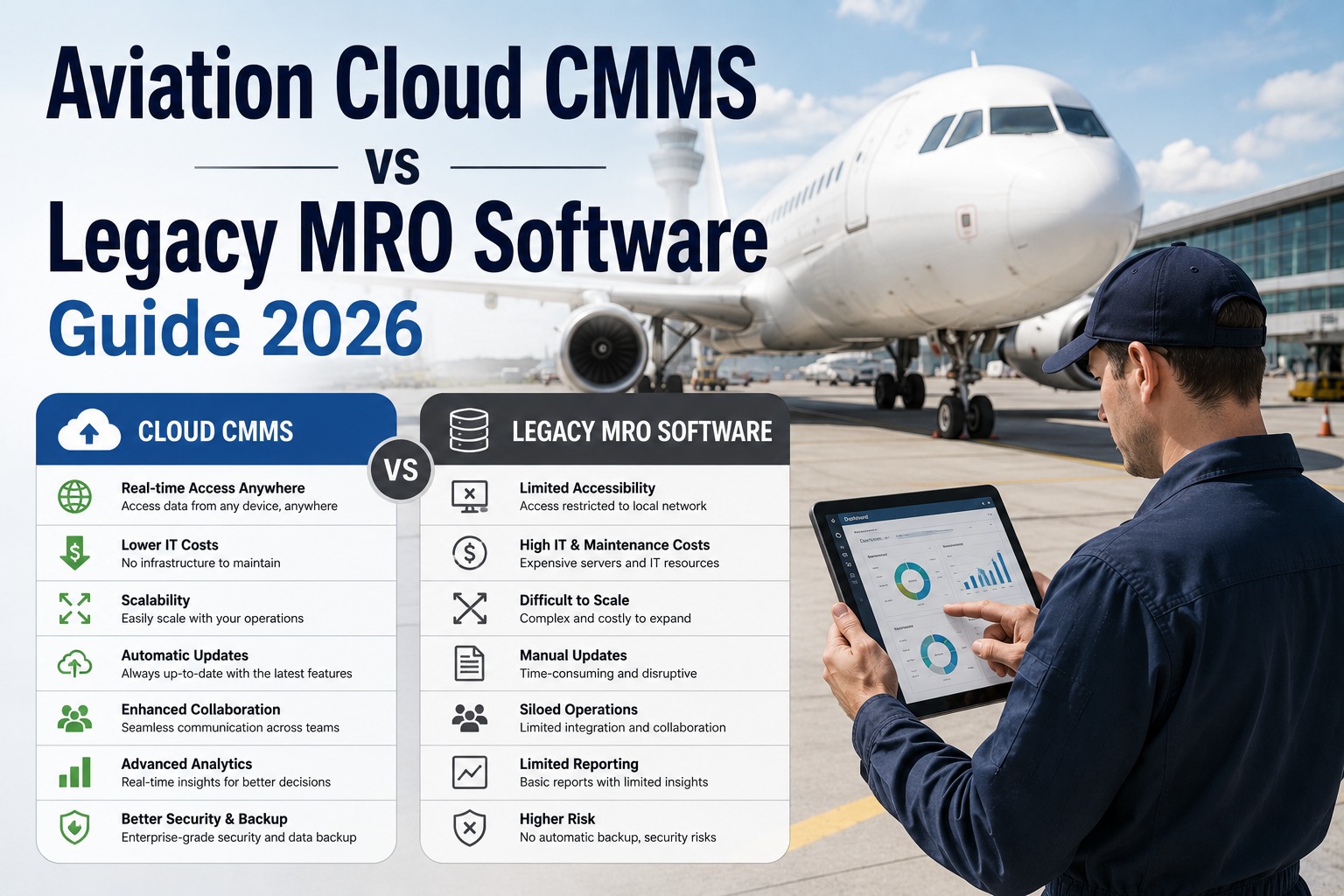
Traditional Maintenance vs. Oxmaint: What Changes
| Operational Area | Without CMMS | With Oxmaint |
|---|---|---|
| FAA Airfield Inspections | Paper forms, manual filing, audit preparation takes days | Mobile-guided inspections with auto-generated Part 139 records |
| Baggage System Failures | Discovered when passengers encounter the jam | Motor degradation flagged by AI 30+ days in advance |
| Work Order Dispatch | Manual phone calls, radio, whiteboard scheduling | Auto-generated, skill-matched, mobile-delivered instantly |
| ARFF Vehicle Readiness | Manual shift-by-shift log checks, certification gaps | Automated certification tracking, readiness alerts before each shift |
| Regulatory Audit Preparation | Weeks of document recovery per audit cycle | Instant report export, complete traceability, always audit-ready |
| Maintenance Cost Profile | Emergency-driven spikes averaging 4–8× planned intervention cost | Planned interventions with a 40% reduction in overall maintenance costs |
| Technician Productivity | Reactive firefighting dominates available hours | 25–35% of hours recovered for strategic planned maintenance work |
Building the Business Case for Airport Leadership
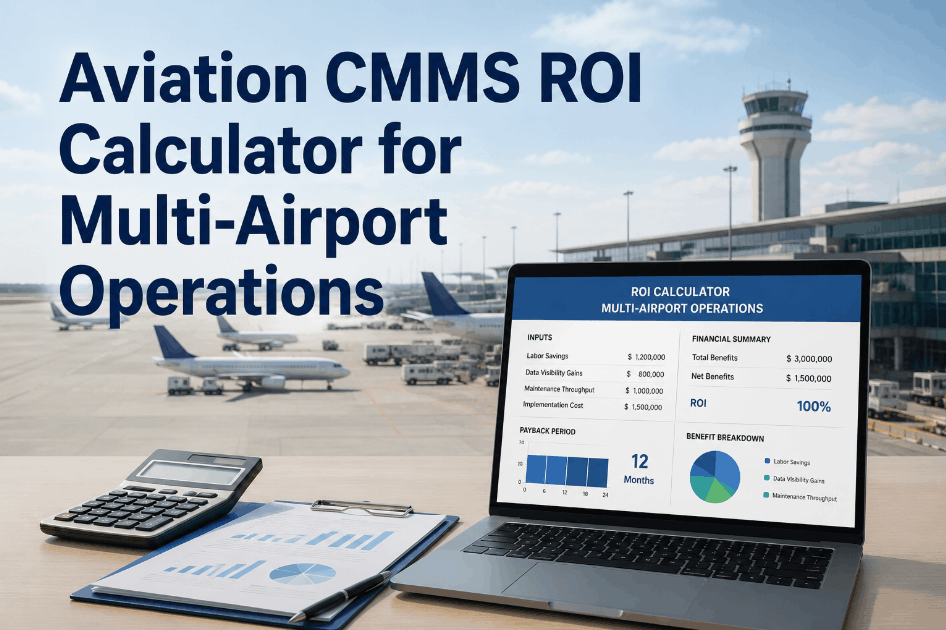
Capital investment decisions in aviation operations compete directly against infrastructure, terminal expansion, and technology modernization priorities. The financial case for a CMMS platform must be grounded in quantifiable ROI rather than general efficiency arguments.
The first value driver is cost avoidance. Emergency repairs for critical airport equipment routinely cost four to eight times more than planned interventions, and each failure that reaches passengers carries liability exposure, airline penalty risk, and reputational damage that rarely appears in initial cost models but absolutely affects long-term revenue.
The second driver is labor optimization. Maintenance teams that eliminate manual scheduling, paper documentation, and reactive dispatch recover 25 to 35 percent of their working hours. That recovered capacity doesn't disappear — it flows into planned, strategic maintenance that further extends asset life and reduces the frequency of failures.
The third driver is regulatory risk reduction. A single FAA citation for documentation deficiency triggers extended monitoring programs and increased inspection frequency. The implementation cost of a compliant documentation system is a fraction of the cost of operating under regulatory scrutiny for a year. Modeled across a five-year horizon, airports with more than 200 staff consistently see ROI from asset intelligence platforms exceed 300 percent. Schedule a personalized walkthrough to see how this model applies to your specific facility.