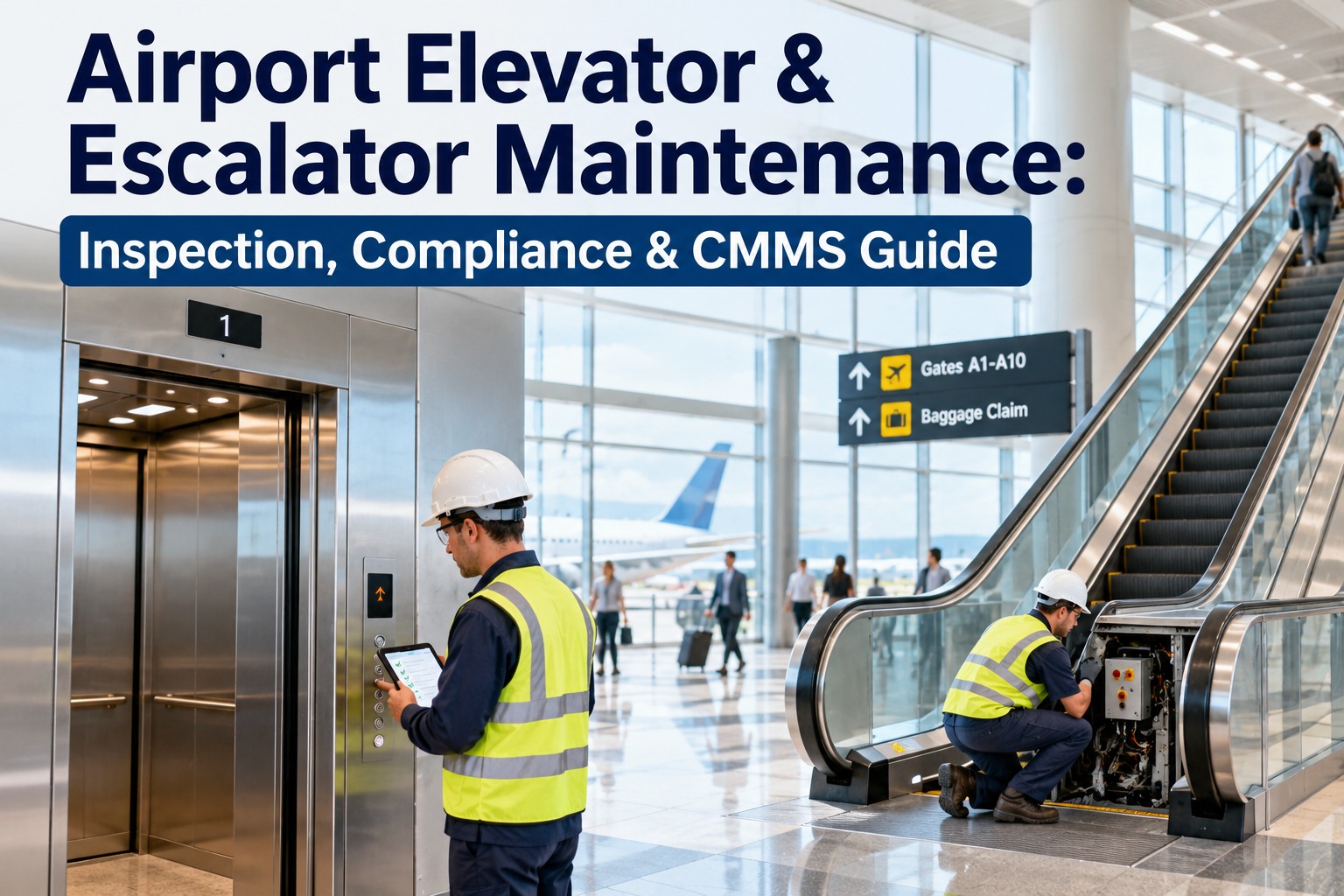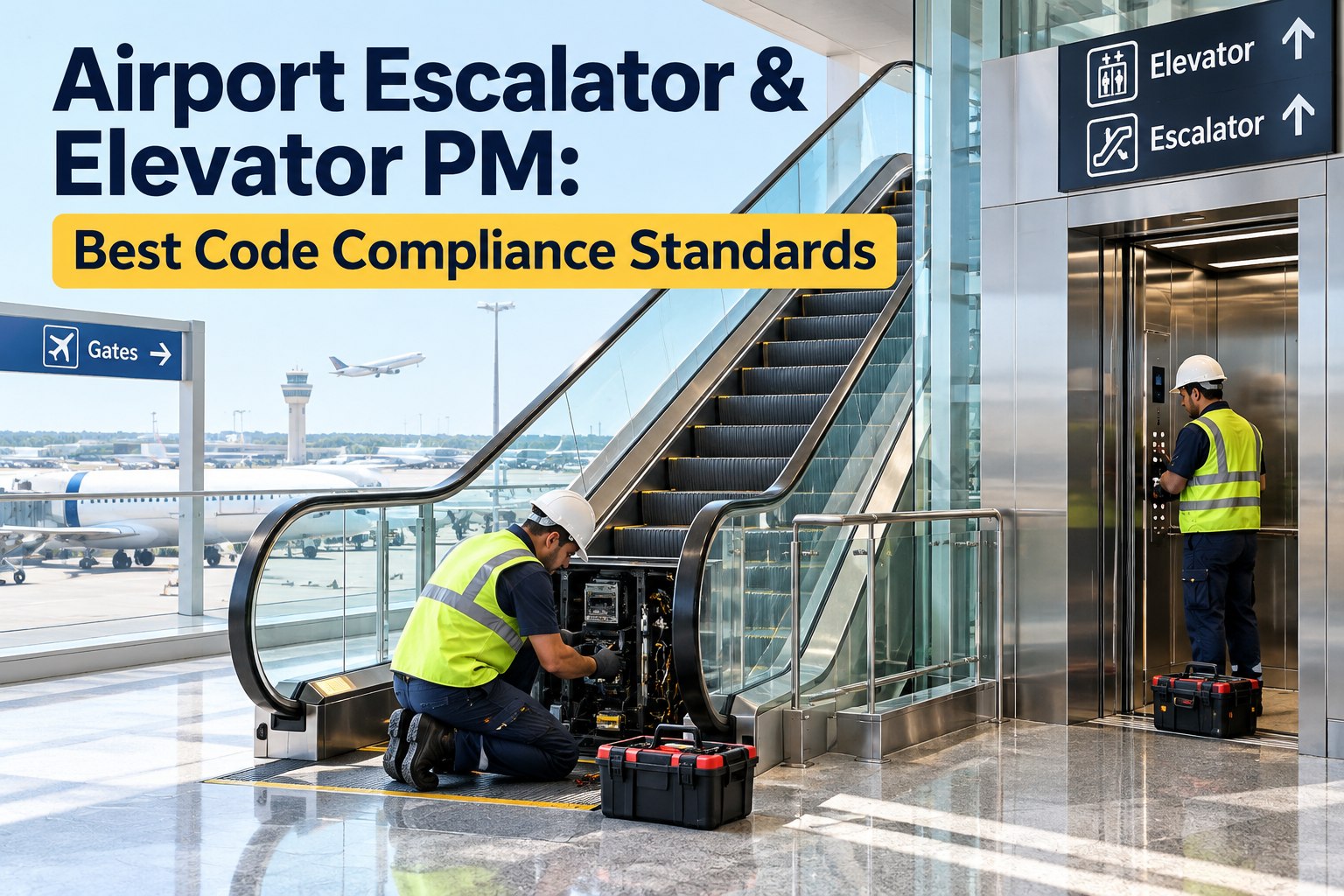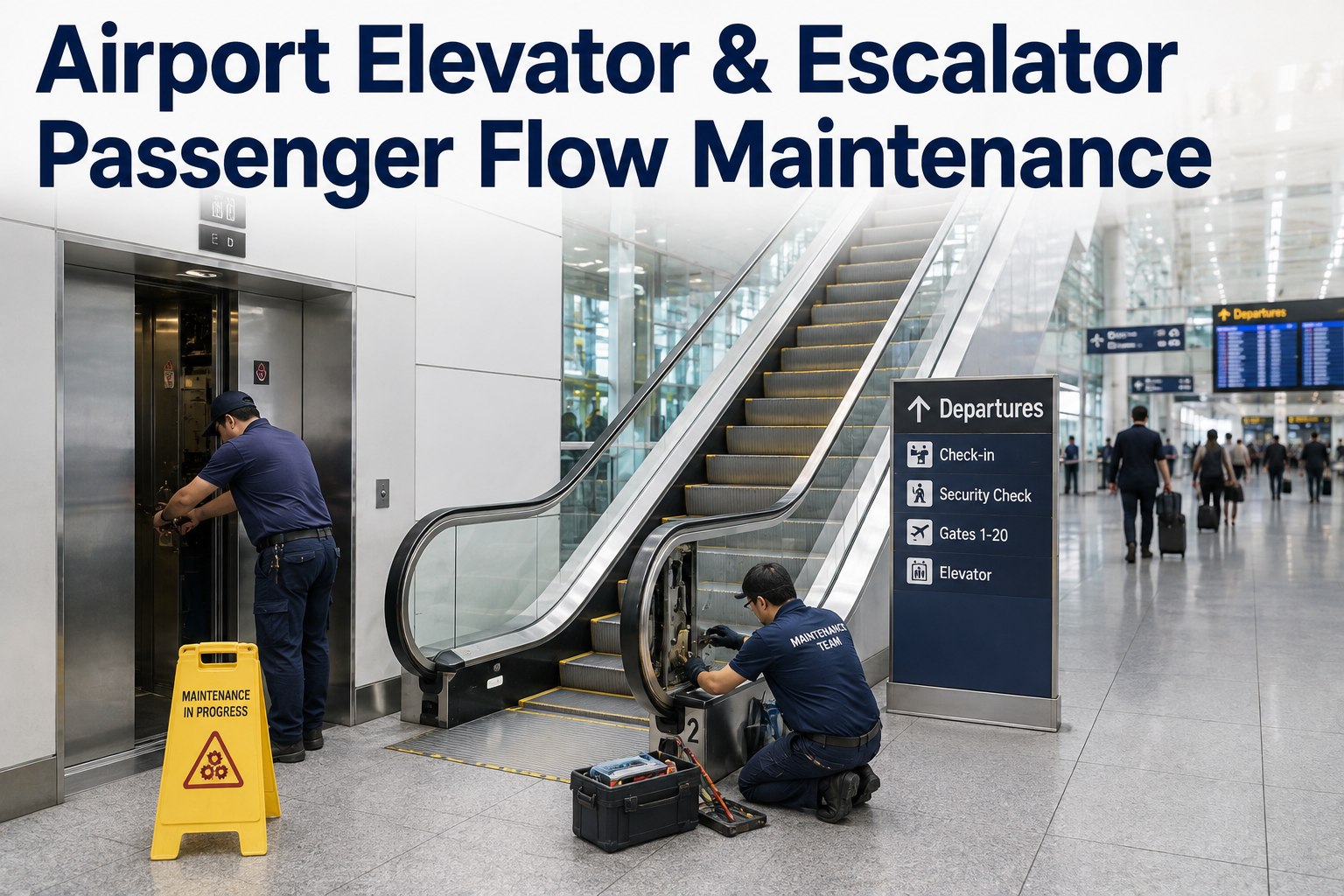
Airport elevator and escalator maintenance is the backbone of uninterrupted passenger flow, terminal throughput, and compliance in modern aviation hubs. When a single escalator stops during peak boarding hours, it disrupts thousands of travelers, triggers immediate passenger experience score drops, and forces facilities teams into costly reactive mode. This guide covers airport elevator and escalator maintenance for passenger flow in CMMS environments, detailing step chain inspection, code compliance testing, and brake PM strategies. Discover how a vertical transportation CMMS prevents downtime and explore how OxMaint helps you transition from reactive chaos to predictive reliability—start your Start Free Trial to see the platform in action.
Airport Vertical Transportation Guide 2026
Is a single escalator breakdown costing your terminal $50,000 per hour in missed flights and passenger compensation?
Airport elevator and escalator maintenance demands precision. When vertical transportation assets fail, passenger flow bottlenecks instantly, security lines back up, and gate connections are missed. A CMMS built for vertical transportation eliminates unplanned outages, ensures ASME A17.1 code compliance, and keeps millions of passengers moving seamlessly.
The Cost of Downtime
Why Airport Elevator and Escalator Maintenance Can't Be Reactive
A major airport terminal operating 40+ escalators and 15 elevators can lose over $4.2M annually in reactive repair costs, passenger compensation, and brand damage if maintenance remains spreadsheet-driven.
Consider a real-world scenario: a 60-gate international airport relying on manual work orders experienced 3 escalator step-band fractures in a single quarter. Each failure averaged 11 hours of unplanned downtime, directly causing missed connections for over 800 passengers. By migrating to a CMMS for escalator maintenance, the facility implemented predictive step-chain lubrication and brake PM schedules, reducing unplanned downtime by 67% within six months. When airport facilities managers leverage a passenger flow CMMS, they don't just fix equipment—they protect the terminal's operational integrity and the passenger experience.
Preventive Maintenance Checklist
Escalator Step Chain & Brake PM Checklist for Airports
Use this vertical transportation CMMS checklist to structure your preventive maintenance routines. Each item maps directly to work order triggers in OxMaint.
Weekly Escalator Mechanical Inspection
- Inspect step chain tension and track step roller wear patterns
- Verify step-band alignment and check for missing step demarcation lights
- Test main drive chain lubrication levels and chain elongation
- Examine combplate teeth for chipping and ensure safety switches engage
- Inspect handrail speed differential relative to step speed (max ±2%)
Monthly Brake & Safety PM
- Test escalator brake stopping distance per ASME A17.1 standards
- Inspect brake pad thickness; replace if under manufacturer minimum
- Verify operation of skirt panel switches and step-up thrust devices
- Test broken step chain device and main drive chain safety guard
- Audit emergency stop button response times at both landing terminals
Quarterly Elevator Code Compliance
- Test fire service Phase I and Phase II elevator operations
- Verify door restrictor functionality and car-door interlocks
- Inspect counterweight buffers and governor overspeed testing
- Test emergency communication and cab lighting backup systems
- Audit ADA compliance for cab controls, braille, and audible signals
Annual State Inspection Readiness
- Compile digital maintenance logs for all vertical assets via CMMS
- Verify load testing documentation for passenger elevators
- Review entrapment response tracking logs and rescue protocols
- Update spare parts inventory for critical step chains and brake pads
- Validate certifying mechanic credentials and inspection deadlines
| Asset Type | PM Frequency | Critical Component | Compliance Standard |
|---|---|---|---|
| Terminal Escalator | Weekly | Step Chain & Rollers | ASME A17.1 |
| Passenger Elevator | Monthly | Door Interlocks & Brakes | ASME A17.1 / ADA |
| Moving Walkway | Bi-Weekly | Handrail Drive & Pallet Band | ASME A17.1 |
| Service/Freight Elevator | Monthly | Load Capacity & Cables | ASME A17.2 |
How OxMaint Helps
How a Vertical Transportation CMMS Keeps Passengers Moving
OxMaint's AI-powered CMMS and EAM platform transforms how airport facilities teams manage elevator and escalator maintenance—mapping specific capabilities to measurable passenger flow outcomes.
Predictive Step Chain Failure Alerts
OxMaint uses AI-driven vibration and cycle analytics to predict escalator step chain and brake failures before they happen. Outcome: Cut unplanned vertical transportation downtime by 30–50% and eliminate terminal bottlenecks before they start.
Automated ASME A17.1 Compliance Tracking
Digitize all state inspection logs, entrapment response tracking, and code compliance testing in one audit-ready dashboard. Outcome: Pass state elevator inspections on the first attempt and eliminate 100% of paper-based compliance gaps.
Real-Time Passenger Flow Work Orders
Trigger automatic work order generation based on passenger traffic volume and equipment sensor data. Outcome: Reduce average maintenance response time by 45%, ensuring high-traffic terminal escalators get priority lubrication and brake checks.
Critical Spare Parts Inventory Management
Track step chains, brake pads, and drive belts with automated reorder points tied to PM schedules. Outcome: Prevent 95% of stockout-related delays and slash spare parts holding costs by optimizing stock levels across terminal hubs.
See OxMaint on Your Terminal's Assets
Book a 30-minute demo and discover how airports use OxMaint to keep elevators and escalators running at 98.5%+ availability while cutting reactive maintenance costs in half.
Passenger Flow ROI
CMMS ROI Calculator for Airport Vertical Transportation
Quantify the value of migrating from reactive repair workflows to an AI-powered CMMS. The formula below models annual savings based on typical mid-sized airport terminal metrics.
Annual Savings Formula
Annual Savings = (Unplanned Outage Hours × Hourly Disruption Cost) + (Emergency Repair Premium) + (Compliance Penalty Risk) − (CMMS Annual Cost)
| ROI Metric | Reactive Status Quo | With OxMaint CMMS | Annual Savings |
|---|---|---|---|
| Unplanned Downtime Hours (per year) | 450 hrs | 150 hrs | 300 hrs saved |
| Hourly Disruption Cost | $50,000 | $50,000 | $50,000 |
| Emergency Repair Premium | $85,000 | $15,000 | $70,000 |
| Compliance Penalty Risk | $40,000 | $0 | $40,000 |
| Total Annual Impact | $575,000 | $15,000 | $560,000 |
"After implementing OxMaint as our passenger flow CMMS, our terminal escalator availability hit 99.1%. The predictive alerts flagged two step chain issues weeks before they would have caused a breakdown during the holiday rush. The ROI was undeniable within the first quarter."
Frequently Asked Questions
Airport Elevator & Escalator Maintenance CMMS FAQs
How does a CMMS improve airport escalator maintenance?
A CMMS like OxMaint improves airport escalator maintenance by automating preventive work orders for step chains and brakes, tracking real-time sensor data for predictive failure alerts, and centralizing ASME A17.1 compliance documentation. This reduces unplanned downtime by up to 50% and ensures technicians are dispatched with the right parts before passenger flow is disrupted.
What are the code compliance testing requirements for airport elevators?
Airport elevators must undergo regular testing per ASME A17.1 standards, including monthly fire service Phase I/II testing, annual load testing, and periodic state inspections. A vertical transportation CMMS tracks these deadlines, stores digital certificates, and sends automated alerts, ensuring your terminal passes state inspections without manual log hunting.
How often should escalator step chains be inspected in an airport?
In high-traffic airport environments, escalator step chains should be inspected weekly for tension, elongation, and roller wear, with full lubrication and brake stopping distance tests performed monthly. Using a CMMS for escalator maintenance ensures these schedules are automatically generated based on passenger traffic volume and equipment cycle counts. You can Book a Demo to see how OxMaint automates these PM triggers.
Can a passenger flow CMMS track entrapment response times?
Yes. OxMaint allows airport facilities teams to log elevator entrapment events, automatically timestamp the rescue response, and generate compliance reports for state regulators. This entrapment response tracking is critical for avoiding fines and identifying assets that may require modernization or more frequent brake PM.
How long does it take to implement a CMMS for airport vertical transportation?
Implementation typically takes 2 to 4 weeks depending on the number of elevators, escalators, and moving walkways being onboarded. OxMaint streamlines this by importing existing asset registers, mapping PM checklists, and training maintenance teams. Start with a Start Free Trial to immediately begin digitizing your terminal's work orders.
Ready to Achieve 98.5%+ Availability on Your Terminal's Vertical Transportation?
Join the airport facilities teams using OxMaint to predict elevator failures, automate escalator PM, and keep millions of passengers moving without interruption.
Free 14-day trial · No credit card required