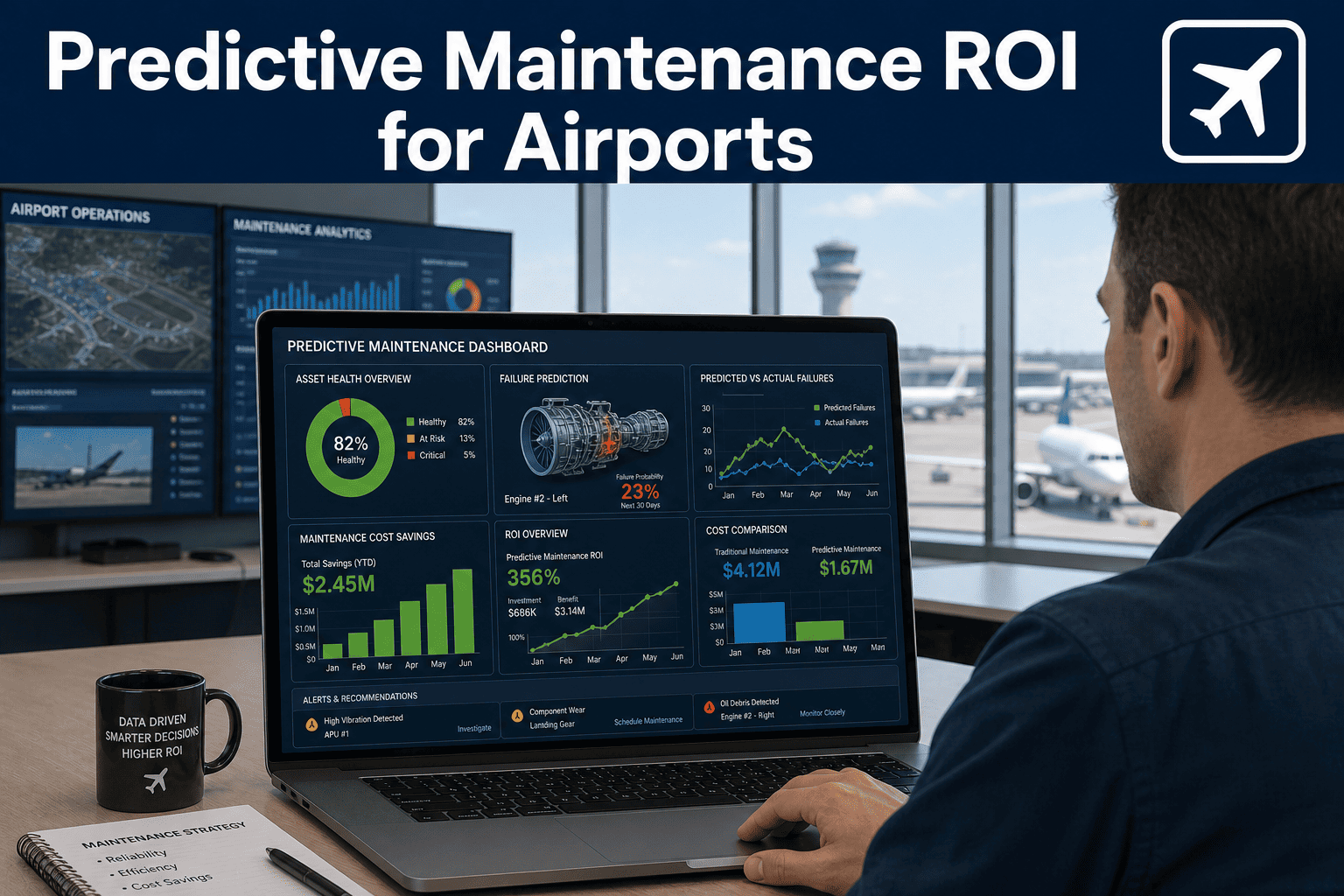
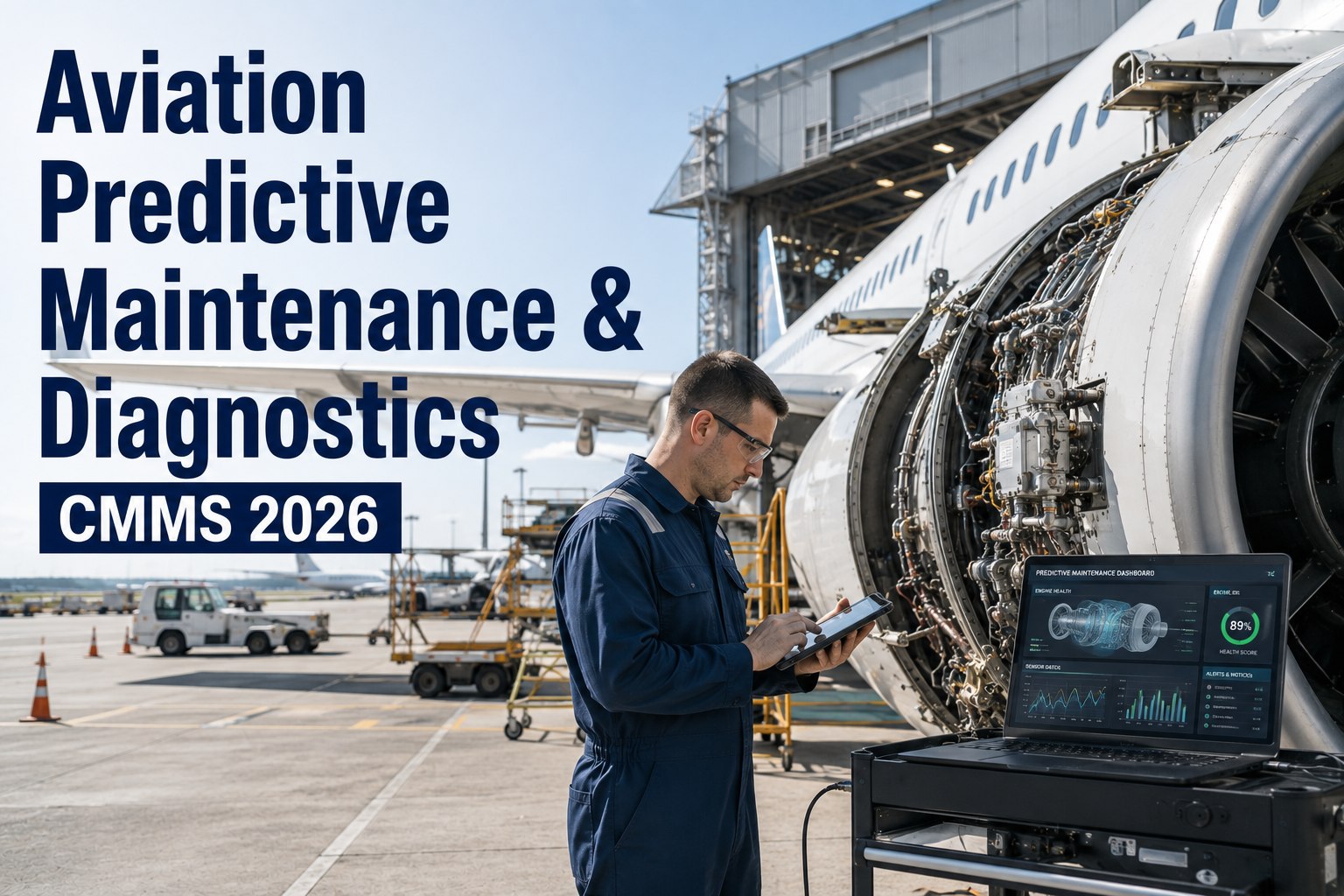
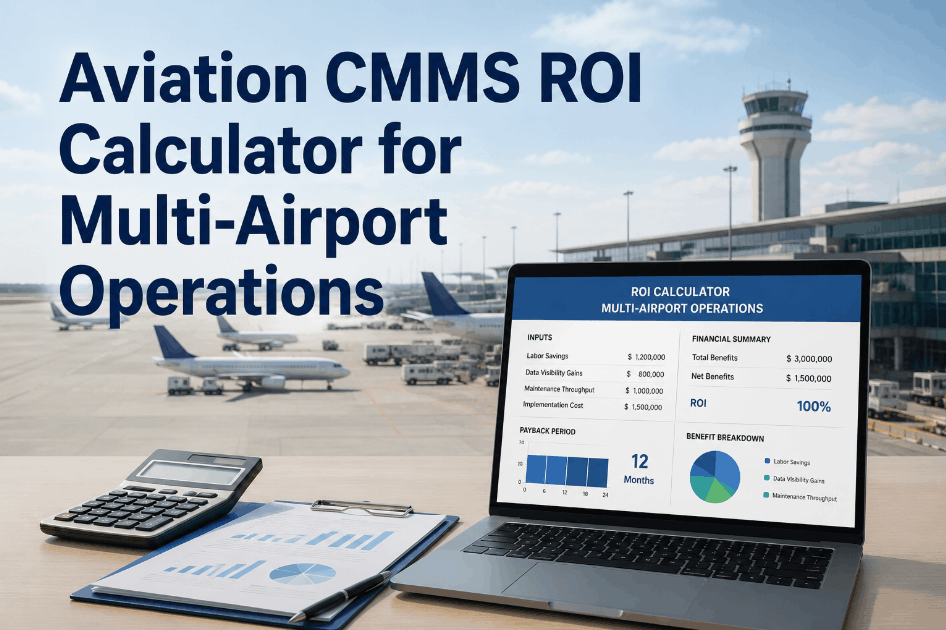
Predictive maintenance sounds expensive until you calculate what it prevents: a baggage handling motor failure that costs $18,000 in airline penalties per hour, an HVAC compressor seizure that forces terminal evacuation during peak travel, or a jet bridge hydraulic failure that delays six departures and cascades into 40 missed connections across the network. The airports building AI-driven predictive maintenance programs aren't doing it for innovation awards—they're doing it because the ROI math is undeniable. Spend $200K on vibration sensors, thermal cameras, and machine learning models, and you avoid $2.4M in emergency failures over three years. The business case writes itself once you stop measuring cost and start measuring avoided loss. Start a free trial to build your predictive maintenance ROI model.
Build the Business Case for Airport Predictive Maintenance AI
OxMaint integrates with IoT sensors and AI analytics to predict failures before they happen. Track vibration trends, thermal anomalies, and equipment degradation patterns—then calculate exactly how much money predictive insights save versus reactive repairs.
12x
ROI Within 3 Years
Typical return on predictive maintenance investment for airports
35%
Failure Reduction
Decrease in unplanned equipment downtime with predictive analytics
$2.4M
Avoided Costs
Three-year emergency failure prevention at mid-size airport
18 mo
Payback Period
Average time to recover predictive maintenance implementation cost
Why Reactive Maintenance Is Killing Your Airport Budget
Every airport runs on the same broken model: wait for something to fail, then scramble to fix it. A baggage handling motor burns out during morning arrivals. An escalator seizes in the main terminal during holiday travel. A jet bridge hydraulic pump fails with a 777 at the gate. Each failure triggers emergency work orders, overtime labor, expedited parts shipping, airline penalty payments, and passenger complaints. The maintenance team looks busy, but they're just expensive firefighters. Predictive maintenance flips this model: catch degradation early, schedule repairs during planned downtime, use in-stock parts, and never pay airline penalties because nothing fails unexpectedly. The airports making this shift report 12x ROI within three years—not from working harder, but from working ahead of failures instead of behind them. Book a demo to see predictive analytics in action.
Critical Impact
Baggage Handling System Failure
Emergency repair: $12,000
Airline SLA penalties: $18,000/hr
Passenger compensation: $8,000
Total cost per incident: $38,000+
Critical Impact
Terminal HVAC Compressor Seizure
Compressor replacement: $45,000
Emergency install labor: $18,000
Lost concession revenue: $12,000
Total cost per incident: $75,000+
Moderate Impact
Jet Bridge Hydraulic Failure
Emergency parts & repair: $8,000
Flight delays (6 departures): $42,000
Gate reassignment costs: $6,000
Total cost per incident: $56,000+
Moderate Impact
Passenger Boarding Bridge Motor
Motor replacement: $4,500
Overtime installation: $2,800
Gate out-of-service time: $8,000
Total cost per incident: $15,300+
The Airport Predictive Maintenance Tech Stack
Layer 1
Sensor & IoT Data Collection
Vibration sensors on motors and pumps, thermal cameras on electrical panels, current monitors on HVAC compressors, pressure transducers on hydraulic systems, and ultrasonic sensors for bearing health.
Vibration Analysis
Thermal Imaging
Oil Analysis
Current Signature
↓
Layer 2
Data Aggregation & CMMS Integration
Sensor data flows into OxMaint via API, tagged to specific assets with location, criticality, and operating context. Historical work orders and failure patterns train the prediction models.
Asset Tagging
Historical Data
Context Mapping
API Integration
↓
Layer 3
AI & Machine Learning Analytics
Algorithms detect anomalies in vibration signatures, thermal patterns, and current draw. Models predict remaining useful life based on degradation trends and historical failure rates.
Anomaly Detection
RUL Forecasting
Pattern Recognition
Failure Prediction
↓
Layer 4
Automated Work Order Generation
When AI flags a degradation trend or predicts failure within 30 days, CMMS auto-generates a work order with recommended action, parts list, and priority level—before anything breaks.
Auto Work Orders
Parts Allocation
Priority Scoring
Technician Assignment
Predictive Maintenance ROI Calculation Model
IoT Sensors & Installation (50 critical assets)
$85,000
AI Analytics Platform License (3 years)
$72,000
CMMS Integration & Configuration
$28,000
Training & Change Management
$15,000
Total 3-Year Investment
$200,000
vs
Emergency failures prevented (8 per year × $38K avg)
$912,000
Reduced overtime labor (35% reduction)
$420,000
Lower parts spend (planned vs expedited)
$180,000
Extended asset lifespan (15% increase)
$540,000
Eliminated airline penalty payments
$360,000
Total 3-Year Benefit
$2,412,000
Annual Benefit After Payback
$804,000/year
Implementation Roadmap: From Pilot to Full Deployment
Months 1-3
Phase 1: Pilot Program
Deploy sensors on 10 highest-criticality assets (baggage motors, HVAC compressors, jet bridge hydraulics). Establish baseline performance data and validate prediction accuracy.
Milestone: First predicted failure prevented
Months 4-8
Phase 2: Expansion to Critical Systems
Scale to 50 monitored assets across terminals and airside. Integrate AI alerts with CMMS work order generation. Train maintenance teams on interpreting predictive insights.
Milestone: 35% reduction in emergency work orders
Months 9-18
Phase 3: Portfolio-Wide Deployment
Deploy sensors across entire asset base. Optimize prediction models with historical data. Build ROI dashboards showing avoided costs and failure trends.
Milestone: Full payback achieved, ongoing savings begin
Months 19-36
Phase 4: Continuous Optimization
Refine algorithms based on prediction accuracy. Expand to secondary systems. Use predictive data to inform CapEx replacement decisions and lifecycle planning.
Milestone: 12x ROI target achieved
Frequently Asked Questions
What ROI can airports expect from predictive maintenance AI?
Most airports achieve 10-15x ROI within three years by avoiding emergency failures, reducing overtime costs, eliminating airline penalties, and extending asset lifespan. The business case is strongest for high-criticality systems like baggage handling, HVAC, and jet bridges where failures have cascading operational impacts.
Start a free trial to model your ROI.
How does OxMaint integrate with IoT sensors and AI analytics platforms?
OxMaint connects to sensor networks via API, ingesting vibration, thermal, current, and pressure data in real time. AI analytics flag anomalies and degradation trends, then automatically generate work orders in the CMMS with recommended actions, parts lists, and priority levels.
Book a demo to see IoT integration.
What assets should airports prioritize for predictive maintenance monitoring?
Start with high-criticality, high-failure-cost systems: baggage handling motors, HVAC compressors, jet bridge hydraulics, escalator drives, and electrical switchgear. These assets have the highest ROI because their failures trigger airline penalties, passenger delays, and emergency repairs.
How long does it take to see results from predictive maintenance implementation?
Most airports prevent their first predicted failure within 90 days of pilot deployment. Full payback typically occurs within 18 months as emergency failure rates drop 35-45% and overtime costs decline proportionally.
Stop Reacting to Failures. Start Predicting Them.
OxMaint integrates with IoT sensors and AI analytics to predict equipment failures before they happen, turning maintenance from a cost center into a profit protector. Build the business case with real ROI data, deploy sensors on critical assets, and start avoiding the emergency failures that destroy your budget and reputation.