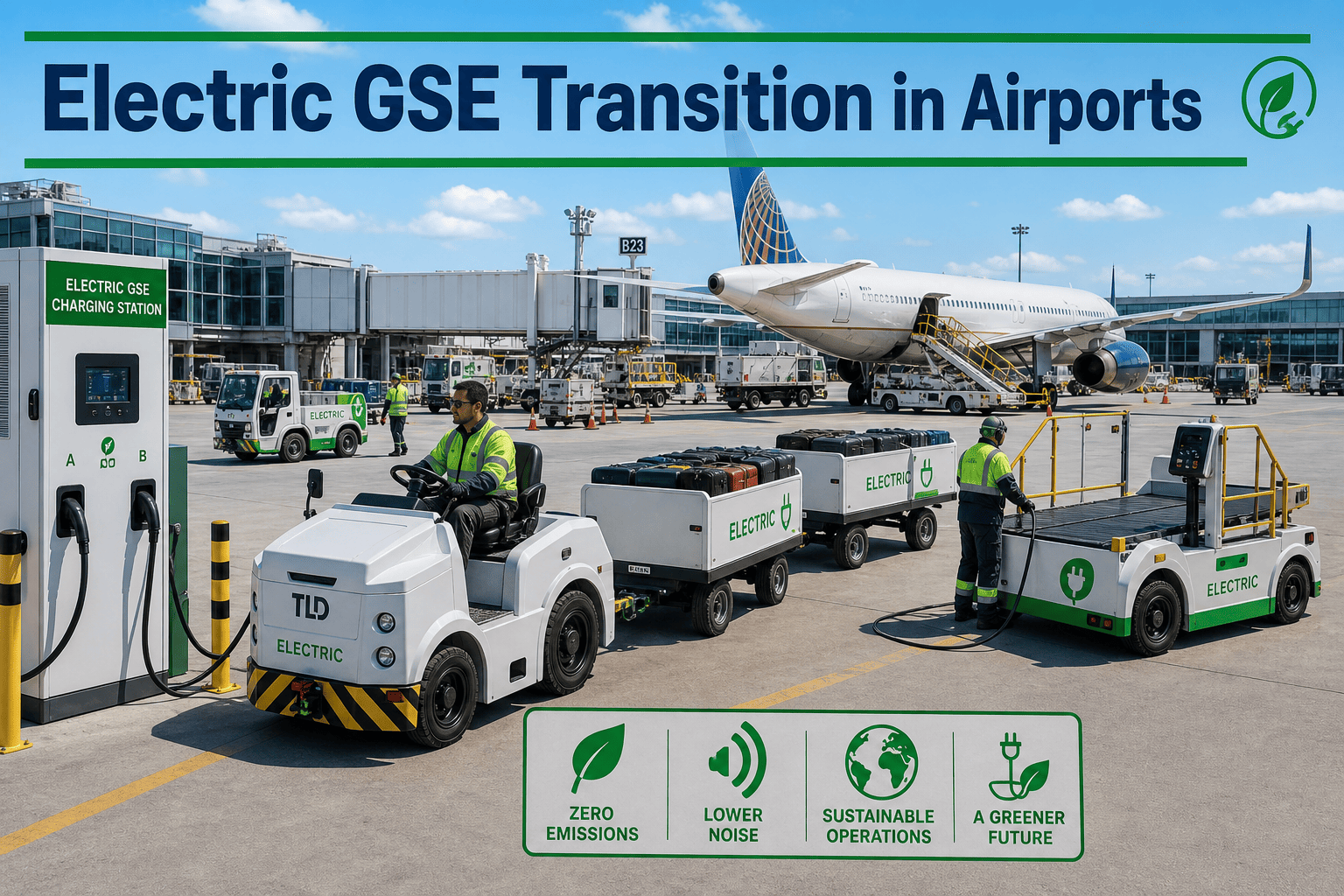
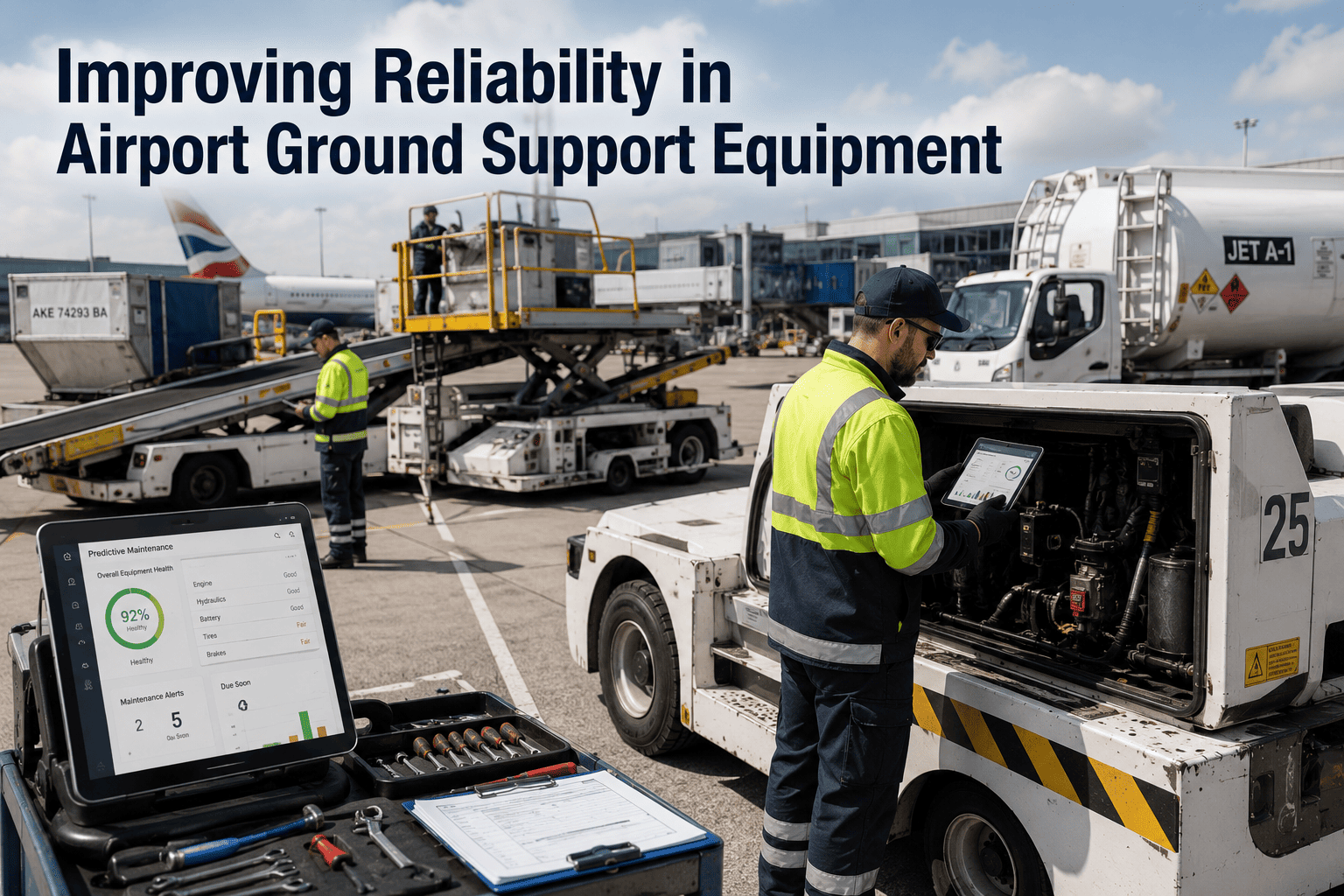
Airport ground support equipment electrification isn't just an emissions goal—it's a $4.2 billion global transition reshaping how airports maintain fleets, manage charging infrastructure, and track battery health across hundreds of electric tugs, belt loaders, and pushback tractors. The airports making this transition successfully aren't just buying electric GSE and hoping for the best. They're using CMMS platforms to track charging cycles, monitor battery degradation, schedule preventive maintenance on electric drivetrains, and coordinate charging station availability across multi-shift operations. A fleet conversion without infrastructure planning and maintenance tracking is how you end up with $800K in electric equipment sitting idle because chargers are broken or batteries are degraded below operational thresholds. Start a free trial to track your electric GSE transition.
Electrify Your GSE Fleet Without Breaking Your Maintenance Operation
OxMaint tracks electric GSE battery health, charging infrastructure maintenance, energy consumption per vehicle, and drivetrain PM schedules in one platform. Make the transition to electric without losing visibility into what's working and what's not.
68%
Airport GSE Electric by 2030
Industry projection for electrified ground support equipment share
$180K
Average Electric Tug Cost
Purchase price for lithium-ion battery electric aircraft tug
2,000
Charge Cycles to 80%
Typical battery degradation point requiring capacity monitoring
42%
Lower Maintenance Cost
Electric GSE maintenance savings vs diesel over 10-year lifecycle
Why Electric GSE Transitions Fail Without Infrastructure Planning
Most airports approach electrification as a vehicle replacement project: retire diesel tugs, buy electric ones, install chargers, done. Then reality hits. You discover your overnight charging window isn't long enough for full fleet rotation. Your Level 2 chargers take 8 hours to charge a belt loader that needs to run three shifts. Battery degradation drops vehicle range by 30% after 18 months, but nobody was tracking charge cycles or capacity. Charging stations fail during peak operations because nobody scheduled preventive maintenance on the power distribution units. The airports that electrify successfully treat it as an infrastructure and maintenance program—not just a procurement event. Book a demo to see electric fleet infrastructure tracking.
Challenge 1
Charging Infrastructure Capacity Mismatch
Installing 20 chargers for a 60-vehicle fleet sounds adequate until you realize shift schedules mean 35 vehicles need charging simultaneously during the 4-hour overnight window.
Solution: CMMS tracks charger availability, vehicle charge cycles, and energy consumption to model infrastructure requirements before deployment.
Challenge 2
Battery Degradation Tracking Gaps
Lithium-ion batteries lose capacity with every charge cycle, but without tracking charge counts and voltage trends, you don't know when a vehicle drops below operational range thresholds.
Solution: CMMS logs every charge event, tracks battery health metrics, and triggers alerts when capacity falls below 80% of original specification.
Challenge 3
Electric Drivetrain PM Knowledge Gap
Your diesel technicians know engine oil and transmission fluid. They don't know high-voltage contactors, battery management systems, or electric motor bearing maintenance.
Solution: CMMS stores manufacturer-specific PM schedules for electric components with training requirements and safety protocols built into work orders.
Challenge 4
Charger Downtime During Peak Operations
Charging stations are critical infrastructure now, but they fail like any other asset. A broken charger during shift change means vehicles sit idle until backup charging is found.
Solution: CMMS schedules preventive maintenance on charging equipment, tracks downtime per charger, and alerts operations when charger availability drops.
The 5-Phase Electric GSE Transition Roadmap
Phase 1
Fleet Assessment & Energy Audit
• Analyze current diesel GSE duty cycles and energy consumption
• Calculate electrical infrastructure capacity requirements
• Identify pilot vehicle classes for initial electrification
• Map charging station locations across ramp and terminal zones
Phase 2
Charging Infrastructure Deployment
• Install Level 2 and DC fast chargers based on vehicle mix
• Upgrade electrical panels and distribution for charging load
• Configure energy management system for load balancing
• Establish charger PM schedules in CMMS before go-live
Phase 3
Pilot Fleet Conversion & Testing
• Deploy first 10-15% of electric vehicles in controlled zones
• Track charge cycles, battery performance, and operational range
• Train technicians on high-voltage safety and electric PM
• Document lessons learned and adjust infrastructure plan
Phase 4
Full Fleet Electrification Rollout
• Scale electric vehicle deployment to 60-80% of fleet
• Expand charging infrastructure in parallel with vehicle adds
• Implement CMMS battery health monitoring and alerts
• Retire diesel equipment on condition-based replacement schedule
Phase 5
Optimization & Lifecycle Management
• Analyze energy consumption trends and charging efficiency
• Forecast battery replacement costs based on degradation data
• Optimize charging schedules to reduce peak demand charges
• Plan second-generation vehicle purchases with lessons learned
What CMMS Tracks Across Your Electric GSE Fleet
Battery Health & Charge Cycles
Total charge cycles: Tracked per vehicle
Current capacity: % of original spec
Voltage trends: Degradation monitoring
Replacement forecast: Based on cycle count
Charging Infrastructure Status
Charger uptime: % availability per station
Energy delivered: kWh per charger per month
PM schedule: Connector, cable, panel checks
Downtime incidents: Work orders per charger
Electric Drivetrain Maintenance
Motor bearing service: Hours-based PM triggers
BMS diagnostics: Battery management system checks
HV contactor inspection: High-voltage safety PM
Coolant system service: Battery thermal management
Energy Cost & Carbon Reporting
kWh per vehicle: Energy consumption tracking
Cost per charge: Utility rate calculations
CO2 reduction: Diesel vs electric emissions
Peak demand charges: Optimization opportunities
Electric GSE Maintenance Cost Reality Check
Purchase Price (Per Tug)
$120,000
Fuel Cost (10 years @ $4/gal)
$84,000
Oil Changes & Fluids
$18,000
Engine Rebuilds & Major Repairs
$32,000
Transmission & Hydraulics
$22,000
Total 10-Year TCO
$276,000
Purchase Price (Per Tug)
$180,000
Electricity Cost (10 years @ $0.12/kWh)
$28,000
Battery Replacement (Year 7)
$45,000
Drivetrain PM & Repairs
$8,000
Charging Infrastructure Share
$12,000
Total 10-Year TCO
$273,000
Electric GSE achieves cost parity by Year 4 and delivers 42% lower maintenance spend over lifecycle. Savings accelerate as battery costs decline and diesel fuel prices rise.
Frequently Asked Questions
How does a CMMS help airports manage electric GSE battery health?
By logging every charge cycle, tracking battery capacity degradation, monitoring voltage trends, and triggering alerts when batteries fall below 80% of original capacity. You know exactly when each battery needs replacement based on data, not guesswork.
Start a free trial to track battery health.
Can OxMaint track charging infrastructure maintenance and uptime?
Yes. Every charging station is an asset in the system with PM schedules for connector inspections, cable checks, and power distribution panel maintenance. The system tracks charger downtime, energy delivered per station, and availability rates so you know which chargers need attention.
Book a demo to see charger tracking.
Does OxMaint calculate energy cost per vehicle for electric GSE fleets?
Yes. The system tracks kWh consumed per charge event, multiplies by your utility rate, and calculates cost per vehicle per month. You can compare energy costs across vehicle types and identify inefficient charging patterns or degraded batteries consuming excess power.
What electric drivetrain PM schedules should airports follow?
Focus on battery thermal management system checks, high-voltage contactor inspections, electric motor bearing lubrication, battery management system diagnostics, and cooling system maintenance. OxMaint includes manufacturer-recommended intervals for all major electric GSE brands with safety protocols built into work orders.
Electrify Your Fleet With Confidence
OxMaint gives airport operations teams the tools to track electric GSE battery health, manage charging infrastructure, schedule electric drivetrain maintenance, and calculate energy costs across the entire transition. Make the move to electric without losing visibility into what's working—and what's costing you money.