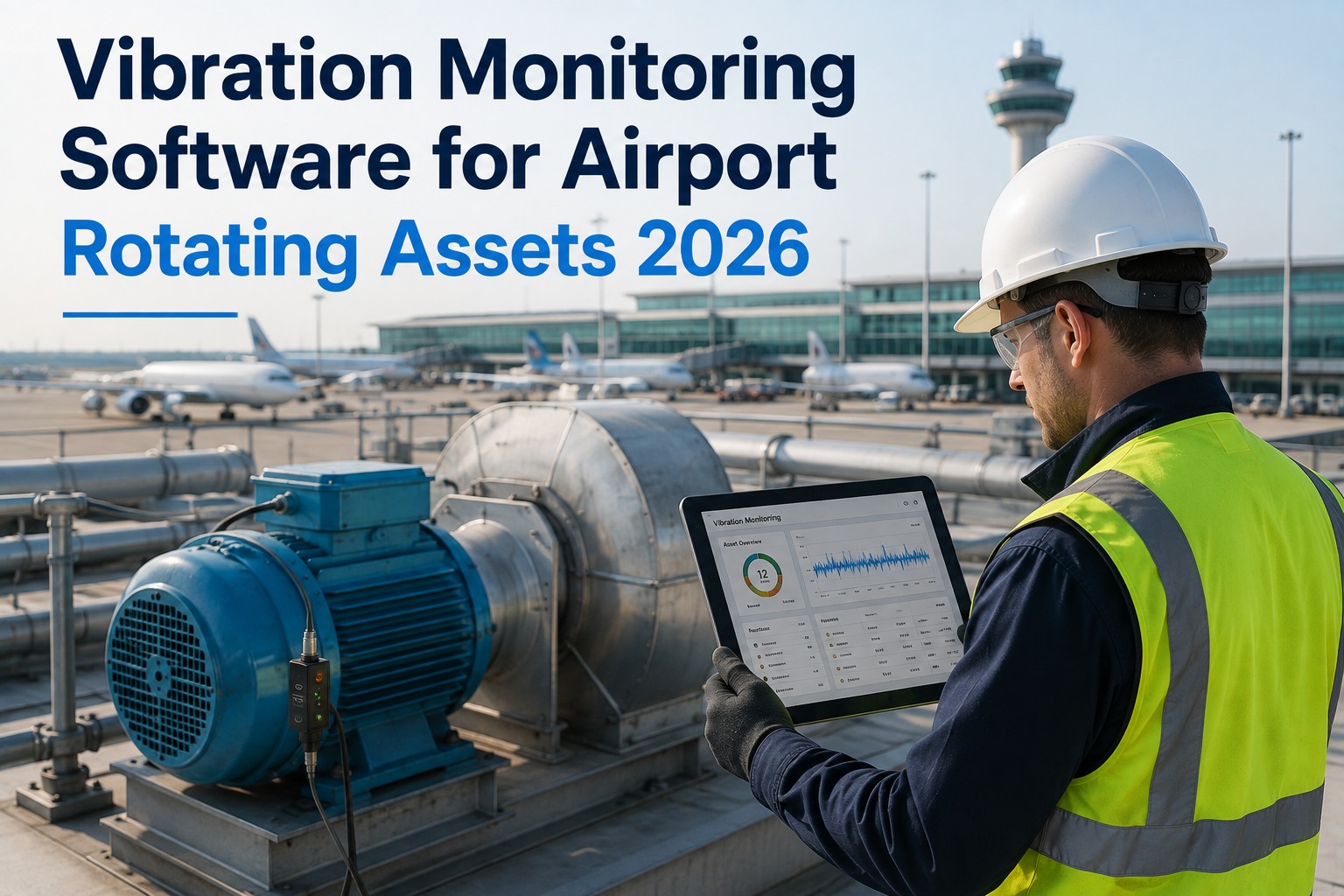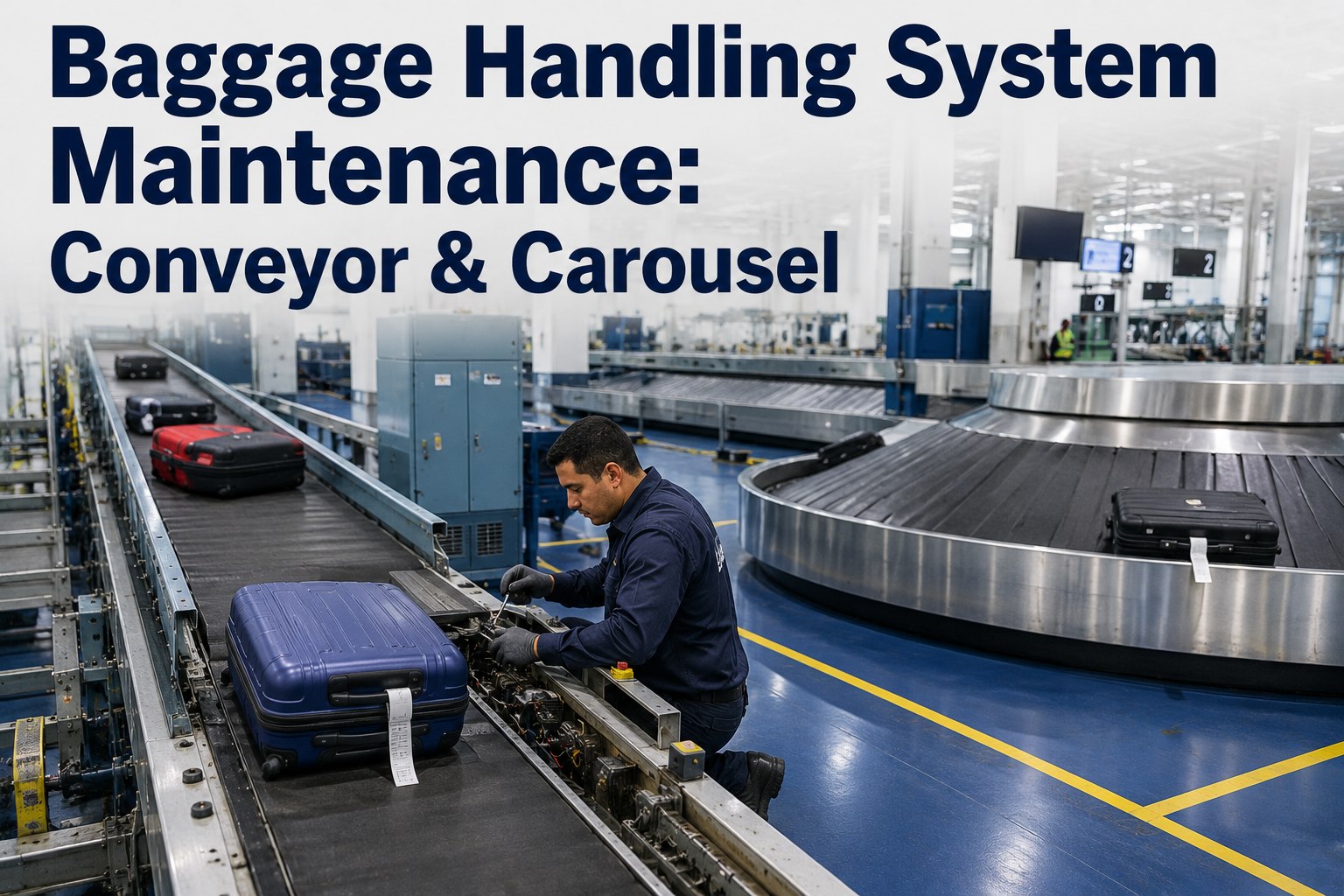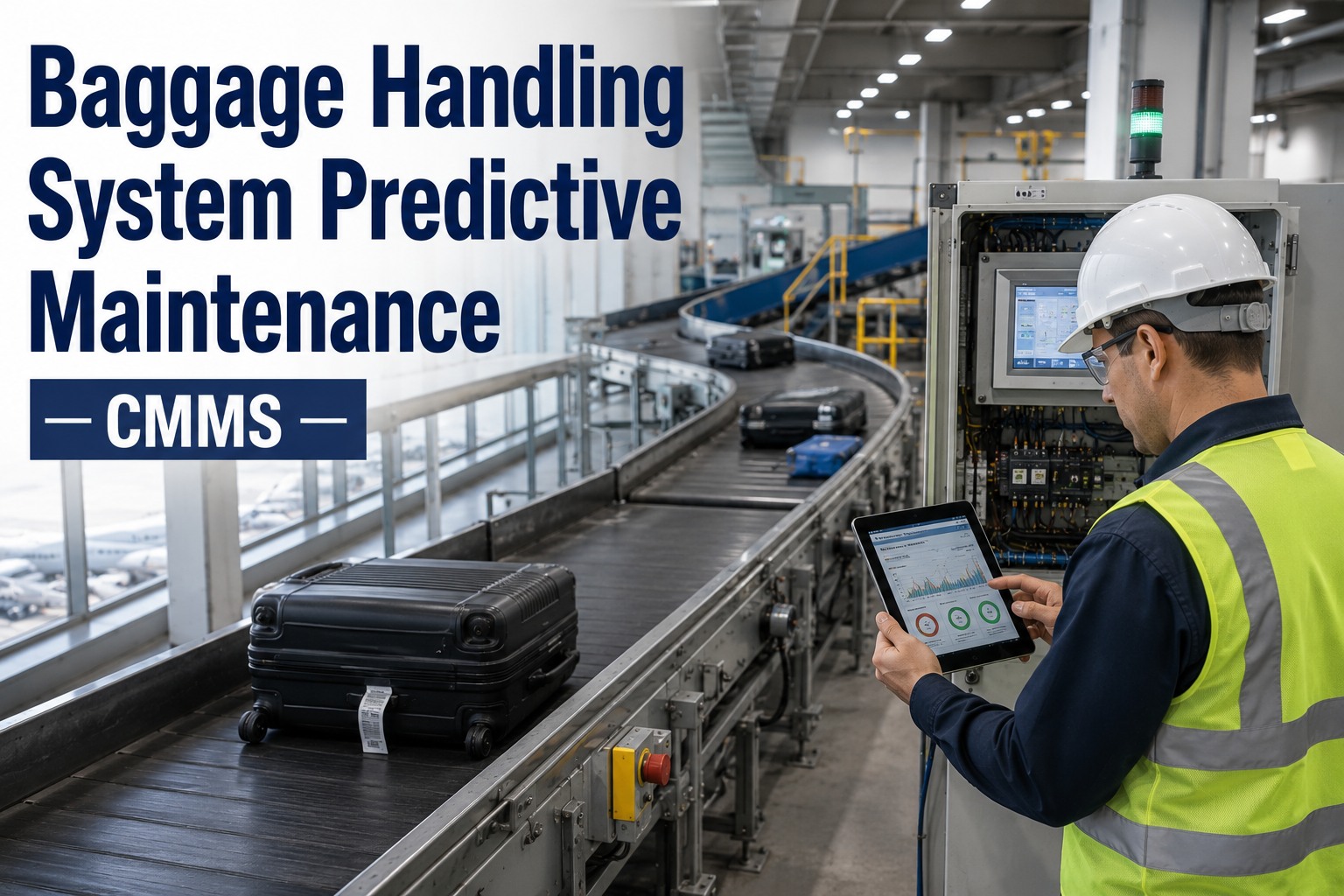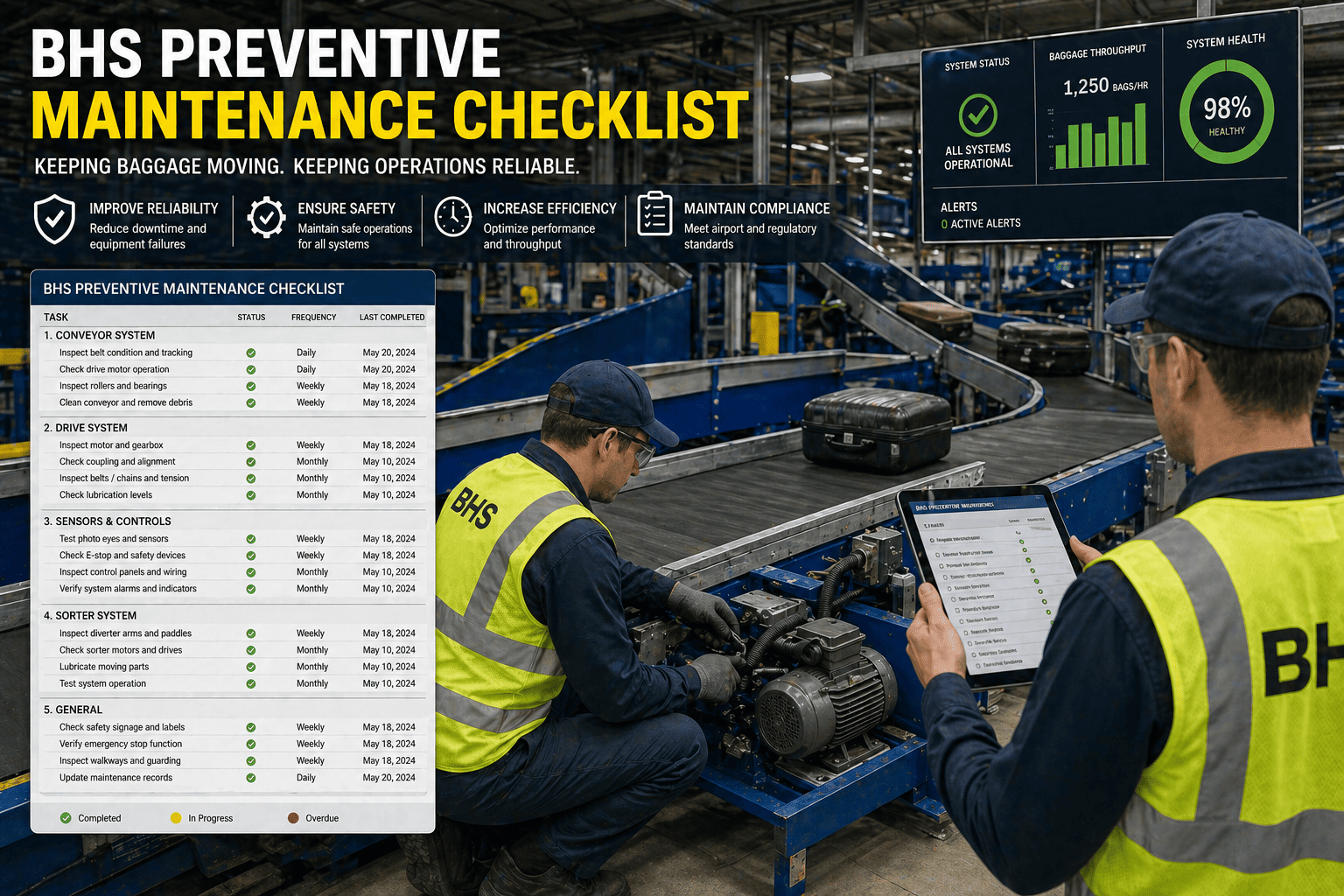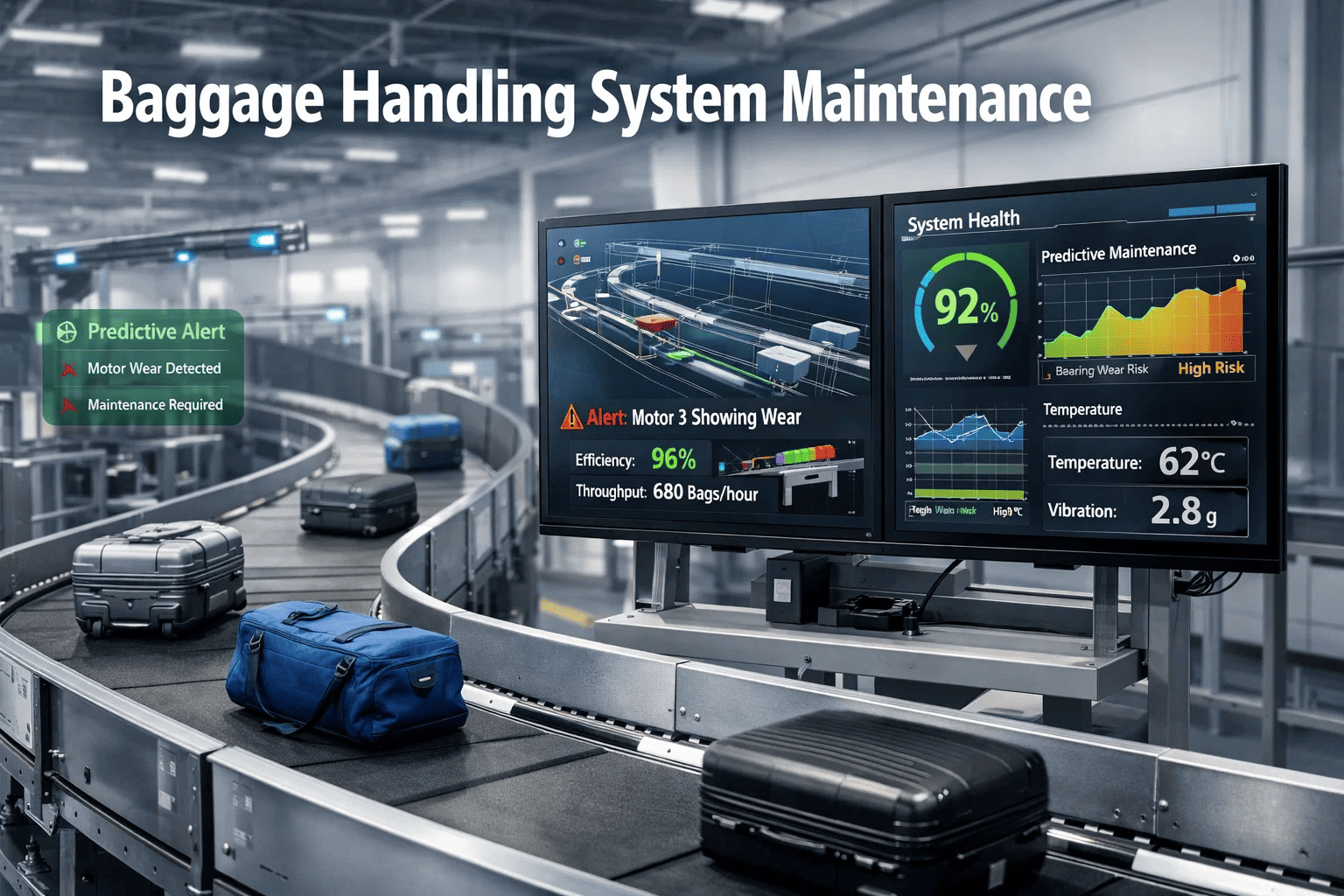
A baggage handling system is a single long machine made of hundreds of conveyors, and when one belt stalls in a sortation loop the jam can back up an entire pier during a peak bank. The failures that cause it almost never arrive without warning — a belt creeping off track, a bearing starting to whine, a motor drawing a little more current each week. Read those three signals and the stall becomes a scheduled repair. The OXMAINT AI — the AI-powered maintenance management software — reads them and turns each one into a work order before the belt gives out.
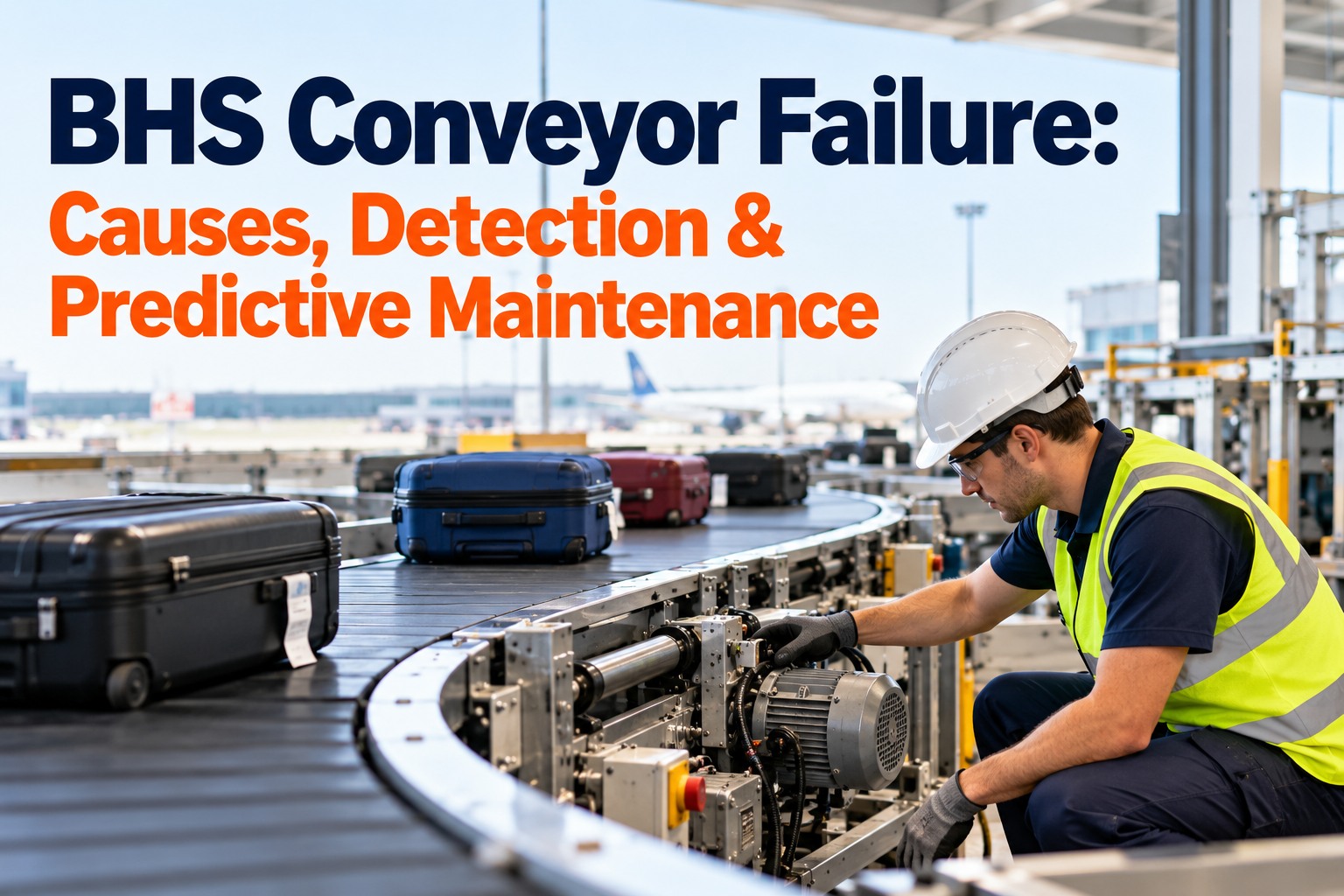
BHS Conveyor Failure: Causes, Detection & Predictive Maintenance
Most conveyor failures announce themselves in one of three signals long before the belt stops. OXMAINT AI watches belt tension, roller vibration and motor current, catches the drift, and raises the work order while bags are still moving.
Where a Conveyor Actually Fails
A baggage conveyor is a chain of parts that each fail in their own way — and knowing which part is failing is half of fixing it before it stops. Walk the machine from belt to drive and the failure points line up; start free and map every conveyor's failure points in OXMAINT AI.
The Three Signals That See It Coming
Nearly every one of those failures shows up first in one of three measurable signals. This is the heart of baggage-conveyor predictive maintenance — three readings, continuously watched, each catching a different family of faults; book a demo to see all three signals monitored live in OXMAINT AI.
Failure Cause, Early Signal, Right Fix
Each common failure has a signal that flags it and a fix that answers it — the value is in acting on the signal rather than the stall. These are the faults a baggage-conveyor program watches for; start free and tie every failure cause to its signal in OXMAINT AI.
Reactive vs Predictive, Side by Side
The same conveyor, the same fault — the difference is only whether you saw it coming. That difference is a peak-hour jam versus a quiet overnight swap; book a demo to move your BHS from reactive to predictive in OXMAINT AI.
- The belt stalls mid-bank
- Bags back up across the pier
- A crew is pulled to an emergency
- The fault is found after it stops
- Downtime lands at the worst moment
- The signal drifts out of range
- A work order is raised early
- The part is staged in advance
- The fix is planned, not scrambled
- The swap happens off-peak
A Jam at a Sortation Pinch Point Does Not Stay Local.
One stalled belt in the wrong place backs up every conveyor feeding it, and bags miss the aircraft. The OXMAINT AI maintenance management software watches belt tension, roller vibration and motor current across the system and raises the work order on the drift — so the fault is caught at one conveyor instead of felt across the pier.
How OXMAINT AI Runs Conveyor PdM
Predictive maintenance only works when the signals are watched, judged and turned into action without anyone staring at a trend — and that is the job the software does. Here is what the OXMAINT AI maintenance management software brings to baggage-conveyor reliability; start free and run your BHS PdM program in OXMAINT AI.
Frequently Asked Questions
Catch the Belt Before It Stops the Bank.
Run baggage-conveyor predictive maintenance inside the OXMAINT AI maintenance management software — three-signal monitoring, drift alerts, automatic work orders, critical-asset priority, spare-part staging and failure-history trends — so belt tension, roller vibration and motor current are watched across the system and the failure is caught at one conveyor, off-peak.