Airport Landside Maintenance: Roads, Curbside & Transport
By Lewis Abbott on April 22, 2026
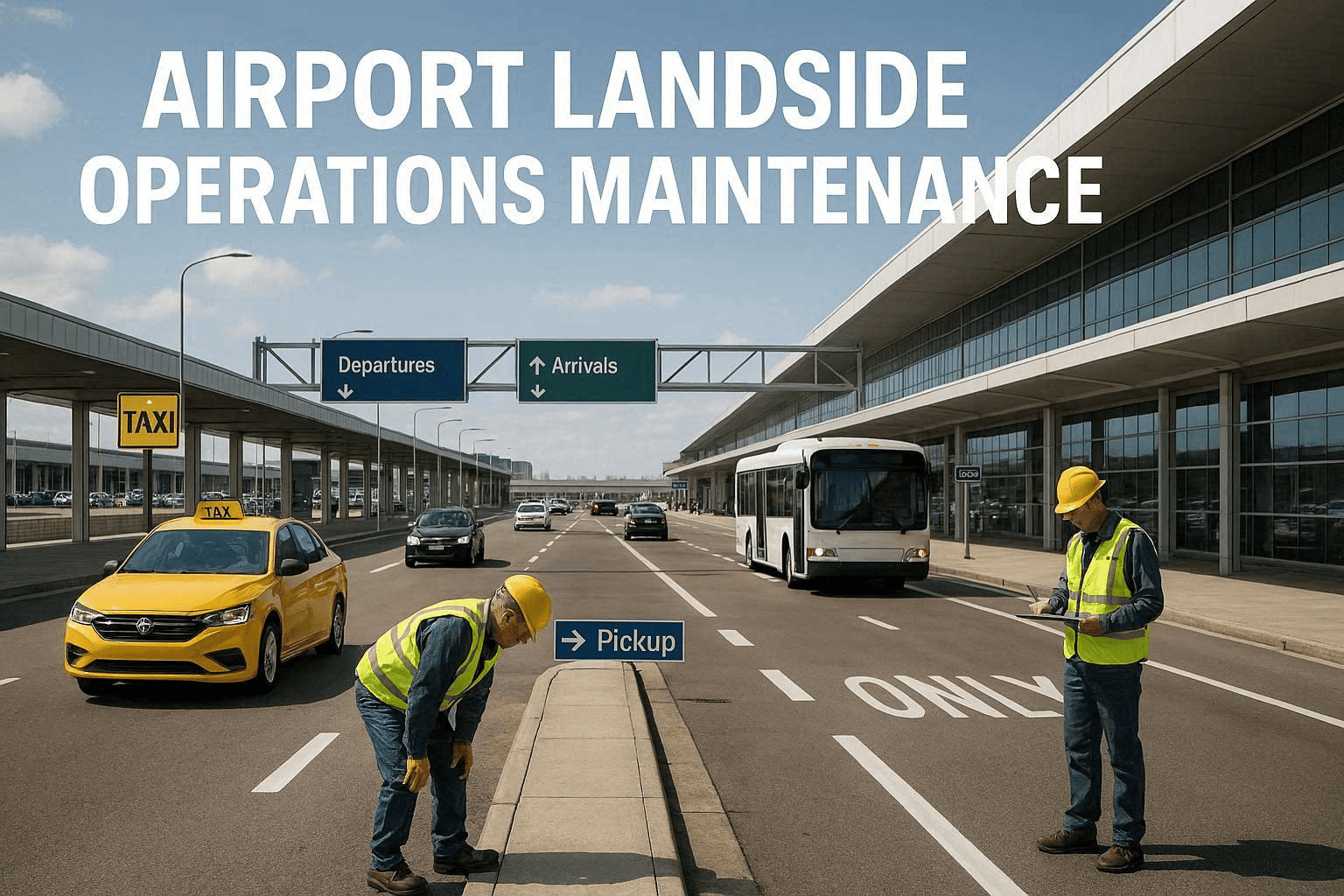
Landside is the first impression passengers form of your airport — and the last. Roads, curbside drop-off zones, bus bays, car parks, and ground transport hubs take a beating from vehicle loads, weather exposure, and continuous 24/7 throughput that exceeds most road infrastructure in intensity. Yet landside maintenance is routinely the least digitized part of airport operations. Pavement faults get reported by drivers, not sensors. Curbside lighting failures show up in complaints before work orders. Ground transport equipment breakdowns disrupt taxi and rideshare flow during peak arrivals. Start a free trial to bring your landside assets under CMMS control, or book a demo to see how Oxmaint handles ground transport maintenance.
$100.76
Cost per minute of aircraft block time — landside delays cascade airside
1 in 4
US flights delayed or cancelled Jul 2024–Jun 2025 — often triggered by ground failures
4–8×
Emergency repair cost multiplier vs. planned maintenance for pavement and infrastructure
25–35%
Labor time recovered when landside crews use mobile CMMS instead of paper dispatch
What Landside Airport Maintenance Covers
Landside airport maintenance encompasses every infrastructure element outside the terminal building and airside fence — from the highway access ramp to the curbside departures lane to the remote car park. It's a category that most CMMS implementations underserve because it sits between airport operations and transportation management, owned by neither fully. The result: reactive road patching, untracked signage defects, and ground transport vehicles maintained by spreadsheet until something fails at the worst possible moment.
01
Access Roads & Highway Ramps
Asphalt condition, drainage systems, signage, lighting, and lane markings. High traffic intensity requires quarterly pavement inspections and rapid pothole response SLAs
02
Curbside Infrastructure
Departures and arrivals curbs, taxi lanes, rideshare staging, bollards, canopy structures, LED signage, and passenger loading zone lighting — all requiring proactive PM schedules
03
Ground Transport Hubs
Bus bays, train station infrastructure, rental car facilities, coach staging areas — mechanical systems, HVAC, passenger information displays, and platform safety elements
04
Multi-Story Car Parks
Structural condition, barrier systems, PARCS equipment, lighting, ventilation, fire suppression, EV charging infrastructure — with rising EVs demanding new maintenance protocols by 2026
05
Landside Vehicles & Transport Fleet
Airport buses, staff shuttles, courtesy vehicles, airside transfer coaches — runtime-based PM schedules, pre-trip inspection checklists, and DOT compliance documentation
06
Drainage & Storm Systems
Surface drainage, retention ponds, de-icing runoff collection, culverts — seasonal inspection schedules critical in northern climates with winter operations pressure
07
Landside Safety Systems
Traffic signal systems, pedestrian crossing infrastructure, emergency call points, CCTV coverage of landside zones — with documented maintenance required for liability protection
08
Passenger Connectivity Infrastructure
Moving walkways connecting terminals to remote piers, covered walkways, inter-terminal connector systems — high-passenger-load assets requiring condition-based maintenance triggers
The 4 Recurring Landside Maintenance Failures
Landside infrastructure fails in predictable patterns. The same failure modes recur across airports — not because the assets are unusually fragile, but because landside maintenance is chronically underplanned. These four failure patterns account for most landside operational disruptions. Book a demo to see how Oxmaint prevents each one.
Weekly automated inspection checklist via mobile CMMS
Pavement deterioration
Annual inspections miss progressive cracking between cycles
Vehicle damage claims, drainage failure, FOD risk near terminal apron
Quarterly condition scoring with photo documentation trigger
Bus/shuttle breakdown
Mileage-based PM deferred when vehicles are in heavy service
Remote car park passengers stranded, rideshare congestion, media incidents
Runtime-triggered PM regardless of schedule pressure
PARCS barrier failure
Mechanical wear not tracked — repaired reactively at failure
Car park exit queues, revenue loss, traffic backing onto landside roads
Cycle-count-based PM using embedded cycle counters with CMMS integration
How Oxmaint Manages Landside Infrastructure
Oxmaint extends the same CMMS discipline that airports apply to BHS and airfield assets to their landside infrastructure — with mobile-first field access, QR asset scanning, and automated PM triggers that don't require a technician to remember to initiate them. Start a free trial and register your first landside assets in under 20 minutes.
Mobile Inspection Rounds
Landside inspection teams use the Oxmaint mobile app to complete structured checklists at each asset — curbside posts, drainage grates, bus bay platforms — with photo capture and digital sign-off. No paper. No transcription. No missed items.
QR-Tagged Asset Registry
Every landside asset — from bollard to barrier arm — gets a QR tag. Field technicians scan to pull full asset history, open work orders, or log defects instantly. No radios to the control room. No paper lookup sheets in the van.
Seasonal PM Scheduling
Winter operations trigger pre-season inspection campaigns across drainage, de-icing runoff systems, and road surface condition. Summer triggers curbside lighting and pavement checks. Oxmaint auto-generates seasonal PM batches from asset records.
Fleet Runtime Tracking
Airport buses, shuttles, and courtesy vehicles log mileage and engine hours through the CMMS. PM triggers fire at the correct intervals — not calendar days. When a shuttle runs 3× its normal distance in one week, the PM interval adjusts automatically.
Reactive vs. Planned Landside Maintenance
Reactive Landside Approach
✕Potholes reported by drivers — repaired days or weeks later
✕Lighting outages found by passengers, not maintenance teams
✕Bus breakdowns handled by emergency callouts — peak hour failures
✕No documentation trail for liability claims or insurance
✕Seasonal preparation missed — winter drainage failures catch teams off-guard
Planned CMMS-Driven Approach
✓Quarterly pavement inspection auto-generates work orders with priority scoring
✓Weekly lighting rounds with checklist — defects found before passenger impact
✓Runtime PM fires on bus fleet — vehicles serviced before failure windows
✓Full digital maintenance history — audit-ready for liability defense
✓Seasonal PM campaigns auto-launch 6 weeks before first frost / summer peak
Your landside infrastructure sets the tone for every passenger's experience. Oxmaint gives your ground operations team the same proactive maintenance capability that your airside and terminal teams already need — mobile-first, automated, and audit-ready.
Industry average 65 without proactive inspection program. CMMS-driven airports average 74.
Lighting Fault Response Time
Target: <4 hours
Mobile CMMS dispatch reduces average response from 12 hours to under 4 hours at most airports.
Fleet PM Compliance Rate
Target: 95%+
Runtime-triggered PM achieves 92–97% compliance vs. 54% on calendar-only systems.
Curbside Incident Rate
Target: Zero safety incidents
Proactive inspection programs reduce passenger safety incidents on landside by 60–80%.
Frequently Asked Questions
Can Oxmaint track pavement condition and generate inspection reports for insurance purposes?
Yes. Oxmaint supports structured pavement inspection checklists with condition scoring, photo attachment, and GPS tagging. Every inspection creates a timestamped, auditable record showing asset condition at a specific date — critical documentation for liability claims involving vehicle damage or passenger incidents on airport roads. Reports can be exported in multiple formats for insurance or legal purposes. Start a free trial to set up your pavement inspection program.
How does landside vehicle fleet maintenance integrate with terminal and airside CMMS operations?
Oxmaint manages landside vehicle fleets within the same platform as terminal and airside assets. A bus that operates both on landside roads and at terminal gates appears in a single asset record. PM schedules, inspection history, and parts records are unified — so when a bus crosses zones, there's no hand-off between systems or duplication of maintenance records.
What does seasonal maintenance scheduling look like for airports in cold-climate regions?
Oxmaint allows you to configure seasonal PM campaigns that auto-launch based on calendar triggers or weather alerts. Pre-winter campaigns cover drainage clearance, de-icing runoff system inspection, road marking condition, and vehicle cold-start preparation. Post-winter campaigns cover pavement damage assessment, pothole repair work orders, and curbside infrastructure condition scoring. All campaigns generate work orders automatically — no manual planning each season. Book a demo to configure your seasonal landside maintenance calendar.
Does Oxmaint support maintenance management for EV charging infrastructure in car parks?
Yes. EV charging stations are registered as assets in the Oxmaint system with manufacturer-specific PM schedules, fault reporting workflows, and utilization tracking. As airports expand EV charging infrastructure to meet sustainability targets, Oxmaint scales to manage charging points alongside traditional car park assets — PARCS equipment, lighting, structural condition — in one unified view for facilities managers.
Landside Deserves the Same Maintenance Discipline as the Runway.
Oxmaint gives your landside operations team mobile-first asset management, automated PM scheduling, fleet runtime tracking, and full documentation — so curbside infrastructure, access roads, and ground transport never become the weak link in your passenger experience.