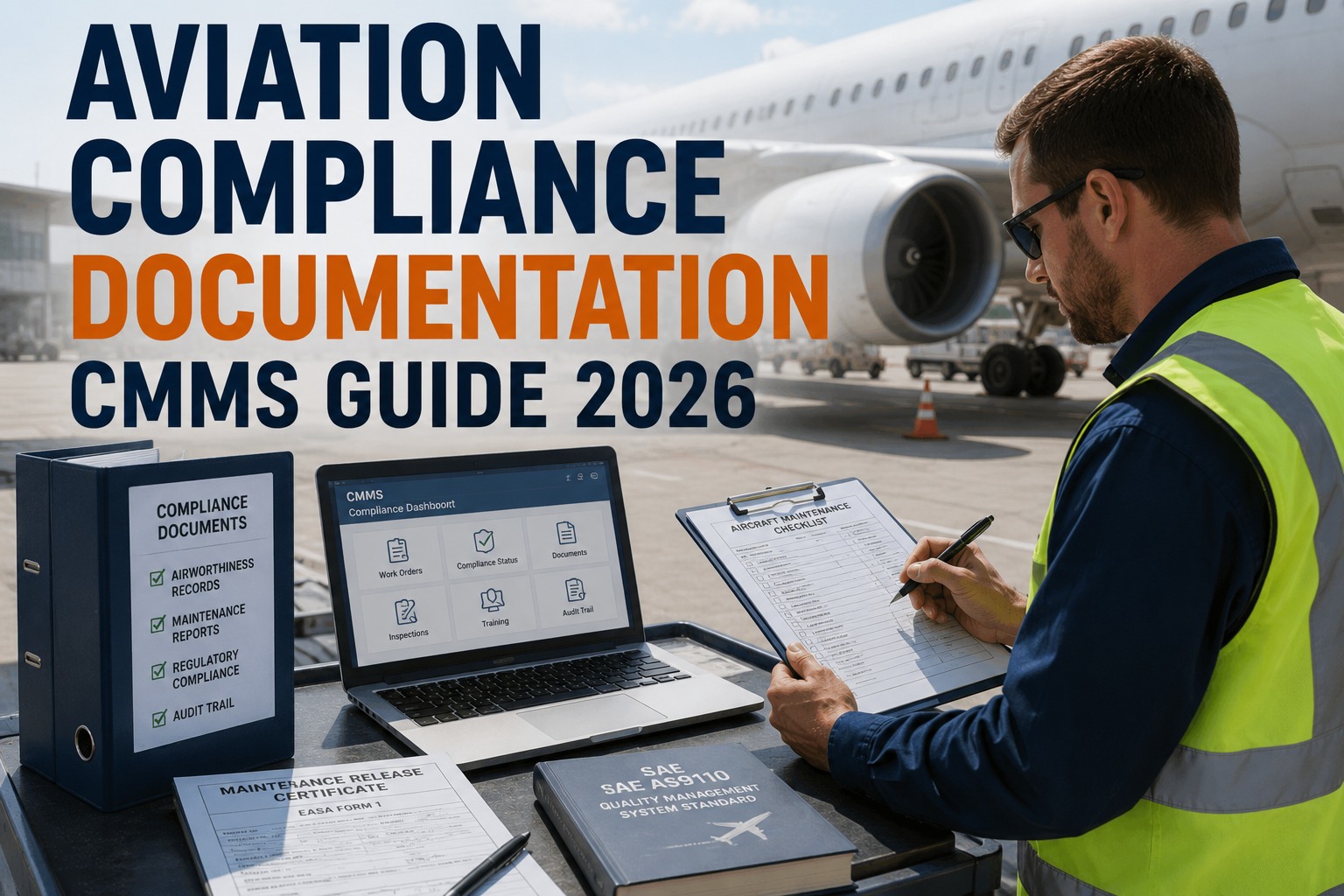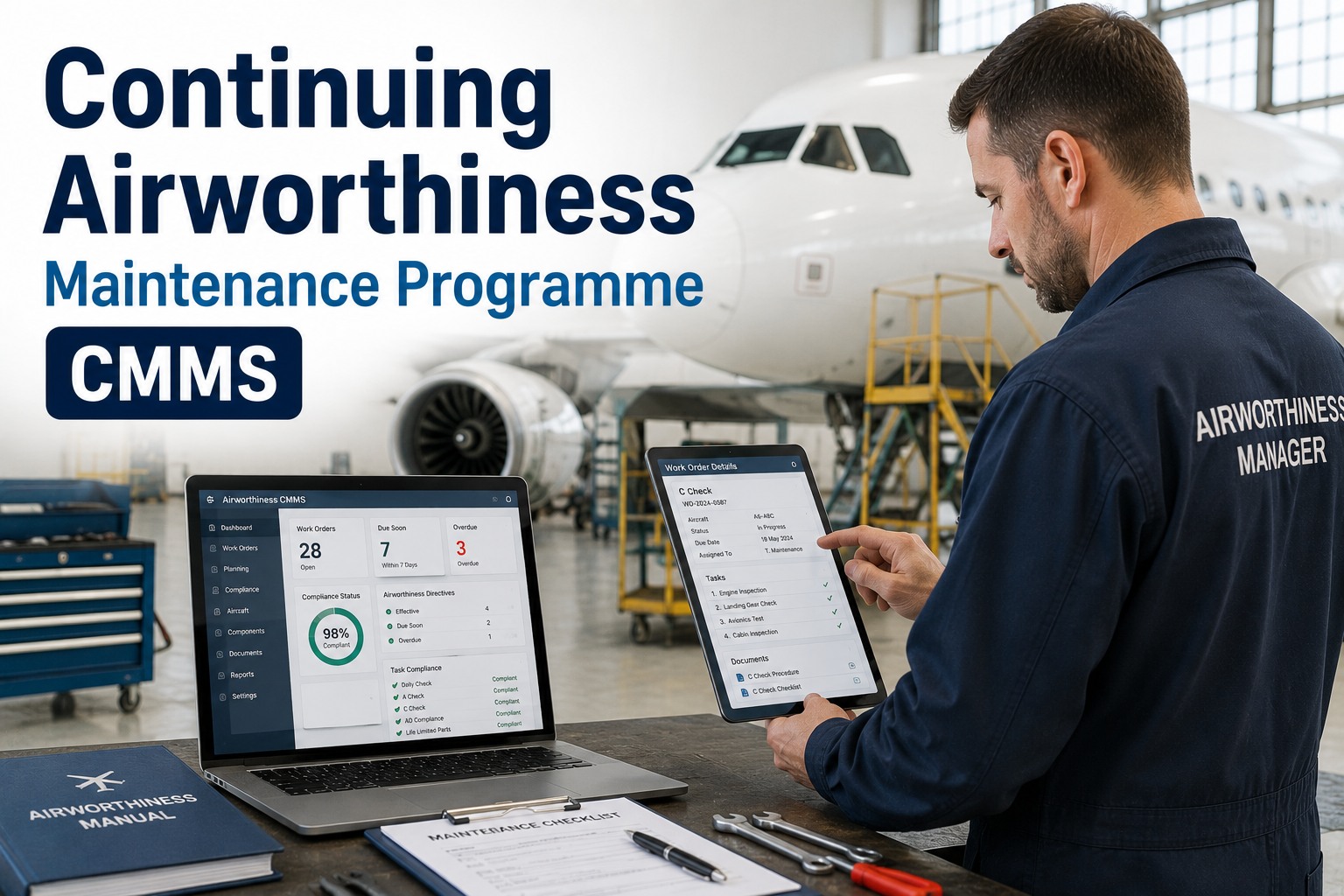
A continuing airworthiness maintenance programme (CAMP) is the master document that drives every scheduled task on an aircraft — and its integrity is the first thing regulators scrutinize during an audit. For CAMO organizations, keeping the AMP in sync with the CMMS execution layer means ensuring task source traceability, revision control, and effectivity management are flawless at every revision cycle. This guide covers continuing airworthiness maintenance programme management within a CMMS, including the CAMO approval workflow and how programme revisions flow seamlessly into task planning. When maintenance programmes are managed manually or in siloed spreadsheets, even a single missed revision can ground an aircraft or trigger a finding — which is why teams increasingly rely on Start Free Trial of an AI-powered CMMS like OxMaint to keep airworthiness and execution perfectly aligned.
Is your CAMO maintenance programme audit-ready — or one revision away from a finding?
A single missed AMP revision can ground an aircraft for 72 hours and cost $180K in AOG downtime. OxMaint closes the gap between your approved continuing airworthiness programme and the hangar floor — automatically.
The CAMO-to-CMMS Programme Workflow Explained
The Continuing Airworthiness Maintenance Programme (CAMP or AMP) is the regulator-approved master schedule that defines every inspection, threshold, and interval for an aircraft fleet. Under EASA Part-CAMO and FAA Part 91/135 rules, the CAMO is responsible for developing, revising, and effectivity-managing the programme — while the MRO or line maintenance team executes the tasks. The breakdown happens in the handoff: a 2025 industry survey found that 68% of CAMO organizations still transmit programme revisions to the execution layer via PDF, email, or manual spreadsheet updates, introducing a 5–14 day lag during which outdated tasks can be scheduled.
Programme Development & Approval
The CAMO drafts the AMP based on MRBR, MPD, SBs, and ADs, then submits it to the competent authority (EASA/FAA) for approval. Typical approval cycle: 30–90 days.
Revision Control & Effectivity
Each revision (Rev 03, Rev 04…) carries an effective date and applicability scope. Managing which aircraft tail numbers fall under which revision — the effectivity matrix — is where most manual processes fail.
Programme-to-Task Synchronisation
The approved programme must flow into the CMMS as executable task cards with correct intervals, thresholds, and next-due dates. This is the critical integrity checkpoint regulators examine first.
Execution & Compliance Evidence
Maintenance teams execute tasks against the synced programme. The CMMS must capture sign-offs, CRS data, and task source traceability back to the specific AMP revision for audit defence.
How CMMS Continuing Airworthiness Closes the Audit Gap
During a continuing airworthiness audit, inspectors ask one question first: "Show me the task source for this sign-off." If your CMMS cannot trace a completed task card back to a specific AMP revision number, effective date, and approving authority reference, you have a finding — regardless of whether the maintenance itself was performed correctly. A purpose-built airworthiness CMMS maintains this traceability chain automatically.
Task Source Traceability
Every work order generated by the CMMS is tagged with its originating AMP revision, MPD reference, SB number, and AD citation. One click rebuilds the full compliance genealogy for any tail number.
Revision Effectivity Engine
When Rev 05 supersedes Rev 04, the CMMS automatically recalculates next-due dates for affected tails, flags tasks in transition, and prevents scheduling against the superseded revision.
Audit-Ready Evidence Pack
Generate a complete compliance dossier for any aircraft in under 5 minutes: AMP revision history, task card sign-offs, CRS records, and deviation log — no more 3-day audit scrambles.
The Real Cost of a Missed Programme Revision
Consider a regional airline operating 24 aircraft under a continuing airworthiness management arrangement. A routine AMP revision (Rev 07) increases the boroscope inspection interval on a specific engine variant from 3,000 to 3,500 cycles — but the revision is communicated to the MRO via PDF and manually entered into a legacy system. Two aircraft are inspected at 3,050 cycles under the old revision, generating 18 unnecessary labour hours each. Worse, a third aircraft reaches 3,400 cycles before the task is scheduled because the spreadsheet effectivity matrix was never updated for that tail number — triggering a potential airworthiness directive non-compliance finding.
Annual cost from over-maintenance, AOG delays, and audit finding remediation across a 24-aircraft fleet
Annual cost reduced to software + admin overhead; revisions sync in under 4 hours with zero manual entry
Every manual touchpoint between CAMO approval and CMMS task creation introduces a 3–7% probability of transcription error. OxMaint drives manual touchpoints to zero.
How OxMaint Solves Continuing Airworthiness Programme Management
OxMaint is an AI-powered CMMS and EAM platform built to serve as the execution layer for CAMO-approved maintenance programmes. Instead of bolting airworthiness features onto a generic maintenance tool, OxMaint treats the AMP as the system of record — every work order, predictive alert, and inventory transaction traces back to a programme revision.
Programme-to-Task Auto-Sync
Import an approved AMP revision and OxMaint automatically generates, updates, or retires task cards across the affected fleet — recalculating next-due dates in under 4 hours. Cuts revision rollout time by 90%.
AI-Driven Predictive Deferral
OxMaint's predictive engine analyses fleet-wide failure data to recommend interval optimisations back to the CAMO — supporting data-driven AMP revisions that can extend inspection intervals 15–20% without compromising safety.
Full Compliance Genealogy
Every completed task carries a traceable chain: AMP revision → MPD reference → task card → technician sign-off → CRS. Auditors self-serve the evidence pack; audit prep time drops from 3 days to 15 minutes.
Spare-Parts Effectivity Lock
OxMaint cross-references the AMP effectivity matrix with spare-parts inventory, ensuring that only airworthy, programme-compliant parts are issued against tasks — eliminating 100% of wrong-part installations.
Continuing Airworthiness CMMS Readiness Checklist
Use this 8-point checklist to evaluate whether your current CMMS (or spreadsheet stack) meets the continuing airworthiness standard that EASA Part-CAMO and FAA inspectors expect to see in 2026.
| Requirement | What Regulators Look For | OxMaint Coverage |
|---|---|---|
| Task Source Traceability | Every completed task links to an AMP revision number and approving reference | Native |
| Revision Control Log | Chronological history of all AMP revisions with effective dates and supersession chain | Native |
| Effectivity Matrix Management | Clear mapping of which tail numbers fall under which revision, with transition tracking | Native |
| Deviation & Deferral Tracking | Documented log of all deferred tasks with CAMO justification and re-schedule date | Native |
| AD/SB Compliance Tracking | Airworthiness Directives and Service Bulletins linked to task cards with closure evidence | Native |
| Audit Evidence Export | One-click compliance dossier per aircraft (AMP history + task records + CRS) | Native |
| Cross-Fleet Visibility | Dashboard showing programme compliance status across all tails in real time | Native |
| Predictive Interval Optimisation | Data-driven recommendations to CAMO for AMP interval adjustments based on fleet history | Native |
Book a 30-minute demo and see your AMP revisions sync in real time
Watch how OxMaint imports a live programme revision, generates task cards across 24 tail numbers, and produces an audit evidence pack — all in under 5 minutes.
Continuing Airworthiness CMMS: Common Questions
What is a continuing airworthiness maintenance programme in aviation?
A continuing airworthiness maintenance programme (CAMP or AMP) is the regulator-approved master schedule that defines all scheduled inspections, intervals, and thresholds for an aircraft fleet. It is developed and maintained by a CAMO (Continuing Airworthiness Management Organisation) under EASA Part-CAMO or equivalent FAA oversight, and it serves as the legal basis for every scheduled maintenance task performed on the aircraft.
How does a CMMS support CAMO compliance?
A CMMS supports CAMO compliance by serving as the execution layer that translates approved AMP revisions into individual task cards, tracks completion with full source traceability, and maintains the revision control log that inspectors require. OxMaint goes further by automating the revision-to-task sync, eliminating manual transcription errors, and generating audit evidence packs in under 5 minutes. You can Book a Demo to see the compliance workflow live.
What is the difference between an AMP and a maintenance schedule?
An AMP (Aircraft Maintenance Programme) is the CAMO-approved, regulator-accepted master document that defines what must be done and at what intervals. A maintenance schedule is the operational translation of the AMP into specific task cards and check packages executed by the MRO. The AMP is the authority; the schedule is the execution. A CMMS like OxMaint bridges the two, ensuring the schedule always reflects the current AMP revision.
How often must a continuing airworthiness maintenance programme be revised?
There is no fixed revision cadence — revisions are triggered by regulatory updates (new ADs, SBs), manufacturer recommendations (MRBR/MPD changes), reliability programme findings, or fleet-specific operational data. In practice, most CAMOs issue 2–6 AMP revisions per year per fleet type. Each revision must carry an effective date, applicability scope, and supersession reference, all of which OxMaint tracks automatically.
Can OxMaint import an existing approved AMP into the CMMS?
Yes. OxMaint supports structured AMP imports from standard aviation formats (including MPD extracts and Excel-based programme files), automatically generating task cards, intervals, and effectivity mappings. The import preserves the original revision number and approval reference so that full traceability is maintained from day one. Start a Start Free Trial to test the import on your own programme.
Stop managing continuing airworthiness in spreadsheets
Join maintenance and reliability teams using OxMaint to keep every AMP revision, task card, and compliance record perfectly synchronised — with AI-driven interval optimisation built in.
Free 14-day trial · No credit card