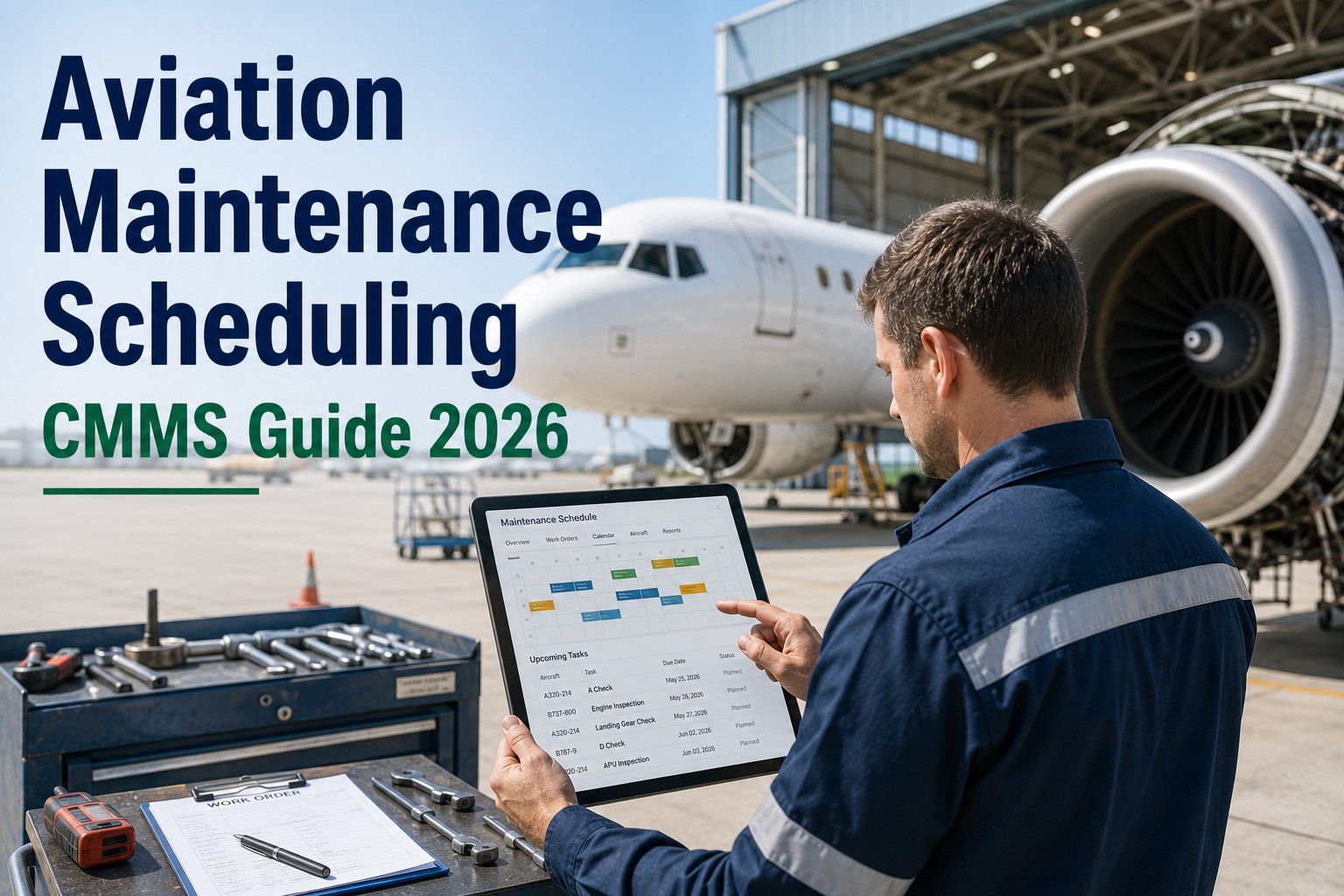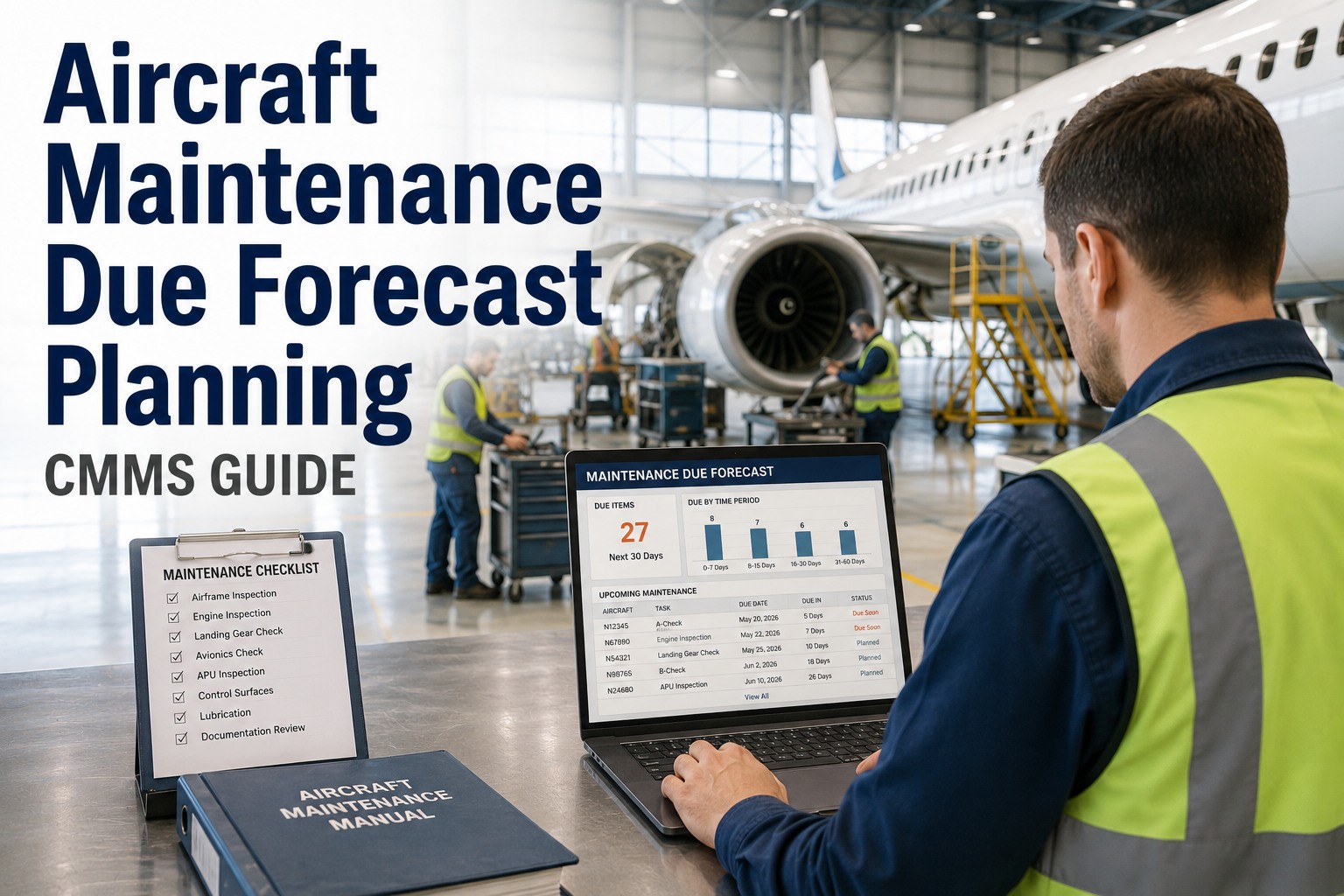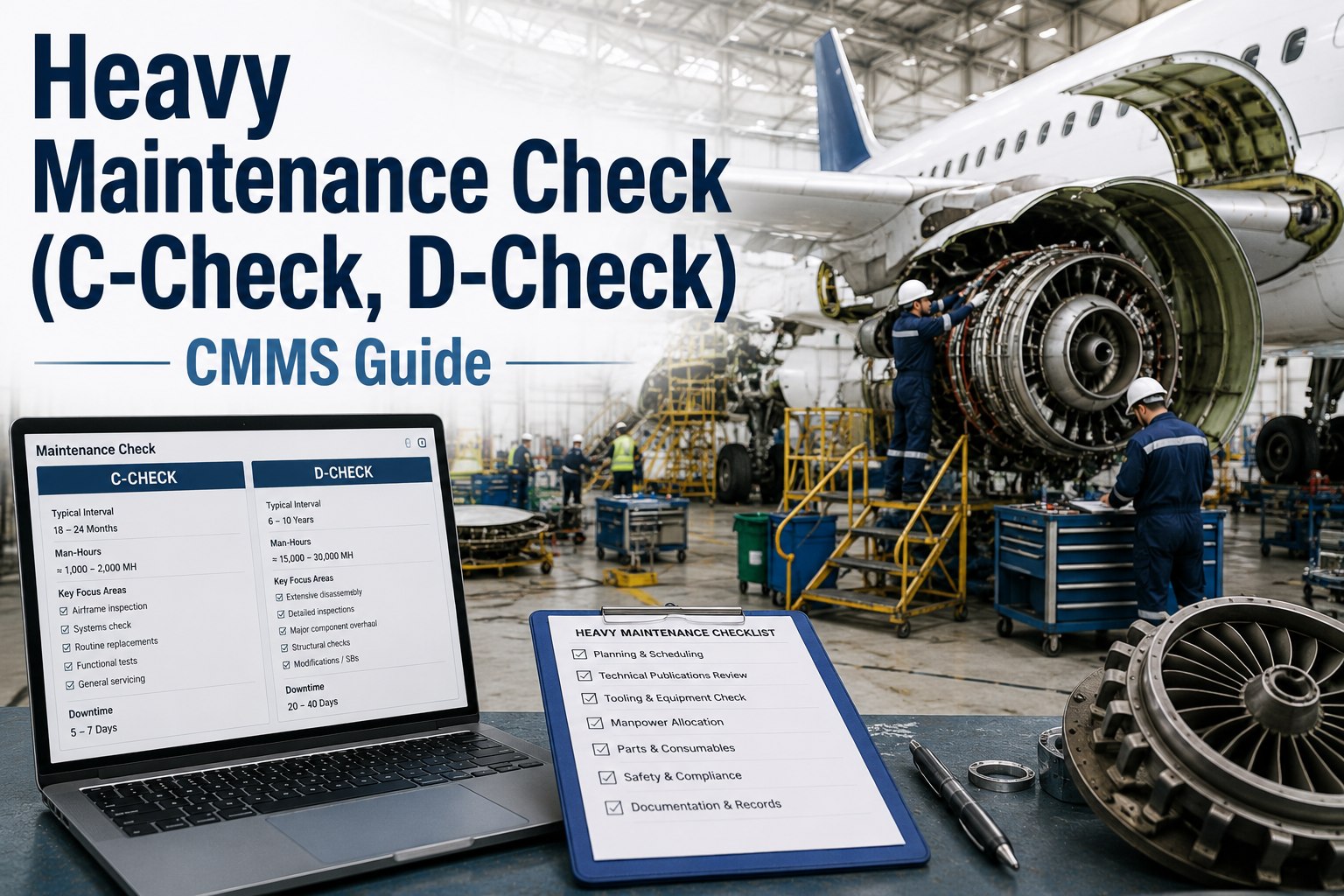
Heavy maintenance checks — C-checks every 18–24 months and D-checks every 6–10 years — are the largest, most complex scheduled events in commercial aviation, grounding an aircraft for 10 days to 6 weeks and consuming 20,000–50,000 labor hours per visit. This heavy maintenance check CMMS guide covers how modern MRO teams use AI-powered CMMS platforms to coordinate task-card packages, non-routine discovery, manpower loading and parts kitting so aircraft release back to service on schedule and on budget. Whether you manage a line station or a Tier-1 hangar, the right software turns a chaotic D-check into a repeatable, auditable process — and you can Start Free Trial to see how OxMaint handles heavy check coordination end-to-end.
Can your hangar absorb a 45-day D-check without bleeding margin?
A single delayed heavy maintenance check can cost $150K–$400K per day in lost revenue, lease penalties and crew reassignments. OxMaint digitizes the entire C-check and D-check work package — from induction to release — so your team ships the aircraft on the promised date.
What distinguishes a C-check from a D-check in modern heavy maintenance?
Both events fall under MSG-3 structured inspections, but their scope, duration and cost differ by an order of magnitude. Understanding where your aircraft sits in the heavy check cycle drives every planning decision — manpower, hangar slot reservation, parts pre-order and spares pool depth.
| Parameter | C-Check | D-Check (Heavy Structural Visit) |
|---|---|---|
| Typical interval | 18–24 months / 6,000 FH | 6–10 years / 30,000–40,000 FC |
| Ground time | 7–14 days | 28–45 days (wide-body up to 60) |
| Labor hours | 3,000–8,000 MH | 20,000–50,000+ MH |
| Scope | Zone inspections, system checks, selected structural | Full structural teardown, paint, interior, mods, STCs |
| Cost (narrow-body) | $1M–$3M | $3M–$8M+ |
| Non-routine ratio | 25–35% | 35–55% of total labor hours |
| Planning horizon | 90–120 days | 180–365 days |
A 12-year-old A320 arriving for a D-check carries a planned work package of 1,400 task cards. By day 12, non-routine discovery adds 620 additional cards — 44% growth. Without a CMMS that auto-resequences dependencies and re-balances shifts in real time, the release date slips by 9 days. At $185K/day in lost revenue and lease costs, that slip alone costs the operator $1.66M. OxMaint flags the critical path daily and re-optimizes manpower allocation so the team recovers 6 of those 9 days.
How to plan a heavy maintenance check: a 7-phase timeline
A D-check planned 12 months out still fails when phase handoffs are manual. This timeline maps the critical milestones — from fleet utilization forecasting through final airworthiness release — and where CMMS automation eliminates the whiteboard.
Work Package Definition
Compile the MPD-driven task list, merge operator-specific modifications, aging-fleet programs (CPCP, SSID) and AD/SB compliance. OxMaint auto-generates the work package from the aircraft's tail-specific maintenance history and flags cards due by flight hours, cycles and calendar.
Long-Lead Parts & Spares Reservation
Identify rotables and consumables with 120+ day procurement lead times — landing gear beams, flap tracks, fuselage skins. OxMaint cross-references the work package against your spares pool and auto-creates purchase requisitions for shortages.
Hangar Slot & Manpower Lock
Reserve the bay, docking equipment, cranes and scaffolding. Lock shift coverage across A&P mechanics, avionics techs, NDI inspectors and structural specialists. OxMaint's capacity planner visualizes skill-matrix gaps before they become bottlenecks.
Task Card Kitting & Pre-Induction
Print, route-sign and kit every routine card with its parts, tools and consumables into hangar-ready totes. Pre-stage 70–80% of the package so mechanics never wait for materials on day one. OxMaint tracks kit completion percentage in real time.
Aircraft Induction & Tear-Down
Tow-in, jacking, cabin strip, paint removal. Open the check in OxMaint — every technician sees their assigned cards on mobile devices with interactive PDFs, required GSE and safety tags. Non-routine findings are raised in-line and auto-routed to engineering for disposition.
Execution & Non-Routine Management
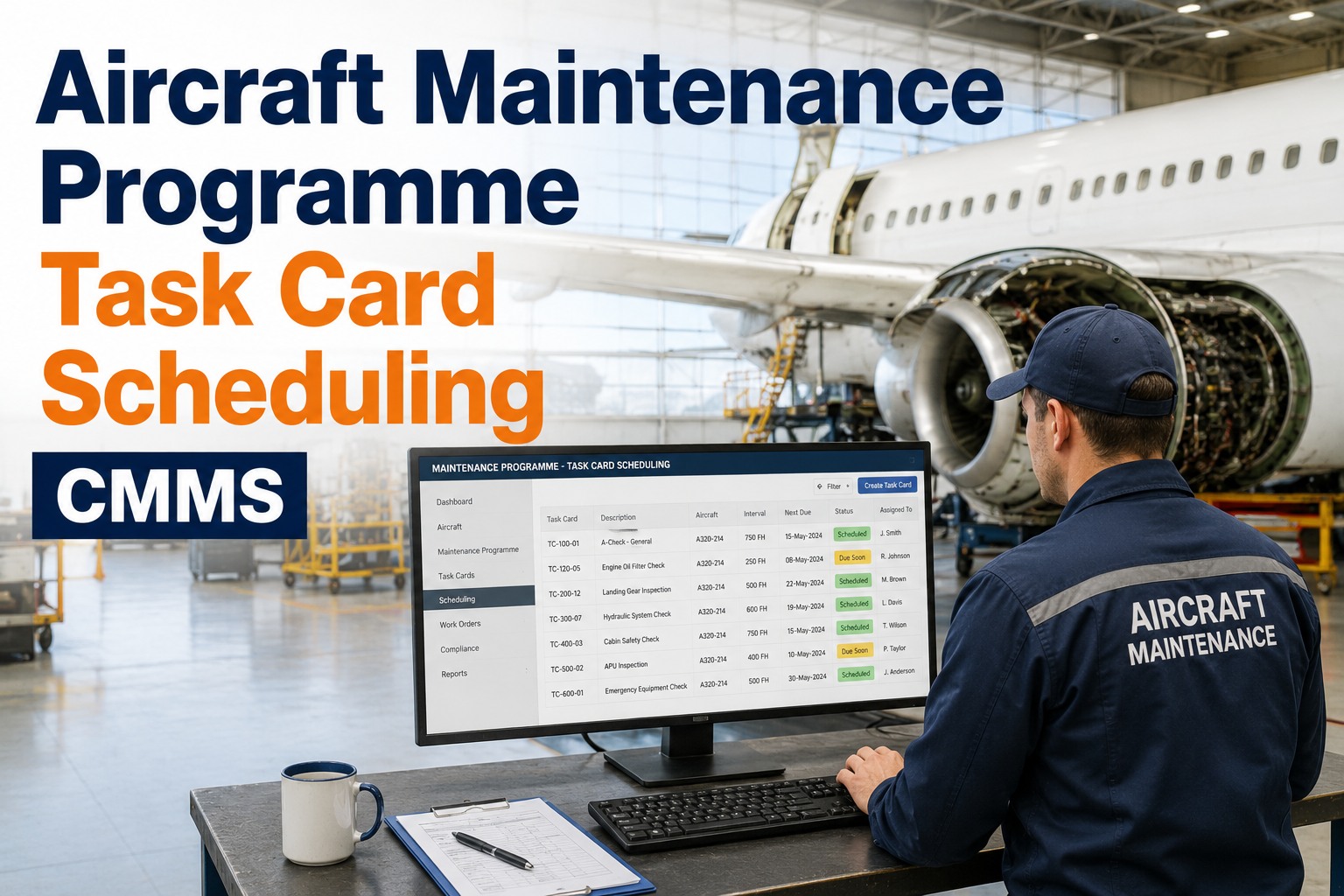
Daily critical-path stand-ups driven by OxMaint's live Gantt — cards blocked by parts, engineering or inspector availability surface in red. Non-routine cards flow through RII review without paper. The system re-balances remaining manpower across shifts automatically.
Reassembly, Ground & Flight Test
Re-install components, restore systems, conduct leak checks, gear swings and functional tests. OxMaint compiles the E-signature trail, CRS (Certificate of Release to Service) package and updated aircraft logbook entries — audit-ready for Part 145 / Part M inspectors.
How OxMaint solves heavy check coordination
Spreadsheets and shared drives lose 12–18% of non-routine findings between the hangar floor and the planning office. OxMaint replaces that friction with four AI-driven capabilities that map directly to heavy maintenance outcomes.
Tail-Specific Work Package Builder
Auto-compiles the full task-card package from MPD, operator programs, AD/SB and fleet history — hours, cycles and calendar accurate to the tail number. Eliminates 60–80 hours of manual package assembly per check.
Mobile Non-Routine Capture
Technicians photograph findings, raise non-routine cards and route them to engineering for disposition — all from a tablet at the aircraft. No paper, no re-keying, no lost findings between shifts.
Parts Kitting & Inventory Sync
Pre-build kits against the work package and track completion live. When a card opens, OxMaint confirms parts are at the bay — and auto-requisitions when a non-routine consumes a spare not in the kit.
Critical-Path Analytics
Live Gantt with dependency logic shows which cards are blocking release — and which shifts are under- or over-loaded. AI suggests reallocation to recover schedule slips before they compound.
What does a CMMS for heavy maintenance cost — and what does it save?
A hangar running 8 heavy checks per year on spreadsheets and legacy MRO software typically loses 6–9 days per check to material delays, documentation gaps and shift-handoff errors. Quantifying that loss is the first step to justifying the switch.
Example: 5 days recovered × $185K/day × 8 checks = $7.4M annual savings against a platform subscription that costs a fraction of one day's AOG rate.
| Heavy Check KPI | Spreadsheet / Legacy MRO | OxMaint CMMS | Impact |
|---|---|---|---|
| Non-routine capture rate | 70–80% | 100% | No lost findings |
| Kit completeness at induction | 55–65% | 90%+ | 35% fewer delays |
| CRS package compile time | 3–5 days | 2–4 hours | Faster release |
| Schedule recovery capability | 0–2 days | 4–7 days | $1M+ saved per check |
| Audit prep time | 2–3 weeks | 1–2 days | Always audit-ready |
Book a 30-minute demo and watch OxMaint build a D-check work package live
We will load your tail-specific MPD data, show non-routine capture on a tablet, and run the critical-path optimizer in real time. No slide deck — just the software on your aircraft.
Heavy maintenance check CMMS: your questions answered
What is the difference between a C-check and a D-check?
A C-check is a major zone inspection performed every 18–24 months requiring 3,000–8,000 labor hours and 7–14 days of ground time. A D-check is the deepest structural inspection — a near-teardown performed every 6–10 years — consuming 20,000–50,000+ labor hours and 28–45 days. D-checks expose the airframe, remove paint and interior, and cost 3–5 times more than a C-check. You can explore how OxMaint manages both check types when you Start Free Trial.
How far in advance should a D-check be planned?
D-check planning should begin 12 months before induction. Long-lead parts like landing gear beams and fuselage skins need 120–180 day procurement windows. Hangar bay reservations, docking equipment and specialized labor (NDI, structural) must be locked 6 months out. Work package kitting and task-card routing begin at T-120 days. Starting later compresses every phase and virtually guarantees a schedule slip.
Can a CMMS manage non-routine findings during a heavy check?
Yes — and it is the single biggest reason MROs switch from paper. OxMaint lets technicians photograph a finding on the hangar floor, raise a non-routine card on a tablet, route it to engineering for disposition and track it through RII sign-off — all without re-keying. Every finding is timestamped, geotagged to the zone and linked to the parent routine card, giving you a 100% auditable trail.
How much does heavy maintenance check software cost?
CMMS pricing for heavy maintenance ranges from $15–$60 per user per month depending on modules and fleet size, but the real question is payback. Recovering just 2 days on a single D-check at $185K/day saves $370K — typically 10–20x the annual platform cost.
Does OxMaint support Part 145 and Part M compliance for heavy checks?
Absolutely. OxMaint captures E-signatures, enforces RII inspection routing and compiles the Certificate of Release to Service package automatically from completed task cards. The system maintains a full digital thread from MPD reference through execution sign-off, so Part 145 and Part M audits take days instead of weeks. Every action is logged with user ID, timestamp and revision history.
Stop losing days and margin on every heavy check
Join the MRO teams using OxMaint to build accurate work packages, capture non-routine findings in real time and release aircraft on the promised date. Start your free trial or book a live demo — we will have you running in days, not months.
Free 14-day trial · No credit card