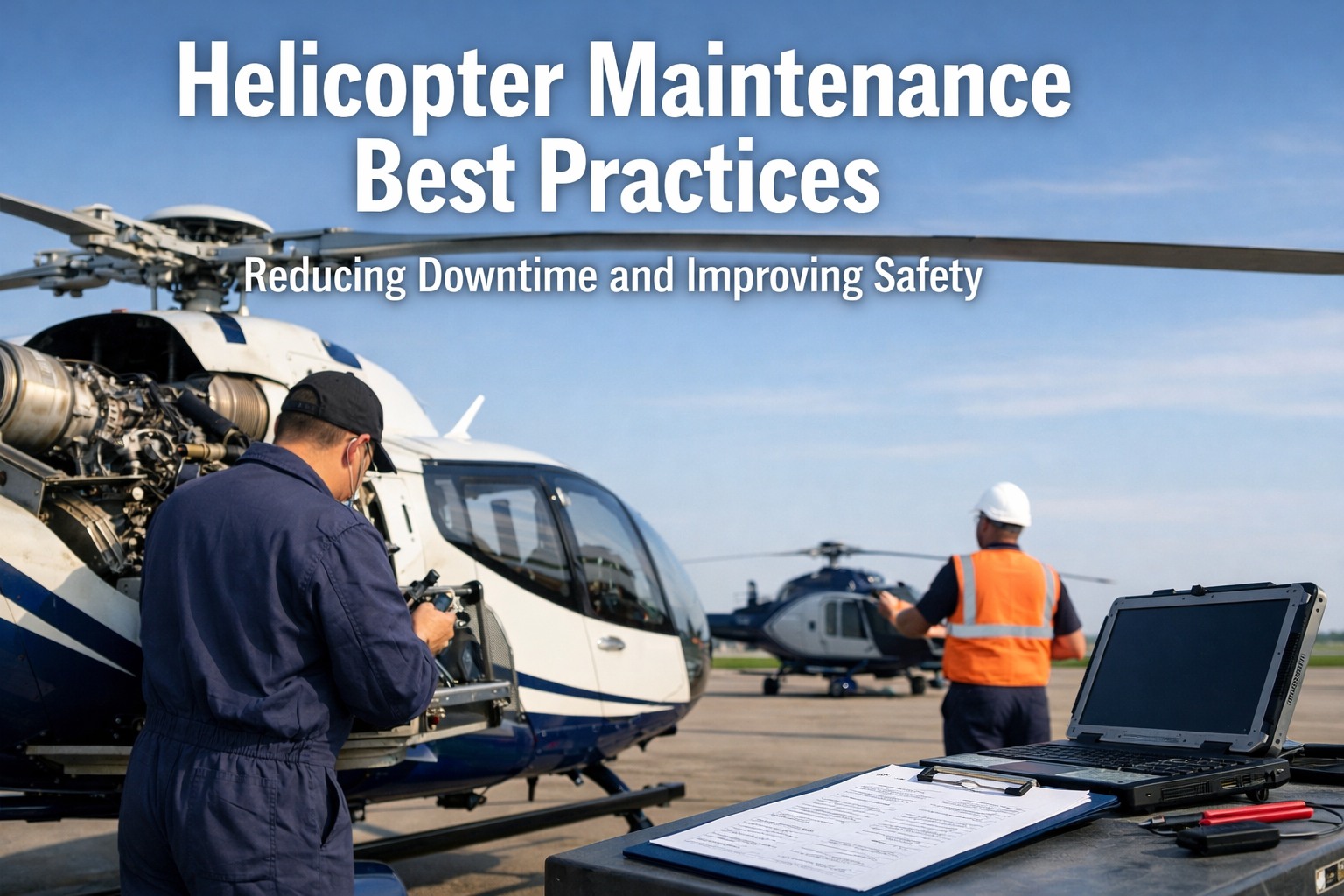
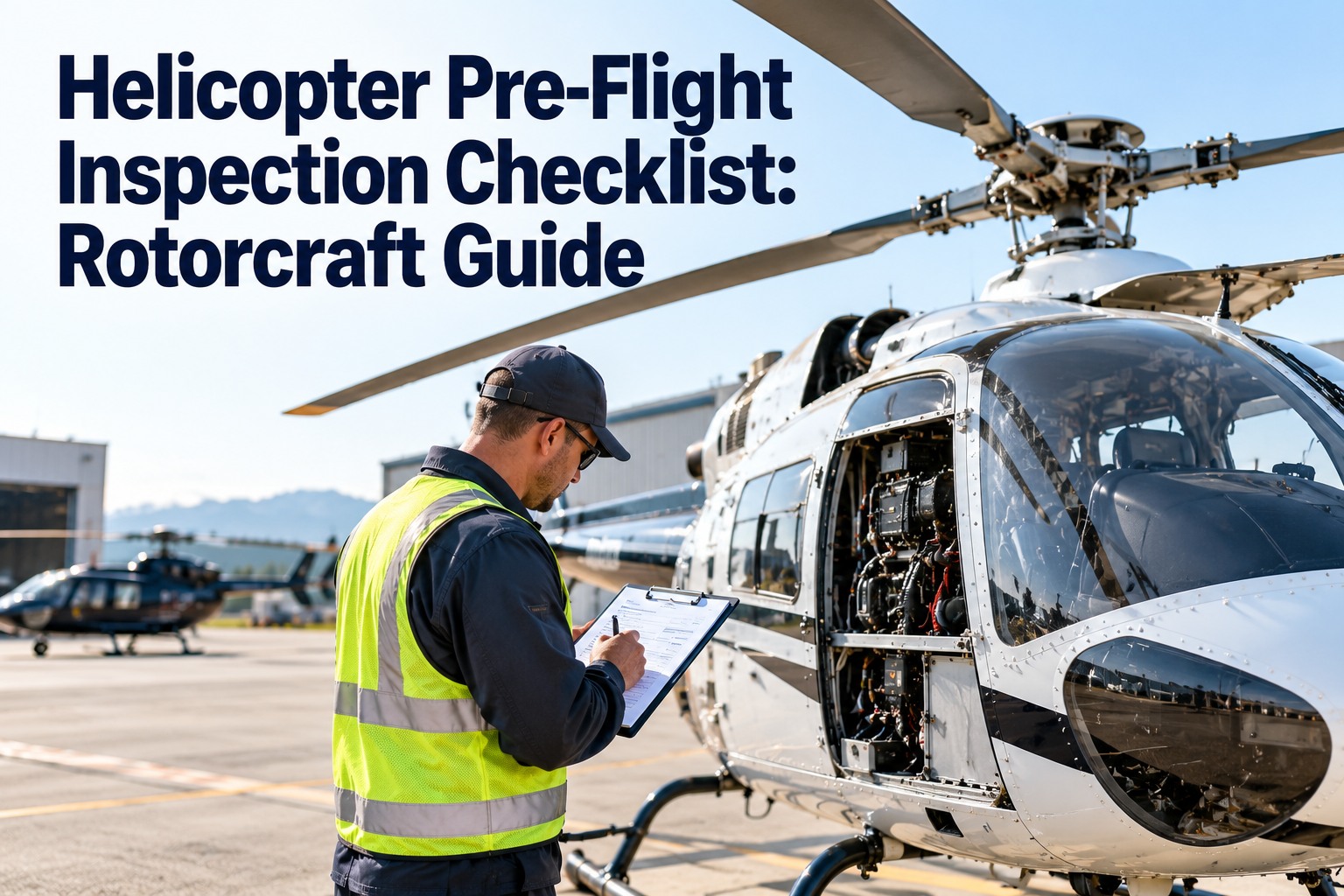
Helicopters operate in a class of their own—hovering over offshore rigs at 3 AM, threading through mountain canyons for search and rescue, racing against the clock in emergency medical evacuations. Every flight depends on thousands of components working in perfect harmony under extreme stress. The helicopter MRO market was valued at $9.03 billion in 2024 and is growing at 4.75% CAGR through 2032, driven by an expanding global fleet and tightening safety standards. This guide covers the maintenance best practices that keep rotorcraft airworthy, compliant, and flying safely. Schedule a demo to see how OXmaint supports helicopter maintenance programs.
The Helicopter Maintenance Challenge: Why Rotorcraft Are Different
Helicopter maintenance is not fixed-wing maintenance with spinning blades. Rotorcraft subject every component to unique aerodynamic, vibrational, and gravitational forces that fixed-wing aircraft simply don't experience. Understanding these differences is the foundation for building a maintenance program that actually prevents failures.
What Makes Helicopters Harder to Maintain
01
Extreme Vibration Loads
Main rotors, tail rotors, transmissions, and drive shafts create complex vibrational harmonics that propagate through the entire airframe. Every bolt, bearing, and seal is under constant cyclic fatigue that no fixed-wing aircraft experiences.
02
Life-Limited Components
Critical parts—rotor hubs, swashplates, tail rotor gearboxes—have hard time limits (TBO) set by the manufacturer. Miss a TBO interval and the aircraft is legally unairworthy, regardless of the component's apparent condition.
03
Mission Diversity
The same airframe might fly offshore crew transport on Monday, mountain rescue on Wednesday, and utility lifting on Friday. Each mission profile imposes different stresses on different systems, making one-size-fits-all maintenance schedules inadequate.
04
Environmental Extremes
Salt spray offshore, sand ingestion in desert operations, icing at altitude, and tropical humidity each accelerate different failure modes. Maintenance programs must adapt to the operating environment, not just the aircraft type.
$9.03B
Helicopter MRO market value in 2024
$1,300+
Average maintenance cost per offshore flight hour (2024)
5,800+
Helicopters in offshore missions globally (2024)
83%
Of accidents are pilot-related—but 11% trace to mechanical failure
The Helicopter Inspection Framework
Helicopter maintenance follows a tiered inspection schedule mandated by FAA regulations (14 CFR Part 43 and Part 91), manufacturer maintenance manuals, and airworthiness directives. Each tier serves a specific purpose, and missing any inspection can ground the aircraft—or worse.
Visual walkaround covering fluid levels, blade condition, control linkages, landing gear, and caution/advisory panel. The pilot's last chance to catch something before flight.
Rotor Blades
Hydraulic Levels
Control Rods
Landing Gear
Engine Oil
Tail Rotor
Oil changes, filter replacements, lubrication of control bearings, chip detector checks, vibration analysis, and detailed visual inspection of rotor head components and drive system.
Oil Analysis (SOAP)
Chip Detectors
Filters
Lubrication Points
Vibration Readings
Comprehensive inspection required by FAA for aircraft used in commercial operations. Covers every major system: rotor, drive train, flight controls, engine, avionics, electrical, fuel, and airframe structure.
Main Transmission
Tail Rotor Gearbox
Flight Controls
Fuel System
Electrical
Avionics
Full airframe and systems inspection including NDT (non-destructive testing) of critical components, corrosion assessment, structural integrity verification, and airworthiness directive compliance review.
NDT / Dye Penetrant
Corrosion Check
AD Compliance
Structural Integrity
Logbook Review
Complete disassembly, inspection, repair, and reassembly of engines, transmissions, and rotor systems to restore them to service limits. The most expensive and time-consuming maintenance event in a helicopter's lifecycle.
Engine TBO
Transmission TBO
Rotor Hub TBO
Component Replacement
Test Flight
Tracking TBO limits across your fleet on spreadsheets? OXmaint automatically alerts you before any component reaches its life limit—no missed intervals, no compliance gaps.
Start Free
Critical Systems: What Fails and Why
Helicopter accidents with mechanical causes consistently trace to the same critical systems. Knowing which systems demand the most attention—and why they fail—is the foundation of an effective maintenance program.
Failure mode: Blade cracks, delamination, pitch link fatigue, swashplate bearing wear
Why it happens: Cyclic loading produces millions of stress cycles per flight hour. Composite blades can develop internal delamination invisible to the naked eye.
Best practice: Track blade hours individually. Perform tap tests and visual inspections at every phase check. Schedule NDT at manufacturer-recommended intervals, not just when damage is suspected.
Failure mode: Compressor stall, turbine blade erosion, fuel control malfunction, oil system contamination
Why it happens: Engines operate under high loads and temperatures with frequent power changes during hover and maneuvering. Sand/salt ingestion accelerates hot-section wear.
Best practice: Monitor engine trends (TGT, Ng, torque) every flight. Run SOAP (Spectrometric Oil Analysis Program) at 25-hour intervals. Replace filters on schedule regardless of appearance. Log every engine parameter exceedance for trend analysis.
03
Tail Rotor & Anti-Torque
Failure mode: Tail rotor gearbox failure, pitch change rod binding, blade strike, drive shaft imbalance
Why it happens: The tail rotor operates at 3-6x the RPM of the main rotor. Small imbalances create enormous forces. Gearbox oil starvation during aggressive maneuvers can cause rapid seizure.
Best practice: Check tail rotor gearbox chip detectors at every phase inspection. Monitor vibration trends. Inspect tail rotor blades for nicks and erosion after every flight in sandy or debris-prone environments.
04
Transmission & Drive Train
Failure mode: Gear tooth pitting, bearing spalling, seal leaks, torque tube fatigue
Why it happens: The transmission converts engine power into rotor rotation under enormous loads. Oil temperature and contamination are the primary degradation drivers.
Best practice: SOAP analysis at every oil change. Chip detector checks at phase intervals. Monitor oil temperature and pressure trends. Any metal particles on chip detectors require immediate investigation—not "watch and wait."
05
Hydraulic & Flight Controls
Failure mode: Servo actuator leak, hydraulic pump cavitation, control rod end bearing wear, boost system failure
Why it happens: Flight controls transmit pilot inputs through mechanical linkages boosted by hydraulic servo actuators. Seal degradation and fluid contamination cause progressive loss of control precision.
Best practice: Check hydraulic fluid level and color at every pre-flight. Filter contamination analysis at 100-hour intervals. Control rigging checks after any hard landing or reported control anomaly.
Failure mode: Wiring chafe, connector corrosion, GPS/nav system drift, caution panel false alarms
Why it happens: Vibration loosens connectors and chafes wiring harnesses against structure. Moisture intrusion causes intermittent faults that are difficult to reproduce on the ground.
Best practice: Visual wiring inspection at annual. Connector cleaning and retorquing at phase intervals. Log all in-flight caution/advisory activations for trend analysis—intermittent faults are precursors to hard failures.
Maintenance Strategy Comparison
The helicopter industry is transitioning from calendar-based maintenance toward condition-based and predictive approaches. Digital maintenance tools adopted by 45% of global helicopter fleets have already reduced unplanned maintenance events by 15%. Understanding where each strategy fits is critical for optimizing both safety and cost.
Approach
Fix after failure
Service at set intervals
Service when data shows degradation
AI predicts failure before symptoms
Downtime Impact
Maximum—unplanned AOG
Moderate—scheduled but sometimes unnecessary
Low—targeted interventions
Minimal—repairs during planned windows
Cost Profile
Highest per incident
Moderate but includes wasted PM
Optimized—extends component life
Lowest total cost of ownership
Safety Level
Unacceptable for flight-critical parts
Good—meets regulatory minimums
Better—catches degradation early
Best—prevents failures before onset
Data Requirement
None
Basic logbook tracking
SOAP, vibration, trend monitoring
HUMS, IoT sensors, ML algorithms
Best Use Case
Non-critical cabin items only
TBO components, regulatory inspections
Engines, gearboxes, hydraulics
Fleet-wide trend analysis, mission planning
Digitize Your Helicopter Maintenance Program
OXmaint tracks TBO limits, automates inspection schedules, logs work orders, and provides real-time fleet visibility—from a single platform purpose-built for aviation maintenance.
7 Best Practices That Reduce Downtime and Improve Safety
Beyond following manufacturer schedules and regulatory requirements, high-performing helicopter maintenance programs share these seven practices that separate reliable fleets from grounded ones.
Implement SOAP at Every Oil Change
Spectrometric Oil Analysis detects wear metals at the molecular level—iron, copper, silver, and chromium concentrations reveal which internal components are degrading. A $50 oil sample can prevent a $500,000 engine replacement. Build a trend baseline for each aircraft and investigate any parameter that rises above its established norm.
Track Every Component by Serial Number
Life-limited components must be tracked individually—not by aircraft. When a blade moves from one aircraft to another, its accumulated hours travel with it. A CMMS that links serial numbers to time-in-service, TBO limits, and installation history eliminates the most dangerous compliance gaps in rotorcraft maintenance.
Log Every Anomaly—No Exceptions
Pilots report an unusual vibration that disappears after landing. If it's not logged, it never happened. The most dangerous failures start as intermittent anomalies that "weren't worth writing up." Require mandatory anomaly logging for every flight—vibrations, caution lights, unusual sounds, control feedback changes—and review logs weekly for emerging patterns.
Adapt Maintenance to Operating Environment
A helicopter flying offshore in the Gulf of Mexico needs corrosion inspections and salt-water wash protocols that an aircraft flying in Arizona doesn't. Sand environments demand compressed-interval compressor washes and inlet filter replacements. Build environment-specific maintenance supplements that layer on top of standard OEM schedules.
Pre-Stage Critical Spares
Helicopter AOG events are devastating because the aircraft often operates at remote locations. Pre-stage high-failure-rate components (tail rotor blades, chip detectors, hydraulic seals, starter generators) at forward bases. Use consumption data from your CMMS to determine which parts are most likely to be needed—and where.
Invest in Vibration Health Monitoring
Modern Health and Usage Monitoring Systems (HUMS) capture vibration signatures from the main rotor, tail rotor, and drive train in real time. Trend deviations reveal bearing wear, blade track issues, and gear tooth damage weeks before they become flight hazards. The 45% of global fleets using digital maintenance tools have reduced unplanned maintenance by 15%.
Use a CMMS Built for Aviation
Generic maintenance software doesn't understand TBO limits, flight-hour tracking, serial number traceability, or airworthiness directive compliance. An aviation-capable CMMS automates life-limit tracking, generates regulatory-ready documentation, enforces inspection schedules, and provides fleet-wide visibility that paper logbooks and spreadsheets cannot.
Regulatory Compliance: The Non-Negotiable Foundation
Helicopter maintenance operates within a strict regulatory framework. Non-compliance doesn't just mean fines—it means grounding the aircraft and potentially losing your operating certificate.
FAR Part 43
Maintenance, Preventive Maintenance, Rebuilding & Alteration
Defines who can perform maintenance, what qualifications they need, and how work must be documented. Appendix D specifies the scope of annual and 100-hour inspections. All work must be performed by or supervised by an FAA-certificated A&P mechanic with appropriate Inspection Authorization.
FAR Part 91
General Operating & Flight Rules
Establishes the owner/operator's responsibility for maintaining aircraft in an airworthy condition. Requires 100-hour inspections for aircraft used commercially, annual inspections for all aircraft, and compliance with all applicable airworthiness directives within specified timeframes.
FAR Part 135
Commuter & On-Demand Operations
Imposes additional requirements for commercial helicopter operators including approved maintenance programs, minimum equipment lists (MEL), and enhanced flight data monitoring. Part 135 operators must maintain detailed maintenance manuals and establish continuing airworthiness programs.
EASA Part-M
Continuing Airworthiness (International)
European regulation governing continuing airworthiness management. Requires approved maintenance programs, CAMO (Continuing Airworthiness Management Organisation) oversight, and standardized reporting of defects and occurrences across EU member states.
The Digital Transformation of Helicopter Maintenance
The helicopter industry is moving from paper logbooks and calendar reminders toward integrated digital systems. Helicopter accidents have decreased 18% in regions with mandatory advanced flight management systems, and MRO costs—which rose 11% in 2024 due to parts scarcity—are being contained by operators who invest in digital tools.
Capture
HUMS sensors, flight data recorders, and pilot anomaly reports feed data into the CMMS automatically after every flight
Centralize
Flight hours, component life, maintenance history, SOAP results, and AD compliance consolidated in a single source of truth
Analyze
Trend monitoring algorithms flag components approaching limits, detect vibration anomalies, and identify fleet-wide failure patterns
Act
Automated work orders, parts requisitions, and maintenance alerts generated before failures occur—scheduled during planned downtime
Prove
Audit-ready compliance records, digital logbooks, and fleet performance reports generated automatically for FAA/EASA review
Frequently Asked Questions
What are the most important helicopter maintenance checks?
Helicopter maintenance follows a tiered framework: pre-flight inspections before every flight, phase inspections every 25-50 hours (oil analysis, chip detectors, lubrication), 100-hour inspections for commercial aircraft covering all major systems, annual inspections including NDT and structural assessment, and major overhauls at manufacturer-specified TBO intervals (typically 1,200-2,400 hours). Each tier catches different failure modes, and missing any one creates cumulative risk.
Schedule a demo to see how OXmaint automates this entire framework.
How much does helicopter maintenance cost per flight hour?
Helicopter maintenance costs vary significantly by type and mission. Offshore helicopter operations averaged over $1,300 per flight hour in maintenance costs in 2024—up 11% from the prior year due to parts scarcity and labor shortages. Light single-engine helicopters may cost $200-500 per hour, while heavy twin-engine types used in offshore or EMS operations can exceed $2,000 per hour when major overhaul reserves are included. Digital maintenance tools have helped operators reduce unplanned maintenance by 15%, which directly reduces the most expensive maintenance events.
What causes most helicopter mechanical failures?
While about 83% of helicopter accidents are pilot-related, the 11% attributed to mechanical causes most commonly involve rotor systems (blade fatigue, pitch link failure), engine failures (compressor stall, turbine blade erosion), and drive train issues (transmission gear wear, tail rotor gearbox seizure). The key insight is that most mechanical failures are preceded by detectable warning signs—abnormal vibration patterns, metal particles in oil, and progressive performance degradation—that a structured maintenance program catches early.
What regulations govern helicopter maintenance?
In the United States, helicopter maintenance is governed by 14 CFR Part 43 (maintenance standards and authorization), Part 91 (owner/operator airworthiness responsibilities and inspection requirements), and Part 135 (additional requirements for commercial operations). Internationally, EASA Part-M establishes continuing airworthiness standards across European member states. Airworthiness Directives (ADs) issued by the FAA or EASA mandate specific inspections or modifications and have legal compliance deadlines.
How does a CMMS improve helicopter maintenance?
A CMMS designed for aviation automates the most dangerous gaps in helicopter maintenance: missed TBO limits, forgotten AD compliance deadlines, lost component serial number traceability, and incomplete maintenance documentation. It provides fleet-wide visibility into component life status, automates work order generation, links parts inventory to upcoming maintenance needs, and produces audit-ready regulatory reports.
Start your free trial to explore OXmaint's aviation maintenance capabilities.
Keep Your Helicopters Flying Safely
From pre-flight inspections to major overhauls, from TBO tracking to AD compliance—OXmaint gives your maintenance team the digital backbone to manage it all with zero gaps.