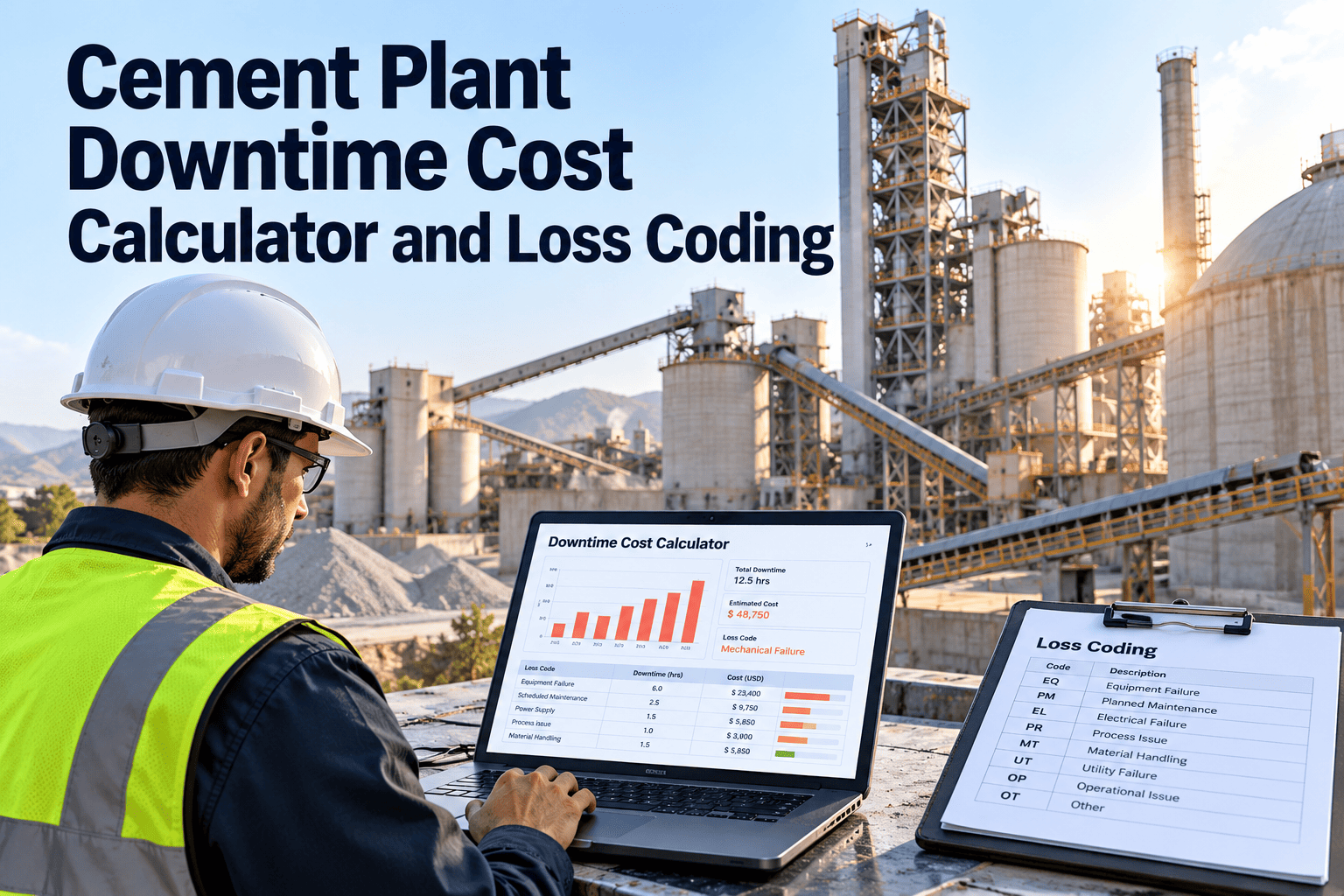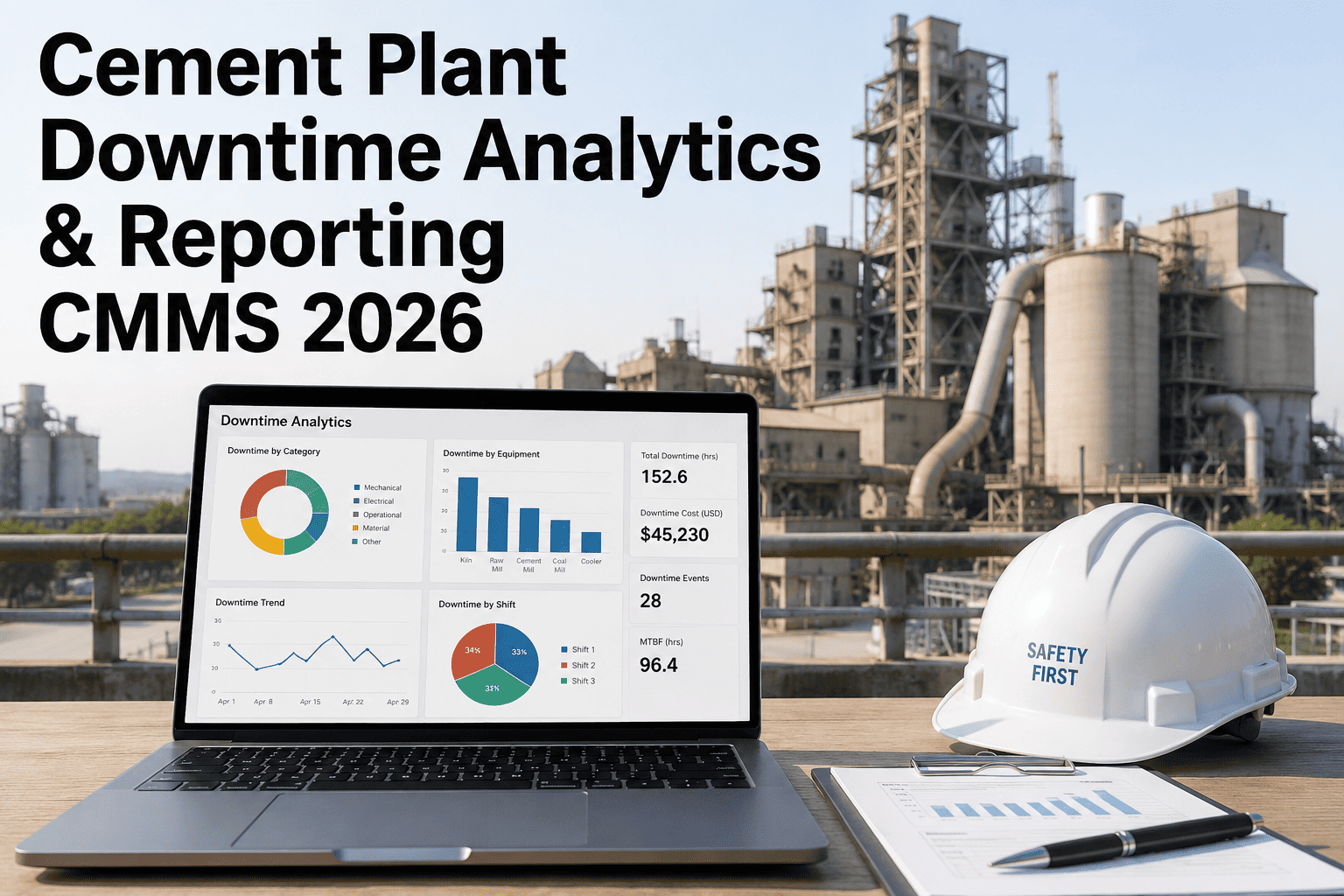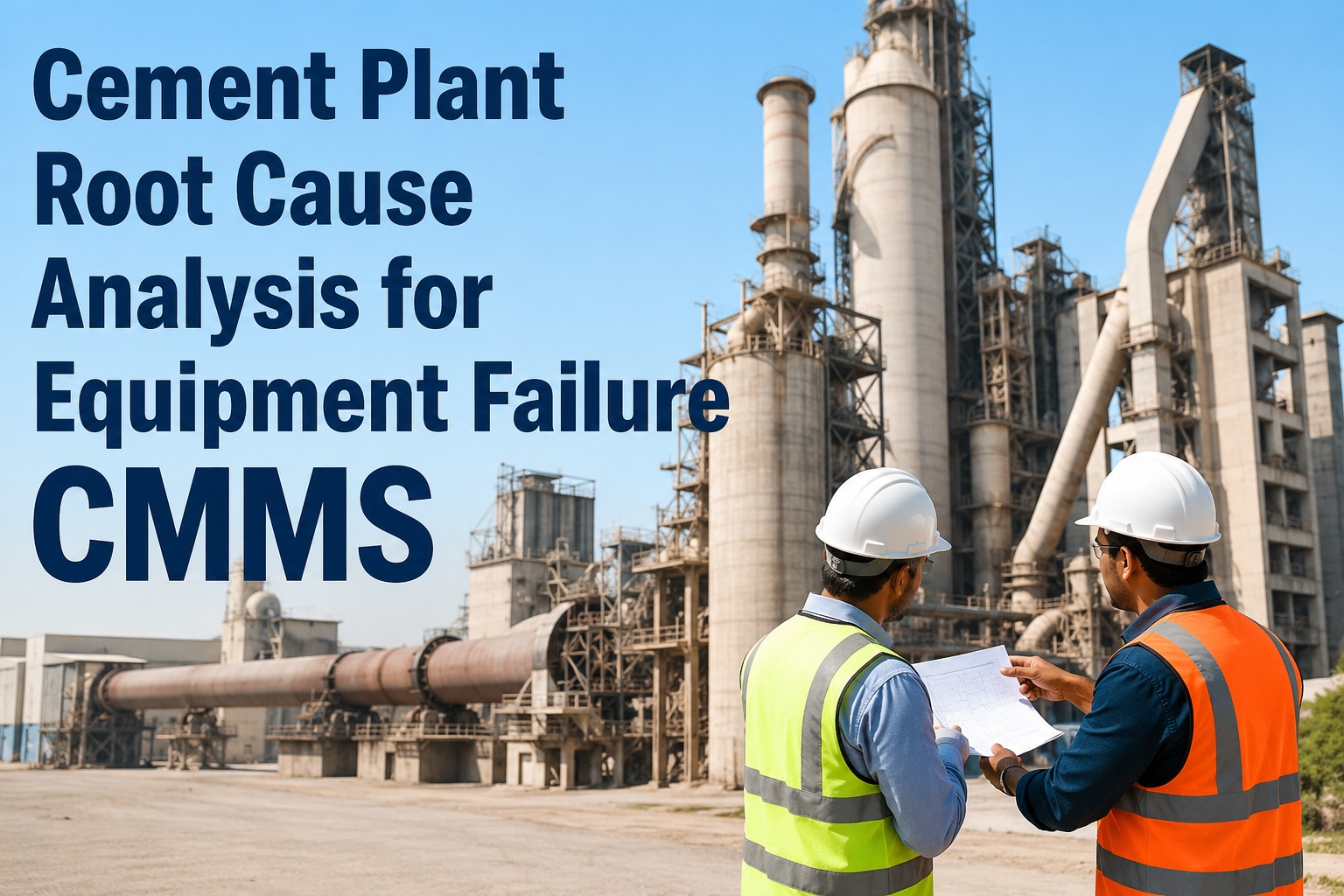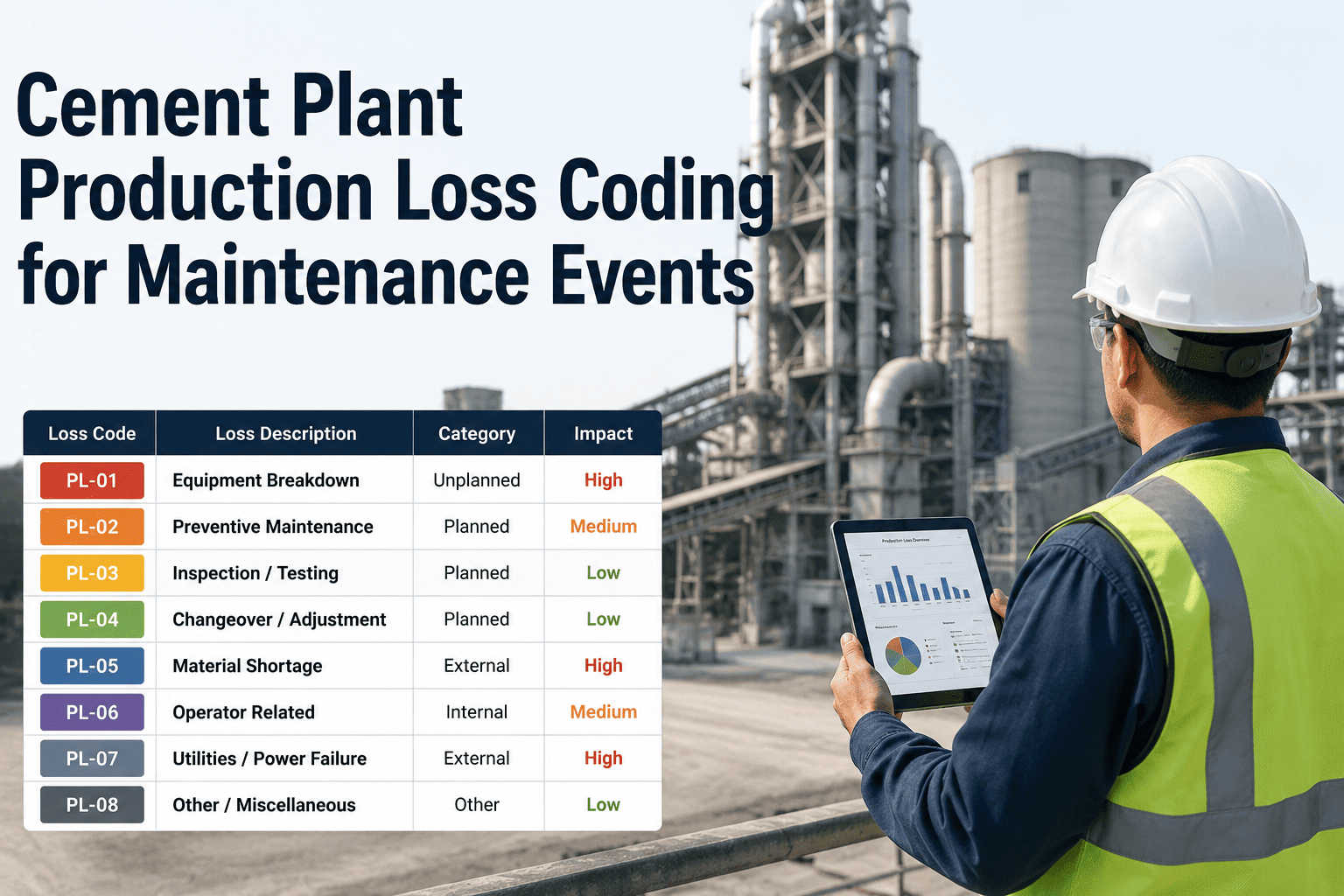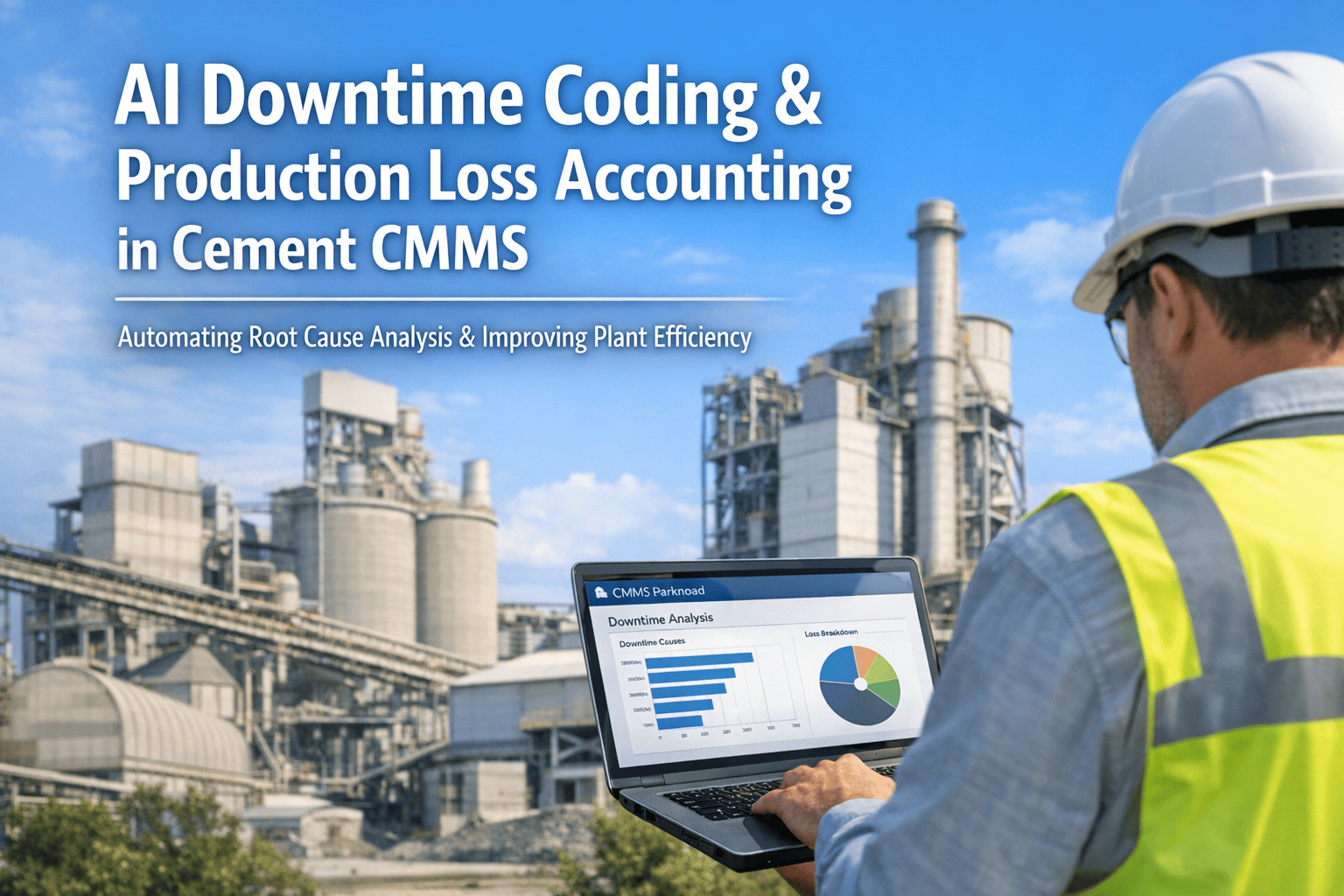
Every month, cement plants lose 3–8% of production capacity due to unplanned stops — but the real loss is hidden in poor downtime coding. Without AI-driven classification, production loss accounting becomes a blame game between operations and maintenance. Oxmaint’s AI downtime coding engine automatically categorizes root causes, assigns financial loss to each event, and gives you an auditable trail. The result: 40% faster root-cause analysis and 25% better asset effectiveness.
Stop guessing why your cement line stopped — AI automatically classifies downtime and production loss
From sensor data to standardized downtime codes (SAIFI, OEM, or custom). No manual entry, no debate. Accurate production loss accounting directly in your CMMS.
Manual downtime coding = chronic under-reporting
In most cement plants, 60% of downtime events are either mis-coded or left uncategorized. That means production loss accounting misses real causes — and the same failures repeat.
Automated root-cause tagging + production loss allocation
Oxmaint’s AI ingests vibration, temperature, PLC alarms, and operator logs — then assigns ISO 14224 or custom downtime codes. Every event is linked to lost tonnes and cost per hour.
What accurate downtime accounting reveals
| Downtime category | Manual coding error rate | AI-coded correction | Production loss (annual) |
|---|---|---|---|
| Mechanical (gearbox, bearing) | 44% misclassified as "electrical" | 88% correct root cause | $480k - $950k |
| Process / operator error | 62% uncoded | Automated detection via PLC | $320k - $670k |
| Raw material / quality | 57% not recorded | AI links to lab data | $210k - $540k |
| External grid / utility | 35% wrong category | auto-tag with timestamp | $150k - $400k |
SCADA, vibration, thermography, operator logs
ISO/ custom downtime codes + confidence score
Lost tonnes x margin = financial impact
Auto-populated downtime records, live dashboards
Manual, fragmented, inaccurate
- Operators guess root cause under pressure
- Same failure coded differently across shifts
- Production loss never tied to specific event
- Recurring issues hidden in spreadsheets
- Monthly downtime meetings become debate clubs
Automated, auditable, actionable
- AI assigns ISO / custom codes from sensor data
- Consistent taxonomy across all assets
- Real-time production loss $ per event
- Auto-generated Pareto charts of top loss causes
- Maintenance plans updated based on true failure modes
From manual guessing to AI-powered loss accounting in 4 steps
Connect your cement plant data to Oxmaint and let AI automatically classify every downtime event, assign production loss, and feed your CMMS with actionable intelligence.
Move from reactive reporting to prescriptive loss accounting
| Maturity stage | Coding method | Production loss visibility | Improvement speed |
|---|---|---|---|
| Reactive | Manual, paper logs | Low / guesswork | Months |
| Standard CMMS | Operator entry, inconsistent | Partial, delayed | Weeks |
| AI-powered (Oxmaint) | Auto-classify + loss mapping | Real-time, auditable | Days |
Production loss accounting that CFOs trust
Every hour of unplanned downtime is multiplied by clinker/cement margin. Oxmaint automatically calculates loss per event, per shift, per asset — and rolls up to monthly P&L impact.
From downtime code to preventive action
AI finds patterns: e.g., “bearing temp rise precedes 80% of mill trips”. System suggests proactive work orders and automatically updates your CMMS failure codes for continuous improvement.
Answers about AI downtime coding & production loss
Join cement producers using Oxmaint AI to automatically classify downtime, allocate production loss, and boost overall equipment effectiveness. Start today — no credit card required.