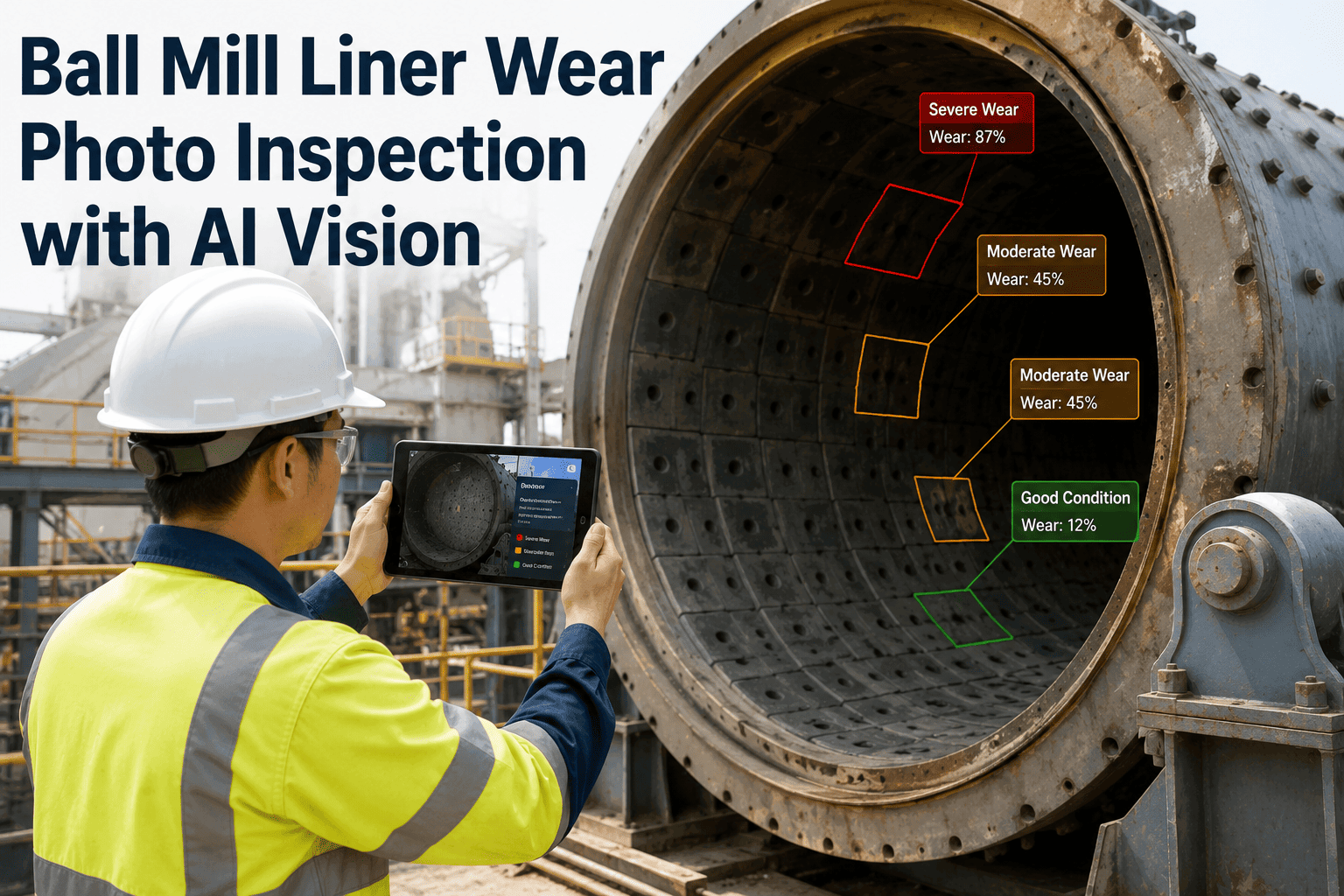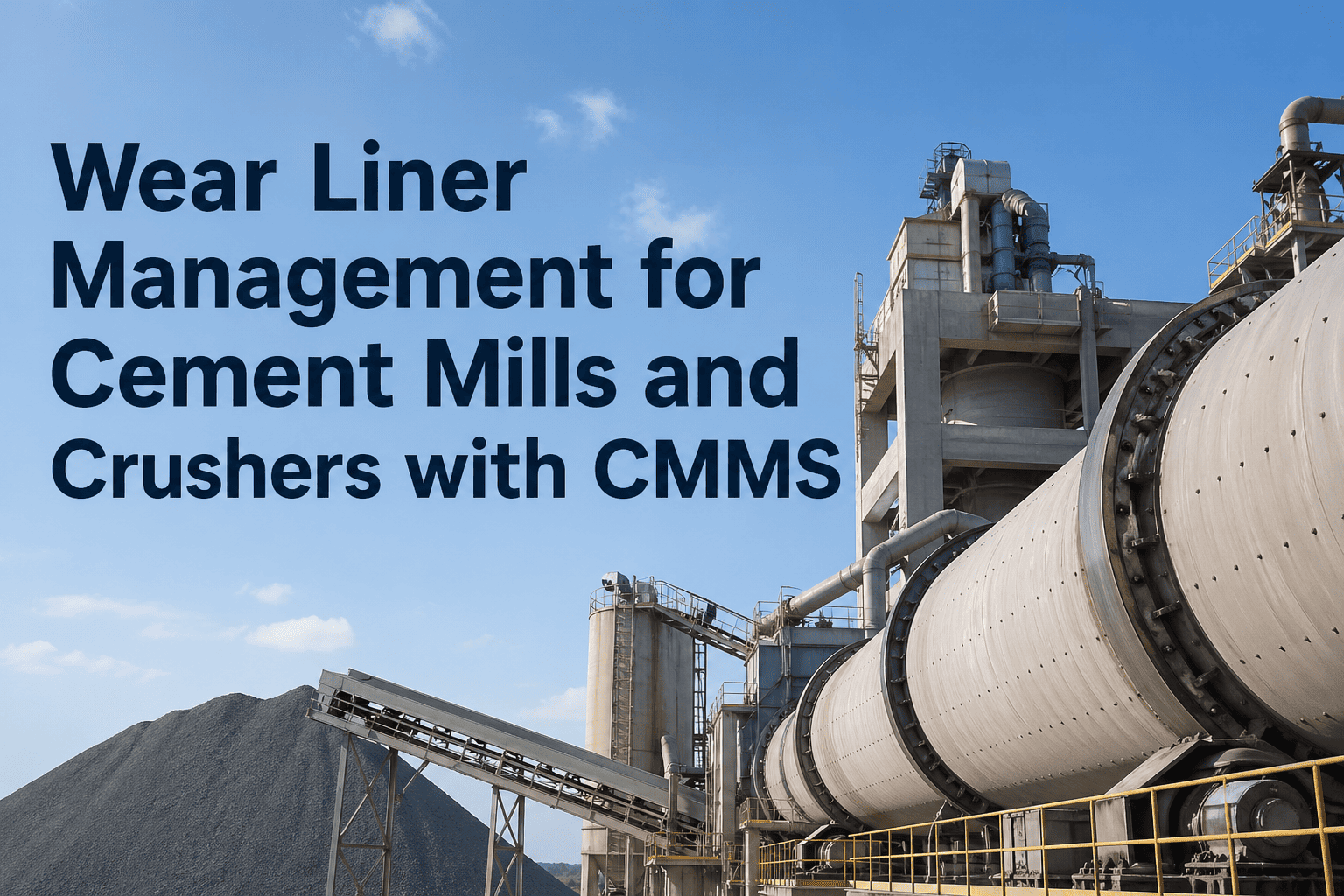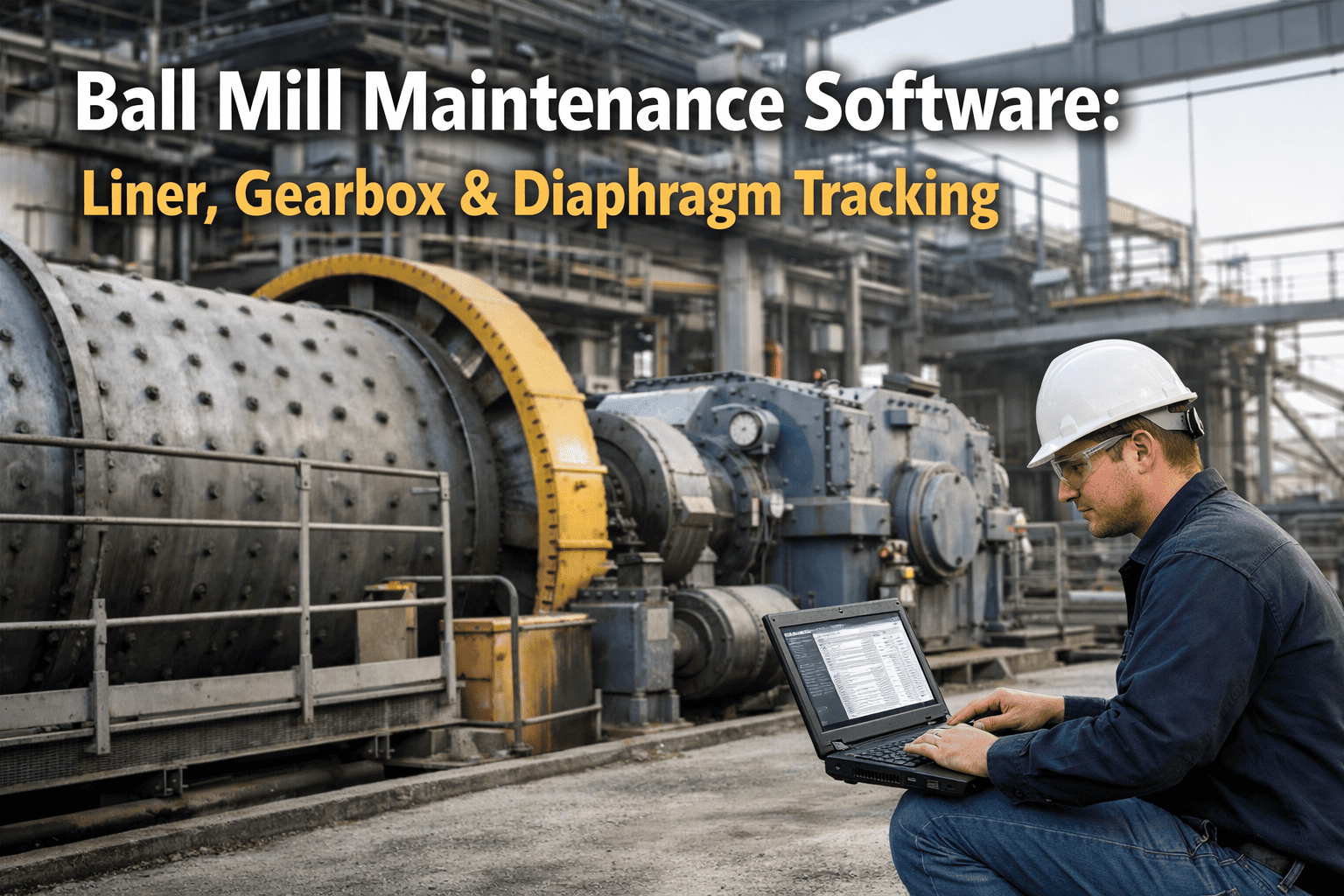
Ball mill liner failures account for 38% of all unplanned grinding circuit shutdowns in North American cement plants — each emergency relining event costs $140,000–$380,000 in lost clinker production and expedited contractor fees. Without throughput-linked wear data, maintenance teams replace liners on fixed calendar intervals, retiring serviceable life 15–22% early or running past safe wear limits. See how Oxmaint tracks liner wear, gearbox health, and diaphragm condition in a live platform demo.
Ball mill maintenance software is a CMMS configured to track liner wear progression against cumulative throughput, schedule gearbox oil analysis and vibration checks by operating hours, and log diaphragm slot condition across inspection cycles. Oxmaint's asset registry links each mill component to its full work order history, enabling data-backed relining decisions and eliminating unplanned stoppages caused by undetected wear.
Why Ball Mill Maintenance Breaks Down Without Data
A 150-tph cement ball mill running on paper PM schedules accumulates condition gaps that only surface at the worst possible moment — mid-shift, with no relining crew available. The four failure patterns below account for over 80% of unplanned ball mill stoppages in US and Canadian cement plants.
Shell and end liner replacements scheduled by months rather than cumulative tonnes processed cause premature retirement at 15–22% remaining life or dangerous overrun past safe wear limits. A single premature relining event on a 4.2m x 13m tube mill costs $95,000–$140,000 in avoidable downtime and contractor mobilization.
Pinion and ring gear wear, main reducer bearing fatigue, and lubrication degradation develop between planned shutdowns. Without oil analysis interval tracking and vibration trending linked to the gearbox asset record, early damage signatures go undetected until catastrophic tooth failure — replacement cost $280,000–$620,000 per event plus 12–22 days lost production.
Intermediate and discharge diaphragm slot wear and blockage reduces compartment segregation and grinding efficiency by 8–14% before it triggers an alarm. Without inspection records linked to production throughput data, the efficiency drop is attributed to feed quality or ball charge rather than the actual diaphragm condition.
Grinding media consumption rates of 35–55 grams per tonne are rarely logged against actual throughput. Without a work order history linking ball top-up events to production data, charge levels are estimated visually — causing output losses of 6–11% and undocumented increases in specific energy consumption that inflate operating costs silently.
Track Every Liner, Every Gearbox, Every Diaphragm — From One Dashboard
Oxmaint's asset hierarchy links throughput data, wear measurements, and oil analysis records directly to your ball mill components. Book a demo to see liner wear trending configured for your mill fleet.
How Oxmaint Delivers Ball Mill Maintenance Management
Each shell and end liner assembly is registered as a component under its parent mill asset. Wear measurements logged at each inspection are plotted against cumulative tonnes processed — not calendar days. The system calculates wear rate per 10,000 tonnes and projects replacement date at the plant's current production rate. Book a demo to see liner wear curves built from your mill's throughput data.
Main reducer, pinion shaft bearings, and ring gear segments each carry their own PM schedule — oil sampling every 2,000 operating hours, vibration baseline at 4,000 hours, tooth contact pattern inspection at planned outages. Work orders auto-generate per component, capturing technician findings and oil analysis results in a single searchable record. Oxmaint flags overdue intervals and links abnormal readings to follow-up corrective work orders automatically.
Intermediate and discharge diaphragm inspections are scheduled by operating hours with slot wear and blockage degree captured per inspection. Ball charge top-up events are logged with quantity and date, enabling the system to calculate consumption rate against throughput and alert when charge level drops below the optimal range. Every finding is stored against the asset record — no spreadsheet, no paper log. See diaphragm inspection templates and ball charge tracking in a live demo.
When liner wear trends project a replacement within 60 days, Oxmaint generates a shutdown planning work order with linked material requisition, contractor checklist, and estimated downtime window. Maintenance managers review the full asset history — previous relining duration, crew size, parts consumed — before committing to a shutdown date. Capital expenditure forecasting uses wear rate data to build a rolling 5-year liner replacement budget with cost-per-tonne tracking.
Platform Features for Ball Mill Asset Management
Six-level hierarchy from plant portfolio down to individual liner bolt pattern. Shell liners, end liners, diaphragm plates, and gearbox components each carry their own condition score and maintenance history. QR-tagged components accessible from mobile in the field.
Plots measured wear thickness against cumulative throughput tonnes. Projects replacement date at current production rate. Flags when remaining wear allowance drops below 20% of original liner thickness. Reduces premature replacement spend by up to 18% per relining cycle.
Work orders auto-generated by operating hours: oil top-up at 500 hours, oil sampling at 2,000 hours, gearbox inspection at 4,000 hours. Alerts at 7 days and 48 hours before deadline. PM compliance reaches 91% within two production quarters of deployment.
Oil sample results — viscosity, particle count, wear metals — logged against the gearbox asset record. Trend view shows contamination progression across consecutive samples. Abnormal particle count triggers automatic corrective work order with priority escalation to the maintenance supervisor.
Rolling 5-year capital forecast built from wear rate data, remaining useful life estimates, and historical relining costs. Each ball mill contributes its projected liner, diaphragm, and gearbox replacement costs to the plant-wide capital plan — formatted for trustee board and budget committee submissions.
Technicians scan a QR tag on any mill component to open its asset record, log inspection findings, upload photos, and close work orders — offline capable. Eliminates paper inspection sheets and ensures every field observation is captured in the asset history in real time.
Oxmaint Outcomes — Ball Mill Fleet Deployments
Measured results across North American and Australian cement plants running Oxmaint for ball mill asset management.
Investment vs Return — Ball Mill CMMS
| Component | Planned Maintenance Cost | Emergency / Reactive Cost | Annual Saving |
|---|---|---|---|
| Shell Liner Set | $62,000 relining — throughput-optimized timing | $140,000–$230,000 emergency relining with lost production | Up to $168,000 avoided per event |
| Main Reducer Gearbox | $18,000 oil analysis and vibration program annually | $280,000–$620,000 catastrophic tooth failure replacement | Up to $602,000 avoided per event |
| Intermediate Diaphragm | $8,500 scheduled slot inspection and cleaning program | $35,000–$55,000 emergency replacement plus 4-day outage | Up to $46,500 avoided per event |
| Ball Charge Management | $4,200 consumption rate tracking and optimized top-up | 6–11% output loss from under-charged mill — $90,000+ annually | $86,000 production loss avoided |
| Oxmaint Platform (full mill fleet) | $28,000 per year — up to 8 mills | Prevention platform | $380,000+ combined annual avoidance |
Eliminate Unplanned Ball Mill Stoppages — Live in 3 Weeks
Asset registry, liner wear trending, gearbox PM scheduling, and CapEx forecasting across your entire mill fleet — no hardware, no consultant fees. Book a demo to review your ball mill asset structure with our team.
Frequently Asked Questions
Continue Reading
Stop Running Ball Mills to Failure — Deploy Oxmaint in 3 Weeks
Liner wear trending, gearbox oil analysis scheduling, diaphragm inspection records, and 5-year CapEx forecasting — configured for your mill fleet, live in three weeks, no hardware or consultant fees required. Book a demo to see your mill asset hierarchy built in real time.