Vertical roller mill roller tire failures are responsible for 31% of unplanned finish grinding shutdowns across North American cement plants — each emergency roller change costs $95,000–$260,000 in lost production and unplanned contractor mobilization. Without hydraulic pressure trending and roller wear tracking linked to cumulative throughput, maintenance teams operate blind between planned outages, discovering critical degradation only after it forces an emergency stop. See how Oxmaint tracks VRM roller wear, hydraulic condition, and separator health in a live demo.
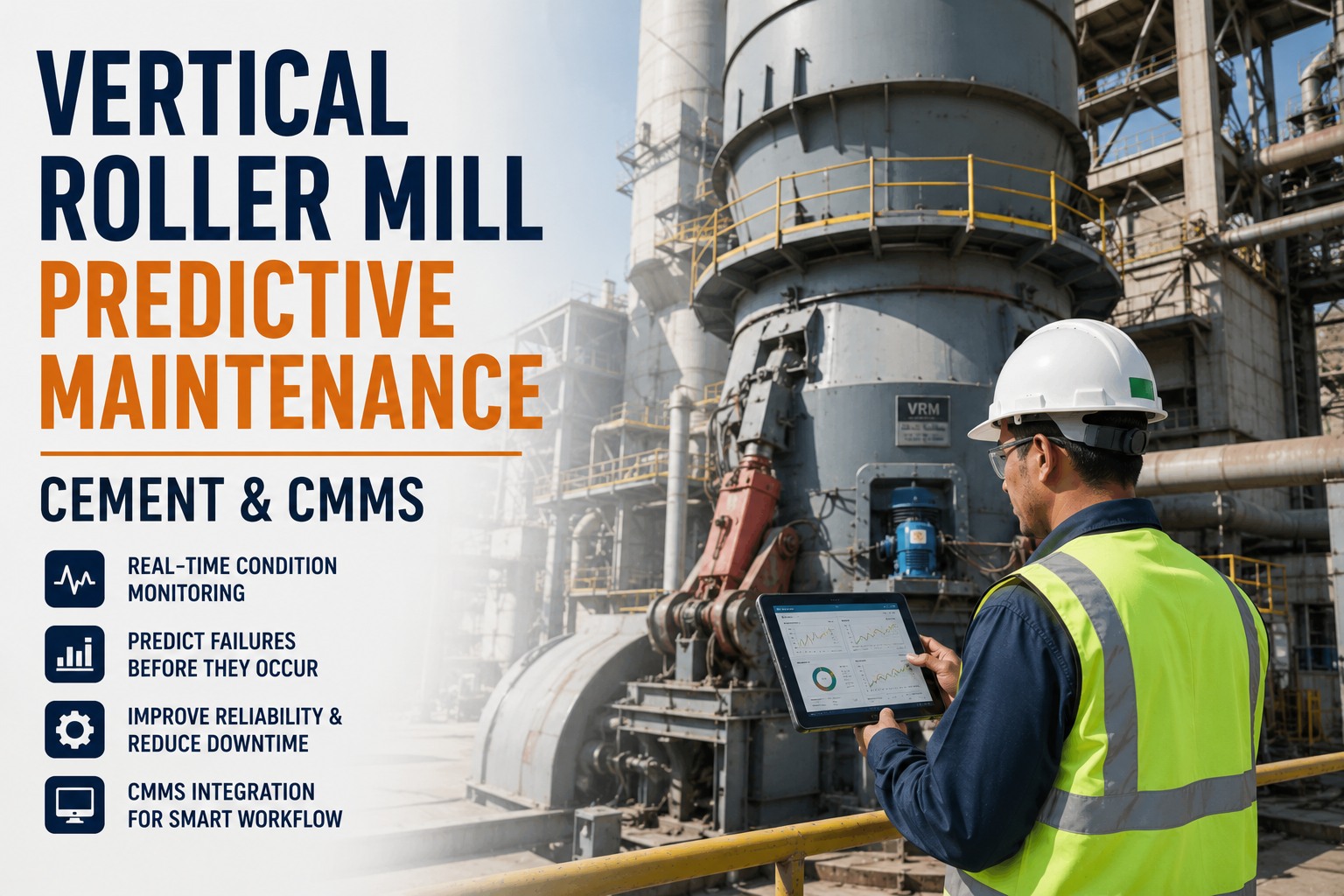
VRM maintenance software is a CMMS configured to track grinding roller tire wear against cumulative tonnes, log hydraulic system pressure and accumulator condition by operating hours, and schedule grinding table segment inspections before fineness drift impacts product quality. Oxmaint registers each VRM component — roller, table, hydraulic unit, and separator — as individual tracked assets with their own PM schedules, wear records, and work order history, eliminating the condition visibility gap that causes unplanned stoppages.
VRM Component Architecture — What Oxmaint Tracks
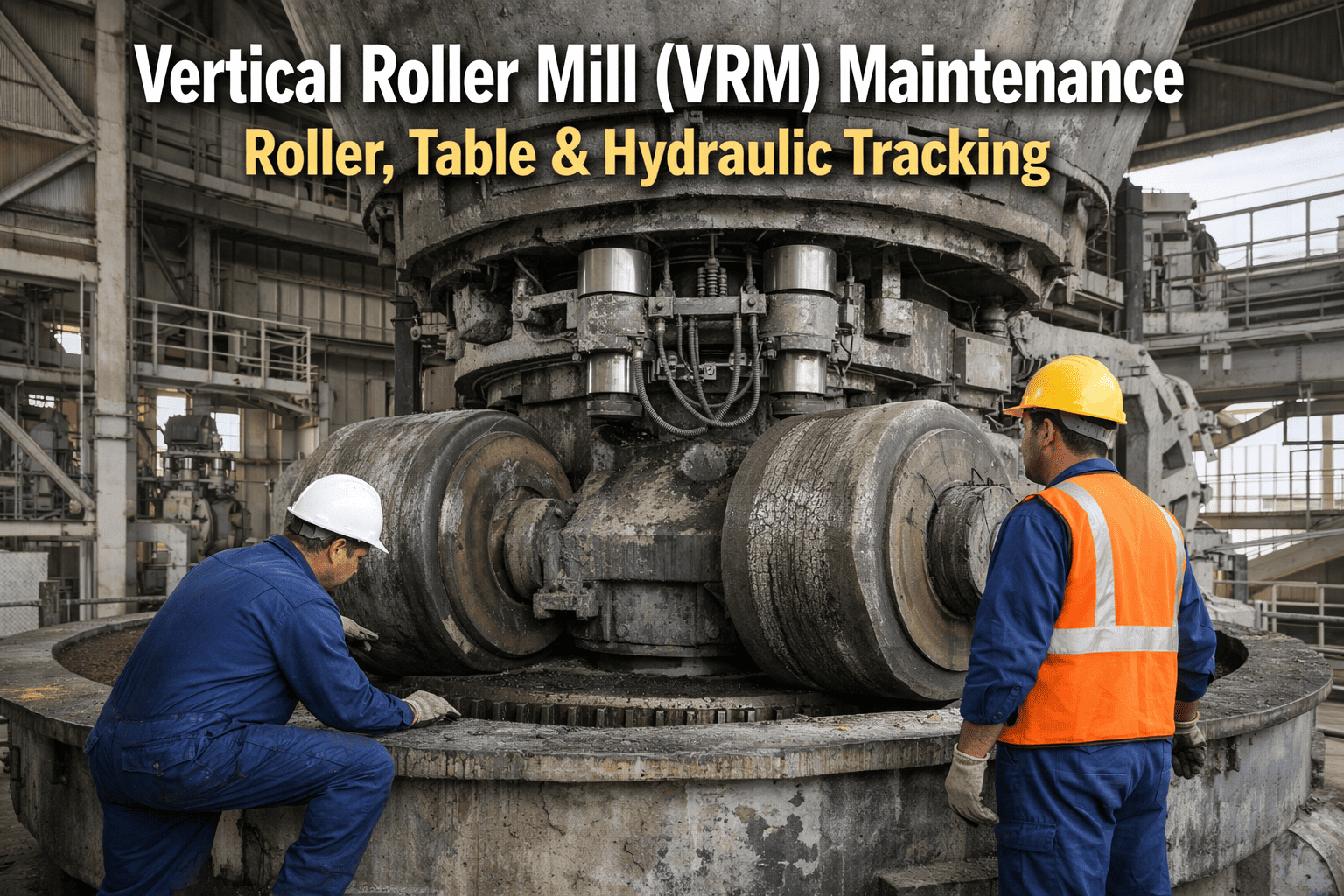
A modern VRM contains four primary maintenance domains. Each carries distinct failure modes, inspection intervals, and cost consequences. Oxmaint registers all four under a single mill asset hierarchy with individual component-level condition scores.
Four Failure Patterns That Stop VRMs Without Warning
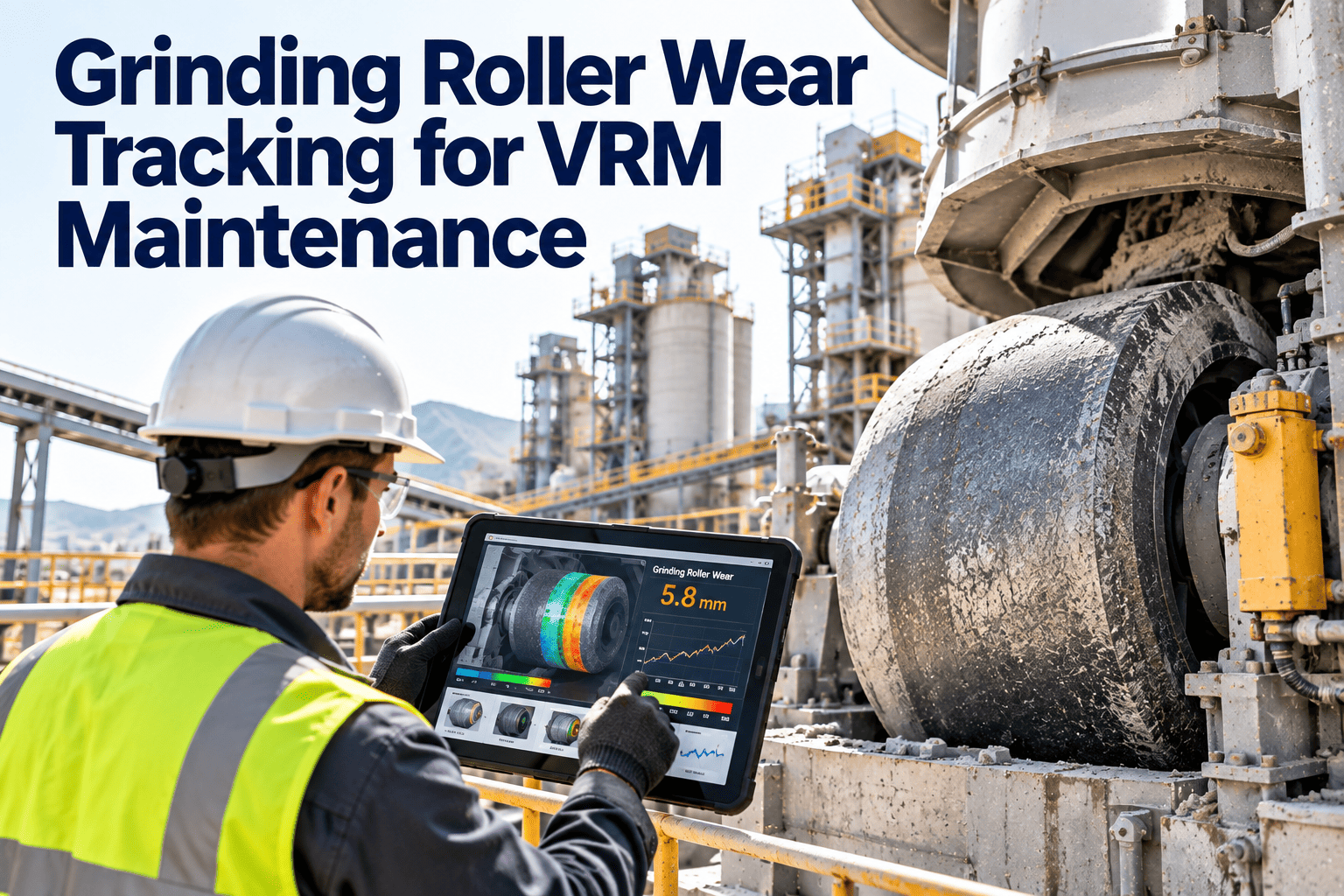
Grinding roller tyre replacements scheduled by fixed months rather than cumulative tonnes processed lead to premature retirement at 12–20% remaining life or dangerous overrun into structural roller failure. A single emergency roller tyre change on a 300-tph VRM costs $95,000–$260,000 in downtime and expedited logistics — 4.2x more than a planned replacement.
Nitrogen pre-charge pressure in hydraulic accumulators drops 8–15% per year under normal operating conditions. Without interval-based pressure checks logged against the accumulator asset record, pressure decay goes undetected until it triggers roller bounce, mill vibration trip, or complete hydraulic system failure — causing unplanned stoppages averaging 18 hours and $140,000 in lost production per event.
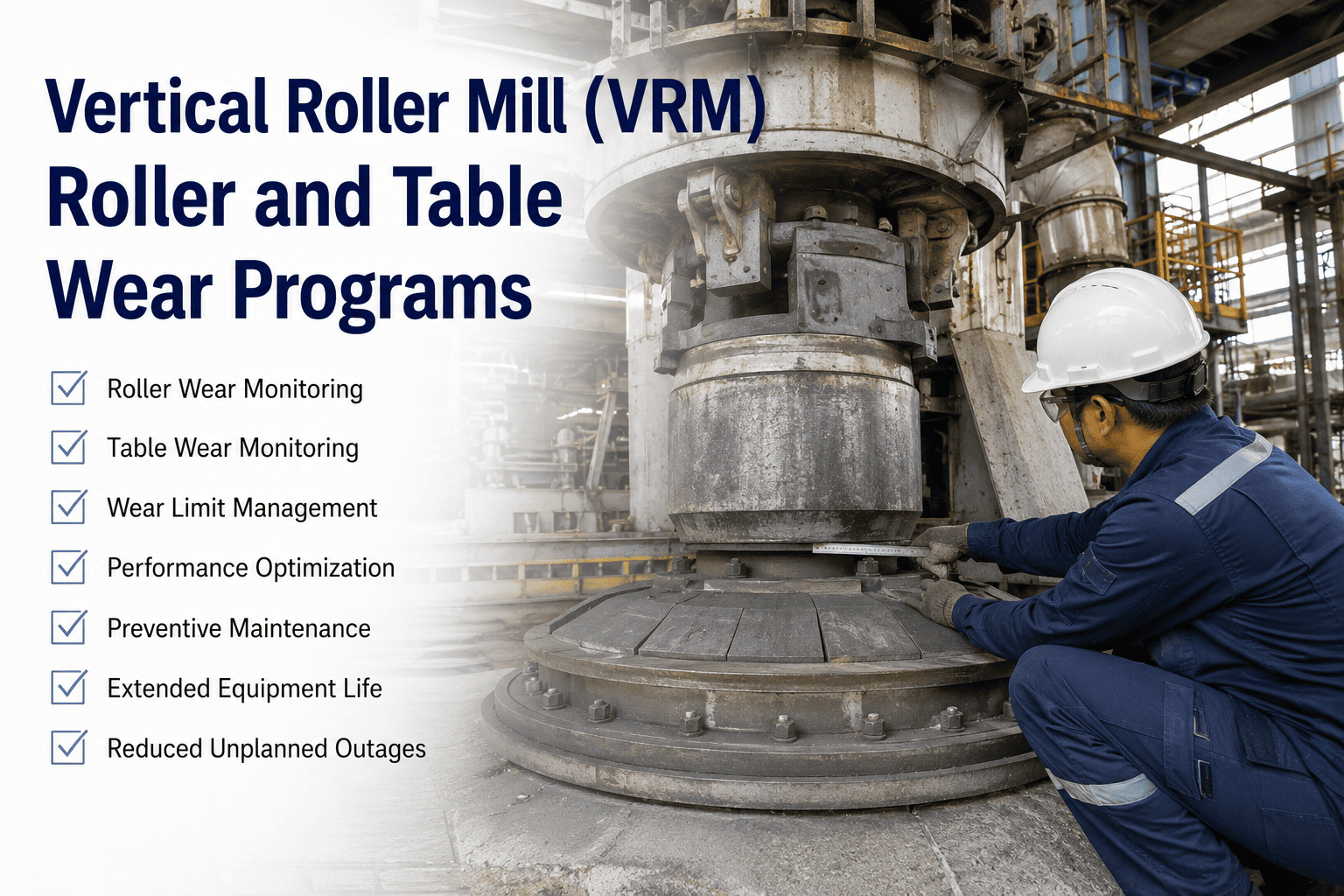
Grinding table liner segment wear changes the effective grinding bed depth and roller nip geometry, causing product fineness to drift 6–14% before the quality deviation triggers an operator response. Without wear measurements linked to production throughput data, the root cause is attributed to feed grindability rather than table condition — delaying corrective action and inflating specific energy consumption.
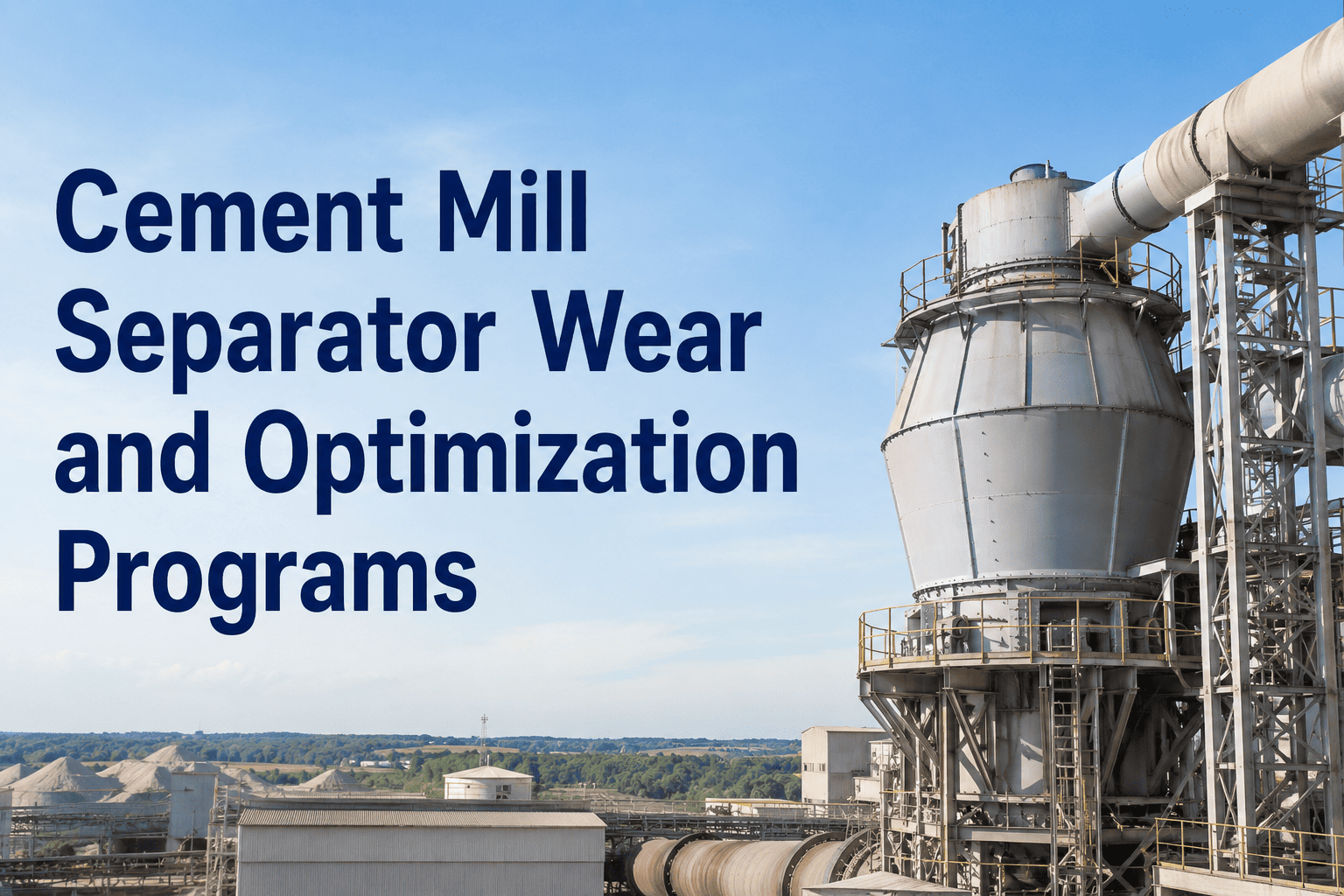
Dynamic separator rotor blade wear accumulates asymmetrically — causing progressive rotor imbalance that increases classifier bearing load and vibration amplitude. Without vibration trend data linked to the separator asset record, the imbalance is not identified until bearing temperature alarms activate or the rotor fails catastrophically, resulting in replacement costs of $55,000–$130,000 and 5–10 days lost production.
Every VRM Component Tracked — Roller to Separator — In One Platform
Oxmaint's six-level asset hierarchy registers each VRM component individually with its own PM schedule, wear record, and condition score. Book a demo to see your VRM fleet configured in the platform.
Before and After — VRM Maintenance With Oxmaint
| Maintenance Area | Without Oxmaint | With Oxmaint |
|---|---|---|
| Roller Tire Replacement Timing | Fixed 6-month intervals — 15–20% usable life wasted or overrun | Throughput-linked wear trending — replacement at actual wear limit |
| Hydraulic Accumulator Checks | Checked during annual shutdown only — pressure decay undetected 11+ months | Quarterly pre-charge pressure checks auto-scheduled with results logged to asset record |
| Grinding Table Inspection | Visual inspection at planned outage — no wear data linked to fineness trends | Liner segment measurements logged per inspection and cross-referenced with product fineness KPIs |
| Separator Vibration Tracking | Vibration data collected on paper — no trend view across consecutive readings | Vibration baselines stored in asset record — consecutive readings plotted to detect rotor imbalance early |
| Unplanned Stoppages per Quarter | 4.2 average unplanned stops per VRM per quarter | 1.4 average — 68% reduction within 2 quarters of deployment |
| CapEx Request Approval Rate | 47% approval — estimate-based with no asset condition evidence | 88% approval — wear trend data and RUL calculations submitted with each request |
How Oxmaint Delivers VRM Asset Management
Each grinding roller, table liner segment, hydraulic cylinder, and separator rotor blade is registered as an individual component under its parent VRM asset. Roller tire thickness measurements entered at each inspection are plotted against cumulative tonnes processed. The RUL engine calculates remaining component life at the plant's current production rate and alerts the maintenance scheduler when replacement is projected within 45 days. Book a demo to see roller wear trending configured for your VRM fleet.
Hydraulic oil sampling, accumulator pre-charge pressure checks, cylinder seal inspections, and pressure relief valve calibrations each carry their own interval-based work orders — triggered by operating hours, not calendar dates. Abnormal oil contamination results logged against the hydraulic unit asset record auto-generate a corrective work order with priority escalation. Maintenance supervisors receive 30-day, 7-day, and 48-hour alerts before each hydraulic PM deadline.
Vibration baseline readings for separator rotor bearings and roller pivot shafts are stored in the component asset record. Each subsequent measurement is logged against the same asset, building a trend view that flags progressive imbalance or bearing deterioration before alarm thresholds are reached. When vibration amplitude exceeds a defined threshold above baseline, Oxmaint creates a corrective work order automatically and notifies the reliability engineer. See vibration analysis tracking for VRM components in a live platform walkthrough.
When roller or table liner wear trends project replacement within 60 days, Oxmaint generates a planned shutdown work order package — pre-populated with the asset's wear history, previous outage duration, and material requirements. The CapEx forecasting dashboard uses component RUL data to build a rolling 5-year replacement budget for every VRM in the plant, formatted for trustee board and engineering budget committee approval.
Platform Features for VRM Asset Management
Plots measured tyre thickness against cumulative tonnes processed. Projects replacement date at current throughput rate. Flags when remaining wear allowance drops below 18% of original profile depth. Reduces premature replacement spend by up to 20% per roller change cycle.
Oil sampling at 2,000 hours, accumulator pre-charge checks every 90 days, cylinder seal inspection at 6,000 hours — all auto-generated from the hydraulic unit asset record. Alerts escalate to maintenance supervisor 48 hours before any missed hydraulic interval.
Consecutive vibration readings for separator bearings and roller pivot shafts stored in asset record and plotted as trends. Threshold-based alerts trigger corrective work orders before bearing failure or rotor imbalance causes an unplanned stop. PM compliance for vibration checks reaches 91% within two quarters.
Portfolio to component-level registry — VRM mill body, grinding unit, hydraulic system, and separator each carry their own condition score, maintenance history, and open work orders. QR-tagged components accessible from mobile in the field without network dependency.
Rolling 5-year roller, table liner, hydraulic, and separator capital replacement schedule built from RUL data and historical outage costs. Each VRM contributes its projected replacement costs to the plant-wide CapEx plan — formatted for VP of Operations and board-level review.
Planned roller or liner change generates a complete shutdown work order package — wear history, material list, previous outage duration, and contractor scope pre-populated. Reduces shutdown preparation time by 74% and eliminates last-minute parts expediting costs.
Oxmaint Outcomes — VRM Fleet Deployments
Measured results from North American and Australian cement plants running Oxmaint across vertical roller mill asset programs.
Investment vs Return — VRM CMMS
| Component | Planned Maintenance Cost | Emergency / Reactive Cost | Annual Saving |
|---|---|---|---|
| Grinding Roller Tyre | $58,000 planned tyre change — throughput-optimized timing | $95,000–$260,000 emergency replacement with lost production | Up to $202,000 avoided per event |
| Hydraulic System | $14,000 annual oil analysis and accumulator program | $140,000 unplanned stop from accumulator pressure failure | Up to $126,000 avoided per event |
| Grinding Table Liners | $46,000 planned liner set replacement — wear-optimized | $80,000–$115,000 emergency replacement plus 3-day outage | Up to $69,000 avoided per event |
| Separator Rotor | $11,000 vibration and blade inspection program annually | $55,000–$130,000 rotor failure replacement and lost production | Up to $119,000 avoided per event |
| Oxmaint Platform (full VRM fleet) | $28,000 per year — up to 6 mills | Prevention platform | $420,000+ combined annual avoidance |
Deploy VRM Condition Tracking Across Your Entire Mill Fleet in 3 Weeks
Asset registry, roller wear trending, hydraulic PM scheduling, and 5-year CapEx forecasting — no hardware, no consultant fees, live in three weeks. Book a demo to review your VRM configuration with our team.
Frequently Asked Questions
Continue Reading
Stop Running VRM Components to Failure — Deploy Oxmaint in 3 Weeks
Roller wear trending, hydraulic PM scheduling, vibration baseline tracking, and 5-year CapEx forecasting — configured for your VRM fleet, live in three weeks, no hardware or consultant fees. Book a demo to see your VRM asset hierarchy built in real time.