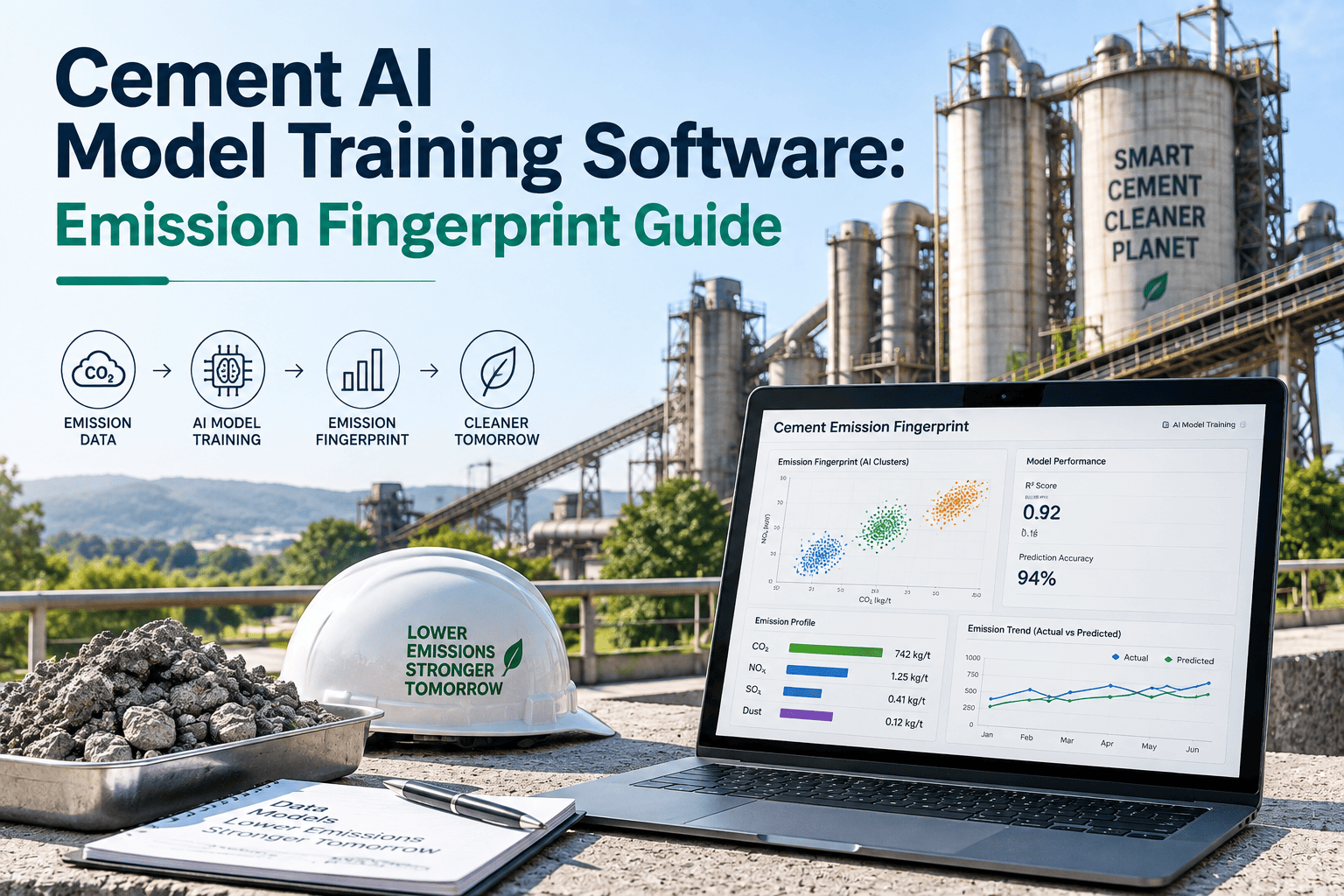
A cement plant in Gujarat spent four months fighting a generic dust-detection AI that fired an alert every time the clinker cooler vented steam on a cold morning. The camera wasn't wrong about what it saw — a visible plume was genuinely there — it just had never been taught the difference between condensing water vapor and actual particulate carryover, so operators learned to ignore the alerts, and one week they ignored a real one too. Off-the-shelf computer vision models are trained on generic smoke and dust datasets that were never built for a cement plant's specific mix of steam, kiln dust, ambient fog, and truck exhaust at a loadout bay. Every one of those model failures traces back to the same root cause: the AI was never shown enough of your plant's own emission behaviour to tell a harmless plume from a real one. Building that plant-specific reference library — what OxMaint calls an emission fingerprint — is the actual work behind a computer vision model that a control room can trust, and it is what separates a system operators believe from one they learn to mute. OxMaint's AI training platform builds that fingerprint library for every stack, vent, and transfer point on your plant, so the model that watches your emissions actually knows what it is looking at.
Why Generic AI Models Misread Cement Plant Emissions
Smoke and dust detection is a genuinely hard computer vision problem, because steam, fog, dust, and true smoke share the same visual signature — a diffuse, moving, semi-transparent plume — and a model trained on generic industrial or wildfire footage has never seen your specific kiln at 6am with condensation rolling off the cooler stack. Research on visual smoke detection consistently points to the same challenge: dust and fog are among the hardest false positives to eliminate, precisely because they look enough like the real event to fool an untrained model. A cement plant compounds the problem further, because it has multiple emission sources behaving differently at the same time — a kiln stack running hot and dry, a clinker cooler venting steam-heavy air, a raw mill kicking up fugitive dust only during startup, and a truck loadout bay throwing exhaust and road dust into the same camera frame. A single generic model applied across all of that will either miss real events or drown operators in false alerts until they stop trusting it entirely. The fix isn't a better generic algorithm, it's teaching the model your plant's own emission fingerprint at every one of those sources.
How OxMaint Builds Your Plant's Emission Fingerprint Library
A fingerprint library is not a one-time upload, it is a structured training pipeline that runs against your actual cameras until the model can reliably separate a real event from everything that only looks like one.
Generic Vision Model vs Fingerprinted AI — Side by Side
The camera hardware is often identical between the two approaches. The difference that actually shows up in the control room is what the model was taught before it went live.
Our first vision system flagged the cooler stack every single cold morning. We ended up disabling the alert channel entirely within six weeks. OxMaint retrained the model on our own footage across a full season, and the false alert rate dropped enough that our control room actually watches the dashboard again instead of ignoring it.— Plant Manager, Integrated Cement Facility
Fingerprints by Emission Source
Every source on a cement plant produces a different visual signature, and a fingerprint library only works if it is built source by source rather than as one blended dataset.
- Distinguishes true particulate carryover from heat shimmer
- Learns startup and shutdown plume behaviour separately
- Correlates visual signature with feed rate and fuel changes
- Flags gradual drift in plume density over weeks, not just spikes
- Trained specifically on condensation and steam behaviour
- Separates cold-morning venting from real dust escape
- Learns grate airflow patterns tied to cooler operation
- Reduces the single largest source of false alerts on site
- Learns startup dust spikes as a normal, recurring pattern
- Flags dust that persists past the normal startup window
- Trained on conveyor transfer point and chute behaviour
- Correlates events with baghouse and dust collector status
- Separates truck exhaust and road dust from actual vents
- Trained across shift changes and varying traffic density
- Learns silo vent behaviour during filling versus idle
- Filters glare from vehicle headlights at low-light hours
What a Trained Fingerprint Model Catches That Generic AI Misses
The value of fingerprinting shows up less in the alerts it removes than in the ones it keeps — and gets right.
Technology Integration: Where the Fingerprint Library Plugs In
Training a plant-specific model is only useful if the output feeds directly into the systems your team already relies on. OxMaint connects the fingerprint model into your existing plant infrastructure rather than running it as an isolated tool.