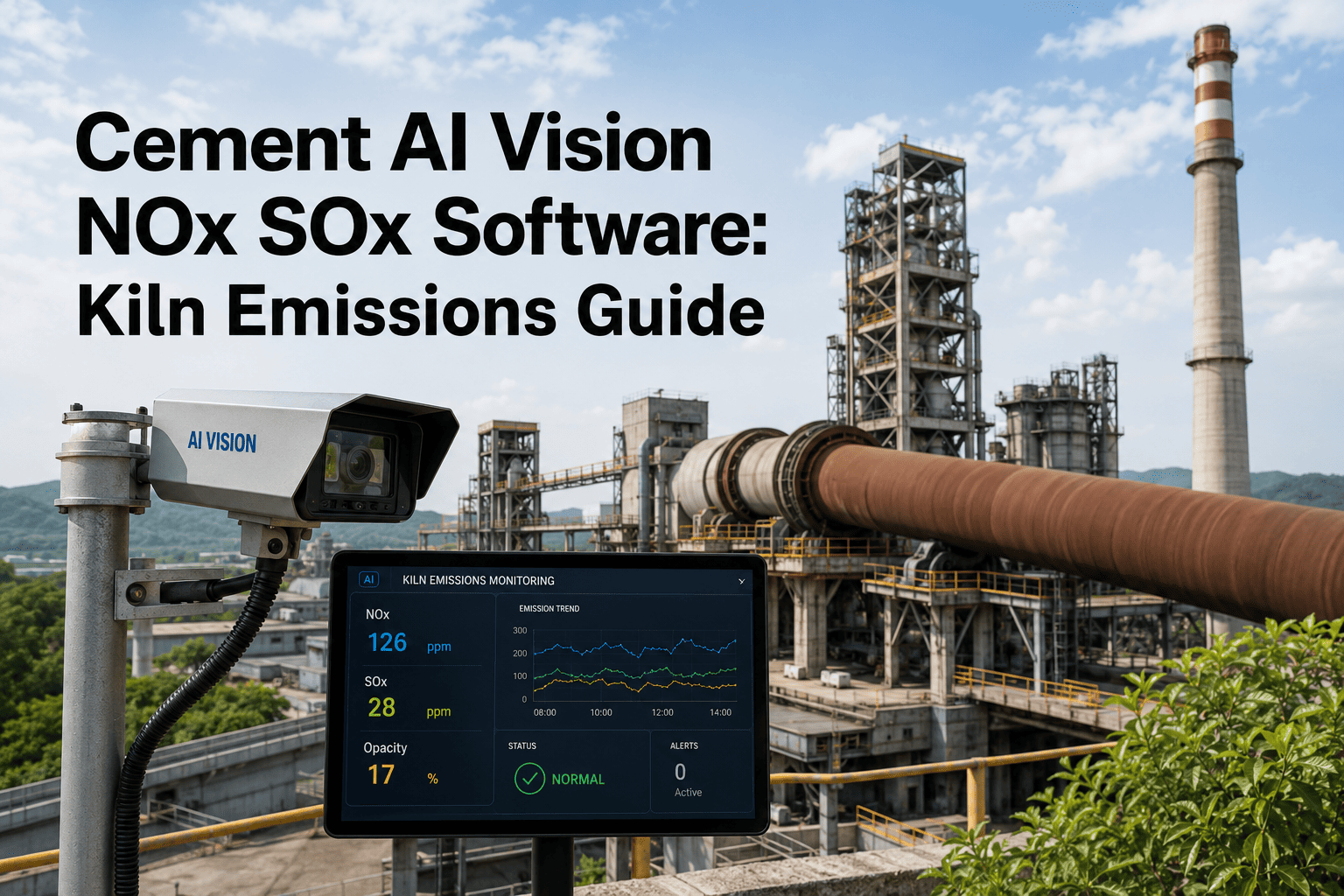
Cement kiln stacks push out a moving mix of NOx and SOx that shifts with fuel type, raw meal chemistry and burning zone temperature every single shift. A certified CEMS analyzer reports the number your permit is measured against, but that number only tells you what already left the stack, not why the plume looks the way it does or where the next drift is building. Kiln managers who watch analyzer numbers alone usually catch a problem after it has already pulled the rolling 30-day average closer to the limit. Pairing that certified reading with AI-visualized plume analysis gives the shift team a second, independent view of stack behaviour that flags a change in opacity or colour before it shows up as a logged exceedance. Start Free Trial to see both data layers on one emissions screen.
AI VISION EMISSIONS MONITORING
Your CEMS shows the number. AI vision shows why the plume looks like that.
Combine certified stack analyzer data with AI-visualized plume analysis inside one CMMS, so kiln managers get a daily emissions picture instead of a quarterly audit surprise.
$100K+
Potential penalty ceiling per day for a single logged stack exceedance
THE COMPLIANCE GAP
A cement kiln stack is not one number, it's a moving chemical picture
A kiln burning zone runs near 1,400°C, hot enough to form thermal NOx from atmospheric nitrogen while fuel-bound nitrogen and raw meal sulphur add their own contribution to the stack stream. A typical preheater-precalciner line can swing between roughly 400 and 900 mg/Nm³ of NOx and anywhere from 10 to 500 mg/Nm³ of SO2 depending on raw mix and kiln stability, and most permits judge that stream against a rolling average rather than a single instant reading.
1,400°C
Approximate burning zone temperature that drives thermal NOx formation
400-900
Typical NOx range in mg/Nm³ from a 5,000 TPD preheater-precalciner kiln
30-day
Rolling average window most NOx permits are measured against
$100K+
Possible per-day penalty ceiling once a stack exceedance is logged
TWO LAYERS, ONE VIEW
Why a certified analyzer and a camera answer two different questions
A CEMS analyzer measures gas concentration directly from the stack and produces the legal number your permit is scored against. A camera reading the plume sees something an analyzer cannot: how opacity, colour tone and dispersion change as combustion conditions shift, often minutes before the certified reading moves.
LAYER ONE
The certified number
Extractive and in-situ analyzers measure NOx, SO2 and O2 concentration directly from the stack gas, generating the rolling average your permit is legally scored against. Between calibration checks, a few percent of analyzer drift can go unnoticed for hours.
LAYER TWO
The visual signal
AI vision reads the plume the way an experienced operator would, tracking opacity, colour and dispersion pattern. These visual traits often shift with fuel switching or kiln feed changes before the certified reading starts to drift.
EARLY WARNING ZONES
Most exceedances give a 30 to 90 minute warning, if someone is watching
A common threshold structure flags a warning at 80 to 85% of the permit limit and an action point at 90 to 95%, well before a violation is ever recorded. Correlating that trend against plume behaviour and process data is what turns a narrow window into usable lead time.
NORMAL
WARNING 80-85%
ACTION 90-95%
Stable stack reading, no action needed
Scheduled work order generated automatically
Immediate burner or reagent correction required
HOW IT WORKS
From stack drift to a closed work order in one workflow
Every stage below runs inside the same CMMS record, so the shift team, the reliability engineer and the compliance officer are all looking at the same evidence.
Step 1
Capture
CEMS analyzer output and AI vision camera feed stream in alongside kiln process data such as O2, fuel rate and kiln inlet temperature.
Step 2
Correlate
The platform checks the analyzer trend against plume opacity and colour pattern plus process data to confirm a genuine drift rather than sensor noise.
Step 3
Alert
Once a reading crosses the warning threshold, the shift team receives an alert with the correlated visual evidence attached.
Step 4
Act
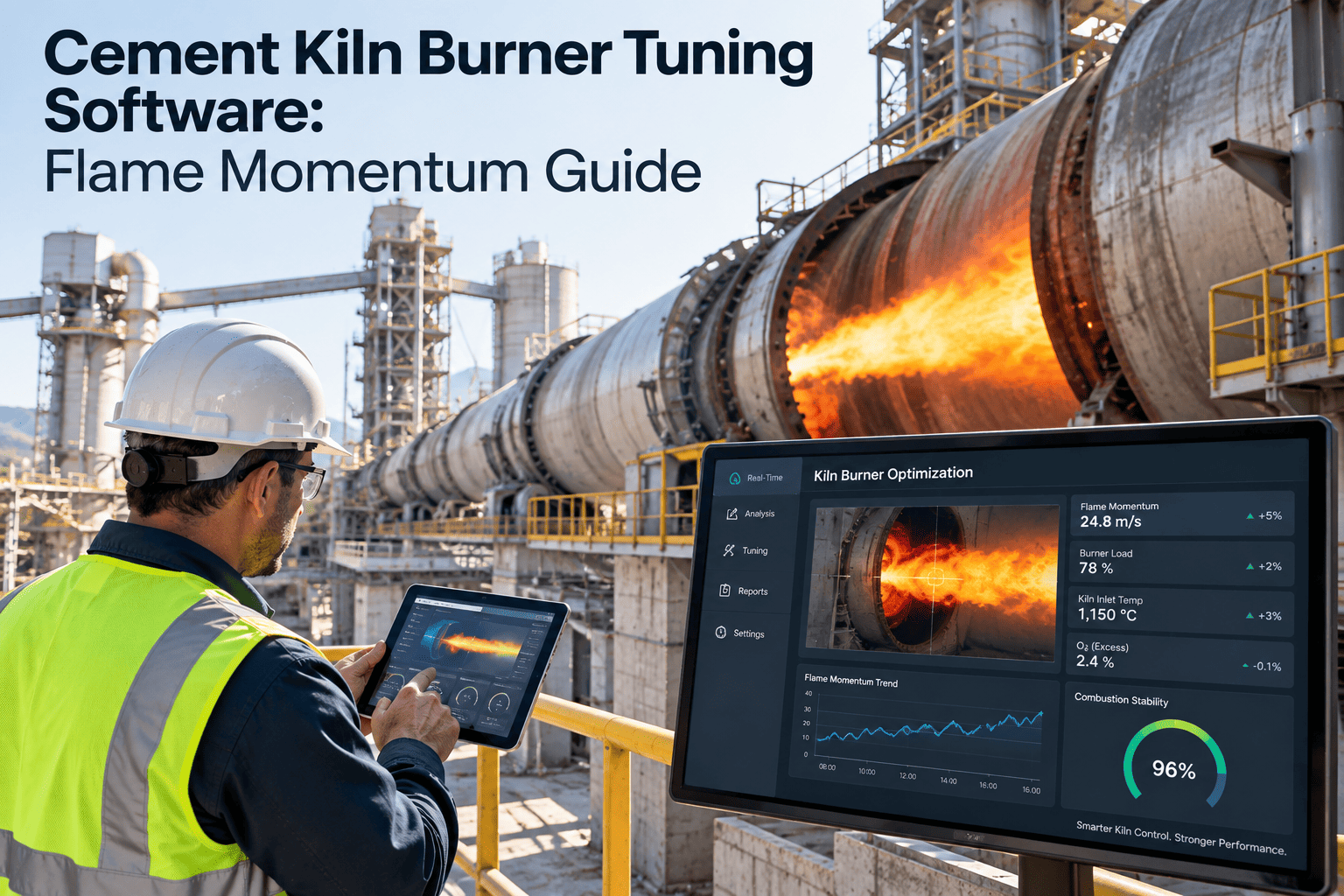
A work order is generated automatically, mapped to the likely lever: SNCR reagent check, burner tuning, or calciner temperature adjustment.
Step 5
Verify
The closed work order is logged with before and after CEMS and plume data, building an audit trail ready for the next inspection.
KEY CAPABILITIES
What a cement AI vision NOx SOx platform actually does for your crew
Each capability below closes one specific gap between a stack reading and the maintenance action it should trigger.
Dual-source ingestion
CEMS analyzer streams and plume camera feeds merge into a single timeline instead of living in separate systems.
Configurable thresholds
Warning and action thresholds are set per pollutant and per permit, not as a single plant-wide number.
Process correlation
Kiln inlet temperature, O2, fuel feed and reagent rate are tracked against every drift event automatically.
Auto-generated work orders
A threshold breach becomes a scheduled maintenance task the moment it is confirmed, not a memo for later.
Audit-ready history
Every alert, plume snapshot and corrective action is stored against the asset record for inspection review.
Multi-line configuration
Each kiln line and stack is tracked with its own permit limits, so raw mix differences never share the wrong rules.
SEE IT ON YOUR STACK
Stop waiting for the quarterly report to find out you were close to a violation
Deploy the dual-layer emissions view on your kiln line and see your first correlated alert within days, not months.
SYSTEM COMPARISON
CEMS-only reporting vs CEMS plus AI vision inside a CMMS
The hardware in both columns can be identical. The difference is what happens between the reading and the response.
| Operational dimension |
CEMS-only reporting |
CEMS plus AI vision in CMMS |
| Drift detection |
Seen only once the rolling average moves |
Flagged when plume and process signals shift together |
| Confirmation method |
Single numeric source, drift can look like noise |
Numeric reading cross-checked against visual plume trend |
| Response trigger |
Manual review during shift change or weekly report |
Work order generated automatically at the warning threshold |
| Evidence for audits |
Numeric log only, context often reconstructed later |
Numeric log plus plume snapshot stored against the event |
| Multi-line visibility |
Each stack reviewed separately, no shared dashboard |
All lines and stacks visible with line-specific thresholds |
FREQUENTLY ASKED
Cement AI vision NOx SOx software, your questions answered
How does AI vision improve on a CEMS analyzer that is already certified for reporting?
The certified analyzer stays your system of record for regulatory reporting, nothing about that changes. AI vision adds an independent signal that reads plume opacity and colour, which often shifts before the analyzer's rolling average does.
Start Free Trial to see both feeds side by side.
Do we need new cameras or can this work with existing plant CCTV?
Most plants already have stack-area cameras installed for safety monitoring, and those feeds can usually be repurposed with minor positioning adjustments. New cameras are only needed where the existing angle does not give a clear view of the plume.
How quickly does the platform flag a NOx or SOx drift before it becomes a violation?
Correlated alerts typically fire 30 to 90 minutes ahead of a logged exceedance, depending on how fast that pollutant moves from warning to action threshold on your kiln. Faster SOx spikes usually give a shorter window than gradual NOx drift.
Can the system handle multiple kiln lines with different permit limits?
Yes. Each kiln line, stack and pollutant is configured with its own warning and action thresholds, so a high-sulphur raw mix on one line never inherits the rules built for a cleaner mix elsewhere.
Book a Demo to see a multi-line setup.
Once an alert fires, does someone still have to remember to act on it?
No. A threshold breach auto-generates a work order tied to the likely corrective lever, such as burner tuning or a reagent check, so the response is scheduled and tracked rather than left to memory.
START MANAGING EMISSIONS TODAY
Your next NOx or SOx reading should confirm compliance, not surprise you
Join cement plants that added an AI-visualized plume layer to their CEMS data and turned quarterly audit anxiety into a daily, five-minute check.
Free 14-day trial, no credit card