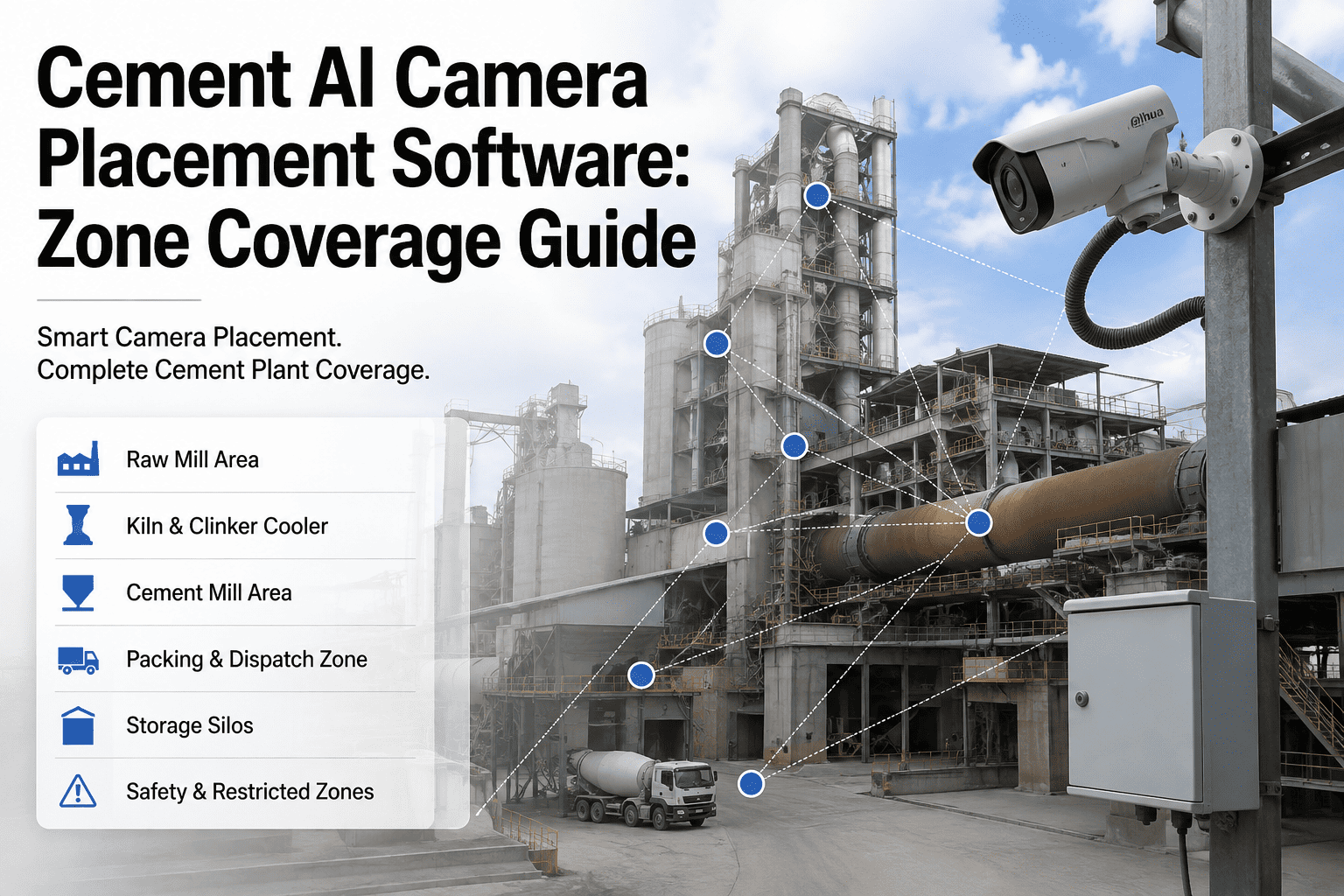
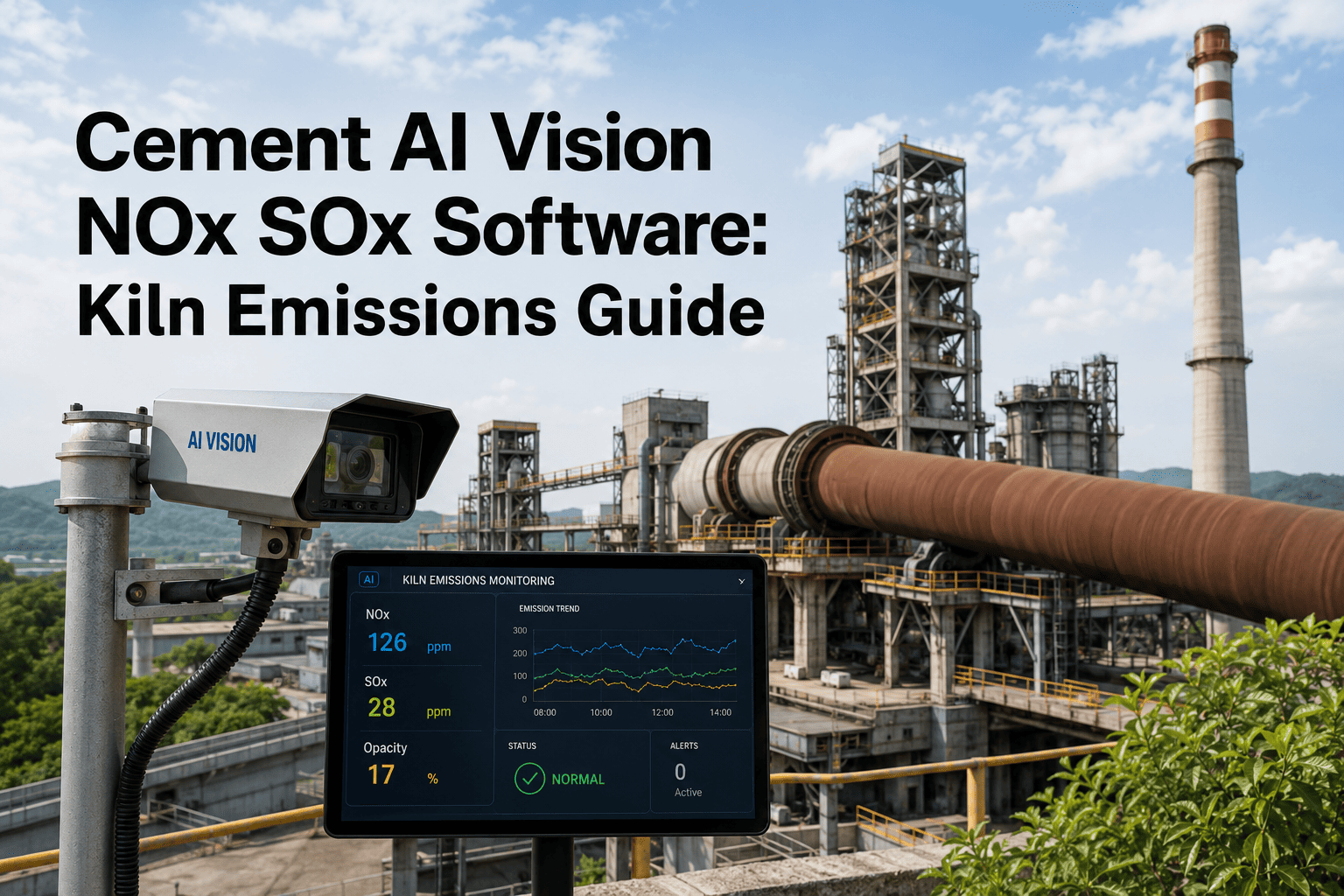
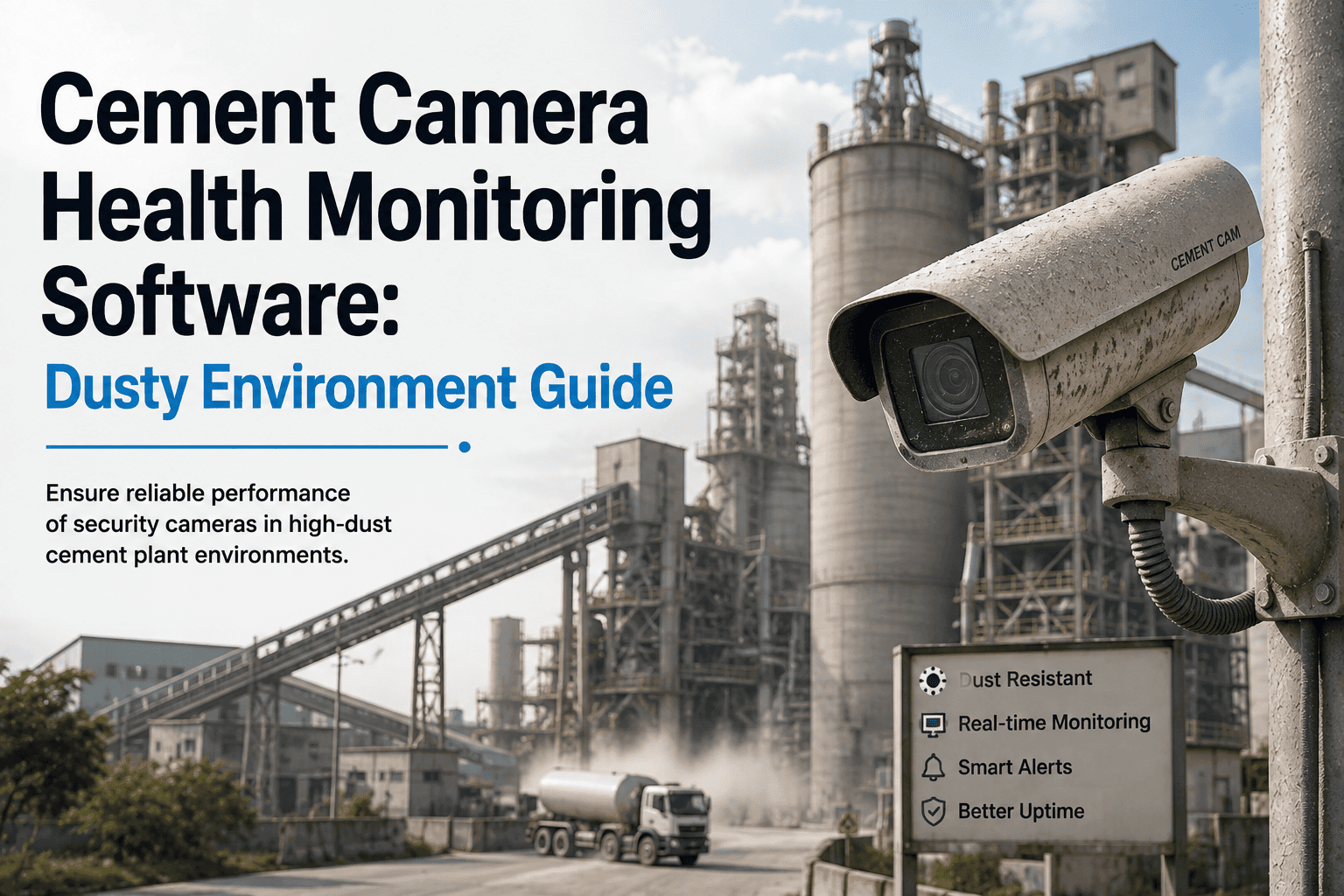
Cement plant boundaries have quietly become one of the most watched zones in the entire operation, and not because of anything happening at the kiln. Continuous emissions monitors track what leaves the stack, but they say nothing about dust drifting off a clinker stockpile, a plume rising near a loading bay, or haze settling over the fence line on a still night. Regulators are now testing exactly these gaps, and a single dust complaint from a neighboring property can trigger a site inspection faster than any stack reading ever could. AI perimeter cameras close that blind spot by watching the boundary continuously and routing what they see straight into maintenance and compliance workflows. Start a free trial of Oxmaint's perimeter monitoring platform and see the fence line the way your regulator already does.
AI Perimeter Monitoring · Cement Plant Boundary · 2026
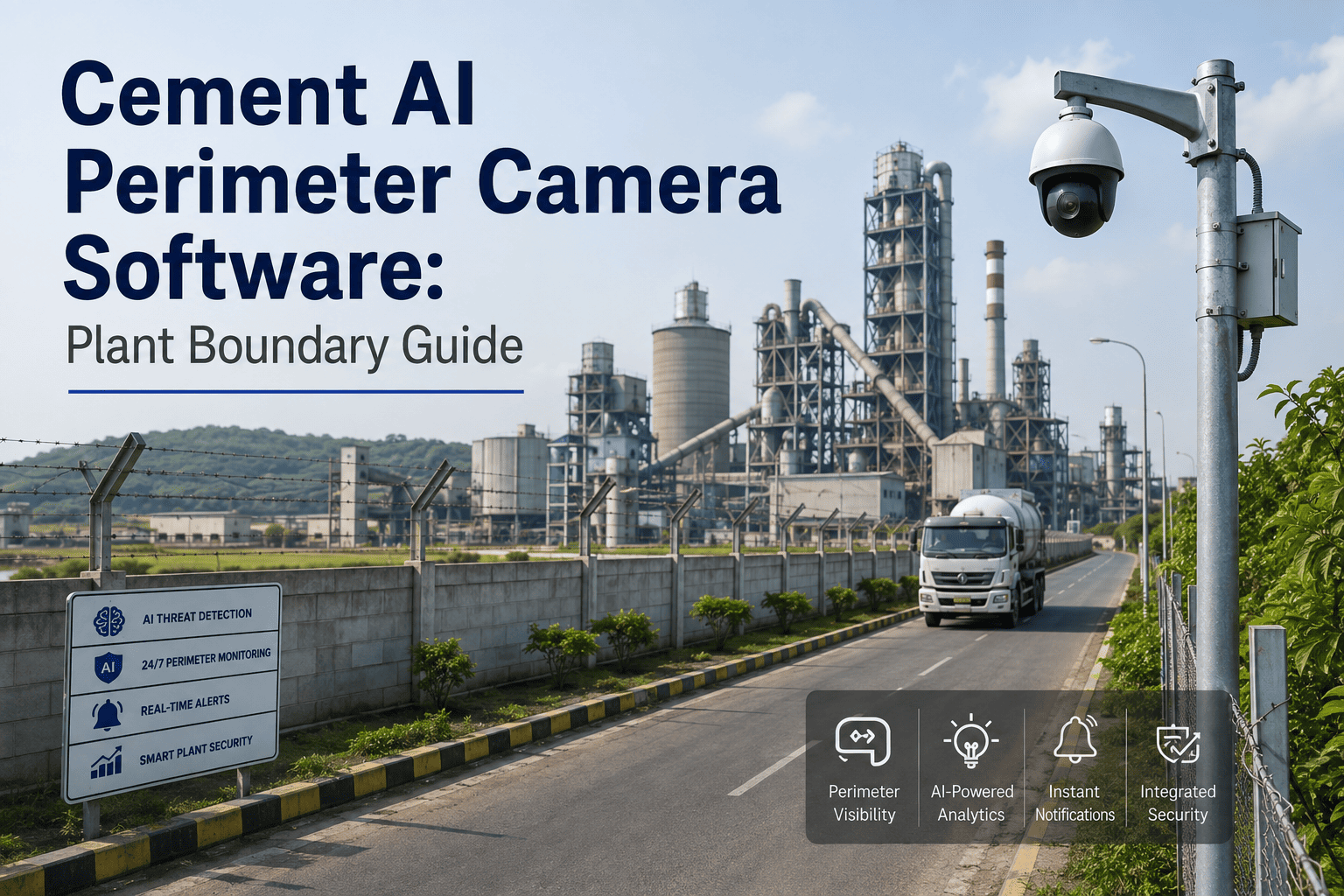
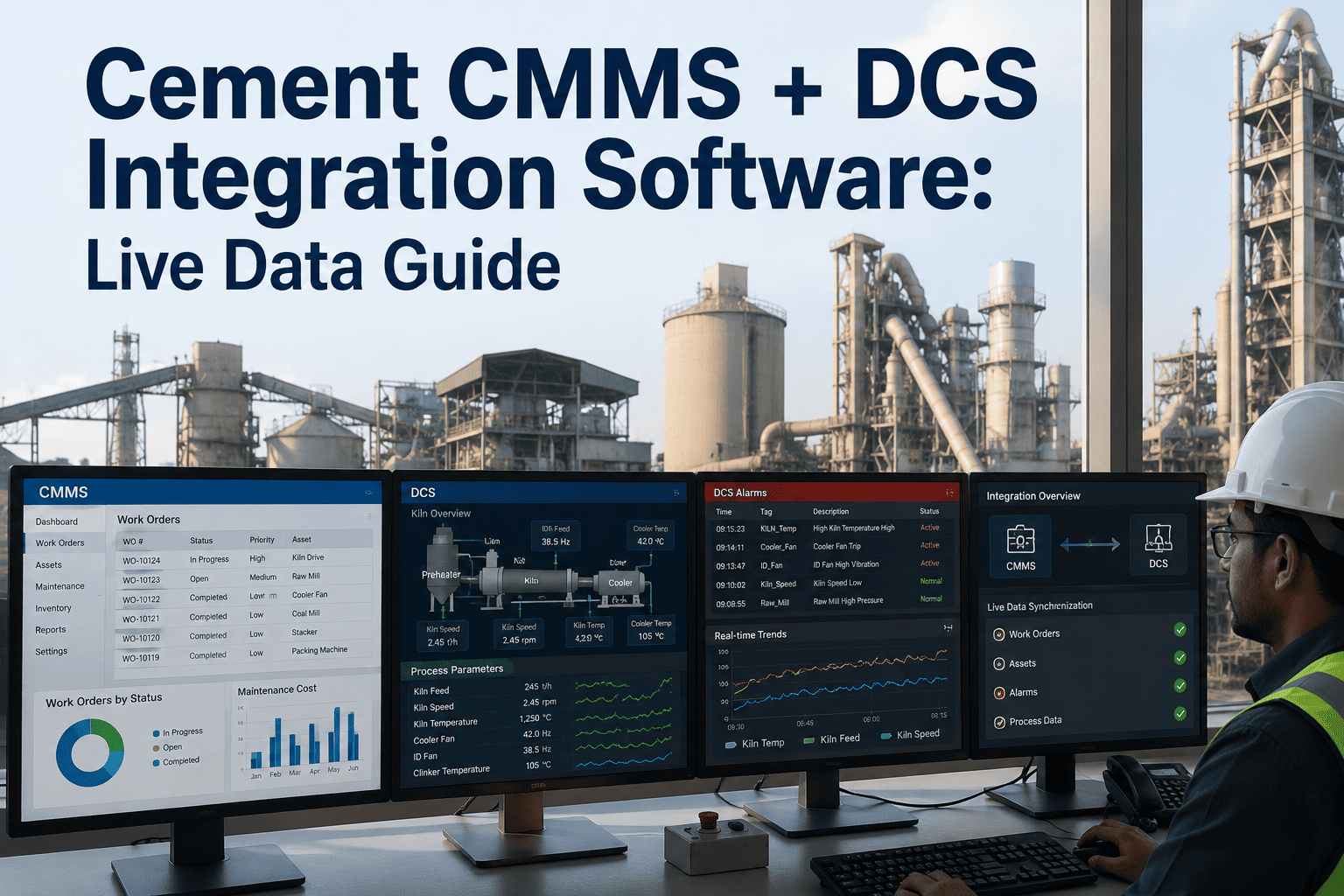
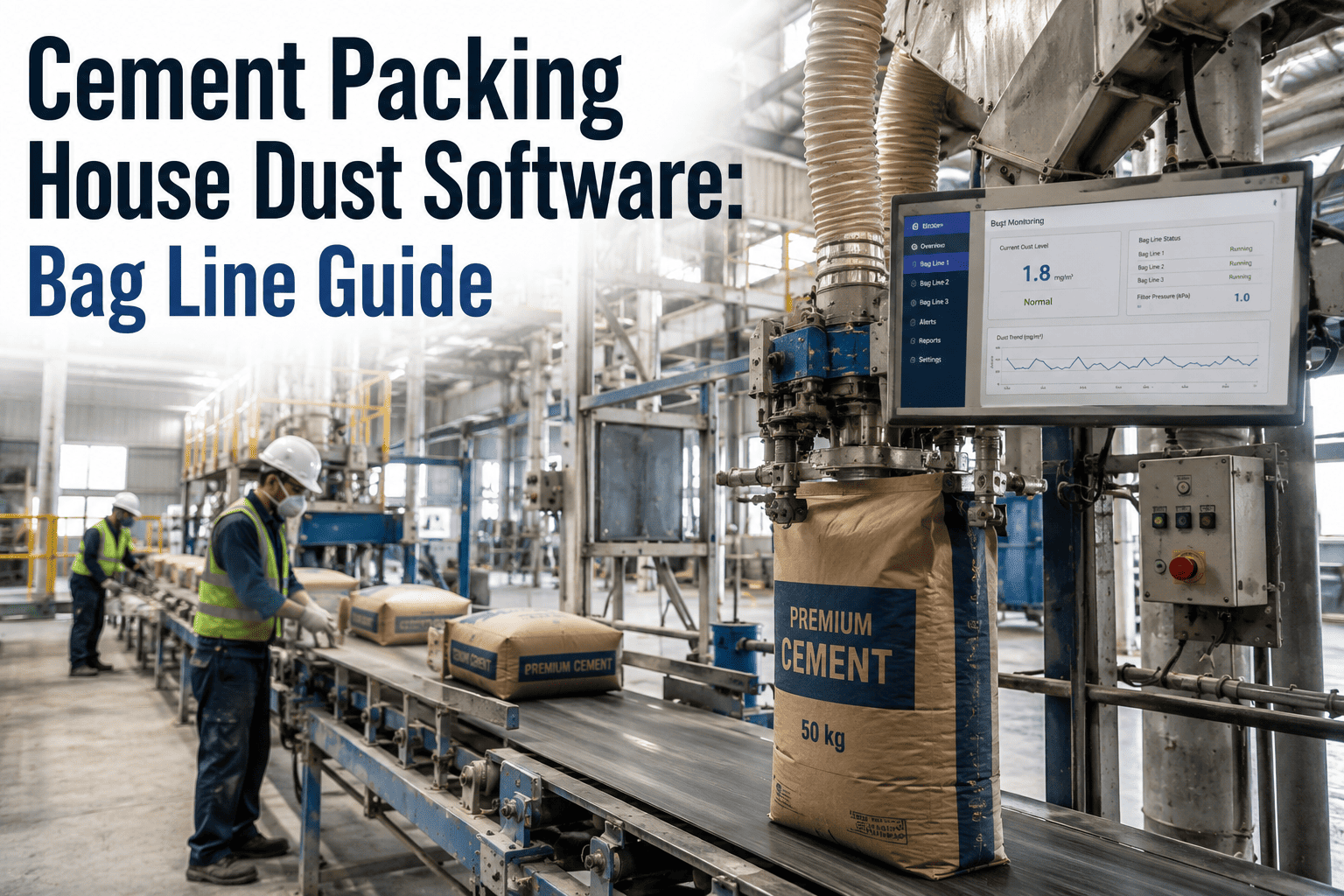
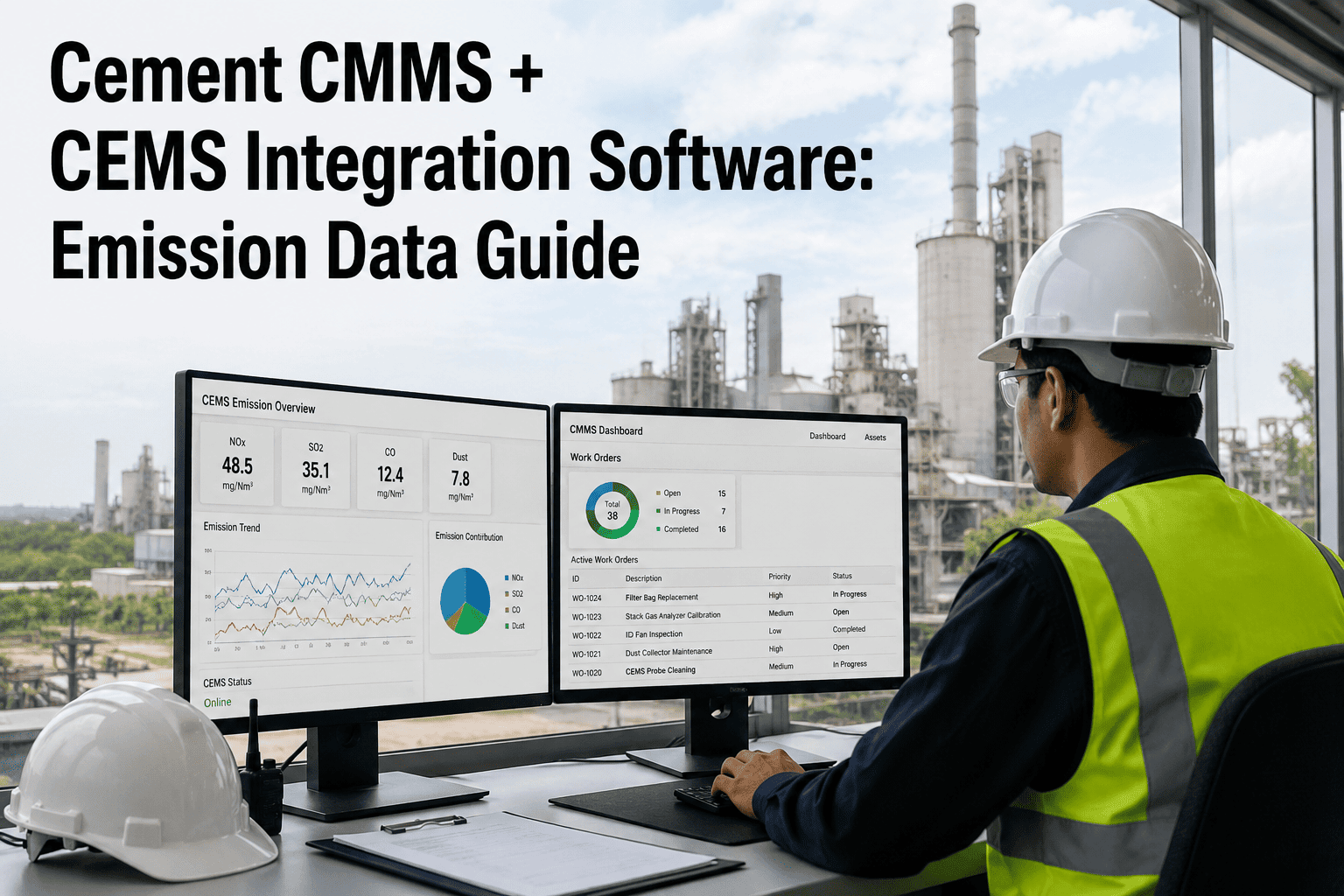
Cement AI Perimeter Camera Software: The Plant Boundary Guide
Stack monitors watch the chimney. Nobody has been watching the fence line — until now. Here is how AI perimeter cameras and CMMS work together to close the compliance gap regulators are already testing for.
24/7
Continuous boundary visibility, day and night
60 sec
Average time from detection to routed alert
1 site
Video, work orders, and audit logs in one place
Why This Matters Now
Why the Plant Boundary Is Under New Scrutiny
For most of the last decade, cement plant environmental compliance was mostly a stack problem. Continuous emissions monitoring systems reported particulate, opacity, and gas concentrations at the source, and that data satisfied most permit conditions on its own. Fugitive emissions — the dust that never passes through a stack at all — were checked periodically with a clipboard and a visual opacity reading, often once a shift or once a day.
That approach is aging out. Communities near cement plants increasingly document dust events themselves, using phone cameras and drone footage, and many environmental agencies now accept that evidence directly. A haze crossing the property line during a windy transfer, a stockpile kicking up dust during loading, or a haul road generating visible plumes are all fugitive emission events that a stack monitor will never register — but a neighbor, an inspector doing a surprise site walk, or a low-flying drone will.
A single unresolved fugitive dust complaint can escalate into a formal enforcement action within weeks, and repeat findings often carry higher penalties than a comparable stack exceedance — because regulators read repeat boundary complaints as evidence of a control program that isn't working.
AI perimeter cameras change the economics of this problem. Instead of relying on a technician walking the fence line twice a shift, fixed and pan-tilt-zoom cameras trained on dust, smoke, and unusual activity patterns watch the entire boundary continuously, flag events as they happen, and hand off evidence and location data to the maintenance team automatically.
How It Works
How AI Perimeter Monitoring Connects to Your CMMS
01
Cameras Watch the Boundary Continuously
Fixed and pan-tilt-zoom cameras cover stockyards, loading bays, haul roads, and the fence line itself, feeding a continuous video stream into an edge AI model trained specifically on dust plumes, smoke, and unusual boundary activity rather than generic motion detection.
02
Events Are Classified in Real Time
The model distinguishes a genuine dust lift-off or smoke event from harmless movement like a passing vehicle, a bird, or shifting shadows, cutting down the false alerts that make teams stop trusting a monitoring system within the first month.
03
A Work Order Is Generated Automatically
A confirmed event creates a prioritized work order in the CMMS with a timestamped clip, the camera location, and a suggested response — water spray activation, stockpile cover check, or haul road watering — routed to whichever shift team is closest.
04
Every Event Becomes an Audit-Ready Record
Detection, response time, corrective action, and closure are all logged against the asset and the shift, building the exact evidence trail an environmental audit or a community complaint response needs, without anyone digging through separate systems.
See Your Fence Line Differently
Turn Boundary Video Into Work Orders, Automatically
Oxmaint connects perimeter camera feeds directly to your CMMS, so a dust event doesn't just get recorded — it gets a work order, a responsible team, and a closed-loop compliance record without anyone reviewing hours of footage by hand.
Scenarios
Where Perimeter AI Catches What Walking Inspections Miss
Stockpile Dust Lift-Off During Loading
Wind gusting across an uncovered clinker or raw material pile during a loader pass is one of the most common boundary complaints. Cameras trained on the stockyard detect the plume the moment it lifts and trigger a work order for water spray activation before the dust reaches the fence.
Unpaved Haul Road Dust Trails
Haul roads dry out unevenly across a shift, and a single dry stretch can generate a visible dust trail behind every truck that passes. Perimeter cameras pick up the pattern building over several passes and flag the road section for watering before a truck-by-truck complaint develops.
After-Hours Activity Near Restricted Zones
Boundary cameras double as a security layer, flagging unauthorized entry near active equipment, fuel storage, or explosive magazines during night shifts when staffing on the ground is lowest and the safety risk of an unnoticed intrusion is highest.
Water Spray System Verification
Dust suppression systems are only useful if they actually run when needed. Cameras confirm whether spray nozzles activated during a detected dust event, closing a gap that periodic manual checks routinely miss between inspection rounds.
Quick Comparison
Traditional Boundary Checks vs AI Perimeter Camera and CMMS
| Aspect |
Traditional Boundary Checks |
AI Perimeter Camera + CMMS |
| Coverage |
Periodic walks, once or twice a shift |
Continuous, every minute of every shift |
| Detection speed |
Depends on when the walk happens |
Near real time, seconds after onset |
| Evidence quality |
Handwritten notes, occasional photos |
Timestamped video clip tied to the event |
| Response routing |
Verbal handoff, easy to lose track of |
Automatic work order to the nearest team |
| Night coverage |
Minimal, limited staffing after hours |
Unchanged, cameras run continuously |
| Audit readiness |
Scattered across logs and memory |
Centralized record per asset and shift |
Frequently Asked Questions
Cement Plant Perimeter Camera Monitoring — Common Questions
Do perimeter cameras replace continuous emissions monitoring systems?
No. Stack CEMS units measure regulated point-source emissions and remain mandatory where required. Perimeter cameras cover fugitive dust and boundary activity that stack monitors were never designed to see.
Start a free trial to see both data streams inside one dashboard.
How many cameras does a typical cement plant boundary need?
Coverage depends on stockyard layout, haul road length, and fence line perimeter, but most plants start with cameras on the highest-risk zones — active stockpiles, loading bays, and haul road entry points — and expand from there.
Book a demo to review a layout for your site.
Can this run on existing plant network infrastructure?
Yes. Wireless perimeter cameras typically connect over existing plant Wi-Fi or cellular backhaul, and edge processing means only classified events and short clips are transmitted, keeping bandwidth use low.
Start a free trial to test the setup on your network.
How does a detected event turn into a work order?
Once the AI model confirms a genuine dust, smoke, or activity event, the CMMS automatically generates a prioritized work order with the camera location, a video clip, and a recommended response, routed to the nearest available shift team.
Book a demo to see the full workflow live.
Is the video and event data useful during an environmental audit?
Yes. Every detected event, response action, and closure time is logged against the asset and shift, building a centralized record that is far easier to produce during an inspection than scattered paper logs.
Start a free trial to see a sample audit report.
Watch the Boundary Before Someone Else Does
Bring Perimeter Monitoring and Your CMMS Into One Platform
Oxmaint connects AI perimeter cameras, work order automation, and compliance reporting into a single system built for cement plant reliability and EHS teams — so fugitive dust events get caught, routed, and documented before they become a complaint on someone else's desk.