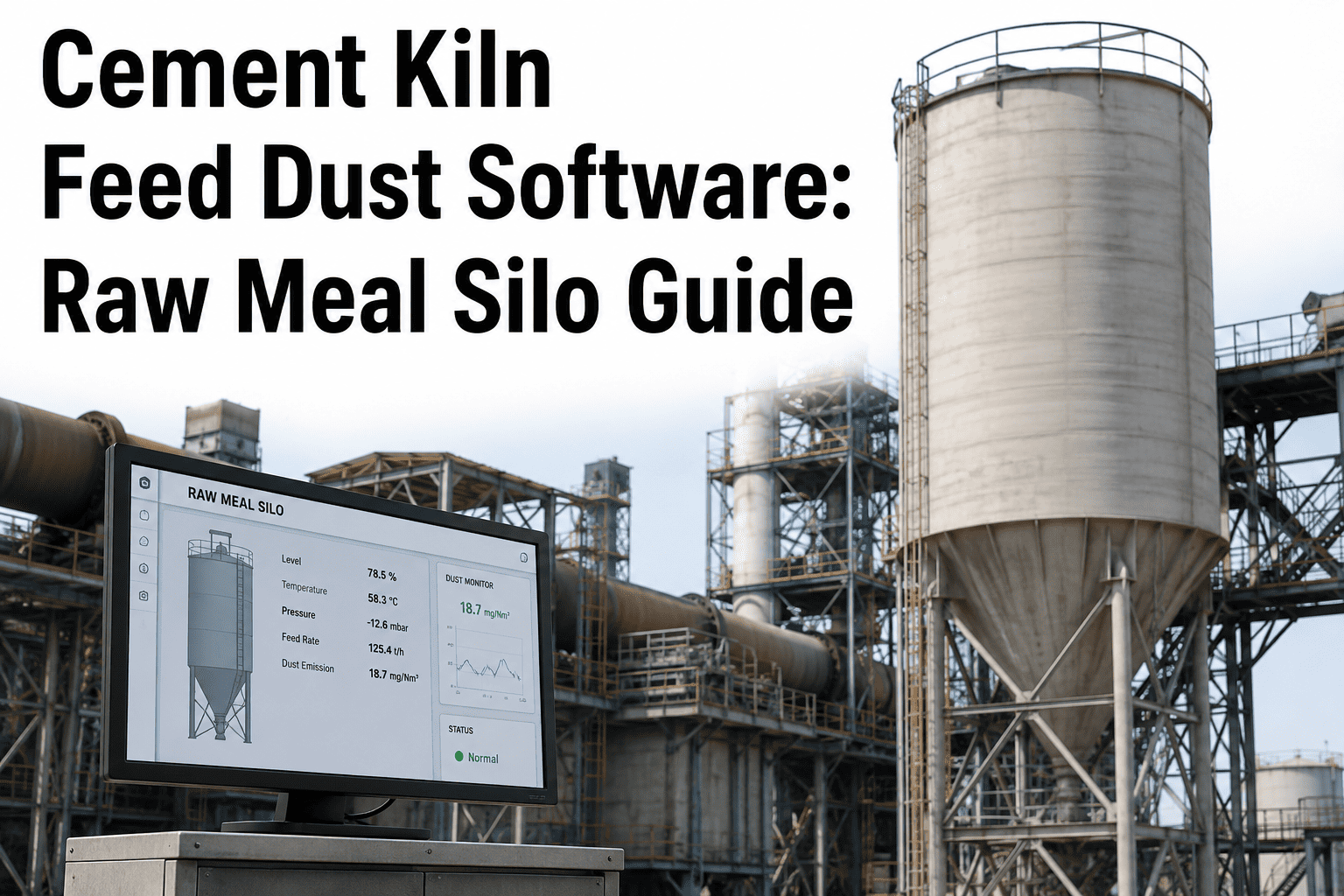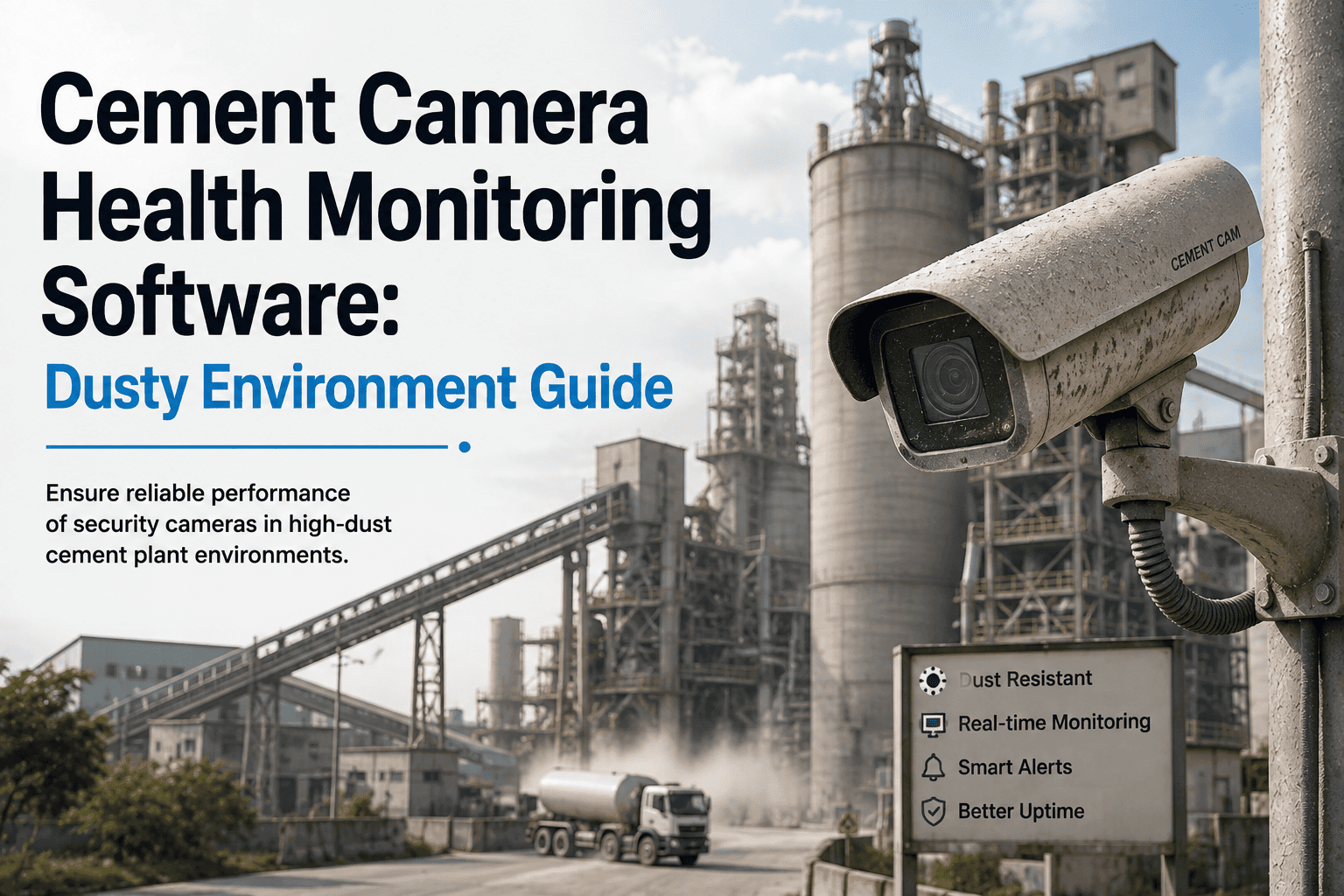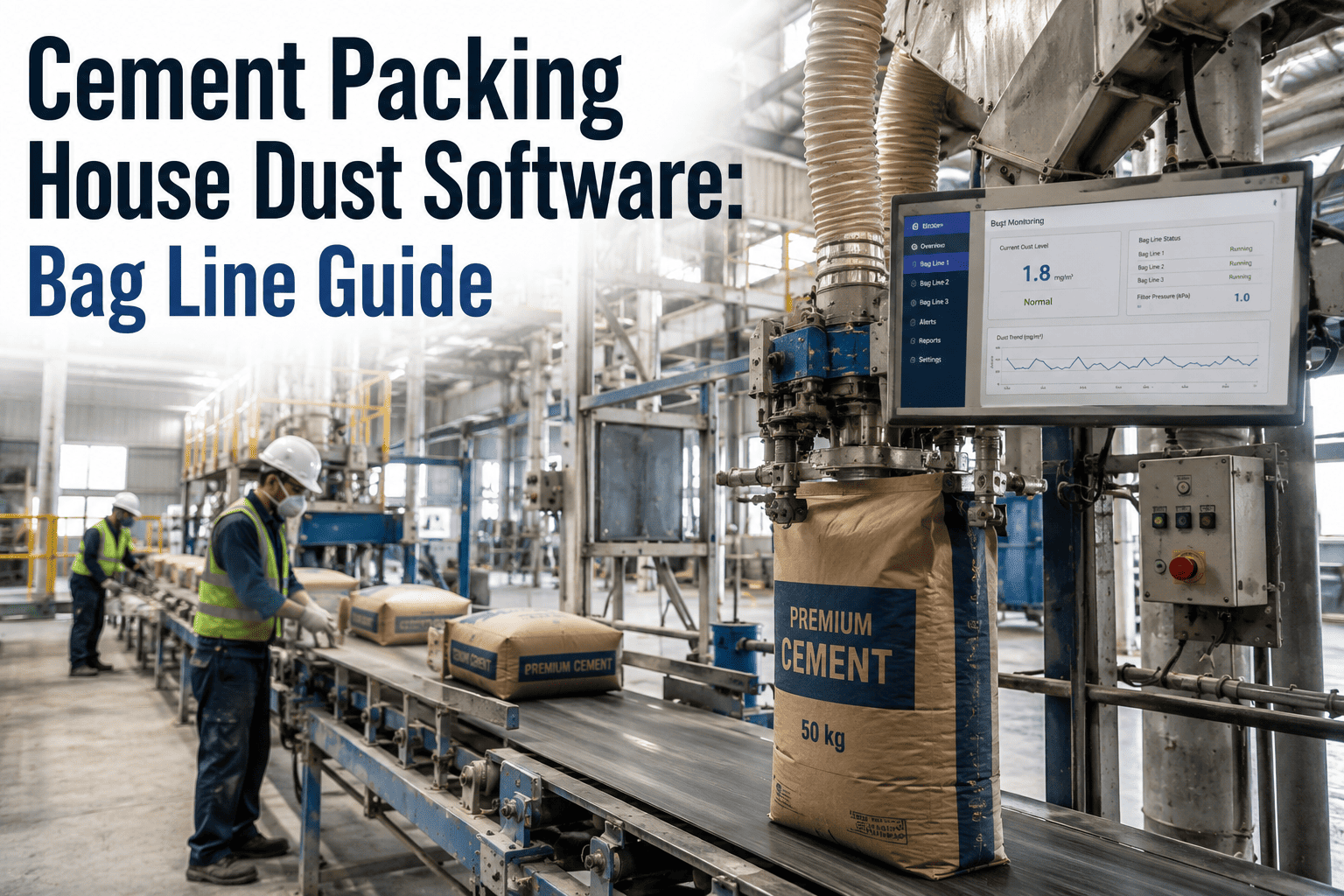
Cement packing house dust is the most visible failure a plant can have — the one visitors, auditors, and regulators see the moment they walk onto the bag line. It escapes from rotary packer spout seals, palletizer wrap stations, and bag rejector conveyors every time a line runs at full 1,800–2,400 bags/hour cycle, and airborne concentration can cross the 20 mg/m³ regulator-visible threshold the instant a spout sleeve wears thin or a filter cartridge clogs. Packing house dust control is not a one-time installation — it is a maintenance discipline built on sweeping frequency, filter cartridge intervals, and spout seal checks that most plants still track on a clipboard. This guide maps every dust-generating point on a cement bag packing line and shows the PM cadence and CMMS setup that keeps it under control — see it running with a Start Free Trial.
CEMENT PACKING HOUSE GUIDE · DUST CONTROL & CMMS
Your bag line runs clean for a week, then dust creeps back. Here is why.
A rotary packer spout sleeve worn by just 2mm, a rejector belt that has not been swept in three shifts, or a palletizer film wrap running loose — any one of these pushes packing house dust past regulator-visible levels. Most plants find out during an inspection, not before one.
DUST SOURCE MAP
Five points on the bag line where cement dust actually escapes
Packing house dust rarely comes from one dramatic leak. It comes from five ordinary wear points that each contribute a little — until the cumulative haze is thick enough that a regulator does not need an instrument to see it. Track each one separately, because each fails on its own schedule.
Rotary packer spout seals
Rubber spout sleeves and clamping seals wear under 1,800–2,400 bags/hour cyclic load. A worn sleeve lets filling-head dust bypass the dedicated collection duct entirely, and on an 8-spout packer even one bad sleeve is enough to fail a visible-emission check.
Dust collection filter cartridges
The bag filter that pulls negative pressure off the filling head loses capture efficiency as the cartridge loads with fine cement. A clogged cartridge does not stop collecting suddenly — it degrades gradually, so DP or airflow trending catches it long before a visible cloud does.
Bag rejector & conveyor line
Torn, underweight, or overweight bags get pulled at the rejector — and every reject spills cement onto the belt and floor. A reject rate above 1.5% is almost always a packer-head problem showing up downstream as a housekeeping and dust problem on the conveyor.
Palletizer & bulk loader spouts
Palletizing arms and telescopic bulk loading spouts rely on dust skirts that compress against the bag or truck opening. A cracked skirt or a spout left retracted mid-cycle turns a sealed transfer into an open one, releasing fine dust exactly where forklift traffic stirs it back up.
Floor & structural sweeping
Settled dust on floors, beams, and cable trays is fugitive dust waiting for a draft or vibration to put it back in the air — and in enclosed packing houses it is also a combustible dust housekeeping risk that inspectors check independently of stack emissions.
WHAT NEGLECT ACTUALLY COSTS
What a packing house dust citation costs versus what prevention costs
Packing house dust does not show up on the P&L as a line item, so it is easy to under-price. It shows up instead as a compliance citation, a shortened bag rejector conveyor life, a worker health exposure claim, or a shutdown for an unplanned filter change during peak dispatch. Here is how the numbers actually stack up across a typical 2,000 bags/hour line.
DUST RISK EXPOSURE
Fine range: $10K – $75K per citation
Regulatory fine ranges vary by jurisdiction and repeat-offense status, but a single documented visible-emission event at a packing house routinely triggers corrective action plans, follow-up inspections, and — on repeat findings — production limits until dust extraction is proven compliant again.
Plus reputational cost with nearby communities and downstream customers
| Dust Condition | Likely Root Cause | Regulatory Exposure | Line Impact |
|---|---|---|---|
| Clean, no haze at spouts | Seals and cartridges within PM window | Low | Full rated bags/hour |
| Light haze near packer heads | Spout sleeve nearing wear limit | Moderate — inspector-noticeable | Reject rate creeping up |
| Visible dust at rejector/conveyor | Torn bags not caught, belt not swept | Elevated — housekeeping citation risk | Slip and combustible dust hazard |
| Persistent cloud at palletizer/loader | Skirt failure or filter cartridge saturated | High — permit and community risk | Line slowdown or forced stoppage |
Stop finding out about dust problems during an inspection
Move spout seal checks, filter cartridge swaps, and sweeping logs into a CMMS that triggers work before dust becomes visible, not after.
MAINTENANCE CADENCE
The packing house PM rhythm that keeps dust out of sight
Dust control on a bag line is not a quarterly shutdown task like a kiln overhaul — it lives and dies on shift-level discipline. Here is the cadence that keeps spouts sealed, filters loaded correctly, and floors clear without turning every shift into a cleanup crew.
Sweep floors, belts, and cable trays
Log a shift-end sweep of the packing floor, rejector belt, and any structural surfaces where dust settles. This single habit does more to prevent a fugitive dust finding than any single piece of equipment on the line.
Belt tracking and reject count
Check conveyor belt tracking and log the rejector count against total bags run. A reject rate climbing past 1.5% is your earliest signal that a spout seal or weighing head is starting to fail — well before dust becomes visible.
Filter DP and spout cycle test
Log differential pressure across dust collection cartridges and cycle-test palletizer and bulk loader spouts. A rising DP trend or a spout that hesitates on retraction both point to a repair that is cheaper this week than next.
Spout sleeve and skirt inspection
Physically inspect every spout sleeve, clamping seal, and palletizer dust skirt for cracking, hardening, or compression loss. Replace proactively — a spout sleeve swap is a planned few-minute task, not an emergency line stoppage.
Full filter cartridge replacement
Replace dust collection filter cartridges on schedule rather than waiting for a DP alarm. Recalibrate weighing sensors and audit dust skirt compression across every spout and loader as part of the same planned window.
CMMS CONFIGURATION
How a CMMS keeps packing house dust PM from living on a clipboard
Most packing houses already know the checklist. What breaks down is follow-through across three shifts, multiple packers, and a rejector line that nobody owns end-to-end. Here is the CMMS setup that closes that gap.
Asset hierarchy by spout and loader
Model each rotary packer as a parent asset with individual spouts as children, and each bulk or bag loader as its own asset. A worn seal maps to spout 4 on packer 2, not "the packer."
Reject-rate triggered work orders
Bind PM triggers to the rejector count feed. When reject rate crosses 1.5% over a rolling shift, auto-generate a spout seal inspection instead of waiting for the monthly calendar check.
Digitized sweeping and floor logs
Turn shift-end sweeping from a paper sign-off into a timestamped, photo-attached checklist per zone — so a missed sweep is visible immediately, not discovered during an audit.
Spare parts forecasting
Track spout sleeve and filter cartridge age per asset. The CMMS forecasts demand 90 days out so procurement has sleeves and cartridges on the shelf before the next planned swap.
Dust filter DP trend log
Record cartridge differential pressure per audit and trend it over months. A slow DP climb across every filter tells you the cleaning cycle needs retuning before any single cartridge fails.
Compliance-ready audit trail
Every sweep, seal replacement, and DP reading is timestamped and exportable. When an inspector asks for packing house housekeeping evidence, it is one report away, not a search through binders.
Our packing house used to fail the visible-emission walkthrough almost every quarter — usually a spout sleeve nobody had flagged. After we moved spout inspections and sweeping logs into the CMMS with reject-rate triggers, we caught the wear points before they showed and passed the last four inspections clean.
FREQUENTLY ASKED
Cement packing house dust control — straight answers
What causes most dust escapes on a cement bag packing line?
Worn rotary packer spout seals, saturated dust filter cartridges, and unswept rejector conveyors account for most fugitive dust events. Each one fails on its own schedule, which is why a single annual inspection is not enough to keep any of them under control.
How often should dust filter cartridges be replaced?
Plan on a 6-month replacement cycle as a baseline, adjusted by weekly differential pressure readings. Waiting for a DP alarm before replacing a cartridge usually means dust has already been escaping for days. Book a Demo to see how Oxmaint schedules this per cartridge.
What reject rate signals a packing dust problem?
A reject rate above 1.5% almost always points back to a packer-head issue — commonly a worn spout seal or a weighing sensor drift — rather than a conveyor fault. Track it daily and treat a rising trend as an early warning, not just a quality metric.
Is settled floor dust actually a compliance issue?
Yes — settled dust on floors, beams, and cable trays is fugitive dust waiting to be disturbed, and in enclosed packing houses it is also assessed as a combustible dust housekeeping hazard separately from stack emissions. Shift-end sweeping logs matter as much as filter maintenance.
Can a CMMS really reduce packing house dust citations?
Yes — by triggering inspections from reject-rate and DP trends instead of a fixed calendar, and by giving inspectors a timestamped digital record instead of paper logs. Plants using this approach typically catch spout and filter wear before it becomes a visible-emission finding. Start Free Trial to set it up on your line.
Put packing house dust control on a schedule, not a clipboard
Configure spout and loader asset hierarchies, reject-rate triggered work orders, and sweeping checklists in under an hour. Your bag line, your inspectors, and your operators will all notice the difference.
Free 14-day trial · No credit card