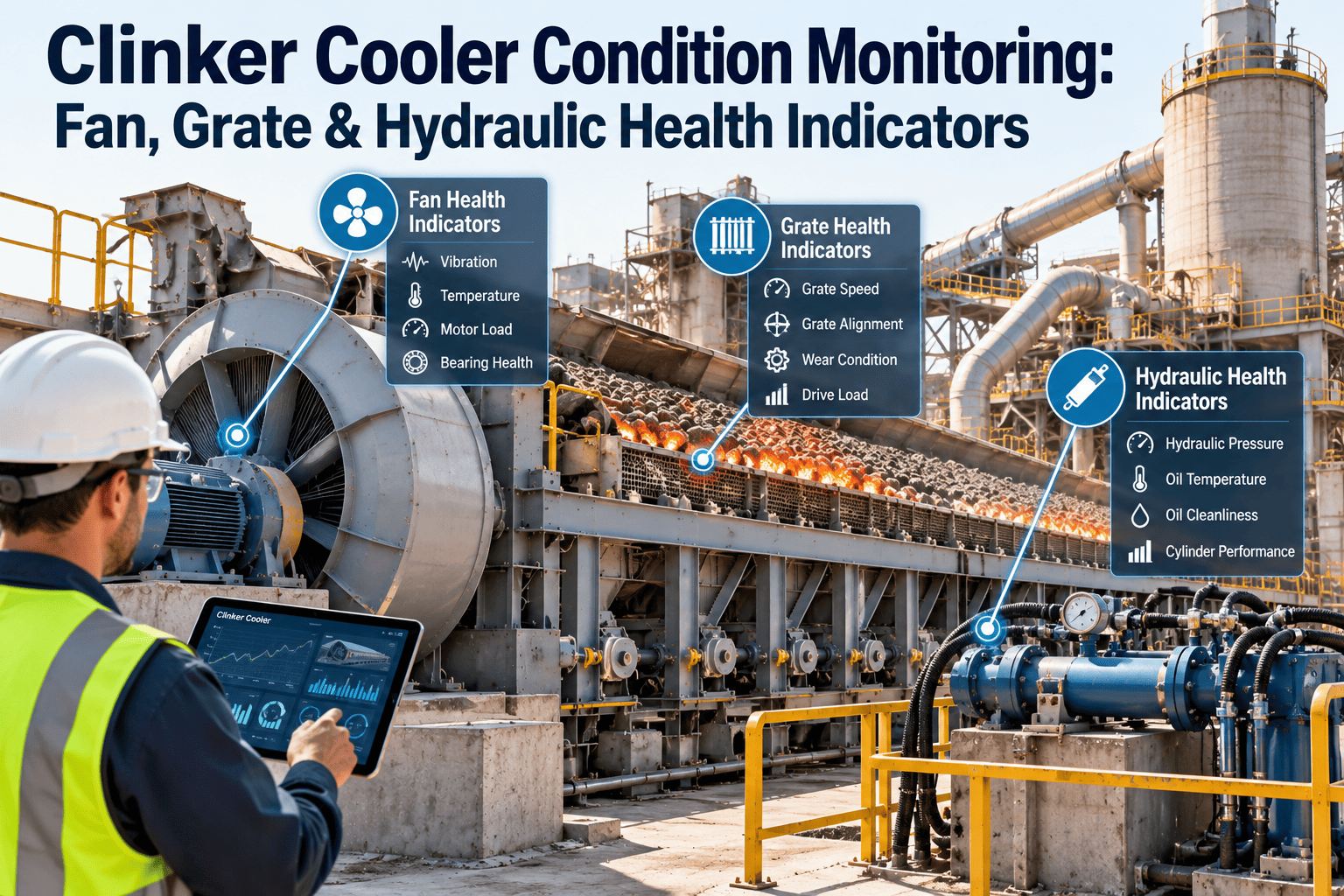
The clinker cooler sits between the kiln and everything downstream, so when it struggles the whole line pays. Worn grate plates let clinker sift through, cooling fans lose airflow quietly, and hydraulic drives lose stroke consistency long before a grate stalls. Most plants find out through a red river or a trip rather than a planned inspection. This article maps the three failure families and the routines that catch them early, with Oxmaint cement maintenance software keeping records together. You can book a demo to see a cooler set up.
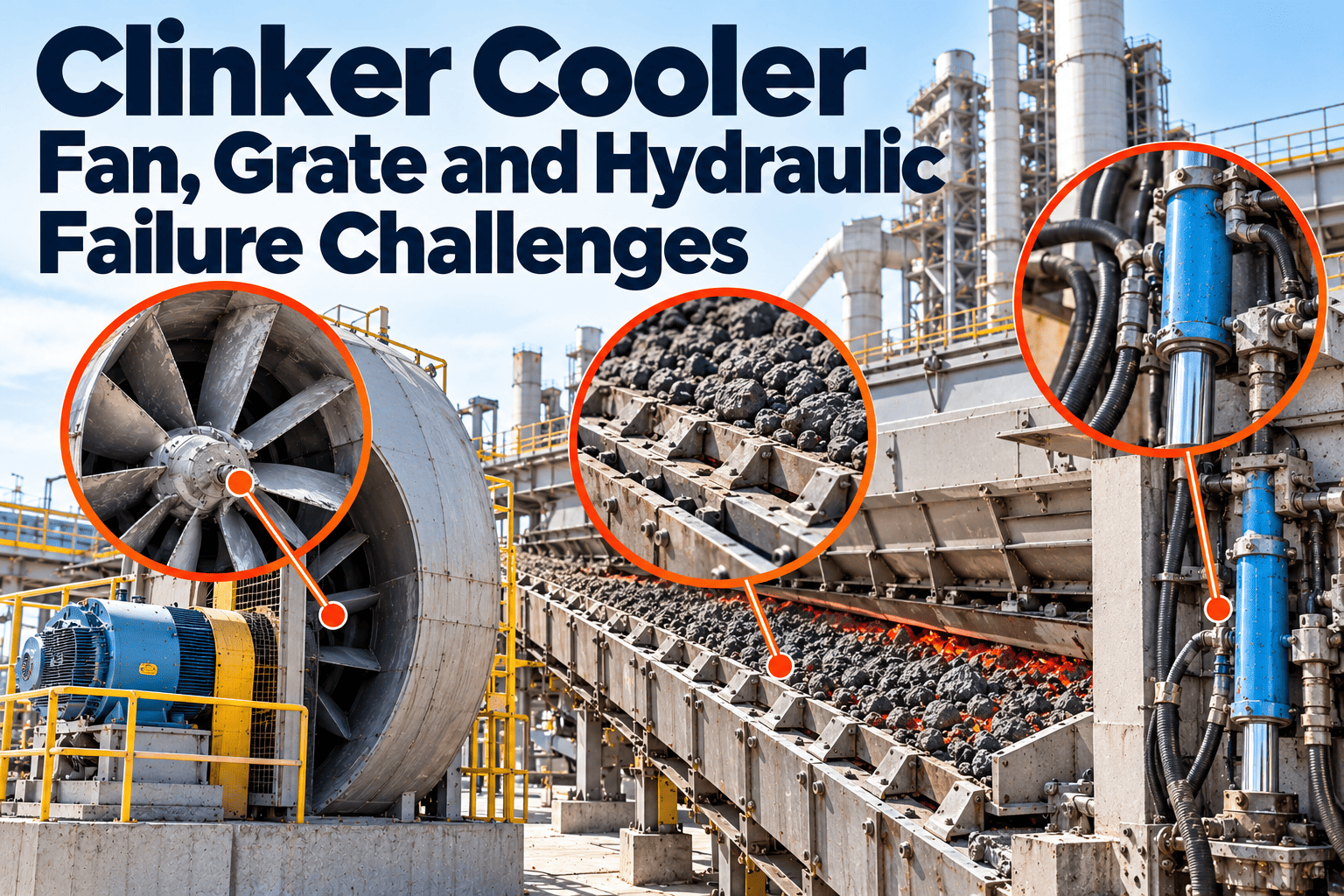
Clinker Cooler Fan, Grate and Hydraulic Failure Challenges
Cooling inefficiency rarely starts with a dramatic breakdown. It starts with plate wear, fan drift and hydraulic pressure creep that nobody trends. Catch the early signals and fix them in planned windows.
Why Cooler Problems Spread So Far
The cooler is commonly cited as the point where a large share of process heat is either recovered or lost. That is why its condition shows up in fuel use, clinker quality and downstream equipment life.
Heat recovery
Clinker quality
Downstream protection
Three Systems, Three Failure Families
Grate and plates
Fans and air distribution
Hydraulic drives
How One Small Failure Becomes a Line Problem
The failures interact. A single worn zone can start a chain that ends in kiln instability.
Root Causes Behind Repeat Cooler Failures
When the same failure returns every few months, the cause is usually upstream of the part that broke. These patterns recur across cement coolers.
| Root cause | How it shows up | Maintenance response |
|---|---|---|
| Unstable kiln output or coarse clinker | Uneven bed, red river, repeated side plate damage | Share cooler findings with operations and record them against the grate asset |
| Wear parts replaced by calendar, not condition | Plates changed too early in some zones and too late in others | Record thickness by zone and replace by measured wear |
| Fan faults masked by control compensation | Damper opens further, current climbs, airflow still falls | Trend current and airflow together and compare adjacent fans |
| Hydraulic oil contamination | Filter blockages, seal wear, inconsistent stroke | Schedule oil sampling and filter changes with condition triggers |
| Findings lost between shifts | The same observation is re-discovered by the next crew | Log observations on mobile so every shift sees the same history |
Reading the Symptoms
| Symptom | Likely causes | First check |
|---|---|---|
| Secondary or tertiary air temperature falling | Worn plates, poor air distribution, leakage or an unstable bed | Inspect grate and undergrate compartments, seal leaks, fan performance |
| Hot clinker at the discharge | Insufficient airflow, uneven clinker, red river | Fan output, damper positions, grate condition |
| Under-grate pressure deviating from normal | Plate wear, buildup, fan degradation | Compare compartments against baseline, check bed depth |
| Hydraulic pressure rising at normal stroke | Heavy bed, snowman, internal leakage, contamination | Check the bed, oil quality, filters and cylinders |
| Fan amps or vibration trending up | Impeller buildup or erosion, bearing wear, imbalance | Inspect impeller, bearings and mounting at the next window |
| Frequent grate drive faults | Worn hydraulic components or linkage wear | Inspect cylinders, hoses, filters and linkages |
Stop Finding Cooler Faults the Hard Way
Grate Plates: Wear You Cannot See Under Clinker
Manual visual checks often miss plate wear because buildup covers the surface. Measurement during shutdowns, plus daily indirect signals, gives a truer picture.
| Indicator | How it is checked | Example starting point for action |
|---|---|---|
| Working face thickness | Ultrasonic measurement during a stop | Plan replacement well before a lower limit, for example 6 mm, per OEM guidance |
| Slot wear and enlargement | Visual and gauge survey of each zone | Replace plates with significant slot growth, set by OEM and plant history |
| Under-grate pressure | Chamber-by-chamber transmitters | Investigate sustained deviation from baseline, often near 15 percent |
| Fines under the grate | Walk-down of undergrate floor | Raise an inspection when volume rises over successive rounds |
| Red glow through windows | Operator observation | Report to the control room immediately and open a work order |
Fans: Degradation Hides in Amps and Airflow
Cooling fans run continuously in dusty air, so erosion and buildup arrive slowly. By the time clinker bed behaviour changes, the fan has often been degrading for weeks.
Hydraulic Drives: Pressure Is a Health Signal
The grate hydraulic system moves the whole reciprocation cycle. Pressure that creeps up at the same stroke speed points to resistance in the bed or wear in the drive.
Snowman and Red River: Two Process-Linked Failures
Snowman formation
Red river
An Inspection Cadence That Matches the Failure Modes
Reactive Cooler Care vs Condition-Based Cooler Care
Reactive
Condition-based
Spares and Lead Time: The Hidden Multiplier
A cooler fault that could be fixed in one shift becomes a multi-day stop when the plate set, bearing or hydraulic seal kit is not on site. Spares planning is part of cooler reliability.
Wear parts
Rotating parts
Hydraulic parts
Planning a Cooler Stop Without Surprises
Technology Trends Reshaping Cooler Maintenance
Modern coolers and monitoring tools shift effort from repairing failures to managing condition. These changes matter for maintenance planning, whatever the cooler supplier.
On the equipment
In the maintenance workflow
Questions to Ask in a Cooler Reliability Review
Safety Notes for Cooler Maintenance
Cooler work combines heat, moving grates, stored hydraulic energy and dust. The maintenance record should show that controls were followed, not only that the job was done.
Hazards to plan for
What to record
Who Owns Which Cooler Signal
| Role | Watches | Acts on |
|---|---|---|
| Control room operator | Bed conditions, discharge and secondary air temperature, hydraulic pressure | Process adjustments and immediate reports of red river or snowman |
| Area technician | Walk-downs, fan vibration, leaks, lubrication | Inspection work orders and minor repairs |
| Planner | Wear records, spares, upcoming stops | Work packages, parts reservations, scheduling |
| Reliability engineer | Trends, repeat failures, plate life | Condition rules, root cause reviews, replacement intervals |