Only 14% of global cement plants have moved beyond basic process control into true Industry 4.0 operations — yet those plants report 38% lower maintenance costs, 22% higher kiln utilization, and carbon intensity reductions of up to 18% compared to non-automated peers. The gap is not technology. It's implementation clarity. Most cement operations have invested in sensors, PLCs, and even AI pilots, but lack the systematic integration architecture that converts isolated data points into plant-wide intelligence. This guide is the implementation roadmap that turns scattered digital investments into a unified, compounding competitive advantage — with every layer built on a foundation of connected maintenance operations through Oxmaint.
What Industry 4.0 Actually Means in a Cement Context
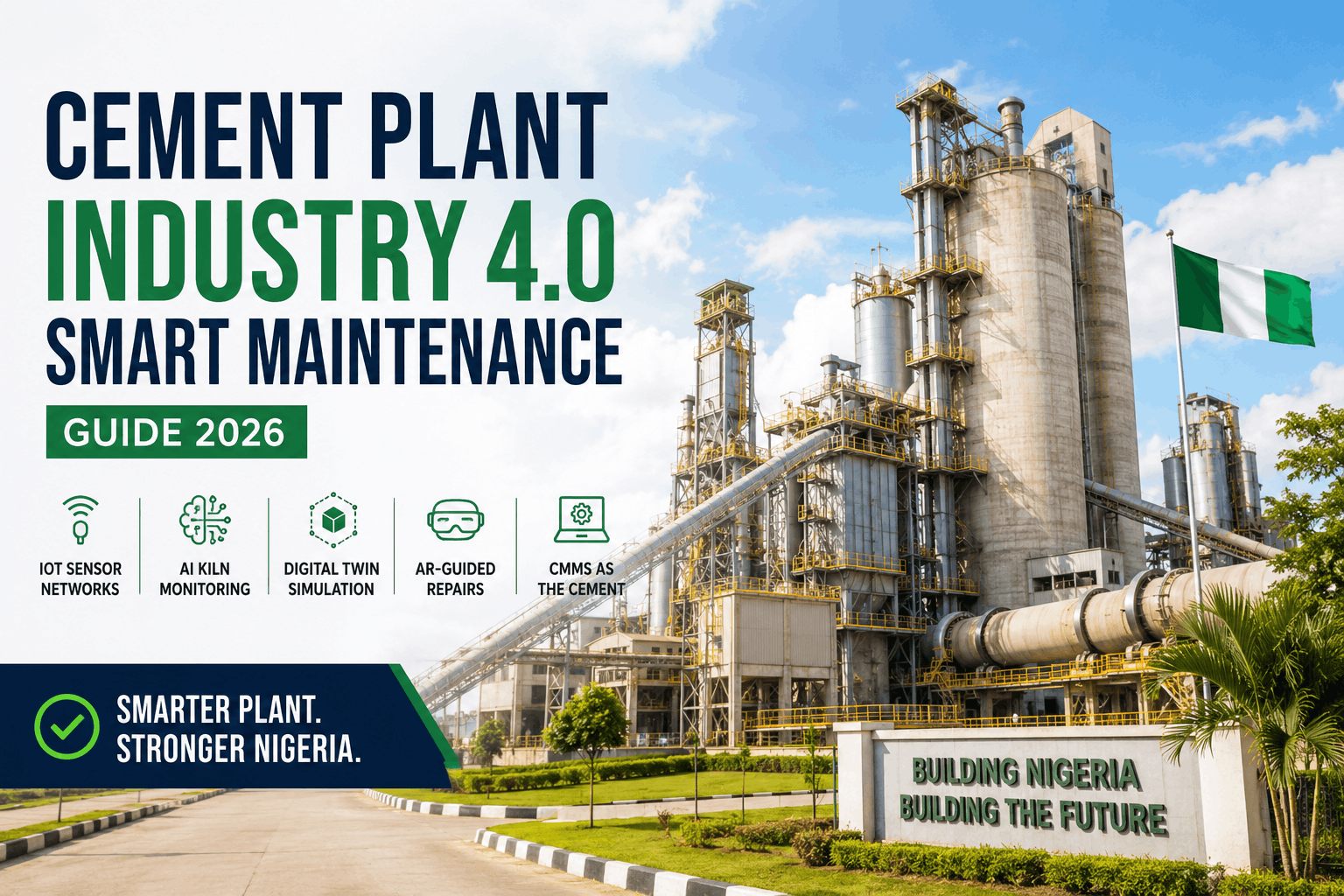
Industry 4.0 is not a product you buy — it is an architecture you build. In cement manufacturing, it means creating a closed-loop system where physical operations generate digital data, analytics convert data into predictions, predictions trigger automated actions, and those actions feed back into improved physical operations. The four technology layers that define this architecture must be integrated, not siloed.
The 7 Core Technologies Driving Cement Plant Automation
Each technology listed below delivers measurable value independently — but their compounding impact when integrated is what separates Industry 4.0 leaders from followers. Book a demo with Oxmaint to see how these technologies connect into a unified maintenance intelligence layer.
Advanced Process Control (APC)
Model-predictive controllers replace manual kiln and mill set-point adjustments. APC systems process 200–500 sensor inputs simultaneously to optimize clinker quality, fuel consumption, and throughput in real time.
Digital Twin Technology
A virtual replica of your kiln, mill, or entire production line that runs in real time. Digital twins simulate process changes before implementation, predict failure modes, and train operators in realistic scenarios without production risk.
IIoT & Condition Monitoring
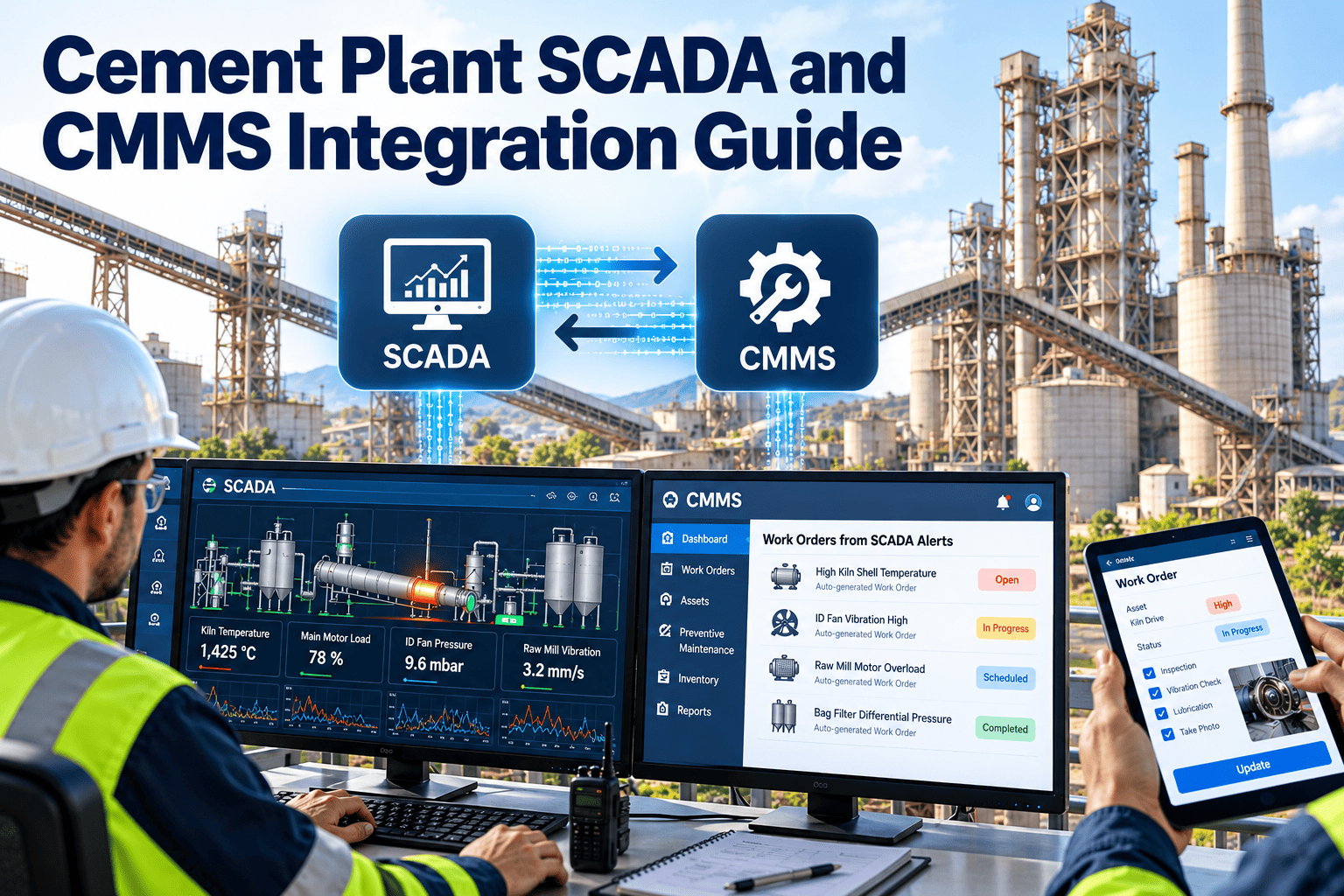
Wireless vibration, temperature, and acoustic emission sensors on rotating equipment — crushers, fans, kilns, mills — provide continuous condition data. When readings cross thresholds, work orders are automatically created in the CMMS before failure occurs.
AI-Powered Kiln Optimization
Machine learning models trained on years of kiln operation data — fuel blends, raw mix chemistry, draft profiles — make micro-adjustments every 30–60 seconds. Cement giants including Heidelberg and Holcim report fuel savings of 4–9% from AI kiln control alone.
Automated Quality Control
Online X-ray analyzers, cross-belt analyzers, and NIR spectroscopy provide chemistry data every 30–120 seconds versus laboratory analysis every 2–4 hours. Closed-loop raw mix control automatically adjusts proportions to hit target LSF, SM, and AM values.
Mobile CMMS & Field Digitization
Technicians with smartphones connected to a cloud CMMS receive work orders, access equipment history, capture photos, scan QR-coded assets, and complete digital checklists — eliminating the paper lag that delays both execution and reporting in traditional maintenance workflows.
Energy Management Systems
Real-time power metering at equipment and circuit level, combined with production data, identifies specific energy-intensity outliers. Automated demand management systems shift non-critical loads away from peak tariff periods, reducing energy bills without production impact.
Watch Industry 4.0 Maintenance Automation in Action
Oxmaint's cement specialists demonstrate how sensor alerts become work orders, how DCS data feeds maintenance dashboards, and how compliance records generate themselves — live on a real cement plant data environment.
The 5-Stage Industry 4.0 Implementation Roadmap for Cement Plants
Industry 4.0 implementation fails when plants try to digitize everything simultaneously. The most successful cement automation programs follow a staged maturity model that delivers tangible ROI at each phase, building organizational confidence alongside technical infrastructure. Start your Oxmaint free trial to anchor Stage 2 with a world-class maintenance management layer from day one.
Digital Foundation
- Asset registry & QR tagging
- CMMS deployment
- Digital work order flow
- Baseline KPI measurement
Connected Sensing
- IIoT vibration sensors on critical equipment
- DCS/SCADA to CMMS integration
- Automated alert-to-work-order
- Energy sub-metering activation
Process Intelligence
- Advanced process control (APC)
- Online quality analyzer integration
- Closed-loop raw mix control
- AI kiln optimization pilot
Predictive Intelligence
- ML failure prediction models
- Digital twin deployment
- Spare parts demand forecasting
- Automated compliance reporting
Autonomous Operations
- Self-optimizing process loops
- Automated procurement triggers
- Carbon accounting integration
- Multi-plant intelligence network
Automation Priority by Equipment: Where to Start
Not all equipment deserves equal automation investment. Prioritize by the product of criticality × failure frequency × cost of downtime. This matrix shows the recommended automation investment sequence for a typical integrated cement plant.
Why Industry 4.0 Projects Stall — And How to Break Through
A McKinsey study found that 70% of industrial digitization programs fail to scale beyond pilot phase. These are the five most common stall points in cement plant automation, and the proven paths through them. If your plant is stuck at any stage, sign up for Oxmaint to re-anchor your program around operational maintenance execution — the layer most programs underestimate.
Oxmaint Connects Your DCS Data to Maintenance Intelligence in Weeks — Not Years
Pre-built OPC-UA connectors. Native mobile app. Cement-specific asset templates. Our implementation team has solved every barrier listed above — across 20+ cement plant deployments. See it working on a real cement plant environment.
Industry 4.0 and Carbon Compliance: The Inseparable Link
Cement accounts for approximately 8% of global CO₂ emissions. With the EU ETS carbon price exceeding €60/tonne in 2025 and CBAM extending obligations to exporters, automation is no longer just an efficiency tool — it is a carbon compliance mechanism. Every percentage point of fuel efficiency gained through APC directly reduces CO₂ intensity. Every predictive maintenance intervention that prevents a kiln upset avoids uncontrolled emission spikes. Industry 4.0 investments that also log, report, and verify emissions data are dual-purpose assets that satisfy both operations and sustainability leadership.
EU ETS Compliance
Automated maintenance records linked to emission events provide the audit-ready documentation required for EU Emissions Trading System reporting. APC-driven fuel reductions directly lower carbon credit requirements.
Scope 1 Emission Tracking
Real-time fuel metering integrated with kiln production data enables continuous Scope 1 emission intensity calculation (kg CO₂ per tonne clinker) — replacing monthly manual estimates with continuous verified data.
Alternative Fuel Optimization
AI-driven fuel blending models that incorporate coal, petcoke, and alternative fuels (RDF, biomass) simultaneously optimize cost, thermal substitution rate, and NOx/SO₂ emissions — aligning decarbonization goals with operational economics.
CBAM Documentation Automation
The Carbon Border Adjustment Mechanism requires granular production-linked emission data for exports to the EU. Automated production and maintenance systems that co-log carbon data eliminate the manual documentation burden of CBAM compliance.
Frequently Asked Questions
What is the realistic first-year ROI from Industry 4.0 investment in a cement plant?
First-year ROI varies significantly based on starting maturity, but a typical integrated cement plant investing $200,000–$500,000 in Stage 1–2 digitization (CMMS + IIoT sensors on critical equipment) should expect: 15–20% labor productivity improvement worth $80,000–$200,000 annually, 1–3 major failure preventions worth $150,000–$500,000 each in avoided downtime, and 5–10% energy cost reduction on instrumented equipment. Conservative first-year net benefit typically reaches 1.5–2.5× the investment. Full ROI usually crystallizes in Year 2 as predictive models accumulate sufficient data to become reliably accurate.
Do we need to replace our existing DCS to implement Industry 4.0?
No — and this is one of the most persistent misconceptions that delays implementation. Modern Industry 4.0 architecture is additive, not replacement-based. Your existing DCS (ABB, Siemens, Yokogawa, Rockwell) continues to handle real-time process control. An OPC-UA data broker layer sits above it, extracting historian data and feeding it to cloud analytics and CMMS platforms. IIoT vibration and temperature sensors connect via wireless gateways that are entirely independent of the DCS network. The only scenario requiring DCS replacement is when controllers are 20+ years old and lack any communication interface — even then, wireless sensors can bypass the DCS entirely for condition monitoring purposes.
How many sensors does a typical cement kiln require for effective condition monitoring?
A comprehensive kiln condition monitoring program typically requires 40–80 sensing points: 8–12 bearing vibration sensors (tyre riding rings, main drive, auxiliary drive, kiln feed end and discharge end), 6–8 shell temperature sensors for refractory monitoring, 4–6 draft and temperature sensors across the preheater tower, 2–4 inlet/outlet NOx and O₂ analyzers, and 4–8 process variable transmitters (feed rate, rotation speed, torque). Not all plants start at full instrumentation — a prioritized pilot covering the 12 highest-criticality sensing points typically covers 80% of failure detection value at 30% of full program cost.
How does a CMMS integrate with DCS/SCADA in practice?
The integration architecture uses an OPC-UA server (or Modbus bridge for older systems) that exposes selected process tags from the DCS historian. The CMMS subscribes to these tags via an integration middleware layer. Configurable rules define which tag values or combinations trigger actions: a bearing vibration reading above 12 mm/s RMS automatically generates a Priority 2 work order with the current sensor reading attached; a kiln drive motor temperature trending upward at more than 2°C/hour triggers a condition assessment task. This closed loop — sensor anomaly → automatic work order → technician investigation → repair → reset — is the core of predictive maintenance in an Industry 4.0 environment.
What cybersecurity framework should govern OT/IT integration in cement plants?
The IEC 62443 standard is the applicable cybersecurity framework for industrial control systems. For cement plants integrating OT and IT networks, the recommended architecture includes: a demilitarized zone (DMZ) with firewalls on both OT and IT sides, one-way data diodes for historian-to-cloud data flows (physically preventing inbound traffic to the OT network), role-based access control with multi-factor authentication for CMMS users accessing any OT-linked data, network segmentation that isolates the kiln DCS from other plant systems, and annual penetration testing of the integration boundary. NIST CSF and ISA/IEC 62443 compliance should be contractual requirements for any cloud CMMS vendor deployed in a cement plant environment.
How long does it take to train AI models for kiln optimization in a new deployment?
Transfer learning from pre-trained cement kiln models significantly accelerates deployment timelines. Vendors with cement-specific AI platforms (such as ABB Ability, FLSmidth ECS, or AI-native solutions) have base models trained on 50–200 kiln-years of operating data. With transfer learning, a new kiln deployment can achieve meaningful optimization performance within 4–8 weeks of data collection, compared to 12–18 months required to train a model from scratch. The first 30 days typically operate in advisory mode (recommendations displayed, operator approves), transitioning to closed-loop control once model performance is validated against at least 500 operating hours of comparative data.
Should we build our own Industry 4.0 platform or integrate best-of-breed solutions?
Build vs. integrate is the central strategic decision in cement Industry 4.0. Building custom platforms requires software engineering talent that most cement companies lack internally and creates long-term maintenance obligations for code your operations team did not write. Best-of-breed integration — APC specialist for process control, IoT platform for condition monitoring, cloud CMMS for maintenance execution — delivers faster deployment and access to vendors whose entire roadmap is focused on your specific problem. The integration risk is managed through open API standards (OPC-UA, REST APIs, MQTT). The only scenario where custom development makes sense is for highly proprietary processes where no commercial solution provides adequate chemistry or process modeling depth — typically limited to raw mix optimization in plants with unusual raw material compositions.
Oxmaint Is the Maintenance Intelligence Layer Every Cement Automation Program Needs
From Stage 1 digital work orders to Stage 4 predictive intelligence — Oxmaint connects your sensor data, automates your maintenance workflows, and delivers the compliance records that regulators demand. Cement-specific. Mobile-first. Live in weeks.