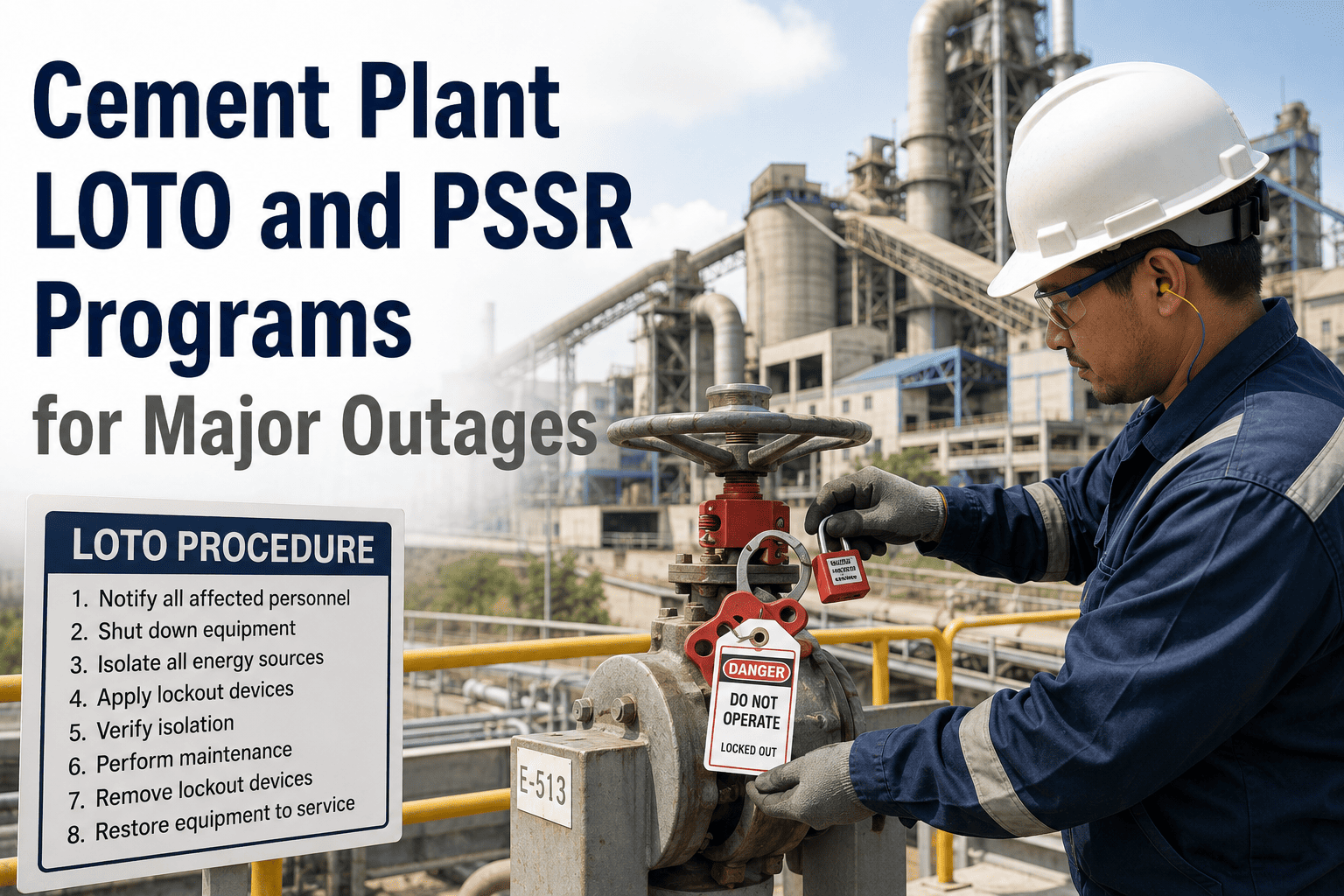
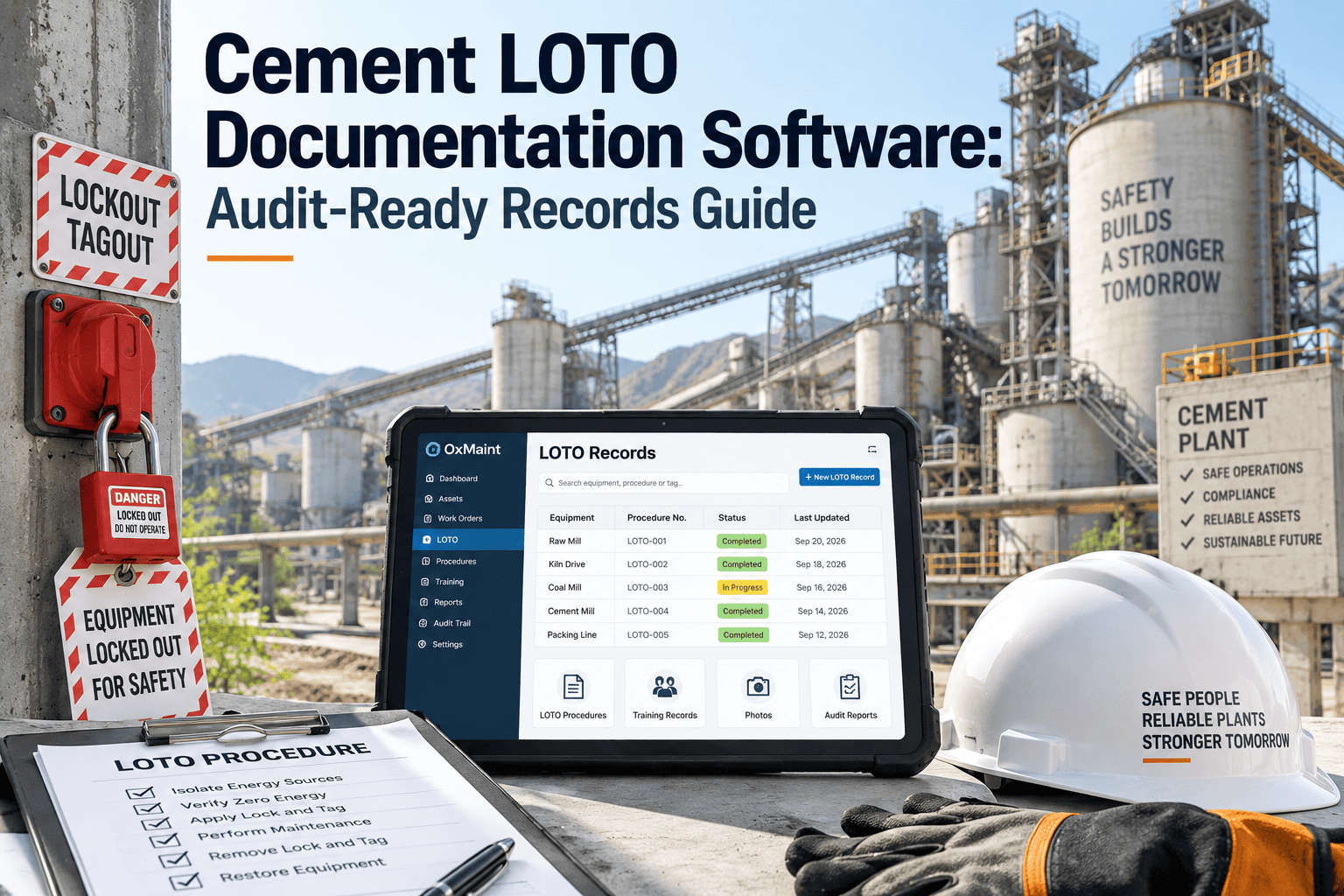
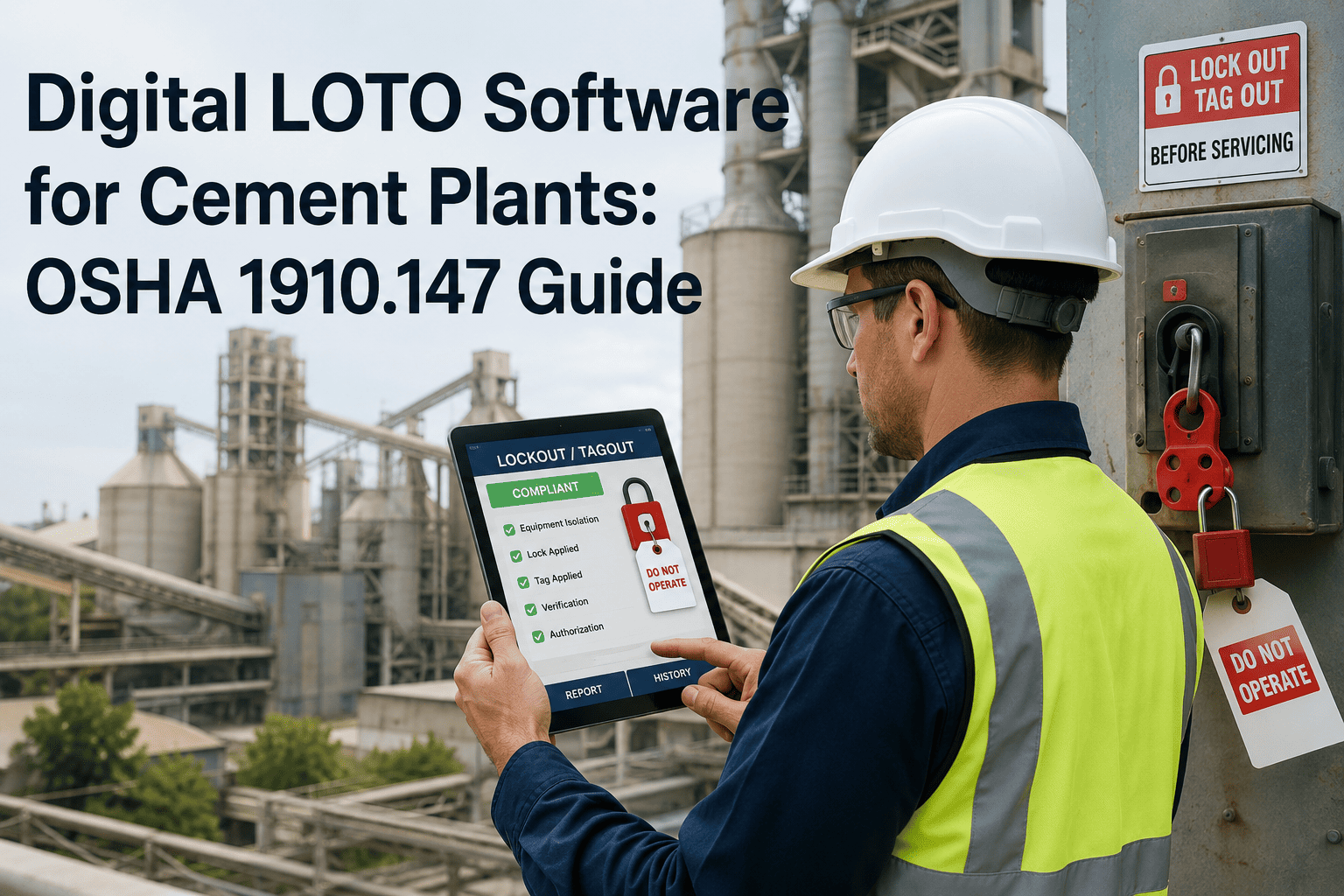
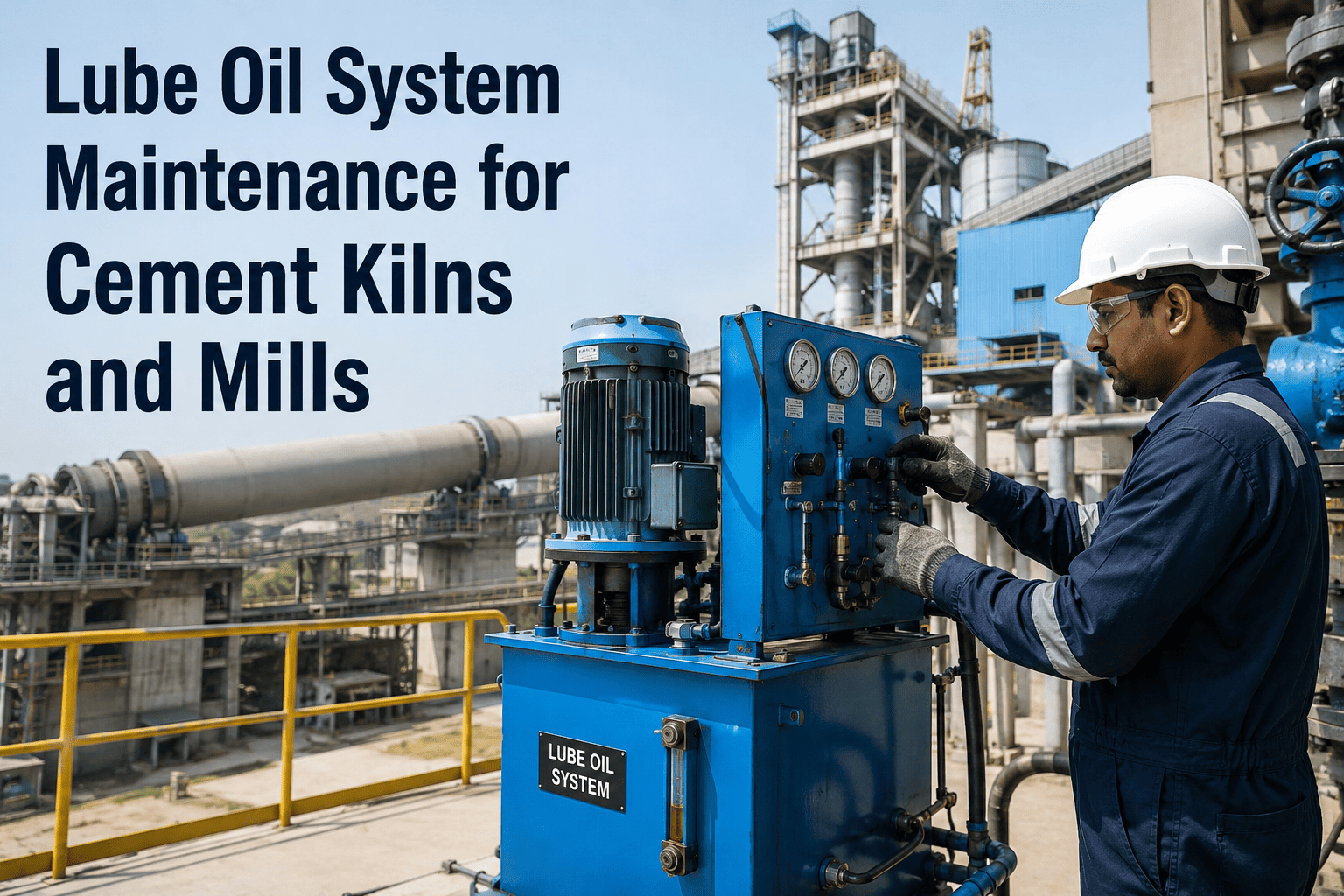
In a cement plant, a kiln drive spinning at operating temperature, a raw mill loaded with material, or a conveyor under tension is not just an asset — it is a stored-energy hazard that can kill the moment isolation procedures fail. OSHA 1910.147 Lockout/Tagout compliance is not optional, and for cement plants running major outages involving dozens of simultaneous energy isolation points across multiple crews, a paper-based LOTO program is a compliance and fatality risk waiting to materialize. This guide covers how to build and operate a cement-specific LOTO and Pre-Startup Safety Review program that is linked directly to your work order system — so no job starts before isolation is confirmed, and no equipment restarts before safety review is complete. Book a demo to see how Oxmaint links LOTO permits and PSSR records directly to work orders in cement plant operations.
$156K
Maximum OSHA penalty per willful LOTO violation — per incident, not per program
50,000+
Workers injured annually in the US due to inadequate LOTO procedures across industry
38%
Of OSHA 1910.147 violations occur in heavy industrial and cement-adjacent environments
100%
Of cement plant equipment with stored energy requires a documented isolation procedure under 1910.147
Every work order on an energized asset requires a LOTO procedure — automate the link with Oxmaint
OSHA 1910.147 in Cement Plants
What OSHA 1910.147 Requires — and Where Cement Plants Fall Short
OSHA's Control of Hazardous Energy standard (1910.147) requires a written energy control program, documented energy control procedures for every piece of equipment with stored energy, training for all authorized and affected employees, and periodic inspections of energy control procedures. For a cement plant with 500 to 2,000 pieces of equipment, this is not a documentation task — it is an operational program that must be embedded in every maintenance workflow.
1910.147 Requirement
Written Energy Control Program
A plant-wide written program covering the scope, purpose, and rules for energy control. Must address all energy types present: electrical, pneumatic, hydraulic, thermal, mechanical, and chemical stored energy.
Commonly Missing: No update process when new equipment is installed
1910.147 Requirement
Equipment-Specific Isolation Procedures
A documented procedure for every machine, piece of equipment, or process with stored energy — identifying each energy source, its type and magnitude, and the method required to control it. In cement, this means a separate procedure for every conveyor drive, mill motor, kiln drive, and compressor.
Commonly Missing: Procedures exist for major equipment but not for smaller drives and auxiliary systems
1910.147 Requirement
Authorized Employee Training and Retraining
All authorized employees (those who perform LOTO) and affected employees (those who work in areas where LOTO is used) must be trained — and retrained when procedures change, when inspections reveal deficiencies, or when there is reason to believe an employee does not understand the program.
Frequent Gap: Contractor employees not included in training records or procedure briefings
1910.147 Requirement
Annual Periodic Procedure Inspections
At least annually, each energy control procedure must be reviewed by an authorized employee other than the one using the procedure — verifying it still reflects the actual equipment configuration and is being followed correctly. This inspection must be documented with the date, equipment covered, employees involved, and the inspector's name.
Frequent Gap: Inspections performed but not documented in a form that survives an OSHA audit
Cement-Specific LOTO Complexity
Why Cement Plant LOTO Is More Complex Than Standard Industrial LOTO
Most industrial LOTO guidance assumes a single machine with a single energy source being isolated by one authorized employee. Cement plant reality is radically different: a kiln outage may require simultaneous isolation of the main kiln drive, kiln feed conveyor, coal mill, clinker conveyor, and cooler fans — across multiple isolation points — with multiple crews working concurrently.
01
Group Lockout Procedures for Major Outages
When multiple authorized employees work on the same equipment simultaneously — as happens in every kiln or mill outage — a group lockout procedure is required. Each authorized employee applies their own personal lock to a hasp or lockout station. The equipment cannot be energized until every personal lock is removed. Cement plants running outages with 10 to 50 workers on the same system must have a documented group lockout process — and a coordinator who tracks every lock applied and removed.
02
Complex Multi-Energy Isolation Points
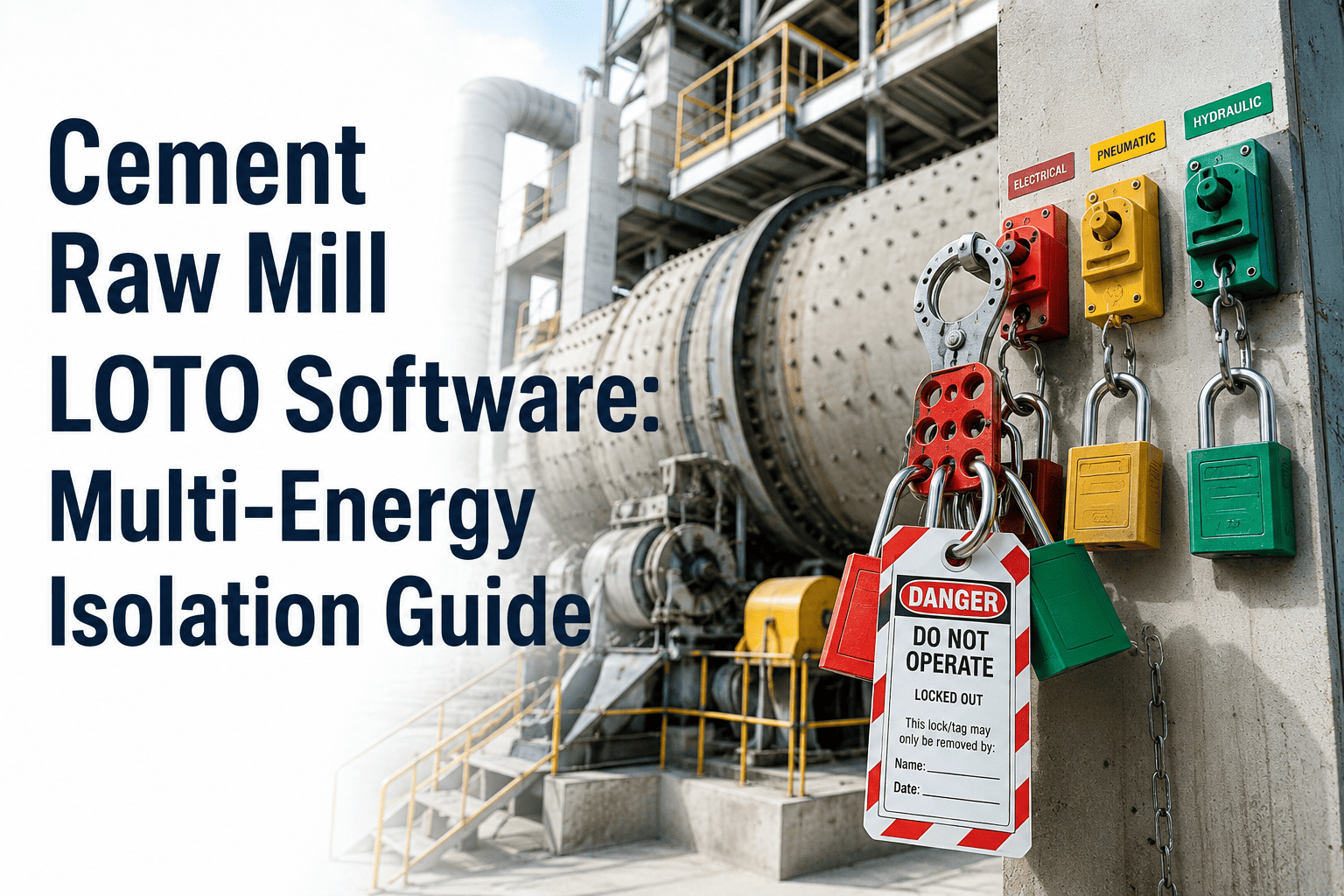
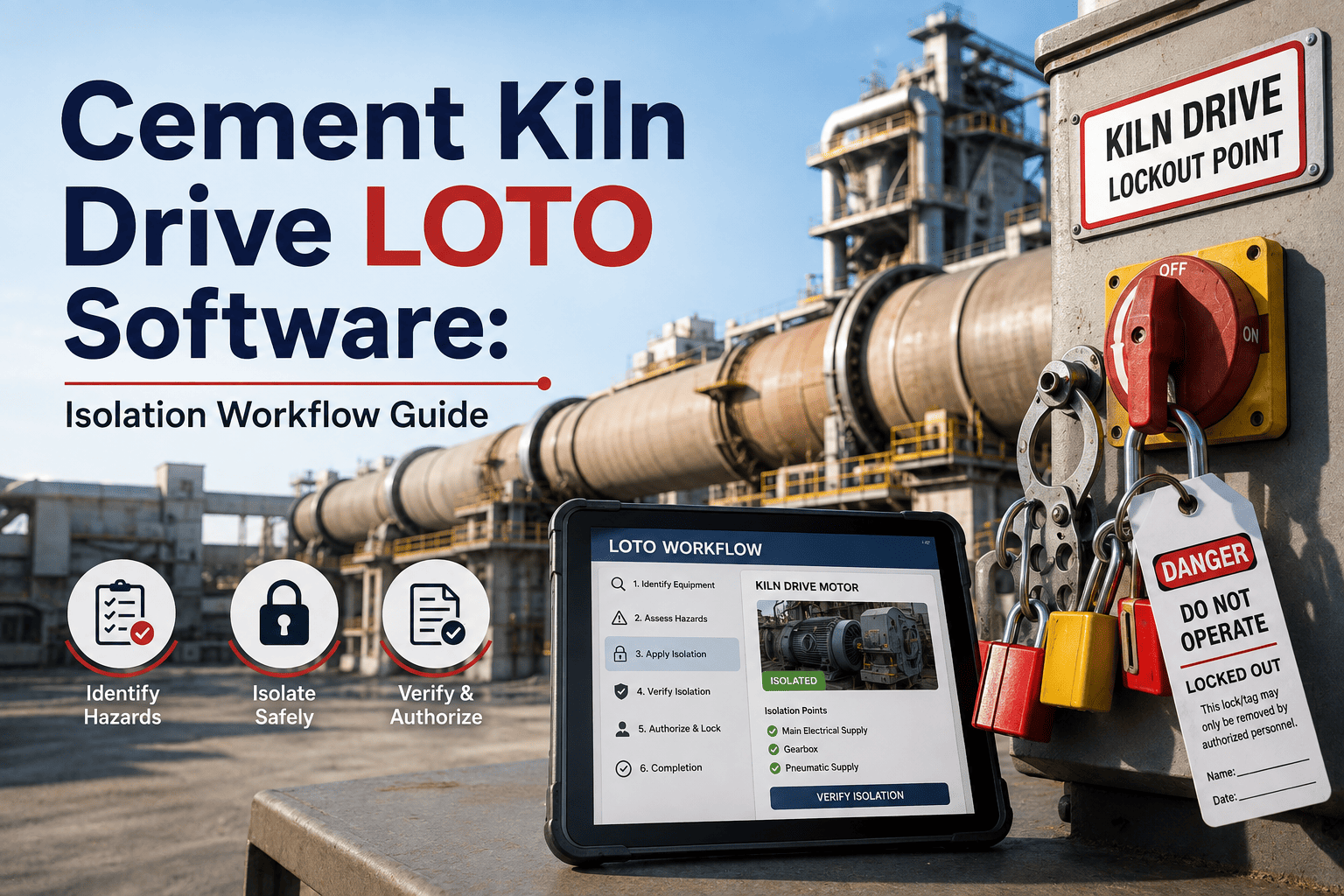
A kiln has electrical energy (main drive motor), mechanical stored energy (kiln rotation momentum), thermal energy (refractory heat after shutdown), and in some configurations pneumatic or hydraulic energy in the kiln shell measurement systems. Each energy type requires a separate isolation method — de-energizing, blocking, bleeding, or cooling. A LOTO procedure that addresses only the electrical disconnect is incomplete and non-compliant.
03
Contractor LOTO Integration and Coordination
When contractors perform maintenance on cement plant equipment, the host employer is responsible for ensuring contractors understand and follow the plant's energy control program. Contractor supervisors must coordinate their LOTO procedures with plant procedures — and the host plant must verify this coordination is happening before any contractor accesses isolated equipment. This requirement is routinely underestimated during outage planning.
04
Hot Equipment — Thermal Energy That Persists for Hours
Cement plant equipment operates at extreme temperatures: kiln shells at 250°C surface temperature, clinker conveyor belts handling 400°C material, and preheater systems that retain dangerous heat for 8 to 12 hours after shutdown. A LOTO procedure for a kiln must include a thermal cool-down verification step — not just an electrical isolation step. Entering a kiln too soon after shutdown is a thermal energy fatality risk that electrical LOTO does not address.
Link Every LOTO Permit to a Work Order — Automatically
Oxmaint connects LOTO procedures, permit sign-offs, and energy isolation records directly to your work orders. No job starts without a confirmed isolation. No equipment restarts without a PSSR sign-off. Full audit trail — timestamped, user-attributed, and exportable for OSHA inspection.
PSSR — Pre-Startup Safety Review
What a Pre-Startup Safety Review Must Confirm Before Kiln or Mill Restart
A PSSR is the structured safety verification that confirms equipment is safe to restart after maintenance, modification, or outage work is complete. In cement plants, an inadequate or skipped PSSR before a kiln restart is one of the highest-consequence risks in the operation. A kiln started with a tool left inside the shell, refractory not properly set, or a seal not confirmed seated can result in catastrophic failure within the first hour of operation.
CMMS-Tracked Records
How CMMS Tracking Turns Your LOTO Program from Paper Risk to Audit Asset
A LOTO program that lives in paper binders is a liability: procedures get photocopied and used after equipment has been modified, training records are stored in HR files that nobody can find during an OSHA inspection, and periodic inspection results are written in a notebook that was last seen two years ago. A CMMS-integrated LOTO program creates a searchable, exportable compliance record tied to every work order and every asset.
Procedure Records
Energy Control Procedures Stored at Asset Level
Each equipment-specific LOTO procedure is stored in the CMMS asset record — accessible from mobile when a technician opens a work order on that equipment. When the procedure is updated after equipment modification, the CMMS version-controls it: technicians always access the current procedure, never an outdated photocopy.
Permit Linkage
Work Order Closure Blocked Until LOTO Permit Confirmed
In Oxmaint, a work order requiring LOTO cannot be marked complete until the LOTO permit sign-off is recorded in the system. This is not a reminder — it is an enforcement mechanism. The same applies to PSSR: equipment restart cannot be authorized in the system until all PSSR checkpoints are confirmed and signed by the designated approver.
Training Records
Authorized Employee Training Tracked per Person and Procedure
CMMS records which employees are trained as authorized for which procedures, when training was completed, and when retraining is due. Supervisors assigning work orders can see at a glance whether the assigned technician is authorized for the LOTO procedure that applies to that asset — before dispatch.
Audit Export
OSHA Audit Ready — Full Record Export in Minutes
When OSHA requests your LOTO compliance records, an Oxmaint report pulls every procedure inspection record, every permit sign-off, every training record, and every work order with LOTO linkage into an exportable file — timestamped and user-attributed — in under 10 minutes. No manual compilation from paper files.
Frequently Asked Questions
Cement Plant LOTO and PSSR: Common Questions
Does OSHA 1910.147 require a separate LOTO procedure for every single piece of equipment in the plant?
Yes — 1910.147 requires a documented energy control procedure for each machine or piece of equipment with stored energy that employees must work on or near during servicing or maintenance. There is a limited exception for equipment with a single, readily identifiable energy source, but cement plant equipment rarely qualifies. Kiln drives, mill motors, conveyor drives, compressors, and fans all require individual procedures.
Store and manage all your LOTO procedures at the asset level in Oxmaint — start a free trial.
How do we manage group LOTO during a kiln outage with 30 workers on site?
Group LOTO requires a designated coordinator who issues and tracks personal locks from a central lockout station, a hasp at each isolation point that accommodates all personal locks, and a sign-out/sign-in process confirming every worker has cleared the work zone before any lock is removed. The CMMS tracks the group lockout permit as a single document linked to all outage work orders — closure of the group permit is the gate for any restart authorization.
Book a demo to see group LOTO workflow in Oxmaint for cement plant outages.
Is a PSSR legally required, or is it just a best practice?
PSSR is required under OSHA PSM regulations (29 CFR 1910.119) for facilities covered by Process Safety Management — which includes cement plants handling hazardous chemicals above threshold quantities. Beyond PSM-covered equipment, PSSR is a recognized industry best practice for any major equipment restart after outage work, and is increasingly expected during OSHA inspections as evidence of a systematic safety program.
How often must LOTO procedures be inspected under OSHA 1910.147?
At minimum, each energy control procedure must be reviewed at least once every 12 months by an authorized employee other than the one using the procedure. The inspection must be documented with the date, equipment involved, names of employees participating, and the inspector's certification that the procedure was found adequate. This documentation must be retained and available for OSHA inspection.
Track periodic LOTO procedure inspections automatically in Oxmaint — start a free trial.
What is the biggest LOTO compliance failure OSHA finds in cement plant inspections?
The most cited failures are: procedures that exist for major equipment but not for auxiliary drives and smaller systems, training records that cannot be located during inspection, and annual periodic inspections that were performed but not documented in a retrievable form. A CMMS-integrated LOTO program addresses all three gaps by storing procedures, training records, and inspection certifications in one searchable system.
LOTO Compliance Should Be in Your CMMS — Not Your Filing Cabinet
Every work order on an energized asset is a LOTO event. Every equipment restart after maintenance is a PSSR event. Oxmaint links both directly to your work order workflow — so compliance is not a separate process, it is part of every job. Procedure storage, permit sign-off enforcement, training records, and audit-ready exports all in one system.