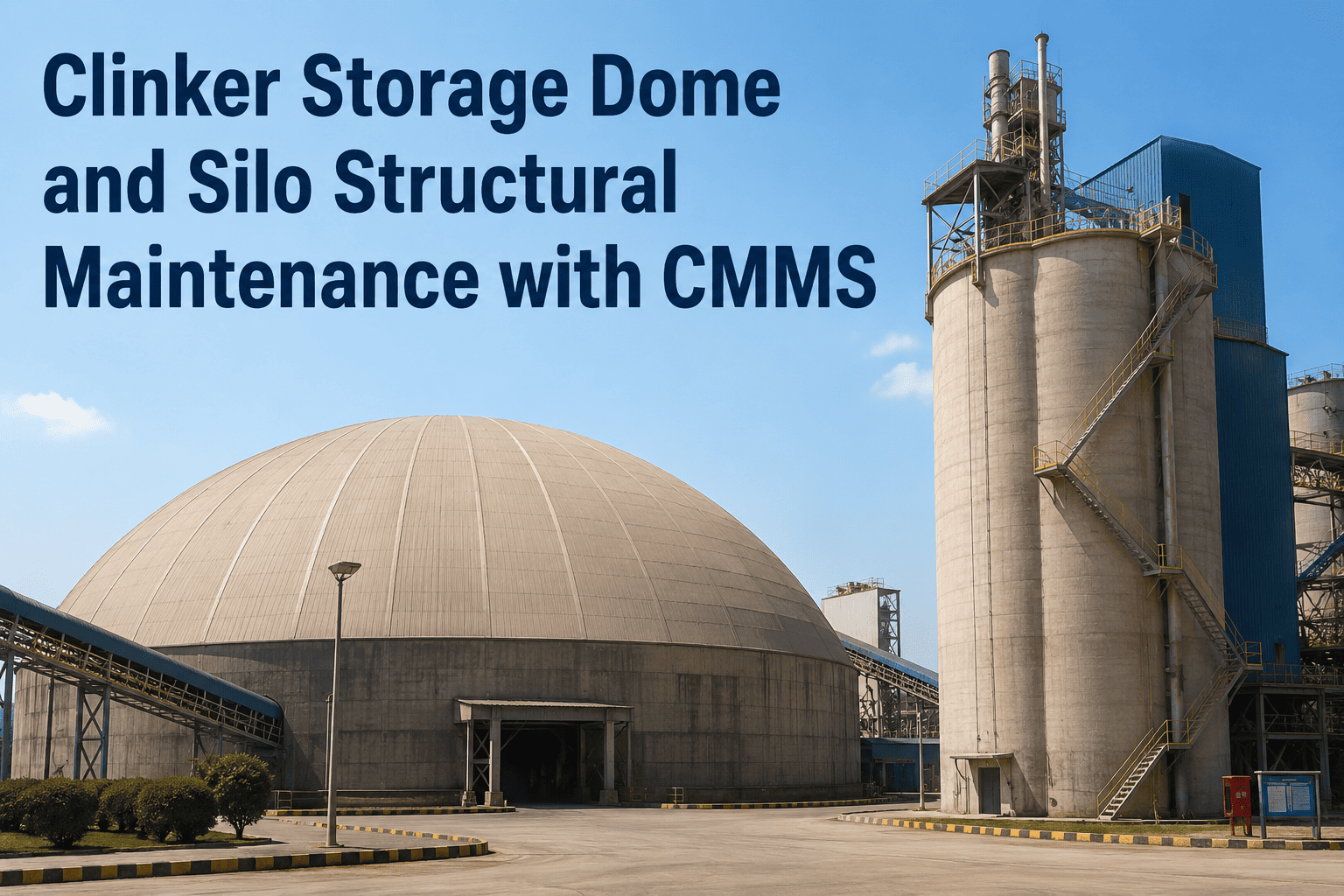
Clinker storage domes and silos hold millions of dollars of cement production capacity — but the civil structures housing that clinker are among the most under-maintained assets in any cement plant. Structural cracks, rebar corrosion, and foundation settlement develop silently over years until an emergency shutdown forces multi-month repair programs that dwarf the cost of any preventive inspection. A CMMS-scheduled structural inspection program, with photographic condition records attached to each asset, is the difference between a two-hour inspection finding a $4,000 repair and a structural emergency that closes the dome for 90 days. Start a free trial on Oxmaint to build your first silo structural inspection schedule, or book a demo and walk through a live cement plant structural maintenance workflow.
Clinker Storage Dome & Silo Structural Maintenance with CMMS
$5–15M in civil infrastructure. Zero scheduled inspections. That is the structural maintenance reality at most cement plants — until a crack becomes a collapse.
Why Clinker Silos Are the Most Neglected Asset in Cement Plants
Rotating equipment gets vibration analysis. Kilns get refractory surveys. Conveyors get weekly walk-downs. But the reinforced concrete dome or silo storing 50,000+ tonnes of clinker often receives no formal structural inspection — not because it is low risk, but because it is invisible to maintenance planning systems that track mechanical assets only.
CO₂ from clinker off-gassing penetrates concrete cover, reducing pH and destroying the passive film that protects rebar. Corrosion can reach critical levels in 8–12 years in high-CO₂ dome environments without protective coatings.
Silos loaded asymmetrically or built on variable soil develop differential settlement that creates diagonal shear cracks in walls. These cracks are structurally distinct from surface shrinkage cracks and require immediate engineering assessment.
Clinker stored at 80–120°C creates repeated thermal cycles in dome shells. Expansion joints that fail to accommodate this movement generate circumferential cracking patterns that extend through the shell thickness over 5–10 years.
Horizontal construction joints in slip-formed silos are natural planes of weakness. Chloride ingress and freeze-thaw cycling in wet climates concentrate damage at these joints, which are rarely visible from ground level without dedicated inspection access.
Oxmaint lets you create recurring structural inspection work orders with photo checklists, crack mapping templates, and condition rating scales — all linked to your silo asset record.
What a CMMS-Scheduled Structural Inspection Program Looks Like
Structural maintenance for clinker domes and silos is not complex — it requires consistency, photographic documentation, and a comparison baseline. A CMMS makes all three possible at scale.
External surface inspection from ground level. Log new crack appearances, spalling, staining (efflorescence, rust), drainage blockages, and expansion joint condition. Photos attached to work order by zone.
Previously identified cracks measured with crack width gauge. Width, length, and orientation recorded against the crack map baseline. Changes greater than 0.1mm trigger engineering review before next shutdown window.
Aerial or rope-access inspection of dome shell, all construction joints, expansion joints, penetration seals, and roof drainage. Cover depth measurement by rebar locator. Condition rating updated in CMMS asset record.
Qualified structural engineer reviews CMMS condition history, performs carbonation depth testing (phenolphthalein), half-cell potential mapping for active rebar corrosion, and updates the remaining service life estimate.
Before vs After — Structural Maintenance with CMMS
| Inspection Activity | Without CMMS | With Oxmaint CMMS |
|---|---|---|
| Inspection scheduling | Ad hoc — after visible damage noticed | Recurring PM on fixed calendar |
| Crack condition baseline | None — no historical comparison | Photo + measurement record per crack |
| Finding-to-repair time | Unknown — findings not tracked | Work order raised and tracked to closure |
| Audit / insurance evidence | Assembled from memory before audit | Timestamped photo record always ready |
| Structural deterioration detection | Emergency — after failure begins | Trend-based — months before critical |
| Repair cost profile | Emergency repair: $200K–$2M+ | Planned repair: $5K–$40K |
The Structural Defects CMMS Records Need to Capture
Not all cracks and surface defects carry the same structural risk. A CMMS inspection template for clinker domes and silos should capture these defect categories with consistent classification so condition trends are meaningful over time.
45° cracks in silo walls indicate differential settlement or out-of-plane loading. Engineering review required before the next load cycle. Do not defer.
Cracks showing efflorescence or damp marks on internal face have penetrated the full concrete section. Active corrosion of rebar is likely. Emergency inspection required.
Horizontal cracks running around the dome or silo circumference. May indicate thermal cycling fatigue or inadequate hoop reinforcement. Track width monthly.
Brown-red staining on the concrete surface indicates rebar corrosion has begun. Cover depth check and half-cell potential test required to assess active corrosion extent.
Surface concrete delamination without exposed rebar. Schedule repair at next planned shutdown. Photograph, measure area, and re-inspect quarterly until repaired.
Failed elastomeric seals allow water and clinker dust ingress at joints. Low-cost repair that prevents expensive joint reconstruction if caught early.
Frequently Asked Questions
Oxmaint creates recurring structural inspection schedules, photo condition records, and repair work orders for every civil asset in your cement plant — before a crack becomes a shutdown.