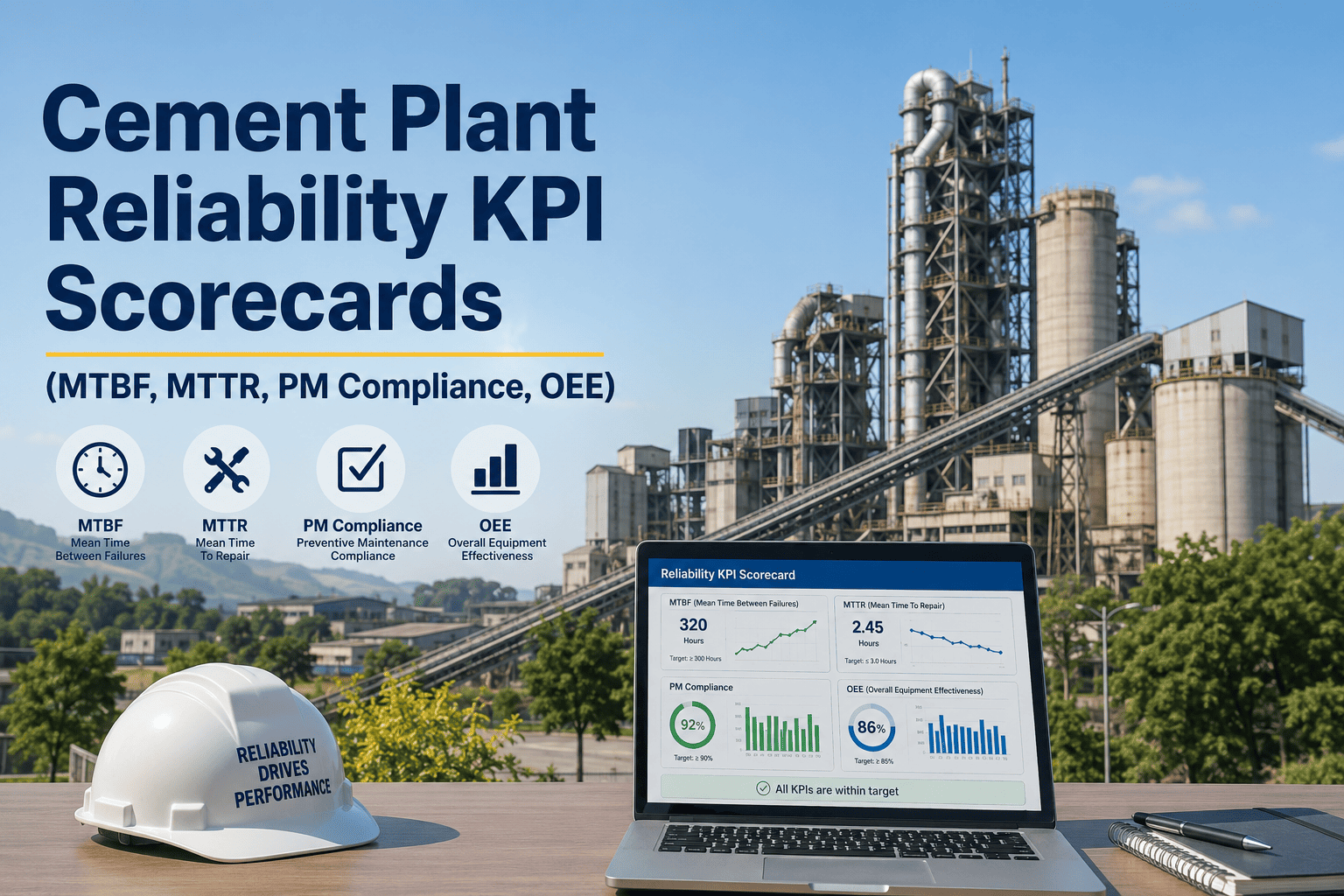
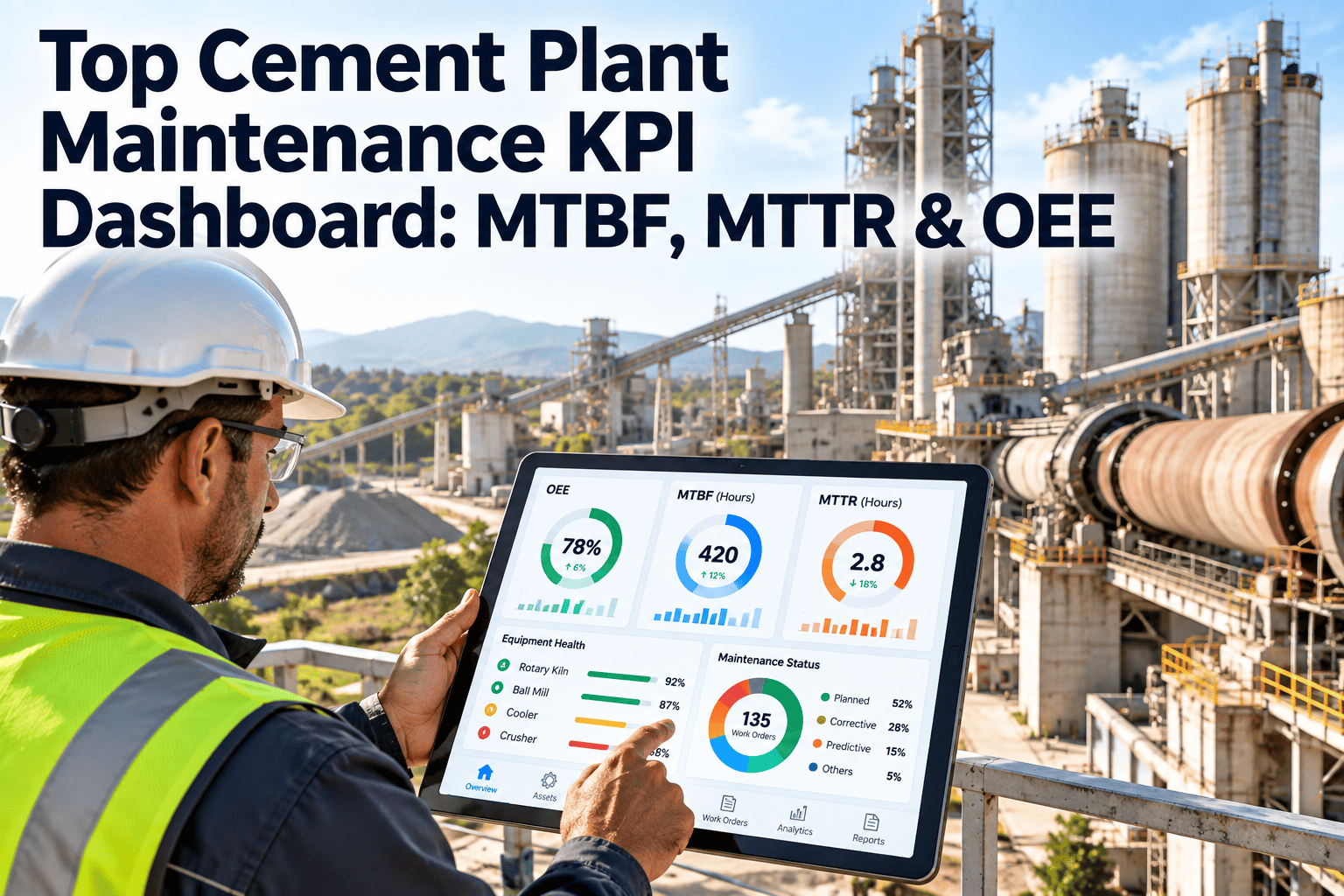
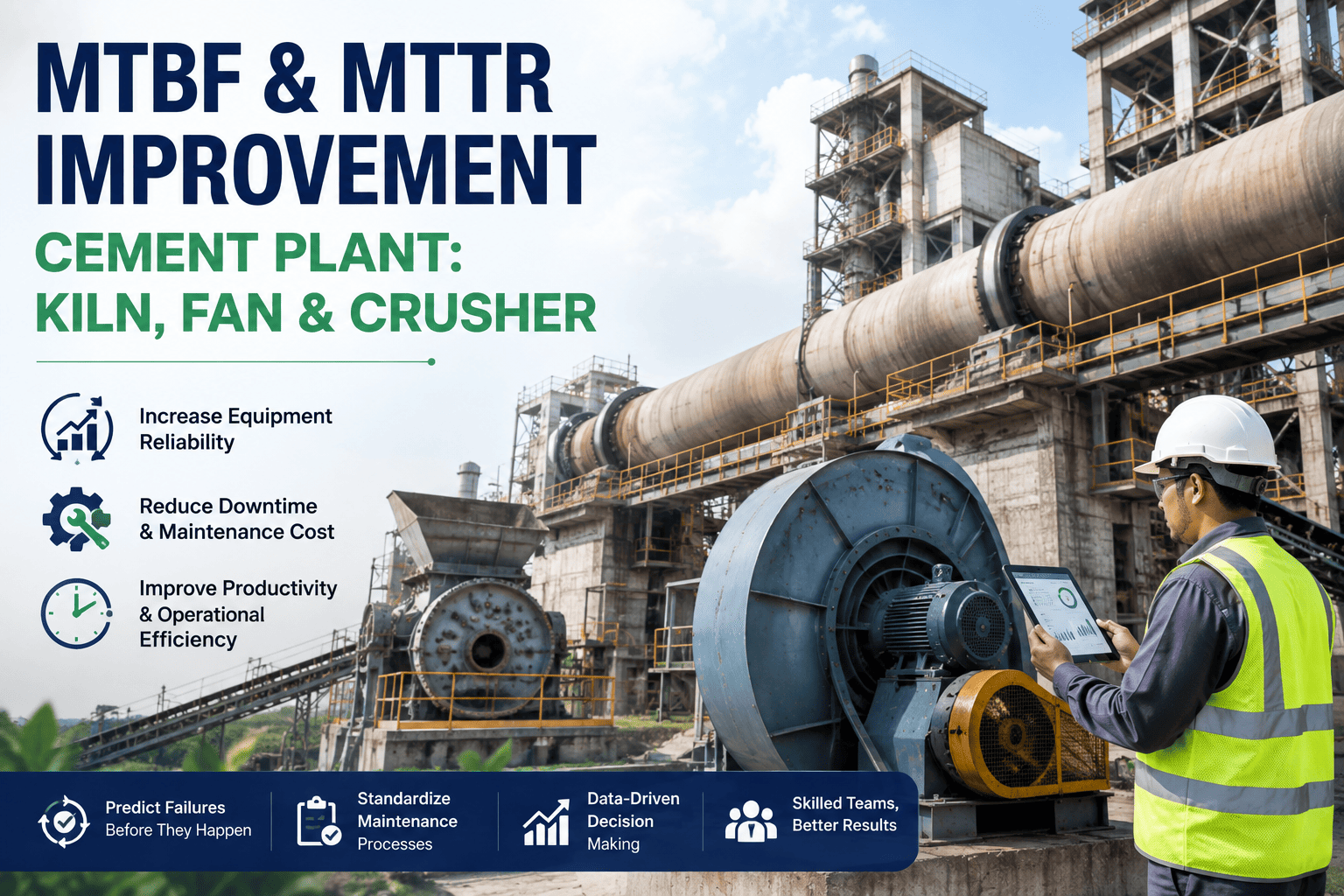
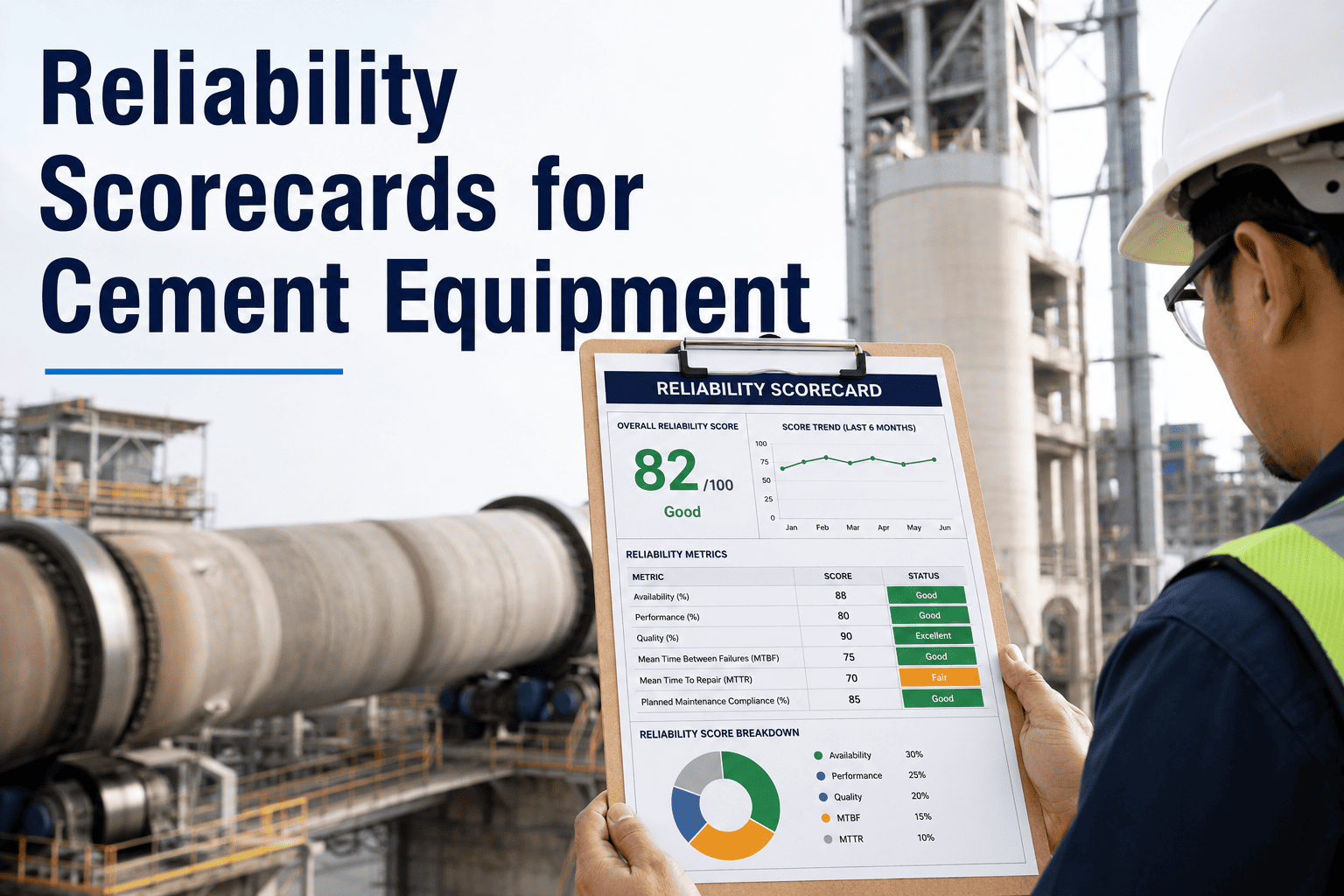
A cement plant manager who cannot answer four questions in under two minutes is operating blind: What is our kiln MTBF this month? What percentage of our PMs were completed on time? What is our reactive-to-planned maintenance ratio? What is our maintenance cost per tonne of clinker? These are not reporting metrics — they are decision instruments. Every hour of unplanned kiln downtime costs $20,000–$50,000. Every percentage point of PM compliance below 85% is a leading indicator of upcoming catastrophic failures. Every reactive maintenance event costs 3–5x more than the equivalent planned intervention. Plants that track these four numbers in real time, by asset class, and act on deviations before they compound are consistently in the top quartile of clinker cost position and kiln availability. The ones that measure performance retrospectively in monthly Excel reports remain reactive, high-cost, and chronically behind on backlog. Oxmaint delivers live MTBF, MTTR, OEE, PM compliance, and planned ratio dashboards calculated automatically from every closed work order — no manual calculation, no reporting lag. Start measuring your plant's reliability in real time with Oxmaint and see your first KPI baseline within 60 minutes of signup.
The Four KPIs Every Cement Plant Must Track — Formulas and Benchmarks
KPI definitions in cement plant maintenance are frequently misunderstood, inconsistently applied, or calculated differently across departments — making benchmark comparisons meaningless. The four definitions below are the standard used across top-quartile cement operations globally. Consistent definition is as important as consistent measurement.
MTBF
Mean Time Between Failures
MTBF = Total Operating Time ÷ Number of Failures
Measures how long a piece of equipment operates between unplanned failures. In cement plants, MTBF is tracked separately per asset class — kiln, mills, crushers, conveyors — because aggregated plant-wide MTBF masks which systems are driving downtime. World-class cement kilns run at 2,000–4,000+ hours MTBF. Ball mills at well-maintained plants average 800–1,500+ hours. Plants below 400 hours MTBF on critical equipment are in reactive maintenance cycles.
Below benchmark: <500 hrs on kiln
Industry avg: 800–1,500 hrs
World-class: 2,000+ hrs
MTTR = Total Repair Time ÷ Number of Repair Events
Measures how quickly the maintenance team restores equipment after a failure. High MTTR signals spare parts stockouts, unclear fault diagnosis procedures, insufficient technician skill, or poor work order execution. Plants tracking MTTR per equipment class identify where repair bottlenecks live — and which bottlenecks are causing the most downtime cost per event. Digital work orders with automated timestamps reduce MTTR by 25–40% by eliminating lost information and manual documentation time.
High cost signal: >8 hrs avg on critical assets
World-class: <2 hrs on planned tasks
OEE
Overall Equipment Effectiveness
OEE = Availability × Performance Rate × Quality Rate
OEE is the single most comprehensive equipment performance metric. Availability is the percentage of planned time the equipment is actually running. Performance rate measures whether it ran at designed speed. Quality rate measures whether output met specification. For cement kilns, the primary driver of OEE improvement is availability — reducing unplanned stoppages. Top-quartile Indian cement plants run kiln OEE at 80–88%. Plants that have not yet implemented structured PM programmes typically run at 65–72%.
Pre-TPM typical: 65–70%
Industry target: 80–85%
World-class: 85–92%
PM Compliance = PMs Completed On Time ÷ Total PMs Scheduled
PM compliance is the leading indicator — it predicts upcoming failures before they happen, unlike MTBF which records failures after they happen. A PM compliance rate below 85% is the earliest measurable warning that a plant is building a reactive maintenance debt that will express itself as unplanned failures 4–8 weeks later. This is the number plant managers and reliability engineers should review weekly, not monthly. Average PM compliance in cement plants using manual scheduling is only 52% — 38 percentage points below the target that sustains kiln availability.
Manual scheduling avg: 52%
CMMS minimum target: 85%
World-class: 92–96%
All Four KPIs. Calculated Automatically. Live on Your Dashboard.
Oxmaint calculates MTBF, MTTR, OEE, and PM compliance in real time from every closed work order — no manual spreadsheet entry, no reporting lag, no data transcription errors. Your first KPI baseline is live within 60 minutes of signup.
KPI Benchmarks by Asset Class — Where Your Plant Stands
Cement Plant Reliability KPI Benchmark Reference — Asset Class by Class
The Planned vs. Reactive Ratio — The Number That Reveals Your Maintenance Culture
The planned-to-reactive ratio is the most revealing single metric of maintenance programme maturity. It measures whether your maintenance spend is controlled and predictable or emergency-driven and wasteful. Every emergency reactive maintenance event costs 3–5x more than the equivalent planned intervention — in parts premiums, overtime, production loss, and collateral damage. The ratio is also self-reinforcing in both directions: a high reactive ratio consumes the capacity needed to execute PMs, which generates more reactive events. Breaking this cycle requires a CMMS that makes the reactive ratio visible at the supervisor level, in real time, before the shift ends.
Reactive-Led Plant
75% reactive / 25% planned
Maintenance cost: 3–5x industry benchmark
Improvement Journey
Transitioning Plant
40% reactive / 60% planned
Typical 18–24 months after CMMS deployment
Continuous Improvement
World-Class Plant
<15% reactive / 85%+ planned
Top-quartile cost position, 90%+ kiln availability
Monthly KPI Review Cadence — What to Review and When
Daily
Supervisor-Level Review
Open work order backlog by priority. PM tasks due today vs completed yesterday. Any unplanned stoppages from previous shift with preliminary cause recorded. Takes 10 minutes from the Oxmaint dashboard — no report generation needed.
Weekly
Maintenance Manager Review
PM compliance rate for the week by area. MTBF trends on critical assets — any significant downward movement from prior week. Reactive vs planned ratio. Work order backlog age — any task older than 14 days requires review. Oxmaint generates this automatically.
Monthly
Plant Manager Review
Full KPI scorecard: MTBF by asset class vs benchmark, MTTR by crew, OEE per production line, PM compliance trend, planned ratio trend, maintenance cost per tonne. Three top failure modes by frequency and cost. Kaizen improvement actions and results from prior month.
Quarterly
Leadership Review
Year-to-date vs budget maintenance spend with KPI context. Capital vs maintenance expense ratio. Peer benchmark comparison on key metrics. Major shutdown performance vs plan. Reliability improvement roadmap progress against 12-month targets set at last quarterly review.
Stop Running Your Plant on Gut Feel. Start Running It on Real Numbers.
Plants in the top quartile of cement industry reliability don't get there by luck — they get there by tracking 6–8 KPIs with weekly discipline and acting on deviations before they compound. Oxmaint automatically calculates every metric in this guide from your live work order data — MTBF, MTTR, OEE, PM compliance, planned ratio, and maintenance cost per tonne — and benchmarks each against cement industry targets. Book a demo to see your plant's current KPI baseline calculated live from a sample data set, and see what the path to top-quartile performance looks like from your current position.
Frequently Asked Questions
What is a realistic MTBF target for a cement kiln in its first year of structured maintenance?
Plants starting from a reactive maintenance baseline typically see kiln MTBF improve from 300–500 hours to 800–1,200 hours within 12 months of implementing structured PM with CMMS support. The first improvements are usually the largest — eliminating the most predictable failure modes through consistent PM execution.
Oxmaint tracks MTBF trends per asset so improvement is visible and defensible to plant leadership.
Why is PM compliance more important than MTBF as a leading indicator?
MTBF tells you what already happened. PM compliance tells you what is about to happen. A drop in PM compliance below 85% predicts a reactive failure surge 4–8 weeks later with high reliability. Tracking compliance weekly in
Oxmaint means you can intervene before the failure — not after. This is the most actionable early warning signal available without expensive condition monitoring investment.
How does Oxmaint calculate OEE for cement kiln and mill systems?
Oxmaint integrates planned production time, unplanned downtime records from work orders, and performance data to calculate OEE automatically for each asset. Availability is derived from actual downtime logged against the asset. Performance and quality inputs can be connected from production system integrations or entered via shift reports.
Book a demo to see the OEE module configured for kiln systems specifically.
What planned-to-reactive ratio should a cement plant target?
The target for a well-managed cement plant is less than 15% reactive maintenance by work order count and less than 20% by cost. Most plants starting with CMMS implementation are at 50–70% reactive. Reaching the target typically takes 18–24 months of consistent PM execution tracked in
Oxmaint. The ratio is visible in real time on the Oxmaint dashboard — supervisors see it shift as each work order is closed and classified.
Book a demo to see the ratio dashboard live.
Can Oxmaint generate KPI reports for management review without manual preparation?
Yes. Oxmaint generates the full monthly KPI scorecard — MTBF by asset class, MTTR by crew, OEE by production line, PM compliance trend, planned ratio, and maintenance cost per tonne — automatically from live work order data. The report is available on demand at any time, not just at month end.
Sign up free to see the report generation module and eliminate manual KPI preparation permanently.