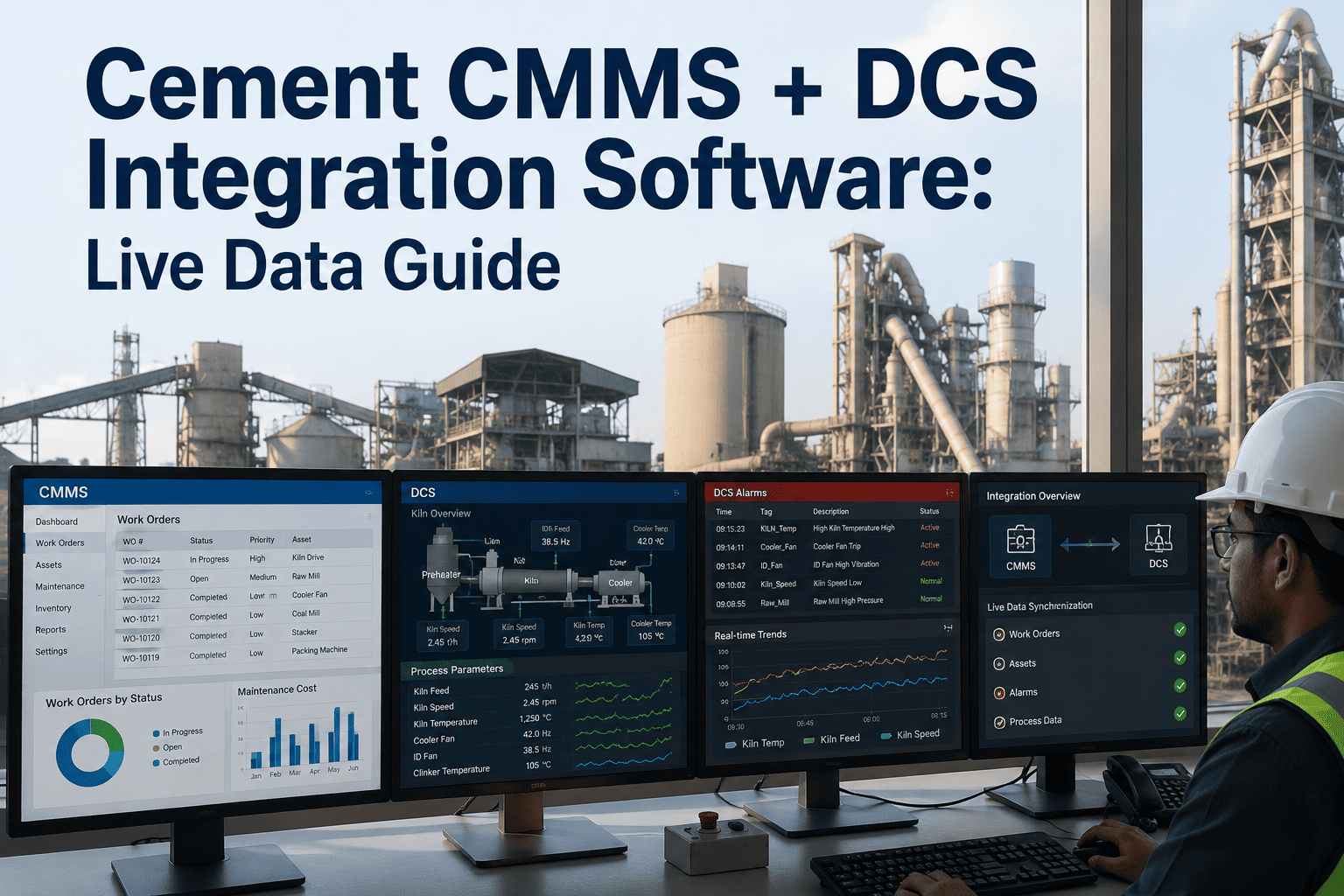
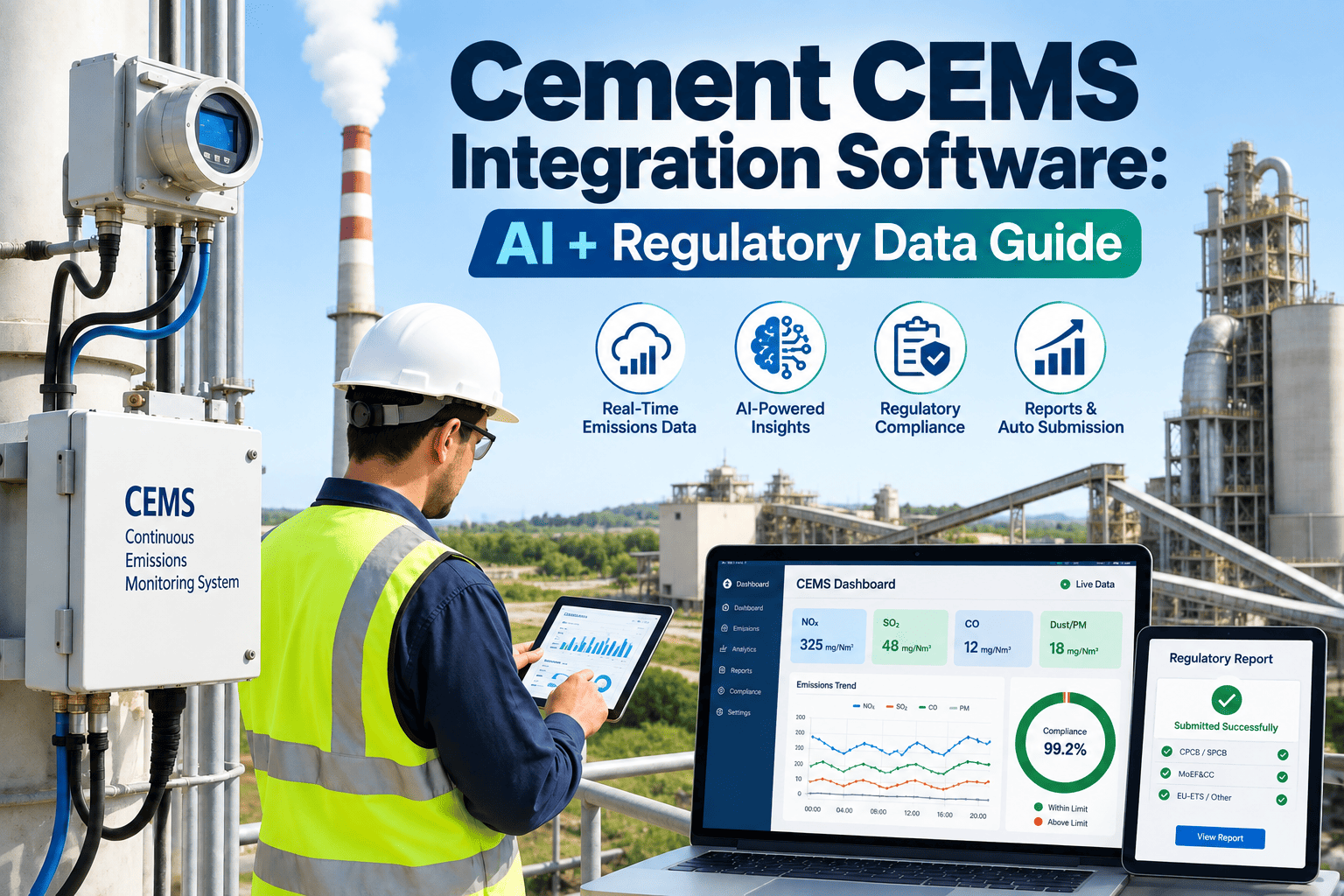
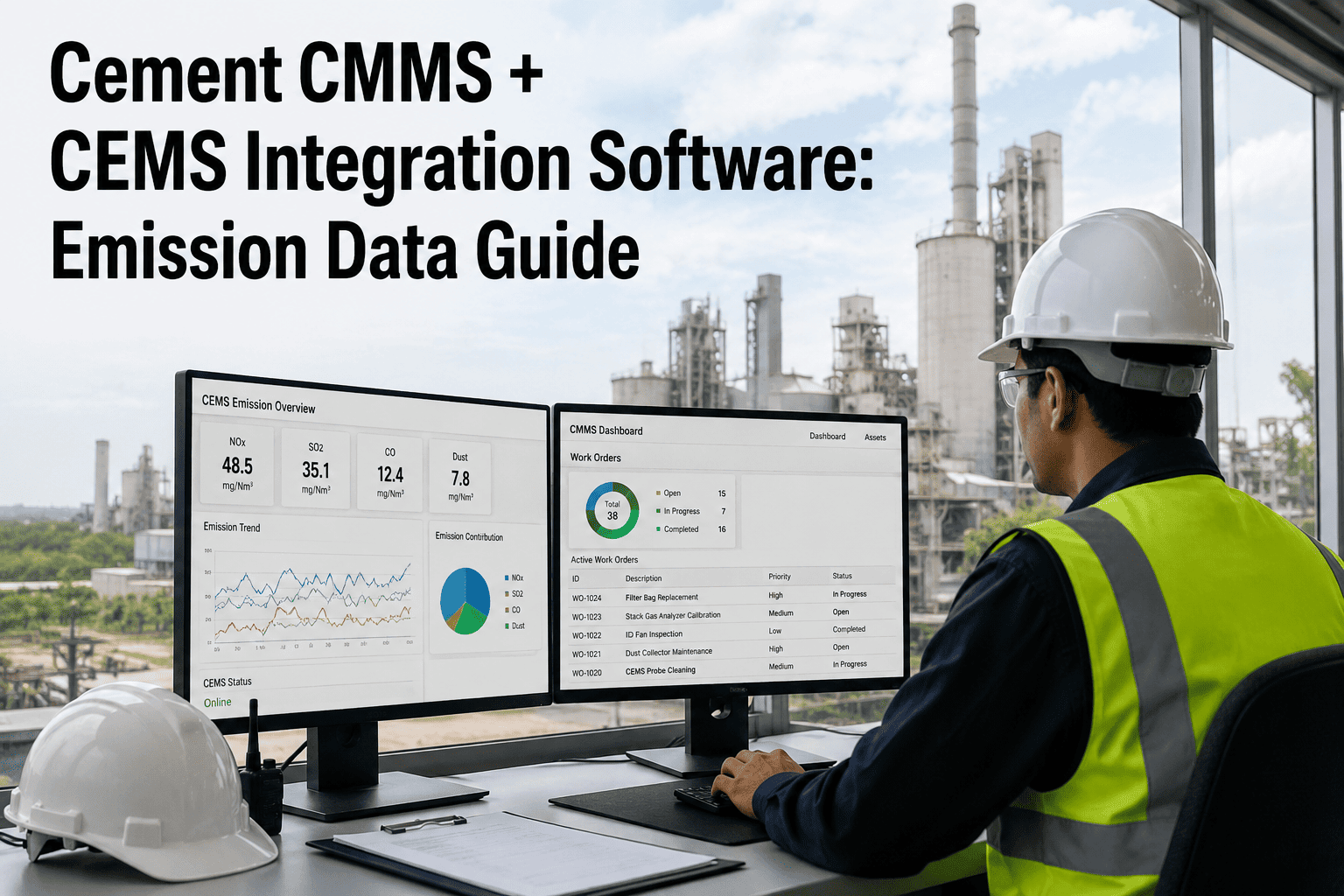
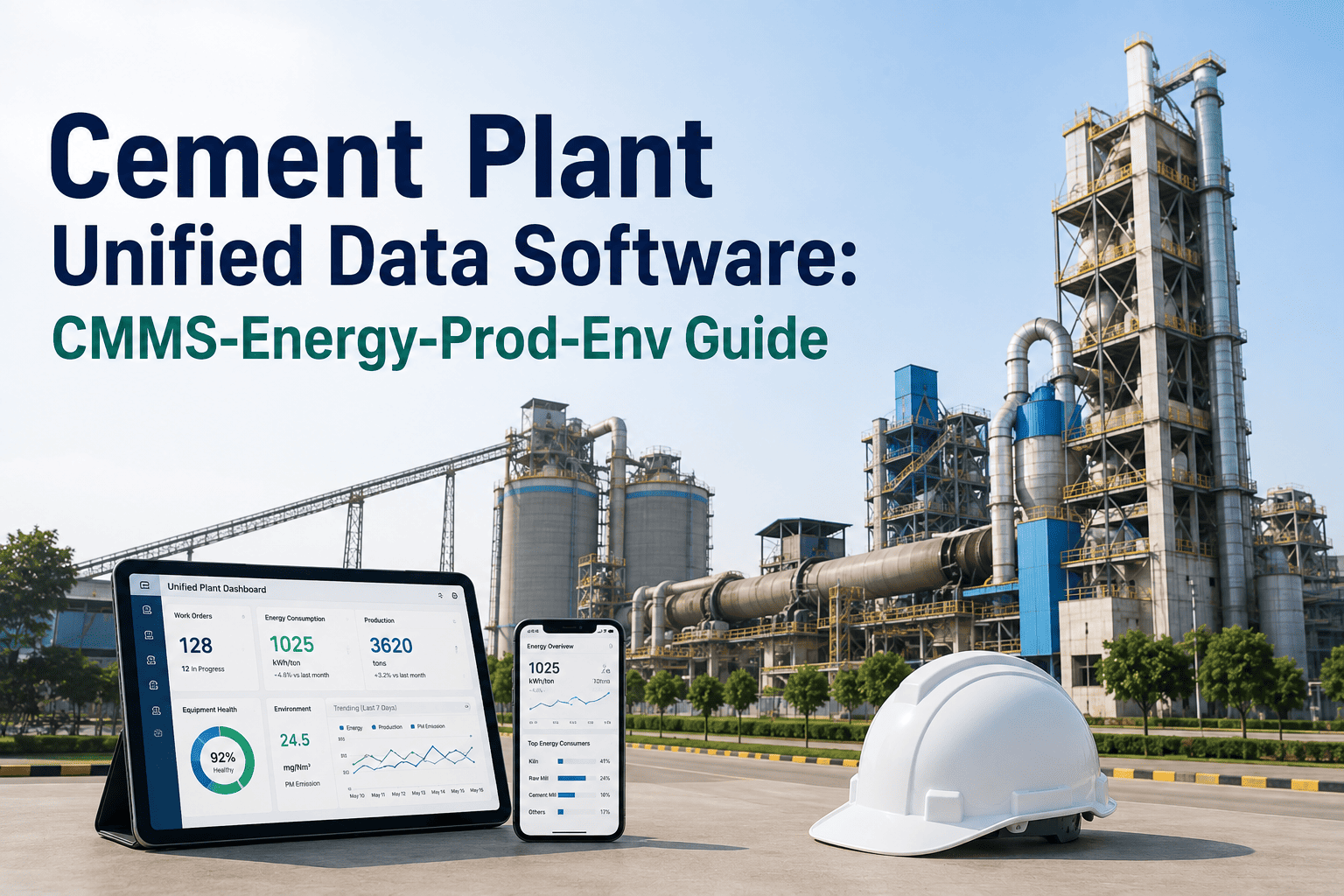
Most cement plants run five systems that were never built to talk to each other — the DCS controls the kiln second by second, LIMS holds every lab result on raw meal and clinker chemistry, CEMS logs stack emissions for environmental filings, the ERP tracks cost and procurement, and the CMMS records every work order and asset history. Each system is accurate on its own, but none of them can answer a question that spans more than one, like whether a rise in NOx lines up with a mill vibration pattern from three shifts earlier. Engineers end up exporting spreadsheets from four different logins to build a single report, and by the time it is finished the numbers are already a week old. Sign in to OxMaint to connect DCS, LIMS, CEMS, ERP, and CMMS data into one queryable data lake built for cement plant reporting.
Unified Ops Data · Cement Plant Intelligence
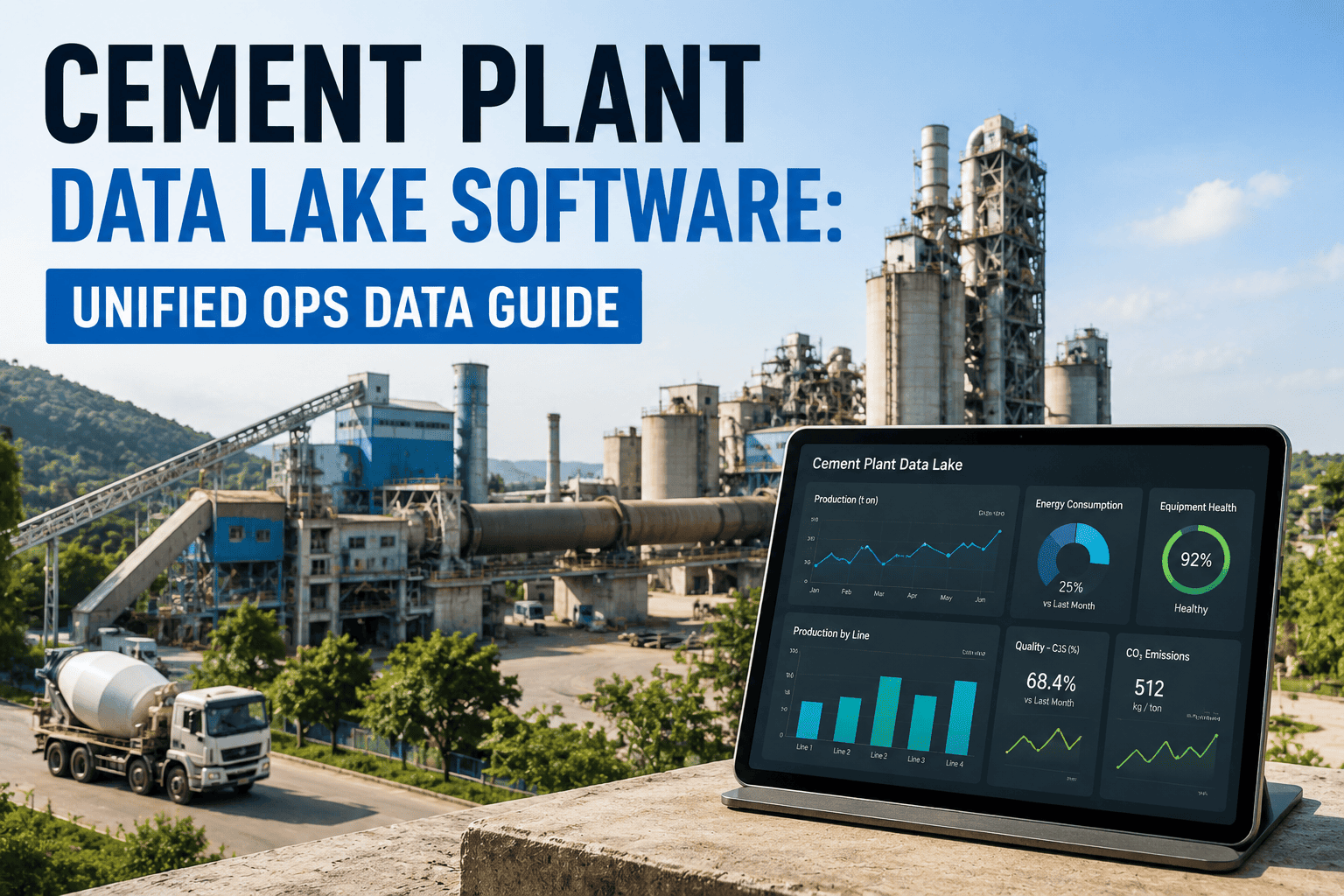
One Data Lake for Every System Your Cement Plant Runs On
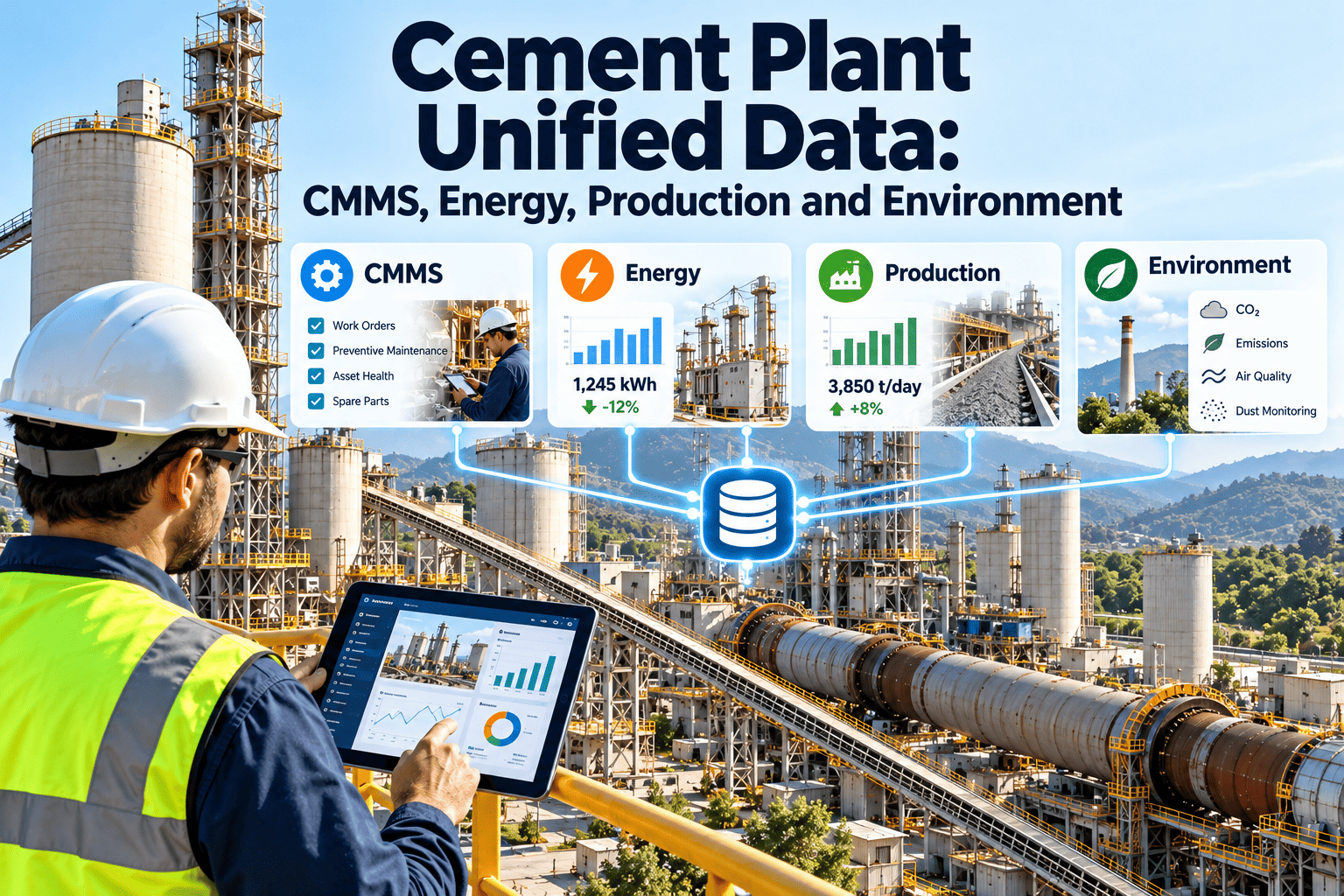
DCS, LIMS, CEMS, ERP, and CMMS each hold half the story. OxMaint pulls all five into a single unified data layer — so reliability, process, and EHS teams stop rebuilding the same report five different ways and start asking questions that span the whole plant.
5-in-1
systems unified
DCS, LIMS, CEMS, ERP, CMMS in one layer
70%
less report time
cut from manual cross-system reporting
Live
data sync
no more week-old spreadsheet exports
100%
audit trail
every data point traceable to source system
The Five Systems That Never Talk to Each Other
Every cement plant of any size already generates the data needed for full plant-wide optimisation — the problem is that it lives in five separate systems, each with its own login, its own format, and its own owner. A process engineer can see kiln temperature trends. A lab technician can see free lime results. A reliability engineer can see work order history. None of them can see all three together without manually stitching files, and that manual step is where the insight gets lost.
DCS
Distributed Control System
Second-by-second process values — kiln speed, burning zone temperature, draft, feed rate. High-resolution but rarely stored beyond a rolling window, and almost never joined with maintenance or lab data.
LIMS
Lab Information Management System
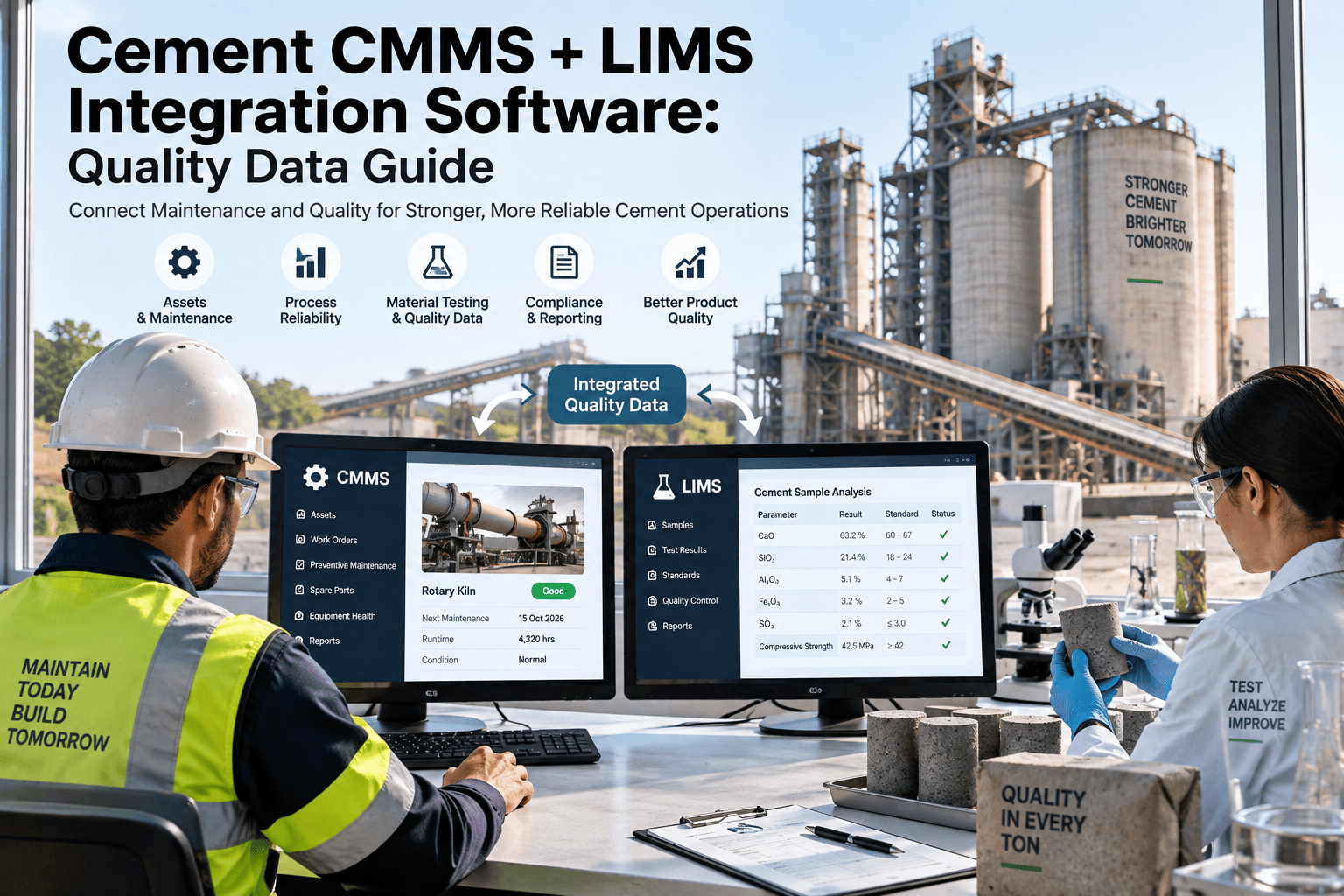
Raw meal chemistry, clinker free lime, cement fineness, and quality test results. Accurate at the sample level, but reported on a delay that puts it hours behind the process data it should be explaining.
CEMS
Continuous Emissions Monitoring
Stack NOx, SO2, particulate, and CO2 readings logged for regulatory filing. Built for compliance reporting, not for correlating emission spikes back to the process conditions that caused them.
ERP
Enterprise Resource Planning
Procurement, inventory, and cost data — refractory spend, spare parts stock, contractor invoices. Financially precise, but disconnected from the asset condition data that actually drives those costs.
CMMS
Computerised Maintenance Management
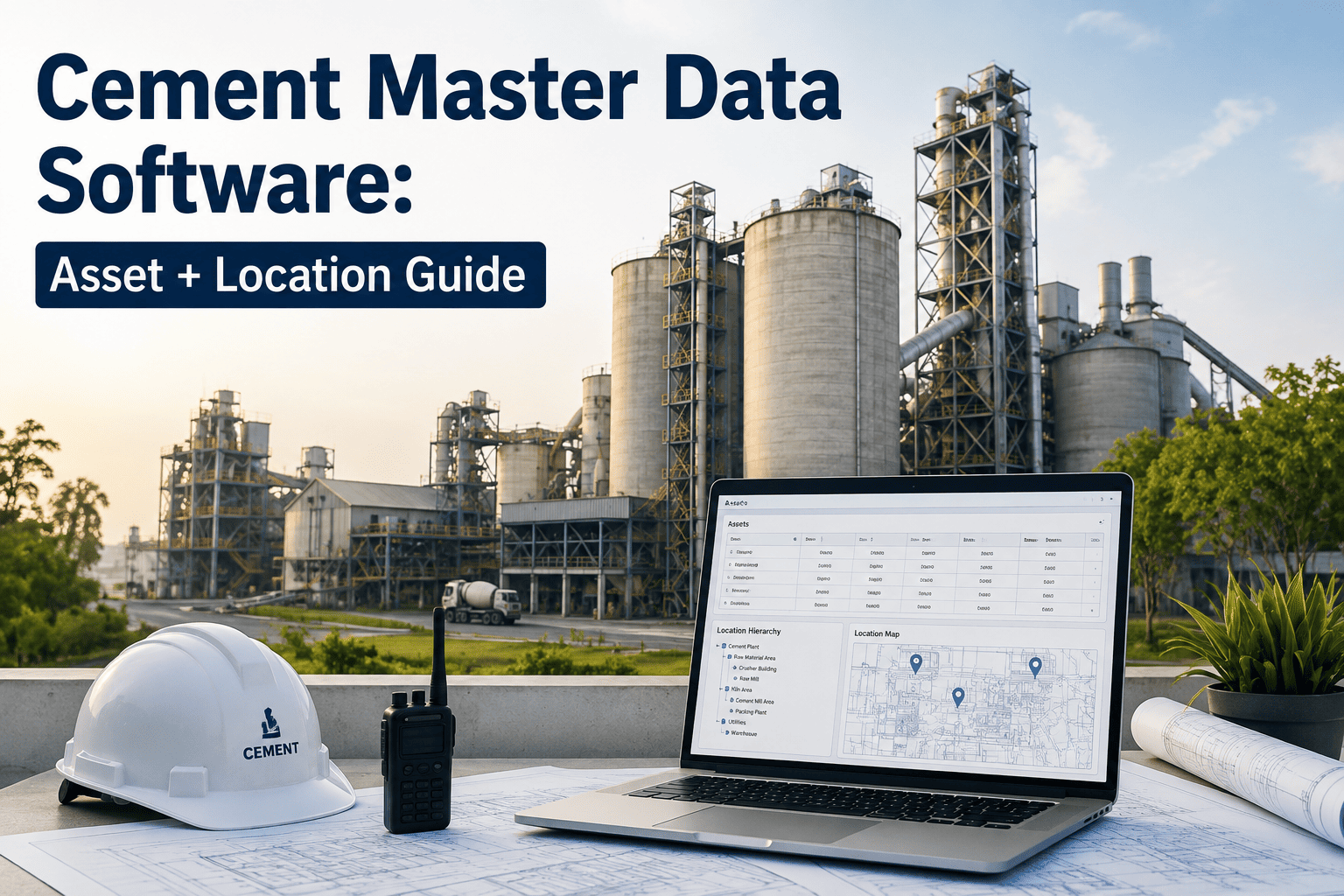
Work orders, asset history, failure codes, and inspection results. The record of what broke and what was fixed, but rarely linked back to the process or quality conditions leading up to the failure.
Stop Exporting Five Spreadsheets to Answer One Question
OxMaint connects to your DCS historian, LIMS, CEMS, ERP, and CMMS through standard OPC-UA, REST, and database connectors — normalising everything into one time-aligned data layer that any team can query without waiting on IT.
How a Unified Data Lake Actually Gets Built
A data lake is not a bigger spreadsheet — it is a structured pipeline that takes raw, differently-shaped data from five systems and turns it into something a plant manager can query in seconds. OxMaint runs this pipeline continuously, so the data layer stays current rather than becoming another static export that goes stale within a week.
1
Connect
Standard connectors pull data from DCS historians, LIMS databases, CEMS loggers, ERP modules, and the CMMS without disrupting existing infrastructure or requiring system replacement.
2
Normalise
Tag names, units, and timestamps are aligned across systems, so a kiln temperature reading and a free lime result from the same hour can be placed side by side automatically.
3
Model
Data is organised into plant-wide models — by asset, by zone, by shift — so a query about the kiln pulls process, quality, emissions, cost, and maintenance data together automatically.
4
Deliver
Dashboards, scheduled reports, and ad-hoc queries pull from the unified layer directly — no manual export, no version confusion, and a single number that every team agrees on.
Manual Spreadsheet Reporting vs a Unified Data Lake
The gap between siloed reporting and a unified data layer is not a matter of convenience — it changes how fast a plant can detect and act on a developing problem. Sign in to OxMaint to see the unified reporting layer running against your own plant systems.
Manual Spreadsheets
OxMaint Data Lake
Data refresh frequency
Weekly or monthly export cycle
Continuous, near real time
Systems queried per report
One login and export at a time
All connected systems in one query
Report build time
Hours of manual joining and formatting
Minutes from a saved dashboard
Cross-system correlation
Rare — requires manual matching by timestamp
Automatic, time-aligned across all sources
Version control
Multiple copies, unclear which is current
Single source of truth for every team
Audit trail
Difficult to reconstruct after the fact
Full lineage back to the originating system
What Plants Actually Use a Unified Data Layer For
A data lake only earns its place if it answers questions a plant actually asks. Four use cases come up in almost every cement operation once DCS, LIMS, CEMS, ERP, and CMMS data sit in the same layer.
Kiln Performance Correlation
Overlay burning zone temperature, free lime results, and fuel mix in one view to find the operating window that produces the most consistent clinker quality with the least fuel.
Energy Benchmarking
Compare specific power and thermal energy consumption across shifts, mills, and campaigns, pulling ERP cost data alongside DCS process data to see where energy spend is actually going.
Predictive Maintenance Feed
Feed process and vibration trends from the DCS into CMMS-driven predictive models, so a developing bearing issue is flagged with process context rather than a sensor reading in isolation.
Compliance & Audit Reporting
Generate regulator-ready emissions summaries directly from CEMS data joined with production records, cutting the manual reconciliation that compliance reporting usually demands.
Frequently Asked Questions
What is a cement plant data lake and how is it different from a historian?
A historian stores time-series process data from the DCS alone. A data lake goes further, unifying DCS, LIMS, CEMS, ERP, and CMMS data into one queryable layer so process, quality, emissions, cost, and maintenance records can be analysed together.
Sign in to OxMaint to see the difference on your own plant data.
Does OxMaint replace our existing DCS, LIMS, or ERP systems?
No. OxMaint connects to existing systems through standard connectors and adds a unified layer on top, so plants keep their current infrastructure while gaining plant-wide reporting they did not have before.
How long does it take to connect all five systems?
Most plants connect their DCS historian, LIMS, and CMMS within the first two weeks, with CEMS and ERP integrations following shortly after.
Book a demo to see a connection timeline built for your specific systems.
Who in the plant actually uses the unified data layer day to day?
Process engineers query kiln and quality correlations, reliability teams pull maintenance and process trends together, and plant managers use dashboards for shift-level and campaign-level performance reviews.
Is the data lake secure enough for compliance-grade CEMS reporting?
Yes. Every data point retains a full audit trail back to its source system, which is exactly the traceability regulators expect from emissions and compliance reporting.
Sign in to OxMaint to review the audit trail structure.
Your Plant Already Has the Data. It Just Cannot See All of It at Once.
OxMaint unifies DCS, LIMS, CEMS, ERP, and CMMS data into one continuously updated layer — so every team stops rebuilding the same report and starts working from one number everyone trusts.