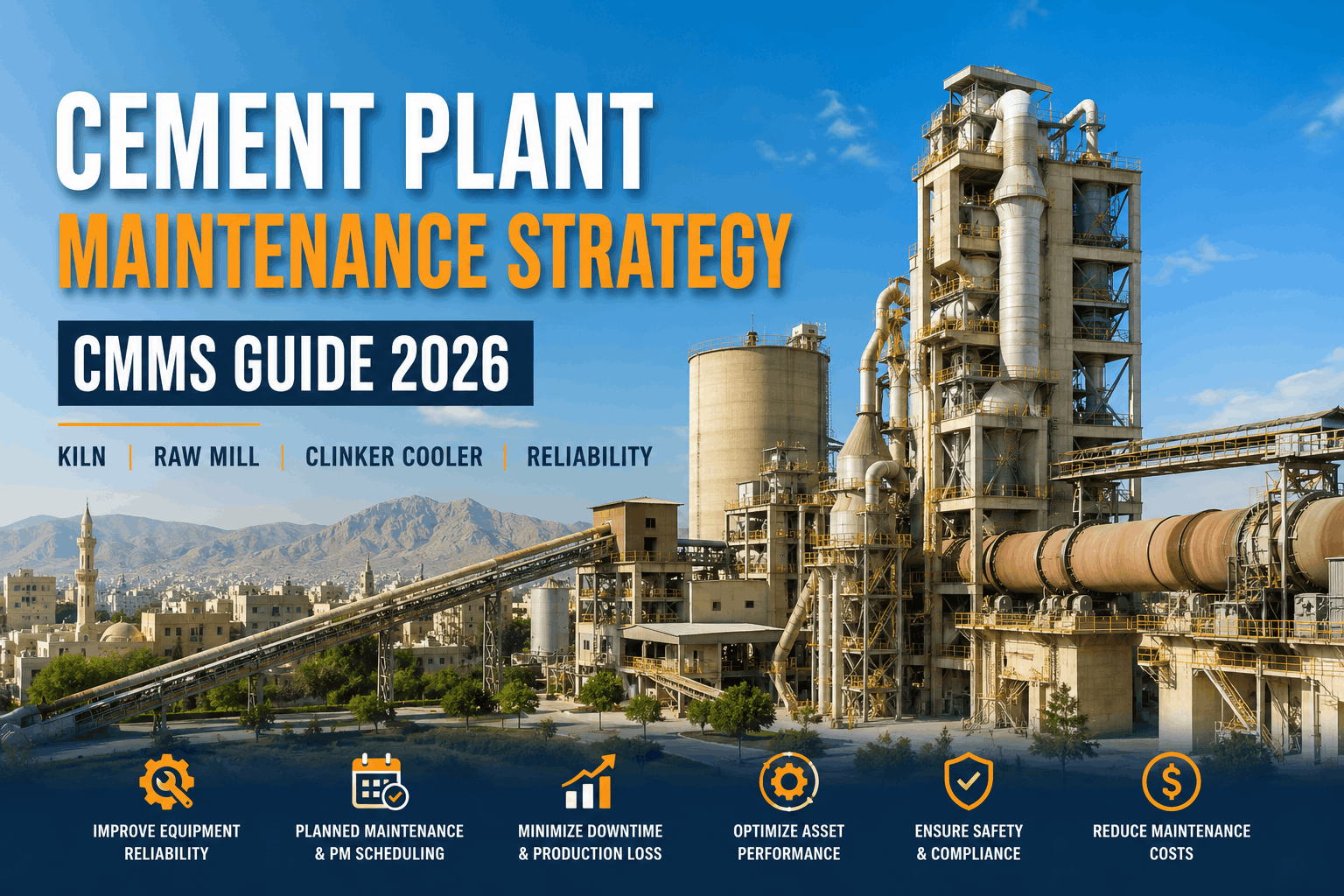
Cement plants spend 25–35% of total production costs on maintenance — yet most of that budget is consumed by reactive responses to failures that were entirely predictable months in advance. A single unplanned kiln stop costs $50,000–$300,000 per day in lost clinker production, and emergency bearing replacements or girth gear interventions consistently run 4–5x the cost of a planned intervention executed at the correct point in the asset's degradation curve. The plants consistently achieving the lowest maintenance cost-per-tonne of clinker share one structural advantage: a systematic maintenance programme built on asset condition data, technician accountability, and capital planning discipline — not on-call firefighting. Book a demo and see how Oxmaint puts that structure in place across your entire plant.
The Financial Stakes of Cement Plant Maintenance
Compliance Standards by Region: Cement Plant Maintenance
Cement plant maintenance obligations extend across safety, environmental, and equipment inspection frameworks that differ by region. Oxmaint automates inspection scheduling, documentation, and audit trail generation across every compliance jurisdiction below — eliminating manual calendar tracking and missed statutory deadlines.
| Region | Key Frameworks | Oxmaint Coverage |
|---|---|---|
| USA | OSHA 29 CFR 1910, EPA NESHAP, MSHA Part 56/57 | Safety inspection scheduling, LOTO work order controls, digital audit trail exports |
| UAE | Civil Defence codes, SASO standards, Estidama | Real-time work order compliance, digital inspection records, multi-site dashboards |
| India | BIS standards, CPCB emission norms, Factories Act 1948 | PM scheduling tied to emission control assets, statutory inspection calendars |
| Germany | DIN standards, BetrSichV, TUV inspection requirements | Mandatory inspection documentation, test record archiving, certification tracking |
| UK | HSE regulations, RIDDOR, PSSR 2000 | Digital incident logging, pressure system inspection scheduling, compliance exports |
| Canada | CSA standards, Provincial OH&S legislation | Multi-site compliance dashboards, centralised inspection record management |
Oxmaint automates inspection scheduling, work order documentation, and compliance audit trails across every region listed above — giving your maintenance team accurate records without manual calendar management.
What Is Cement Plant Maintenance Management?
Cement plant maintenance management is the structured system for scheduling, executing, tracking, and planning all maintenance activity across a plant's full asset base — from the rotary kiln shell and girth gear to auxiliary conveyor motors and compressed air systems. At its core, it moves plants from reactive firefighting toward proactive intervention, where every work order is driven by asset condition data, every technician visit is logged against an asset record, and every capital replacement is budgeted years before it becomes urgent. Book a demo to see Oxmaint's maintenance framework running on live cement plant data.
Preventive Maintenance
Systematic, time-based and condition-based work scheduled before failure occurs. Inspection intervals, lubrication schedules, and component replacements driven by asset degradation data — not reactive callouts. PM compliance tracked against targets with automated work order generation.
Condition-Based Monitoring
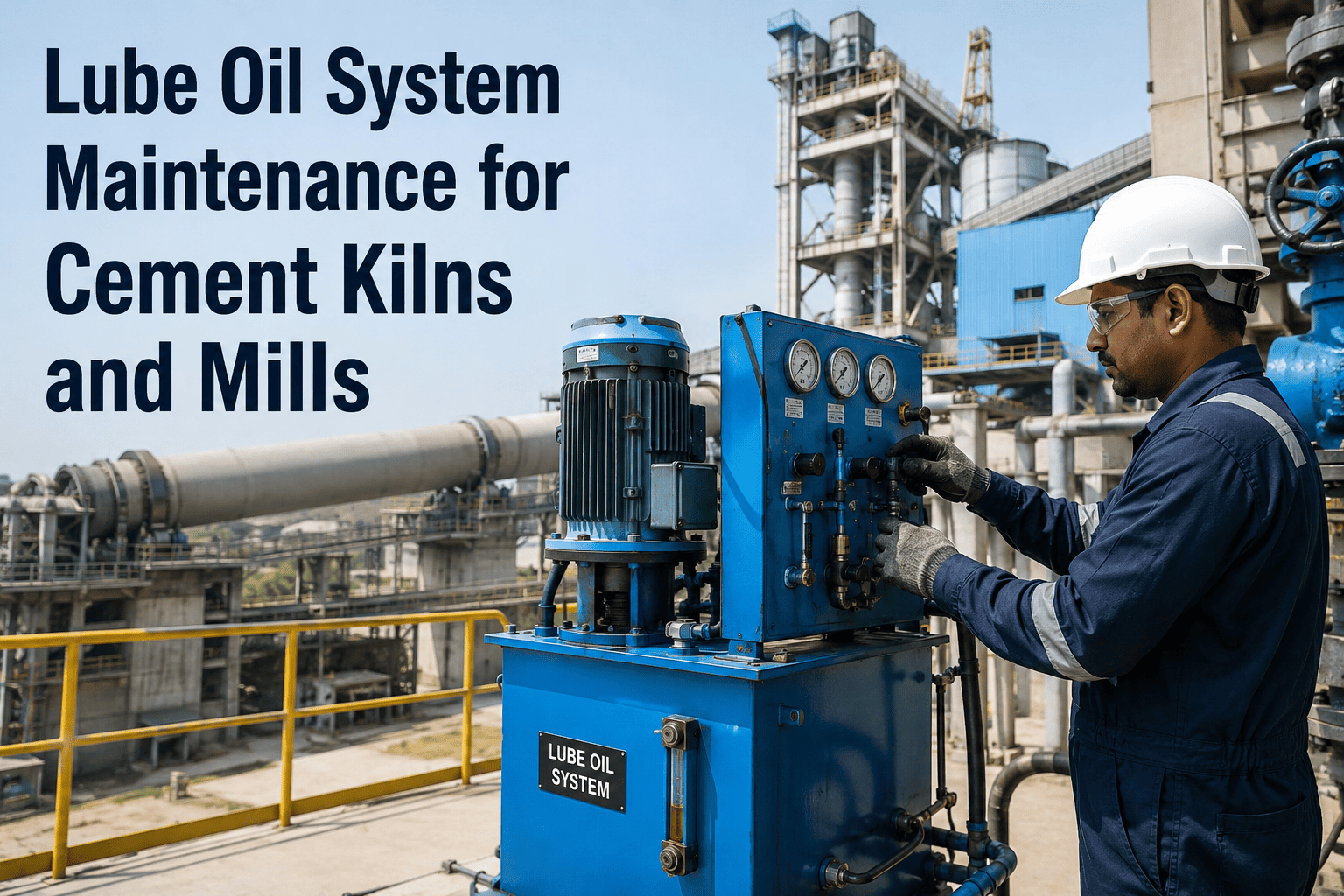
Vibration analysis, oil sampling, infrared scanning, and shell temperature mapping feed real-time degradation signals into the maintenance schedule — triggering work orders at the optimal intervention point, 4–8 weeks before failure threshold is reached.
Asset Lifecycle Management
Every asset tracked from commissioning through to planned decommissioning. Remaining Useful Life calculations, refurbish-vs-replace analysis, and total cost of ownership visibility across the full fleet — with replacement alerts 12–24 months ahead of projected failure.
Capital Planning and CapEx
Lifecycle data aggregated into 3–5 year CapEx forecasts. Replacement budgets built from condition data — not failure surprises — giving finance teams the capital visibility they need to plan ahead and eliminate unbudgeted emergency spends.
See Oxmaint Running on Cement Plant Assets
Our team will walk you through a live demo with actual cement plant asset hierarchies, preventive maintenance schedules, RUL dashboards, and capital planning reports — in under 30 minutes.
Four Maintenance Problems Costing Cement Plants Millions Annually
The same structural failure patterns repeat across cement plants worldwide — regardless of plant age, capacity, or geography. These four problems are the root cause of inflated maintenance spend, preventable capital losses, and equipment retired years ahead of its rated design life.
Reactive Maintenance Culture
Teams respond to kiln stops, mill trips, and crusher failures rather than preventing them. Emergency callouts dominate the work schedule, consuming 60–70% of available maintenance labour and leaving no bandwidth for proactive inspections. Each reactive event costs 4–5x a planned equivalent — and damages equipment far beyond the immediate failure component.
No Asset Condition Visibility
Girth gear wear, bearing degradation, and refractory thinning are invisible until they cross the failure threshold. Without continuous condition tracking, maintenance managers have no lead time. Interventions become emergencies, emergency procurements carry 25–40% cost premiums, and production stops while long-lead parts are sourced.
CapEx Decisions Without Data
Refurbish-vs-replace decisions are made on engineering intuition rather than total cost of ownership analysis. Premature retirements waste $380,000–$620,000 per major asset. Delayed replacements cause catastrophic failures — costing far more in emergency procurement premiums, contractor mobilisation, and clinker production losses.
Siloed Paper and Spreadsheet Records
Maintenance histories are scattered across paper work orders, personal notebooks, and disconnected spreadsheets. There is no single source of truth. When experienced technicians leave, institutional knowledge leaves with them — and the next failure repeats a root cause that was diagnosed and solved years earlier.
How Oxmaint Solves Cement Plant Maintenance Challenges
Oxmaint replaces reactive firefighting with a four-stage framework that structures every maintenance decision — from daily work orders to 5-year capital budgets. Each stage builds on the last, compounding value as your asset data accumulates. Book a demo to walk through the full framework with your plant's asset classes.
Ready to Move From Reactive to Proactive Maintenance?
Oxmaint deploys across a cement plant in 60–90 days. Start with the asset hierarchy, activate PM scheduling, and begin building the condition data that drives capital planning decisions for the next decade. Book a personalised 30-minute demo — no sales pitch, just your data and our platform.
Oxmaint Platform: Purpose-Built for Cement Manufacturing
Each module addresses a specific maintenance failure point in cement plant operations. Together they form a closed-loop system where every work order feeds asset condition data, every condition reading refines the PM schedule, and every asset record contributes to the capital plan. Book a demo to walk through each module with cement plant asset data.
Reactive vs. Proactive Maintenance: The Performance Gap in Cement Plants
The performance gap between reactive and proactive maintenance compounds over years. These six factors quantify what structured maintenance management delivers — and what reactive programmes cost cement plants every operating year.
Cement Plant Maintenance Performance Benchmarks
These performance improvements represent average results from cement plants that transitioned from reactive management to structured CMMS-driven programmes within 24 months of deployment. Results vary by plant size, asset age, and baseline maintenance maturity.
Your Plant Benchmarks Start Here
Oxmaint delivers measurable maintenance improvements within 60–90 days of deployment — no heavy onboarding, no implementation consultants, no long contracts. Book a 30-minute demo to map your current baseline against these industry benchmarks and build a business case for your leadership team.
Critical Asset Lifecycle Profiles: Cement Plant Equipment
Lifecycle management requirements differ significantly across a cement plant's asset base. Understanding the capital risk, typical service life, and CMMS tracking approach for each major equipment class is the foundation of an effective maintenance strategy. Book a demo to see how Oxmaint tracks each of these asset classes in a live cement plant environment.
Rotary Kiln Assembly
Shell ovality and tyre migration tracked quarterly. Girth gear wear measured at each shutdown against replacement threshold curves. Refractory heat maps updated monthly from infrared scanner data. Full total cost of ownership tracked against 30-year capital horizon.
Ball Mill and Vertical Roller Mill Systems
Liner thickness logged at each shutdown against cumulative wear curves. Main bearing vibration trended continuously. Drive gear backlash measured annually. Asymmetric wear patterns trigger partial liner replacement work orders before full failure occurs.
Crusher Systems
Liner wear tracked by operating hours and throughput tonnage — not calendar time. Replacement work orders auto-generated as cumulative tonnage targets approach. Power draw trending detects crushing efficiency loss before product size deviation appears in quality data.
Preheater and Calciner Systems
Refractory thickness tracked zone-by-zone from annual inspection data. Shell temperature hot spots mapped and trended — alerts triggered when surface temperature exceeds defined thresholds. Riser duct thickness measurements entered into wear progression curves for replacement forecasting.
ROI From Structured Cement Plant Maintenance Management
Frequently Asked Questions: Cement Plant Maintenance Management
QWhat does cement plant maintenance management actually cover?
QHow does a CMMS differ from basic PM scheduling software for cement plants?
QWhich global compliance frameworks apply to cement plant maintenance?
QHow long does CMMS implementation take in a cement plant?
QWhat maintenance KPIs should cement plant managers track?
QCan older or smaller cement plants benefit from structured maintenance management?
Continue Reading: Cement Plant Maintenance Resources
Explore these in-depth guides to build a complete picture of maintenance strategy, asset management, and operational performance for cement manufacturing.
Start Building Your Cement Plant Maintenance Programme Today
Oxmaint deploys in 60–90 days with no heavy implementation fees and no long onboarding programme. Start with your critical asset hierarchy, activate preventive maintenance scheduling, and begin building the condition data that drives capital planning decisions for the next decade. Book a 30-minute demo — your plant's data, our platform, zero obligation.