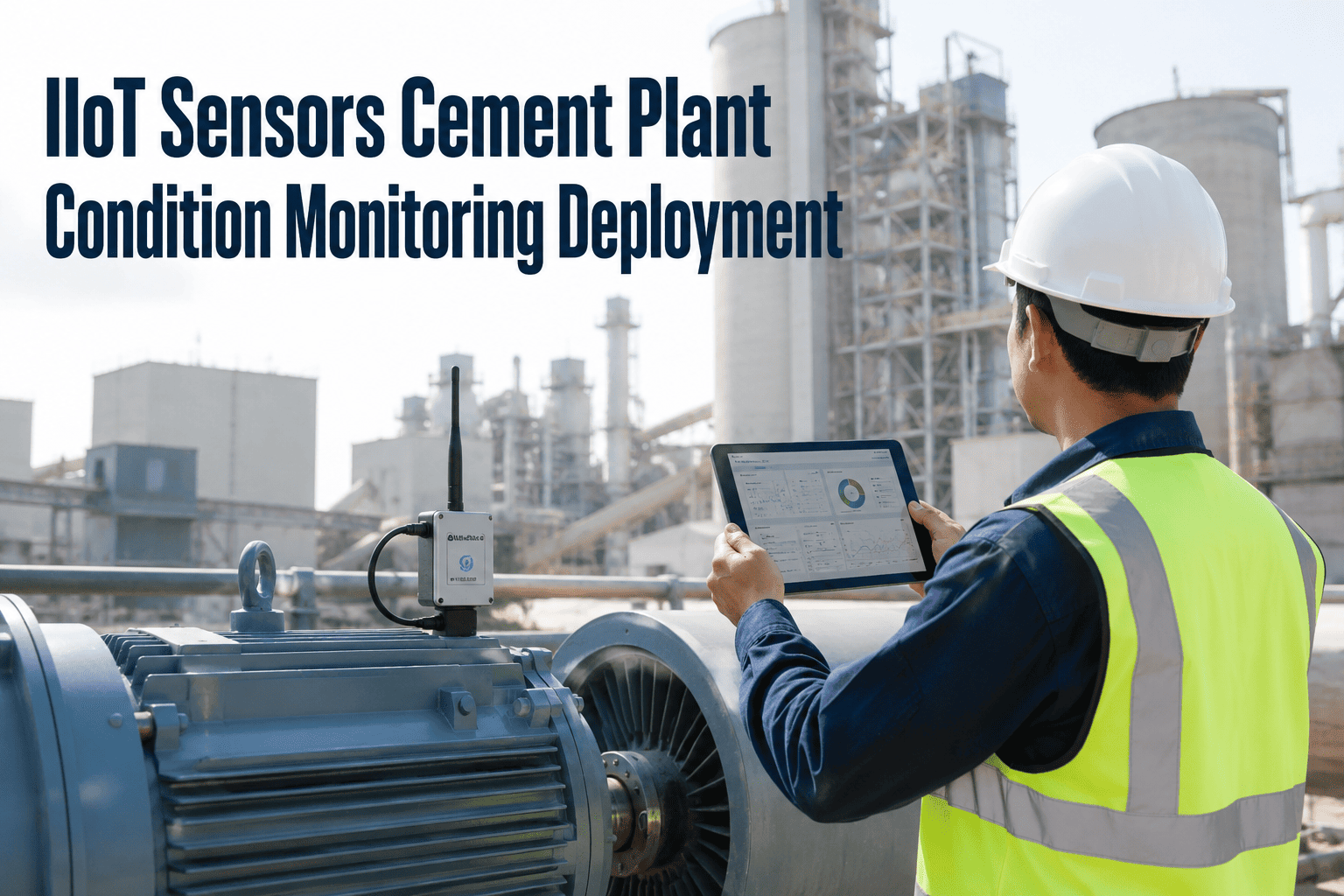
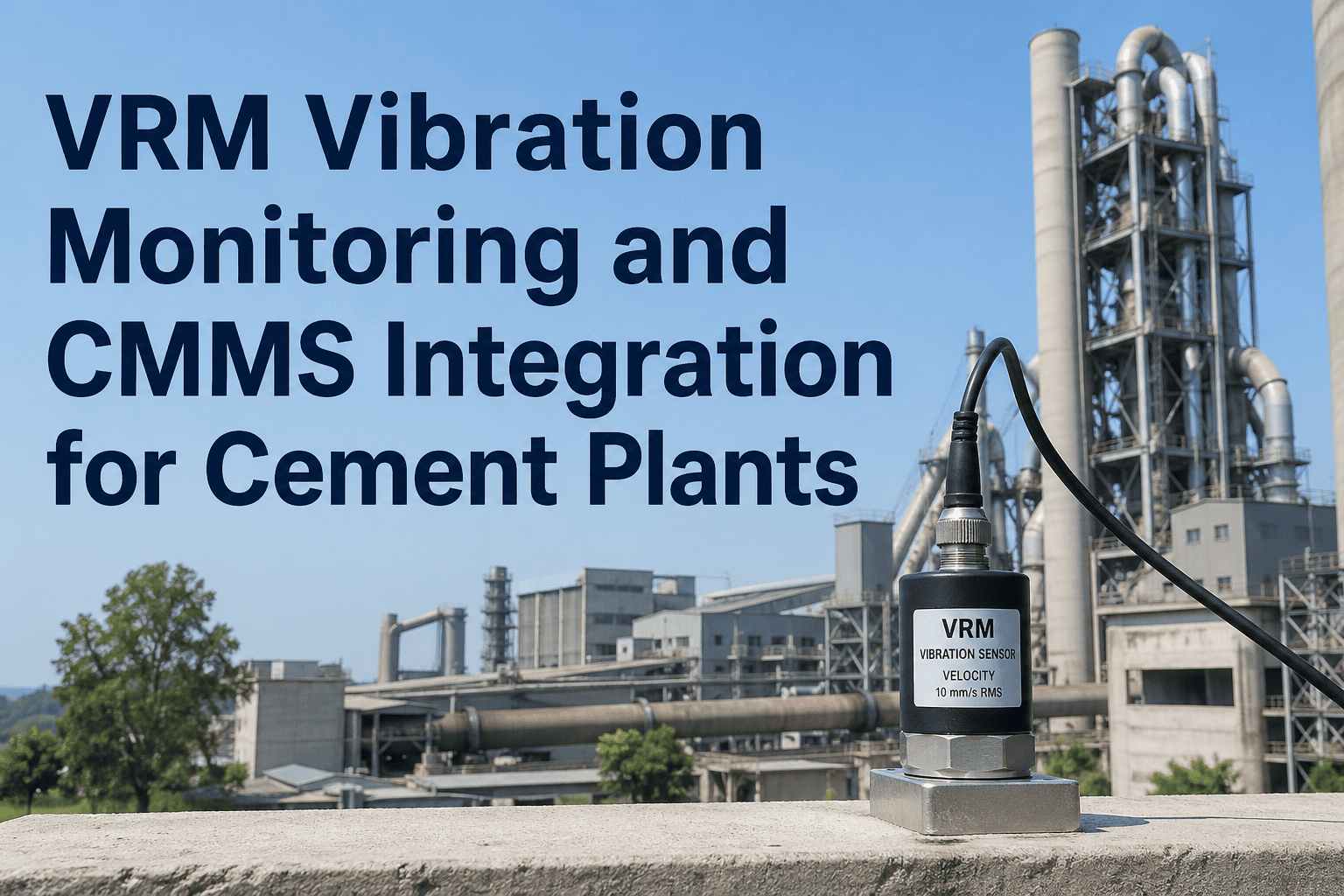
An unplanned kiln stop costs $18,000–$45,000 per hour — yet 73% of critical cement failures show measurable anomaly signals 4–8 weeks before breakdown. AI analytics and IoT sensor networks close the gap between what equipment signals and what maintenance teams act on. Book a demo to see how Oxmaint's AI Prediction Engine connects IoT sensors to automated work orders across kiln, mill, and crusher assets.
See Oxmaint's AI Prediction Engine on Cement Plant Equipment
Vibration trend analysis, AI-generated RUL estimates, automated work orders, and predictive dashboards for kiln, mill, and crusher assets — demonstrated against your actual equipment profile. Book a 30-minute demo and see the platform running against your plant structure.
Compliance Standards for Predictive Maintenance by Region
Predictive maintenance compliance obligations appear across all major regulatory frameworks. Oxmaint provides the sensor data archive, AI audit trails, and work order records to demonstrate compliance at inspections.
| Region | Applicable Standards | Oxmaint Documentation Coverage | Obligation |
|---|---|---|---|
| Global | ISO 13374, ISO 13373, ISO 55000 | Sensor data archive, AI prediction audit trail, RUL records, work order logs | Asset health monitoring under ISO 55000 |
| USA | OSHA PSM 29 CFR 1910.119, MSHA 30 CFR 57, API 691 | Condition assessment records, inspection compliance, predictive alert documentation | Mechanical integrity programme for critical equipment |
| EU / Germany | Machinery Directive 2006/42/EC, BetrSichV, DGUV | Maintenance record exports, AI audit logs, inspection report generation | Safe operating condition with documented evidence |
| India | Factories Act 1948 Sections 7A & 7B, BIS IS 14846 | Statutory maintenance records, inspection compliance, condition monitoring archives | Maintenance programme adequacy for factory safety reports |
| UAE | OSHAD-SF Mechanism 11, ADNOC AGES, Civil Defence | Multi-site compliance dashboards, maintenance records, audit report exports | Documented maintenance for operating licence |
Oxmaint keeps cement plant predictive maintenance programmes audit-ready across every region — AI prediction audit trails and compliance exports without manual record assembly.
PdM vs PPM vs CBM: Core Predictive Maintenance Concepts
Where kiln bearing failures cost $250,000+ per event and ball mill liner replacements require multi-day shutdowns, the difference between calendar PM and AI-driven predictive maintenance is measurable in production hours and emergency spend. Book a demo to see how Oxmaint structures predictive workflows.
Predictive Maintenance
Condition-based intervention triggered by measured degradation — vibration growth, temperature rise, acoustic emission, oil contamination. AI models identify the degradation trajectory and calculate remaining useful life. Work orders generate automatically when thresholds are crossed.
Preventive Maintenance
Calendar or run-hour-based replacement on fixed cycles regardless of actual condition. Effective for low-cost consumables but creates over-maintenance and under-maintenance for critical rotating assets where degradation varies with load.
Condition-Based Monitoring
Continuous measurement of physical parameters — vibration, temperature, pressure, current draw, ultrasonic noise. CBM provides the raw data stream; AI processes it into actionable failure forecasts and RUL estimates across kiln drives, mill bearings, and crusher assemblies.
Remaining Useful Life
The AI output that converts sensor trends into a concrete planning horizon. RUL estimates let planners schedule interventions during planned shutdowns, align spare parts to actual need dates, and coordinate workforce — typically 4–8 weeks ahead for cement plant critical assets.
Four Reasons Cement Plants Miss Predictive Failure Signals
Manual Measurements Taken Too Infrequently
Monthly handheld rounds miss the 2–3 week rapid failure acceleration phase. A bearing progressing from ISO Zone B to Zone D in 10 days is invisible on a 30-day cycle. IoT sensors at 1-second sampling capture this trajectory with zero gaps.
Vibration Data Never Analysed by AI
Vibration readings in spreadsheets require a specialist to review manually — data is only checked after a complaint. Oxmaint's AI Prediction Engine processes every reading against machine-specific baselines and cement-industry failure mode libraries automatically.
Sensor Data Siloed from the CMMS
Vibration analyser software disconnected from the CMMS means analysts email alarms to planners who manually create work orders — often too late. Oxmaint closes this gap: AI alerts generate pre-populated, urgency-classified work orders directly.
ISO Overall Alarms Miss Bearing Frequencies
A ball mill trunnion bearing in early outer race failure shows normal overall velocity while its defect frequency is 12–15 dB above baseline. AI spectral analysis catches frequency-specific fault signatures 4–6 weeks before ISO alarm limits are breached. Read the cement plant maintenance software guide.
How Oxmaint Structures AI-Driven Predictive Maintenance
Oxmaint integrates IoT sensor ingestion, AI failure mode detection, and automated work orders into a single CMMS platform. Book a demo to walk through the full workflow for your cement plant.
Oxmaint Platform: Predictive Maintenance Modules for Cement Plants
Each module closes the loop from sensor signal to scheduled intervention. Book a demo to walk through each module with live cement plant data.
Reactive vs. Predictive: The Maintenance Performance Gap
The gap is measurable in kiln availability, emergency repair spend, and capital budget accuracy. Read the cement plant CMMS comparison guide.
| Performance Factor | With Oxmaint Predictive Maintenance | Without Predictive Maintenance |
|---|---|---|
| Kiln Failure Warning | 4–8 weeks advance notice. Shutdown at lowest-cost window. Parts at standard lead time. Crew staged at regular rates. | Zero notice. Discovery at catastrophic failure. Emergency crews at overtime with no preparation. |
| Kiln Availability | 89–93% availability. Bearing defect frequencies monitored continuously. Interventions before failure threshold. | 74–81% availability. Unplanned stops from refractory and girth gear degradation not caught by monthly manual rounds. |
| Emergency Repair Spend | Emergency repairs reduced to 14–19% of budget within 18 months as AI prediction replaces reactive callouts. | 38–52% of maintenance budget on emergencies. Parts at 2.8–4.2× standard cost. Out-of-hours contractor rates. |
| Secondary Damage | Bearing replaced at 30–40% wear. No damage to shaft, housing, or adjacent components. | Seized bearing damages shaft journal, housing bore, girth gear. Secondary repair 5–15× higher than planned intervention. |
Predictive Maintenance Benchmarks: Oxmaint Cement Plants
Average results from cement plants transitioning from route-based manual vibration rounds to Oxmaint AI-driven predictive maintenance, measured within 24 months of full IoT sensor deployment.
Sensor Deployment and AI Detection by Equipment Class
Each equipment class has a distinct failure mode profile requiring specific sensors and AI detection models. Book a demo to see Oxmaint sensor and AI profiles for your equipment.
Rotary Kiln Drive System & Shell
Gear mesh harmonics increase 3–6 dB before tooth spalling triggers a work order. Shell hot spots raise immediate alerts. Axial drift beyond ±5 mm auto-generates thrust roller inspection with RUL estimate.
Ball Mill & Vertical Roller Mill
Bearing defect frequencies detect race defects 3–4 weeks before seizing. Oil particle threshold triggers gearbox inspection. Abnormal power draw identifies liner wear for planned shutdown scheduling.
Primary & Secondary Crushers
Shock pulse trending predicts bearing failure 2–3 weeks ahead at 87% accuracy. Ultrasonic tracks liner thickness at 8 points — AI recommends replacement before throughput degrades. Hydraulic spikes detect tramp iron and frame stress.
Preheater Fans & Compressors
Fan imbalance from dust buildup tracked via 1× velocity trend — cleaning order raised before ISO alarm. Compressor valve wear identified via pressure ratio degradation. Lubrication intervals dynamically adjusted from measured temperature.
ROI From Predictive Maintenance in Cement Plants
Frequently Asked Questions
QHow much lead time does AI predictive maintenance give before kiln drive failures?
QWhat sensors are required to start predictive maintenance on a cement ball mill?
QHow does Oxmaint's AI distinguish genuine failure predictions from false alarms?
QHow does predictive maintenance integrate with cement plant shutdown planning?
Continue Reading: Cement Plant CMMS Resources
Start Predicting Cement Plant Failures Before They Happen
Oxmaint deploys AI prediction and IoT sensor integration across your cement plant's critical asset inventory in 60–90 days. No heavy implementation fees, no production shutdown required. Book a 30-minute demo — your equipment list, our AI, zero obligation.