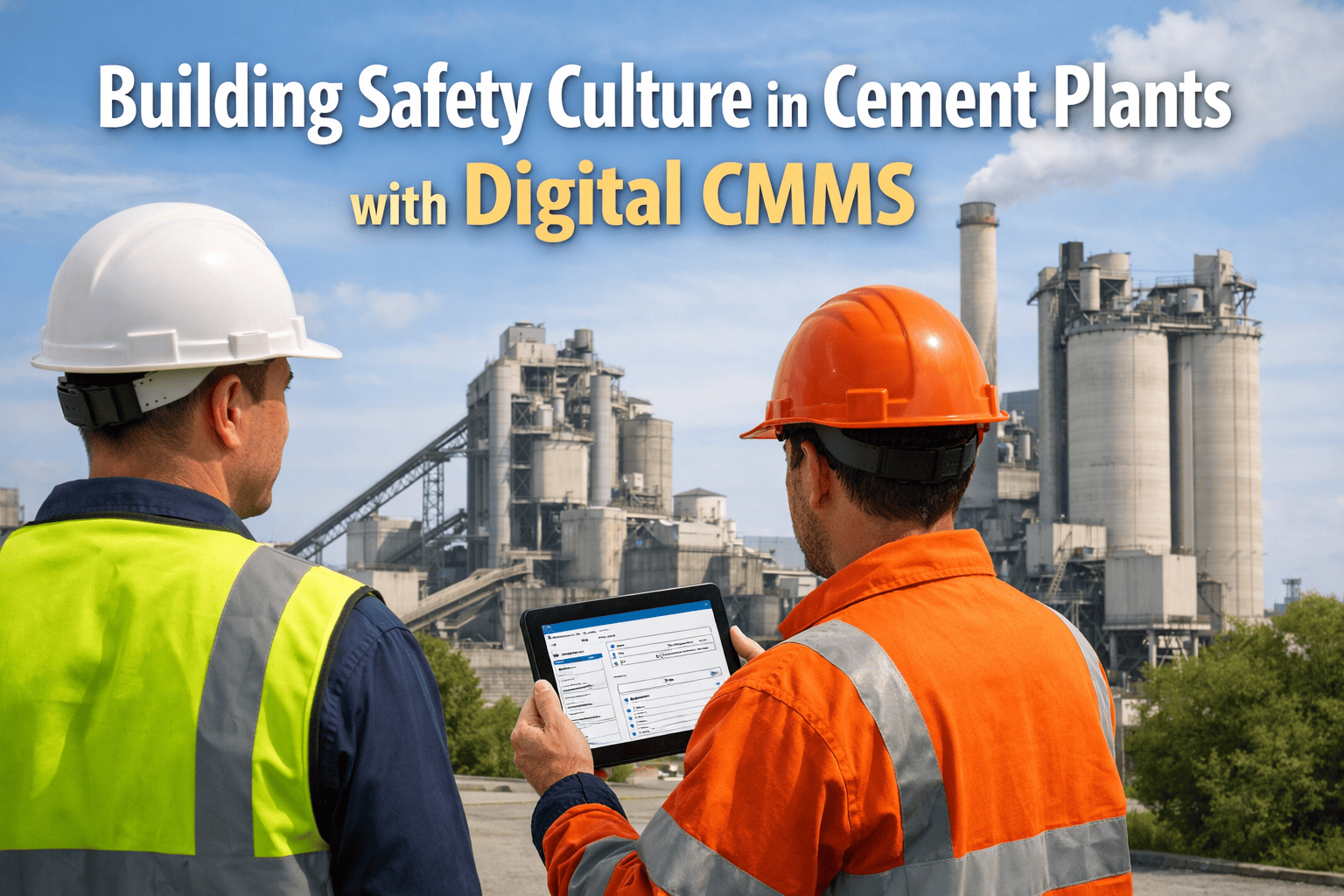
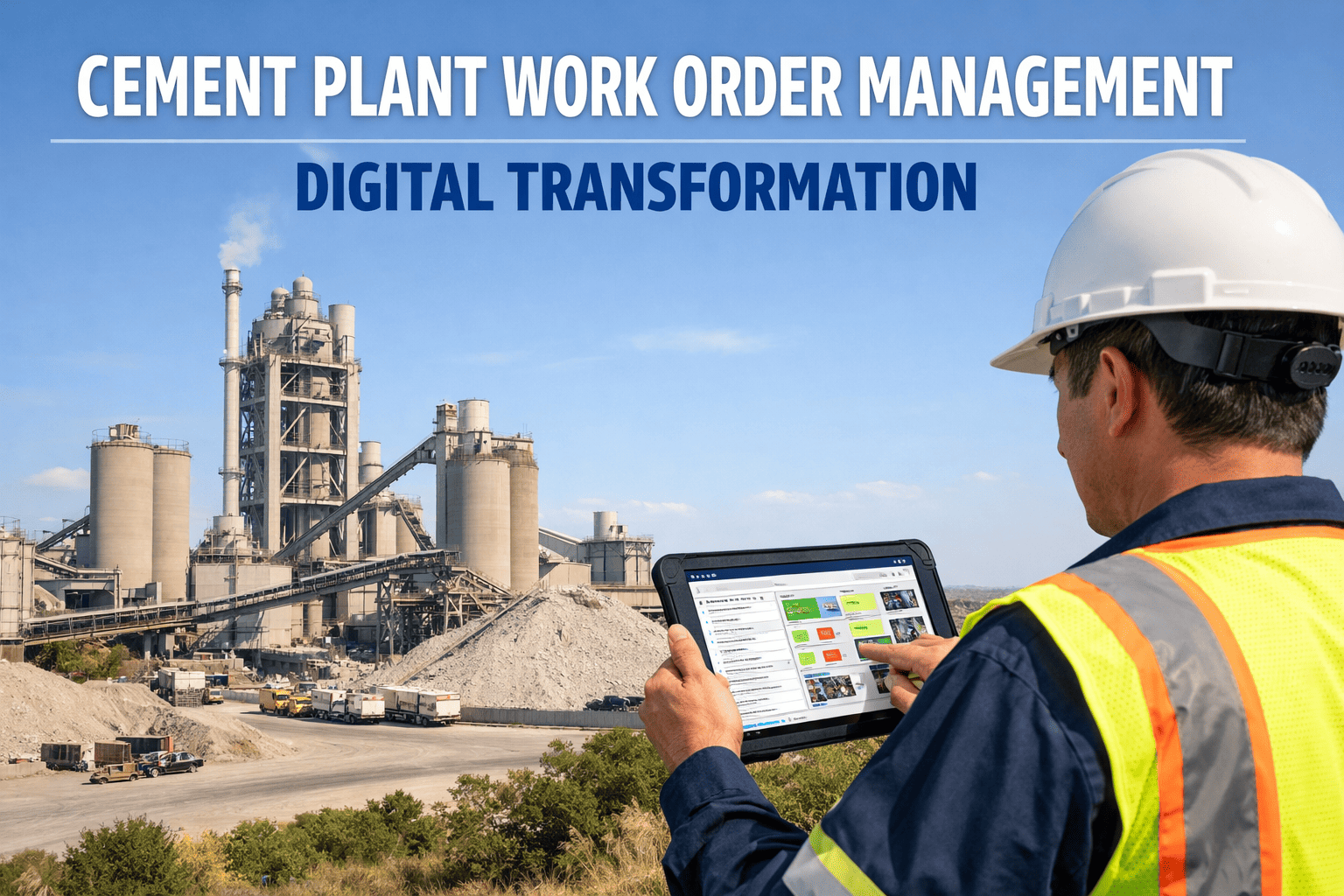
At 6:14 AM on a Tuesday, a maintenance technician enters a preheater cyclone for a routine inspection. The confined space permit was issued the previous shift — but the atmospheric testing was done 9 hours ago, and a small raw meal leak overnight has displaced enough oxygen to create a lethal environment. By the time his partner realizes he's unresponsive and calls for rescue, irreversible harm has occurred. The investigation reveals a familiar chain of failures: a paper-based permit system that couldn't enforce real-time validity checks, no automated atmospheric re-testing requirement, and a confined space entry log that existed only in a binder at the control room. Cement plants are among the most hazardous industrial environments on earth — combining extreme temperatures, confined spaces, rotating equipment, airborne silica, and fall hazards across sprawling facilities. Yet most still manage safety with the same paper-based tools they used 20 years ago. Digital HSE integrated with CMMS changes the equation entirely, making unsafe conditions harder to create and safety compliance easier to maintain.
Every Incident Has a Maintenance Root Cause. Every Safety System Needs Digital Enforcement.
Paper vs. Digital: Why Safety Systems Fail in Cement Plants
The fundamental gap in cement plant safety isn't a lack of rules — it's a lack of enforcement at the point of work. Paper-based systems can't validate that a permit is still current when conditions change, can't prevent a LOTO being removed while someone is still inside a vessel, and can't alert a supervisor when an inspection is overdue. Digital HSE closes these gaps with automated enforcement:
The 7 Critical Hazard Zones in a Cement Plant
Cement plants concentrate an extraordinary density of hazards across a large footprint. Each zone below presents distinct risks that require zone-specific safety protocols, inspection frequencies, and CMMS-integrated controls:
Quarry & Crushing
Blasting operations, heavy mobile equipment, rock fall hazards, crusher nip points, and conveyor entanglement. Quarry operations account for 15–20% of cement industry fatalities. Haul road conditions deteriorate rapidly and require daily inspection.
Raw Mill & Blending
Confined space entry in silos and hoppers, respirable dust exposure (crystalline silica), rotating equipment hazards on mills and separators, noise exposure exceeding 95 dB in mill buildings. Silo engulfment is a leading cause of death in cement operations.
Preheater Tower
Work at height (60–120m tall structures), extreme heat exposure near cyclone stages, confined space entry during shutdowns, CO/CO₂ gas accumulation in enclosed areas. Falls from preheater platforms are among the most common fatal incidents in cement plants.
Kiln & Cooler
Surface temperatures exceeding 350°C, molten clinker hazards at cooler discharge, refractory brick fall during relining, rotating kiln contact, and CO gas exposure during startup/shutdown. Kiln area maintenance is the highest-risk activity in the entire plant.
Cement Mill & Packing
Rotating equipment on mills and separators, cement dust exposure (hexavalent chromium in some cements), conveyor entanglement at packing stations, vehicle-pedestrian interaction at dispatch. Chronic dust exposure causes silicosis, COPD, and skin conditions.
Electrical Systems
High voltage (11–33kV) distribution, arc flash hazards at switchgear, cable trench confined spaces, VFD/MCC maintenance with stored energy. Electrical incidents are the #2 cause of fatalities in cement after falls. Arc flash events cause severe burns in milliseconds.
Shutdown & Contractor Operations
Highest risk period: 3–5x more incidents per hour than normal operations. Multiple contractors working simultaneously, unfamiliar workers on site, overlapping LOTO requirements, fatigue from extended shifts, and compressed timelines that pressure safety shortcuts.
Digitize Every Permit, Inspection, and LOTO — In One Platform
Oxmaint integrates safety management directly with maintenance work orders. Every permit links to an asset, every LOTO links to a work order, every inspection generates trackable actions.
The Cost of Safety Failure vs. Digital Investment
Investing in digital HSE isn't a cost — it's a financial decision with measurable returns. Here's the economics of safety in cement manufacturing:
6 Digital Safety Systems Every Cement Plant Needs
These are the core digital HSE capabilities that transform safety from a compliance exercise into an operational advantage. Each system integrates with Oxmaint's CMMS platform to connect safety directly to maintenance operations:
Digital Permit-to-Work (PTW) System
Every high-risk activity — confined space, hot work, work at height, electrical isolation — requires a digital permit with automatic pre-condition verification, time-limited validity, real-time status visible to all stakeholders, and mandatory close-out before area release. No more expired permits being "still valid" because nobody checked the paper logbook.
Integrated LOTO Management
LOTO tied directly to CMMS work orders. System prevents work order closure if any lock is still active. Multi-lock coordination for shutdown periods. Digital lock registry with worker-specific assignments. Shift handover verification ensures no worker is left locked in an isolated system.
Mobile Safety Inspections
Zone-specific inspection checklists deployed to mobile devices with mandatory photo documentation, GPS tagging, and automatic escalation for critical findings. Overdue inspections trigger alerts. Trend analytics identify recurring hazards across zones and shifts.
Incident & Near-Miss Reporting
Real-time mobile incident capture with photo/video evidence, witness statements, and automatic root cause investigation workflow. Near-miss reporting with positive reinforcement tracking. Every incident links back to equipment and maintenance history for systemic analysis.
Contractor Safety Management
Pre-qualification verification (insurance, certifications, safety records) before gate access. Digital site induction with comprehension testing. Real-time contractor headcount and location tracking. Performance scorecards that influence future contract awards.
Occupational Health Monitoring
Dust exposure tracking linked to work area and duration. Noise dosimetry records. Heat stress protocols with automated alerts when temperatures exceed action levels. Audiometric and spirometry test scheduling integrated with HR and CMMS records.
Leading Indicators vs. Lagging Indicators: Measuring What Matters
Most cement plants measure safety by counting injuries. That's like measuring quality by counting customer complaints — by the time you're counting, you've already failed. Leading indicators predict and prevent; lagging indicators only confirm failures that already happened.
Leading Indicators (Predictive)
Measure these daily/weekly — they predict tomorrow's safetyLagging Indicators (Reactive)
Track these monthly — they confirm what already happenedTrack Leading Indicators That Prevent Tomorrow's Incidents
Oxmaint's safety dashboards give plant managers real-time visibility into inspection completion, corrective action aging, permit status, and near-miss trends — the metrics that actually predict safety performance.
Frequently Asked Questions
What are the most common causes of fatalities in cement plants?
The five leading causes of cement plant fatalities are: falls from height (preheater tower, silo tops, conveyor structures — accounting for ~25% of fatalities), mobile equipment strikes (quarry haul trucks, wheel loaders, forklifts — ~20%), confined space asphyxiation (silos, cyclones, vessels — ~15%), electrical contact (high-voltage switchgear, arc flash — ~15%), and entanglement in rotating equipment (conveyors, mills, kiln — ~12%). Every one of these is preventable with proper procedural enforcement.
How does digital permit-to-work prevent incidents?
Digital PTW prevents incidents through automated enforcement that paper systems can't provide: permits have hard expiry times (not "until further notice"), atmospheric testing requirements auto-trigger for confined space entries, the system blocks permit approval if prerequisite isolations aren't verified, and real-time status dashboards show every active permit across the plant. The biggest single improvement: time-limited validity — a confined space permit that auto-expires after 8 hours forces re-assessment of conditions before continued work.
Why is shutdown maintenance the most dangerous period?
Shutdowns concentrate multiple high-risk activities simultaneously: 3–5x more workers on site (including unfamiliar contractors), overlapping confined space entries and hot work operations, multiple active LOTO procedures on interconnected systems, compressed timelines that create pressure to shortcut safety procedures, and extended shift hours (12–16 hour days) that cause fatigue-related errors. Plants that digitize shutdown safety management — with real-time permit boards, contractor headcount tracking, and multi-lock LOTO coordination — reduce shutdown incident rates by 50–70%.
What is the connection between maintenance and safety?
Maintenance and safety are inseparable in cement operations. Approximately 85% of safety incidents have a maintenance-related root cause: failed guarding that wasn't replaced after the last repair, a vibration switch that was bypassed rather than repaired, an access platform with corroded grating that maintenance flagged but never received a work order for. Integrating safety observations with the CMMS means every safety finding generates a trackable maintenance action — closing the loop that paper-based systems leave wide open.
How does Oxmaint integrate safety with maintenance?
Oxmaint connects safety and maintenance through: LOTO integration — every isolation links to a CMMS work order and cannot be removed until all assigned work is complete; inspection-to-work-order flow — safety findings auto-generate corrective maintenance work orders with priority and deadline; permit-asset linking — every PTW references specific equipment, pulling maintenance history and known hazards into the permit approval process; and incident root cause tracking — investigation findings link to equipment records, driving preventive maintenance improvements that address the systemic causes of safety failures.