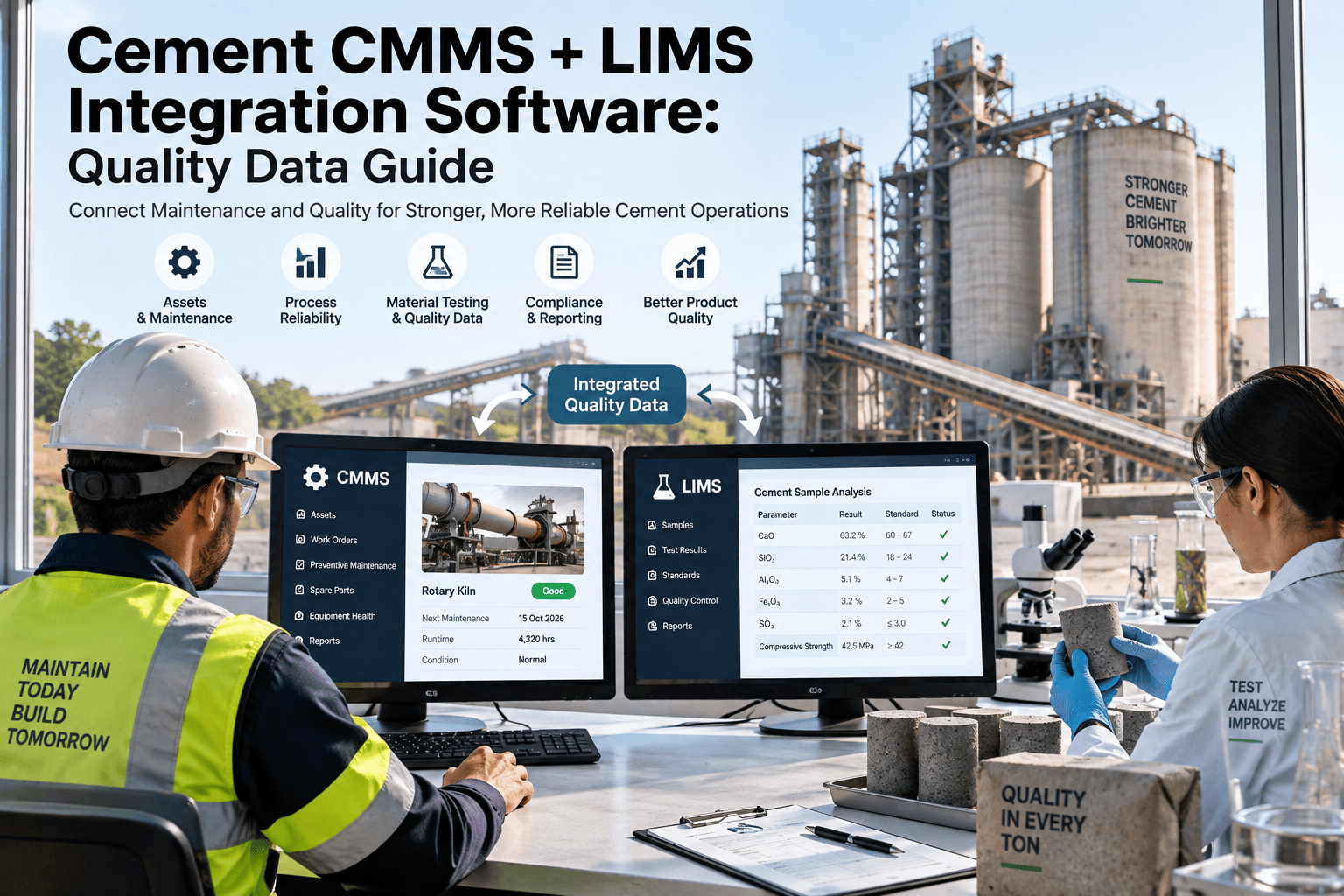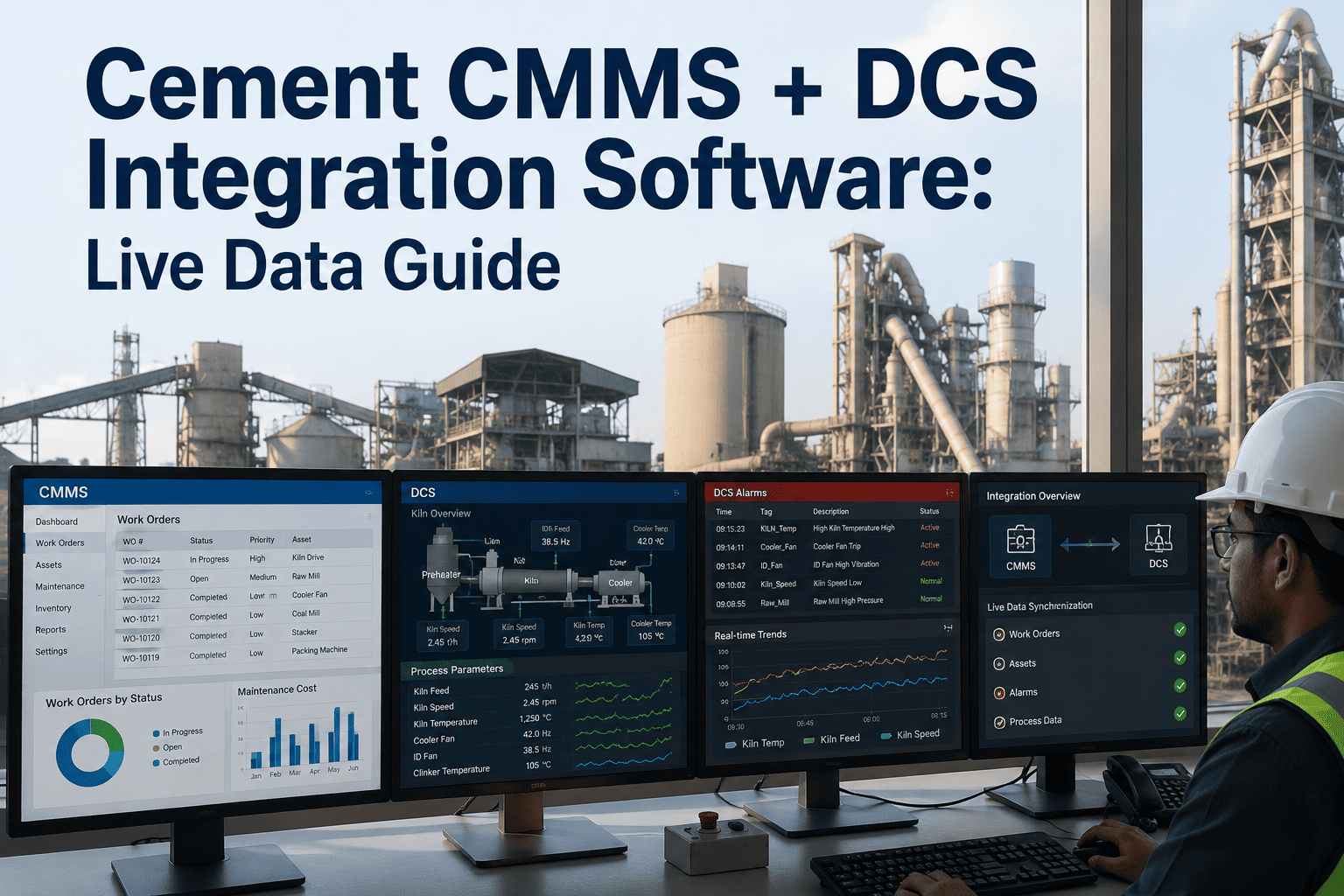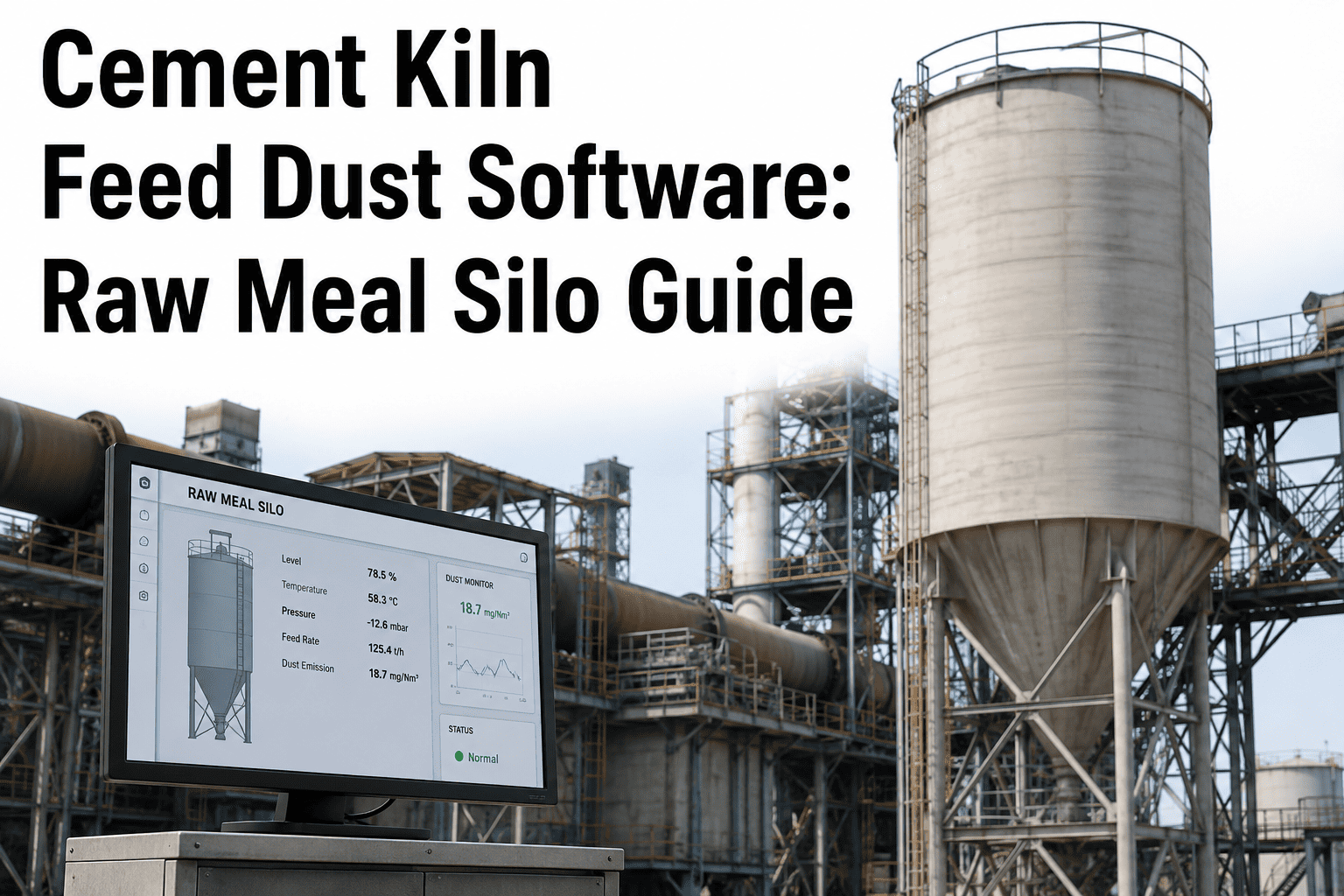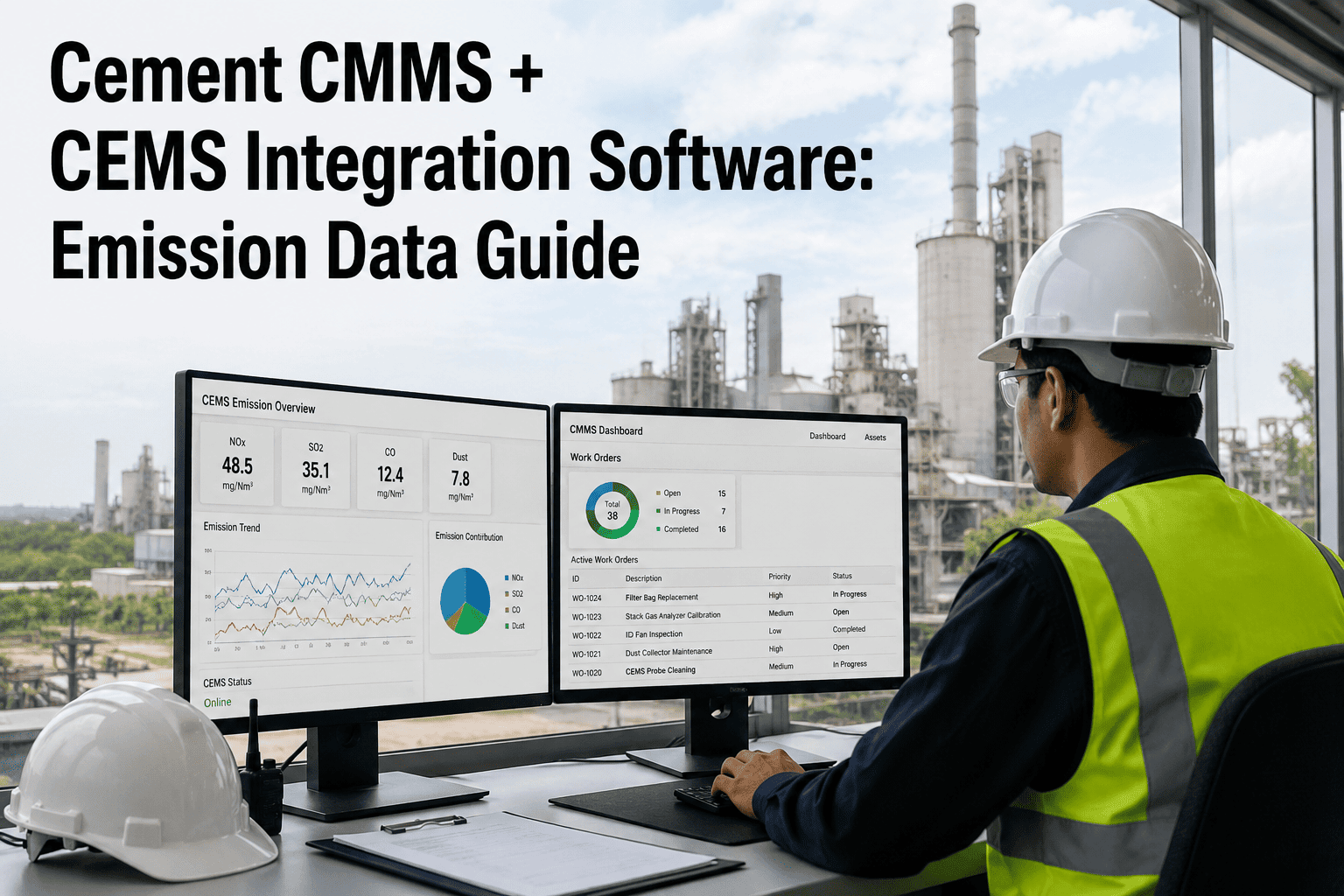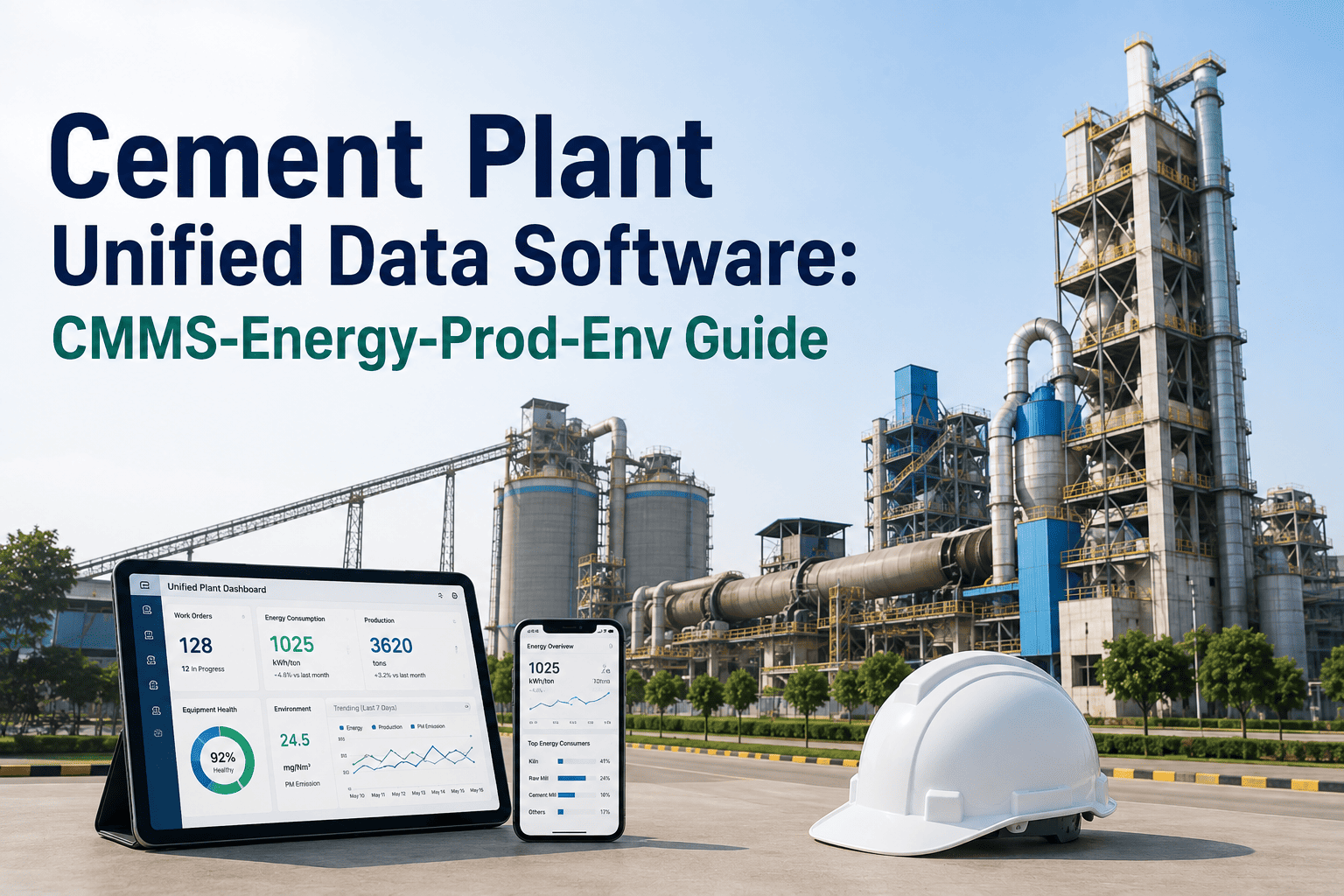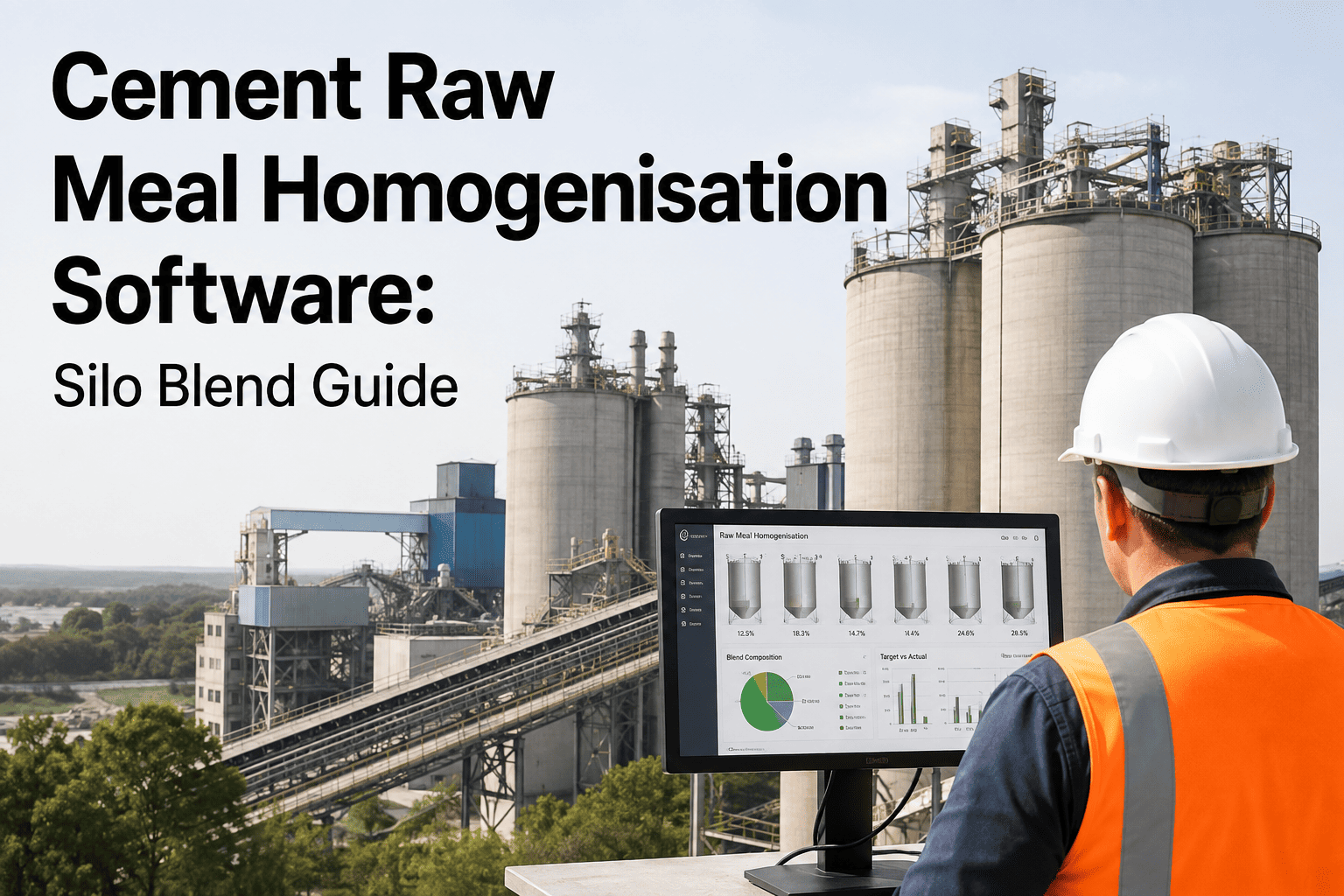
Every cement kiln lives or dies by the consistency of one number: the chemistry of the raw meal reaching the burner. Limestone quarried this week can carry a noticeably different CaCO3 percentage than limestone quarried last month, and clays, shale, and iron correctives add their own swings on top of that. Left unmanaged, this raw material variability turns into unstable lime saturation factor, erratic clinker nodulisation, coating loss, and a kiln operator chasing fuel and speed changes all day. Homogenisation silos exist to absorb these swings before they ever reach the burning zone, but a silo only performs as well as the maintenance, sampling, and aeration discipline built around it. OxMaint CMMS gives raw mix and process engineering teams the tools to track blend factor trends, silo aeration health, and residence time performance in one connected system.
Turn Raw Meal Variability Into a Controlled Number, Not a Kiln Emergency
Quarry-to-quarry and truckload-to-truckload, incoming limestone chemistry can swing well beyond what a stable kiln can tolerate. OxMaint helps process and maintenance teams track silo blend factor, sampling discipline, and aeration system health so variability gets absorbed inside the silo — never inside the kiln.
Why Raw Meal Variability Is the Root Cause Behind Most Kiln Problems
Rings, coating loss, free lime spikes, and unstable burning zones usually get blamed on the kiln. In most plants, the real story starts upstream — the raw meal reaching the kiln never had the chemical consistency the burning process needed in the first place. Understanding what actually drives homogenisation performance is the first step toward fixing it, and it starts with a single ratio: the blend factor, calculated as the standard deviation of the raw meal entering the silo divided by the standard deviation of the kiln feed leaving it.
Quarry Face Chemistry Drift
Limestone composition varies meaningfully even within the same quarry face. Without stacking and reclaiming as a pre-blending stage, sharp chemical shifts pass straight into the raw mill and can overwhelm downstream silo capacity.
Aeration System Degradation
Fluidisation pads, blowers, and solenoid valves lose performance gradually. Once aeration falls off, a homogenising silo starts behaving like an unmixed storage bin instead of a blending system.
Sampling and Analysis Lag
Blend factor depends on comparing inlet and outlet standard deviation from regular sampling. Infrequent or delayed XRF analysis hides a problem until clinker quality has already slipped.
Outlet and Hopper Segregation
Uneven extraction across outlets, or a partially blocked outlet, breaks the layered blending pattern the silo geometry was engineered to create in the first place.
Batch, Continuous Flow, or Pneumatic — Which Silo Design Fits Your Plant
Not every plant needs the same blending architecture. Capacity, raw material variability, and available power all shape which silo design delivers the target blend factor most efficiently for a given operation.
| Silo Type | Typical Blending Ratio | Power Use | Storage Role | Best Suited For |
|---|---|---|---|---|
| Batch / Air-Merge | Around 10:1 | 1.5–2.5 kWh per tonne | 2–3 days kiln feed buffer | Smaller-capacity plants prioritising guaranteed chemistry |
| Continuous Flow (CF) | 3–6:1 as designed | Lower compressor draw than batch | 15,000–20,000+ tonnes storage | Large plants running mill and kiln at different rates |
| Pneumatic Homogenising | Amplifies particle-level mixing | Depends on blower duty cycle | Mid-size intermediate storage | Plants needing finer particle-level uniformity |
The Silo Maintenance Checklist Most Plants Are Missing
A homogenising silo is a mechanical and pneumatic system before it is a chemistry solution. When the aeration, extraction, and sampling hardware around it fall behind schedule, blend factor drifts long before anyone notices it in a lab report.
Operating Monitoring
- Silo fill level versus 50–70% target
- Inlet and outlet chemistry from continuous sampler
- Aeration blower running status and pressure
- Extraction valve sequencing confirmation
- Kiln feed tank level and flow rate
Operational Inspection
- Solenoid valve and air distributor function check
- Fluidisation pad pressure test per segment
- Sampler probe cleaning and calibration check
- Outlet throttle plate wear inspection
- Compressor filter and moisture trap check
Internal Inspection
- Aeration pad replacement where degraded
- Silo interior buildup and wall deposit check
- Extraction cone and outlet geometry review
- Blower and compressor overhaul
- Full sampler calibration against lab reference
From Blend Factor Data to a Documented Maintenance Program
OxMaint connects the maintenance side of homogenisation — aeration, extraction, sampling — to the chemistry data your process team already tracks, so both teams work from one shared history instead of two disconnected records.
Blend Factor Trend Tracking
Log inlet and outlet standard deviation readings directly against each silo asset, so drifting blend factor shows up as a visible trend rather than a surprise clinker quality complaint.
Aeration and Extraction PM Scheduling
Blower runtime checks, fluidisation pad pressure tests, and outlet sequencing verification are scheduled automatically, with overdue tasks flagged before they affect blending performance.
Sampler Calibration Records
Continuous sampler and XRF calibration history is stored against the instrument, giving you a defensible record whenever raw meal or clinker consistency is questioned.
Pre-Blending and Quarry Data Linkage
Stacking and reclaiming inspection findings connect to raw mill and silo performance records, helping teams trace a blend factor problem back to its actual source.
Corrective Work Order Closure
When an inspection or trend flags a fluidisation or extraction issue, OxMaint generates the corrective work order and tracks it to closure against the asset history.
Stop Guessing Why Blend Factor Slipped This Month
OxMaint connects your silo, sampler, and aeration maintenance data in one place, so process and maintenance teams stop working from separate spreadsheets and start working from the same blend factor history.
Documentation That Connects Maintenance to Clinker Quality
When a customer or an internal audit asks why clinker chemistry shifted, the answer should be a report, not a guess. OxMaint builds that report automatically as maintenance and inspection work happens.
Blend Factor History by Silo
Every inlet and outlet standard deviation reading, by chemical parameter, stored against the specific silo asset so long-term homogenisation trends are visible instantly.
Aeration System Health Log
Blower runtime, fluidisation pressure readings, and solenoid valve maintenance history in one timeline, showing exactly when performance began to slip.
Corrective Action Closure
Deficiencies found during inspection — a failed pad, a blocked outlet — generate a corrective work order tracked to closure and linked back to the original finding.
Quarry-to-Kiln Traceability
Pre-blending, raw mill, and silo maintenance records connected in one asset hierarchy, so a clinker quality issue can be traced back through the entire raw mix chain.
Questions From Process and Maintenance Engineers
Better Raw Meal Homogenisation Starts With Better Maintenance Records
Silo chemistry is a maintenance outcome as much as a process one. OxMaint gives raw mix and reliability teams the platform to track blend factor trends, schedule aeration and sampler maintenance, and document the whole homogenisation program — so kiln feed stays consistent instead of reactive. Start your free trial today.