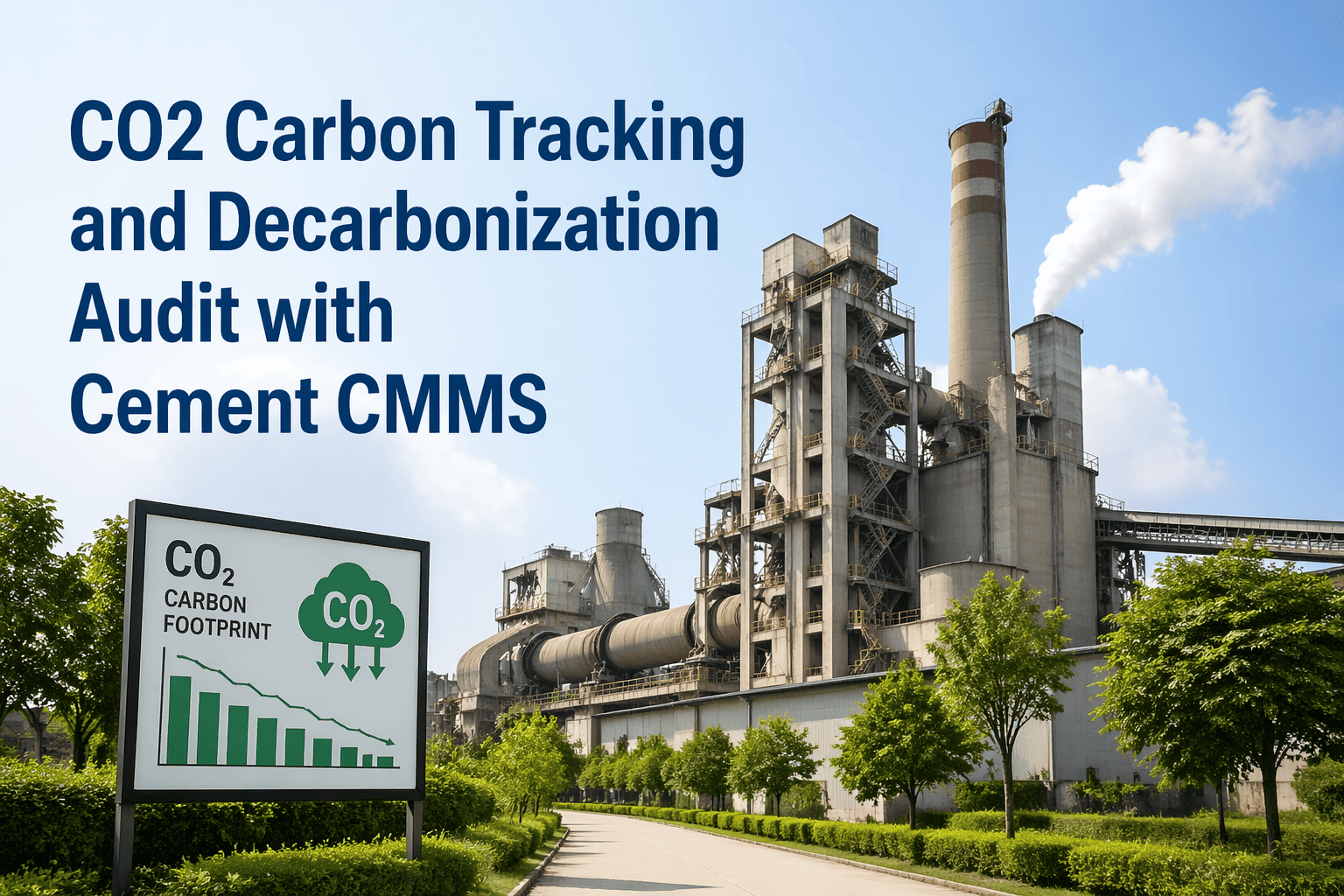
The global construction sector is undergoing a materials specification shift that cement producers who ignore it will lose market share to those who do not. Green building rating systems now influence over 40% of commercial construction decisions in North America, Europe, and the GCC — and Environmental Product Declarations have become a mandatory submission requirement for major public infrastructure tenders in Germany, France, the UK, and an expanding number of US state procurement frameworks. A cement plant that cannot provide a verified EPD, demonstrate a clinker factor below 0.75, or document its CO2 intensity per tonne of product is being excluded from project specifications not for price reasons — for documentation reasons. Developing and certifying low-carbon cement products requires integrating quality data, emission records, supplementary cementitious material consumption, and product performance testing into a format that third-party verifiers and project specifiers can act on. Book a demo to see how Oxmaint structures product quality tracking, emission data management, and compliance documentation for green cement certification programmes.
The Market Scale of Green Cement Certification
Compliance Standards by Region: Green Cement Certification and EPD Frameworks
Green cement certification, Environmental Product Declaration requirements, and low-carbon product labelling are governed by standards that vary significantly by region — in scope, verification requirements, and which rating systems recognise which certification. Oxmaint automates the quality data collection, emission record management, and compliance documentation that feeds EPD preparation and ongoing certification maintenance across all frameworks below.
| Region | Key Frameworks | Oxmaint Coverage |
|---|---|---|
| USA | ISO 14044 LCA methodology, PCR for portland cement EPDs, LEED v4 and v4.1 MRc disclosure requirements, Buy Clean California Act, ASTM C150 and C595 product standards | Product quality data compilation for EPD, emission intensity records per tonne of clinker, SCM consumption tracking, LEED documentation support, ASTM compliance test record management |
| UAE | Estidama Pearl Rating System material requirements, GSAS green building cement standards, LEED recognition in free zone projects, Emirates Authority for Standardisation ESMA product certification | Estidama-aligned product documentation, GSAS material submission data, ESMA certification records, multi-site product emission intensity dashboards |
| India | BEE Star Rating energy performance, BIS IS 455 Portland slag cement standards, GRIHA green rating cement requirements, Green Building Index material specifications | BEE energy consumption records per tonne, BIS product test certificate tracking, GRIHA material documentation, specific heat consumption reporting for low-carbon product claims |
| Germany | EN 15804 EPD standard, DIN EN 197 cement product standards, EU Taxonomy green product classification, Institut Bauen und Umwelt EPD verification, DGNB certification material requirements | EN 15804 data compilation, EU Taxonomy documentation support, IBU EPD data set management, DGNB material submission records, emission intensity tracking per product type |
| UK | BS EN 15804 EPD framework, BREEAM New Construction material credits, UK Green Building Council embodied carbon guidance, PAS 2080 infrastructure carbon management | BREEAM material credit documentation, PAS 2080 product carbon data, BS EN 15804 EPD data management, embodied carbon records per product specification |
| Canada | LEED Canada material transparency credits, CSA A3001 cement standards, Zero Carbon Building Standard material requirements, National Energy Code embodied carbon provisions | LEED Canada EPD and product disclosure documentation, CSA product compliance records, zero carbon building material data, multi-site Canadian product portfolio tracking |
Oxmaint delivers quality data management, emission intensity tracking, SCM consumption records, and compliance documentation for green cement certification programmes across every framework above — giving producers the verified data sets that EPD preparers, third-party verifiers, and project specifiers require.
What Is Green Cement Certification and Low-Carbon Product Development?
Green cement certification is the formal process by which a cement product's environmental performance — primarily its CO2 intensity per tonne, clinker-to-cement ratio, supplementary cementitious material content, and production energy intensity — is documented, verified by an independent third party, and labelled in a format recognised by green building rating systems and public procurement frameworks. Low-carbon product development is the underlying manufacturing and formulation programme that achieves the emission intensity and clinker factor required for certification — through supplementary cementitious material optimisation, kiln fuel mix evolution, process efficiency improvement, and clinker chemistry refinement. Book a demo to see how Oxmaint tracks the production data that feeds green certification programmes in a live cement manufacturing context.
Environmental Product Declarations
Type III environmental declarations prepared to ISO 14025 and EN 15804 — quantifying the cradle-to-gate CO2 intensity, energy consumption, water use, and waste generation of each cement product across its production lifecycle. EPDs prepared from a Life Cycle Assessment and verified by an accredited third party. The primary document required by LEED, BREEAM, DGNB, and Estidama material credit submissions — and increasingly mandatory in public sector tender specifications globally.
Clinker Factor and SCM Optimisation
The clinker-to-cement ratio — the proportion of portland clinker in a cement blend versus supplementary cementitious materials such as fly ash, ground granulated blast furnace slag, silica fume, and calcined clay — is the primary determinant of a cement product's CO2 intensity. Every percentage point reduction in clinker factor reduces CO2 intensity by approximately 8–10 kg per tonne of cement. SCM optimisation is the core technical programme in low-carbon product development, requiring consistent SCM quality data, clinker chemistry control, and performance testing to maintain product compliance.
Green Building Rating System Recognition
LEED v4.1 (North America and international), BREEAM New Construction (UK and Europe), DGNB (Germany), Estidama (UAE), GRIHA (India), and Green Star (Australia) all award materials credits for cement products with verified low embodied carbon — but each has different documentation requirements, credit structures, and acceptable verification pathways. Understanding which certification is recognised by which rating system in each target market determines the EPD and certification investment priorities for each product and region.
Life Cycle Assessment and Carbon Accounting
ISO 14044-compliant Life Cycle Assessment forming the technical foundation of each EPD — quantifying process CO2 from clinker calcination, energy CO2 from kiln and mill fuel combustion, transport emissions, and upstream raw material extraction impacts from quarrying through to the plant gate. LCA data quality depends entirely on the accuracy and completeness of production data records in the CMMS — fuel consumption per tonne of clinker, SCM quantities, electricity consumption, and process emission factors verified against laboratory test records.
See Oxmaint Supporting Green Cement Certification Data Management
Our team will walk you through a live demo with product quality tracking, emission intensity records, SCM consumption monitoring, and EPD data compilation tools built for cement manufacturing certification programmes — in under 30 minutes.
Four Green Certification Failures Blocking Market Access for Cement Producers
These four operational failures are the most common reasons cement producers fail EPD verification, lose tender specifications to certified competitors, or find their green product claims challenged by customers, verifiers, and procurement bodies in key markets.
Production Data Not Structured for LCA and EPD Preparation
An Environmental Product Declaration requires CO2 intensity per functional unit — typically one tonne of cement — broken down by process emissions from calcination, energy emissions from kiln fuel combustion, electricity consumption, and transport to plant gate. Most cement plants record these data points in different systems — fuel in the energy management spreadsheet, emissions in a separate environmental report, SCM quantities in the quality system, and electricity in the utility billing records. Assembling these into the consistent, auditable, unit-normalised data set that an LCA practitioner requires typically takes 3–6 months of manual reconciliation work before EPD preparation can begin — with data quality issues identified during verification requiring additional production record retrieval that may not be possible retrospectively.
SCM Quality and Quantity Records Insufficient for Clinker Factor Verification
Claiming a certified clinker factor of 0.68 in an EPD requires documented evidence of supplementary cementitious material quantities incorporated in every production batch — with SCM quality certificates matching the calorific value and chemistry of the fly ash, slag, or calcined clay used to replace clinker. Plants that record SCM deliveries in aggregate monthly totals rather than by delivery lot and mix batch cannot demonstrate the product-level clinker factor consistency that EPD verification requires. A single EPD value covers the annual average — but verifiers require the batch data that confirms the declared average was actually achieved consistently across the declaration period.
Green Product Claims Made Without Verified Supporting Data
Cement producers increasingly describe products as low-carbon, reduced-embodied-carbon, or sustainable in marketing materials and tender submissions — based on internal calculations rather than verified EPDs or third-party certification. Major project specifiers, green building consultants, and public procurement bodies in Germany, France, the UK, and an increasing number of US states now require verified third-party declarations rather than self-declared environmental claims. Producers who cannot back their green product assertions with ISO 14025-compliant EPDs are being replaced by competitors who can — regardless of whether the unverified claim was numerically accurate.
EPDs Prepared Once and Never Updated as Product or Process Changes
An EPD has a declared validity period — typically 5 years under EN 15804 — and must be updated when the production process, product formulation, or fuel mix changes materially. Most cement producers prepare an EPD when a major project requires it and then allow it to lapse or fail to update it when clinker factor, fuel mix, or SCM source changes. An outdated EPD that no longer reflects actual production conditions exposes the producer to verification challenges, customer complaints, and in regulated procurement markets, potential tender disqualification if the declared values cannot be confirmed from current production records.
How Oxmaint Supports Green Cement Certification and Low-Carbon Product Development
Oxmaint provides the production data infrastructure that green certification depends on — structuring quality records, emission tracking, SCM consumption data, and product test results in the consistent, auditable format that LCA practitioners, EPD verifiers, and certification bodies require. Book a demo to walk through the full green certification data management framework with your product portfolio and current emission intensity profile.
Ready to Build Your Green Cement Certification Data Infrastructure?
Oxmaint deploys across a cement plant's quality and emission data management systems in 60–90 days. Start with structured product emission tracking, activate SCM consumption records, and build the certification management system that opens green building project specifications. Book a personalised 30-minute demo — your product portfolio, our platform, zero obligation.
Oxmaint Platform: Supporting Green Cement Certification Data Management
Each module addresses a specific data management requirement in green cement certification — from production emission tracking to certification record maintenance. Together they form the data infrastructure that translates daily production operations into the verified, auditable records that EPD programmes, rating system credit submissions, and procurement bodies require. Book a demo to see each module operating with real cement plant production and certification data.
Unmanaged Product Data vs. Oxmaint: The Green Certification Gap
| Factor | With Oxmaint | Manual Management |
|---|---|---|
| EPD Data Readiness | Production emission data structured in LCA-ready format continuously. Annual average CO2 intensity per product compiled in days from live records. EPD preparation timeline reduced from 6 months to 6–8 weeks. | Data scattered across fuel spreadsheets, environmental reports, and quality system. 3–6 months of manual reconciliation required before LCA practitioner can begin EPD work. Data quality issues discovered during verification require retrospective record retrieval. |
| Clinker Factor Documentation | SCM deliveries logged per lot with quality certificates. Clinker factor calculated per product type at batch level. Annual average for EPD declaration compiled automatically from batch records with full traceability. | SCM deliveries recorded as monthly aggregate totals. Product-level clinker factor calculation requires manual batch extraction. Verifier requests for batch-level evidence cannot be satisfied without weeks of log retrieval. |
| Certification Expiry Management | Expiry alerts at 6 months and 3 months for every active EPD and certification. Renewal preparation begins with lead time. No EPD lapse gap that removes products from tender eligibility. | EPD expiry discovered when a project submission is rejected or a customer requests a current declaration. Product excluded from tender specification during the renewal gap — which takes 3–6 months to close. |
| Customer Documentation Response | Project documentation requests fulfilled from Oxmaint certification register — EPD, declared CO2 intensity, product test summaries generated in under 30 minutes for any product and any target rating system. | Customer requests for EPD and green certification data require manual assembly from laboratory files, EPD programme portals, and archived email attachments. Response time measured in days — losing project specification to a faster competitor. |
| Continuous Carbon Improvement | Daily CO2 intensity monitoring versus EPD declared values. Process variables correlated with emission intensity deviations identified in real time. Products consistently performing better than declaration are candidates for improved EPD renewal values. | CO2 intensity calculated annually at EPD renewal. No real-time visibility of whether current production is tracking above or below declared values. Systematic over-achievement of declared values is invisible and generates no commercial premium. |
| Regulatory and Market Readiness | Verified EPDs active for all products in all target markets. Rating system recognition documented per product per region. Ready for mandatory EPD procurement requirements as they expand to new jurisdictions. | EPDs exist for some products, absent for others. No documentation of which certifications are recognised in which markets. Each new mandatory EPD requirement triggers a reactive programme rather than an already-operating system. |
Green Cement Certification Programme Performance Benchmarks
These performance improvements represent average outcomes for cement producers that implemented structured green certification data management with Oxmaint within 18 months of deployment.
Your Green Certification Data Programme Starts Here
Oxmaint delivers structured emission data management, SCM tracking, and certification record systems within 60–90 days of deployment. Book a 30-minute demo to map your current product portfolio against green building market requirements and build a certification roadmap for your commercial and sustainability teams.
Green Cement Product Profiles: Certification Strategy by Product Type
Certification pathway, target clinker factor, relevant rating system recognitions, and commercial premium potential differ across the green cement product types available to producers with varying raw material access and kiln technology. Understanding the profile of each product type clarifies which certification investments deliver the strongest commercial return in each target market. Book a demo to see how Oxmaint tracks emission intensity and clinker factor for each product type in your current portfolio.
Portland Composite Cements with High SCM Content
SCM delivery records and quality certificates tracked per delivery lot — fly ash, slag, or calcined clay chemistry and reactivity index logged against each batch. Clinker factor calculated per product batch and averaged across the declaration period for EPD. Performance consistency across the declaration period demonstrated from production batch records. CO2 intensity tracked daily versus EPD declared value — systematic outperformance of declaration identified as premium-value evidence for next renewal cycle.
Ground Granulated Blast Furnace Slag Cements
GGBS supplier delivery certificates tracked per lot — activity index, specific surface area, and glass content logged against each delivery and cross-referenced to the product batches incorporating that supply. Activity index consistency across the declaration period critical for EPD verification — deviations in GGBS quality that affect product performance trigger process adjustment alerts. Allocated CO2 for GGBS upstream transport documented per delivery for EN 15804 cradle-to-gate boundary compliance in EPD preparation.
Calcined Clay and LC3 Cement Products
Calcined clay reactivity index — the primary quality variable in LC3 cement performance — tracked per production batch from calciner temperature profile records linked to laboratory Chapelle test results. Kiln calcination temperature consistency monitored as a production asset condition in Oxmaint — deviations in calcination temperature logged as process quality events linked to the relevant clinker and product batch records. Emerging market EPD preparation supported by structured batch data from commissioning — enabling faster first EPD preparation as product volumes qualify for declaration.
Low-Carbon CEM I with Alternative Fuel and Efficiency Optimisation
Specific heat consumption per tonne of clinker tracked daily against industry benchmark — demonstrating process efficiency performance for EPD declaration. Alternative fuel thermal substitution rate and calorific value-weighted carbon reduction documented per production month, reducing energy CO2 component of the EPD versus a coal-only baseline. Biogenic carbon credits from biomass fuels documented per delivery under EN 15804 biogenic carbon accounting rules — potentially reducing declared net CO2 intensity below the process-only calculation and opening additional rating system credit eligibility.
ROI From Structured Green Cement Certification Data Management
Frequently Asked Questions: Green Cement Certification and Low-Carbon Product Development
QWhat is an Environmental Product Declaration and why is it required for green building projects?
QWhat production data is required to prepare an EPD for a cement product?
QWhich green building rating systems recognise EPDs for cement products globally?
QHow is the clinker factor verified during EPD third-party review?
QHow does Oxmaint support green cement certification without replacing a dedicated quality management system?
QHow long does it take to prepare a first EPD for a cement product with Oxmaint data support?
Continue Reading: Cement Plant Sustainability and Emissions Resources
Explore these in-depth guides to build a complete picture of sustainability reporting, carbon reduction strategy, supplementary cementitious material optimisation, and environmental compliance across cement manufacturing operations.
Start Building Your Green Cement Certification Data Infrastructure Today
Oxmaint deploys across your cement plant's quality and emission data management systems in 60–90 days — no heavy implementation fees and no long onboarding. Start with structured product emission tracking, activate SCM consumption records, and build the certified product documentation programme that opens green building specifications and commands price premiums in the markets where your competitors are still selling undifferentiated standard cement. Book a 30-minute demo — your product portfolio, our platform, zero obligation.