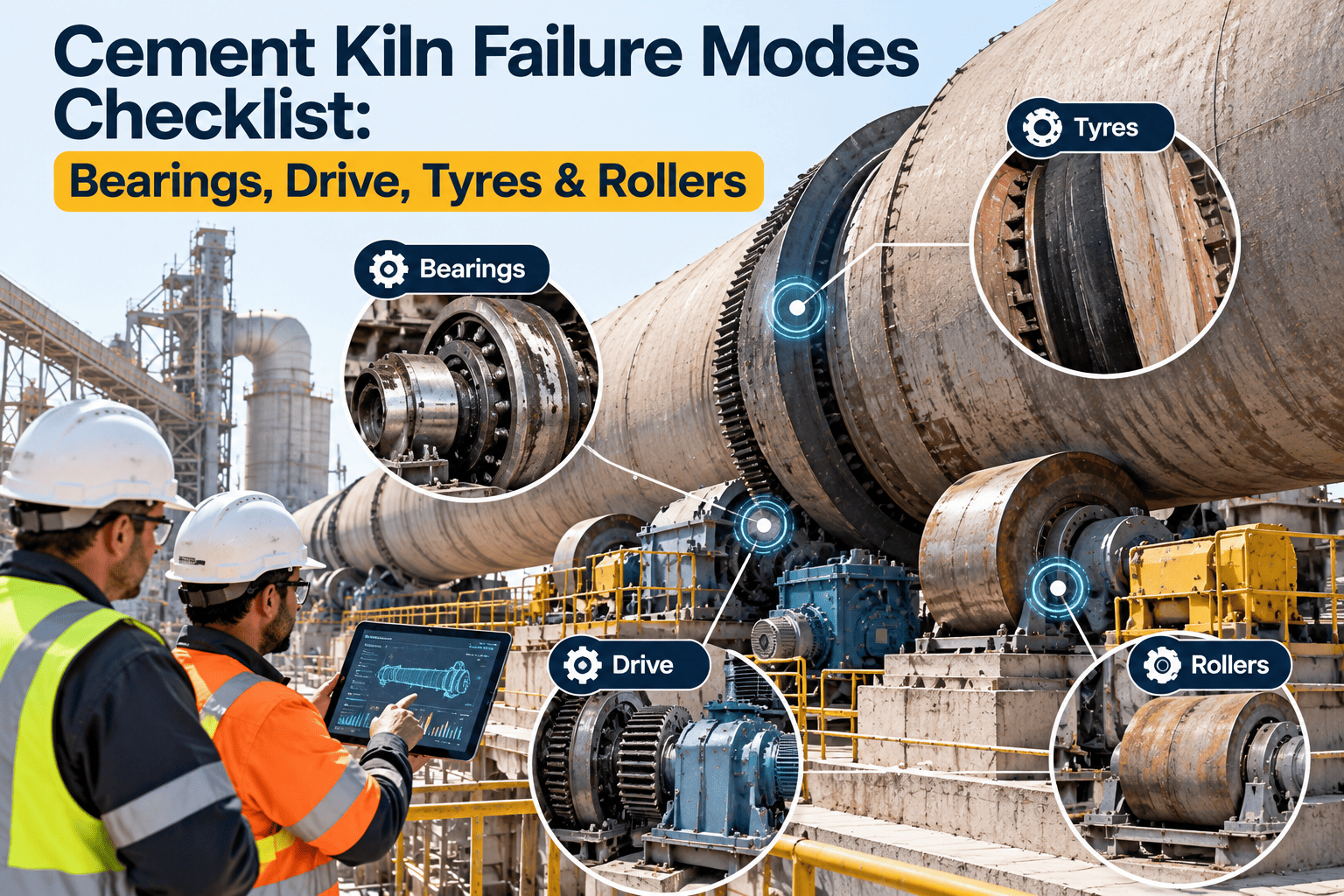
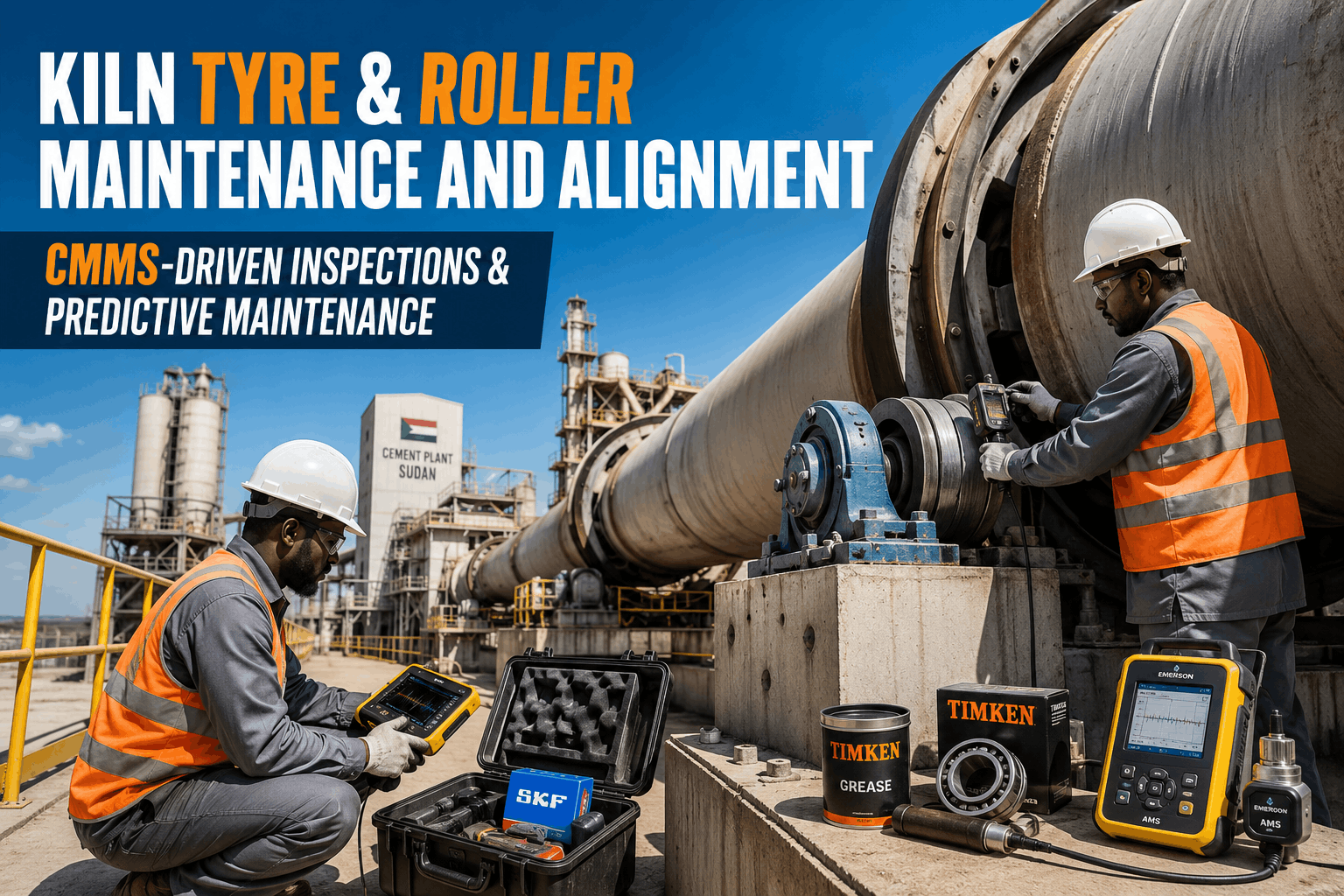
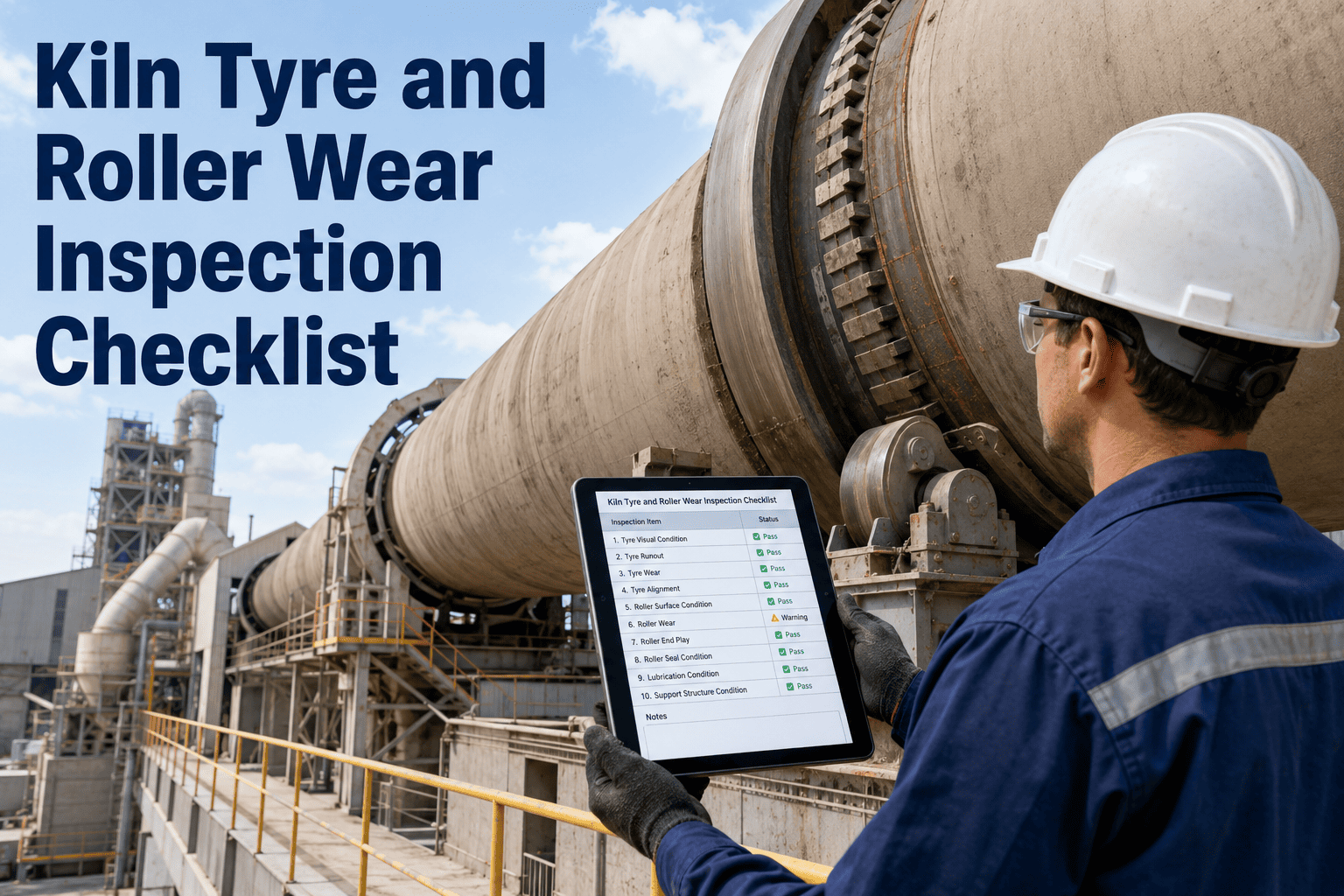
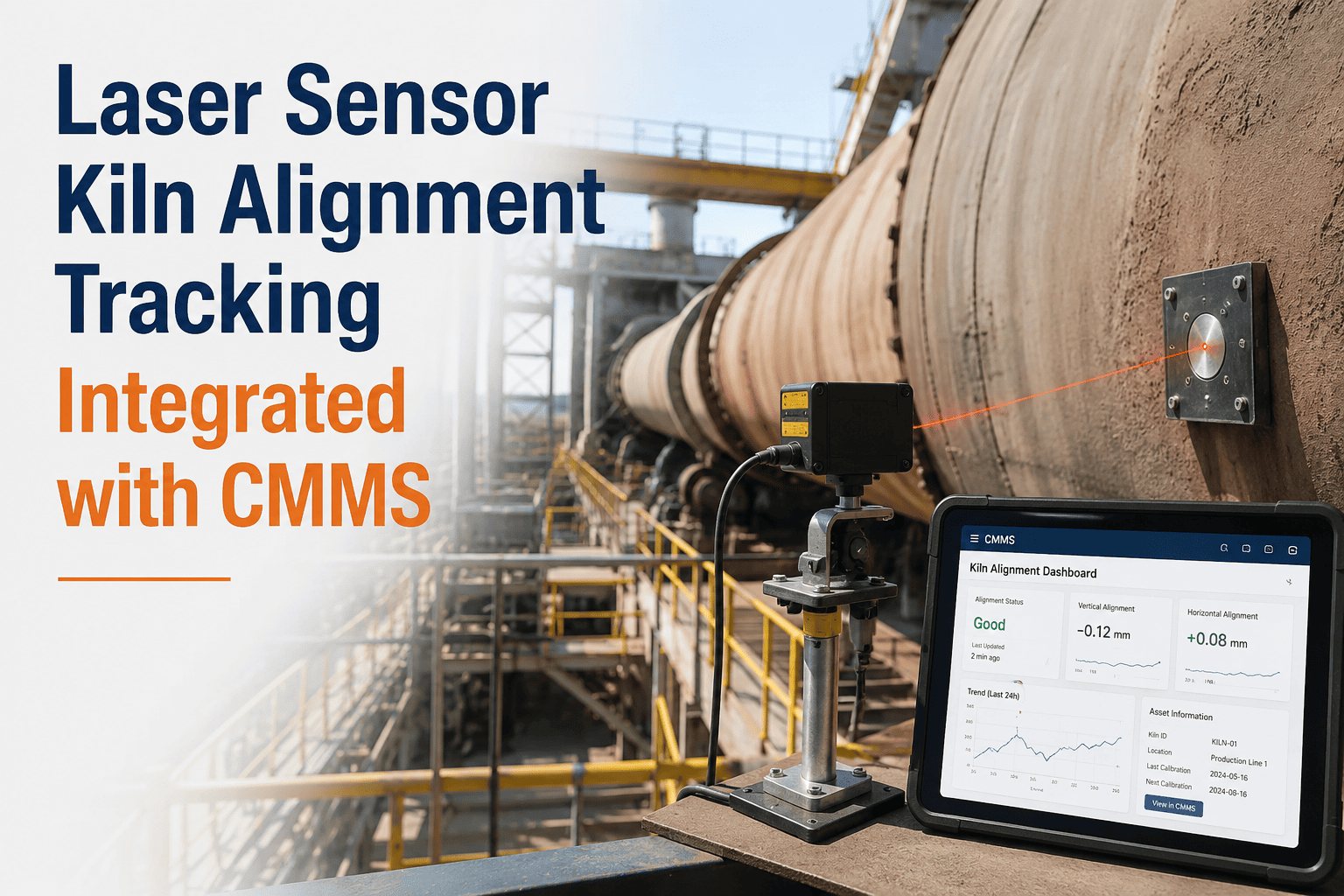
Kiln misalignment costing a North American cement plant $180,000 in unplanned downtime is not an equipment failure — it is a measurement gap that developed over six to eighteen months without a structured trending program. Tyre creep exceeding 50mm per revolution, roller skewing beyond 0.5 degrees, and shell ovality above 0.3 percent of diameter are all detectable weeks before they cause girth gear damage, refractory loss, or bearing seizure. Without logged baseline data and trend alerts, maintenance teams respond to symptoms rather than signatures. Book a demo to see how Oxmaint structures kiln mechanical measurement programs across multi-kiln cement portfolios.
Kiln alignment and tyre/roller maintenance involves the scheduled measurement, trending, and correction of mechanical parameters including tyre migration, roller skew, shell ovality, girth gear backlash, and axial thrust — all tracked against baseline data to detect drift before it causes unplanned downtime. A structured CMMS-based measurement program reduces emergency alignment events by over 60 percent and extends refractory campaign life by reducing thermomechanical stress on the shell.
Why Kiln Mechanical Trending Fails Without a CMMS
Most cement plant alignment failures share one root cause: measurements taken during shutdowns end up in spreadsheets disconnected from work order history, making trend detection impossible across campaigns. Book a demo to see how Oxmaint connects measurement data to kiln asset records.
Tyre creep, roller temperatures, and ovality data stored in shutdown binders cannot be trended across campaigns. Drift goes undetected until failure.
Without a CMMS asset record holding commissioning measurements, technicians cannot calculate drift rate or forecast the correction window.
Roller skew corrections made without trending data are guesswork — often over-correcting and introducing new axial thrust problems on adjacent stations.
Girth gear backlash growing beyond the 12mm action threshold discovered only during inspection, not forecasted — eliminating planned correction lead time.
Log Kiln Measurements Against Asset Records — Live in One Shift
Oxmaint structures your kiln measurement program from first tyre creep reading to rolling 10-campaign trend — no spreadsheets, no disconnected binders. Book a demo to configure your kiln asset hierarchy.
The Six Mechanical Parameters That Drive Kiln Reliability
Each parameter requires a measurement protocol, a baseline record, an action threshold, and a correction window — all managed from Oxmaint's kiln asset profile.
Measured per revolution using mark-and-measure method. Below 20mm is acceptable; 20 to 50mm warrants monitoring; above 50mm requires retaining block inspection or replacement. Oxmaint logs per-campaign creep values and calculates rate of change between shutdowns.
Cross-diameter measurements at tyre stations and mid-span. Above 0.3 percent of shell diameter accelerates refractory wear and seal damage. CMMS trending identifies stations where ovality is growing between campaigns.
Measured as angular deviation of roller axis from kiln centerline. Above 0.5 degrees generates axial thrust and bearing wear. Oxmaint records skew per station and tracks corrections against thrust load history.
Measured at four positions 90 degrees apart. Action threshold typically 10 to 12mm depending on gear module — confirmed against OEM specification in Oxmaint asset record. Backlash trend predicts gear replacement window.
Kiln float measured at uphill and downhill stop positions. Correct float range is typically 25 to 50mm. Out-of-range float indicates roller skew imbalance requiring immediate station adjustment before thrust roller damage occurs.
All roller station bearing temperatures logged per shift. Normal operating range is 40 to 65°C. Above 80°C triggers immediate lubrication check and shutdown risk assessment. Oxmaint stores per-bearing temperature history across campaigns.
How Oxmaint Structures Kiln Mechanical Maintenance
Every kiln component — shell sections, tyre stations, roller stations, girth gear, and thrust rollers — registered in Oxmaint's asset hierarchy with commissioning measurements, OEM tolerances, and action thresholds stored against the asset record. The baseline is the foundation every future measurement is trended against. Book a demo to see how Oxmaint structures the kiln asset registry for your specific kiln size and configuration.
Oxmaint generates kiln measurement work orders on campaign-based triggers — tyre creep checks every shutdown, ovality surveys quarterly, and bearing temperature logs every shift. Technicians complete measurements on mobile with QR-scanned asset confirmation, GPS check-in, and direct numeric entry. No paper, no transcription errors.
Oxmaint's alignment trending engine plots each parameter against baseline across all recorded campaigns, calculating drift rate and projecting the correction window. When tyre creep reaches the 50mm action threshold or girth gear backlash approaches the OEM limit, the system generates a corrective work order automatically — not a spreadsheet flag nobody checks.
Alignment corrections identified during trending feed directly into the Oxmaint shutdown planning module — appearing in the work pack with measurement history, correction specification, and parts requirements. Shutdown teams have evidence-based scope instead of subjective inspection findings. CapEx forecasting dashboard projects roller replacement and gear overhaul investment windows 3 to 5 years forward. Book a demo to see the shutdown work pack integration for kiln mechanical maintenance.
Platform Features for Kiln Alignment and Mechanical Tracking
Tyre creep, ovality, and backlash plotted across all campaigns with drift rate calculation and forecasted action date.
Numeric measurement capture on mobile with asset QR scan, GPS check-in, and direct entry against OEM tolerance stored in the asset record.
Automatic corrective work order generation when any measurement exceeds defined action threshold — tyre creep, backlash, skew, or bearing temperature.
Alignment corrections from trending feed directly into the shutdown work pack with measurement history, specification, and contractor scope attached.
Each station carries its own bearing history, skew correction record, and temperature trend — enabling station-level RUL calculation and replacement forecasting.
Alignment status, outstanding corrections, and measurement compliance across all kilns in the portfolio — visible to the maintenance director from a single dashboard.
KPI Benchmarks — Kiln Mechanical Maintenance
Outcomes — Oxmaint-Deployed Kiln Mechanical Programs
Investment vs Return — Kiln Mechanical Trending Program
| Component | Planned Intervention Cost | Emergency / Reactive Cost | Annual Saving |
|---|---|---|---|
| Tyre retaining blocks | $8,000 planned replacement | $45,000 plus downtime from tyre drop event | Up to $37,000 avoided per kiln |
| Girth gear overhaul | $180,000 planned at campaign | $420,000 emergency including rental gear | Up to $240,000 avoided per event |
| Roller bearing replacement | $12,000 planned per station | $85,000 emergency including kiln stop | $73,000 avoided per bearing event |
| Alignment hot correction | $22,000 scheduled specialist | $180,000 forced stop plus correction | Up to $158,000 avoided per event |
| Oxmaint measurement program | $28,000 per year per kiln | Prevention platform | $300,000 to $500,000 combined avoidance |
Campaign-Based Measurement Scheduling — Configured in 3 Days
Oxmaint loads your kiln asset registry, configures measurement work orders per campaign cycle, and activates threshold alerting against your OEM tolerances — all before the next scheduled shutdown. Book a demo to see the configuration timeline for your kiln portfolio.
Frequently Asked Questions
Continue Reading
Connected resources in the cement plant kiln and pyroprocessing maintenance cluster
Stop Managing Kiln Alignment from Disconnected Spreadsheets
Tyre creep trending, girth gear backlash logging, roller skew history, and CapEx forecasting for roller and gear replacement — all live in Oxmaint within 3 to 5 days, no hardware required. Book a demo with your kiln maintenance team and see the full mechanical measurement program configured for your kiln specifications.