Rotary kiln failures are the most expensive unplanned events in cement manufacturing — a single uncontrolled shell overheat or refractory collapse can mean 5 to 14 days of lost production worth $1.4M to $4.8M per event, plus emergency refractory costs and forced shutdown labour. Yet most cement plants still track kiln shell temperatures on paper logs, manage refractory campaigns in spreadsheets, and have no automatic link between sensor readings and maintenance work orders. Book a demo to see how Oxmaint connects kiln sensor data to automated work orders and refractory life tracking.
Rotary kiln maintenance software is a CMMS configured for cement kilns that tracks shell temperature profiles against refractory thickness records, manages drive system PM intervals for the girth gear, support rollers and trunnion bearings, and routes sensor threshold alerts directly to timestamped work orders. Unlike generic maintenance platforms, a kiln-specific CMMS stores zone-by-zone refractory campaign data, calculates remaining lining life per kiln section, and produces the audit trail required for refractory warranty claims and insurance inspections.
Why Kiln Maintenance Breaks Down Without Dedicated Software
Kilns are the most asset-complex piece of equipment in cement manufacturing — one kiln integrates refractory, mechanical drive, shell structural, bearing, and process chemistry systems, each with distinct failure modes and inspection intervals. Generic CMMS platforms were not built for this. Book a demo to see how Oxmaint structures kiln asset hierarchies with zone-level refractory tracking.
Shell scanner temperatures mean nothing without the corresponding brick thickness record. Without linked data, a 280°C reading could indicate 90% remaining lining or 40% — the response is entirely different and one requires an emergency stop.
Girth gear lubrication, support roller skewing, tyre fillet clearance, and trunnion bearing oil changes each sit in different spreadsheets or paper routes. One missed girth gear spray interval costs $180K to $420K in tooth replacement at US labour rates.
Without campaign-to-campaign brick thickness records logged per kiln zone, there is no way to calculate remaining lining life or predict the next relining date. Capital budget requests for refractory programmes fail at board level without this data.
Shell scanners and bearing temperature sensors generate alerts that operators acknowledge in the DCS and then log on paper — or do not log at all. Zero documented corrective action trail means zero warranty claim evidence and zero audit defence.
Connect Your Kiln Sensors to Automatic Work Orders
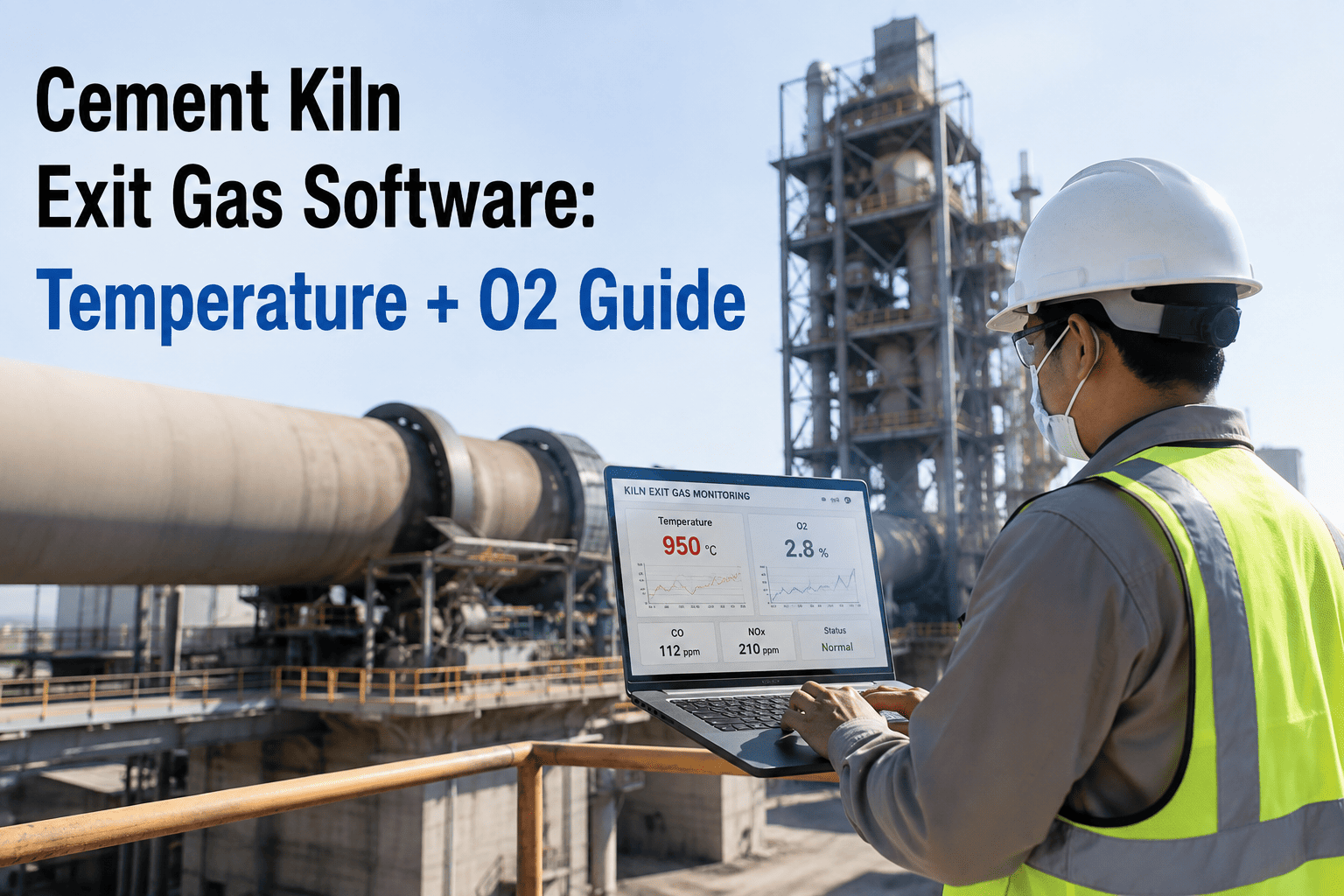
Shell temperature thresholds, bearing alarms, and refractory zone flags auto-generate timestamped Oxmaint work orders — closing the gap between detection and documented corrective action at every kiln stop and running shift. Book a demo to see kiln sensor integration configured for your plant.
Three Kiln Systems Oxmaint Tracks in One Platform
Each system has its own failure modes, monitoring intervals, and documentary requirements. Oxmaint structures them under a single kiln asset hierarchy so inspection records, PM schedules, and sensor alerts share one source of truth.
Oxmaint ingests shell scanner data via OPC-UA and maps readings to the corresponding refractory zone record. Each zone stores brick type, installation date, campaign thickness measurements, and calculated remaining life. When a shell temperature reading exceeds the zone-specific threshold — adjusted for current brick thickness — the system generates a prioritised work order with zone reference, temperature reading, and brick life estimate pre-populated. Campaign-to-campaign thickness trending shows wear rate per zone so the next relining date can be forecast with accuracy.
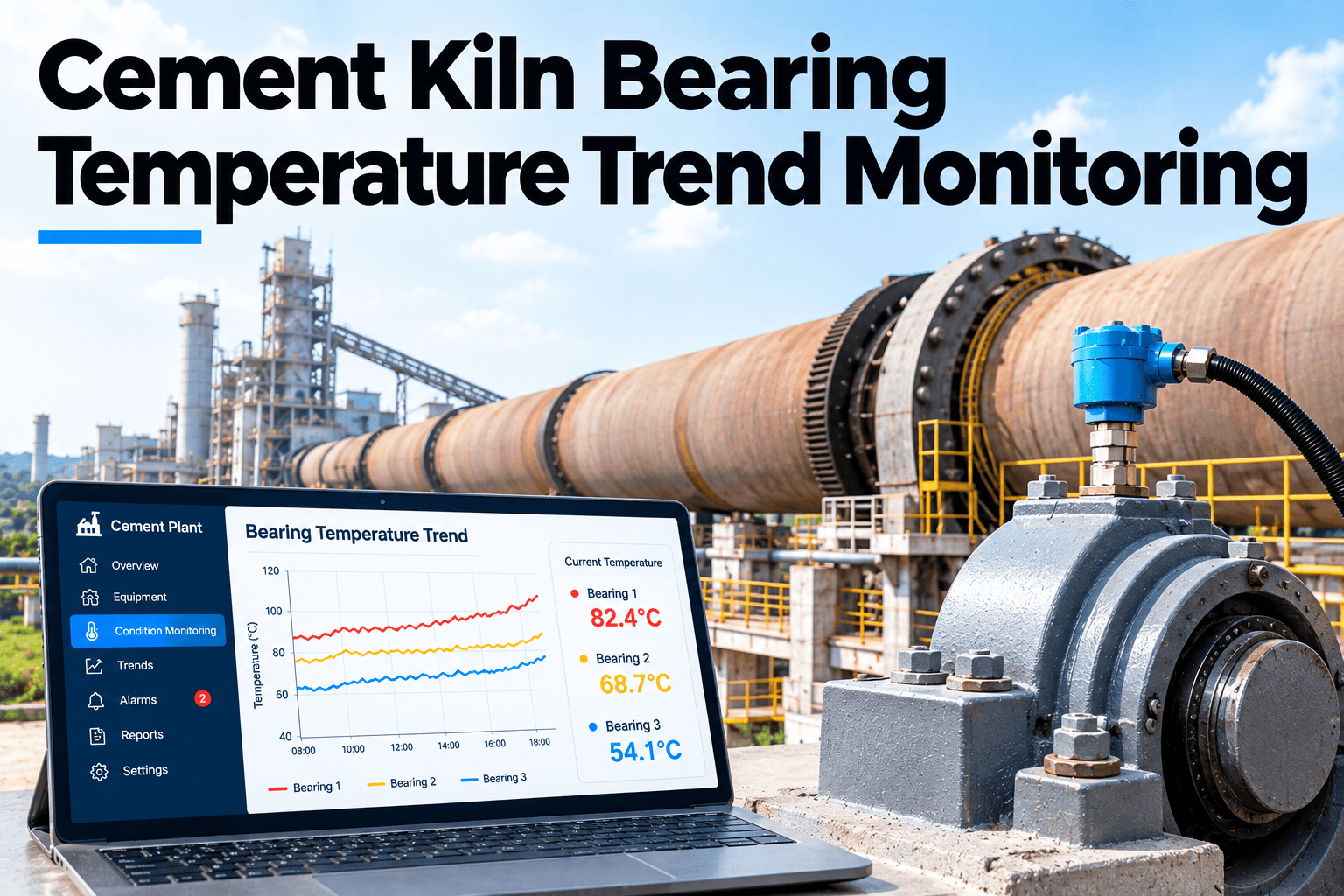
The kiln drive train — girth gear, pinion, support rollers, trunnion bearings, and tyre fillet pads — each have different lubrication intervals, measurement frequencies, and failure consequence levels. Oxmaint generates PM work orders per component on running-hour triggers with escalating alerts at 48, 24, and 6 hours before deadline. Girth gear backlash, support roller skew position, tyre migration rate, and bearing temperature readings are all logged against the component record. Bearing temperature trending triggers a condition alert when the rate of change exceeds the configured limit — not just when an absolute threshold is crossed.
Burner misalignment and flame shape deviation are the primary upstream causes of premature burning zone refractory wear — yet they are rarely tracked with the same rigour as mechanical systems. Oxmaint tracks burner inspection intervals, flame position reading records, coal gun condition checks, and primary air system calibrations. Every burner intervention is timestamped and linked to the refractory condition data for that campaign — so the relationship between burner state and zone wear can be analysed across campaigns to support root-cause investigations and refractory specification decisions.
How Oxmaint Works for Kiln Maintenance
Platform Capabilities for Kiln Operations
Zone-by-zone shell temperature map updated on each scanner cycle. Threshold exceedances colour-coded by severity. Historical trend overlay shows whether a hot zone is stable, rising, or accelerating. PM compliance on shell monitoring reaches 94% within 60 days of deployment.
Zone-level brick records with installation date, specification, campaign measurement history, and calculated remaining life. Campaign-to-campaign wear rate trending per zone. Automatic relining forecast alert when remaining life drops below the planning threshold configured by the maintenance engineer.
Running-hour and calendar-triggered PM for girth gear, support rollers, tyres, and bearings. Escalating alerts at 48, 24, and 6 hours before deadline. Drive PM compliance at Oxmaint cement sites averages 91% versus 58% at comparable sites without structured scheduling.
Continuous temperature logging per bearing station with rate-of-change alerting. A bearing rising at 3°C per week triggers an alert at week 3 — not when it hits the absolute threshold at week 7 when the failure window is already narrow. Measurement history exportable for insurance and warranty claims.
Pre-built kiln stop inspection templates covering all seven zones — burning zone, upper and lower transition, nose ring, inlet, mechanical, and cooler throat. Mobile completion with photo upload at each measurement point. All findings auto-routed to corrective work orders before the inspection team leaves the kiln.
Remaining lining life data feeds directly into the 5-year CapEx dashboard with relining cost projections per zone. Refractory CapEx requests backed by measurement data carry 88% board approval rate versus 47% for estimate-based submissions — the difference between campaign-based trending and guesswork.
KPI Benchmarks: Kiln Maintenance Performance
Performance Outcomes — Oxmaint-Deployed Kiln Sites
Investment vs Return: Kiln Maintenance Software
| System or Intervention | Planned Cost | Emergency or Deferred Cost | Annual Saving |
|---|---|---|---|
| Burning zone relining | $180K planned at scheduled stop | $620K to $1.4M emergency collapse scenario | Up to $1.2M avoided per event |
| Girth gear tooth set | $22K annual lubrication program | $180K to $420K emergency tooth replacement | $158K to $398K per cycle avoided |
| Support roller bearing | $4.8K planned replacement per station | $38K to $95K emergency including downtime | $33K to $90K per event avoided |
| Kiln axis alignment | $6K annual laser survey | $240K to $480K tyre and shell damage | Protective value across campaign |
| Oxmaint kiln module | $28K to $62K per year for 1 to 2 kiln lines | Prevention and condition tracking platform | $380K to $1.8M combined avoidance per site |
Kiln Refractory and Drive Data in One Maintenance Platform
Shell temperature thresholds linked to brick thickness records, drive PM on running-hour triggers, and campaign-to-campaign lining wear trends — all from a single Oxmaint deployment. Book a demo configured for your kiln specification and drive train layout.
Frequently Asked Questions
Continue Reading
68% Fewer Kiln Stops. Shell Alerts to Work Orders in Under 4 Minutes.
Kiln shell temperature zones linked to refractory thickness records, drive PM on running-hour triggers, and campaign lining wear trending — deployed in 3 to 5 weeks without touching your control room infrastructure.