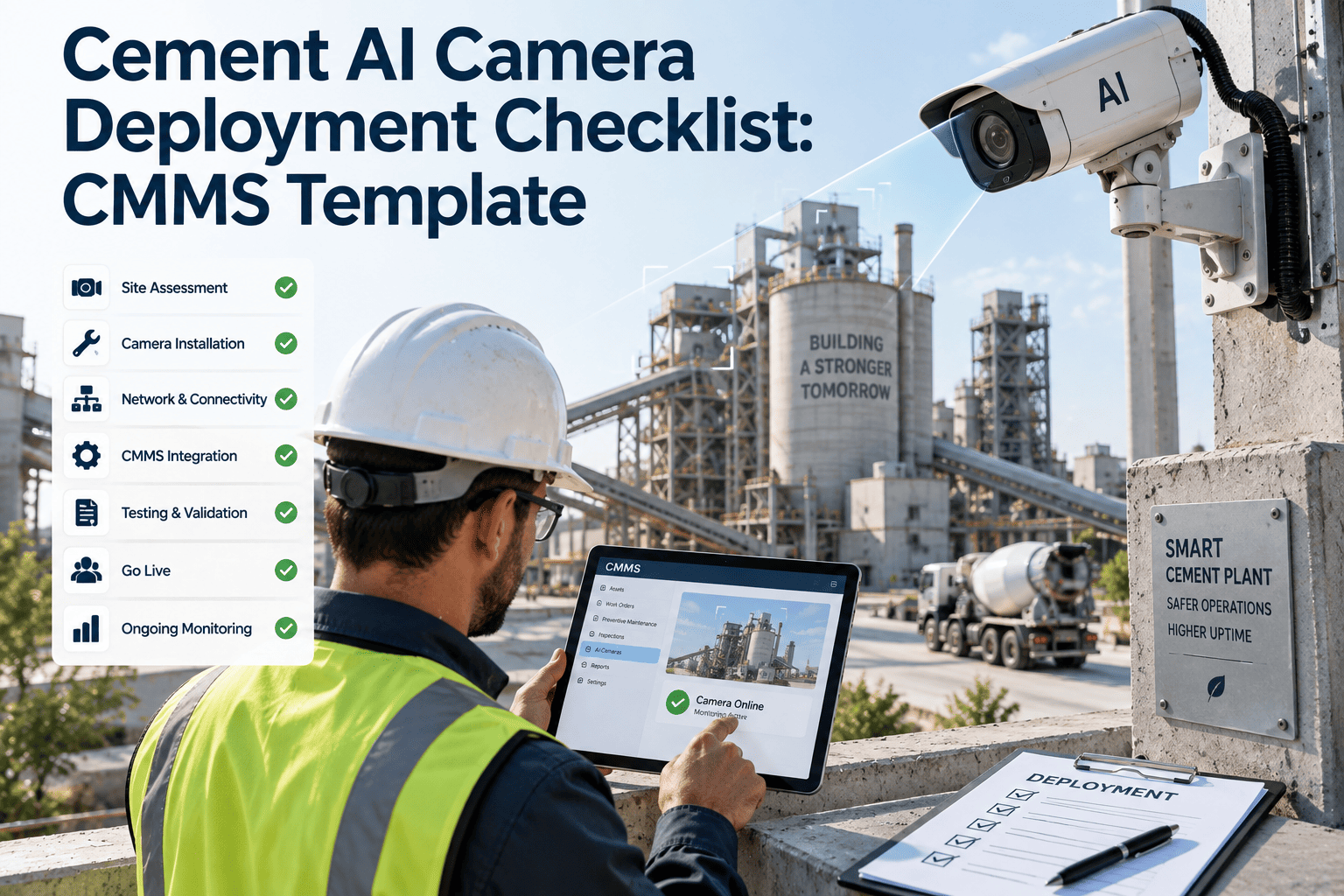
Cement plants run some of the most mechanically demanding operations in heavy industry — kiln temperatures above 1,400°C, refractory linings that degrade unpredictably, AFR feed systems, and regulatory frameworks spanning NESHAP, MSHA, and ISO 50001. A modern CMMS built for cement engineering is not a ticketing tool — it is the operational backbone that connects asset data, compliance records, CapEx planning, and ESG reporting into a single live system. Sign Up Free and connect your cement plant's maintenance workflows to OxMaint today.
Generic CMMS platforms built for warehouses or facilities management consistently underperform in cement environments. Kiln drive systems, raw mill circuits, preheater towers, and clinker coolers each carry failure modes that require asset-specific PM logic, spare parts pre-positioning, and compliance traceability that a generic work order tool cannot provide. According to the Global Cement and Concrete Association, unplanned kiln stops cost an average of $120,000 per day in lost production. A CMMS purpose-fitted for cement operations — with kiln campaign tracking, refractory wear logging, and NESHAP permit condition monitoring — directly reduces that exposure.
01
Rotary Kiln Campaign and Shell Monitoring
A rotary kiln campaign can run 12 to 18 months before a major refractory reline is required. A CMMS tracks shell temperature profiles, brick wear data from infrared scans, and historical campaign lengths to predict the optimal stop window — preventing costly uncontrolled failures mid-campaign. OxMaint links kiln asset records to refractory thickness logs and generates pre-stop work orders automatically as campaign milestones approach.
02
Refractory Lining Lifecycle and Replacement Tracking
Refractory lining replacement is one of the largest maintenance CapEx items in a cement plant — often $2M to $5M per kiln reline. A CMMS maps refractory zones, tracks material specifications, logs each zone's wear history, and builds a replacement cost model that feeds directly into CapEx planning. Detailed lining records also support warranty claims and vendor accountability.
03
Alternative Fuel and Raw Material (AFR) System Maintenance
AFR feed systems — shredders, conveyors, dosing equipment, and high-temperature injection points — carry elevated failure rates due to abrasive, variable-quality fuel streams. A CMMS schedules component inspections based on AFR throughput tonnage rather than calendar time, tracks wear part life, and triggers replacement before process disruption.
04
NESHAP and Air Permit Compliance Tracking
EPA NESHAP regulations for Portland cement manufacturing require continuous emissions monitoring, stack test scheduling, fabric filter inspection records, and opacity log maintenance. A CMMS stores all compliance-linked maintenance tasks against permit conditions — generating audit-ready reports without manual data assembly. Missed inspection deadlines trigger automatic escalations, reducing regulatory risk.
05
MSHA Safety Inspection and Corrective Action Workflows
MSHA regulations require documented inspection rounds for electrical systems, conveyor guarding, dust suppression, and mobile equipment. A CMMS digitises inspection routes, captures findings against specific asset records, generates corrective work orders instantly, and produces compliance reports that demonstrate due diligence during MSHA audits — reducing citation risk.
06
Vertical Raw Mill and Cement Mill PM Scheduling
Vertical roller mills and ball mills account for 30–40% of a cement plant's total energy consumption. A CMMS manages roller segment replacement intervals based on running hours and feed hardness, schedules separator bearing inspections, tracks grinding media additions, and logs classifier performance data — ensuring optimal mill availability and specific energy consumption.
07
Gearbox and Large Drive System Condition Monitoring Integration
Kiln main drives, raw mill reducers, and clinker cooler drives are high-value, long-lead assets. A CMMS integrates with vibration monitoring and oil analysis systems to receive condition alerts and automatically generate predictive maintenance work orders — closing the loop between sensor data and maintenance action without manual intervention.
08
Clinker Cooler Grate Plate and Fan Management
Clinker cooler grate plates wear unevenly due to clinker size distribution and temperature gradients. A CMMS tracks individual grate plate positions, wear history, and replacement dates across the full cooler width — enabling zone-based replacement strategies that extend overall grate life and maintain cooler efficiency without full-cooler shutdowns.
09
CapEx and Major Shutdown Planning
Annual and biennial kiln stops are multi-week, multi-million-dollar events requiring hundreds of work orders, contractor coordination, and material pre-positioning. A CMMS builds the entire shutdown work scope from asset history and FMEA findings, manages contractor access permits, tracks progress in real time, and captures post-shutdown as-built records for future planning.
10
Spare Parts and Critical Inventory Management
Long-lead critical spares — kiln tyres, riding rings, main gear segments, large motor windings — can have 16–52 week lead times. A CMMS links spare parts to asset failure modes, monitors inventory levels, triggers reorder alerts, and tracks spare condition to prevent shelf degradation — ensuring critical parts are available when an unplanned failure occurs.
11
ESG and Scope 1 Emission Reduction Reporting
Cement production is among the most emissions-intensive manufacturing sectors. A CMMS supports ESG programmes by tracking specific energy consumption per tonne of clinker, logging AFR substitution rates, recording CO₂ reduction initiatives, and generating structured data exports for GHG reporting frameworks — connecting maintenance decisions to sustainability KPIs.
12
Audit-Ready Asset and Maintenance Record Management
ISO 9001, ISO 50001, and cement-sector audit frameworks require full traceability of maintenance actions, calibration records, contractor qualifications, and permit documentation. A CMMS stores every work order, inspection, and corrective action against the specific asset — enabling auditors to retrieve complete asset histories in minutes rather than searching through paper files or disconnected spreadsheets.