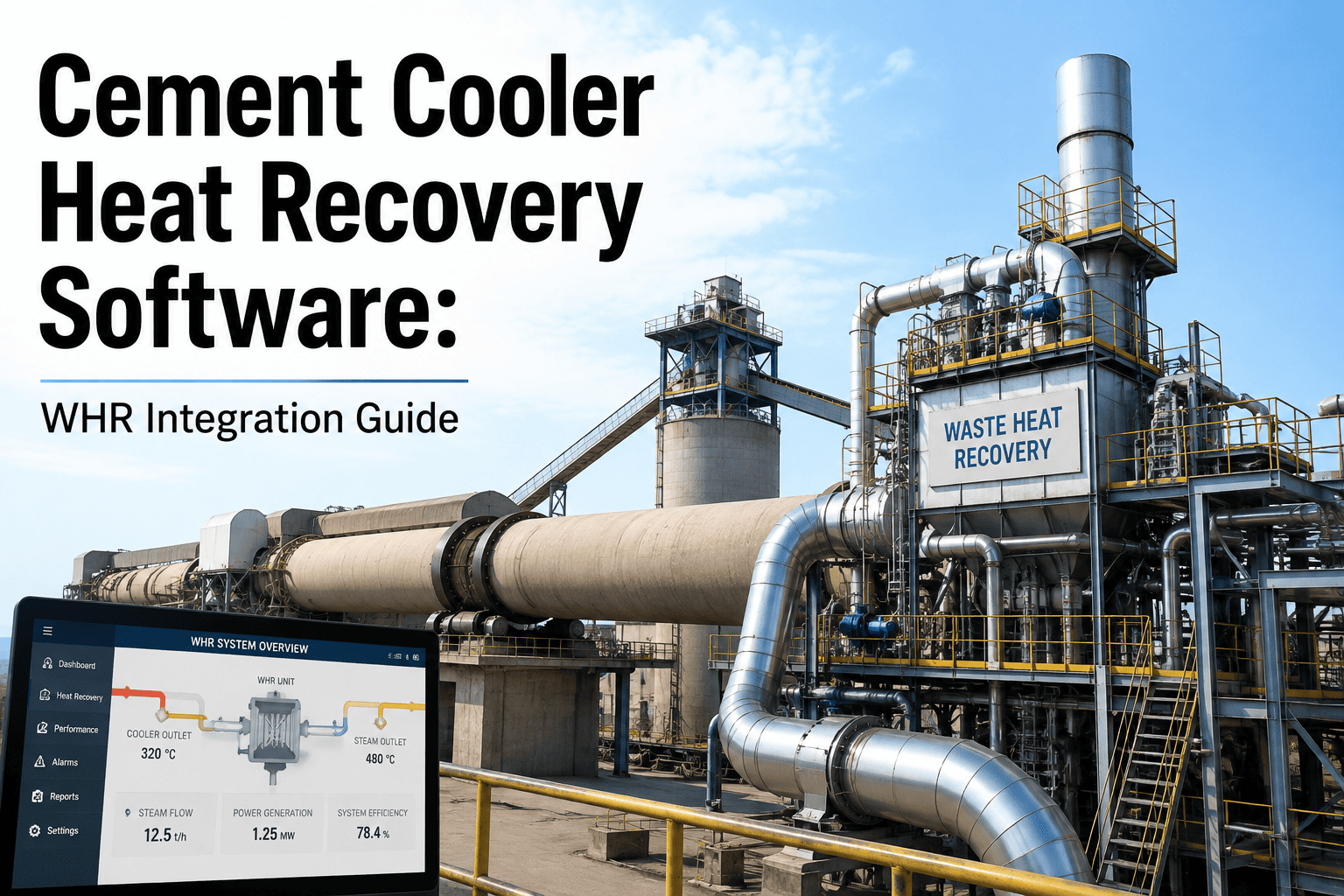
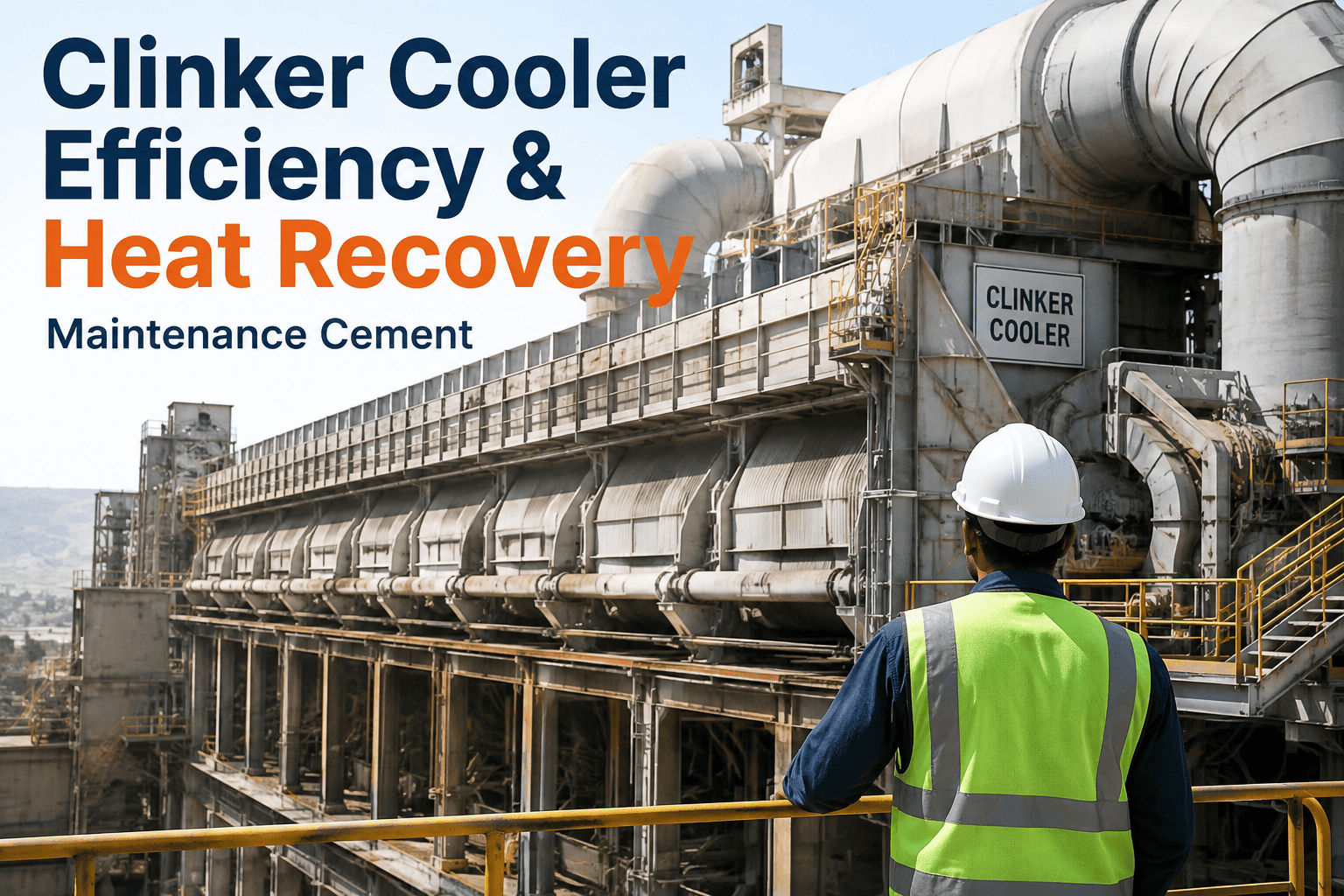
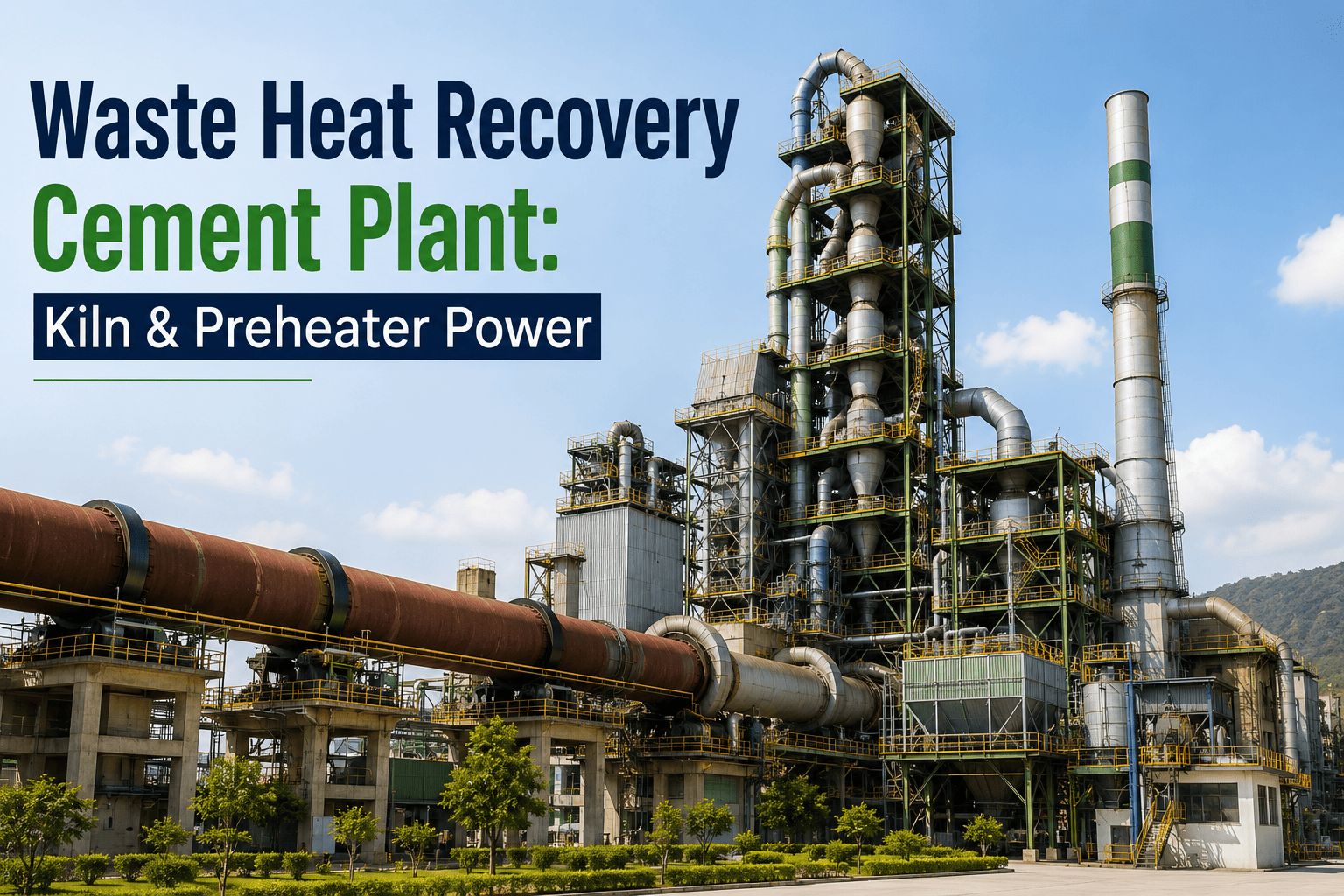
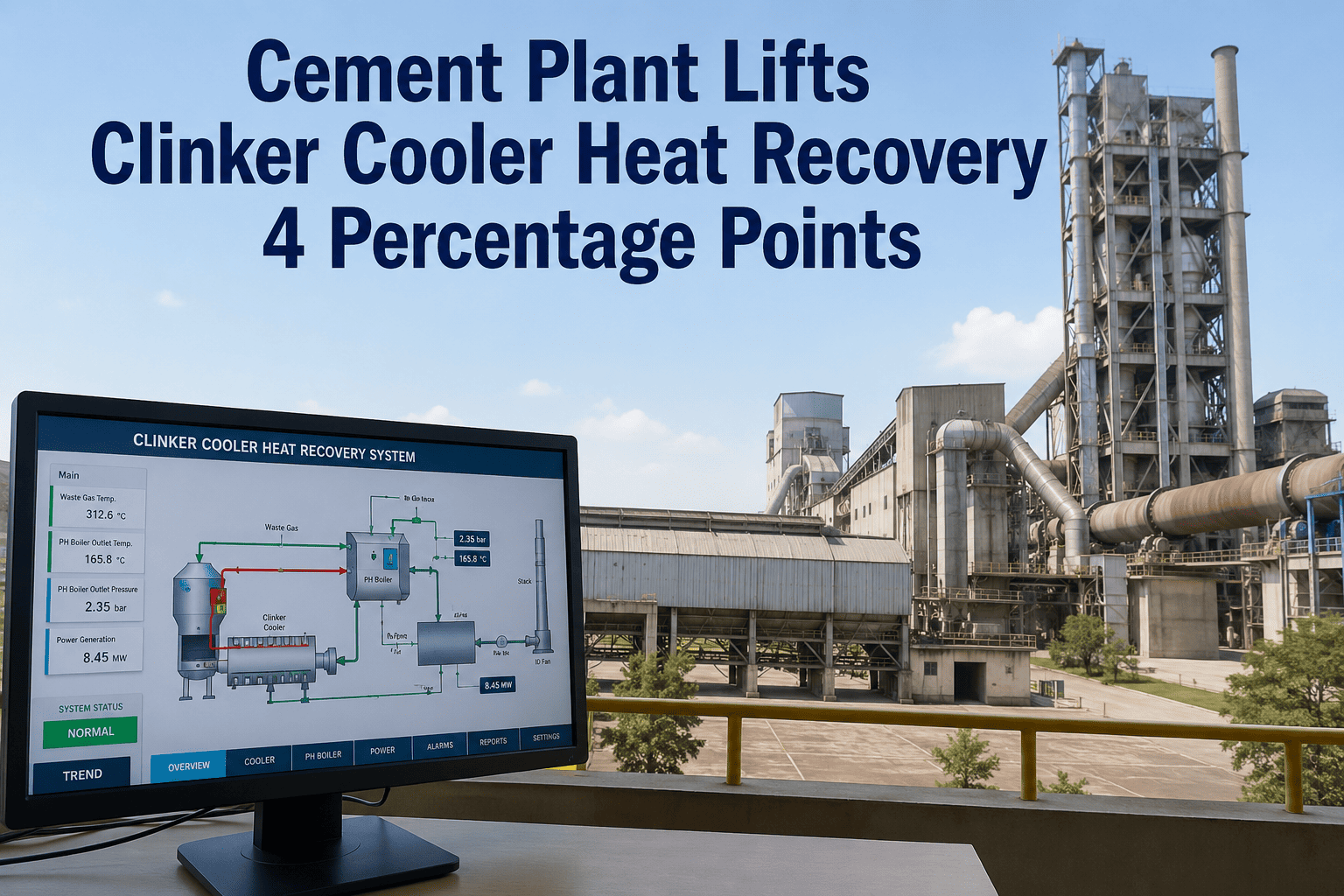
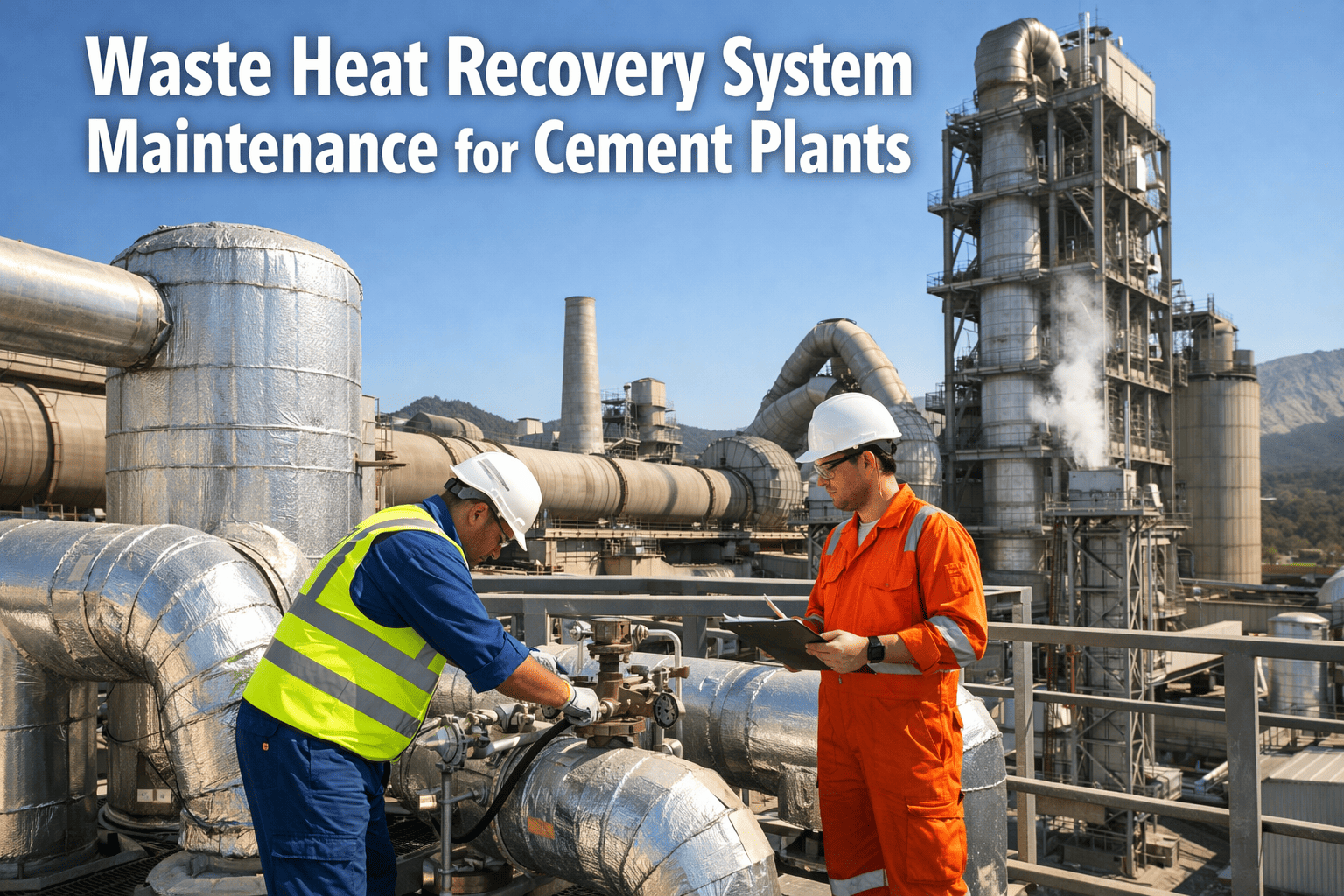
Cement manufacturing is one of the most energy-intensive industrial processes on the planet, and nearly 40% of the total thermal energy input is lost as waste heat through preheater exhaust gases and clinker cooler vents. That is not a minor inefficiency — for a typical 1 million tonne per year plant, it represents over 60 MW of recoverable thermal energy escaping into the atmosphere. The global cement waste heat recovery system market was valued at $15.8 billion in 2024 and is projected to reach $32.6 billion by 2034, growing at 7.7% CAGR — driven by rising energy costs, tightening carbon regulations, and proven payback periods as short as 14 months. Over 70% of cement plants in Europe have already adopted some form of waste heat recovery. WHR systems can supply 25–30% of a cement plant's total electrical power demand, reduce indirect CO2 emissions by up to 63%, and cut clinker production costs by 3.8–7.5%. Unlike solar or wind, WHR generates power around the clock as long as the kiln is running. The cement industry alone has an estimated WHR potential of 17.15 TWh per year. Despite these numbers, many plants — particularly in emerging markets — have yet to implement WHR, leaving massive energy and cost savings on the table. Sign up for Oxmaint to track WHR system performance, schedule heat exchanger and turbine maintenance, and ensure your recovery system runs at peak efficiency year-round.
Waste Heat Recovery Systems for Cement Plants
Energy Efficiency, Technology Selection & Maintenance Planning Guide
$15.8B
Global cement WHR market value in 2024, projected to reach $32.6B by 2034
25–30%
Of a cement plant's electrical demand that WHR can supply from recovered heat
63%
Reduction in indirect CO2 emissions achievable through WHR implementation
14 mo
Documented payback period for WHR boiler retrofits at current fuel prices
Where the Heat Goes: Cement Plant Energy Flow
Understanding where recoverable heat exists is the first step in designing or evaluating a WHR system. In a dry-process cement plant, the kiln operates at approximately 1,400°C to convert raw meal into clinker. After tertiary use for raw material drying and coal mill heating, exhaust gases still exit at 250–400°C — far too hot to waste, and perfectly suited for power generation or process pre-heating. The two primary heat sources are the preheater exhaust and the clinker cooler mid-section vent.
Preheater Exhaust
280–400°C
Hot gases exiting the top cyclone stage after raw meal preheating. Contains significant thermal energy — the primary WHR source in most installations.
~55% of recoverable heat
WHR System
Heat Recovery Boiler
Steam Turbine / ORC
Generator
Electrical Output
7–13 MW
Per million-tonne annual capacity. Supplies 25–30% of plant electrical demand. Reduces grid dependency and energy costs.
Continuous generation 24/7
Clinker Cooler Vent
250–350°C
Hot air from the clinker cooling process after tertiary air extraction. The second major WHR source — lower temperature but high volume airflow.
~45% of recoverable heat
Recovery Options
ORC Power Generation
Raw Material Drying
Steam for Process Use
Total Savings
16–30%
Reduction in plant energy costs. Combined preheater and cooler recovery delivers the highest ROI. Payback in 14–36 months depending on scale.
CO2 reduction: up to 63%
WHR Technology Comparison
Three primary technologies compete for cement plant WHR applications, each suited to different temperature ranges, plant sizes, and capital budgets. Organic Rankine Cycle systems dominate the market with approximately 40% share in 2025 due to their efficiency at low-to-medium temperatures — the exact range where cement plant waste heat sits. Book a demo to see how Oxmaint tracks performance metrics and maintenance schedules for each WHR technology type.
Steam Rankine Cycle
Temperature Range300–600°C
Electrical Efficiency18–25%
Best Suited ForLarge plants (>3,000 TPD) with high-temperature preheater exhaust
Capital CostHigher initial investment, lower operating cost per kWh
Market Share~35% of installations
Maintenance NeedsBoiler tube inspection, water treatment, turbine blade checks, condenser cleaning
Payback Period24–42 months
Organic Rankine Cycle (ORC)
Temperature Range150–350°C
Electrical Efficiency12–20%
Best Suited ForMedium plants and clinker cooler recovery where temperatures are lower
Capital CostModerate — best efficiency-to-cost ratio for cement applications
Market Share~40% of installations (dominant)
Maintenance NeedsHeat exchanger fouling, organic fluid degradation monitoring, pump seals, condenser maintenance
Payback Period14–30 months
Thermoelectric Generators (TEG)
Temperature Range100–300°C
Electrical Efficiency5–8%
Best Suited ForSmall-scale recovery, remote sensors, supplementary power where moving parts are undesirable
Capital CostLow per unit — but lower output requires more modules for meaningful generation
Market Share~5% (fastest growing segment)
Maintenance NeedsMinimal — no moving parts. Module replacement, connection inspection, surface cleaning
Payback Period36–60 months
The Business Case: ROI and Cost Impact Analysis
The financial case for WHR in cement plants is built on three pillars: direct electricity cost savings, carbon credit value, and reduced clinker production cost. A 2024 techno-economic analysis of a 1 Mt/year cement plant found total recoverable waste heat of 60.52 MW, capable of generating nearly 13 MW of electrical power — enough to meet 25–30% of the plant's demand. Sign up for Oxmaint to track your WHR system's actual power output against design capacity and identify efficiency degradation before it erodes your ROI.
Clinker Cost Reduction
3.8–7.5%
Clinker production cost drops from $58.20 to $55.98 per tonne (3.81% direct), with levelized cost reduction reaching 7.49% when lifecycle benefits are included. For a 1 Mt plant, this translates to $2.2–$3.5 million in annual savings.
63%
CO2 Emission Reduction
Annual indirect emissions reduced from 81,440 tonnes to 29,900 tonnes of CO2. At current carbon credit prices ($50–$100/tonne in EU ETS), this represents $2.5–$5.1 million in additional annual value or avoided compliance costs.
Energy Independence
25–30%
Share of plant electrical demand supplied by WHR. Unlike solar or wind, WHR produces power continuously 24/7 while the kiln operates. Reduces exposure to grid price volatility and supply interruptions in regions with unreliable power infrastructure.
Key Insight
At full potential, WHR across the Indian cement industry alone could replace energy equivalent to 8.6 million tonnes of coal and save 12.8 million tonnes of CO2 emissions annually — with a total generation potential of 1.3 GW.
Protect Your WHR Investment with Proactive Maintenance
WHR systems require consistent maintenance to deliver their designed energy output. Heat exchanger fouling, turbine efficiency loss, and fluid degradation all erode performance silently. Oxmaint schedules every inspection, logs every reading, and alerts you the moment efficiency drops below your defined threshold.
WHR System Maintenance Requirements
Operational disruptions and maintenance downtime are the primary risks to WHR system ROI. Heat exchangers, turbines, and control systems all require regular inspection and servicing to prevent performance degradation. In cement plant environments, the additional challenge of high dust loading accelerates fouling and wear on heat transfer surfaces. Book a demo to see how Oxmaint automates WHR maintenance scheduling with meter-based and calendar triggers.
Heat Recovery Boilers
DailyMonitor flue gas inlet/outlet temperatures, steam pressure and flow rate, feedwater quality parameters
WeeklyInspect soot blower operation and effectiveness. Check tube surface cleanliness through inspection ports.
MonthlyWater chemistry analysis — hardness, dissolved oxygen, pH, conductivity. Inspect economizer and superheater sections for fouling.
QuarterlyThermal performance test — compare actual heat recovery against design capacity. Inspect tube thickness at erosion-prone locations.
AnnualFull internal inspection during kiln shutdown. Non-destructive testing of tube welds. Refractory assessment in high-temperature zones.
Steam Turbines & ORC Expanders
DailyMonitor bearing temperatures, vibration levels, oil pressure, and electrical output against design capacity
MonthlyLube oil sampling — wear metals, moisture, viscosity, particle count. Inspect control valves and steam traps.
QuarterlyVibration analysis and trending on all bearing positions. Turbine efficiency calculation from actual operating data.
AnnualTurbine internal inspection — blade condition, nozzle wear, seal clearances. For ORC: working fluid analysis and top-up.
3–5 YearsMajor overhaul — bearing replacement, blade refurbishment, valve rebuild, generator inspection and testing.
Heat Exchangers & Condensers
DailyMonitor approach temperatures (inlet vs. outlet differential) — narrowing approach signals fouling buildup
MonthlyCheck condenser vacuum levels and cooling water flow rates. Inspect cooling tower condition and water treatment.
QuarterlyClean heat exchanger surfaces — both gas-side (dust/soot) and water-side (scale). Document fouling rate trends.
AnnualFull tube bundle inspection. Eddy current or ultrasonic testing for wall thinning. Gasket and expansion joint replacement as needed.
Implementation Considerations for Cement Plant WHR
WHR implementation is not a plug-and-play project. It requires careful integration with the existing kiln process, gas handling system, and electrical infrastructure. The following factors determine whether a WHR installation delivers its promised returns or underperforms.
Kiln Line Compatibility
WHR extracts heat from the gas stream, which can affect preheater performance and raw mill drying capacity. System design must ensure that heat extraction does not reduce kiln thermal efficiency or create condensation problems in downstream ductwork. Five-stage cyclone preheaters operating at 380°C are the most favorable configuration for WHR — recovering exhaust heat to pre-heat raw materials to 900°C reduces kiln fuel demand by 7.8%.
Dust Loading & Gas Quality
Cement kiln exhaust carries heavy dust loads that rapidly foul heat exchanger surfaces. Boiler tube design must account for erosion from abrasive particles and include effective soot blowing systems. Gas conditioning (temperature control, dust removal) upstream of the WHR boiler significantly extends maintenance intervals and protects system efficiency.
Water Availability & Treatment
Steam-based WHR systems require consistent feedwater supply meeting boiler chemistry specifications. Plants in water-scarce regions must evaluate air-cooled condensers or dry cooling systems, which reduce electrical output by 5–15% but eliminate water consumption. ORC systems with closed-loop organic fluid circuits require less water than steam Rankine systems.
Electrical Grid Integration
WHR-generated power must synchronize with the plant's electrical distribution system and potentially with the external grid. Load following capability, power quality (voltage and frequency stability), and protection system coordination all require engineering during the design phase. Plants with unstable grid connections benefit most from WHR as a self-generation hedge against supply interruptions.
Space & Layout Constraints
WHR equipment — boilers, turbine house, cooling systems, and ductwork — requires significant footprint adjacent to the preheater and cooler. Unlike solar installations requiring 17,000+ hectares for equivalent capacity, WHR systems fit within the existing plant boundary. However, retrofitting into congested brownfield layouts requires careful 3D modeling and construction sequencing.
Regulatory & Carbon Credit Value
WHR qualifies for carbon credits under multiple frameworks (CDM, VCS, Gold Standard) and receives regulatory incentives in many jurisdictions. EU ETS carbon prices at $50–$100/tonne make the emission reduction value of WHR substantial — potentially equaling the direct electricity savings. Plants operating under or anticipating carbon pricing should factor this value into ROI calculations.
Keep Your WHR System Running at Design Capacity
Every percentage point of efficiency lost to fouled heat exchangers, degraded turbine blades, or contaminated working fluid erodes your WHR investment. Oxmaint tracks performance against baseline, schedules maintenance proactively, and ensures your system delivers the energy savings it was designed for.
Frequently Asked Questions
How much electricity can a waste heat recovery system generate for a cement plant?
A typical WHR installation on a 1 million tonne per year cement plant can generate 7–13 MW of electrical power, supplying 25–30% of the plant's total demand. A 2024 analysis identified 60.52 MW of total recoverable thermal energy from preheater exhaust and clinker cooler vent gases at a 1 Mt facility. The actual electrical output depends on the WHR technology selected (steam Rankine, ORC, or hybrid), the temperature and volume of available exhaust gases, and the efficiency of the heat recovery and power generation equipment.
What is the payback period for cement plant WHR systems?
Documented payback periods range from 14 months for boiler retrofit projects at current fuel prices to 36–42 months for full greenfield WHR installations with steam turbine generators. ORC systems typically offer the fastest payback at 14–30 months due to their moderate capital cost and strong efficiency at cement plant temperature ranges. The payback calculation should include not only direct electricity savings but also carbon credit value, reduced clinker production costs, and avoided grid dependency charges.
What maintenance does a waste heat recovery system require?
WHR systems require daily performance monitoring (temperatures, pressures, power output), regular heat exchanger cleaning to manage fouling from cement dust, periodic turbine inspections (blade condition, bearing health, seal clearances), water chemistry management for steam systems, and working fluid monitoring for ORC installations. Major overhauls are typically scheduled every 3–5 years. The primary maintenance challenge in cement plant WHR is managing dust fouling on heat transfer surfaces — effective soot blowing and scheduled cleaning are critical to maintaining design efficiency.
Which WHR technology is best for cement plants?
Organic Rankine Cycle systems dominate cement WHR installations with approximately 40% market share because they operate most efficiently in the 150–350°C temperature range — exactly where most cement plant waste heat sits. Steam Rankine Cycle systems are better suited for large plants with high-temperature preheater exhaust above 300°C. Thermoelectric generators are emerging for small-scale or supplementary applications. The optimal choice depends on your plant's specific exhaust gas temperatures, available space, water availability, and capital budget. Many modern installations use hybrid configurations combining steam and ORC to maximize recovery across different temperature zones.
Can WHR be retrofitted to existing cement plants?
Yes — the majority of WHR installations worldwide are retrofits on existing kiln lines rather than greenfield builds. The retrofit process involves adding heat recovery boilers in the preheater and cooler exhaust gas streams, installing turbine-generator sets, and integrating the power output with the plant's electrical system. Key retrofit considerations include available space adjacent to the preheater and cooler, structural capacity of existing ductwork, and ensuring that heat extraction does not negatively affect kiln thermal efficiency or raw mill drying performance. Five-stage cyclone preheaters are the most favorable configuration for retrofit WHR.
How does WHR affect cement plant CO2 emissions?
WHR reduces indirect CO2 emissions by displacing grid electricity — which in many regions is generated from coal or natural gas — with self-generated power from recovered heat. A documented analysis showed annual indirect emissions dropping from 81,440 tonnes to 29,900 tonnes of CO2 after WHR implementation, a 63.26% reduction. At the industry level, full WHR deployment across Indian cement plants alone could save 12.8 million tonnes of CO2 annually. WHR does not reduce direct process emissions from clinite calcination, but the electricity savings and reduced fuel consumption contribute meaningfully to overall plant carbon intensity reduction.
How does a CMMS support waste heat recovery system maintenance?
A CMMS like Oxmaint manages WHR maintenance through automated scheduling of all inspections, cleaning tasks, and overhauls based on operating hours and calendar intervals. It logs performance data (power output, temperatures, pressures) against design baselines to detect efficiency degradation early. It manages water chemistry and oil analysis results with trend visualization and threshold alerts. It tracks spare parts inventory for critical WHR components — turbine blades, heat exchanger tubes, seals, and working fluids. And it calculates actual energy recovery versus design capacity to quantify the financial impact of any performance shortfall.