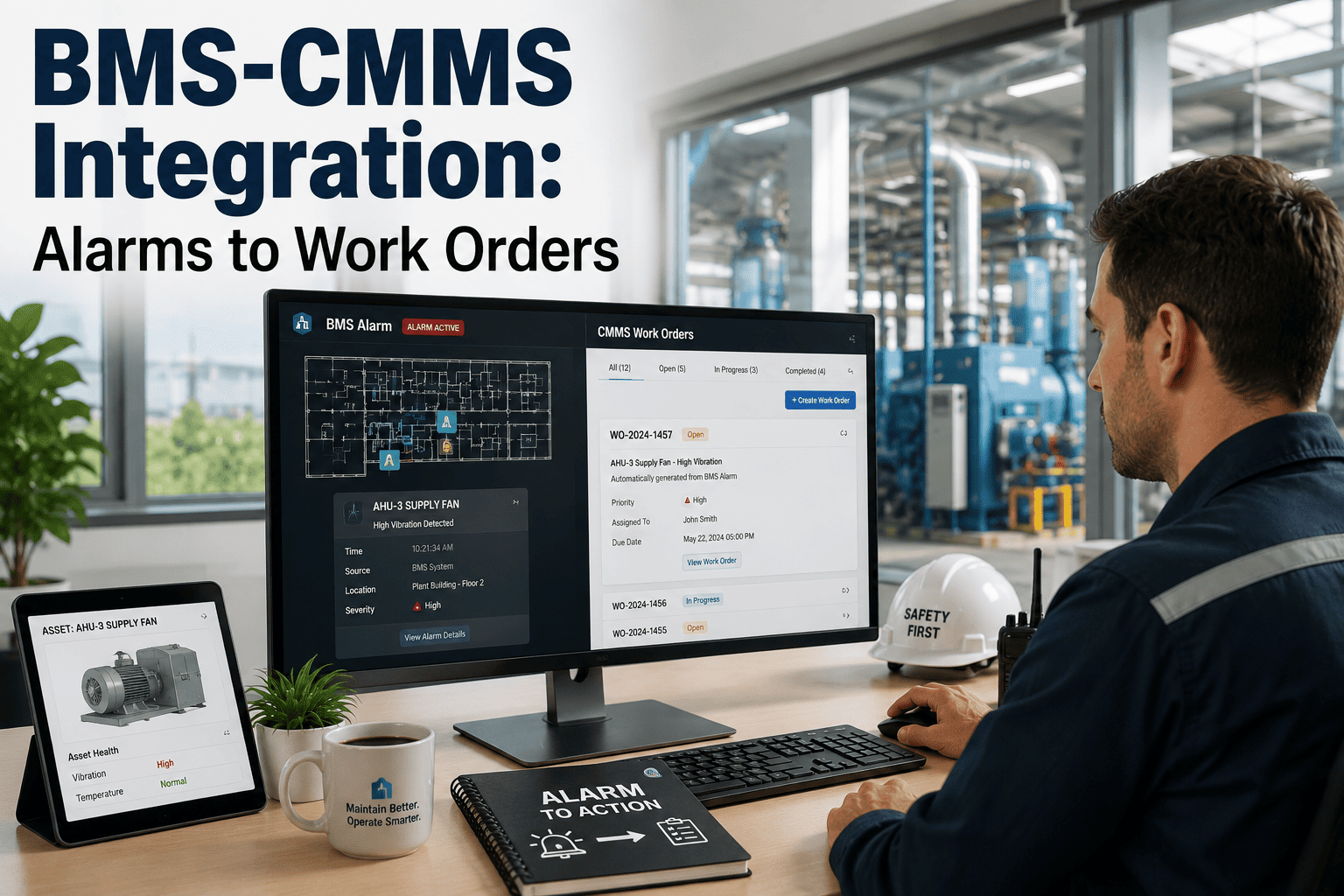
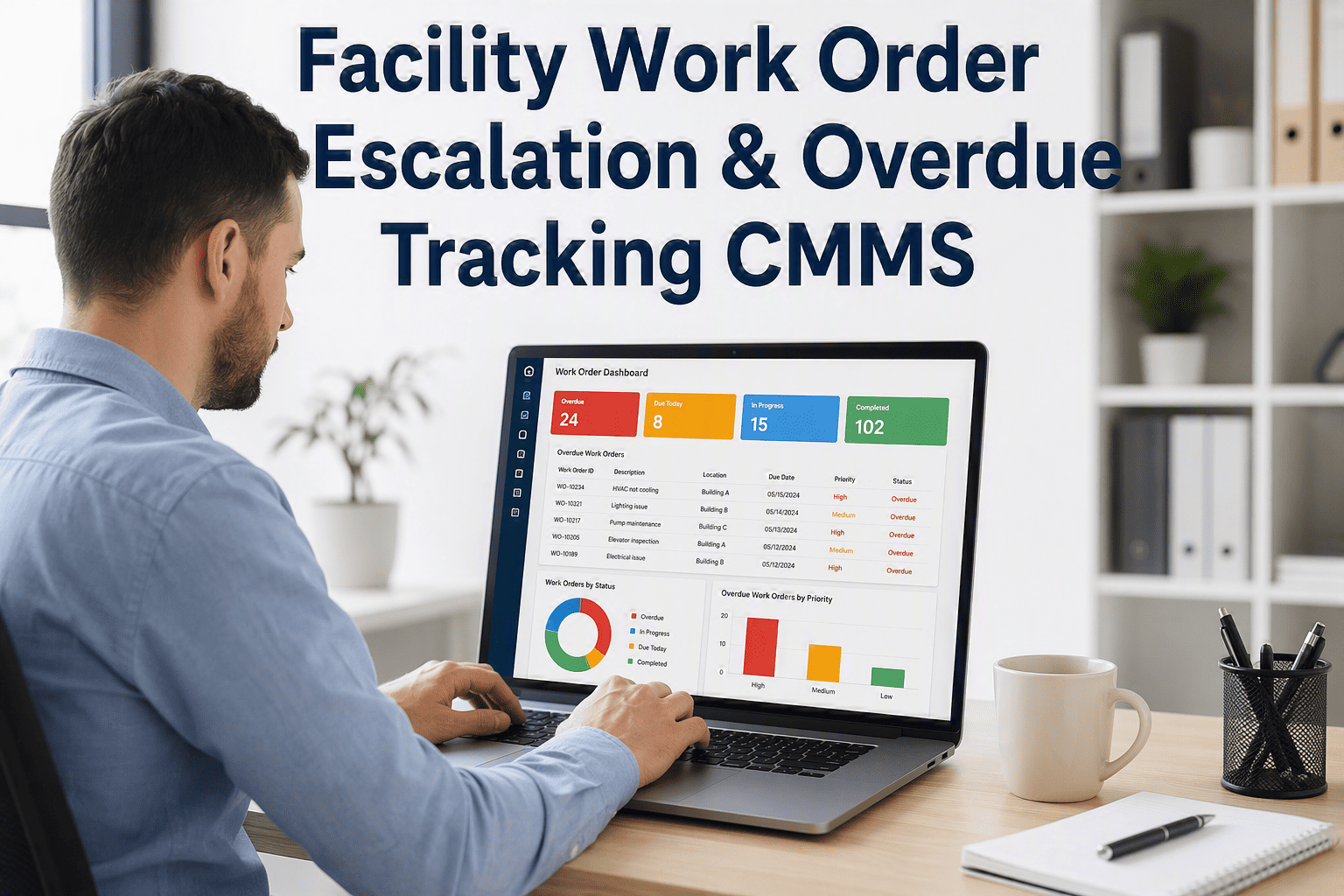
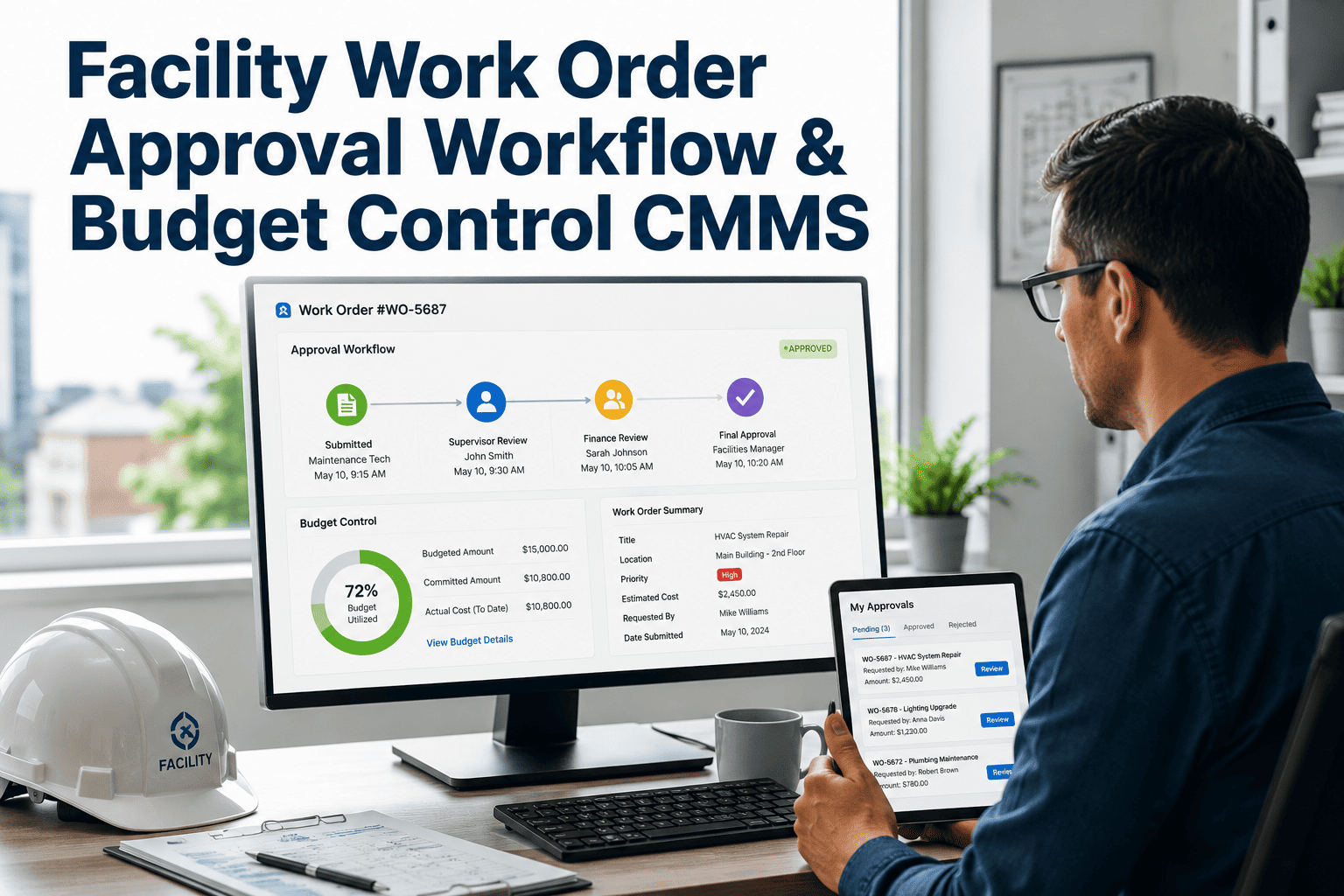
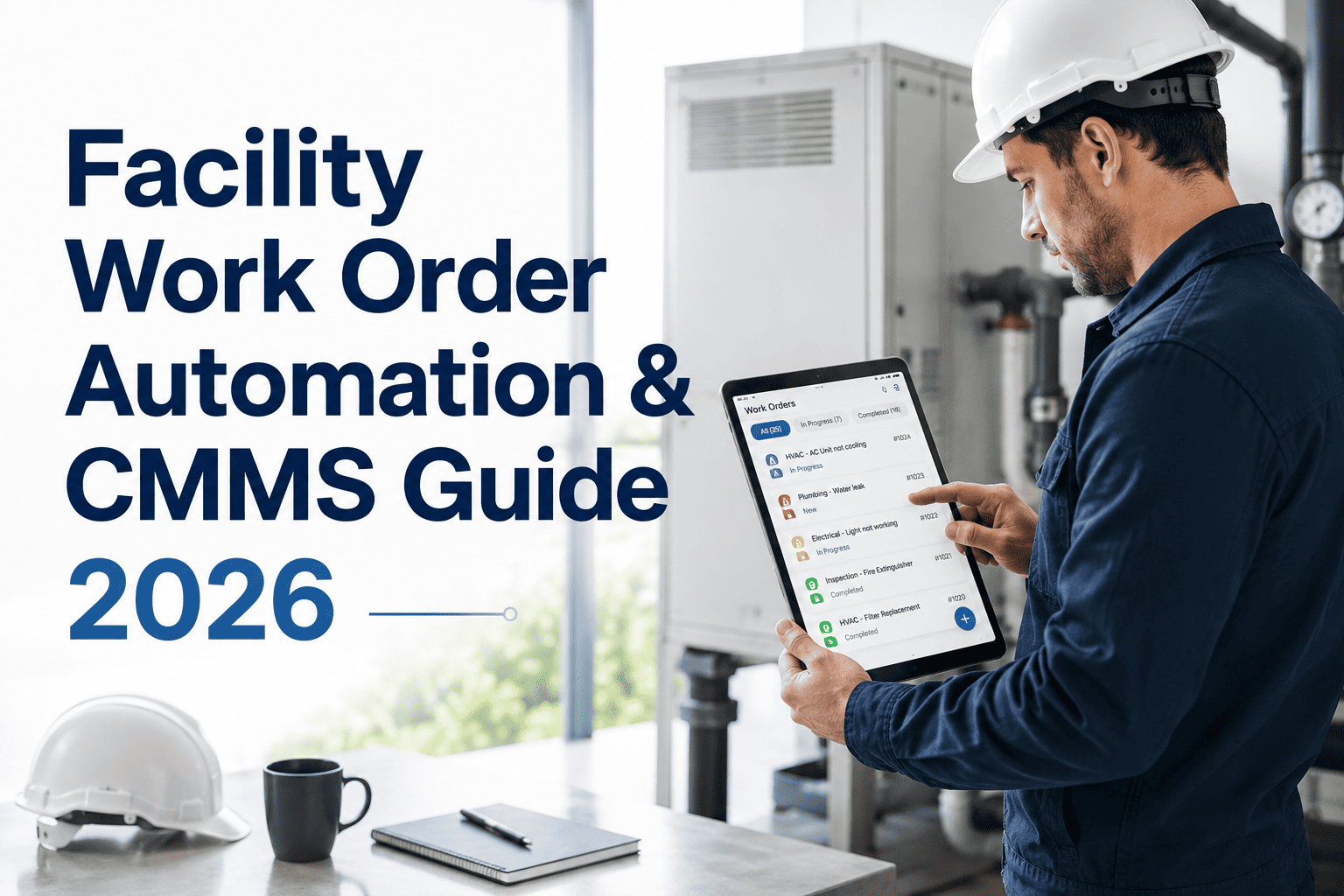
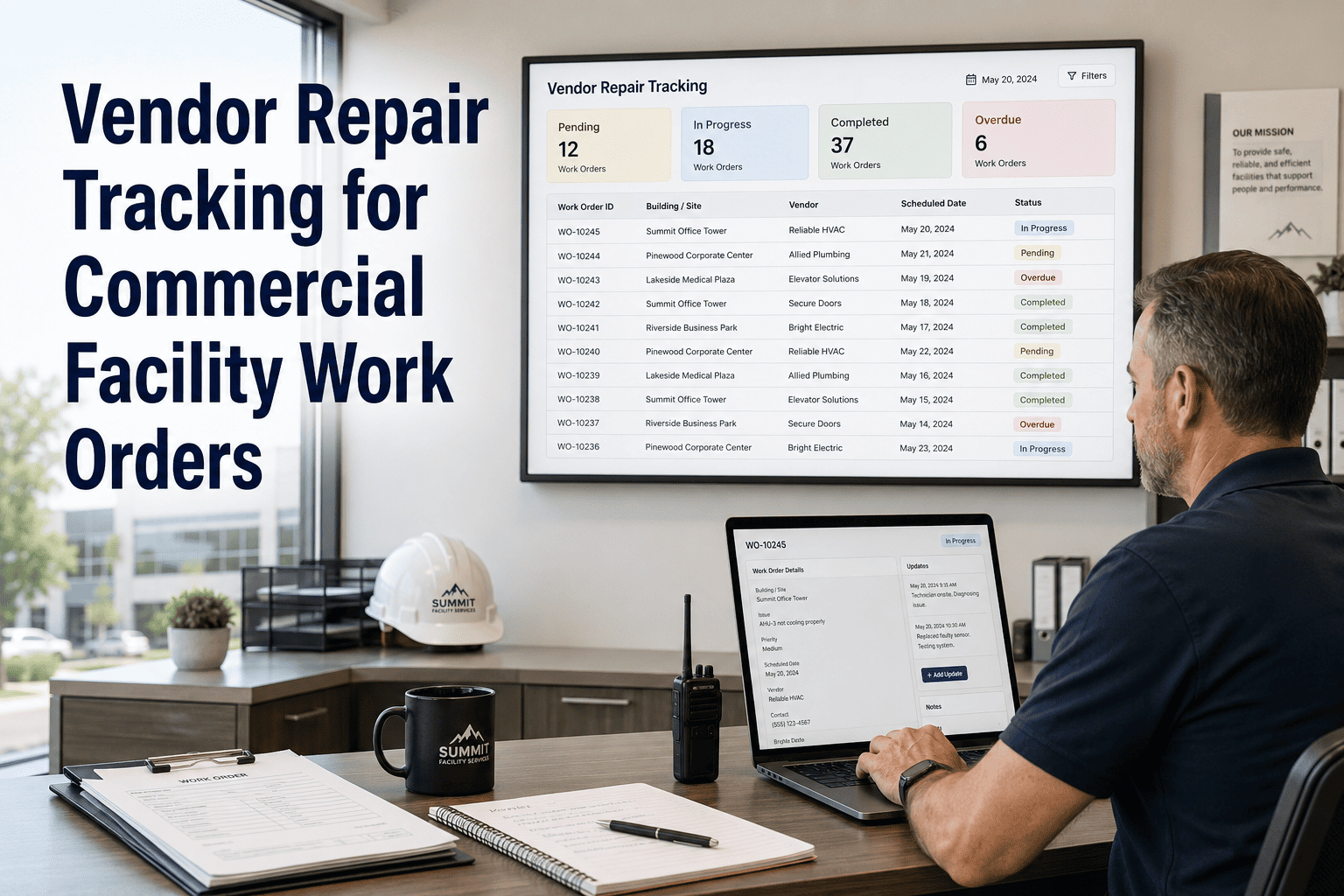
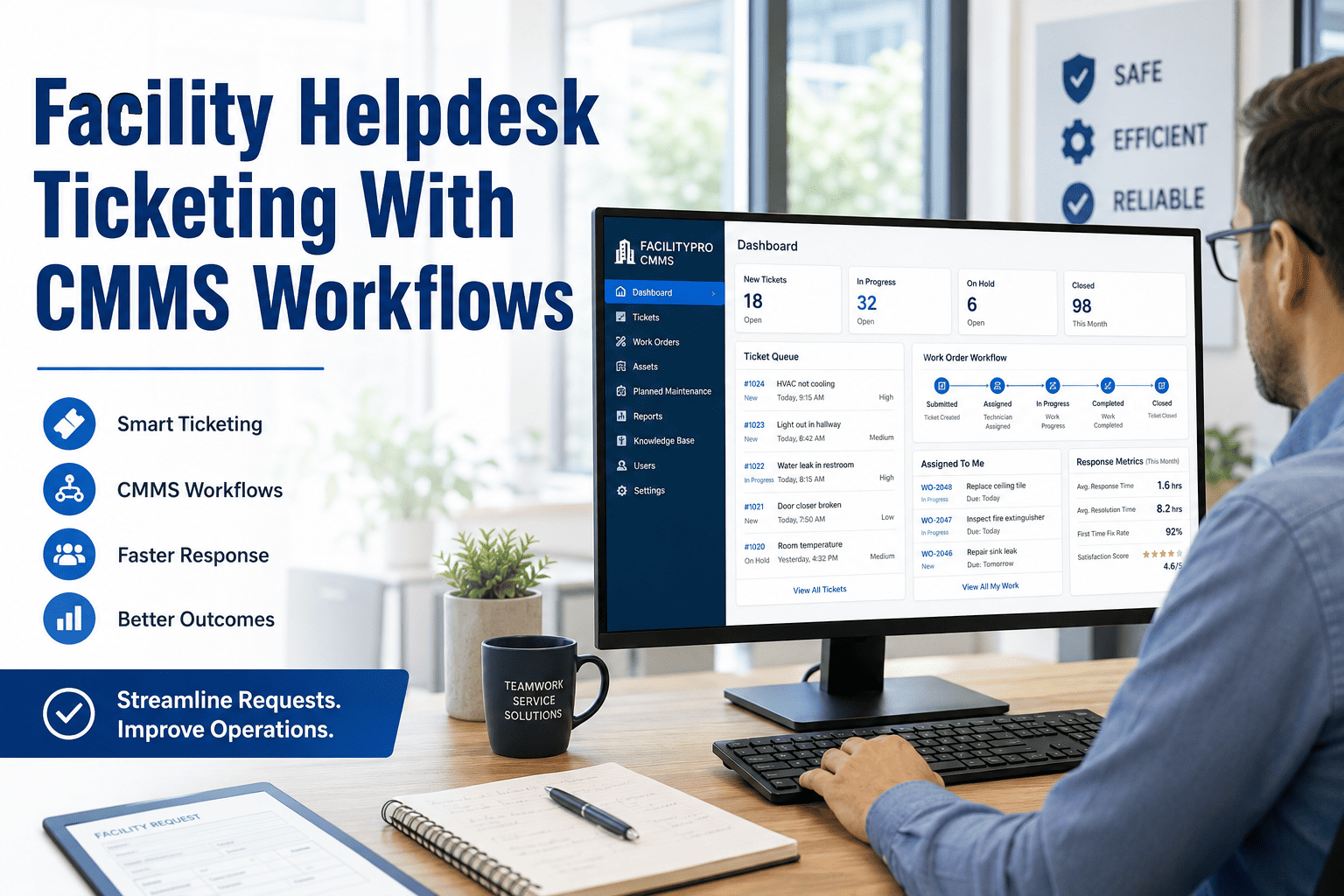
Facility teams running manual work order systems lose an average of 27% of productive hours to administrative overhead - logging requests, determining priority, assigning technicians, chasing updates, and re-entering data into compliance registers. AI-powered work order management removes every one of these steps. Requests are parsed and classified automatically, priority is scored against asset criticality data in under 2 seconds, and the right technician is dispatched without supervisor input in 73% of routine cases. Teams deploying AI work order workflows cut average response time by 50% or more within the first quarter. Book a demo to see how Oxmaint automates your work order lifecycle from first request to final close-out.
50%+
reduction in average work order response time with AI auto-assignment and routing
73%
of routine work orders auto-assigned by AI without any dispatcher intervention
4.8x
higher cost for emergency reactive repairs versus planned preventive maintenance
68%
fewer missed PM tasks after deploying automated scheduling and follow-up chains
Where Manual Work Order Systems Break Down
The failure points in manual work order management are predictable across every facility type. Requests arrive through inconsistent channels with missing information. Priority is set by whoever escalates loudest, not by asset criticality. Technicians are assigned based on visibility, not qualifications. Overdue work accumulates invisibly because no system is watching the clock. By the time a critical HVAC or plumbing fault gets actioned, the low-cost intervention window has often already closed.
01
Inconsistent Request Intake
Requests arrive by email, phone, paper ticket, and verbal handoff - each missing key data. Critical fields like asset ID, location, and failure description are absent in 42% of manual submissions, triggering back-and-forth loops before any work can begin.
02
Priority Based on Noise
Without asset criticality data, supervisors assign priority based on reporter persistence rather than equipment risk. A critical air handling unit fault queues behind a sticking door because one tenant escalated louder. Asset impact is invisible in the manual queue.
03
Assignment Without Skill Matching
Manual assignment ignores technician certifications, current workload, and proximity simultaneously. Work orders sent to unqualified or unavailable technicians sit idle for an average of 3.2 hours per misassignment - compounding across every dispatch cycle.
04
No Escalation on Overdue Work
Without automated follow-up, overdue work orders accumulate silently. 34% of manual work orders exceed their target completion time with no escalation triggered. Compliance audits surface these gaps at the worst possible moment - when they carry regulatory or warranty consequences.
Replace Manual Dispatch with AI-Powered Work Order Routing
Oxmaint handles intake, priority scoring, technician matching, escalation, and compliance documentation automatically across every site in your portfolio. Start free or book a demo to see automated routing live for your facility team.
The AI-Automated Work Order Lifecycle: Six Stages
AI does not replace facility technicians - it removes the administrative layer between a fault occurring and a qualified person being dispatched to fix it. Each stage of the work order lifecycle carries a specific automation opportunity that compounds response speed, first-visit completion, and compliance accuracy across your entire portfolio.
01
Request Capture and Standardization
AI parses incoming requests from any channel - mobile app, QR code scan, email, IoT sensor alert, or tenant portal - and standardizes each into a structured record with asset ID, location, symptom category, and initial severity estimate. Structured intake reduces clarification loops by 61%.
61% fewer intake clarification loops
02
AI Priority Scoring Against Asset Criticality
Each work order is scored in real time against asset criticality rating, failure mode history, active SLA commitments, and safety risk flags. A compressor fault on a critical data centre AHU scores higher than a sticking door handle automatically, in under 2 seconds, with zero supervisor input required.
Priority set in under 2 seconds
03
Skill-Based Technician Matching and Dispatch
Oxmaint matches the work order to the optimal technician based on certification match, current workload, shift schedule, and proximity to the asset. 73% of routine work orders are assigned and dispatched with zero supervisor involvement. Complex jobs are flagged for human review before dispatch.
73% auto-dispatched without supervisor review
04
Inventory Pre-Check Before Technician Dispatch
Before dispatch, AI checks spare parts inventory against work order requirements. Missing parts trigger a procurement request automatically. Technicians arrive prepared - lifting first-visit completion rates from an industry average of 51% to 84%.
First-visit completion: 51% to 84%
05
SLA Monitoring and Automated Escalation
Every open work order is tracked against its SLA target continuously. Overdue tasks trigger a configurable escalation chain - alert at 50% of window, escalate at 100%, critical flag at 120% - without any manual monitoring. The system watches every work order, across every site, 24 hours a day.
3-tier auto-escalation - zero manual monitoring
06
Completion, Record Generation, and Predictive Loop
Technicians close work orders on mobile with readings, photos, and parts used. Oxmaint auto-generates compliance records, updates asset history, and - when a failure pattern appears across similar assets - creates a proactive PM sweep work order for all comparable units before the next failure occurs.
Pattern-triggered PM generation from closed WO data
Core AI Capabilities: What Modern Work Order Automation Includes
Capability 01
Natural Language Request Parsing
AI interprets free-text fault descriptions and maps them to asset categories, work types, and required skill sets. "Water dripping near Room 204 ceiling" becomes a categorized, located, prioritized work order linked to the correct asset record - automatically, with no manual interpretation.
Capability 02
Dynamic Priority Recalculation
Priority scores update in real time as conditions change. A partial power failure affecting a floor instantly reprioritizes every open work order on that floor. No manual queue reordering required during incidents or emergency situations across any site.
Capability 03
Skill-Based Technician Routing
Work orders requiring specific licenses - HVAC, electrical, confined space entry - are only auto-assigned to certified technicians. Skill-matched routing reduces rework from incorrect assignments by 44% and eliminates compliance exposure from uncertified maintenance work.
Capability 04
Inventory Pre-Check and Parts Staging
Before each dispatch, AI verifies required parts are in stock. Missing parts trigger a procurement request automatically. Technicians arrive with what they need - cutting wasted site visits and lifting first-visit close rates from 51% to 84% across FM facilities on Oxmaint.
Capability 05
SLA Monitoring and Auto-Escalation
Every work order carries an SLA target. AI monitors elapsed time and escalates at configurable thresholds. Critical asset work orders approaching 80% of their SLA window escalate to senior technicians automatically, without any supervisor intervention or manual monitoring.
Capability 06
Recurring Failure Pattern Detection
AI analyses closed work orders for failure patterns on specific assets, building types, and seasonal windows. Three belt failures on rooftop units within 90 days triggers a proactive PM sweep across all comparable units before the next failure reaches cost-impact levels.
Capability 07
Compliance Record Auto-Generation
Every work order completion generates a timestamped, technician-attributed compliance record for OSHA, building safety, and equipment warranty documentation. Zero manual data re-entry between work order close and the compliance register - records are audit-ready on completion.
Capability 08
Multi-Site Portfolio Visibility
Portfolio managers see open work order count, SLA compliance rate, backlog age, and technician utilization across every site on one live dashboard. Site teams work in their own view. No monthly reporting calls, no spreadsheet consolidation, no visibility gaps at the portfolio level.
Manual vs AI-Automated Work Order Management
| Metric |
Manual Process |
AI-Automated with Oxmaint |
| Request to assignment time |
2-4 hours average for routine requests; longer when supervisor is unavailable or overloaded |
Under 3 minutes for 73% of work orders via AI auto-assignment engine |
| Priority accuracy |
Based on reporter persistence and supervisor judgment - no asset criticality weighting applied |
Scored against asset criticality, failure history, and active SLAs in real time |
| Technician utilization |
55-65% effective utilization; remainder lost to travel time, waiting, and rework trips |
78-86% effective utilization with skill-based routing and pre-staged parts per dispatch |
| PM schedule compliance |
34% of PMs missed or delayed - no automated follow-up trigger exists in manual workflows |
92% PM compliance rate with automated scheduling and escalation chains active |
| First-visit completion rate |
51% first-visit close - remainder require costly return trips due to missing parts |
84% first-visit close with inventory pre-check run before every technician dispatch |
| Compliance documentation |
Manual re-entry from paper to register; 4-8 hours of audit preparation per compliance event |
Auto-generated on work order close - audit-ready records available immediately |
| Backlog visibility |
Tracked in whiteboards or spreadsheets - no real-time multi-site view available |
Live backlog dashboard by site, asset type, and age across every property in portfolio |
How Oxmaint Implements AI Work Order Automation
01
Asset Registry and Criticality Mapping
Oxmaint ingests your existing asset register and assigns criticality scores to each asset based on failure impact, replacement cost, and operational dependency. This data drives all subsequent AI priority scoring - no manual priority rules to configure from scratch. Facilities go live within 14 days.
Live in 14 days - pre-built asset hierarchy templates
02
Multi-Channel Intake Configuration
Configure intake channels - mobile app QR scan, tenant portal, email parsing, IoT sensor trigger - each mapping to standardized work order templates. Requestors receive automatic confirmation and status updates without any dispatcher involvement at any point in the workflow.
Multi-channel intake - one unified AI-managed queue
03
Technician Profiles and Skill Matrix
Each technician profile stores certifications, skill categories, shift schedule, and maximum concurrent work order load. AI uses this profile for every assignment decision - ensuring the right certification reaches the right asset without supervisor lookup on every ticket.
Book a demo to see skill-based routing for your team.
04
SLA Rules and Escalation Chain Setup
Define SLA targets by work order category and asset criticality tier. Set escalation chains - who gets alerted at 50%, 100%, and 120% of the SLA window. Oxmaint monitors every open work order and fires escalation notifications automatically, across all sites, around the clock.
Automated escalation - zero manual monitoring required
AI Work Order Automation: Performance Results
Work orders auto-assigned by AI without dispatcher input in FM facilities on Oxmaint
73%
First-visit completion rate with AI-driven inventory pre-check before technician dispatch
84%
PM schedule compliance rate achieved within 6 months using automated scheduling workflows
92%
Reduction in missed preventive maintenance tasks after deploying automated scheduling
68%
Reduction in emergency reactive repair costs versus pre-automation baseline
61%
Reduction in rework events from incorrect technician assignments with skill-based routing
44%
ROI Case: What AI Work Order Automation Saves
Emergency Repair Cost Elimination
10-property portfolio, 61% reactive reduction
$380K-$720K/yr
Annual saving from shifting emergency reactive spend to planned preventive maintenance. At 4.8x the cost of planned equivalents, cutting reactive volume by 61% removes the premium directly from the operating budget across a mid-size FM portfolio.
Baseline: Emergency repairs at $2,400-$4,800 per event versus $500-$1,000 for a planned equivalent
Technician Productivity Recovery
12 technicians, 27% admin time recaptured
4,200+ hrs/yr
Annual productive hours recovered by eliminating manual work order administration for a 12-person maintenance team. At a fully-loaded cost of $45-$65/hour, this represents $189,000-$273,000 in recovered labor value with no additional headcount required.
Baseline: 27% of technician hours lost to administrative tasks - logging, status updates, dispatch coordination
Asset Life Extension via PM Compliance
68% PM miss reduction, 15-20% life extension
15-20% longer
Assets running on consistent AI-scheduled PM programs last 15-20% longer than assets maintained on manual catch-up schedules. For a $2M asset portfolio, this defers CapEx replacement by $300,000-$400,000 per replacement cycle without adding maintenance spend.
Baseline: Manual PM schedules average a 34% miss rate; each missed PM reduces expected asset life by 2-4%
Compliance Audit Risk Elimination
Auto-generated records on every work order close
Zero Audit Gap Risk
Every work order completion generates a timestamped, technician-attributed compliance record linked to the asset. OSHA inspections, building safety audits, and tenant due diligence requests are answered with a single report export - no manual register search, no missing documentation.
Baseline: Manual compliance prep takes 4-8 hours per audit cycle; documentation gaps carry $5,000-$50,000 fine exposure
Frequently Asked Questions
QHow does AI determine work order priority without manual input?
Oxmaint scores each work order against asset criticality, failure mode history, active SLAs, and safety risk flags in under 2 seconds - with no supervisor involvement.
Start free or
book a demo to see priority scoring configured for your asset register.
QCan Oxmaint auto-assign work orders based on technician certifications?
Yes. Each profile stores certifications and skill categories - work orders requiring specific licenses are only routed to qualified technicians, reducing incorrect assignment rework by 44%.
Book a demo to configure skill-based routing for your team size and structure.
QWhat happens when a work order misses its SLA deadline?
Oxmaint fires a configurable escalation chain at 50%, 100%, and 120% of the SLA window - alerting supervisors and senior technicians automatically with no manual monitoring at any stage.
Book a demo to review escalation configuration options for your SLA tiers.
QDoes AI work order automation generate compliance records automatically?
Yes. Every completed work order generates a timestamped, technician-attributed compliance record linked to the asset and ready for OSHA, building safety, and warranty audit purposes immediately.
Start free or
book a demo to see auto-documentation live.
Automate Every Work Order From Request to Resolution
Oxmaint's AI engine handles intake, priority scoring, technician routing, escalation, and compliance records automatically across every site in your portfolio. Live in 14 days, no implementation project required. Start your free trial or book a 30-minute demo for your facility team today.
Continue Reading
AI-Powered Energy Optimization for Commercial Buildings: Save 20-40%
Cut commercial building energy costs 20-40% with AI-driven HVAC, lighting, and BMS optimization strategies with measurable ROI for facility managers.
Read the Article
ESG Reporting for Facility Managers: Compliance Guide 2026
Navigate ESG reporting requirements - track Scope 1-3 emissions, water, and waste and generate audit-ready sustainability reports for your facilities.
Read the Article
AI Copilots for Facility Management: Bridging the Labor Shortage Gap
AI copilots help facility teams do more with fewer staff - automate work orders, inspections, and reporting to combat the FM workforce shortage directly.
Read the Article
WAGES KPIs Tracking: Water, Air, Gas, Electricity & Steam Monitoring
Track WAGES utility KPIs for facilities and reduce costs with real-time monitoring, AI-driven anomaly alerts, and consumption benchmarks across every utility stream.
Read the Blog
50% Faster Response. 73% Auto-Assigned. Zero Admin Overhead.
Oxmaint connects your asset registry, technician skill profiles, and SLA rules into a fully automated work order lifecycle - from first request to final audit record, across every site in your portfolio. Live in 14 days. Book a 30-minute demo for your facility team.