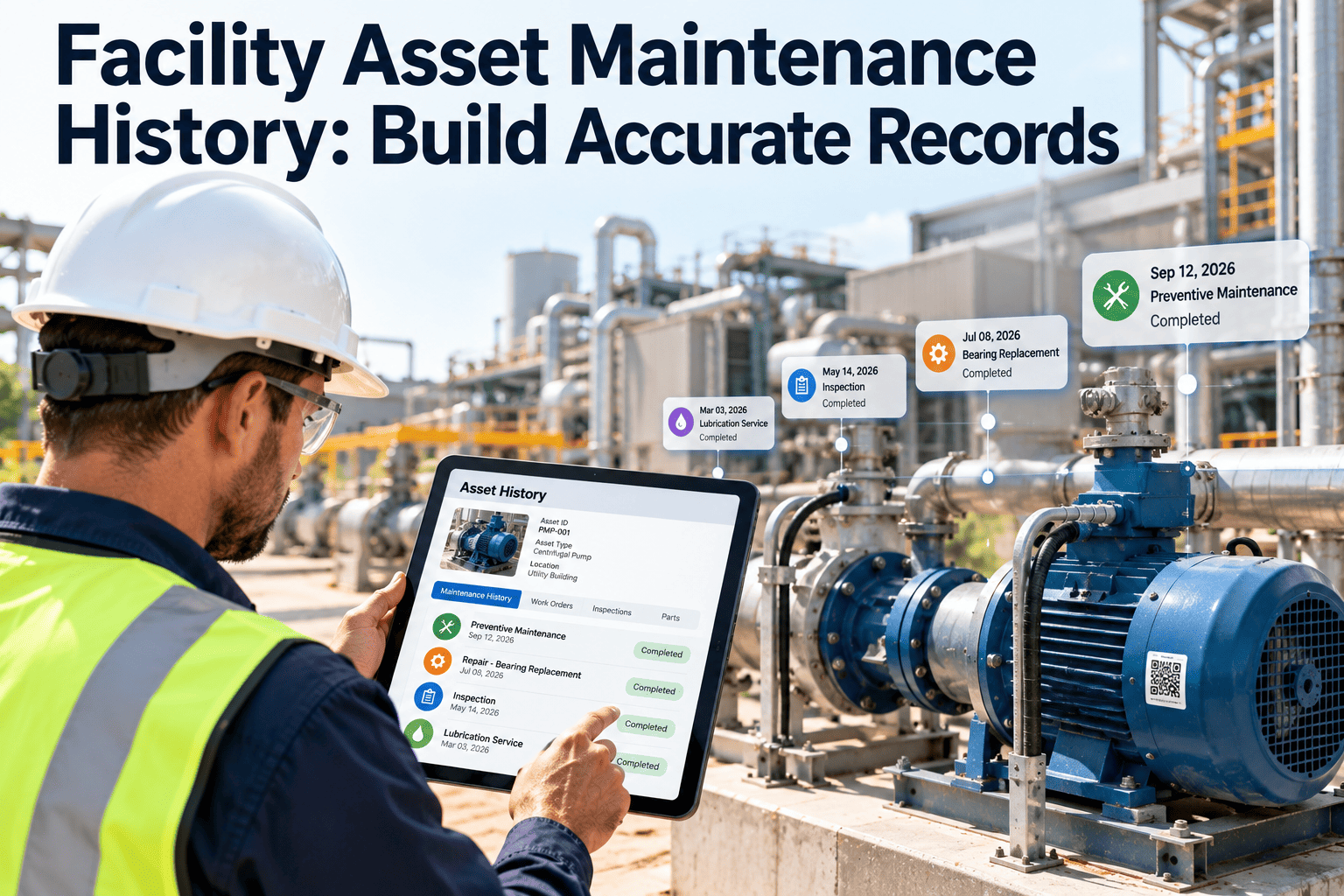
Ask a facility manager when a rooftop unit was last serviced, what it has cost to keep running, and whether the compressor is still under warranty. In many buildings the honest answer is a search across email threads, contractor invoices, and one technician's memory. Accurate facility asset maintenance history turns those guesses into evidence. It supports warranty claims, defends capital budgets, and gives predictive maintenance something real to learn from. Without it, every decision starts from zero. A CMMS-based asset record is the practical way to keep that evidence complete.
Facility Asset Maintenance History: Build Records That Survive Audits, Claims, and Budget Reviews
Use an 8-field model so every chiller, air handler, pump, and elevator carries a complete, searchable life story from installation to replacement.
One asset record, eight fields
1 Identity
2 Location
3 Specification
4 Install date
5 Warranty
6 Work history
7 Cost to date
8 Condition
Three Decisions That Depend on Your History
Warranty claims
Manufacturers typically expect proof that required maintenance was done on schedule. Missing service dates weaken a claim before it starts.
Capital planning
Repair frequency and cumulative cost show when repairing stops making sense. Replacement requests without that trail get cut or delayed.
Predictive maintenance
Condition-based models need past failures, readings, and repairs on the same asset. Sparse history means weak signals and false alerts.
The 8-Field Asset Record Model
Complete records are not about capturing everything. They are about capturing the same eight things on every asset, consistently.
- 1
Unique identity
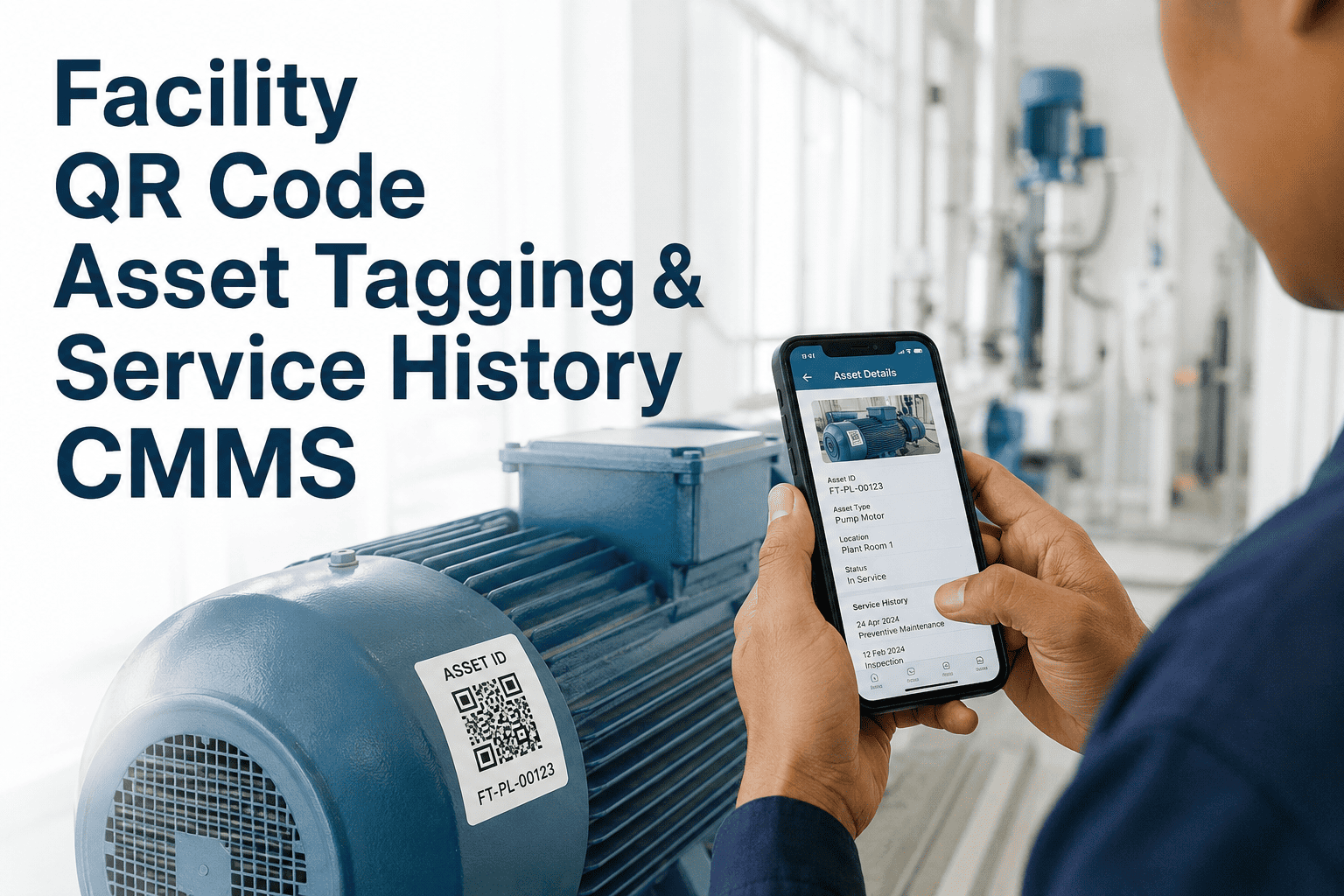
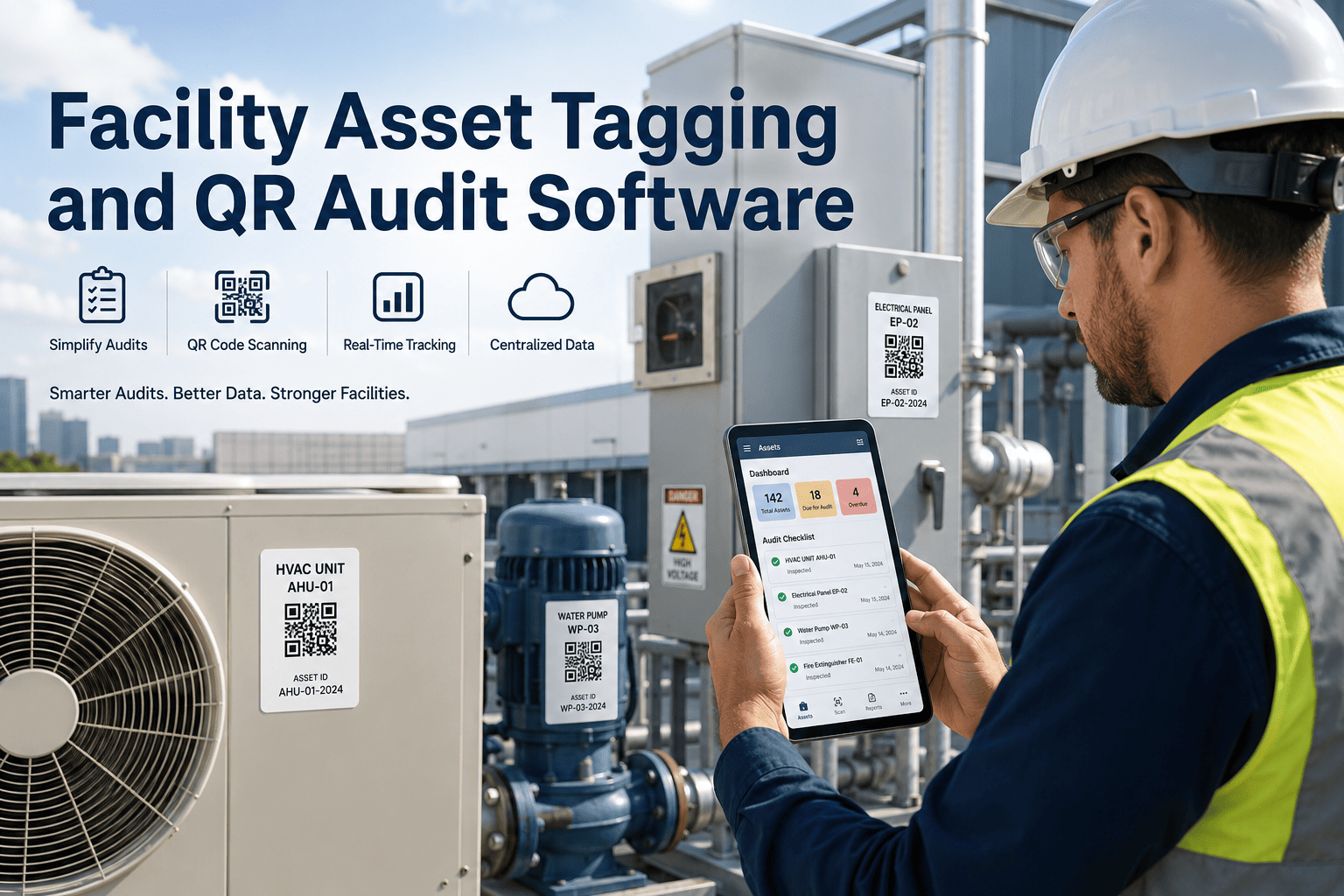
A permanent asset ID and tag, never reused, matching the physical label or QR code on the equipment. - 2
Location hierarchy
Site, building, floor, room, and system the asset serves, so a failure shows what else is affected. - 3
Manufacturer, model, serial
The details a vendor or parts counter needs, plus capacity and nameplate data. - 4
Install and commissioning date
The start of the life clock, with commissioning readings kept as the baseline for later comparison. - 5
Warranty terms
Start date, expiry, coverage scope, and maintenance conditions, with an alert before expiry. - 6
Work order history
Every preventive, corrective, and inspection job, with failure cause, actions taken, and technician notes. - 7
Cost to date
Labor, parts, and contractor spend rolled up per asset, compared against replacement value. - 8
Condition and criticality
A current condition rating and a criticality score that drives inspection frequency and spares.
How Records Decay, and What Good Looks Like
Typical unmanaged record
- Service notes split between spreadsheets, email, and paper tickets
- Vague entries such as "checked unit, OK"
- Contractor visits never entered against the asset
- Warranty paperwork stored in a facilities cabinet
- Replaced assets keep the old ID or vanish from the list
Managed asset record
- One record per asset, reached by scanning its tag
- Required fields for cause, action, and readings on close-out
- Contractor work entered or attached before invoices are paid
- Warranty dates and documents stored on the asset
- Retired assets archived with full history intact
See a Complete Asset Record Before You Migrate a Single Spreadsheet
Walk through how Oxmaint structures asset history, work orders, and warranty tracking for commercial facilities.
What Gets Logged Across the Asset Lifecycle
Install
Serial, specs, commissioning readings, warranty start
Routine PM
Checklists, readings, parts used, time on task
Failure
Symptom, root cause, downtime, corrective action
Major repair
Cost, contractor, warranty claim outcome
Replace
Lifetime cost, reason for retirement, successor asset link
Which Fields Each Decision Needs
| Decision | Fields required | What breaks without them |
|---|---|---|
| Warranty claim | Install date, warranty terms, work history | No proof of required maintenance |
| Repair or replace | Cost to date, work history, condition | Replacement judged on opinion |
| Predictive alert tuning | Specification, baseline readings, failure history | Thresholds set generically |
| Spare parts stocking | Identity, specification, criticality | Wrong parts or excess inventory |
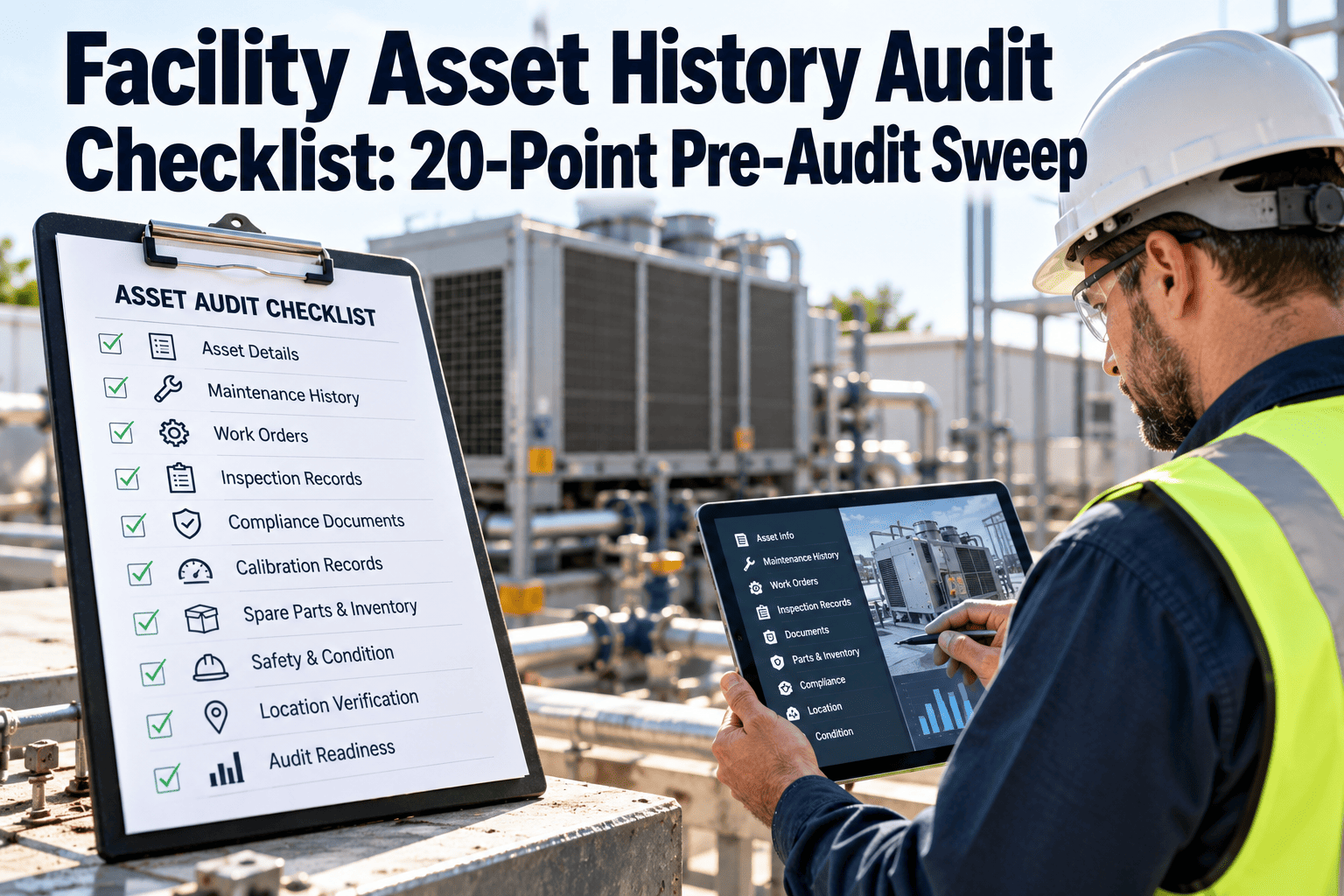
| Audit or inspection | Work history, inspection dates, condition | Gaps found during the audit itself |
A Practical Sequence for Cleaning Up Existing Records
- 1
Rank assets by criticality
Start with equipment whose failure stops operations or triggers safety, comfort, or compliance issues. - 2
Walk and tag
Verify each asset on site, photograph nameplates, and attach a scannable tag. - 3
Load what exists
Import known history, flagging gaps rather than inventing entries. - 4
Enforce close-out fields
Require cause, action, and readings before any work order can be closed. - 5
Review monthly
Track completeness and correct the assets or teams falling behind.
Where Oxmaint Fits
Asset management
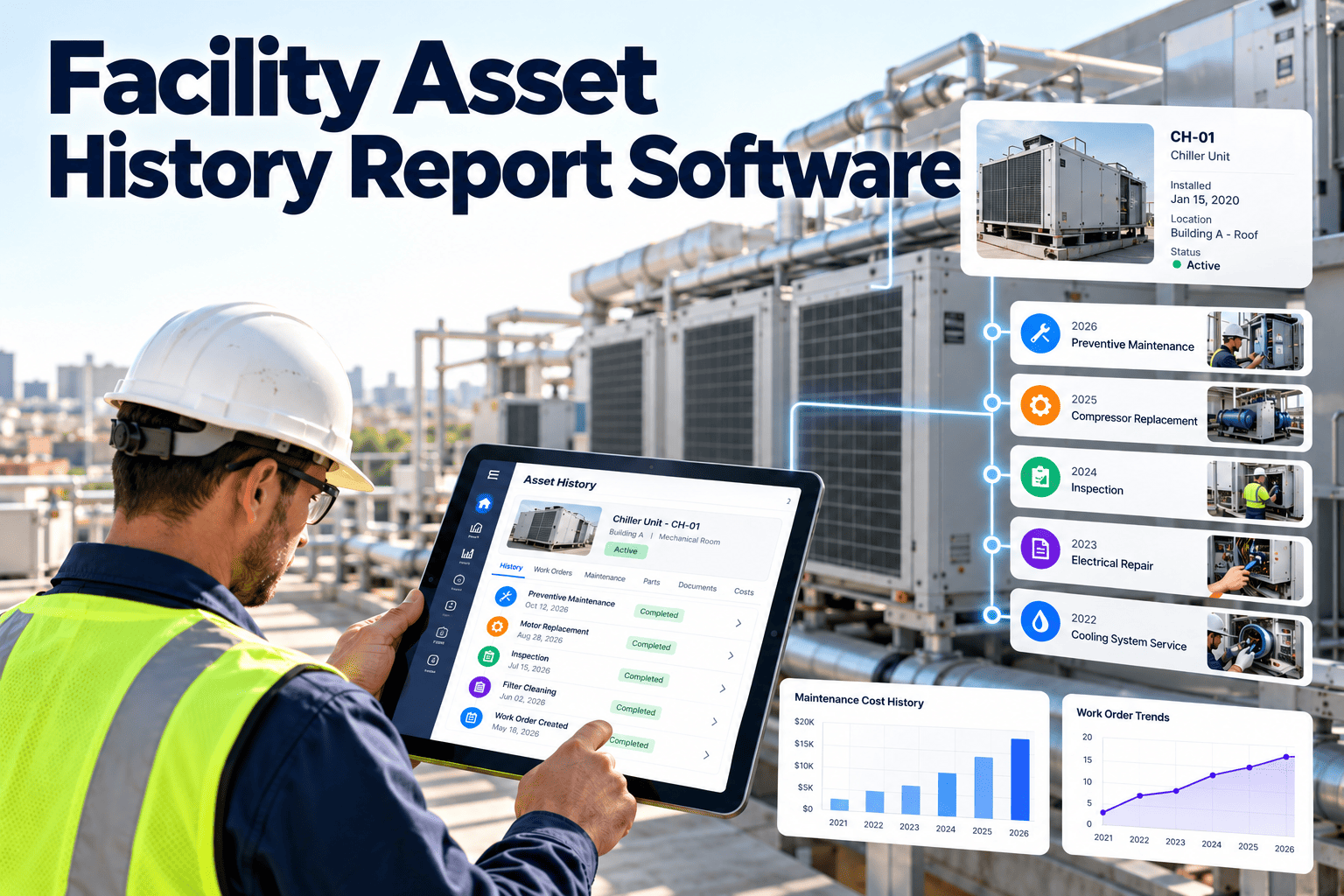
Hierarchical records with specifications, documents, and warranty dates per asset.
Work orders
Preventive and corrective jobs written straight into the asset's history.
Mobile workflows
Technicians scan, update, and close jobs at the equipment, with photos attached.
Reporting
Cost per asset, repeat failures, and record completeness in dashboards.
Measuring Record Quality
Record completeness
Share of assets with all eight fields filled.
Close-out quality
Share of work orders closed with cause and action.
Warranty capture
Assets with warranty dates stored before expiry.
Repeat failures
Assets failing again for the same cause.
Facility Asset History FAQs
How much history is enough for a warranty claim?
Enough to show each required service happened on schedule. Sign up to attach service proof to each asset.
Should every minor asset get a full record?
No. Give critical assets all eight fields and lighter records to low-risk equipment.
What if past records are incomplete?
Mark gaps as unknown and build forward. Invented history is worse than none.
Who owns record accuracy?
Technicians enter data, supervisors verify it at close-out, and managers review completeness monthly.
Can contractor work be included?
Yes, if service reports are required before payment. Book a demo to see the workflow.
Stop Rebuilding Asset History Every Time Someone Asks
Give every facility asset one accurate record that holds up in claims, audits, and budget reviews.
.jpeg)
