Indoor Environmental Quality (IEQ) goes far beyond air quality — it encompasses thermal comfort, acoustic performance, visual comfort, and spatial layout. Research from the Harvard T.H. Chan School of Public Health shows that occupants in high-performing IEQ buildings score 61% higher on cognitive function tests, while the World Green Building Council reports that improved IEQ can boost productivity by 8–11%. For facility managers, the challenge is not just measuring these parameters — it is acting on the data before occupant complaints escalate. OxMaint's IoT sensor integration platform connects CO₂ sensors, temperature/humidity monitors, sound level meters, and daylight sensors directly to your maintenance workflow — converting every comfort deviation into a tracked, assigned work order. Start monitoring your building's IEQ today. Book a demo to see how smart building sensors integrate with your CMMS.
Smart Buildings · IoT Sensors · Occupant Productivity
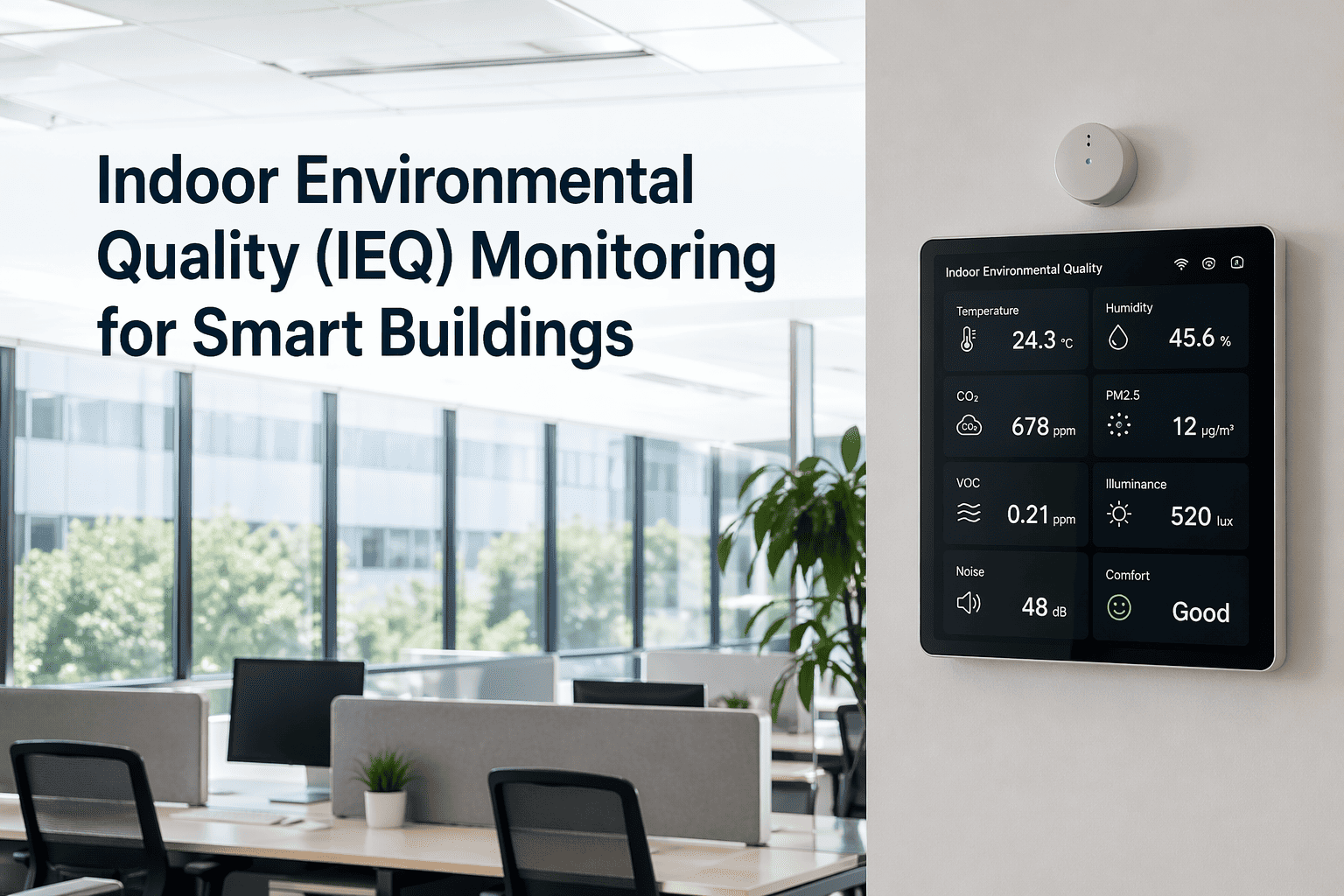
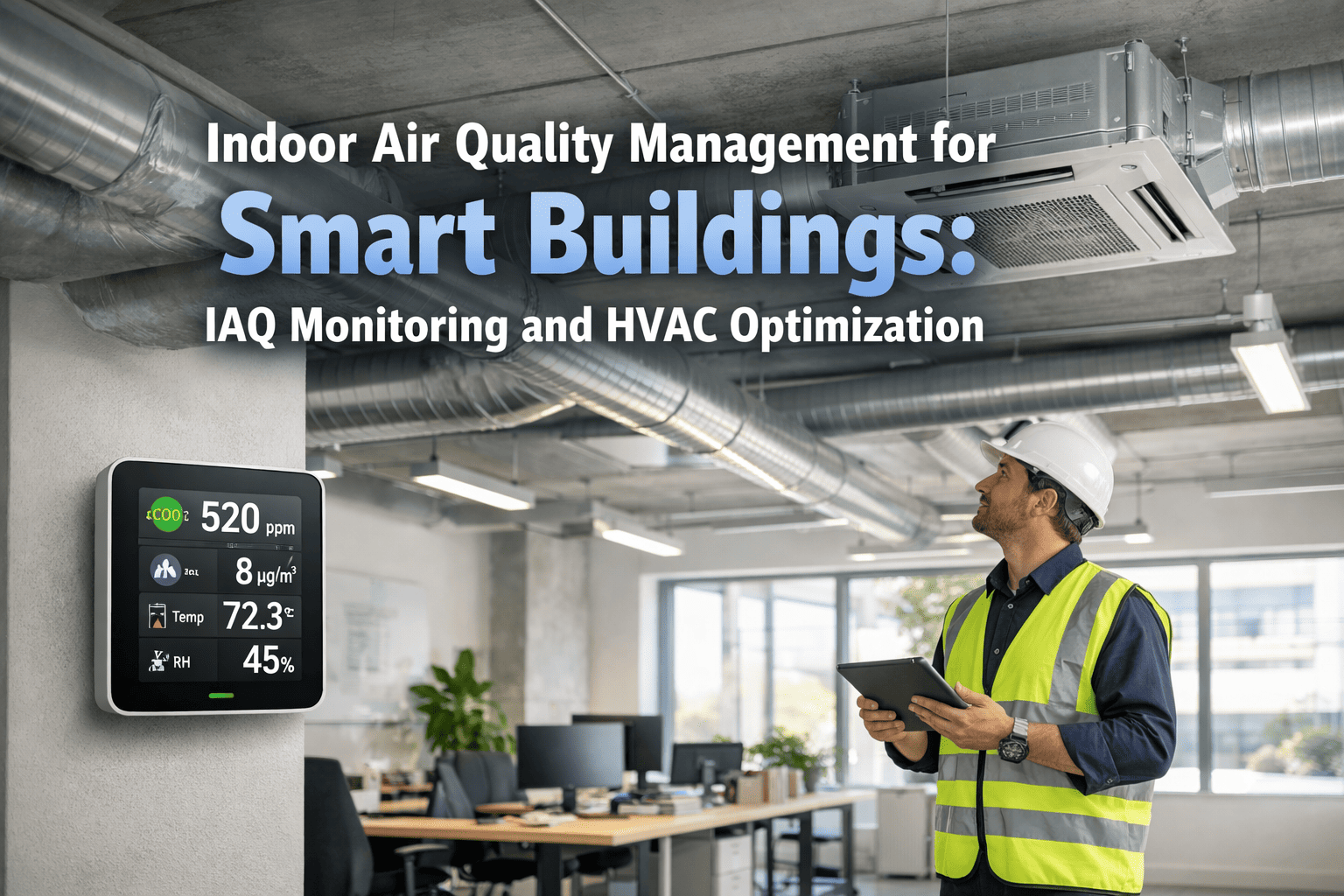
Indoor Environmental Quality (IEQ) Monitoring for Smart Buildings
Air quality, thermal comfort, acoustic performance, visual comfort — the complete framework for measuring and maintaining IEQ in commercial, institutional, and residential buildings.
61%Higher cognitive function in high-IEQ buildings (Harvard)
8-11%Productivity improvement from better IEQ (WorldGBC)
30%Fewer occupant complaints with continuous IEQ monitoring
Stop reacting to occupant complaints. OxMaint monitors IEQ parameters across your entire building — CO₂, temperature, humidity, noise, and light — auto‑scheduling maintenance before comfort issues affect productivity.
IEQ Framework
The Four Pillars of Indoor Environmental Quality
IEQ is not a single measurement — it is the intersection of four distinct comfort domains, each affecting occupant health, productivity, and satisfaction differently. A building can have excellent air quality but fail on thermal comfort, or perfect acoustics but poor lighting. Comprehensive IEQ monitoring tracks all four domains simultaneously, building a complete picture of occupant experience.
01
Air Quality (IAQ)
CO₂, PM2.5, PM10, VOCs, humidity, and fresh air ventilation rates. Poor IAQ causes drowsiness, headaches, and increased absenteeism. ASHRAE Standard 62.1 sets minimum ventilation requirements.
02
Thermal Comfort
Temperature, radiant asymmetry, air velocity, and humidity. ASHRAE Standard 55 defines acceptable ranges: 68–74°F winter, 72–80°F summer. Stagnant air and draft cause the most complaints.
03
Acoustic Comfort
Background noise levels, speech privacy, reverberation time, and mechanical noise from HVAC. Open offices show reduced cognitive performance at ambient noise above 50 dBA.
04
Visual Comfort
Illuminance, glare, flicker, and color temperature. Workspaces need 300–500 lux for general tasks; daylight integration and glare control are the most common deficiencies.
Monitoring Parameters
Key IEQ Metrics — What to Measure and Why
| Parameter | Sensor Type | Target Range | Action Trigger | LEED / WELL Credit |
| CO₂ concentration | NDIR CO₂ sensor | ≤1,000 ppm (ASHRAE 62.1) | >1,100 ppm sustained 15 min | LEED EQc4, WELL A01 |
| PM2.5 particulate | Laser scattering | ≤12 µg/m³ (EPA good) | >15 µg/m³ sustained 1 hr | WELL A04, LEED EQc3 |
| Temperature | Thermistor / RTD | 68–74°F (winter) / 72–80°F (summer) | Deviation >±2°F from setpoint, 30 min | LEED EQc7, WELL T01 |
| Relative Humidity | Capacitive sensor | 30–60% RH | Below 25% or above 65% sustained | WELL A07, LEED EQc1 |
| Ambient Noise | Class 2 sound level meter | ≤45 dBA (open office) | >50 dBA during occupied hours | LEED EQc9, WELL S01 |
| Illuminance (lux) | Photopic sensor | 300-500 lux general office | Below 200 lux or above 800 lux | LEED EQc6, WELL L02 |
| Air Velocity | Hot-wire anemometer | <50 fpm (0.25 m/s) | >60 fpm at workstation | ASHRAE 55 compliance |
IEQ Impact on Occupant Outcomes
CO₂ reduction (900 ppm vs 1,400 ppm)+61% cognitive score Thermal comfort satisfaction42% → 88% Noise reduction (55 dBA → 45 dBA)+48% task accuracy Daylight integration+27% sales (retail) Sources: Harvard COGfx Study, WorldGBC, Cornell University research
ROI of IEQ Monitoring
Reduced absenteeism (1.5 days/employee/year)$1,800 per employee
Improved productivity (8% average)$6,400 per employee
Fewer HVAC service calls$2,500–$7,500 annually
Retail sales lift (good IEQ)+27% documented
LEED / WELL recertification savings additional
From Sensor Data to Maintenance Action
OxMaint connects your IEQ sensors directly to your CMMS workflow. When CO₂ rises or temperature drifts, the platform creates a work order for the responsible AHU, damper, or VAV box — closing the loop between comfort deviation and corrective action.
Sensor Placement
IEQ Sensor Density and Location Guidelines
| Space Type | Sensor Density | Key Placement Areas | Mounting Height |
| Open office | 1 per 2,000–4,000 sq ft | Away from windows, diffusers, corners | 3–6 ft above floor |
| Private office / meeting room | 1–2 per room | Occupied zone center | 3–6 ft above floor |
| School classroom | 1 per classroom | Wall-mounted opposite door | 4–5 ft above floor |
| Healthcare patient room | 1 per room + return duct | Headwall for IAQ, return for infection control | 3–4 ft above floor |
| Retail / hospitality | 1 per zone (500–2,000 sq ft) | Occupied area, away from kitchen/loading | 5–7 ft above floor |
"The most common IEQ mistake I see is monitoring only air quality and calling it complete. Thermal comfort drives more complaints in commercial buildings than IAQ by a factor of 3:1. Acoustic comfort drives more productivity loss than any other IEQ domain in open offices. Comprehensive IEQ monitoring requires all four domains — and the maintenance system that acts on deviations in each one. A CO₂ sensor that triggers an AHU inspection but no temperature sensor to catch a stuck VAV box leaves half the problem unsolved."
Dr. Sarah Chen, PE, LEED Fellow
Building Performance Specialist · 22 years IEQ and building science · Author of ASHRAE research project 1756 on sensor fusion for IEQ monitoring
Frequently Asked Questions
How many IEQ sensors does a commercial building need?
Sensor density depends on space type, variability of use, and certification goals. ASHRAE 62.1 requires CO₂ sensors in densely occupied spaces (25+ people per 1,000 sq ft). For full IEQ monitoring, a typical open office needs 1 sensor per 2,000–4,000 sq ft for CO₂/temperature/humidity, plus sound and light sensors at 1 per 5,000 sq ft. Meeting rooms, classrooms, and lobbies require individual sensors due to variable occupancy and activity.
What is the difference between IEQ and IAQ monitoring?
IAQ (Indoor Air Quality) monitors airborne contaminants: CO₂, VOCs, particulates, humidity. IEQ (Indoor Environmental Quality) adds thermal comfort (temperature, air velocity, radiant asymmetry), acoustic comfort (noise level, speech privacy, reverberation), and visual comfort (illuminance, glare, color temperature). Comprehensive IEQ is required for WELL certification and increasingly for LEED v4.1. Focusing solely on IAQ misses 60–70% of occupant comfort complaints.
How does OxMaint integrate with existing BMS and IoT sensors?
OxMaint connects to building automation systems (BAS), IoT platforms, and direct sensor connections via BACnet, Modbus, MQTT, and REST APIs. Data from all four comfort domains is centralized in a single dashboard — giving facility managers a complete IEQ picture. When any parameter drifts outside its target range, OxMaint auto-generates a work order for the responsible system: AHU damper for CO₂, VAV box for temperature, window seal or fan for noise, dimming controller for glare.
Book a demo to see the IEQ dashboard in action.What IEQ parameters are required for WELL certification?
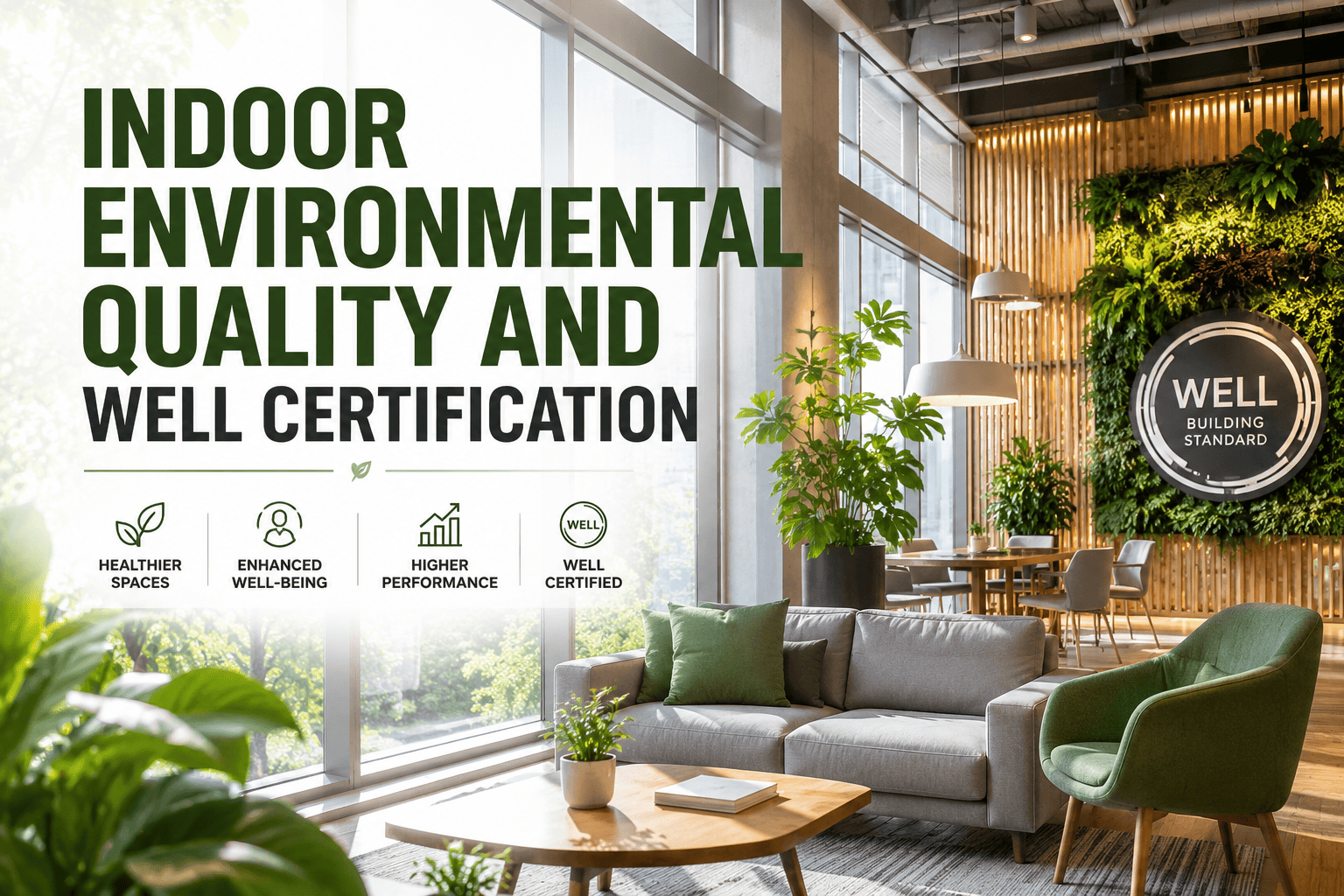
WELL v2 requires monitoring of: CO₂ (≤900 ppm for 90% of occupied hours), PM2.5 (≤15 µg/m³), formaldehyde (≤27 ppb), VOCs (≤500 µg/m³), temperature (within ASHRAE 55 ranges), humidity (30–60%), and ambient noise (≤50 dBA for open offices). Light intensity (300–500 lux at desk) and daylight autonomy are also required. OxMaint tracks all parameters and exports compliance reports for WELL recertification.
Start a free trial to configure WELL monitoring.
IEQ Monitoring That Protects Occupants and Productivity
OxMaint's IoT sensor platform monitors CO₂, temperature, humidity, noise, and light levels across your entire building — converting comfort deviations into automated maintenance work orders before occupants complain or productivity drops. LEED and WELL compliance reporting built in.