Modern UPS maintenance teams face mounting pressure to maximize system uptime while managing complex infrastructure across multiple facilities. Traditional reactive approaches—waiting for alarms, manual inspections, and spreadsheet-based tracking—can no longer keep pace with the reliability demands of critical power systems. IoT-enabled workflows transform UPS maintenance from reactive firefighting into proactive system orchestration, connecting sensors, analytics, and automated work orders into a seamless operational framework. Schedule a consultation to explore how IoT workflows can transform UPS maintenance at your facility.
Why IoT Workflows for UPS Maintenance
Uninterruptible power systems protect critical operations across data centers, healthcare facilities, manufacturing plants, and commercial buildings. Equipment failures don't just mean inconvenience—they mean lost revenue, compromised safety, and potential data loss. Manual monitoring methods miss the subtle patterns that precede failures, leaving maintenance teams perpetually one step behind.
The Case for IoT-Enabled UPS Maintenance
35%
Reduction in unplanned downtime through IoT-enabled predictive maintenance and real-time monitoring
<5min
Time to detect critical anomalies and auto-generate work orders—versus hours with manual checks
80%
Faster anomaly detection compared to traditional scheduled inspections and manual logging
25%
Reduction in maintenance costs through optimized scheduling and eliminated unnecessary service calls
Ready to eliminate UPS failures before they happen? Join leading facilities using IoT workflows to maximize uptime and reduce maintenance costs.
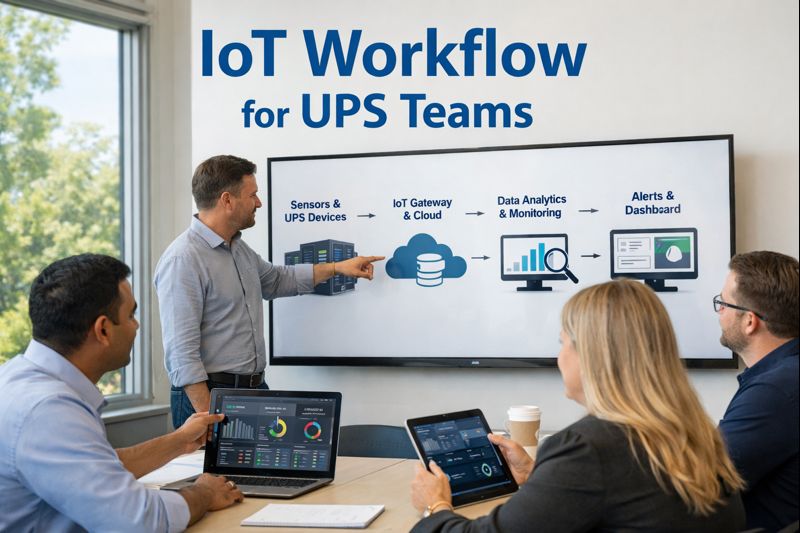
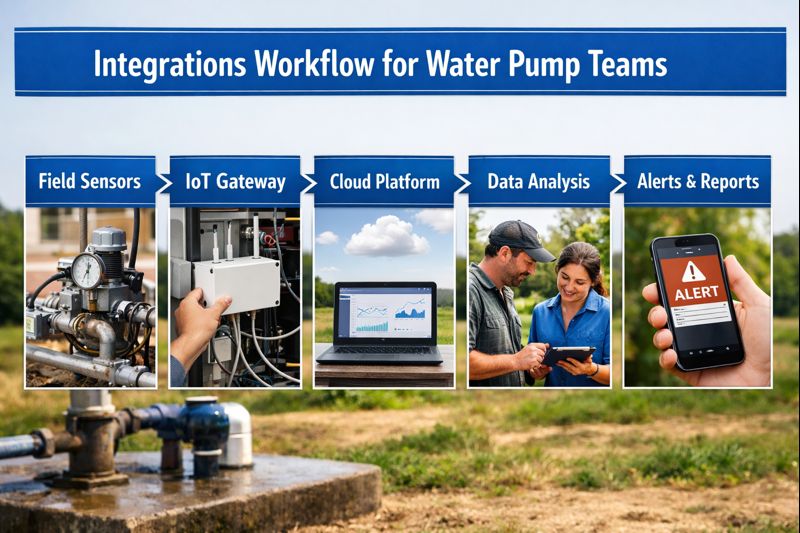
Modern IoT workflow platforms combine smart sensors, edge computing, and CMMS integration to deliver real-time intelligence across your entire UPS infrastructure. The architecture ensures no critical event goes undetected while automating the maintenance response chain.
End-to-End IoT Workflow ComponentsFrom sensor data to completed work orders
01
Smart Sensor Network
IoT sensors monitor critical UPS parameters including battery voltage, temperature, load percentage, input/output frequency, and runtime capacity. Continuous data capture at sub-second intervals ensures no anomaly escapes detection.
02
Edge Processing Layer
Edge devices aggregate sensor data locally, performing initial anomaly detection and threshold validation. This reduces bandwidth requirements while ensuring critical alerts propagate immediately, even during network interruptions.
03
AI Analytics Engine
Machine learning models analyze patterns across historical and real-time data to predict battery degradation, capacitor failures, and cooling system issues weeks before they cause outages.
04
Automated Work Order Generation
When anomalies are detected, the system automatically creates prioritized work orders in your CMMS with asset details, fault codes, and recommended actions. Technicians receive instant mobile notifications for rapid response.
05
CMMS Integration
Bidirectional sync with maintenance management platforms enables complete workflow automation—from alert to resolution. Sign up for Oxmaint to centralize IoT workflows across your entire UPS infrastructure.
Key IoT Workflow Capabilities
IoT workflow platforms deliver capabilities that transform how UPS teams operate—shifting from calendar-based maintenance to condition-driven interventions that maximize equipment life while minimizing service disruptions.
Workflow Automation Features
Real-Time Anomaly Detection
Continuous monitoring identifies voltage fluctuations, temperature spikes, and load imbalances within minutes. Adaptive thresholds account for seasonal variations and equipment aging automatically.
Battery Health Tracking
AI models analyze charge/discharge cycles, internal resistance trends, and temperature patterns to predict battery end-of-life and schedule replacements before capacity drops below safe thresholds.
Automated Work Orders
Sensor-triggered work orders include complete context—asset ID, location, fault code, priority level, and recommended parts. Technicians arrive prepared with the right tools and components.
Mobile Team Coordination
Field technicians receive real-time alerts on mobile devices with navigation to affected equipment. Status updates sync immediately across the team for complete visibility.
Compliance Reporting
Automatic documentation of all maintenance activities, sensor readings, and corrective actions creates audit-ready compliance records without manual data entry.
Performance Benchmarking
Compare efficiency metrics across UPS units, facilities, and time periods. Identify underperforming equipment and optimize maintenance strategies based on actual data.
See IoT workflows in action. Book a demo and we'll show you real-time UPS monitoring and automated maintenance scheduling for your facility.
Comprehensive IoT workflows require monitoring at multiple points throughout the UPS system. Each parameter serves specific diagnostic and predictive purposes to ensure maximum reliability.
Grid instability, voltage sags, frequency deviations
Output Power
Every 1 second
Load percentage, voltage stability, waveform quality
Overload conditions, transfer switch issues, inverter problems
Thermal Management
Every 10 seconds
Ambient temperature, component temps, airflow
Cooling failures, blocked vents, HVAC issues
Transfer Switch
Event-driven
Transfer time, switch position, test results
Slow transfers, contact wear, mechanical failures
Monitoring frequency varies by parameter criticality. High-frequency monitoring on battery and power systems enables rapid anomaly detection.
Traditional vs. IoT-Enabled Maintenance
Understanding the capabilities difference between traditional UPS maintenance and IoT-enabled workflows reveals why facility teams are transitioning to intelligent maintenance management.
Maintenance Approach Comparison
Traditional Maintenance
X
Scheduled inspections regardless of equipment condition
Manual data logging and spreadsheet tracking
Reactive response to alarms and failures
Limited visibility into battery health trends
Paper-based work orders and compliance records
15-20%of failures occur between scheduled inspections
IoT-Enabled Workflows
✓
Condition-based maintenance triggered by actual data
Automated sensor data collection and analysis
Predictive alerts before failures occur
Real-time battery degradation tracking
Digital work orders with complete audit trails
<3%unexpected failures with continuous monitoring
Transform Your UPS Maintenance with IoT Workflows
Oxmaint connects your UPS infrastructure to intelligent maintenance workflows—automating work orders, tracking battery health, and ensuring your critical power systems never let you down.
IoT workflow investments deliver returns through reduced downtime, optimized maintenance scheduling, extended equipment life, and eliminated emergency service calls. The financial impact compounds across multiple value streams.
Documented Implementation BenefitsBased on facility deployment data across multiple industries
62%
Organizations using CMMS for maintenance (up from 49%)
50%
Reduction in unplanned downtime with predictive maintenance
28%
Faster work order closure with automated CMMS integration
37%
Reduction in process errors through workflow automation
Calculate your potential savings. Create a free Oxmaint account and our team will help model the ROI for your specific UPS infrastructure.
Successful IoT workflow deployment requires careful planning across sensor infrastructure, system integration, and team adoption. A phased approach delivers quick wins while building toward comprehensive automation.
Baseline data collectionAlert threshold tuningWorkflow configuration
Week 7+
Optimization
Team training rolloutContinuous improvementExpansion planning
IoT integration with CMMS is revolutionizing how organizations manage maintenance operations. With real-time monitoring, predictive alerts, and streamlined workflows, teams can increase productivity, reduce costs, and make data-driven decisions for long-term success.
— Industry Research on IoT-CMMS Integration
Deploy IoT Workflows for UPS Excellence
Your spreadsheets can't detect a battery approaching failure or automatically dispatch a technician when temperature thresholds are exceeded. Oxmaint helps you deploy IoT workflows that monitor every UPS parameter, predict failures before they happen, and automate your entire maintenance response chain.
How quickly can we see results from IoT workflow implementation?
Most facilities identify optimization opportunities within the first 30 days of deployment. Quick wins from anomaly detection and automated alerts often demonstrate value immediately, with full ROI typically realized within 6-12 months. Schedule a consultation to discuss expected timeline for your specific infrastructure.
What if our UPS systems are from different manufacturers?
IoT workflow platforms are designed to integrate with equipment from any manufacturer. Standard protocols like SNMP, Modbus, and BACnet enable connectivity across mixed environments. The platform normalizes data from different sources into a unified dashboard and workflow system.
How does predictive maintenance work for batteries?
AI models analyze multiple battery parameters including voltage trends, internal resistance changes, temperature patterns, and charge cycle history. By identifying degradation patterns that precede failure, the system recommends replacement timing that maximizes battery life while preventing unexpected outages. Sign up for a free account to see how battery analytics work.
Can IoT workflows integrate with our existing CMMS?
Yes. Modern IoT platforms offer REST APIs and pre-built connectors for popular CMMS systems. Bidirectional sync ensures work orders flow automatically from sensor alerts to your maintenance management platform, with completion data returning for model optimization.
What security measures protect our UPS monitoring data?
Enterprise-grade security includes end-to-end encryption, role-based access control, and compliance with industry standards. Edge processing keeps sensitive operational data on-premises when required, with only aggregated analytics sent to cloud systems. Book a demo to review our complete security architecture.