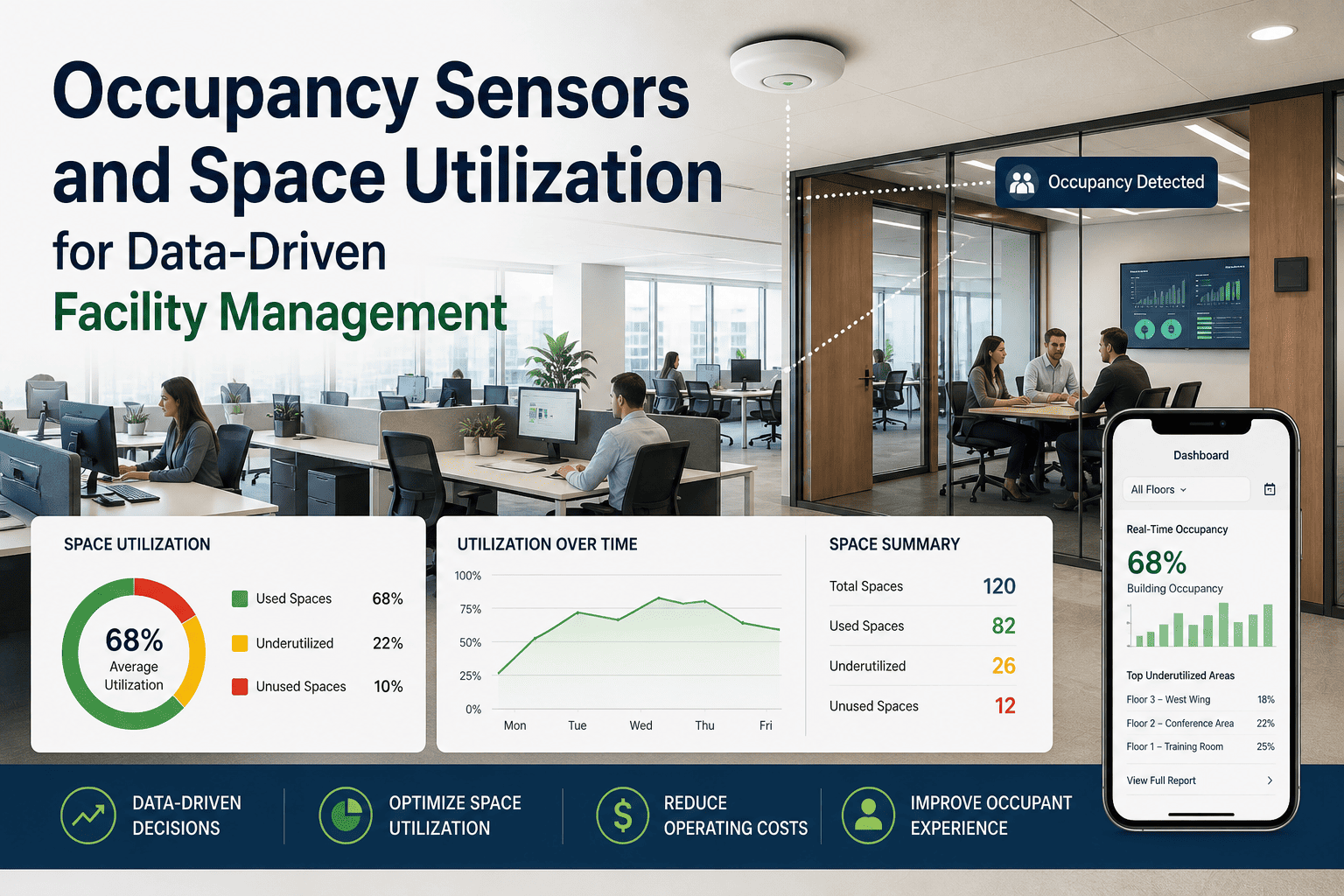
Most facilities are paying for space that nobody is using, it has been found that office utilization rates in the Americas averaged just 31% in 2023 — less than half the 64% pre-pandemic global average. European businesses alone could save $243 billion by eliminating wasted space in office buildings. Globally, the savings potential from workspace optimization reaches $1.5 trillion. Yet the majority of facility managers still make space planning decisions based on booking logs, anecdotal feedback from department heads, and occasional walkthroughs — none of which produce the granular, continuous utilization data that real space optimization requires. In 2026, IoT occupancy sensors combined with analytics platforms have made real-time space utilization data accessible, affordable, and actionable for facilities of any size. Assigned private offices sit unoccupied 77% of the workday on average. Desks in North American offices go unused roughly two-thirds of the time. And yet renewal and expansion decisions are routinely made without a single data point on how the current space is actually performing. This guide covers exactly how occupancy monitoring works, which sensor types generate which data, how heat maps and utilization dashboards translate raw signals into decision intelligence, and how Oxmaint's integrated platform connects space utilization data to maintenance scheduling and asset management. For a platform walkthrough specific to your portfolio, book a free demo directly.
Smart Buildings & IoT
Occupancy Monitoring and Space Utilization Analytics: How Facility Managers Cut Costs and Optimize Hybrid Workplaces
8 to 10 min read
31%
Average office utilization rate in the Americas — less than half the 64% pre-pandemic global benchmark (CBRE 2024 to 2025)
$1.5T
Global savings potential from workspace optimization — if organizations right-sized to actual occupancy data
77%
Of assigned private offices are unoccupied during the average workday — the core case for occupancy monitoring investment
95%
Accuracy achieved by AI-optical occupancy sensors — distinguishing people from objects and tracking active vs. passive occupancy
Oxmaint Connects Occupancy Data to Maintenance Scheduling, Asset Management, and Facility Operations in One Platform
Real-time occupancy monitoring integrated with preventive maintenance scheduling, work order management, and multi-site portfolio reporting. Free to start. Deployed in days.
What Occupancy Monitoring Actually Measures — and Why Booking Data Is Not Enough
Room booking systems tell you when a space was reserved. They do not tell you whether anyone showed up, how many people used it, how long they stayed, or whether the configuration matched actual demand. This gap between scheduled occupancy and actual occupancy is where most space cost waste originates — and it is invisible without sensor data.
What Booking Data Tells You
Room was reserved for a 10-person meeting at 2pm
Desk was booked for all day Tuesday
Floor plan shows 200 assigned workstations
Meeting room booking rate is 85% this week
Department A has 40 assigned desks on Level 3
Utilization rate estimated at 72% based on headcount vs. seats
What Occupancy Sensor Data Adds
3 people actually attended — room was 70% over-allocated for its real demand
Desk occupied for 2.5 hours — passive occupancy (bag on chair) for the remaining 5.5
Peak concurrent use of 94 workstations — 106 seats generating zero occupancy value
Room was vacant for 40% of booked time — ghost meetings inflating booking metrics
14 desks in Dept A never occupied on any day in past 60 days
Actual utilization 31% — 41 percentage points lower than headcount-based estimate
The 4 Sensor Technologies Behind Occupancy Monitoring — and Which Data Each Delivers
Sensor selection determines data granularity. Understanding what each sensor type captures — and what it cannot — prevents under-specification that generates incomplete data and over-specification that inflates deployment cost without additional operational insight.
PIR Motion Sensors
Entry Level
Hardware cost: $20 to $80 per sensor
Detects
Space occupied / vacant
Motion presence
Dwell time estimate
Does Not Detect
Headcount, passive occupancy, identity, or precise location within space
Best for: Small meeting rooms, individual offices, low-traffic corridors where presence vs. vacancy is the primary data requirement
Desk-Level Occupancy Sensors
Targeted
Hardware cost: $40 to $120 per desk sensor
Detects
Individual desk occupied/vacant
Active vs. passive occupancy
Duration per session
Daily occupancy patterns per desk
Does Not Detect
Zone-level headcount, movement patterns, or multi-person space dynamics
Best for: Hot desking environments, flex seating floors, and assigned desk portfolios where per-desk utilization data drives reconfiguration decisions
People Counting Sensors
High Accuracy
Hardware cost: $150 to $400 per sensor
Detects
Precise headcount (plus/minus 2 to 5%)
Entry and exit events
Peak occupancy times
Zone dwell time
Traffic flow patterns
Does Not Detect
Individual identity — fully anonymous. Does not distinguish active vs. passive object presence
Best for: Large open plan floors, conference centers, lobbies, and any space where accurate concurrent headcount is the primary planning data requirement
AI Optical Sensors
AI-Powered
Hardware cost: $250 to $600 per sensor
Detects
95% accuracy headcount
Active vs. passive occupancy
Zone-level heat maps
Movement pattern tracking
Object vs. person distinction
Privacy
Anonymous edge-processing — images never stored or transmitted. GDPR, SOC2 Type II, and ISO/IEC 27001 compliant
Best for: High-value decision environments where the distinction between active human presence and objects matters — critical for right-sizing, hot desking ROI calculation, and portfolio consolidation decisions
Oxmaint integrates occupancy sensor data from any hardware provider via open API — connecting real-time utilization signals to maintenance scheduling, cleaning work orders, and energy management without additional configuration consulting.
Connect your existing sensor infrastructure or configure new deployments. All occupancy data flows into the same asset and space management dashboard as your maintenance records. Talk to our team about your sensor infrastructure.
How Heat Maps and Utilization Dashboards Turn Sensor Data Into Actionable Intelligence
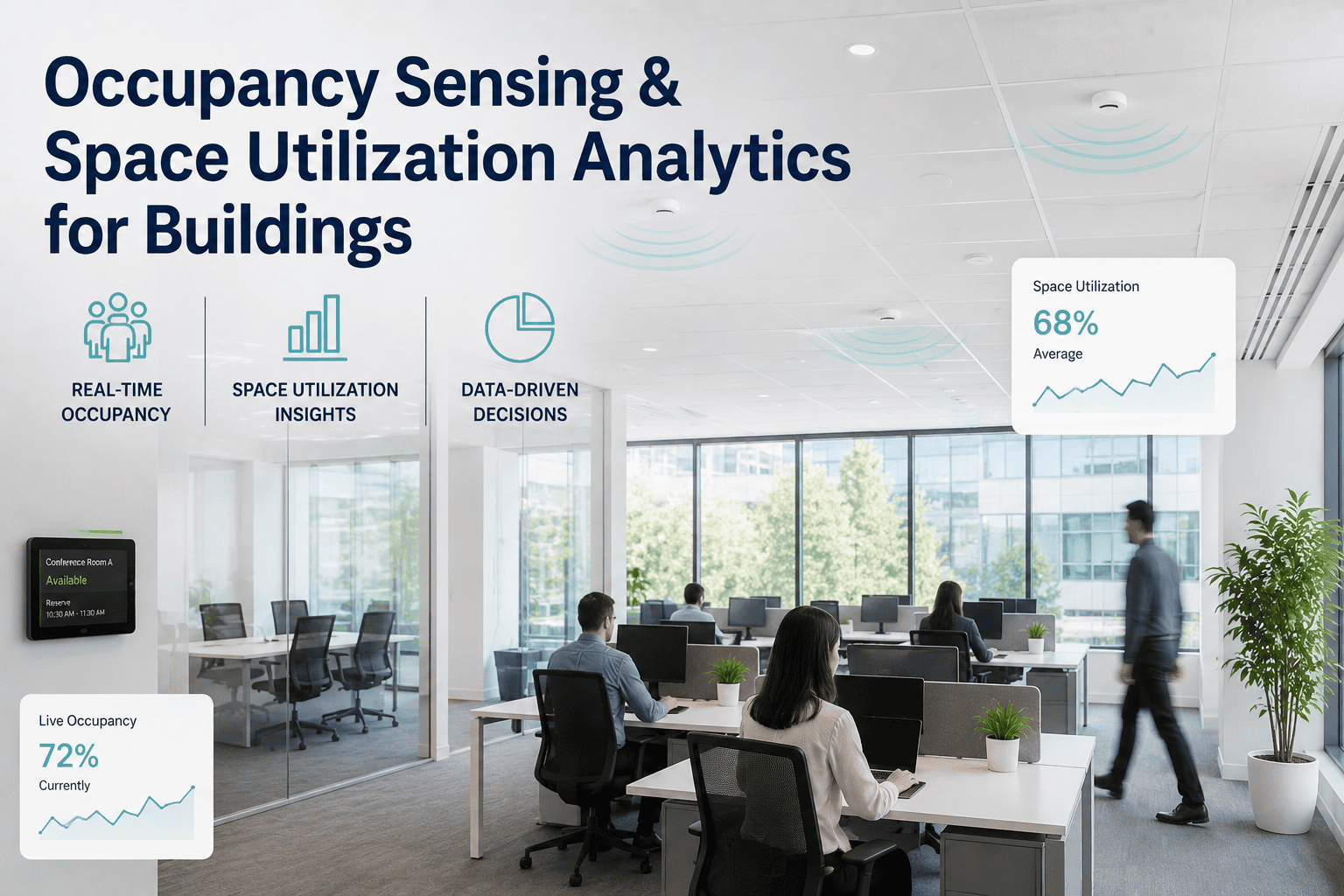
Raw sensor signals — seat occupied, motion detected, headcount registered — are operational data. Heat maps and utilization dashboards are what convert that data into the space planning intelligence that reduces costs, improves occupant experience, and justifies capital decisions.
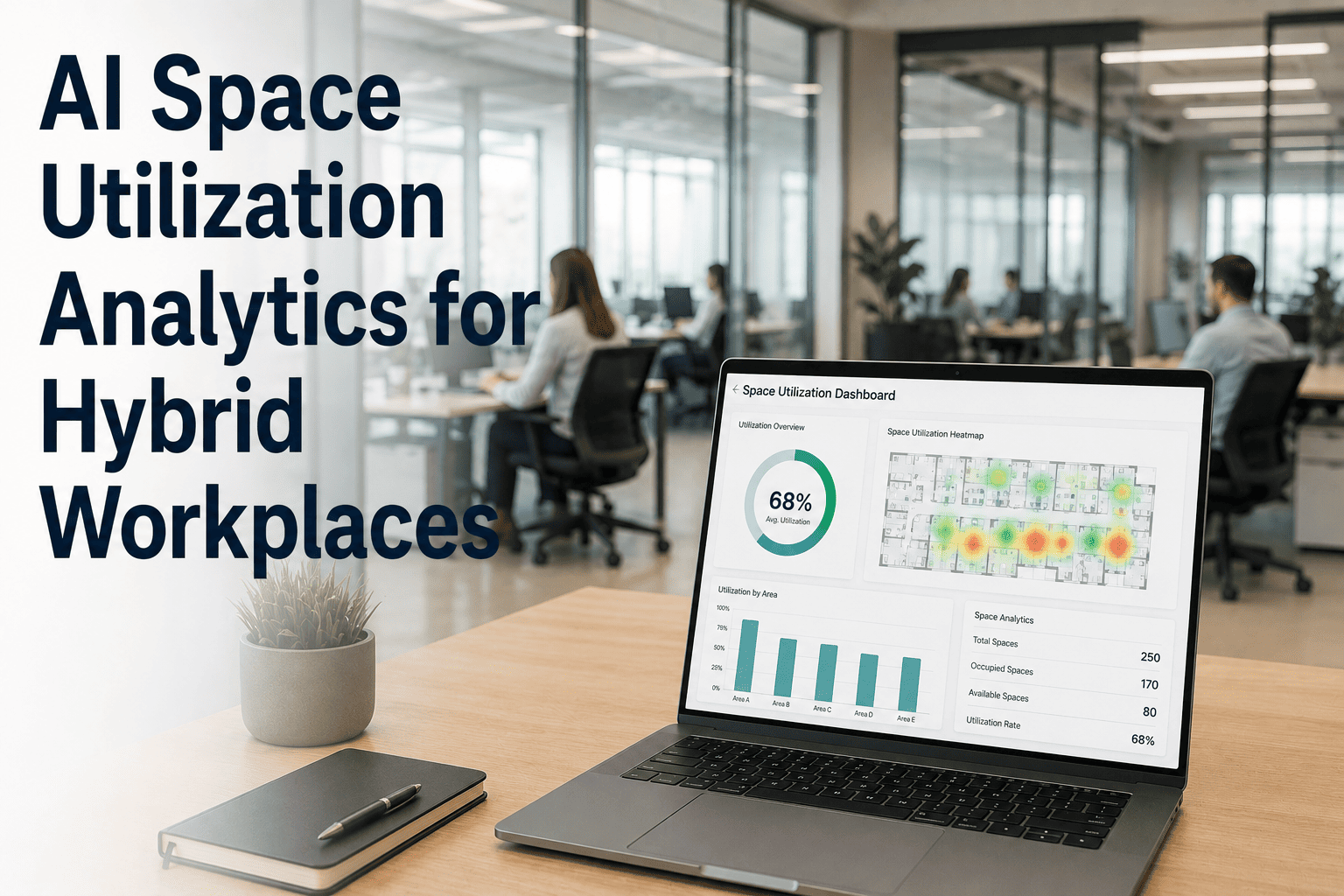
Occupancy Heat Maps
Floor plan overlaid with color-graduated utilization intensity — dark zones indicate consistently high occupancy, pale zones indicate consistently low or zero use. Updated in real time and filterable by hour, day, week, or month.
Decision enabled: Identify which areas justify investment in reconfiguration and which should be consolidated, sub-leased, or repurposed. A heat map showing 40% of a floor with near-zero occupancy for 6 consecutive weeks is a consolidation decision with data behind it.
Peak Demand vs. Average Utilization
Two-metric view showing the difference between peak concurrent occupancy (the highest headcount recorded in any single period) and average utilization (mean concurrent headcount across all measured periods). Most space planning is sized to peak — which is why average utilization is 31%.
Decision enabled: Right-size space to the 85th or 90th percentile of peak demand rather than the absolute maximum. This alone typically reduces required footprint by 15 to 25% versus peak-sized planning without materially degrading the occupant experience on high-demand days.
Ghost Meeting Detection
Comparison between room booking data and sensor-confirmed actual occupancy. A room booked for 10 people from 9am to 11am with sensor data showing 0 occupants during the booked window is a ghost meeting — space reserved and unavailable to others, but never used.
Decision enabled: Implement auto-release policies — rooms not checked in within 15 minutes of booking start are released to the available pool. Organizations implementing this based on ghost meeting data recover 15 to 30% of meeting room availability without adding a single room.
Space-Type Utilization Breakdown
Comparative utilization by space category — assigned desks, hot desks, collaboration zones, quiet focus areas, meeting rooms by size, phone booths, and social spaces — measured simultaneously across the same time period.
Decision enabled: Identify which space types are consistently over-subscribed (collaboration zones, medium meeting rooms) versus chronically underutilized (large boardrooms, assigned desks). Reconfigure in the direction the data indicates, not the direction managers assume.
Active vs. Passive Occupancy
AI optical sensors distinguish between an occupied seat with a person present (active) and an occupied seat with only a bag or laptop present (passive). VergeSense's 2025 data shows nearly one-third of all desk time is passive occupancy — a significant overstatement of actual desk utilization in standard reporting.
Decision enabled: True desk utilization, stripped of passive occupancy inflation, is typically 20 to 35% lower than standard occupancy reporting shows. This is the metric that accurately justifies hot desking ratios and desk reduction programmes to finance and real estate leadership.
Temporal Pattern Analysis
Occupancy trend over time — by hour of day, day of week, and week of month — showing the repeating patterns that characterize space demand in hybrid work environments. Tuesday, Wednesday, and Thursday peak occupancy is typically 2 to 3x Monday and Friday in hybrid portfolios.
Decision enabled: Schedule cleaning, maintenance, and HVAC optimization to actual occupancy patterns rather than flat daily schedules. Automatically reducing HVAC capacity on low-occupancy days based on temporal sensor data typically reduces HVAC energy consumption by 15 to 20% annually.
The Operational Impact: What Occupancy Data Changes Beyond Space Planning
01
Maintenance Scheduling Linked to Actual Occupancy
Cleaning and maintenance schedules based on flat daily frequency rather than actual occupancy clean spaces that have not been used and skip spaces that have been heavily occupied. Oxmaint connects occupancy sensor data to maintenance scheduling — rooms with zero occupancy on a given day trigger no cleaning work order; high-traffic zones trigger additional service calls. A 30-space office floor implementing occupancy-linked cleaning scheduling typically reduces cleaning labour hours by 18 to 25% while improving cleanliness scores in high-use areas by removing the fixed-schedule coverage gap.
02
Energy Optimization — HVAC and Lighting Tied to Real Presence
HVAC systems running to full capacity in spaces with no occupants are the single largest source of avoidable energy waste in commercial facilities. Occupancy sensors connected to building management systems enable demand-driven HVAC and lighting control — conditioning only the spaces that are occupied, at the levels that actual headcount requires. Facilities implementing occupancy-driven HVAC control consistently achieve 15 to 30% energy cost reductions. A 50,000 sq ft office building spending $180,000 annually on energy recovers $27,000 to $54,000 per year from this single integration, typically achieving full sensor investment payback within 8 to 18 months.
03
Real Estate Portfolio Right-Sizing With Evidence
The lease renewal or office footprint reduction decision requires reliable utilization data to justify to finance leadership and real estate committees. Anecdotal feedback from department heads consistently overstates space requirements — every department believes it uses its space fully and needs more. Sensor data showing actual concurrent peak utilization of 47% against 200 assigned workstations is a documentable, data-backed case for footprint reduction that finance teams can evaluate on its merits. Organizations that right-size based on occupancy data versus booking estimates consistently identify 15 to 30% footprint reduction opportunities that were invisible without sensor measurement.
04
Safety, Compliance, and Emergency Response
Occupancy monitoring generates continuous real-time headcount data per zone — the exact information that emergency evacuation procedures, fire safety compliance, and occupancy limit enforcement require. Rather than estimated headcount from manual sign-in systems, occupancy sensors provide verified, real-time zone counts that emergency response teams and safety officers can rely on. In regulated environments (healthcare, education, government), this also satisfies fire code and occupancy limit compliance documentation requirements that manual processes cannot reliably generate.
Occupancy Monitoring ROI: The Numbers Behind the Investment Decision
Typical Investment
PIR sensor deployment — 100 sensors
$5,000 to $8,000
Desk sensors — 100 desks
$6,000 to $12,000
AI optical sensors — 20 zones
$8,000 to $15,000
Analytics platform + CMMS integration
$6,000 to $18,000/yr
Installation and commissioning
$3,000 to $8,000
Total deployment (50,000 sq ft office)
$28,000 to $61,000
Annual Value Recovered
Energy cost reduction — HVAC and lighting (15 to 25%)
$27,000 to $45,000
Cleaning labour reduction — occupancy-linked scheduling
$12,000 to $28,000
Real estate cost reduction — right-sized renewal decision
$60,000 to $200,000+
Meeting room recovery — ghost meeting elimination
$8,000 to $20,000
FM staff time — eliminated manual space surveys
$6,000 to $14,000
Conservative annual value (ex. real estate savings)
$53,000 to $107,000
Frequently Asked Questions: Occupancy Monitoring and Space Utilization
QDo occupancy sensors violate employee privacy — and how do organizations address this?
This is the first question most FM teams encounter when proposing occupancy monitoring to HR or legal. The answer depends on the sensor type deployed and how occupancy data is used. Modern occupancy sensors are specifically designed to avoid privacy violations. PIR motion sensors detect presence only — they produce a binary signal (occupied/vacant) with no information about who is in a space. People counting sensors track aggregate headcount anonymously — they know there are 4 people in a room but not who they are. AI optical sensors (such as VergeSense's Infinity series) use edge-processing architecture where images are immediately converted to occupancy data and deleted — never transmitted or stored. The sensor knows a seat is occupied by a person rather than a bag, but has no ability to identify the person or record their activity. GDPR, SOC2 Type II, and ISO/IEC 27001 compliance frameworks all accommodate these anonymous occupancy sensor approaches when properly configured. The practical recommendation for FM teams is to involve HR and legal in the sensor selection process, confirm that the specific sensor model's data processing architecture meets your organization's privacy requirements, and communicate clearly to employees that occupancy monitoring is anonymous, aggregate, and focused on space planning rather than individual tracking.
Sign up for Oxmaint free to see how occupancy data integrates with facility operations, or
book a demo to discuss sensor integration options for your portfolio.
QHow long does it take to generate actionable space planning insights from an occupancy monitoring deployment?
The timeline to actionable insights depends on what decisions you need to make and how much historical data those decisions require. For immediate operational decisions — cleaning schedule adjustment, HVAC optimization, meeting room auto-release policy — 2 to 4 weeks of sensor data is typically sufficient to establish reliable patterns. You can see which spaces are consistently vacant by 6pm, which meeting rooms are consistently generating ghost meetings, and which floors have zero occupancy on Mondays and Fridays. For space configuration decisions — reconfiguring a floor to add more collaboration zones and reduce assigned desks — 60 to 90 days of data builds the temporal pattern confidence needed to justify a physical change. You can see whether low Tuesday desk utilization is a consistent pattern or a temporary period-specific anomaly. For portfolio-level decisions — lease renewal, footprint reduction, consolidation across sites — 6 months of data provides the statistical confidence and trend validation that finance and real estate committees require. One important nuance: hybrid work patterns are inherently seasonal, with August and holiday periods showing consistently lower utilization than March to June and September to November. A lease renewal decision supported by 6 months of data should include at least one full peak-occupancy cycle to avoid under-counting actual demand.
Book a demo to see how Oxmaint's analytics timeline applies to your specific portfolio type, or
sign up free to start building your utilization baseline.
QHow does occupancy monitoring data connect to maintenance and cleaning schedules in a CMMS?
The connection between occupancy data and maintenance scheduling is one of the most operationally valuable integrations available to facility teams — and one that most organizations have not yet implemented. In Oxmaint, occupancy sensor data flows into the operations platform via API from the sensor management system. The platform uses this data in three ways. First, condition-triggered cleaning work orders: when a space reaches a configured utilization threshold (for example, a meeting room occupied for 4 cumulative hours in a day), a cleaning work order is automatically created and assigned to the appropriate cleaning team member. Spaces that were not used that day generate no cleaning work order — eliminating the unnecessary cleaning of vacant areas that flat-schedule cleaning programmes generate. Second, preventive maintenance scheduling: HVAC filter replacement, air handling unit servicing, and lighting maintenance intervals can be triggered by actual runtime hours (derived from occupancy-driven operation) rather than calendar dates — ensuring service at actual usage intervals rather than arbitrary time periods. Third, low-occupancy maintenance windows: planned maintenance that requires space access (deep cleaning, electrical work, network infrastructure maintenance) can be automatically scheduled to the lowest-occupancy periods identified by the sensor data — minimising disruption to occupants without requiring manual coordination between FM and space management teams.
Sign up free to configure occupancy-linked maintenance workflows, or
book a demo to see the integration running in a live environment.
QWhat is the difference between occupancy rate and space utilization rate — and why does the distinction matter for FM decisions?
This distinction is frequently confused in FM reporting and creates systematic errors in space planning decisions when the two metrics are used interchangeably. Occupancy rate measures the percentage of a space's total capacity that is in use at a given point in time. If a 10-person meeting room has 4 people in it, the occupancy rate is 40%. If a 200-desk floor has 62 people working on it at 2pm on Wednesday, the occupancy rate is 31%. Space utilization rate measures the percentage of time a space is in use across a defined period. If a meeting room is occupied for 3 hours in an 8-hour workday, its utilization rate is 37.5%. If a desk is occupied for 2 days in a 5-day work week, its utilization rate is 40%. For most FM and real estate decisions, the relevant metric is utilization rate — because you are asking not just whether a space is in use right now, but whether it is generating enough use across its available hours to justify its cost. A meeting room with a 90% booking rate but a 35% actual utilization rate (because of ghost meetings) is not performing at its booking rate — it is performing at 35%, and the decisions about adding rooms, implementing auto-release policies, or downsizing should be based on the 35% figure. Oxmaint's space analytics dashboard reports both metrics simultaneously — occupancy rate in real time and utilization rate trended over configurable periods — so FM teams have the right metric available for the right type of decision.
Book a demo to see the utilization analytics dashboard, or
sign up free to begin tracking both metrics across your portfolio today.
QCan occupancy monitoring be deployed without replacing existing building infrastructure?
Yes — and this is one of the most important practical considerations for FM teams evaluating the investment. Modern occupancy sensor systems are designed to operate as an overlay on existing infrastructure, not as replacements for it. Most sensors connect via Wi-Fi, LoRaWAN, or Bluetooth Low Energy — protocols that use existing wireless infrastructure in most commercial buildings without requiring new network cabling. Battery-powered desk sensors and ceiling-mounted PIR sensors are typically self-installing: they mount with adhesive or simple screw fixtures and connect to the building's wireless network without electrician involvement. People counting sensors and AI optical sensors mounted at ceiling level require minor ceiling penetration for mounting but do not require connection to the building's electrical system — they operate on Power over Ethernet (PoE) or long-life batteries. For existing buildings with basic BACnet or Modbus building management systems, occupancy sensor data can integrate directly into the existing BMS for HVAC demand control without replacing the BMS hardware — the sensor acts as an additional data input source. Oxmaint's open API accepts occupancy data from any sensor brand or management protocol — existing sensor deployments (VergeSense, Density, Verkada, Cisco Meraki, Envoy) connect to the platform without replacing hardware.
Sign up free to evaluate Oxmaint's occupancy data integration for your specific building infrastructure, or
book a demo to discuss your current infrastructure and the right sensor overlay strategy for your facilities.
Your Space Is Generating Occupancy Data Whether You Capture It or Not. The Facility Teams Making Better Decisions Are the Ones Who Do.
Oxmaint connects real-time occupancy monitoring to maintenance scheduling, cleaning work orders, HVAC optimization, and portfolio reporting — giving facility managers the integrated platform that makes every square metre accountable. Free to start. Deployed in days across any number of sites.
Continue Reading
The resources below provide the broader energy, compliance, and sustainability context that determines how occupancy monitoring fits into a complete smart building and FM strategy.
Start Measuring What Your Space Is Actually Doing — Not What You Think It Is.
Oxmaint's integrated platform connects occupancy sensor data to maintenance scheduling, energy management, and portfolio reporting in one system. Free tier available — no credit card required. Paid tier unlocks full sensor integration, analytics dashboards, and multi-site portfolio management.