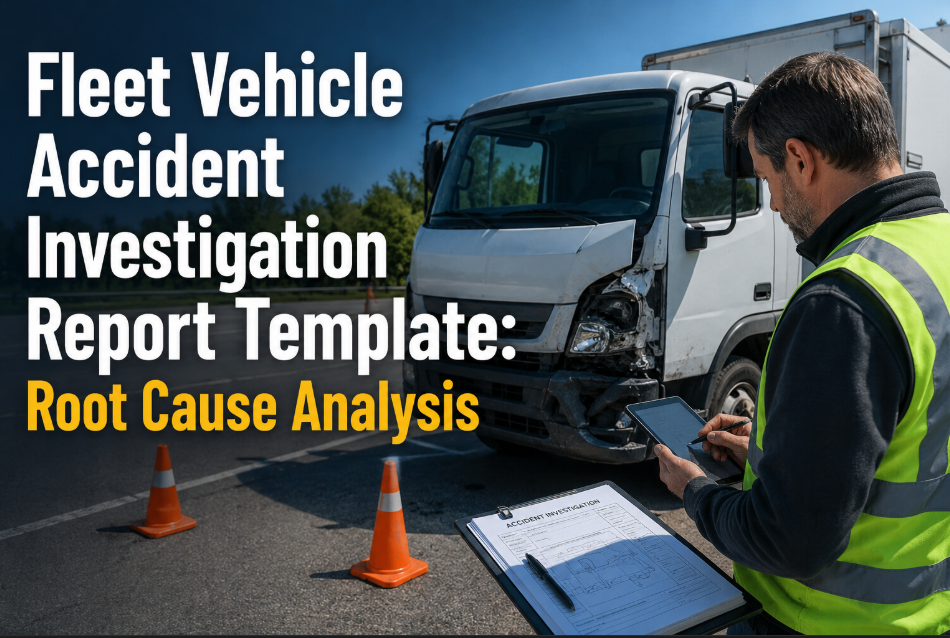
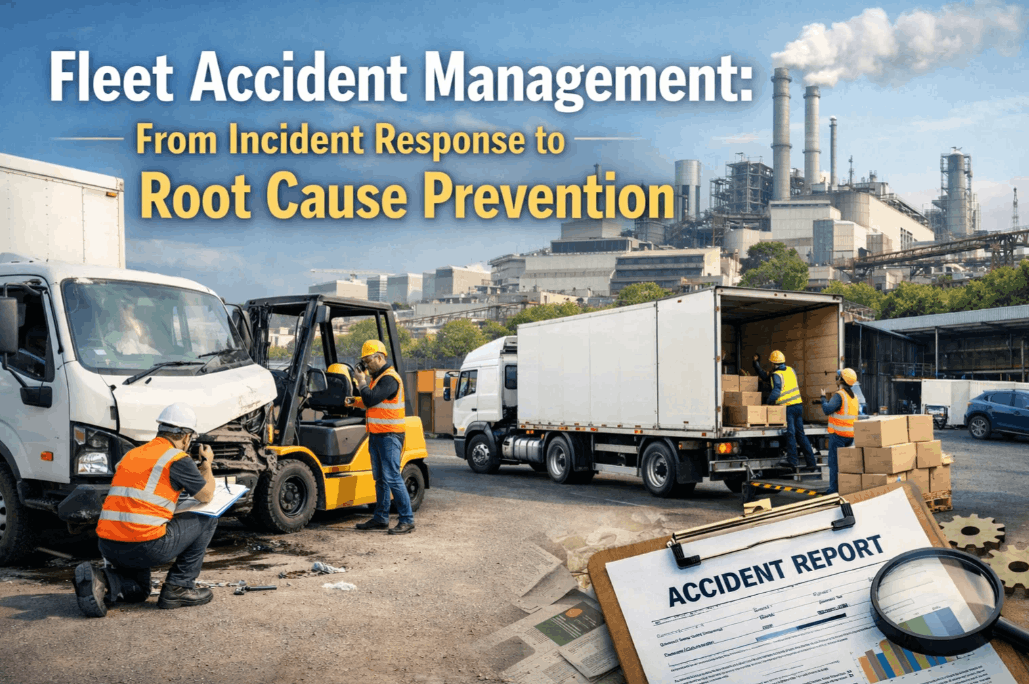
Every fleet safety program is only as strong as its incident and near miss reporting system — and in most fleets, that system is broken. OSHA data shows that for every serious workplace injury, there are approximately 300 near misses that went unreported. In fleet operations, the ratio is even worse: drivers underreport near misses at a rate of 12:1, meaning fleet safety managers are making decisions based on less than 8% of actual safety event data. The incidents you know about are the tip of the iceberg — the near misses you do not know about are the leading indicators that predict your next serious event. This incident and near miss reporting template provides a comprehensive documentation framework covering driver reports, vehicle damage assessment, injury recording, witness statements, root cause analysis, and corrective action tracking. Download it to establish a structured reporting culture, or deploy Oxmaint's digital safety reporting platform where drivers report incidents from their mobile devices in minutes, near misses are captured without stigma, and safety trends are visible in real time. Paper-based reporting creates friction that suppresses near miss data. Digital reporting removes friction and reveals the leading indicators that prevent serious events. Book a demo or start a free trial to see digital safety reporting in action.
Fleet Incident and Near Miss Reporting Template: Safety Event Documentation
Comprehensive safety event documentation covering driver incident reports, vehicle damage assessment, injury recording, witness statements, root cause analysis, and corrective action tracking. Digital and PDF formats for immediate deployment.
Capture the Safety Data That Prevents Serious Events
Use the PDF template for paper-based incident documentation. For mobile driver reporting, real-time safety analytics, and automated corrective action tracking, Oxmaint captures the near miss data that paper systems miss — because drivers will report digitally what they will not write on paper.
Template Sections and Documentation Structure
The template is designed to capture complete event documentation while being fast enough for drivers to complete at the scene. Each section serves a specific purpose in incident investigation, insurance claims, OSHA reporting, and corrective action planning.
Categorize the event as collision, near miss, property damage, personal injury, environmental release, or mechanical failure. Classification drives investigation depth, reporting requirements, and corrective action urgency. Near misses receive simplified forms to encourage reporting.
Structured narrative section with prompts for what happened, when, where, weather conditions, road conditions, and contributing factors. Guided questions produce more complete and useful narratives than blank text fields. Captures 47% more detail than unstructured forms per fleet safety research.
Vehicle diagram for marking damage locations, damage severity scale (cosmetic, functional, structural), drivability assessment, and tow requirement. Photo documentation prompts for all damage areas. Links to maintenance for repair work order creation.
Injured party identification, injury type and body part, first aid administered, medical treatment sought, hospital transport, and workers' compensation notification. OSHA 300 log classification guidance included. Critical for regulatory compliance and claims management.
Five-Why analysis framework, contributing factor checklist (driver behavior, vehicle condition, road environment, weather, training gap), and preventability determination. Structured RCA produces actionable findings rather than blame assignments. 73% of preventable incidents have identifiable training gaps.
Corrective actions assigned by responsible party, target completion date, verification method, and status tracking. Closes the loop between incident investigation and prevention. Without corrective action tracking, 82% of RCA findings are never implemented.
Incident vs. Near Miss: Why Both Matter Equally
Most fleet safety programs focus on incidents — events that resulted in damage, injury, or loss. But near misses are the leading indicators that predict where the next incident will occur. Capturing both creates a complete safety picture.
| Aspect | Incident Report | Near Miss Report |
|---|---|---|
| Definition | Event that resulted in damage, injury, or loss | Event that could have resulted in damage, injury, or loss |
| Documentation Depth | Full documentation — damage, injury, witness, RCA | Simplified — event description, location, contributing factors |
| Regulatory Requirement | Required by DOT, OSHA, and insurance | Not required but strongly recommended by OSHA |
| Predictive Value | Lagging indicator — tells you what already happened | Leading indicator — tells you where the next incident will occur |
| Reporting Barrier | Low — damage/injury forces documentation | High — drivers fear blame, see no benefit to reporting |
| Prevention Value | Moderate — reactive to events that already occurred | High — proactive prevention before events occur |
Near miss reporting rates increase 4.7x when drivers can report from their mobile devices in under 2 minutes — without fear of blame, without finding a paper form, and without waiting until they return to the office. Oxmaint's mobile safety reporting removes every barrier between a near miss event and a documented safety record. The data reveals patterns that prevent serious incidents before they happen.
Root Cause Analysis Framework
The template includes a structured Five-Why analysis framework that guides investigators from symptom to root cause. This prevents the common mistake of addressing symptoms (driver made a bad turn) instead of root causes (route assigned to vehicle too large for the street). Effective RCA identifies systemic issues that prevent multiple future incidents, not just the one being investigated. Fleets using Oxmaint link RCA findings to corrective actions that are tracked to completion — because the 82% of RCA findings that go unimplemented represent incidents waiting to recur. Book a demo or start a free trial to see corrective action tracking in practice.
Speed, distraction, fatigue, substance impairment, failure to yield, improper lane change, following distance, aggressive driving. Driver behavior contributes to 94% of crashes per NHTSA research. Training gaps identified here drive targeted coaching programs.
Brake deficiency, tire failure, steering malfunction, lighting defect, mirror inadequacy, visibility obstruction. Vehicle condition contributes to 12% of crashes. Links directly to maintenance — was the defect documented in a prior inspection? Was PM overdue?
Weather conditions, road surface, construction zones, visibility, lighting, traffic density. Environmental factors are present in 34% of fleet incidents. Identifies routes and conditions requiring additional safety protocols.
Scheduling pressure, route planning, training adequacy, policy clarity, safety culture, management expectations. The root causes that no one wants to acknowledge — but that drive the most impactful corrective actions. 73% of preventable incidents trace back to organizational factors.
Frequently Asked Questions
What incidents require OSHA reporting?
How do I encourage drivers to report near misses?
How long should incident records be retained?
Should near miss reports be anonymous?
Prevent the Next Serious Incident With Data You Capture Today
Every serious fleet incident was preceded by warning signs — near misses, minor events, recurring patterns. The fleets that prevent serious events are the ones that capture, analyze, and act on this leading indicator data. This template structures the capture. Oxmaint structures the analysis and action. Download the template to establish safety reporting, or go digital and uncover the near miss data that paper systems will never reveal.