A fleet coordinator at a regional distribution hub in Ohio lost three vehicles to no-start failures on the same February morning — battery voltage had looked fine on manual checks two days earlier. The real culprit was cold-cranking amp degradation, a pattern invisible to weekly visual inspections but detectable weeks ahead through continuous voltage and charge-cycle analysis. Those three vehicles sat idle for an average of 11 hours each, costing over $19,000 in downtime, towing, and rush labor. If your fleet still treats battery health as a monthly checkbox, start a free trial with Oxmaint to see real-time AI battery monitoring in action, or book a demo with our fleet specialists today.
AI-Powered Predictive Maintenance / Fleet Battery Management / Failure Prevention
Fleet Battery Health Monitoring: AI That Predicts Failure Before Your Drivers Call for a Tow
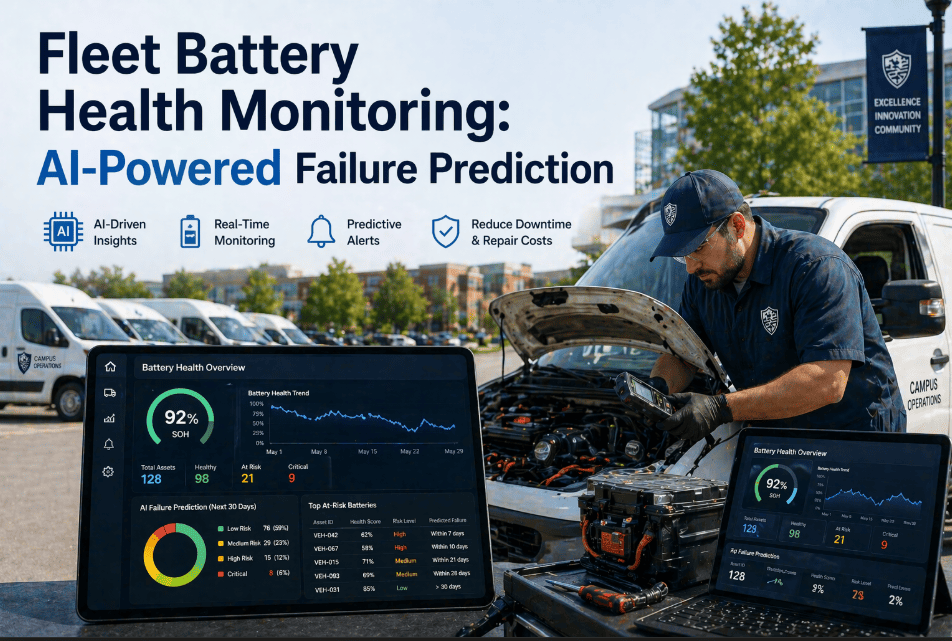
Battery failure is the leading cause of no-start incidents in commercial fleets. Oxmaint AI monitors voltage, State of Health, charge cycles, and thermal stress continuously — predicting battery failures days before they happen and scheduling replacements before a single route is disrupted.
46%
of fleet no-start incidents traced to battery failure
$191B
predictive maintenance market value projected by 2032
85–95%
AI failure prediction precision for component health
3.5x
cost of emergency replacement vs. planned service
Start Monitoring Today
Predict Battery Failures Before They Cost You Routes and Revenue
Oxmaint integrates with your fleet's telematics and OBD data to deliver continuous battery condition monitoring — automated alerts, scheduled replacement workflows, and a fleet-wide health dashboard your team can act on in minutes.
What Is Fleet Battery Health Monitoring?
Fleet battery health monitoring uses IoT sensors and machine learning to track every measurable dimension of a battery's condition — not just whether the engine starts today. Key parameters include State of Health (SOH), State of Charge (SOC), Cold Cranking Amps (CCA), internal resistance, charge cycle count, and thermal operating history. Traditional fleet management replaces batteries on a schedule; AI monitoring tracks them as assets with a measurable remaining useful life. The difference is measured in tow bills avoided and routes completed. See how condition-based battery management works in your operation — start a free trial for 30 days or book a demo to walk through the monitoring workflow.
Battery Health Lifecycle — The Four Stages Oxmaint Tracks Continuously
Stage 1
Optimal
SOH 80–100% | CCA within spec
Full charge capacity, consistent voltage output. Routine monitoring only — no action window required.
Stage 2
Early Degradation
SOH 65–79% | CCA declining
Charge cycles lengthening. Oxmaint flags a 3–6 week replacement planning window before risk climbs.
Stage 3
Critical Threshold
SOH 50–64% | CCA deficient
Work order auto-generated. Cold weather or high-draw events carry significant no-start probability.
Stage 4
Imminent Failure
SOH below 50% | Internal resistance elevated
Replacement escalated to urgent. Any extreme operating condition will result in field failure without immediate action.
Four Ways Battery Failure Is Silently Draining Your Fleet Budget
01
No-Start Breakdowns at Peak Operating Hours
Battery failures spike in extreme cold and heat — precisely when fleet pressure is highest. Each no-start event costs an average of $480 in direct expenses before lost-route revenue is counted. Without early warning, every aging battery is a ticking liability.
02
Calendar-Based Replacement Wastes Thousands Per Cycle
Replacing batteries every 3 years regardless of condition means discarding batteries with 40% remaining life alongside ones already at critical degradation. A 100-vehicle fleet replacing on schedule wastes an estimated $18,000–$24,000 per cycle in premature replacements alone.
03
Thermal Stress Fails Batteries That Passed Their Last Test
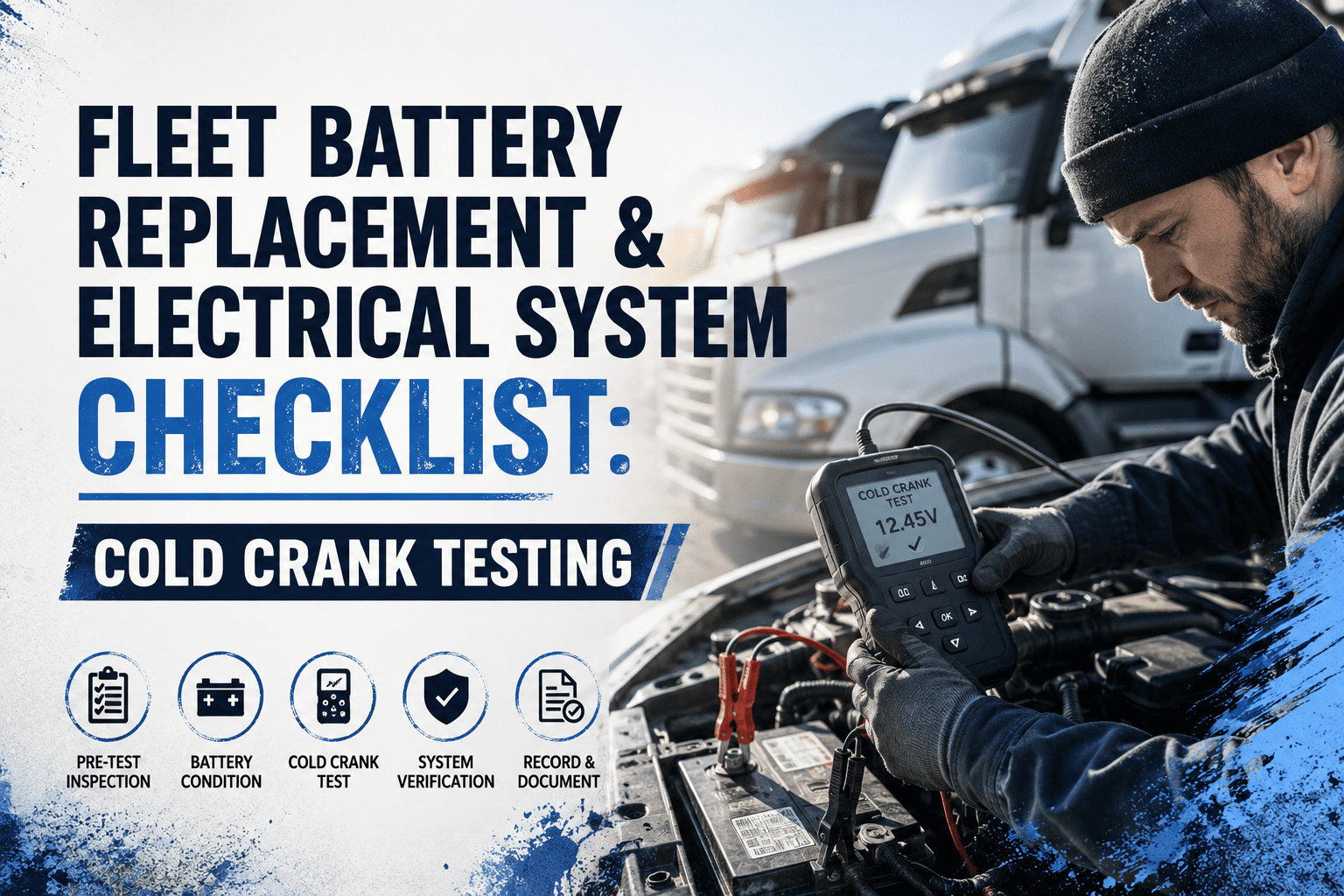
A battery that tests fine at 70°F can fail at -10°F — thermal stress accelerates internal resistance in ways visual inspection never detects. Cold-cranking amp loss follows predictable curves that AI models track continuously, but only if temperature data is collected alongside voltage.
04
EV Transition Multiplies Battery Complexity
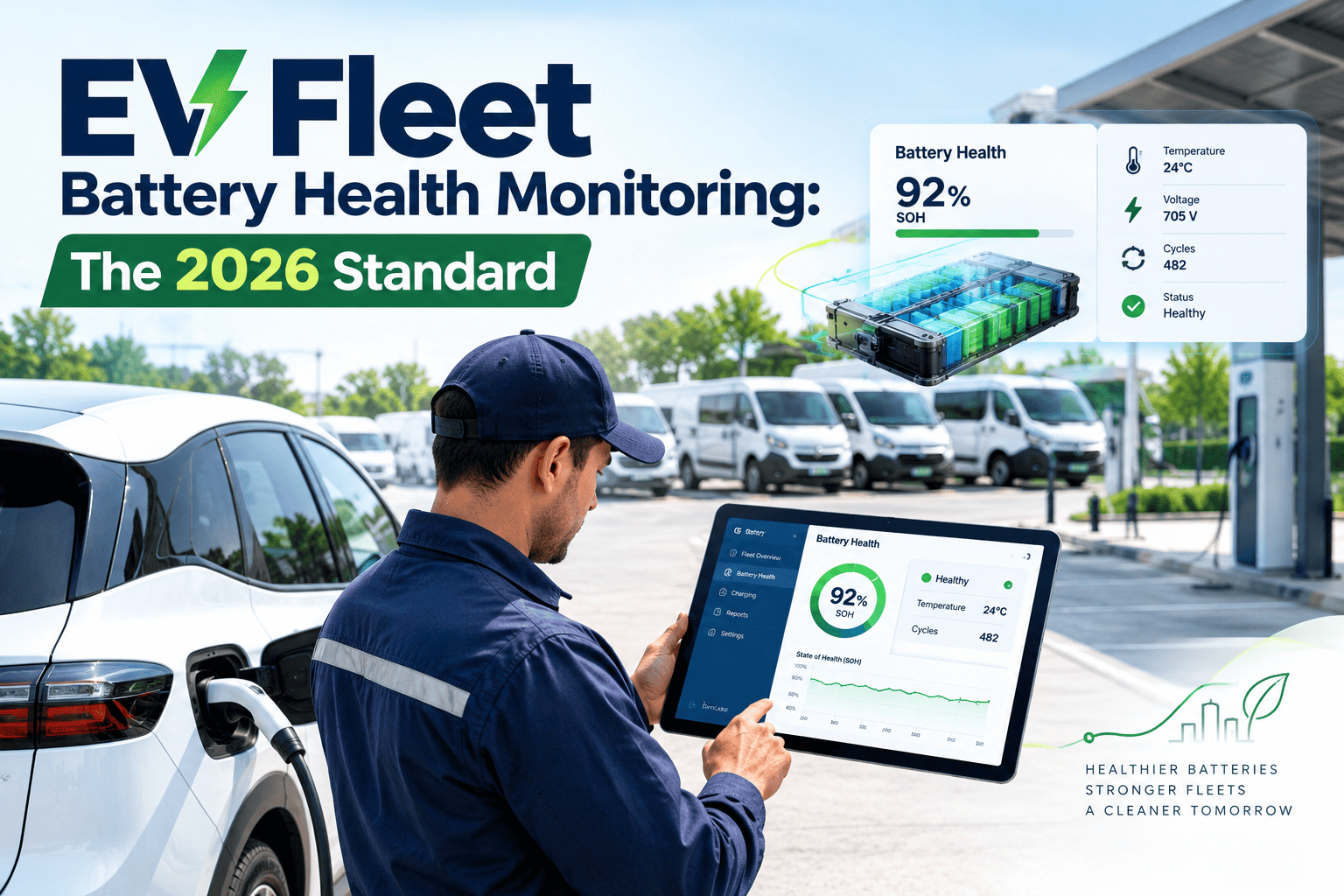
Mixed fleets — EVs alongside ICE vehicles — require two different monitoring frameworks. EV pack health demands cell-level SOH tracking, charge depth analysis, and thermal management oversight. Managing this manually across a mixed fleet without a unified platform is operationally unsustainable.
How Oxmaint AI Monitors and Predicts Fleet Battery Health
Oxmaint connects to telematics systems and OBD data streams to deliver continuous battery condition monitoring across every vehicle in your fleet — surfacing degradation patterns weeks before failure, automating replacement scheduling, and eliminating the guesswork of interval-based battery management. Want to see it working on your asset list? Start a free 30-day trial or book a demo with our team.
01
Continuous Voltage and CCA Monitoring
Real-time voltage readings and cold-cranking amp trend analysis across every vehicle. A drift of more than 0.15V over 30 days triggers an automatic alert — detecting degradation curves long before visual inspection would show anything unusual.
Alert fired 18–42 days before typical failure event
02
State of Health Scoring Per Vehicle
Each battery receives a live SOH score from 0–100%, updated continuously from charge/discharge cycle data. Below 70% flags a planning window. Below 60%, the work order is created automatically and escalated to fleet manager review without any manual steps.
Remaining useful life accurate to within 2 weeks
03
Charge Cycle Count and Depth Analysis
Every charge cycle is logged — shallow cycles, deep discharge events, and fast-charge sessions. Patterns linked to accelerated degradation (repeated deep discharges, short partial cycles) are flagged for operational scheduling adjustments and driver behavior coaching.
20–30% battery life extension through cycle optimization
04
Temperature-Correlated Degradation Modeling
Operating temperature history is cross-correlated with SOH decline rate. Batteries with repeated extreme-cold cycle exposure see their failure risk recalculated upward. Pre-season alerts warn fleet managers before winter, allowing proactive replacement before the first freeze.
Cold-weather no-starts reduced by up to 78%
05
Automated Replacement Work Order Generation
When Oxmaint predicts a battery will reach critical SOH within 14 days, a replacement work order is created automatically — assigned to the next scheduled shop visit or triggered for priority scheduling. The battery is replaced before it fails.
Unplanned no-starts converted to 15-minute planned visits
06
Fleet-Wide Battery Health Dashboard
Every battery in the fleet — from ICE start batteries to EV packs — ranked by SOH and failure risk in a single dashboard. Fleet managers see which vehicles need attention this week, which run for another month, and where next quarter's replacement budget should be directed.
Full fleet battery status reviewed in under 3 minutes
Manual Battery Checks vs. Oxmaint AI Monitoring
| Category | Manual / Schedule-Based | Oxmaint AI Monitoring | Business Impact |
|---|
| Failure detection timing | After failure or at next scheduled check | 18–42 days before failure event | Eliminates roadside no-starts |
| Data collection | Point-in-time manual voltage tests | Continuous voltage, SOH, temperature, cycles | Complete real-time picture |
| Replacement scheduling | Fixed calendar intervals regardless of condition | Condition-based with predicted remaining life | 20–35% reduction in replacement cost |
| EV battery support | Separate manual process required | Cell-level SOH, thermal, charge depth | Mixed-fleet monitoring unified |
| Work order creation | Manual after technician inspection | Automated when SOH threshold crossed | Zero missed replacements |
| Temperature risk modeling | Not performed | Seasonal alerts from degradation history | Cold-weather failures prevented |
The ROI of Proactive Battery Management
30–50%
Reduction in unplanned fleet downtime
Consistently reported by fleets that deploy AI predictive monitoring across all component types
22%
Battery failure predicted 10+ days in advance
AI voltage drift detection outperforms manual inspection by identifying degradation weeks early
$292K
Net annual savings for a 50-vehicle fleet
From prevented engine damage, eliminated emergency callouts, and optimized replacement cycles
6–12 mo
Typical time to documented ROI
Most fleets recover the platform cost through emergency repair savings alone within the first quarter
Frequently Asked Questions
What battery parameters does Oxmaint monitor in real time?+
Oxmaint monitors terminal voltage, State of Health (SOH), State of Charge (SOC), cold-cranking amp trend, charge cycle count and depth, internal resistance drift, and operating temperature history. For EV battery packs, cell-group-level SOH is tracked alongside thermal performance, charge event logging, and depth-of-discharge patterns. All data streams continuously to the fleet dashboard via telematics integration.
Start a free trial to see the monitoring dashboard configured for your fleet.
Does this work for both traditional ICE and EV fleets?+
Yes. Oxmaint handles conventional 12V/24V lead-acid and AGM batteries for ICE vehicles, and lithium-ion pack monitoring for EVs and hybrids — all in one unified dashboard. EV battery monitoring uses a cell-group SOH model tracking pack degradation from charge depth, thermal exposure, and cycle frequency, delivering range-loss predictions before they affect daily operations.
Book a demo to see mixed-fleet monitoring configured.
How does temperature affect Oxmaint's failure predictions?+
Temperature is one of the strongest predictors of battery failure risk. Oxmaint cross-correlates each battery's thermal exposure history with its SOH decline rate, producing a temperature-adjusted failure probability score updated continuously. Batteries with repeated extreme-cold cycles see their predicted failure date moved forward accordingly. Pre-season alerts are generated automatically 3–6 weeks before winter and summer peaks, giving fleet managers a clear replacement window before conditions put those batteries at failure risk.
How quickly does Oxmaint alert the team before a battery fails?+
Oxmaint fires a proactive alert when a battery's SOH falls below a configurable threshold — typically 70% for a planning alert and 60% for an urgent replacement work order. At typical fleet degradation rates, this means notification arrives 18–42 days before the battery reaches critical failure probability. Alerts route to the fleet manager dashboard, mobile app, and email simultaneously. The work order is created automatically and assigned to the next shop visit or escalated for priority scheduling based on severity level.
Fleet Battery Intelligence — Oxmaint
Stop Losing Routes to Batteries That Should Have Been Replaced Last Month
Oxmaint AI battery monitoring delivers continuous SOH scoring, temperature-correlated failure prediction, automated replacement work orders, and a unified fleet dashboard — so your operations team knows exactly which batteries need attention this week and which vehicles are safe to run for another 60 days.
Zero
No-start surprises with continuous AI monitoring
18–42 days
Early warning lead time before typical failure
30–50%
Reduction in unplanned downtime reported
1 platform
ICE and EV batteries monitored together