A dead battery is the cheapest component failure that produces some of the most expensive downtime in a fleet. A truck that will not start misses its route, strands a driver, and often triggers a roadside call that costs many times the battery itself. Most of these failures are predictable, because batteries degrade in measurable ways long before they quit. Fleets that log test results, install dates, and replacements against each vehicle can swap batteries on their schedule instead of the road's, and a fleet maintenance software platform keeps that history in one place.
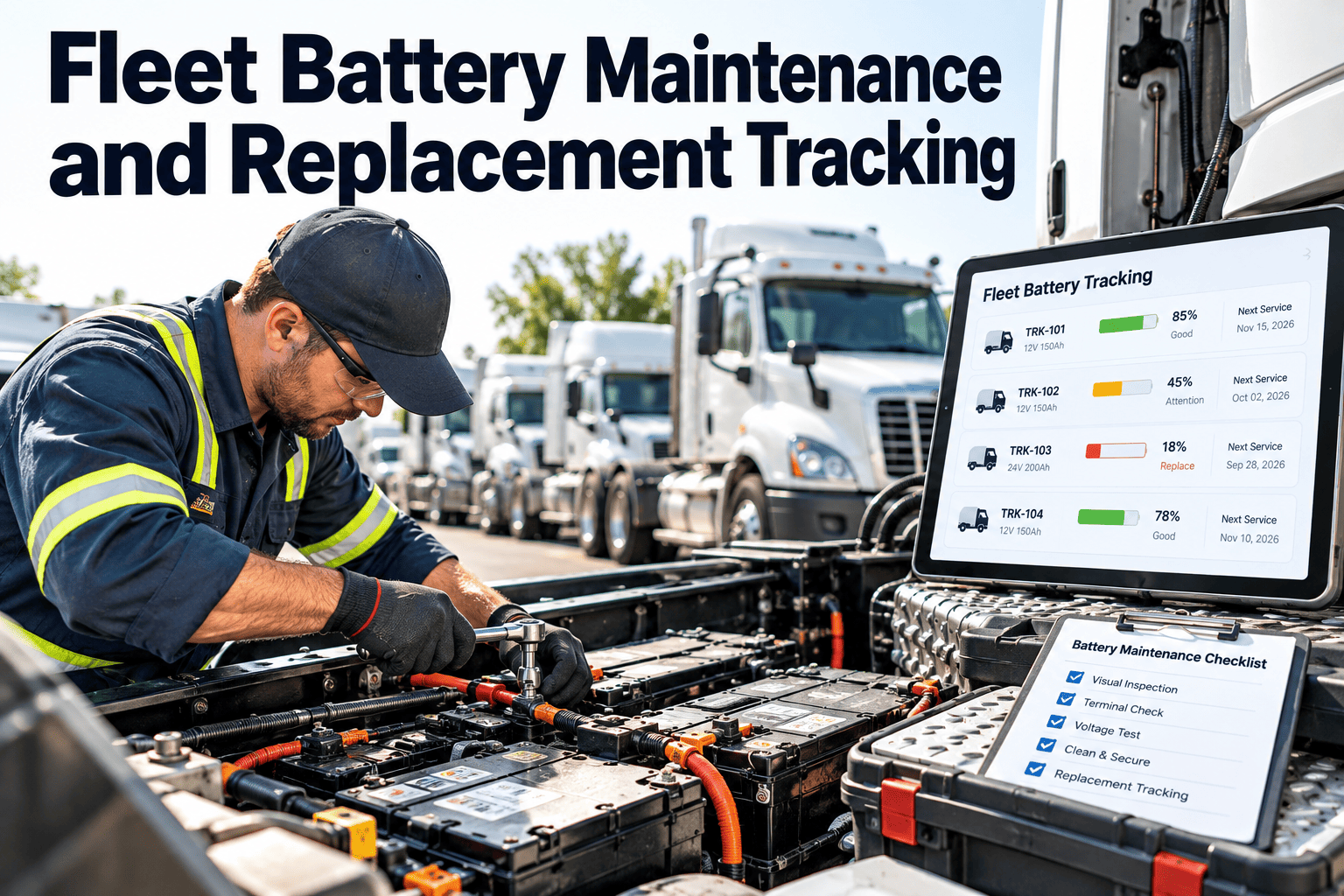
Fleet Battery Maintenance and Replacement Tracking
Stop treating batteries as run-to-failure parts. Track age, test results, charging health, and replacements per vehicle so no-start events become planned work orders.
Why Fleet Batteries Fail Earlier Than Expected
Most commercial batteries last roughly three to five years, but service life varies widely with climate, duty cycle, and charging system health. The same battery model can last twice as long in one vehicle as in another.
Common Root Causes
- Heat exposure, which accelerates internal degradation and water loss
- Short trips and heavy idling that never fully recharge the battery
- Parasitic draw from telematics, lift gates, radios, and aftermarket equipment
- Loose, corroded, or undersized cables and terminals
- A failing alternator or voltage regulator that undercharges or overcharges
- Vibration damage from poor hold-downs on off-road or vocational units
Why It Goes Unnoticed
- Install dates live on a sticker or in a technician's memory
- Warranty terms are not tied to the vehicle record
- Slow cranking is reported verbally, never logged
- Replaced batteries are treated as parts issues, not asset history
- Seasonal weak-battery spikes are handled reactively every winter
What a Battery Test Should Record
A reading is only useful if it is comparable over time. Log the same measurements at every service so a downward trend is visible before the failure.
| Check | What It Shows | Typical Reference | Action Trigger |
|---|---|---|---|
| Resting voltage | State of charge | About 12.6V fully charged (12V lead-acid) | Repeated readings near 12.4V or lower |
| Load or conductance test | Ability to deliver cranking current | Compare to rated CCA | Falls well below rating or fails test |
| Charging voltage | Alternator and regulator health | Roughly 13.7V to 14.7V running | Outside range, open a corrective work order |
| Terminals and cables | Resistance and corrosion | Clean, tight, no heat marks | Corrosion, looseness, damaged insulation |
| Parasitic draw | Key-off drain | Per OEM specification | Draw above spec on units that sit idle |
Always confirm thresholds against the vehicle and battery manufacturer's specifications. AGM, flooded, and hybrid or EV auxiliary batteries differ.
The Battery Lifecycle Fleets Should Track
Receive and Install
Record part number, group size, CCA, supplier, warranty end date, and the date code against the vehicle's asset record.
Inspect at Every PM
Add battery and charging checks to preventive maintenance and pre-trip inspections so readings accumulate automatically.
Watch the Trend
Slow cranking, repeated jump starts, and declining test values move a unit onto a watch list before it fails.
Replace on Schedule
Generate a planned work order, reserve stock, and schedule the swap during existing downtime, ahead of cold or hot seasons.
Close the Loop
Log the removed battery's age and failure mode, claim warranty where valid, and record disposal or core return.
Turn Battery Data Into Planned Replacements
Put install dates, test results, and warranty terms on every vehicle record and let scheduled checks surface weak batteries early.
Reactive vs Tracked Battery Management
Run to Failure
- Failures found at the yard gate or on the road
- Jump starts and road service calls not recorded
- Batteries bought urgently at retail prices
- Warranty claims missed for lack of dates
- Root causes such as alternators go undiagnosed
Tracked and Planned
- Weak batteries flagged from inspection and test data
- Every no-start linked to an asset and a work order
- Bulk purchasing and stocked common group sizes
- Warranty dates stored with the installed battery
- Repeat failures trigger charging system diagnosis
Data Fields Worth Capturing per Battery
KPIs That Show Whether Battery Management Works
Setting Up Battery Tracking in Oxmaint
Asset records
Attach battery details and warranty dates to each vehicle in asset management.
Inspections and PM
Add voltage, load test, and terminal checks to mobile inspection and preventive maintenance schedules.
Work orders
Failed checks open work orders automatically, with corrective tasks for charging system faults.
Inventory
Set reorder points on common group sizes so the replacement is on the shelf before the swap.
Reporting
Dashboards show battery age, replacement forecasts, and failure trends by vehicle group.
Battery Maintenance Questions
How often should fleet batteries be tested?
Should we replace batteries by age or by condition?
Why do some vehicles keep killing batteries?
How does software help with warranty claims?
Can we start with a small group of vehicles?
Replace Batteries on Your Schedule, Not the Road's
Give every vehicle a battery history, schedule the checks, and turn weak readings into planned work orders before the next no-start.