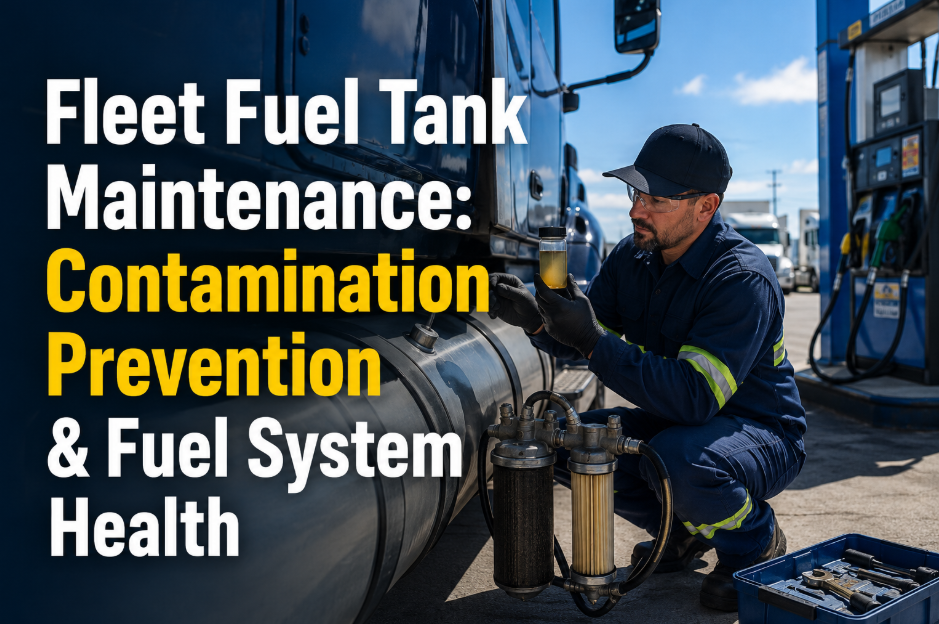
Diesel fuel contamination is one of the most expensive and preventable problems in commercial fleet operations. When water, microbial growth, sediment, or oxidized fuel degrades the quality of fuel sitting in your tanks, the damage cascades — clogged injectors, failed fuel pumps, premature filter replacement, and unplanned vehicle downtime that pulls trucks off route without warning. Industry data shows fuel contamination causes 12% of all diesel fleet fuel system failures, and the average injector replacement runs $1,200 to $3,500 per vehicle. Most fleet managers do not discover contaminated fuel until a vehicle fails, because fuel tank inspection and water separator service are treated as reactive tasks rather than scheduled preventive work. A structured fuel tank maintenance program — with defined inspection intervals, water separator service schedules, fuel polishing protocols, and microbial treatment procedures — eliminates the reactive cycle and protects the entire fuel system from the tank forward. Oxmaint gives fleet maintenance teams the CMMS infrastructure to schedule, assign, and document every fuel system PM task automatically, so contamination is caught before it reaches injectors. If your fleet's fuel system PMs are not on an automated schedule today, start a free trial or book a demo to see how automated fuel system scheduling works for your fleet size.
Fleet Fuel Tank Maintenance: Contamination Prevention and Fuel System Health
Fuel contamination silently destroys injectors, pumps, and filters before a vehicle ever breaks down on route. Structured PM schedules, water separator service, and CMMS-tracked fuel quality management protect your fuel system from the tank forward.
Fuel Contamination Does Not Announce Itself — It Builds Until a Truck Stops Running
Water ingress, microbial colonies, sediment accumulation, and oxidized fuel all degrade silently inside your tanks. By the time a driver notices sluggish throttle response or a check engine light, the fuel system damage is already done. Oxmaint schedules water separator drain intervals, fuel filter replacement cycles, and annual tank inspection work orders automatically — so your team catches contamination before it reaches injectors. Start a free trial or book a demo to see fuel system PM scheduling in action for your fleet.
The Four Fuel Contamination Threats That Damage Commercial Diesel Fleets
Each contamination type has a different source, a different progression timeline, and a different damage pathway through the fuel system. Effective tank maintenance addresses all four — not just the most visible one.
Water in diesel fuel creates a layering effect that corrodes tank walls, supports microbial growth, and causes injector steam damage at operating temperature. Even 0.1% water content by volume accelerates filter plugging and injector wear. Water separator service every 15,000–25,000 km is the primary control measure.
Bacteria and fungi colonize the water-fuel interface in diesel tanks, producing a dark sludge that clogs filters at a rate of 10–20x faster than clean fuel. Microbial contamination is the leading cause of unexplained repeat filter clogging in commercial fleets and requires biocide treatment plus physical tank cleaning to resolve.
Rust particles from corroding steel tanks, delivery hose debris, and oxidized fuel gum deposits accumulate at tank bottoms and become mobile during temperature cycling or vehicle vibration. Particulates above 4 microns cause injector scoring and premature pump wear — fuel polishing removes them before they reach the engine.
Diesel fuel begins to oxidize and form gum deposits within 30 days in high-temperature storage and within 6–12 months in normal conditions. Oxidized fuel produces varnish deposits on injector tips, increases filter plugging frequency, and reduces combustion efficiency — measurable as increased fuel consumption per km on monitored vehicles.
Fleet Fuel Tank Maintenance: The Complete Service Schedule
A structured fuel system maintenance program covers four service tiers — each with a defined interval, specific task list, and documentation requirement. Missing any tier creates gaps that allow contamination to progress undetected.
Why Commercial Fleets Struggle with Fuel System Health
Fleet managers have no real-time signal that fuel is degrading between scheduled services. Contamination builds invisibly until a filter plugs or a vehicle loses power on route — the first sign of a problem that started weeks earlier in the tank.
When vehicles are under dispatch pressure, water separator drains are skipped as "not urgent." Within three to four missed intervals, accumulated water supports microbial growth that clogs the primary fuel filter — turning a $45 separator drain into a $400 filter replacement and potential injector inspection.
Switching between summer and winter diesel blends, or receiving deliveries from multiple suppliers, creates fuel compatibility issues and accelerates oxidation. Fleets without a documented fuel quality management protocol experience seasonal spikes in filter replacement frequency — often misattributed to vehicle age.
Without records of water separator drain volume, filter replacement frequency, and fuel system complaints by vehicle, fleet managers cannot identify which vehicles in the fleet have chronic fuel system issues. Repeat injector work on the same vehicle goes unconnected to the root cause in the fuel tank.
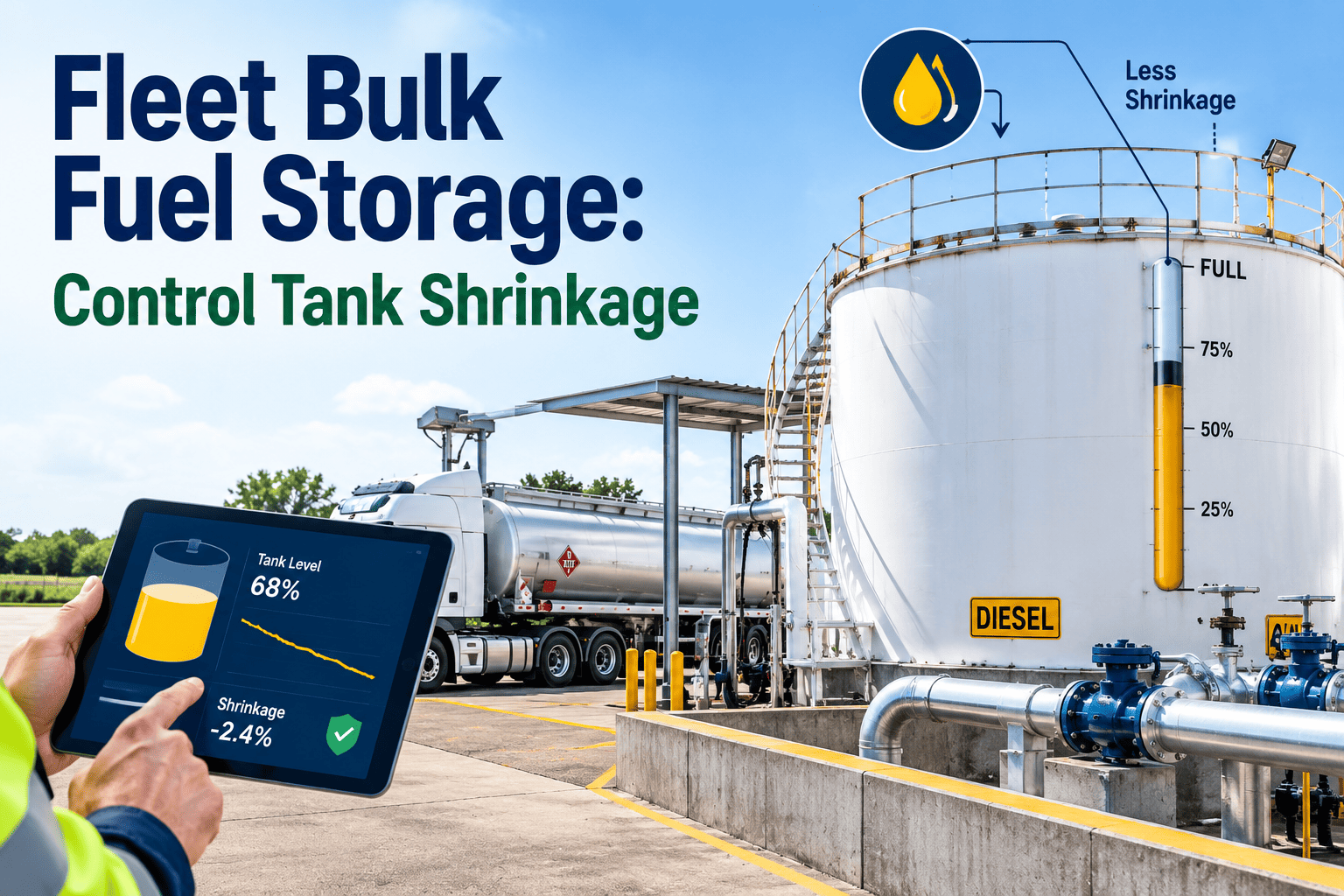
If the fleet's bulk fuel storage tank is contaminated — a common problem in above-ground tanks in humid climates — every vehicle refueled from that tank receives contaminated fuel. Without scheduled bulk tank inspection and water bottom sampling, a single contamination event affects every vehicle in the fleet simultaneously.
When an injector or fuel pump fails prematurely, OEM warranty claims and insurance subrogation against fuel suppliers both require documented proof of maintenance history. Fleets without complete fuel system service records forfeit warranty coverage and have no evidence trail to support third-party liability claims for contaminated delivery fuel.
How Oxmaint Monitors and Manages Fleet Fuel System Health
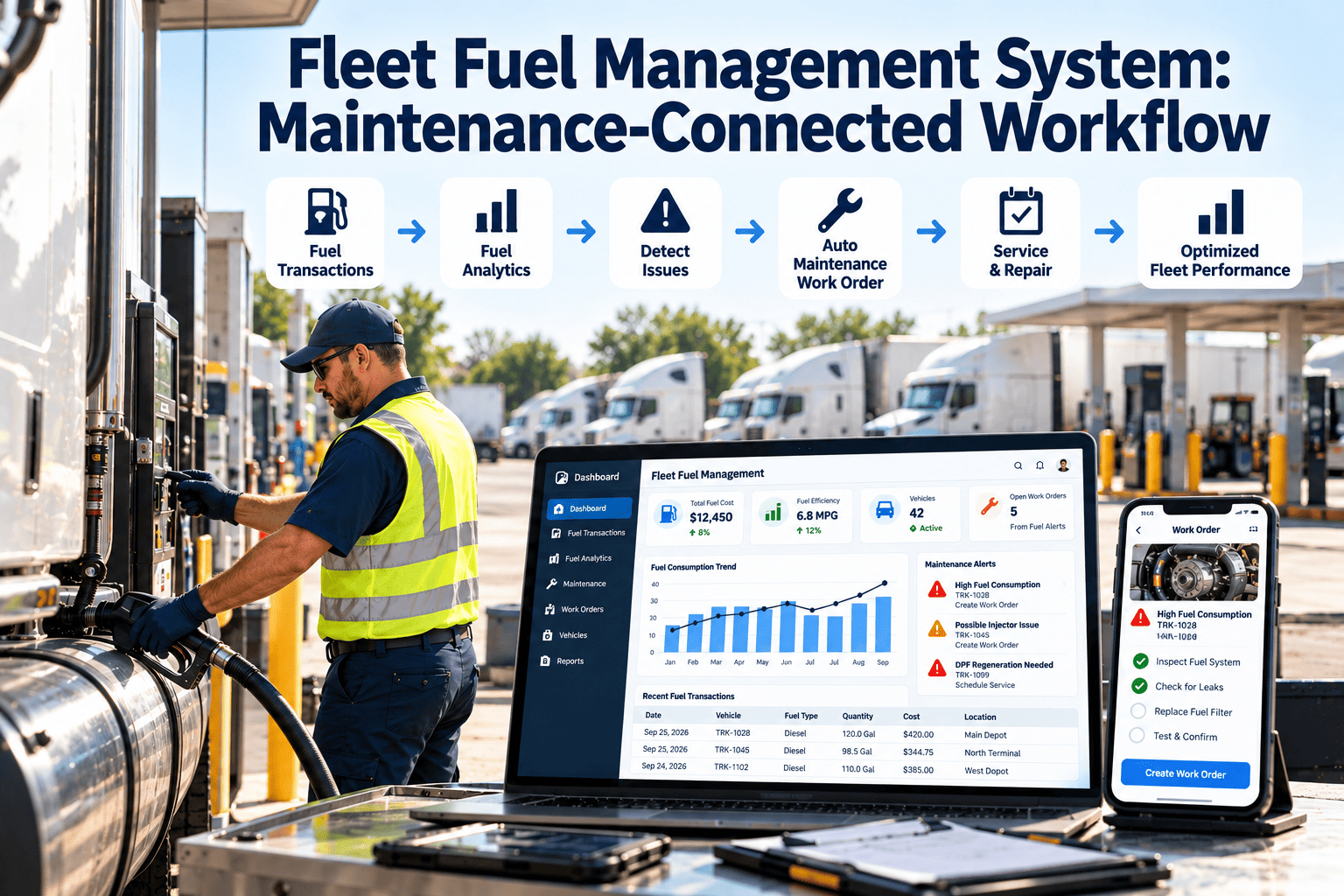
Oxmaint replaces manual fuel system tracking with automated PM scheduling, digital inspection checklists, and trend-based condition monitoring — so every water separator, fuel filter, and tank inspection happens on schedule and generates a complete documentation trail. Fleet managers ready to eliminate reactive fuel system failures can start a free trial or book a demo to map their fleet's fuel assets to automated service schedules.
Configure water separator service, fuel filter replacement, and tank inspection intervals by mileage, hours, or calendar date — whichever comes first. Oxmaint generates the work order automatically when the trigger is reached and escalates to the supervisor if it is not completed within the grace window.
Technicians complete digital fuel system inspection checklists on mobile — recording water separator drain volume, filter condition rating, tank inspection findings, and photo documentation. Every result is timestamped, linked to the vehicle asset record, and immediately visible to fleet management.
Oxmaint tracks water separator drain volume and filter replacement frequency over time by vehicle. Increasing water volumes or accelerating filter replacement intervals flag individual vehicles for tank inspection before the fuel system fails — turning trend data into proactive maintenance decisions.
Register bulk fuel storage tanks as assets in Oxmaint with their own inspection schedules — water bottom sampling, tank internal inspection, vent system check, and water separator service. When bulk tank contamination is detected, a priority work order links to every vehicle refueled from that tank, enabling rapid fleet-wide response.
When a technician flags a fuel contamination finding — heavy sediment, emulsified water, microbial sludge — Oxmaint automatically creates a corrective work order for fuel polishing or tank cleaning, assigns it to the appropriate team, and tracks it to closure. No contamination finding goes unaddressed or undocumented.
Every fuel system service — separator drain, filter change, tank inspection, polishing, biocide treatment — is recorded with date, technician, findings, and parts used. Export complete fuel maintenance history by vehicle or fleet for OEM warranty claims, insurance documentation, or fuel supplier dispute resolution.
Reactive vs. Proactive Fuel System Management: The Real Cost Difference
Fleet Fuel System PM: Measurable Outcomes
Structured PM eliminates the majority of contamination-related fuel system failures — the most preventable category in diesel fleet maintenance
Fleets with scheduled water separator and filter programs report significant drop in emergency fuel system callouts and roadside breakdowns
vs. $180–$240 in annual scheduled fuel system maintenance costs — return on proactive program is measurable within the first service cycle
Clean injectors operating on clean fuel maintain rated combustion efficiency — measurable improvement in km per litre on vehicles transitioning from reactive to proactive programs
Frequently Asked Questions
How often should water separators be serviced on commercial diesel trucks?+
What is diesel bug and how do you treat it in a commercial fleet fuel tank?+
Can Oxmaint track both vehicle fuel tanks and bulk storage tanks in the same system?+
How does fuel polishing differ from a standard tank drain, and when is it needed?+
Every Diesel Tank in Your Fleet Is Either Managed or Degrading Right Now
Fuel contamination does not wait for a convenient breakdown window. Water accumulates, microbial colonies establish, and oxidized fuel deposits build — while your vehicles run routes and your maintenance team focuses on visible problems. The fleets that eliminate reactive fuel system repairs are the ones with automated PM schedules, digital inspection records, and trend data that identifies high-risk vehicles before they fail. Oxmaint gives you all three — no long implementation, first automated fuel system work orders in week one.