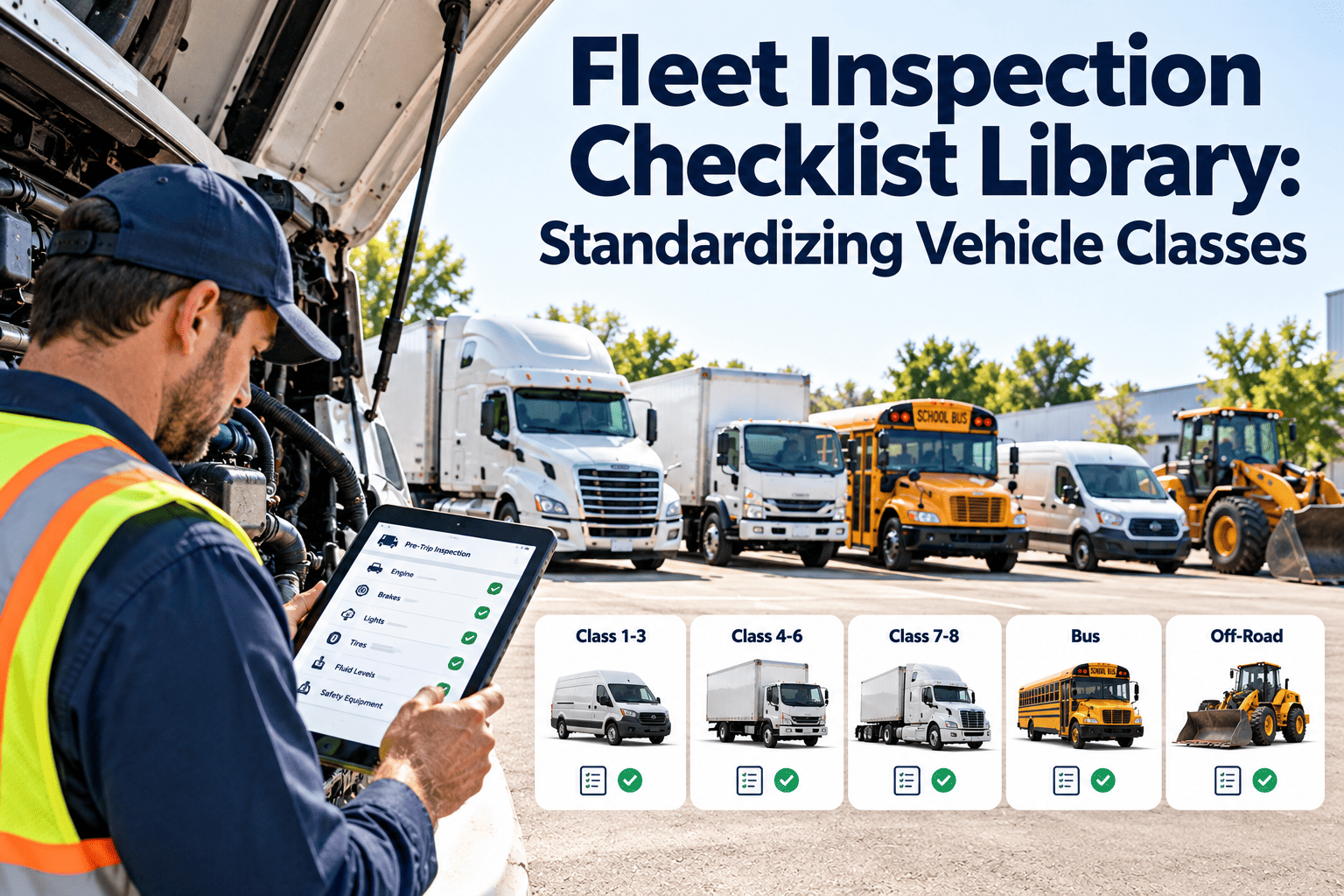
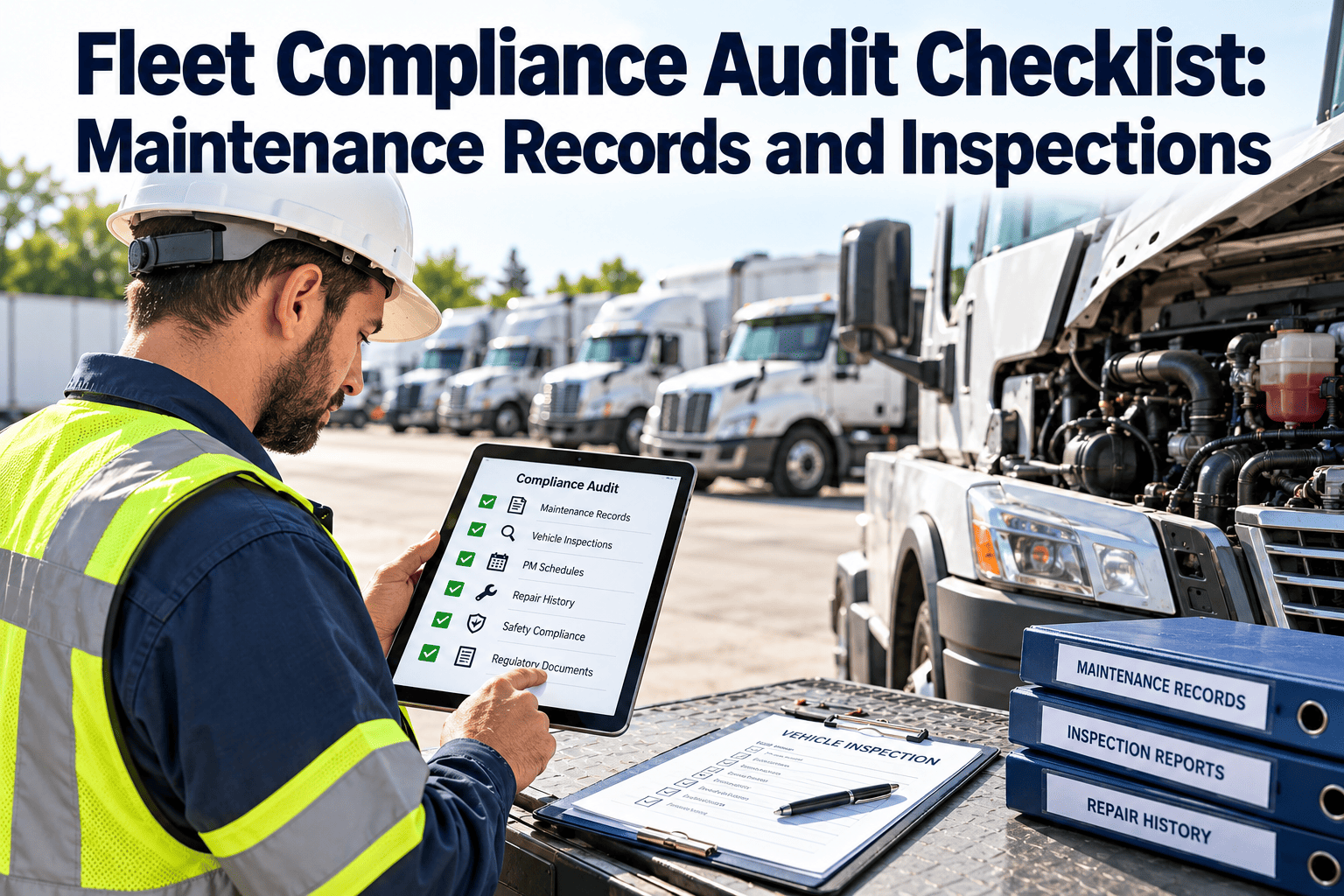
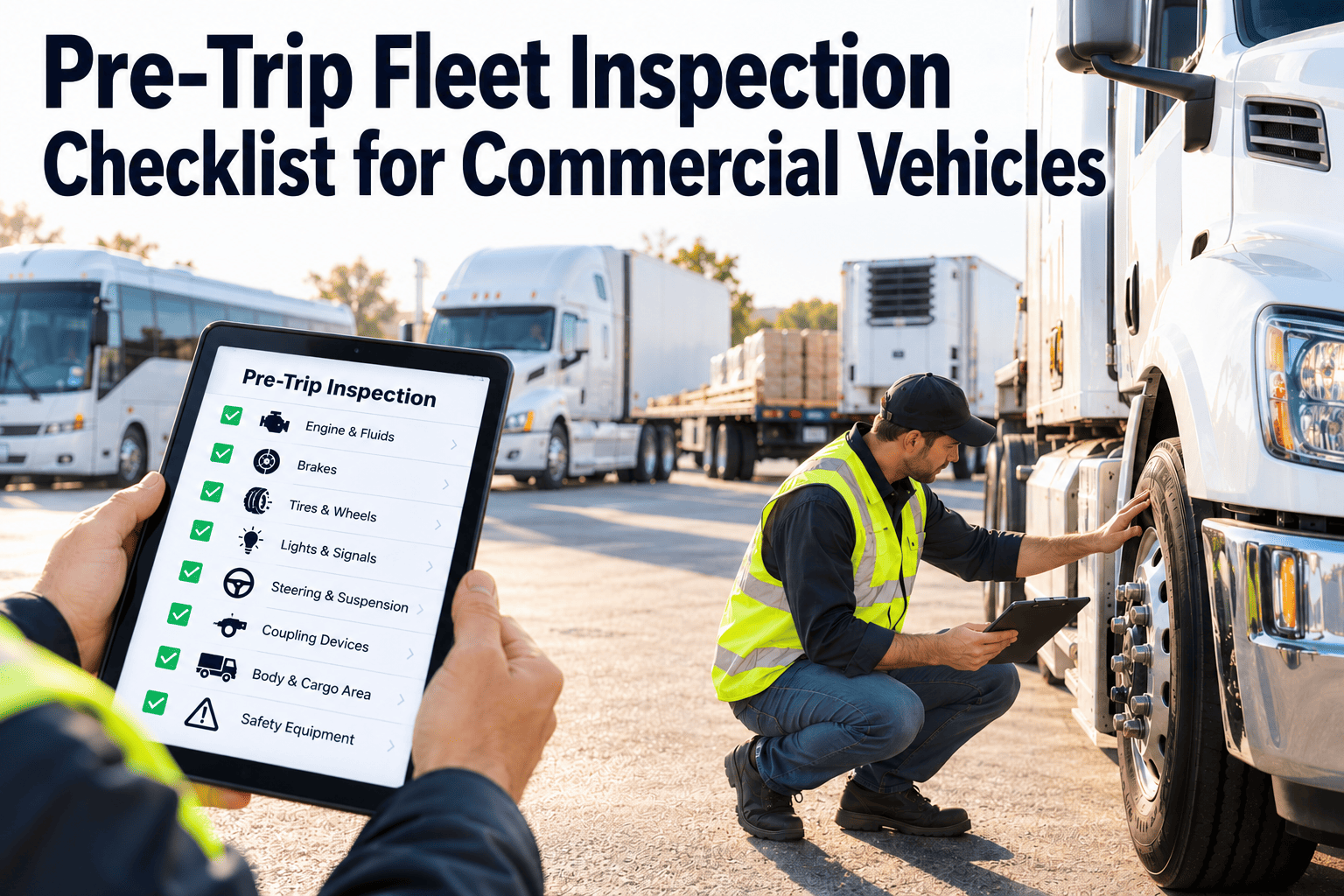
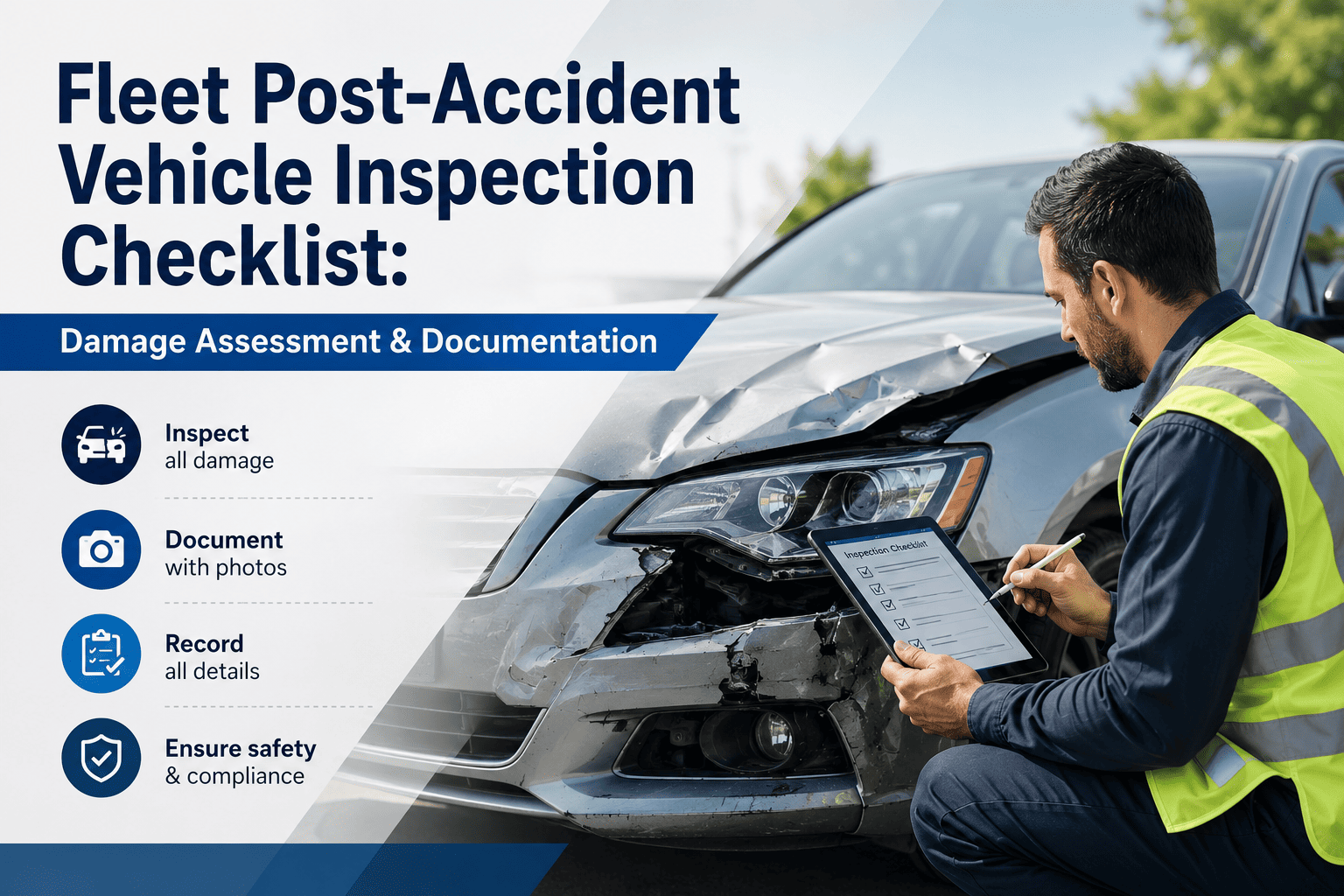
Commercial fleets operating without a structured maintenance checklist spend 28% more on unplanned repairs than those running documented preventive maintenance programs. The American Transportation Research Institute reports that unplanned vehicle downtime costs fleet operators an average of $760 per truck per day in lost productivity, missed deliveries, and emergency repair premiums — costs that compound across every vehicle in the fleet simultaneously. A comprehensive fleet maintenance checklist eliminates the guesswork from vehicle servicing, standardizes inspection quality across all technicians and all depot locations, and creates the documentation trail that satisfies DOT compliance requirements and insurance auditors. The difference between a fleet that runs at 94% uptime and one that averages 78% is almost entirely explained by the discipline of the maintenance program — not the age of the vehicles. Fleets using OxMaint's digital fleet maintenance platform execute every checklist task on mobile, auto-schedule next services at work order closure, and build a complete maintenance history per vehicle that supports CapEx forecasting and disposal decisions. Book a demo to see automated fleet maintenance scheduling configured for your vehicle inventory.
Run Your Fleet at 94%+ Uptime with OxMaint Digital Maintenance Checklists.
OxMaint replaces paper maintenance logs with mobile-first digital checklists — auto-scheduled per vehicle, completed in the field, and archived automatically. Every missed service becomes visible before it becomes a breakdown. Free to start. Deploys in days. No credit card required.
Why Most Fleet Maintenance Programs Fail — and What This Checklist Fixes
Fleet maintenance failures are rarely caused by lack of knowledge. They are caused by inconsistent execution — different technicians performing different checks, paper-based systems that lose records, and no automatic trigger when a service interval passes. This checklist addresses all three failure modes with a structured, measurable program.
| # | Maintenance Task | Standard / Acceptance Criteria | Interval | Priority | Sign-Off | |
|---|---|---|---|---|---|---|
| 1.1.1 | Engine oil and filter change — drain warm oil completely, replace filter with OEM-specified part, refill to correct volume with specified grade. Inspect drained oil for contamination or metallic particles. | Correct oil grade per OEM spec. Volume at upper dipstick range. No contamination in drained oil. Metallic particles escalated to engineering review. | Every 5,000–15,000 mi | Critical | ________ | |
| 1.1.2 | Coolant condition check — test coolant freeze protection, pH level, and SCA concentration for diesel trucks. Coolant degradation accelerates corrosion in cylinder liners, water pump, and heater cores — causing $3,000–$15,000 engine damage. | Freeze protection to local climate minimum plus 20%. pH 8.5–10.5. SCA concentration within spec range. Coolant replaced or supplemented as indicated by test results. | Every 15,000 mi or annually | Critical | ________ | |
| 1.1.3 | Fuel filter replacement — replace primary and secondary fuel filters at OEM interval. Clogged fuel filters cause injector cavitation and pump damage on diesel engines — $8,000–$18,000 fuel system failure cost. | New OEM-specified filters installed. No air introduced to fuel system during replacement. Prime cycle completed before engine start. Fuel filter condition noted on work order. | Every 15,000–25,000 mi | High | ________ | |
| 1.1.4 | Air filter inspection and replacement — check air filter restriction indicator if equipped. Inspect filter element for loading, damage, or bypass. Dust-loaded air filters increase fuel consumption by 8–12% and reduce engine power output. | Restriction indicator in green zone. Filter element not more than 50% loaded. Replace if above loading limit or any damage found. New filter condition rated and recorded. | Inspect every 10,000 mi / Replace as indicated | High | ________ | |
| 1.1.5 | Transmission fluid check — check automatic or manual transmission fluid level, colour, and smell. Dark brown fluid or burnt smell indicates overheating or clutch pack wear. Record fluid condition on work order. | Fluid at correct level for operating temperature. Colour honey to red — not dark brown or black. No burnt smell. Condition recorded. Replace if degraded. | Check every service / Replace per OEM | High | ________ | |
| 1.1.6 | Differential and axle oil check — check front and rear differentials and drive axle oil levels. Inspect for contamination or milky appearance indicating water ingress through failed seals. | All differentials at correct level. Oil clear with no water contamination or metal shavings. Contaminated oil escalated to axle inspection before next dispatch. | Every 25,000–50,000 mi | Standard | ________ |
| # | Inspection Item | Pass Criteria | Interval | Priority | Sign-Off | |
|---|---|---|---|---|---|---|
| 1.2.1 | Serpentine and accessory drive belts — inspect for cracking, glazing, fraying, missing ribs, or contamination from oil leaks. Use belt tension gauge where accessible. Belt failure disables alternator, power steering, and air conditioning simultaneously. | No cracking, glazing, or fraying. Tension within OEM specification. Replace if any visible damage or glazing present. Belt condition rated and recorded. | Inspect every service / Replace per OEM | High | ________ | |
| 1.2.2 | Coolant hoses — inspect all upper and lower radiator hoses, heater hoses, and coolant bypass hoses for softness, swelling, cracking, or collapse. Squeeze hoses when cold — firm is correct, mushy indicates internal collapse risk. | All hoses firm with no swelling, cracking, or collapse. Clamps tight with no evidence of seepage. Any mushy or swollen hose replaced before next dispatch. | Every 15,000 mi or annually | High | ________ | |
| 1.2.3 | Engine mount inspection — check engine and transmission mounts for cracking, compression, or separation. Failed engine mounts cause driveline vibration that accelerates wear in transmission, exhaust joints, and radiator connections. | Mounts intact with no cracking or separation. No excessive engine movement when revved in gear with brakes applied. Condition rated per mount location and recorded. | Every 25,000 mi | Standard | ________ |
| # | Brake Maintenance Task | Pass Criteria and Service Threshold | Interval | Priority | Sign-Off | |
|---|---|---|---|---|---|---|
| 2.1.1 | Brake lining or pad thickness measurement — measure lining at the thinnest point on each axle position. Record measurement in CMMS per position. Trend tracking identifies replacement schedule 1–2 services in advance, converting emergency replacements to planned services. | Steering axle: replace at 4/32 inch or above (OOS at 1/4 inch). Other axles: replace at 3/16 inch (OOS at 1/8 inch). All measurements recorded per position in CMMS history. | Every 10,000–15,000 mi | Critical | ________ | |
| 2.1.2 | Brake drum or rotor measurement — measure drum diameter at the wear zone and compare against maximum diameter stamped on drum. For disc brakes, measure rotor thickness against minimum discard thickness. Record trend across services. | Drum below maximum diameter or rotor above minimum discard thickness. Measurement recorded per position in CMMS. Replace at recommended service limit to avoid emergency failure. | Every brake service | Critical | ________ | |
| 2.1.3 | Hydraulic brake fluid condition — check fluid level in master cylinder and test fluid condition with brake fluid test strips. Moisture-contaminated brake fluid lowers boiling point, causing brake fade under heavy use — a dangerous condition in loaded commercial vehicles. | Fluid at correct level. Moisture content below 3% by volume. Fluid colour clear to light amber — not dark brown. Contaminated fluid flushed before next dispatch on vehicles with safety-critical brake systems. | Inspect every service / Replace per OEM or annually | Critical | ________ | |
| 2.1.4 | Brake hose and line inspection — inspect all flexible brake hoses for cracking, chafing, swelling, or damage. Inspect steel brake lines for corrosion, kinks, or damage at chassis routing clips. Any flexible hose showing external cracking or swelling replaced before dispatch. | All flex hoses free of cracks, abrasion, or bulging. Steel lines free of significant corrosion or kinks. Routing clips intact with hoses secured. Condition rated and recorded per location. | Every 15,000 mi | Critical | ________ |
| # | Tire and Wheel Task | Pass Criteria and Service Threshold | Interval | Priority | Sign-Off | |
|---|---|---|---|---|---|---|
| 3.1.1 | Tire tread depth measurement — check all tires including inner duals with calibrated tread depth gauge. Record measurement per position in CMMS. Under-tread tires on wet roads increase stopping distance by 40% compared to new tires. | Steer tires above 4/32 inch recommended (2/32 OOS). Drive and trailer positions above 2/32 inch recommended (1/32 OOS). All measurements recorded per position and trended across services. | Every 10,000 mi | Critical | ________ | |
| 3.1.2 | Tire inflation check — measure and record cold inflation pressure on all positions with calibrated gauge. Tires operating 20% under-inflated run 25% shorter life and reduce fuel economy by 0.5% per 1 PSI under-inflation across the fleet. | All tires within 5% of rated cold inflation. Pressure recorded per position. Any tire more than 10% under-inflated investigated for slow leak before returning to service. | Weekly or every 2,500 mi | Critical | ________ | |
| 3.1.3 | Tire rotation — rotate tires per fleet rotation pattern at specified intervals. Uneven wear patterns indicate alignment or suspension issues — record wear pattern per position before rotation to enable diagnostic use. | Rotation completed per fleet pattern. Pre-rotation wear pattern recorded per position. Irregular wear (cupping, one-sided, heel-toe) escalated to alignment or suspension inspection before next service. | Every 10,000–15,000 mi | High | ________ | |
| 3.1.4 | Wheel torque check — retorque all wheel lug nuts or stud nuts to OEM specification using calibrated torque wrench. Loose wheel fasteners are a safety-critical condition — wheel separation at highway speed causes multi-vehicle accidents and catastrophic liability. | All lug or stud nuts at OEM torque specification. Torque value used recorded on work order. Any fastener that turns under torque wrench investigated for thread damage before returning vehicle to service. | At every tire rotation or 10,000 mi | Critical | ________ |
| # | Electrical and Lighting Task | Pass Criteria | Interval | Priority | Sign-Off | |
|---|---|---|---|---|---|---|
| 4.1.1 | Battery condition test — load test battery with calibrated conductance tester. Measure cold cranking amps output and compare against rated CCA. Batteries testing below 60% of rated CCA are approaching failure — typically within 30–90 days depending on climate and load. | Battery CCA output above 75% of rated capacity. If below 75%, schedule replacement within 30 days. If below 60%, replace before next dispatch. Test result and date recorded in CMMS per vehicle. | Every 15,000 mi or biannually | High | ________ | |
| 4.1.2 | Alternator output test — measure alternator charging voltage at idle and at 2,000 RPM with load applied. Under-charging alternators allow battery depletion during long idle periods — common in vehicles with high auxiliary electrical loads. | Charging voltage 13.8–14.5V at idle. Voltage maintained above 13.5V with full electrical load applied. Result recorded in CMMS. Below 13.5V triggers alternator replacement. | Every 25,000 mi or annually | High | ________ | |
| 4.1.3 | All lighting systems — test headlights (low and high), brake lights, reverse lights, turn signals, hazard flashers, marker lights, clearance lights, and reflectors. Lighting violations account for 23% of FMCSA OOS violations — all non-functional lights replaced same-day. | All required lights functional. All lenses clean and intact. Any non-functional lighting replaced before vehicle is dispatched. Complete lighting test result recorded on work order per lamp position. | Every pre-trip and PM service | Critical | ________ | |
| 4.1.4 | Wiper blade condition and washer function — inspect wiper blades for streaking, skipping, or chattering. Replace blades showing any performance degradation — impaired visibility is a safety violation. Test washer fluid spray coverage on both wiper zones. | Blades clean windshield in single stroke with no streaking. Washer fluid sprays full windshield coverage. Blade replacement recorded in CMMS. Refill washer fluid volume recorded on work order. | Every 6 months or as indicated | High | ________ |
| # | Body and Cargo System Task | Pass Criteria | Interval | Priority | Sign-Off | |
|---|---|---|---|---|---|---|
| 5.1.1 | Cargo securement equipment — inspect all straps, chains, binders, and load bars for cuts, wear, corrosion, or broken hardware. Defective cargo securement equipment is an OOS violation and a catastrophic liability in the event of cargo shift or spillage. | All straps rated and marked with working load limit. No cuts, abrasion, or knots in strap material. All hooks, ratchets, and binders functional. Defective equipment removed from service and tagged for replacement. | Every pre-trip and PM service | Critical | ________ | |
| 5.1.2 | Door seals and latches — inspect all cab, cargo, and trailer door seals for tears or compression failure. Test all latches for positive locking and confirm doors cannot be opened from inside without releasing latch. Damaged seals cause water ingress and cargo damage claims. | All door seals intact and providing positive weather seal. All latches functional and secure. Any damaged seal noted on work order and scheduled for replacement within 30 days. | Every 10,000 mi | High | ________ | |
| 5.1.3 | Cab mounting and body panel integrity — inspect cab mounts for cracking or separation. Check body panels for sharp edges, loose panels, or damage that could cause injury to dock workers or pedestrians. Inspect mirrors for secure mounting and correct adjustment. | Cab mounts intact with no separation or cracking. Body panels secure with no sharp edges. Mirrors mounted securely and providing required rearward visibility per FMCSA 49 CFR 393.80. | Every 15,000 mi | High | ________ | |
| 5.1.4 | Emergency equipment inventory — verify fire extinguisher charge and mounting, first aid kit contents, warning triangles, and spare fuses are present and serviceable. FMCSA requires fire extinguisher and warning devices on all CMVs. | Fire extinguisher charged and within inspection date. Three warning triangles or flares present and serviceable. First aid kit stocked. Fuse kit complete. Inventory recorded on work order. | Every quarterly service | High | ________ |
Fleet Maintenance KPIs Every Fleet Manager Should Track Monthly
Executing maintenance checklists consistently is the foundation. Measuring the program's effectiveness across the fleet with the right KPIs is what enables continuous improvement — and the budget justification conversations that fund adequate maintenance programs. OxMaint calculates every one of these KPIs automatically from your work order data.
Replace Paper Maintenance Checklists with OxMaint Digital Fleet Maintenance.
Every checklist item in this guide exists inside OxMaint as a configurable digital work order — completed on mobile, auto-scheduled per vehicle, measurements recorded and trended, and next service triggered automatically at work order closure. Fleet compliance dashboard shows every overdue vehicle and approaching threshold. Free to start. No credit card required. Deploys in days.
Frequently Asked Questions — Fleet Maintenance Checklist
Common questions from fleet managers building or improving structured maintenance programs. Sign up free or book a demo to see OxMaint's fleet maintenance workflows configured for your vehicle inventory.
How do I set maintenance intervals for a mixed fleet with different vehicle types and ages?
What is the financial ROI of implementing a structured fleet maintenance checklist program?
How does OxMaint handle maintenance records for multi-depot fleets where vehicles move between locations?
What documentation does OxMaint generate to satisfy DOT maintenance record requirements?
Deploy This Fleet Maintenance Checklist Digitally with OxMaint.
Every category, every task, and every measurement in this checklist runs inside OxMaint as a mobile-first digital workflow. Services auto-schedule per vehicle. Measurements trend across service intervals. Compliance records generate automatically. Fleet-wide uptime and cost KPIs update in real time. Free to start, no credit card required, deploys in days not months.