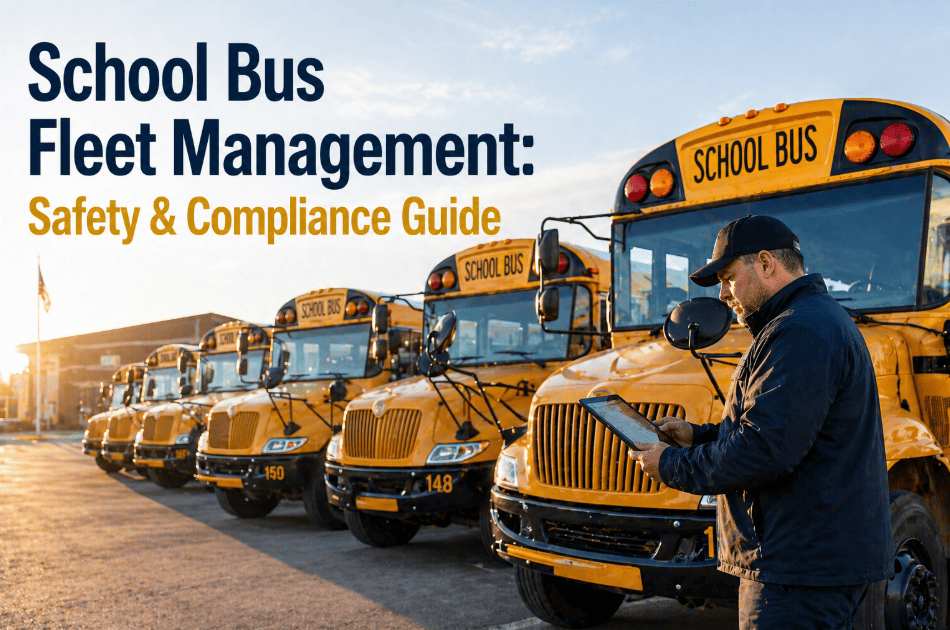
School Bus Fleet Management: Safety & Compliance Guide
By Jack Miller on April 27, 2026
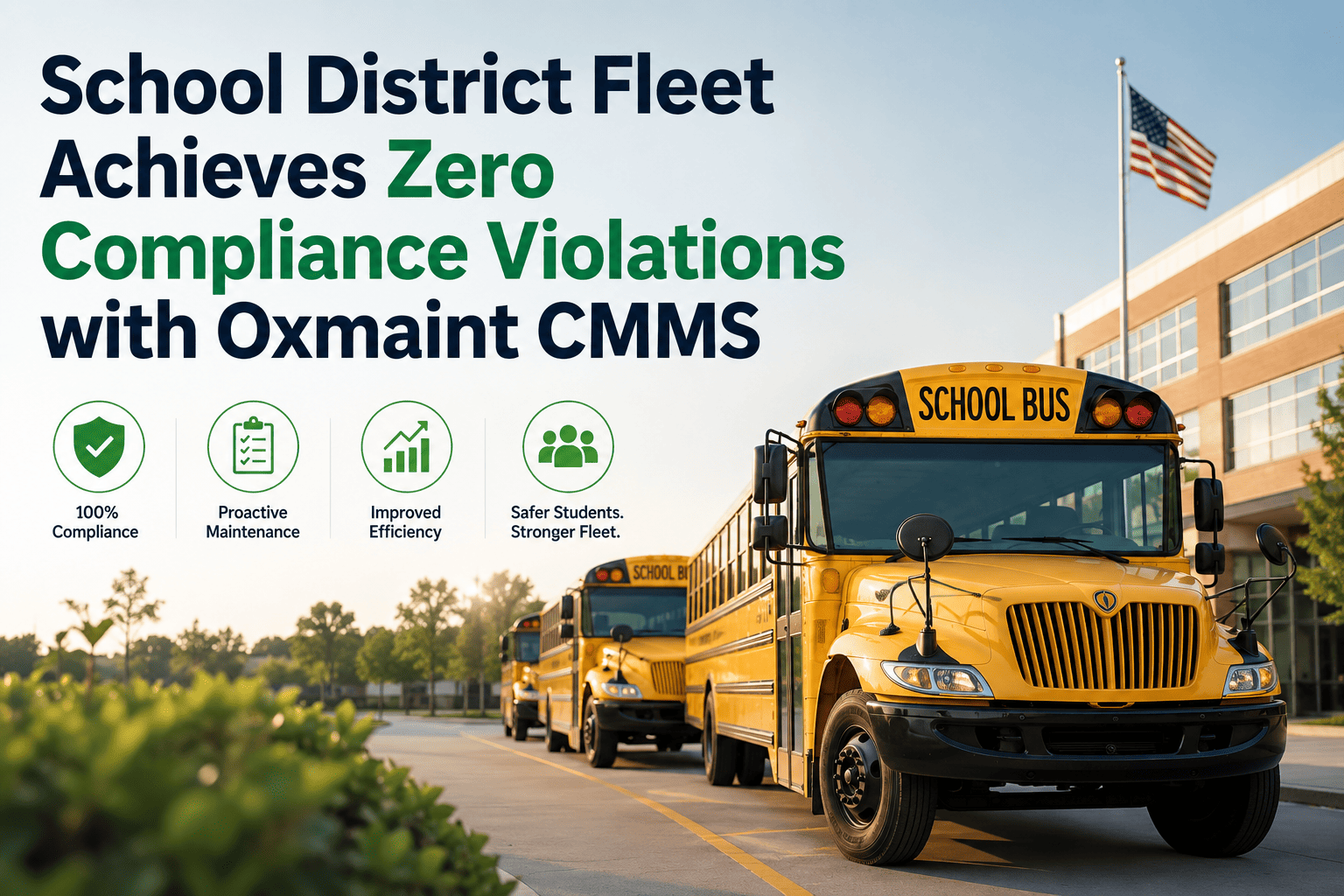
A school bus carries the most precious cargo in transportation — and the most regulated. Federal Motor Vehicle Safety Standards govern how every bus is built. State inspections verify every component annually — and semi-annually for buses over 12 years old. 49 CFR 396.3 requires carriers to systematically inspect and maintain vehicles in safe operating condition. 49 CFR 396.17 mandates comprehensive annual inspections. As of March 2026, FMCSA explicitly authorizes electronic DVIRs under rule FMCSA-2025-0115 — and paper-based inspection processes now create unnecessary audit risk. DVIR-related penalties reach $1,270 per day for failure to complete required reports, $12,700 for falsifying reports, and $15,420 for dispatching a bus with documented defects. The school districts that avoid these penalties — and, far more importantly, protect every student — are the ones running digital inspection and maintenance platforms that make compliance automatic, not aspirational.
Student safety is the non-negotiable standard. Compliance is the documented proof that you met it.
School Transportation Safety · 2026 Compliance
School Bus Fleet Management: Safety, Compliance & Operations
Every school bus is a regulated commercial motor vehicle carrying children. Pre-trip inspections, preventive maintenance, driver compliance, and audit-ready documentation aren't optional — they're the minimum standard for operating a school transportation fleet.
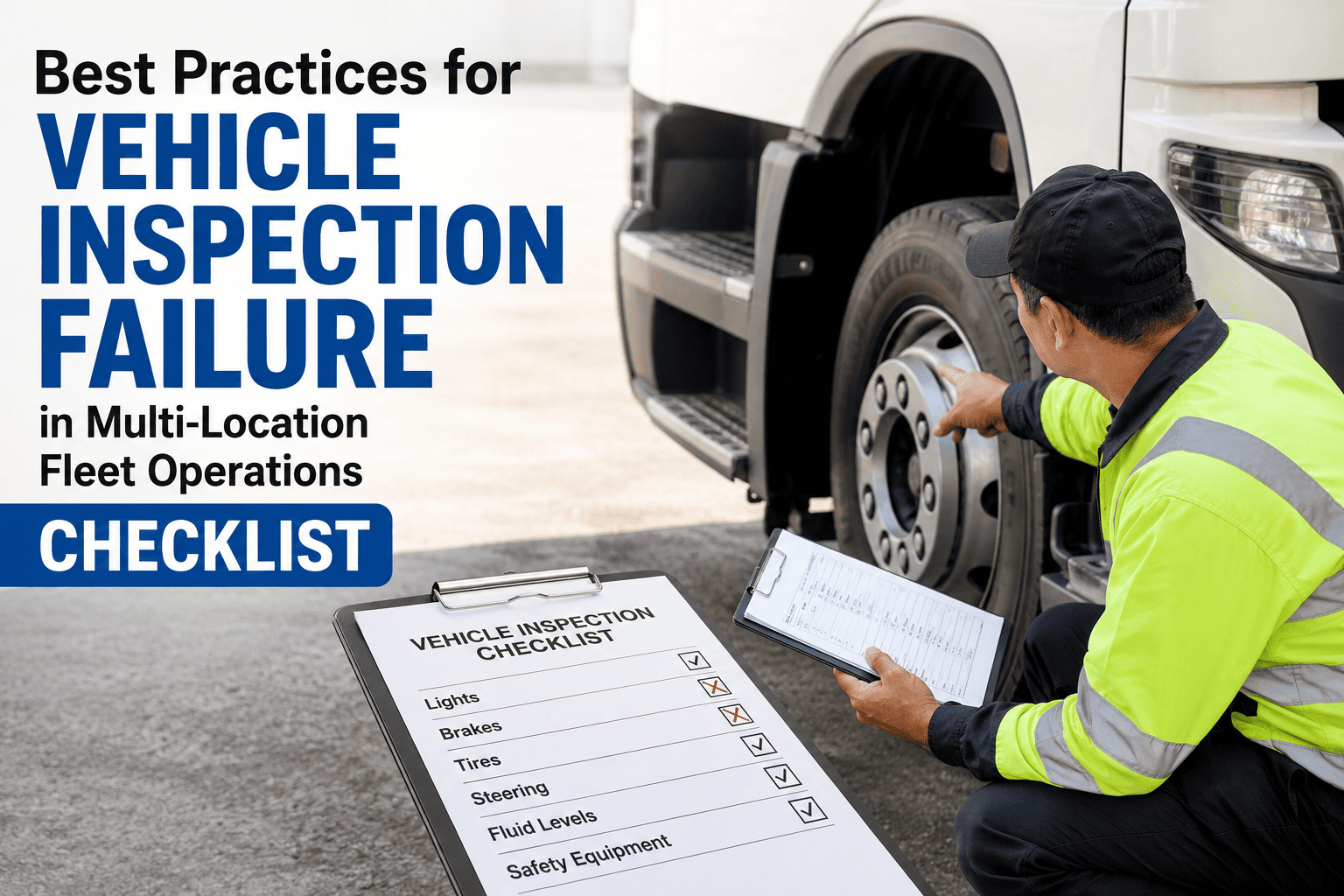
Unlike property-carrying commercial vehicles, passenger-carrying vehicles — including school buses — must complete DVIRs regardless of whether defects are found. This is the most common audit trap in school bus operations. OxMaint enforces minimum inspection durations, requires photo capture for critical items, and sends instant defect alerts to your maintenance team.
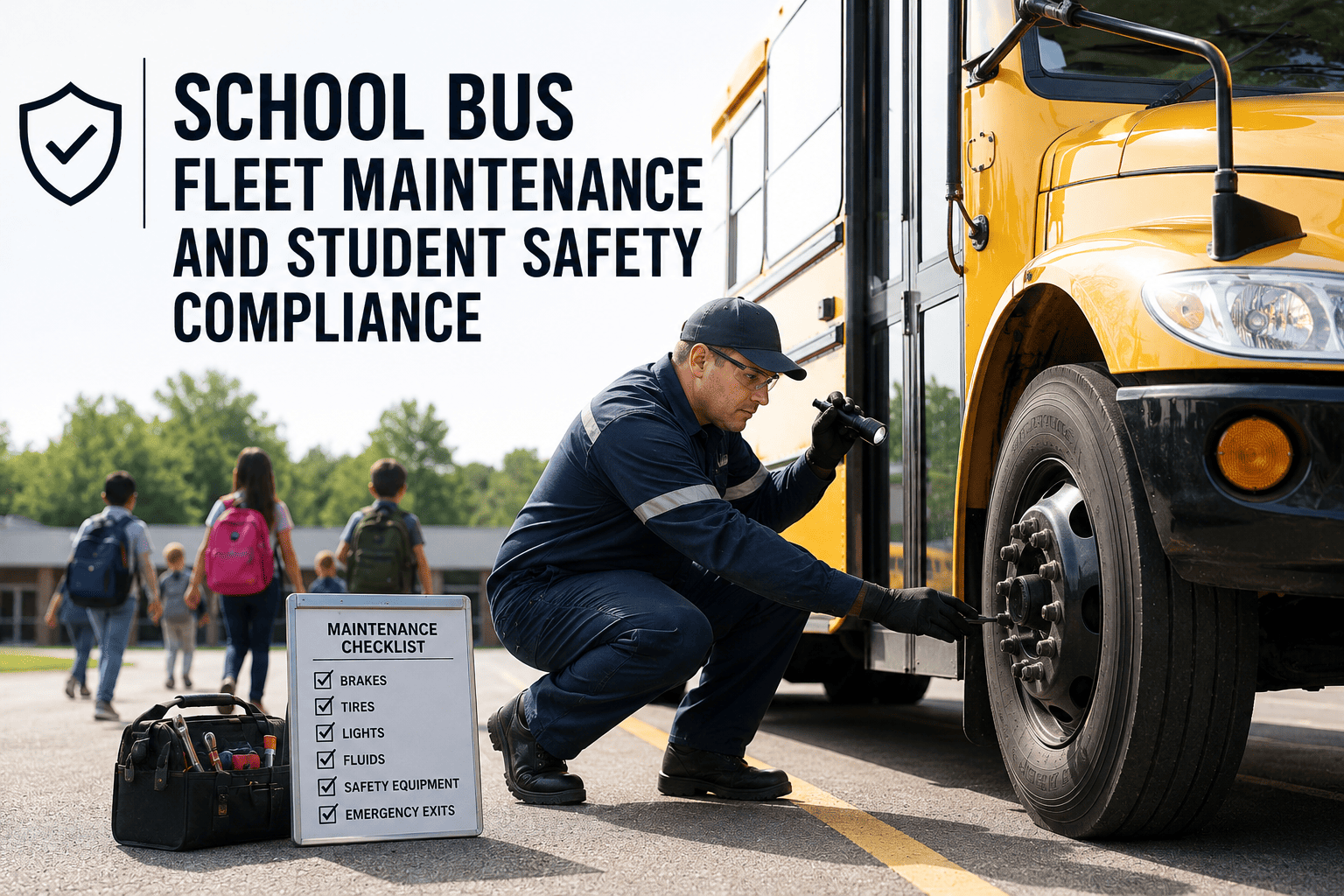
Exterior Walkaround
Tires: tread depth, pressure, sidewall condition, no cuts or bulges
Stop arm and crossing control arm: deploy, retract, full visibility
Mirrors: clean, properly adjusted, no cracks — cross-view and convex
Body: no fluid leaks underneath, no loose panels, bumpers secure
Emergency exits: functional, latches operational, buzzers working
Interior & Safety Equipment
Steps: no damage, non-slip surfaces intact, handrail secure
Seats: all secured to floor, no exposed hardware, seat belts (if equipped)
Emergency equipment: fire extinguisher charged, first aid kit stocked
Floor: clean, clear of obstructions, no tripping hazards
Windows: open/close properly, no cracks that impair visibility
Gauges: all in normal range, no warning lights illuminated
Brake System (Most Critical)
Air brake LAB test: low air warning, applied brakes, build-up rate (allow 2–3 min)
Parking brake: holds bus stationary when pulling forward gently against it
Service brakes: bus stops straight, smooth, no pulling, no unusual noise
Air system: no audible leaks, gauge readings stable, air dryer functional
Preventive Maintenance Schedule
Federal regulations require comprehensive inspection at least every 12 months (49 CFR 396.17). Leading districts go further — PM checks every 3,000–5,000 miles or quarterly, whichever comes first. Well-maintained buses can serve 15–16 years. Neglected buses become liabilities by year 8.
Daily
Pre-trip and post-trip DVIR by driver. Photo documentation of tires and safety equipment. Defects reported instantly to maintenance.
Oil and filter change, brake inspection, air system check, steering and suspension evaluation, exhaust system inspection, safety equipment audit.
Annual
Full 49 CFR 396 Appendix A inspection by qualified inspector. Cooling system service, transmission check, complete safety system verification. State-specific inspection as required.
Summer Overhaul
Major maintenance during summer break: engine service, brake overhaul, body repair, seat inspection, paint/lettering, deep cleaning. Return to service with full PM certification before first day of school.
Why Paper Inspections Are Now a Compliance Risk
Paper-Based Inspection
Drivers rush through — checking "Pass" in 2 minutes without walking around
No timestamp verification — inspector could have been anywhere
Defect reports sit in a drop box until someone reads them
Mandatory photo capture for tires, brakes, safety equipment
Driver Compliance & Credential Management
School bus drivers require CDL with passenger endorsement, valid medical certificates, background checks, drug and alcohol testing compliance, and state-specific training certifications. One expired credential means that driver cannot legally transport students — and the district is liable if they do. OxMaint tracks every credential with expiry alerts, ensuring no driver operates without current qualifications.
CDL + Endorsements
Class B CDL with passenger (P) and school bus (S) endorsements tracked per driver with renewal date alerts.
Medical Certificate
DOT medical examiner certificate verified via MVR — paper certificates no longer accepted per 2026 FMCSA rule.
Background & Drug Testing
Background check clearance, drug and alcohol testing compliance, and FMCSA Clearinghouse queries — all tracked with dated records.
Training Certifications
State-specific training, first aid/CPR, defensive driving, and student management certifications — with renewal tracking and completion documentation.
School Bus Fleet CMMS
Protect Every Student. Pass Every Inspection. Document Everything.
OxMaint gives transportation directors digital pre-trip inspections, automated PM scheduling, driver credential tracking, and audit-ready compliance documentation — all from one platform purpose-built for school bus fleet operations.
What federal regulations apply to school bus maintenance?+
The primary federal framework includes 49 CFR 396.3 (systematic maintenance requirements), 49 CFR 396.11 (driver vehicle inspection reports), 49 CFR 396.17 (annual periodic inspection), and 49 CFR 393.75 (tire standards). FMVSS standards govern bus manufacturing. As of March 2026, FMCSA rule FMCSA-2025-0115 explicitly authorizes electronic DVIRs. State requirements layer on top of federal — many states impose additional inspection frequencies, especially for older buses (semi-annual inspections for buses 12+ years old).
How often should school buses receive preventive maintenance?+
Federal law requires comprehensive inspection at least every 12 months. Best practice is PM checks every 3,000–5,000 miles or quarterly, whichever comes first. Daily pre-trip and post-trip DVIRs catch emerging issues between scheduled PM. Summer break is the ideal window for major maintenance — buses can be overhauled without disrupting school-year operations. OxMaint generates all PM schedules automatically based on mileage, calendar, or both.
What are the penalties for school bus compliance violations?+
DVIR-related penalties include $1,270 per day for failing to complete required reports, $12,700 for falsifying reports (including "rubber stamping" without actual inspection), and $15,420 for dispatching a bus with documented but unrepaired defects. Operating an out-of-service vehicle carries a maximum fine of $19,277. Beyond fines, violations impact CSA BASIC scores, trigger additional audits, increase insurance premiums, and create significant litigation exposure if an incident occurs.
Can OxMaint manage school bus inspections digitally?+
Yes — OxMaint provides mobile-first pre-trip and post-trip inspection checklists specifically designed for school bus operations. Drivers complete inspections on their phone at the bus (GPS-verified), with mandatory photo capture for critical items like tire tread and safety equipment. Minimum inspection durations prevent rushed "rubber stamp" inspections. Any defect flagged generates an instant work order to the maintenance team — before the bus completes its morning route. Transportation directors see real-time completion rates across every bus, every route, every day.
How does CMMS help with summer fleet overhaul planning?+
OxMaint aggregates all maintenance data, inspection findings, and parts forecasts during the school year — so when summer arrives, the maintenance team has a prioritized work list for every bus. Major PM tasks, brake overhauls, body repairs, and seat inspections are scheduled across the summer break with parts pre-ordered. Every bus returns to service with a fresh PM certification documented in the CMMS before the first day of school. No last-minute scrambling, no buses failing state inspection in August.
OxMaint · School Bus Fleet Safety
The Safety of Every Student Depends on the Maintenance of Every Bus.
School bus fleet management isn't fleet management with a different paint color. It's a regulated safety operation carrying children — with federal inspection requirements, state-specific compliance obligations, and zero tolerance for maintenance shortcuts. OxMaint provides the digital inspection, PM scheduling, and credential tracking platform that makes compliance automatic and documentation audit-ready.


.png)