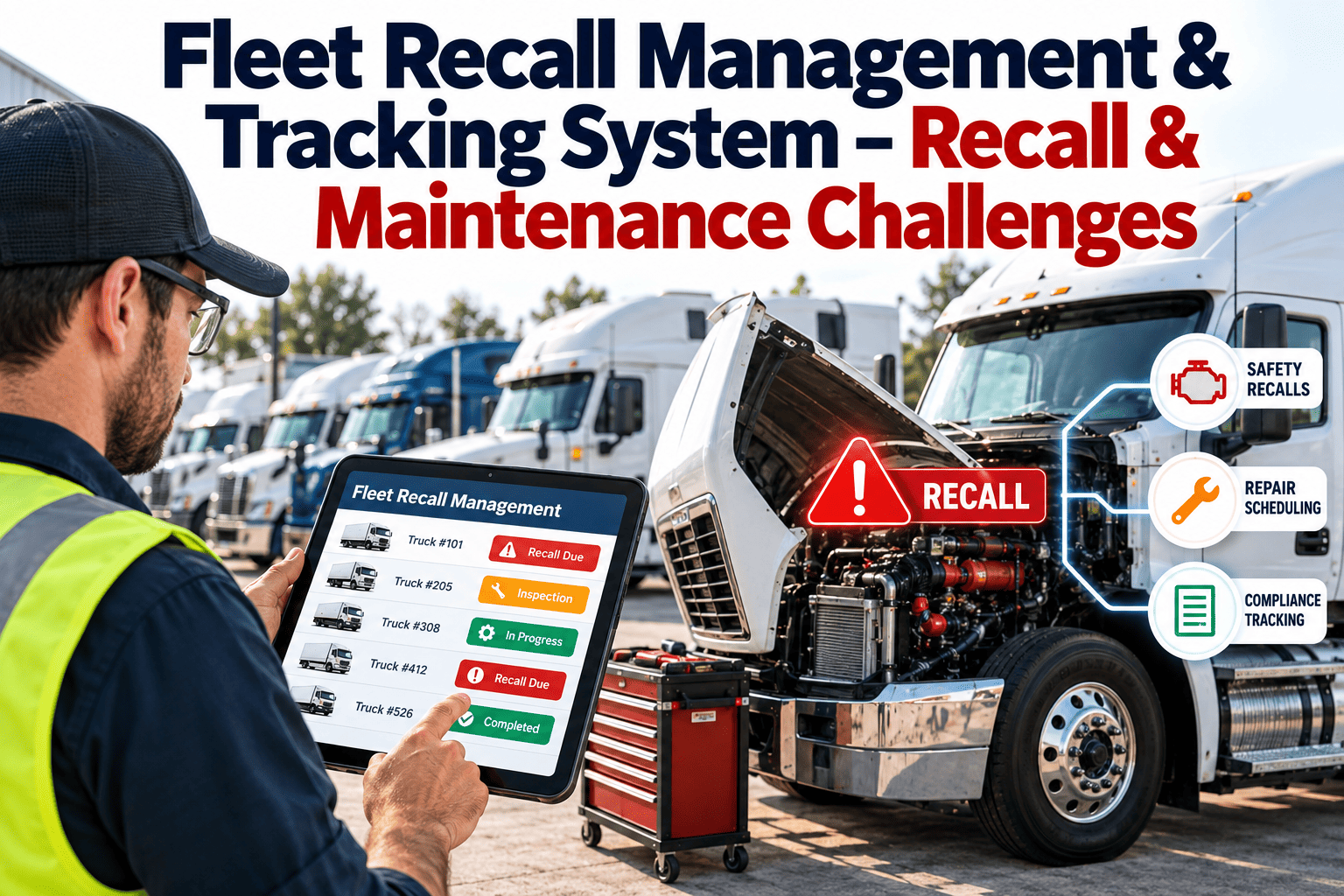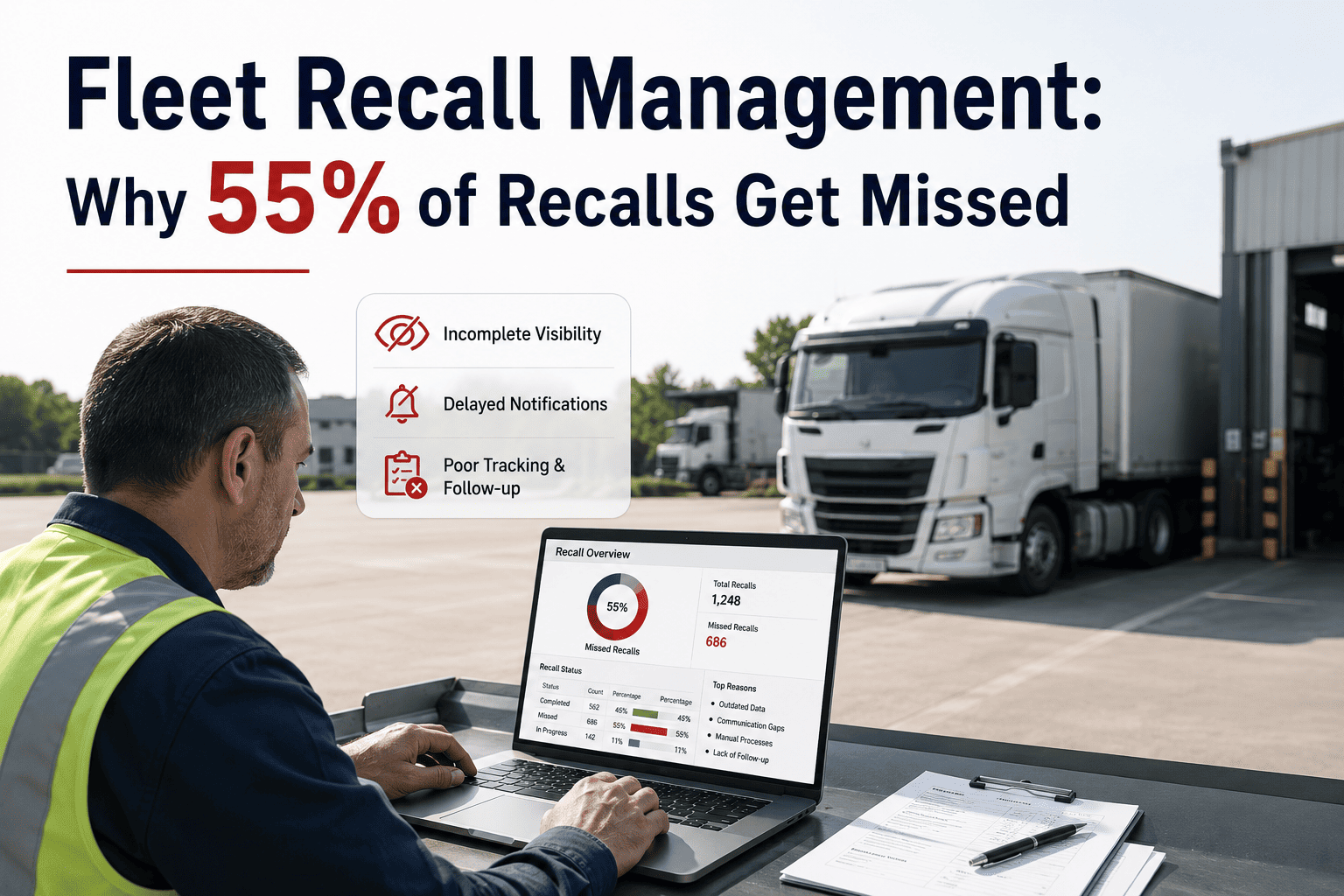
Every year NHTSA issues hundreds of vehicle safety recalls covering tens of millions of vehicles, and the government's own weighted-average completion rate across a decade of recall campaigns sits at just 65.8 percent. That means more than one in three recalled vehicles nationally never make it back to a shop for the fix, and for categories like airbags and suspension the unrepaired share climbs past half. A private owner who misses a notice puts one car at risk. A fleet operator who misses it puts every driver and customer riding in that vehicle at risk, often without knowing a defect notice was ever filed. OxMaint closes that gap by matching every VIN in a fleet against live NHTSA recall data automatically, so an open campaign surfaces the day it's issued, not the day something breaks.
See Every Open Recall Across Your Fleet Before It Becomes a Roadside Failure
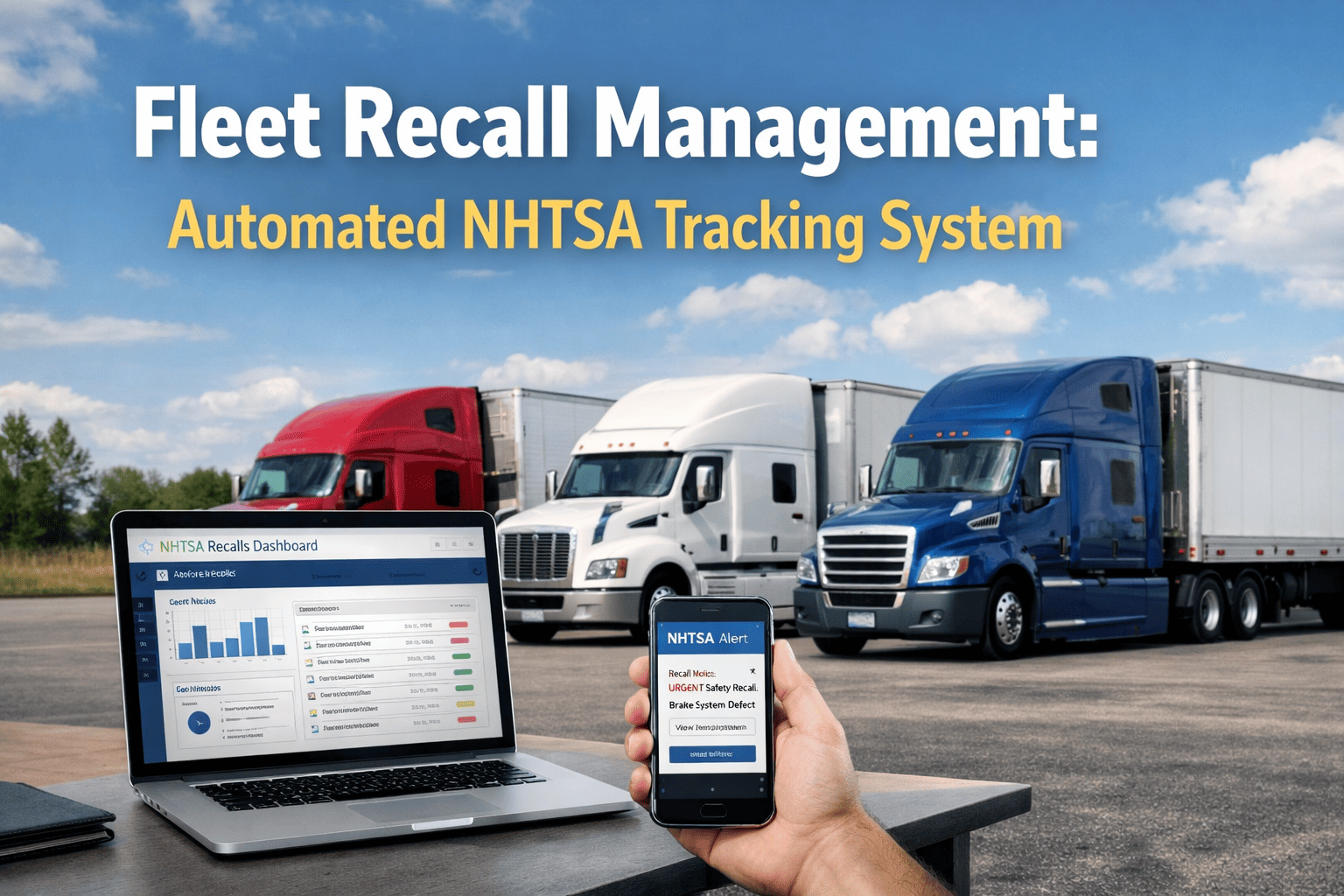
OxMaint checks every VIN in your fleet against NHTSA's live recall database every single day, turning a manufacturer letter that would have sat in a filing cabinet into an automatic work order, a parts request, and a closed-loop repair record — no manual VIN lookups required.
The Five-Stage Recall Chain — And Where Fleets Lose the Signal
A recall does not fail in one place. It fails across a chain of handoffs, and each handoff has a chance to drop a vehicle out of the process entirely. NHTSA files the campaign, the manufacturer is required to identify and notify the registered owner, the notice has to reach the right person inside the fleet, someone has to flag the specific VIN against the active roster, and only then does a vehicle actually get scheduled and repaired. For an individual owner that is three steps. For a fleet it is five, and the extra two steps — getting the notice to compliance, and matching it against a roster that changes weekly as vehicles are added, sold, or reassigned between depots — are exactly where campaigns go quiet. A recall letter addressed to a leasing company, a previous owner, or a corporate mailroom rarely reaches the person who schedules maintenance.
Each stage narrows further without a system that matches VINs against NHTSA data directly instead of waiting for a letter to arrive.
Recall Completion Rates by Vehicle System
NHTSA's own reporting shows completion rates vary enormously by the type of defect involved, and the gap between "issued" and "repaired" is not evenly distributed. Powertrain issues get remedied at a relatively strong rate because the failure mode is obvious to drivers. Suspension and airbag campaigns lag badly, partly because symptoms are silent until the component actually fails on the road. A fleet running mixed makes and model years is statistically carrying several of these lagging categories at once, whether anyone has checked or not.
Why Fleets Miss Recalls More Often Than Individual Owners
Registration Doesn't Match Operations
Recalls are tied to VIN and registered owner, not to a fleet roster. Leasing arrangements, previous owners, and lagging DOT registration updates mean a notice can be mailed correctly and still never reach the depot that actually runs the vehicle.
Dozens of Open Campaigns at Once
A mixed fleet of makes, models, and model years is statistically carrying several simultaneous open campaigns at any given time, each with a different remedy, a different parts lead time, and a different manufacturer notification schedule to track manually.
Drivers Rotate, Paperwork Doesn't Follow
The driver who might notice a dashboard warning or a recall sticker on the windshield today may not be assigned to that vehicle next week. Recall awareness that depends on one person seeing one letter does not survive a rotating driver pool.
No Automatic Cross-Reference
Without a system that checks every VIN against NHTSA's recall feed on a schedule, compliance teams are left manually scanning manufacturer bulletins — a process that is easy to fall behind on during a busy quarter, and impossible to fully trust once it does.
Stop Finding Out About Recalls From a Roadside Inspector
Manual recall checks catch what someone remembers to look for. Automated VIN monitoring catches everything, every day, regardless of whether a letter ever arrives at the right desk.
How Automated VIN Monitoring Closes the Gap
The fix for a five-stage failure chain is removing the stages that depend on a human remembering to check something. Matching VINs against recall data directly, rather than waiting for a letter to travel through the mail and across a compliance desk, collapses the chain from five uncertain steps down to two reliable ones: detection and repair.
Every active VIN in the fleet roster is checked against NHTSA's recall feed daily, independent of whether a manufacturer letter was ever mailed, forwarded, or opened by anyone at the company.
The moment a match is found, an open work order is created and assigned automatically, with the recall number, remedy description, and parts requirement already attached — no re-entry required.
One dashboard shows every open recall across every depot and vehicle type, so a mega-recall touching forty vehicles across three cities never stays invisible until it is discovered by accident.
Once a vehicle is repaired, the completion record, technician sign-off, and repair date are stored permanently — giving compliance directors instant, exportable proof of remedy for FMCSA or insurer review.
We found out about a suspension recall on eleven of our trucks through OxMaint's daily VIN check, three weeks before the manufacturer letter even showed up. That's eleven vehicles that could have failed inspection, or worse, sitting on the road with an open defect we didn't know existed.
Fleet Recall Readiness Scorecard
Use the areas below as a quick self-check before assuming your fleet has no open campaigns. Most fleets that discover an unrepaired recall during an audit or roadside inspection had no process failure — they had no process at all.
Frequently Asked Questions
How does a fleet find out if one of its vehicles has an open recall?
Most fleets rely on the manufacturer's mailed notice, which can go to a leasing company or a previous owner instead of the fleet. OxMaint checks every VIN against NHTSA's recall database directly, so the fleet finds out the day a campaign is filed.
How often should a fleet check for new recalls?
Daily is the practical standard, since NHTSA campaigns are filed continuously throughout the year rather than on a fixed schedule. Weekly or monthly manual checks leave a fleet blind to any recall issued between review cycles.
What happens if a fleet knowingly operates a vehicle under an open recall?
Continuing to operate a vehicle with a known safety defect creates direct liability exposure if that defect contributes to an incident, and can factor into FMCSA scrutiny during a compliance review. Documented, prompt remedy is the only real protection.
Can OxMaint monitor recalls automatically without manual VIN lookups?
Yes. OxMaint matches the entire fleet roster against live recall data on a daily basis and generates a work order automatically the moment a match is found. Book a demo to see the VIN monitoring dashboard in action.
Are commercial trucks recalled as often as passenger cars?
Medium- and heavy-duty commercial vehicles are subject to the same NHTSA recall requirements as passenger vehicles, and campaigns covering brakes, steering, and lighting systems are common across truck fleets specifically.
Never Let a Recall Reach Your Fleet Unnoticed Again
OxMaint matches every VIN in your fleet against live NHTSA recall data every day, and turns every match into a tracked, documented, closed-loop repair.