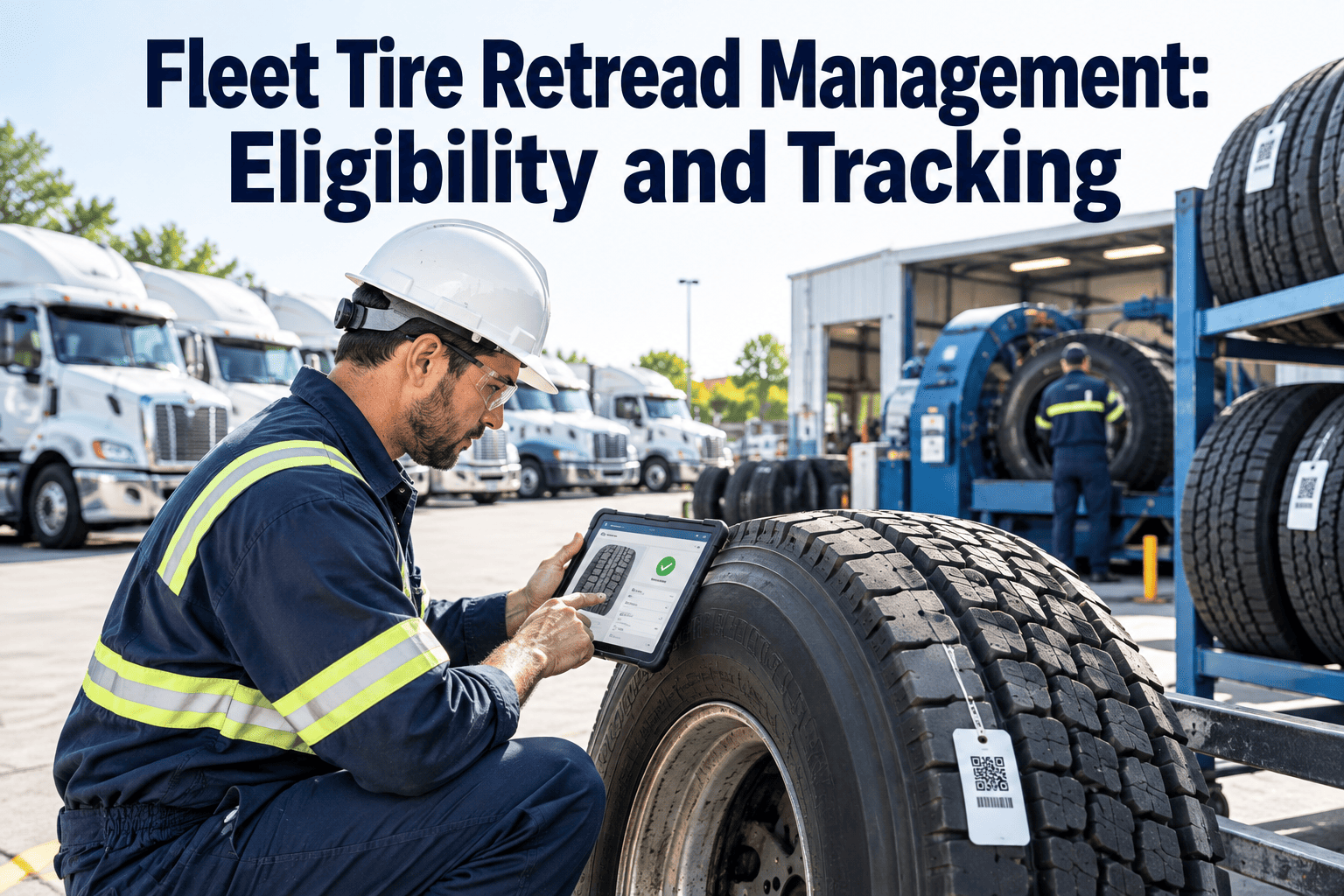
A tire casing is one of the most valuable assets on a truck, yet many fleets treat it as scrap the moment the tread wears down. Retreading can extend that casing's life for a second or third tread, but only if the casing is inspected, sorted, and tracked correctly. Without a record of age, position, repairs, and prior retreads, teams guess, and guessing leads to rejected casings, premature failures, and roadside calls. This guide explains how to judge retread eligibility and how to keep casing history in a fleet maintenance system built for tire records.
Fleet Tire Retread Management: Eligibility and Tracking
Decide which casings deserve another life, follow each tire from first mount to final scrap, and stop paying for casings that were never good candidates.
What Retreading Actually Reuses
The casing is the asset, the tread is the consumable
- The casing is the tire body: bead, sidewalls, and steel belt package
- A retread replaces the worn tread rubber, using either a precure or a mold cure process
- The retreader inspects each casing, so your inspection is a first filter, not the only one
- Retreading generally costs less than buying a new tire, which is why casing value matters
- Each casing that fails inspection is a cost you already paid to mount, run, and remove
Why the casing decision starts before removal
Six Eligibility Gates Every Casing Should Pass
Fail any gate and the casing goes to scrap or a repair review
Casing Disposition Codes That Keep Decisions Consistent
| Code | Meaning | Typical Action | Record to Capture |
|---|---|---|---|
| Retread | Casing passes fleet screening | Ship to retreader with tag | Tag number, casing age, retread count |
| Repair first | Minor injury that may be repairable | Hold for qualified repair review | Injury location, repair method, technician |
| Warranty | Early failure suspected as a defect | Photograph and hold for claim | Mount date, mileage, photos, claim number |
| Scrap | Casing fails a gate | Dispose through approved channel | Reason code, position, cause of damage |
Start Tracking Every Casing From First Mount
Build tire records in Oxmaint so eligibility is checked from real history, not memory at the tire rack.
What to Track Per Tire
Minimum data fields for a useful casing record
Position Policy: Where Retreads Belong
Set rules by axle, then let records prove them
| Position | Common Practice | Tracking Focus |
|---|---|---|
| Steer axle | Many fleets use only new or premium casings by policy; buses face specific regulatory limits, so check your rules | Removal reason and any irregular wear |
| Drive axle | Common retread position with matched tread depth | Depth matching across duals and mileage per life |
| Trailer axle | Frequently retreaded in regional and long-haul service | Pressure history and curb damage |
Root Causes That Destroy Retreadable Casings
Casing killers
- Running underinflated between inspections
- Mismatched duals that overload one tire
- Alignment problems left uncorrected
- Unrepaired punctures driven for days
- Removing tires only when the belt shows
Casing savers
- Scheduled pressure and tread depth inspections
- Dual matching rules in the work order checklist
- Alignment checks triggered by irregular wear
- Puncture reports that create same-day work orders
- Removal at the policy tread depth
Measuring Retread Program Performance
How Oxmaint Supports Tire and Casing Workflows
- Register each tire as an asset linked to its vehicle and position
- Schedule pressure and tread depth inspections with mobile checklists
- Open work orders from failed inspection items, such as low tread or sidewall damage
- Record mounts, rotations, and removals against the work order
- Track tire inventory, including casings awaiting retread and returned units
- Review cost, removal reasons, and vehicle patterns in reports
Frequently Asked Questions
Which tires are eligible for retreading?
Who makes the final eligibility call?
Why track casing age and repairs?
Can retreads be used on every axle?
Can Oxmaint manage tire inventory?
Get More Life From Every Casing You Own
Put tire history, inspections, and retread decisions in one system your yard and shop both use.